
Reviewed · MUSEUMS
Berlin: Natural History Museum Entrance Ticket
Berlin’s Museum für Naturkunde puts you face to face with Giraffatitan brancai, the tallest mounted dinosaur skeleton in the world, then brings you to Tristan Otto, one of the few original T. rex skeletons in Europe. The effect is immediate: you are not just looking at bones in glass cases, you are trying to picture entire vanished worlds.
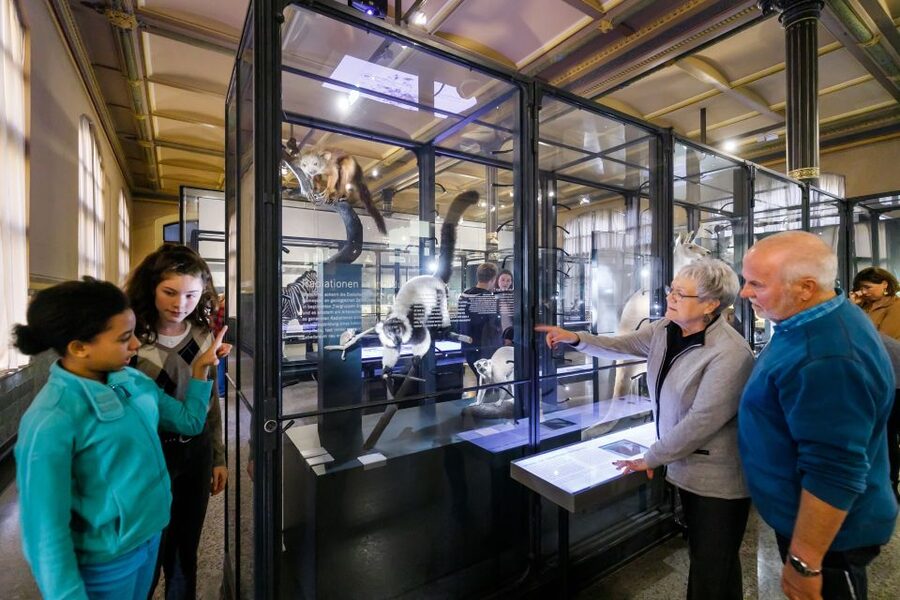
I like the excellent dinosaur hall and the chance to see the museum’s Archaeopteryx lithographica, one of the most important fossils in natural history. I also like the wet collection, where about one million animals sit preserved in 80 tonnes of alcohol. The main drawback is that some displays have limited English text, and the downloadable audio guide works best if you bring your own phone and headphones.
Key points
- Giraffatitan brancai: See the world’s tallest mounted dinosaur skeleton towering over the main dinosaur hall.
- Tristan Otto: Meet one of the few original T. rex skeletons in Europe.
- Archaeopteryx: View the delicate fossil often called the Mona Lisa of natural history.
- Wet collection: Look into a working scientific collection holding about one million animals in alcohol.
- Biodiversity Wall: See more than 3,000 species presented together in one striking display.
- Practical visit: The $12 ticket includes admission, cloakroom use, and downloadable audio content, but not a physical audio guide or special programs.
Why the dinosaur hall makes this museum worth your time
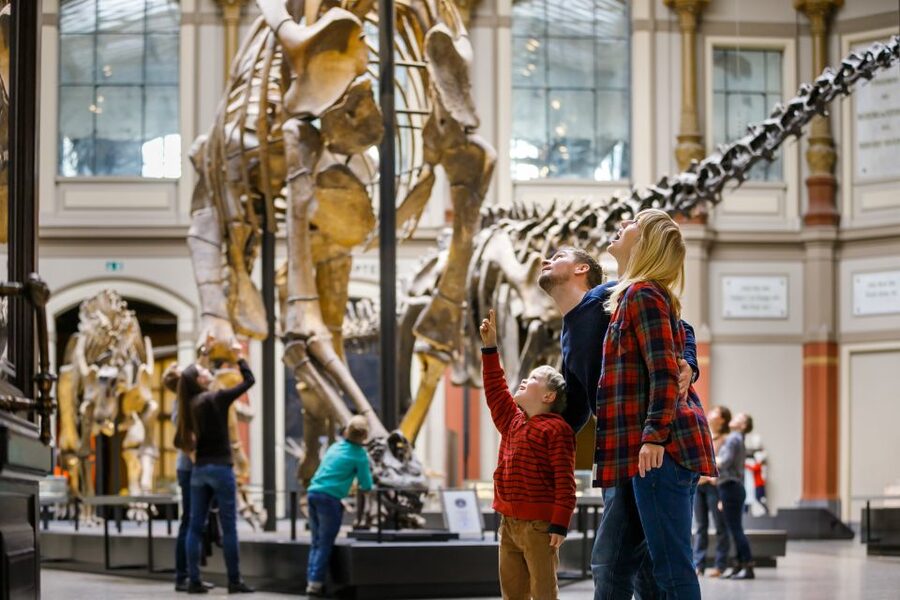
The best reason to come is simple: the dinosaur hall has scale. Giraffatitan brancai rises in the center of the room, its long neck reaching high above you. It is the sort of exhibit that makes children stop talking for a moment, and it gives adults a useful sense of how extreme these animals really were.
The hall presents life as it might have looked in the Upper Jurassic period, about 150 million years ago. You will see fossil objects and dinosaur skeletons, but the value goes beyond the spectacle. Each fossil still raises questions about movement, growth, diet, and the way these animals lived.
The hall is especially good for families because it gives you a clear visual starting point. You can look first, then read. Some interactive elements and displays help set the scene, though this is not a hands-on children’s science center. If your child needs constant buttons, levers, and play areas, the museum may feel quieter than expected.
More Attraction Tickets in Berlin
- Berlin: Jewish Museum Berlin Entrance Ticket
★ 4.5 · 8,393 reviews - Berlin: Berlin Story Bunker Entry Ticket
★ 4.6 · 6,759 reviews - Berlin: Illuseum Berlin Entrance Ticket
★ 4.1 · 3,970 reviews
Tristan Otto and the rare thrill of a real T. rex
Tristan Otto is the other major stop. Seeing a T. rex skeleton is familiar from films and books, but the physical presence is different. You can study the skull, teeth, ribs, and powerful frame at close range, while the lighting and presentation give the exhibit a strong sense of drama.
This is one of the few original T. rex skeletons in Europe, which makes it more than a popular photo stop. You are looking at genuine fossil material from an animal that lived millions of years ago, not simply a modern reconstruction.
The dinosaur section also includes other prehistoric creatures and fossil displays. Plan to spend time looking at smaller objects, too. The biggest skeletons attract the eye, but fossils such as Archaeopteryx show how much scientific value can sit inside a comparatively small case.
Archaeopteryx, minerals, and the quieter treasures
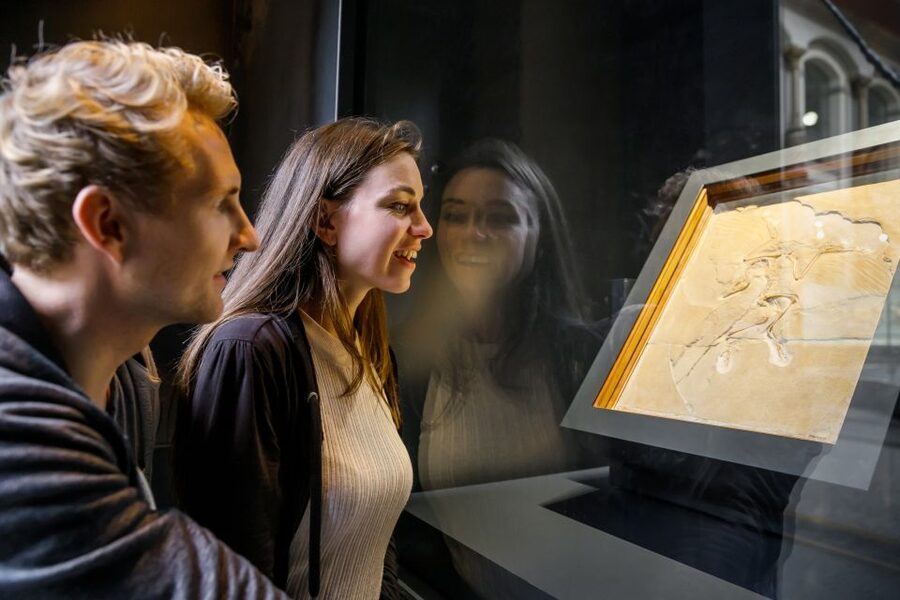
The Archaeopteryx lithographica is displayed in a safety showcase at the back of the dinosaur hall. It is a delicate and important fossil, so do not expect the same visual punch as Tristan Otto. Its appeal comes from what it tells you about the connection between dinosaurs and early birds, and from the rarity of seeing such a celebrated specimen in person.
The museum also has a mineral collection and displays connected with Earth science, geography, biology, and the solar system. These sections give the visit useful range. If the dinosaur hall is the loud headline, the minerals and Earth displays provide the slower second act.
Some parts of the museum feel older or less polished than the star exhibits. That is not necessarily a flaw. The traditional cases and dense information give the place the feel of a working research museum rather than a theme park. Still, you may find the organization a little uneven, and maps do not always make the route obvious.
One million animals in the East Wing
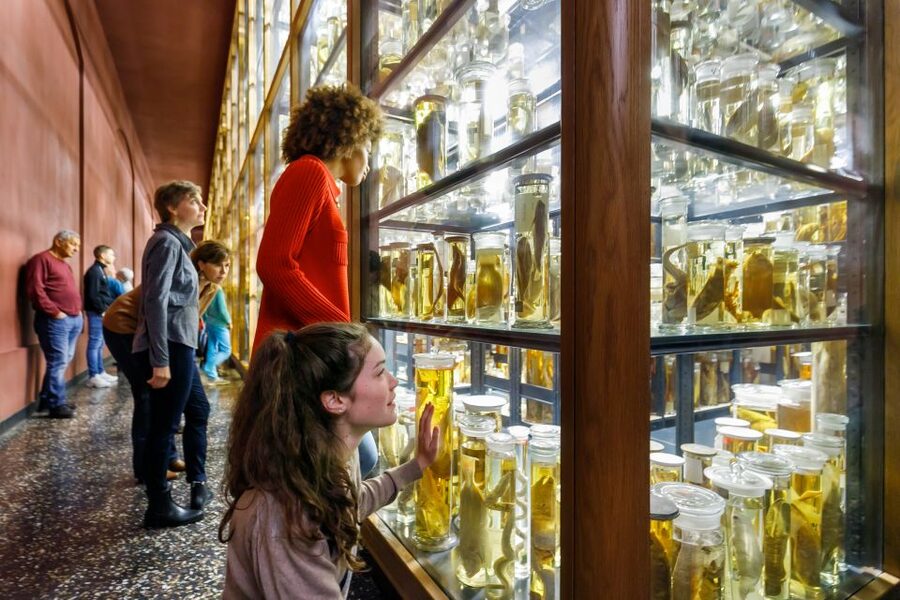
The East Wing offers a different kind of museum experience. Here you can see part of a genuine scientific research collection, with about one million animals preserved in alcohol. The scale is hard to grasp until you consider the weight involved: the collection contains roughly 80 tonnes of alcohol.
This area is not as instantly popular as the dinosaurs, but I find it valuable because it shows how natural history research actually works. Scientists use collections like this to compare species, study change, and investigate questions that cannot be answered by a single fossil or photograph.
The preserved specimens can be fascinating, but they are not for everyone. Some people may find the sight of real animals stored in jars uncomfortable. If that is likely to bother you, spend more time with the fossils, minerals, and biodiversity displays instead.
More History Tours in Berlin
- Berlin Historical Highlights Walking Tour
★ 4.9 · 657 reviews - Berlin Private Complete History All Day Walking Tour
★ 5.0 · 474 reviews - Berlin: Historic Boat Sightseeing City Center Tour
★ 4.5 · 415 reviews - Berlin: Cold War Era History Guided Bike Tour
★ 4.8 · 413 reviews
The Biodiversity Wall puts extinction into perspective
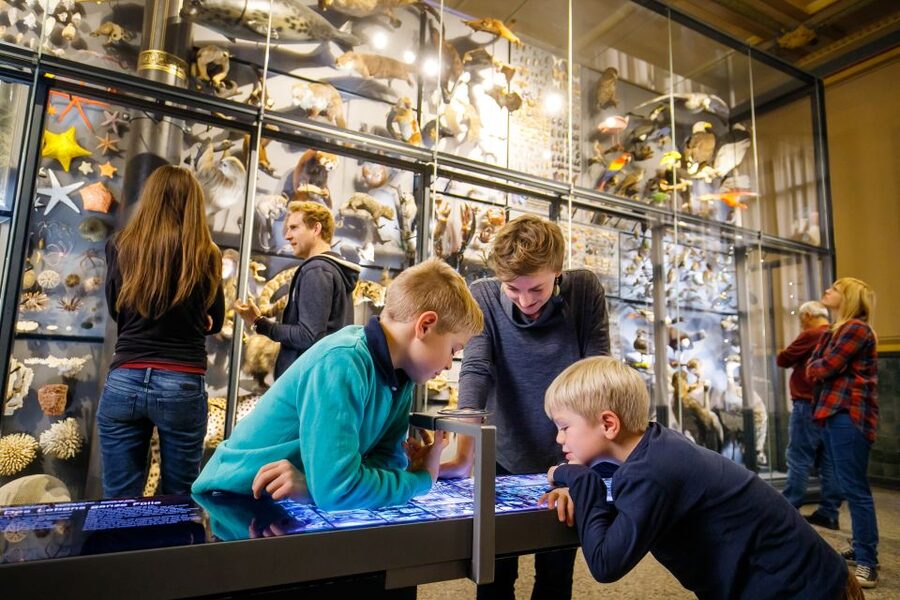
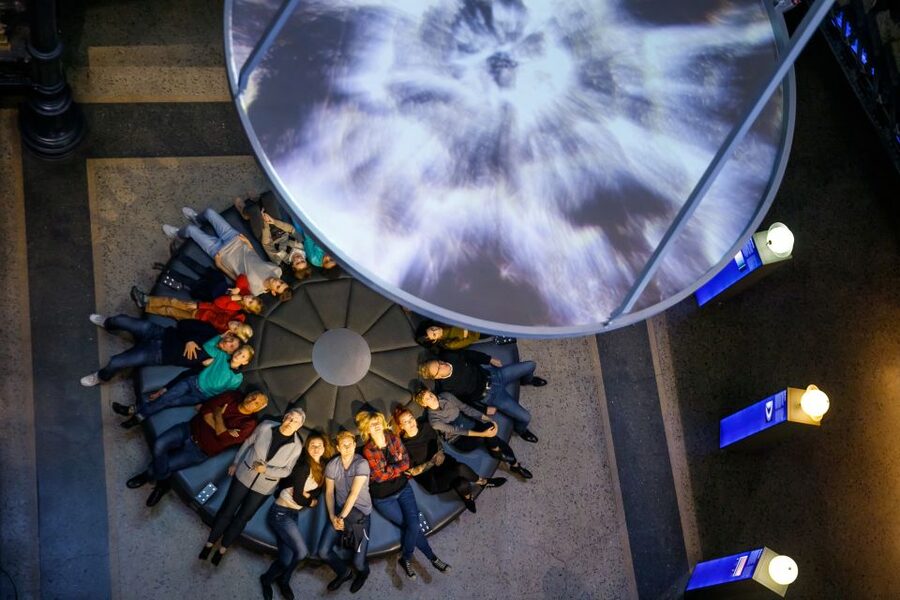
The Biodiversity Wall presents more than 3,000 different species in one view. It is an effective way to move from individual specimens to the much larger question of life on Earth.
The display is attractive at first, but its message is serious. By showing such a broad range of species together, it encourages you to think about how much life exists, how scientists classify it, and what is lost when biodiversity declines.
This is one of the museum’s most modern-feeling ideas. It connects the older collections with current scientific work and makes clear that natural history is not only about the distant past. The museum’s approximately 200 scientists use collections of more than 30 million items while studying problems that affect the future.
How to plan your route through the museum
The listed visit length is 30 minutes to one hour, but that is the minimum useful visit. You can see the main dinosaur highlights fairly quickly, especially if you are traveling with a young child or have only a short break in Berlin. For a more satisfying visit, allow extra time for the Archaeopteryx, minerals, Earth displays, wet collection, and Biodiversity Wall.
I would begin with the Dinosaur Hall. The largest skeletons give you an immediate sense of the museum, and you can return to smaller fossil cases once you know what interests you. From there, follow the displays toward the East Wing and the biodiversity material.
The museum can feel a little confusing if you expect one perfect route from entrance to exit. Some sections are organized by theme, which helps, but the overall flow may not always be obvious. Take a moment near the entrance to check the map, then accept that you may double back.
School groups can make the building noisy, especially on weekends and during busy periods. That is part of the atmosphere of a family museum, but it can make close reading harder. If you want a quieter visit, avoid the busiest family periods when you can.
The audio guide is useful, but prepare before you arrive
Admission includes access to downloadable audio content in English, French, German, Italian, Japanese, Polish, Portuguese, Russian, Spanish, and Turkish. It is accessed through a website rather than a supplied physical device.
Bring your phone and headphones. Free Wi-Fi is available, but relying on a phone without headphones can be awkward in crowded rooms. The audio content adds useful context, particularly when printed English explanations are limited.
The language coverage is a real strength, but the written information is not always equally convenient in every area. Some visitors have found that QR codes or audio links do not always work as expected. I would download or open the audio content before getting fully settled inside, and I would not treat it as a guaranteed replacement for every label.
The museum’s approach to translation can feel inconsistent. Many cases have English information, but not all displays offer the same level of detail. If you enjoy reading every label, allow extra time and use the audio option where available.
What the $12 ticket actually gets you
At $12 per person, this is a sensible museum ticket for Berlin, particularly if you care about dinosaurs, fossils, minerals, or biological collections. The price includes the main museum entrance, cloakroom use, and access to the downloadable audio content.
The value depends on your pace. If you rush through in 30 minutes and look only at the largest skeletons, the ticket may feel less impressive. If you spend time with the fossil cases, Archaeopteryx, minerals, wet collection, and Biodiversity Wall, the admission becomes much better value.
The ticket does not include guided tours, special programs, special events, or a physical audio guide. Those extras matter if you want a scheduled lecture or a guide-led visit, but the permanent displays provide enough material for an independent visit.
Booking ahead is wise because the museum can reach capacity. A prebooked ticket also helps you avoid the main ticket line. Keep your voucher easy to access on your phone, and bring your passport or ID card. Reduced-price tickets require proof of age or status at the entrance.
Accessibility and family appeal
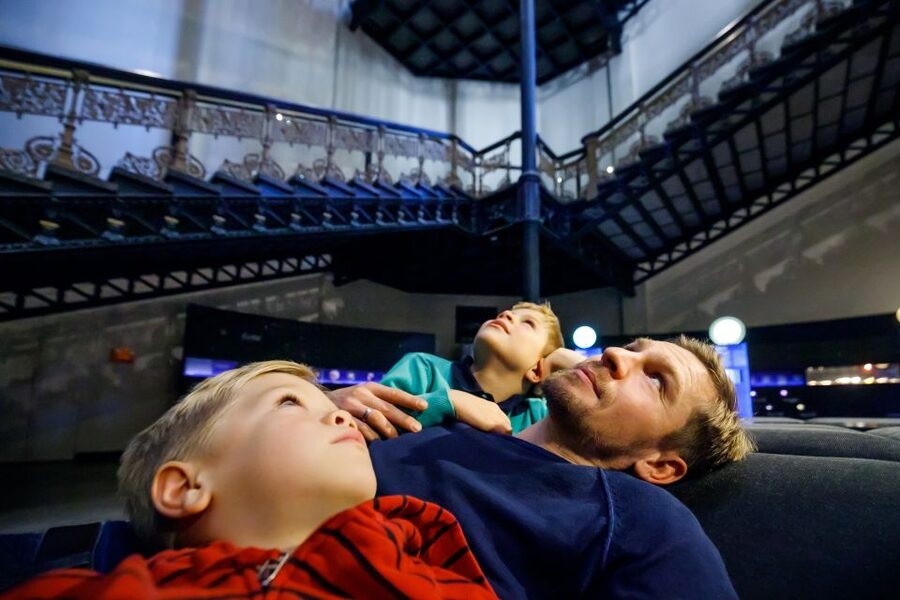
The museum is wheelchair accessible, and its large central exhibits are easy to appreciate without needing a long attention span. The dinosaur hall is a natural hit with children, while the minerals, solar system displays, taxidermy, and fossil cases give adults reasons to keep looking.
I would recommend it for families with young children, but I would set expectations correctly. There are some interactive features, yet the museum is mainly about looking, reading, and listening. It has fewer play-based activities than a dedicated children’s science museum.
Adults without children can enjoy it just as well, especially if you take interest in evolution, geology, scientific collections, or museum research. A short visit works for casual sightseeing. A longer visit rewards people who like details.
The museum shop adds a pleasant final stop, with souvenirs connected to the collections. Options can include small items such as pins, while more unusual fossil-related objects may cost much more. If you are hoping for a specific Archaeopteryx souvenir, choices may be limited.
Location and practical details
The entrance is at Invalidenstraße 43, 10115 Berlin. The experience begins at the museum’s main entrance, where your ticket is scanned. The skip-the-line benefit is useful during busy periods, though it does not always mean you walk straight into an empty building. Capacity controls can still create a wait.
The visit is easy to fit into a Berlin afternoon because there is no required tour group or fixed guide schedule. You choose your pace, leave when you like, and can use the cloakroom during your visit.
Temporary exhibitions, lectures, workshops, and other programs change over time. They are not included in this entrance ticket, so check the museum’s current schedule if you want more than the permanent displays.
Should you book the Museum für Naturkunde ticket?
Book it if you want a well-priced museum with major dinosaur displays, a real T. rex skeleton, Archaeopteryx, minerals, and unusual research collections. It is especially suitable for families, dinosaur fans, and anyone who prefers a self-guided visit.
I would not choose it only because you expect a huge, highly interactive attraction. Some areas are compact, parts of the building may occasionally be closed, and the written English support can be uneven. Bring headphones, use the downloadable audio content, and allow more than an hour if you want to read carefully.
For most visitors, the combination of Giraffatitan, Tristan Otto, Archaeopteryx, and the Biodiversity Wall makes the $12 ticket a fair buy. The museum gives you both the big prehistoric spectacle and a look at the patient scientific work behind it.
FAQ
How much does the Berlin Natural History Museum ticket cost?
The listed price is $12 per person. The ticket includes museum admission, access to the cloakroom, and downloadable audio content.
How long should I allow for the museum?
The stated visit duration is 30 minutes to one hour. You can see the main highlights in that time, but you should allow longer if you want to read the displays and visit the wet collection, minerals, and biodiversity sections.
Is the audio guide included?
Access to downloadable audio content is included. It is provided through a website, not as a physical audio guide, so bring your phone and headphones. Audio is available in English, French, German, Italian, Japanese, Polish, Portuguese, Russian, Spanish, and Turkish.
What are the main exhibits?
The major highlights include Giraffatitan brancai, the world’s tallest mounted dinosaur skeleton, Tristan Otto, one of the few original T. rex skeletons in Europe, Archaeopteryx lithographica, the wet collection of about one million preserved animals, and the Biodiversity Wall with more than 3,000 species.
Is the museum wheelchair accessible?
Yes, the museum is wheelchair accessible.
What should I bring to the museum?
Bring your passport or ID card. If you have a reduced ticket, bring proof of your age or status. A phone and headphones are also useful for the downloadable audio content.
More Museum Tours in Berlin
- Berlin: DDR Museum Tickets
★ 4.3 · 3,443 reviews - Berlin: Neues Museum Entry Ticket
★ 4.6 · 3,261 reviews - Skip-the-Line: Berlin Wall Museum at Checkpoint Charlie
★ 4.1 · 2,041 reviews - Berlin: Museum Island Multiple Museum Entry Ticket
★ 4.4 · 2,007 reviews
Just added in Berlin
- Berlin & The Third Reich Private Guided Tour★ 5.0 · 3 reviews
- Third Reich Quest Experience in Berlin★ 4.5 · 7 reviews
- Private Analogue Photography Experience in Berlin★ 5.0 · 3 reviews
- Berlin Urbex Adventure and History Tour★ 5.0 · 9 reviews
- The Beauty of Berlin by Bike: Private Tour★ 5.0 · 59 reviews
- Berlin: Guided Bike tour of the Berlin Wall and Third Reich★ 5.0 · 160 reviews
- Beyond Currywurst: Berlin’s Hidden Street Food & Culture Tour★ 5.0 · 100 reviews
- Berlin Third Reich & Cold War Walking Tour With A Guide★ 5.0 · 7 reviews
Museums, compared.



Skip-the-Line: Berlin Wall Museum at Checkpoint Charlie
Read our review →
Browse the lists this tour appears in