
Reviewed · MUSEUMS
Cologne: Chocolate Museum Entrance Ticket
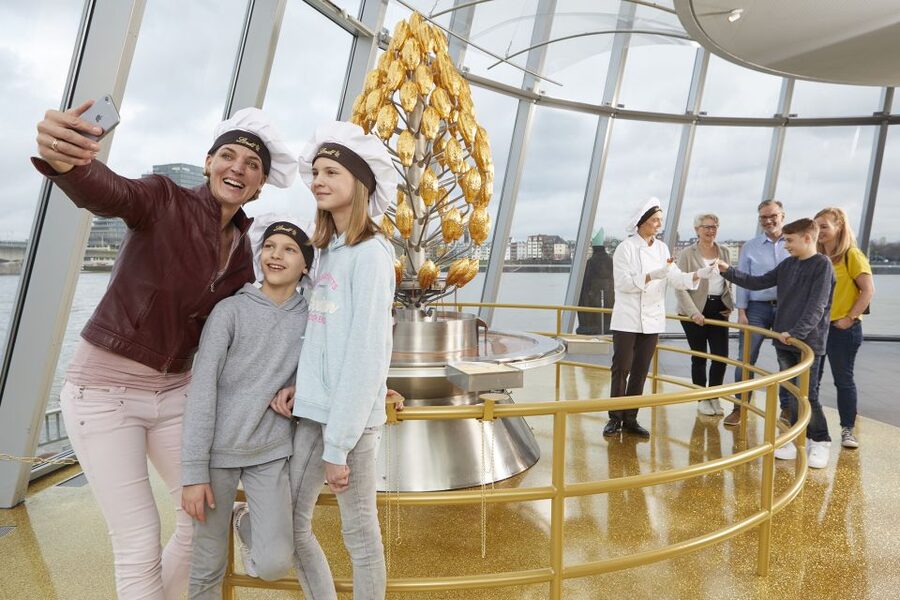
The best part of Cologne’s Chocolate Museum may be the 3-meter-high chocolate fountain, where 200 kilograms of warm chocolate bubble constantly. You receive a wafer for tasting, and sampling is not a guilty secret here. It is part of the plan.
I like the clear trip from cocoa tree to finished praline, and I like the mix of old trade objects, working machines, and modern production. The main drawback is that this is an entrance ticket, not a guided tour, so you need to read and explore at your own pace.
I would allow about 1 to 2 hours, though families and careful readers can easily spend 2.5 hours. The museum can get warm, and the number of toilets is limited, so plan a café break rather than trying to rush through.
Key points at a glance
- Chocolate fountain: Taste warm chocolate from a 3-meter fountain holding about 200 kilograms.
- Cocoa to praline: Watch chocolate being roasted, mixed, molded, and finished in a glass factory.
- 5,000 years of chocolate: Follow cocoa from Central American cultures through European trade and industrial production.
- Family-friendly format: Interactive displays, samples, machines, and custom chocolate bars keep children and teenagers interested.
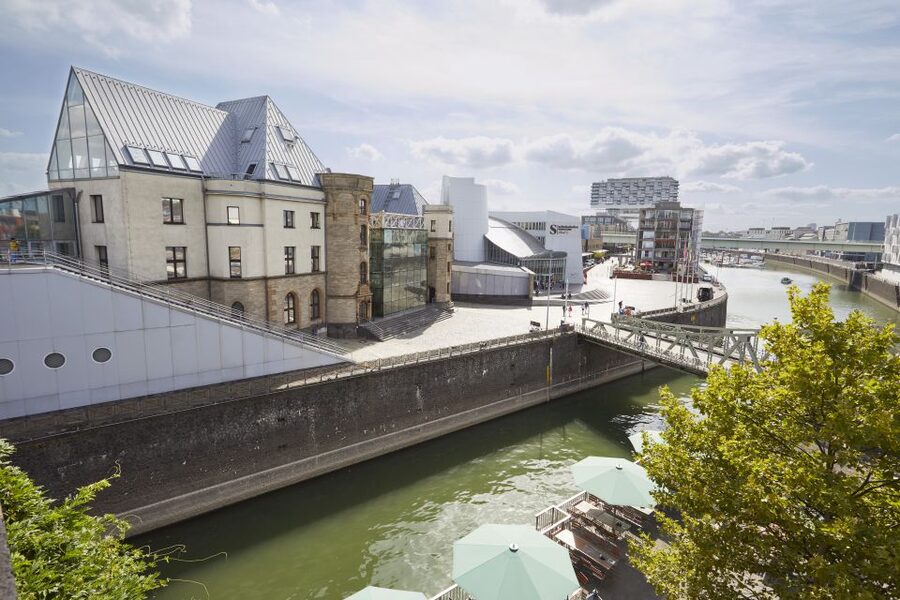
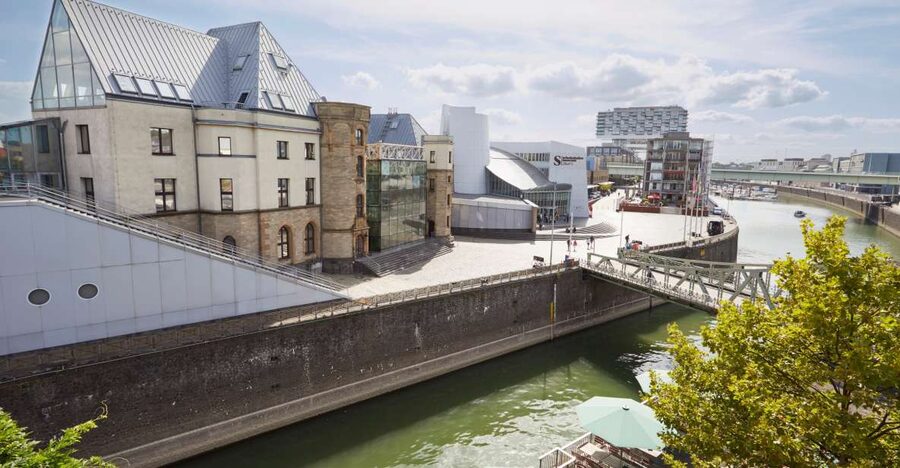
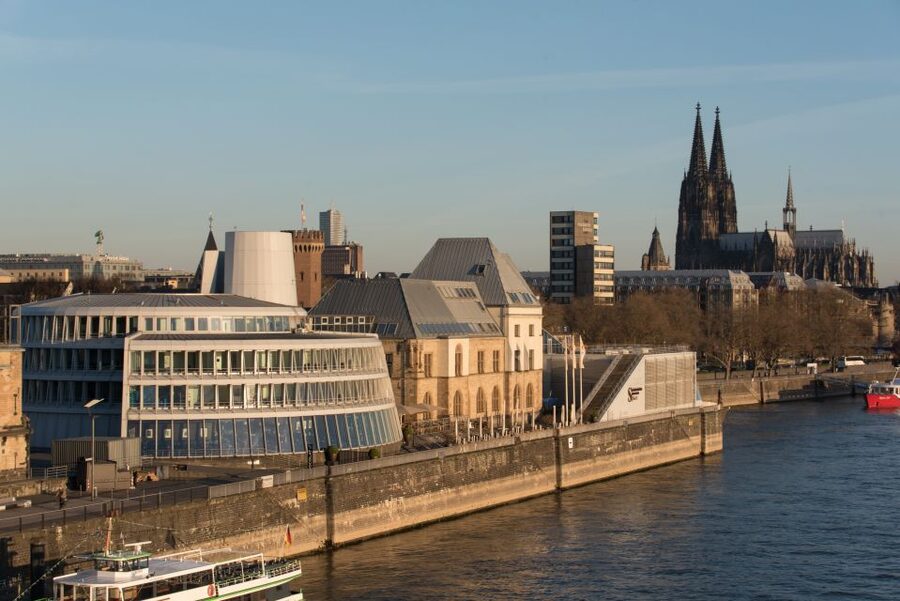
- Riverside setting: The museum sits beside the Rhine, with a café and shop that make the visit easy to pair with a walk.
- Good ticket value: At about $19 per person, admission covers a substantial self-guided visit and several tastings.
The chocolate story begins with a living cocoa tree
Cologne’s Chocolate Museum does not begin with a candy counter. It begins with cocoa itself.
You first encounter a walk-in tropical house, where cocoa trees grow in a warm, green setting. This small section gives the rest of the museum a useful anchor. Chocolate starts as an agricultural product, not as a neat bar in a wrapper. You can see the plant and learn about the conditions needed before cocoa ever reaches a factory.
Natural history information explains the cocoa bean and its role in chocolate production. This is a good opening for children because it answers a simple question many people never stop to ask: where does chocolate actually come from?
The museum’s presentation moves from plant to ingredient, then from ingredient to finished food. I like that order. You are not simply shown a series of unrelated displays. You are given a working explanation of how cocoa becomes something you eat.
The tropical house may feel warm, especially on a hot day. One visitor found the heat uncomfortable enough to shorten the stay, so keep that in mind if you are sensitive to warm indoor spaces.
More Attraction Tickets in Cologne:
- Cologne: IceBar Entry Ticket with Drinks
★ 3.3 · 770 reviews - Cologne: Cologne Zoo and Aquarium Entry Ticket
★ 4.6 · 764 reviews - Pub Crawl Cologne Including Admission Fee for Bars and Shots
★ 3.8 · 636 reviews
Central American cocoa culture and European luxury
The museum sets chocolate in a much larger story, reaching back about 5,000 years. Exhibits on pre-Columbian cultures of Central America show that cocoa had meaning and value long before European factories turned it into a mass-market product.
This section is useful because it places chocolate inside trade, ritual, and daily life. You see cocoa as a cultural product, not just a sweet snack. The displays are informative, but this is the part of the museum that rewards reading. If you want only machines and samples, you may move through it quickly. If you enjoy objects and background, it gives the visit more weight.
The museum then turns toward Europe, including an important collection of Baroque porcelain and silver. These objects show how chocolate became linked with ceremony and status. The cups, serving pieces, and tableware help explain the difference between early chocolate culture and the casual chocolate bar you buy today.
I find this change of pace effective. The museum is not all industrial equipment. It gives you art, trade, agriculture, and food culture before moving into the factory. The result feels broader than a simple brand display.
Working machines make the factory section worth your time
The industrialization section brings chocolate into the machine age. Old machines show how production changed when chocolate moved from small-scale preparation toward factory work.
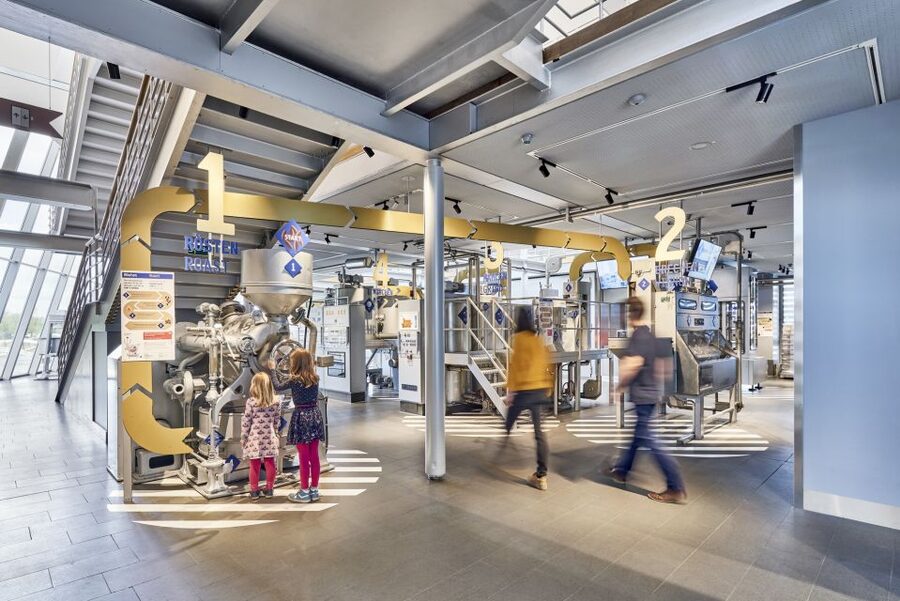
Then you reach the glass chocolate factory, which covers about 43,055 square feet. From the public walkways, you can watch parts of the production process in action. The exact level of activity can vary, but the purpose is clear: to show how chocolate moves through stages from cocoa ingredients to finished products.
This is one of the strongest parts for families. Children can watch rather than simply read. Teenagers who might skim the historical displays often pay attention when rollers, mixers, molds, and production equipment are operating.
You can follow steps such as roasting, processing, molding, and finishing. The glass walls matter because you are close enough to see the work while remaining separate from the production area. It feels more direct than looking at a static diagram.
The machines also help explain why chocolate production depends on temperature, timing, and consistency. A handmade truffle may look simple in a shop window, but the factory shows the controlled process behind familiar sweets.
The chocolate atelier adds a handmade touch
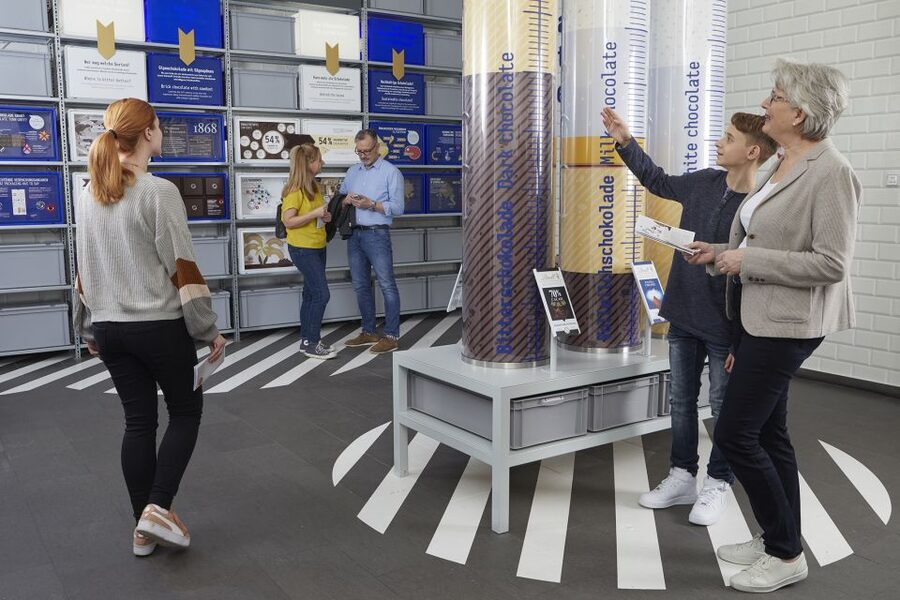
The museum also has a chocolate atelier, where chocolate products are made by hand. This balances the factory section nicely. You see both ends of the process: industrial scale and individual craft.
The handmade work is especially useful if you are interested in pralines or decorated chocolate. The museum sometimes offers the chance to create your own chocolate bar for an additional charge. You choose or arrange the ingredients, then watch the bar being made. This option was a favorite with families and older children, but it is separate from the admission price.
I would treat the custom bar as an optional extra, not a reason to buy the basic ticket. It adds a personal souvenir and can be a good activity for children, but the regular museum visit already includes plenty to see.
The production areas close about 30 minutes before the museum itself, so do not arrive at the last possible moment if the factory is your main goal. Last entry is one hour before closing.
More Museum Tours in Cologne:
- Cologne: Ticket for the German Sport & Olympia Museum
★ 4.5 · 84 reviews - Cologne: HOUSE OF BATES // CONTENT GALLERY
★ 4.7 · 46 reviews - Berlin: Jewish Museum Berlin Entrance Ticket
★ 4.5 · 8,393 reviews - Berlin: DDR Museum Tickets
★ 4.3 · 3,443 reviews
The famous fountain is more than a photo stop
The 3-meter chocolate fountain is the museum’s most memorable feature. About 200 kilograms of chocolate bubble through it, and staff provide wafers for tasting.
Tasting is expressly encouraged. You can dip the wafer into the warm chocolate and sample it before continuing through the museum. This small moment gives the visit a clear sensory payoff. You have read about cocoa, seen the machines, and then tasted the finished product in a simple, immediate way.
The samples do not all come from one single stop. Small chocolate pieces are handed out at points along the route, and several visitors counted around six pieces during the visit. The exact amount may vary, but you should expect more than one taste.
I would not visit expecting a full meal made of free chocolate. The portions are tasting portions. Still, they add real value to a ticket costing about $19, especially for families.
The aroma of chocolate is present through much of the visit. If you have a strong sweet tooth, this can make the café and shop feel irresistible by the time you finish.
Allow one hour, or slow down for two and a half
The museum is officially valid for one day, so you are not forced into a tight timed route. In practical terms, many people spend about 1 to 1.5 hours inside. I would allow 2 hours if you like to read signs, watch the machines, and stop for tastings.
Families may spend longer. Children can pause at interactive displays, watch the factory, sample chocolate, and create a custom bar. One family stayed more than 2.5 hours, which is possible if you add the café or take your time through the exhibits.
The museum works well on a rainy day because it gives you a full indoor activity without feeling like a short stop. It can also fill a spare afternoon between Cologne sights.
Go near opening time if you can. The museum may become busier soon after opening, particularly on weekends. The mobile ticket lets you go straight to the entrance and scan your phone, but skip the ticket line does not always mean walking past every crowd. If many people already hold online tickets, you may still encounter an entry queue.
The meeting point information can be a little confusing because the map may appear to place you outside the building. In practice, go directly to the museum entrance and scan your mobile ticket.
Café, shop, and Rhine views complete the visit
The riverside location is one of the museum’s practical pleasures. After looking at chocolate for an hour or two, you can step into the café or continue along the Rhine.
The café is worth planning for, not just treating as an emergency coffee stop. It serves meals, drinks, cakes, waffles, hot chocolate, and desserts. Portions can be generous. A waffle and a fondue together may be more food than you expect, so check the size before ordering both.
Chocolate cake, soufflé, espresso, fondue, and hot chocolate have all been popular choices. Prices are described as reasonable, and the café offers a place to rest after standing and reading through the displays.
The shop has a wide selection of chocolate gifts. It is convenient for presents, though the prices may be higher than what you pay for similar Lindt products at home. I would browse before buying rather than assuming every item is a bargain.
The riverside setting also makes the museum easy to combine with a Cologne walk. You can visit the exhibits, stop for cake, then enjoy the Rhine rather than treating the museum as an isolated indoor attraction.
Who will enjoy this museum most?
I would recommend it to families with children, couples who like food museums, and anyone who wants an easy Cologne activity with both education and tasting.
Children under 12 must be accompanied by a paying adult. The museum is wheelchair accessible and suitable for pushchairs, which makes it practical for families with young children. The route includes displays, machines, a tropical house, and samples, so different ages can find something to hold their attention.
Teenagers tend to have a good time because the visit is not built around reading alone. The factory, fountain, tasting stops, and optional custom bar give them things to watch and do.
Chocolate enthusiasts will enjoy the production details, while history-minded visitors will appreciate the pre-Columbian and Baroque sections. If you dislike sweets or prefer a short, tightly guided tour, the museum may feel less suitable. The ticket does not include a guided tour, and the amount of reading is up to you.
There is a small group option shown for the experience, but the standard ticket itself is simply museum admission. If you want a guide, confirm that arrangement separately before booking.
Is the $19 ticket good value?
At roughly $19 per person, I consider the admission fair for what you receive. You get access to a large museum with historical displays, a tropical house, old machines, a working glass factory, a chocolate atelier, tasting opportunities, and the fountain.
The ticket becomes even better value if you spend 90 minutes or more inside. It is less compelling if you rush in, take a photo at the fountain, and leave. The museum rewards a moderate pace.
The samples help, but they should not be the only measure. You are paying for the full route from cocoa agriculture to industrial production. The café and shop cost extra, as does making your own chocolate bar, so set a separate budget if those extras appeal.
Free cancellation up to 24 hours before the visit and reserve-now, pay-later booking can help if your Cologne plans are unsettled. The ticket is valid for one day, and you should check the available opening time before booking.
Should you book the Cologne Chocolate Museum?
I would book it if you want a relaxed, family-friendly Cologne activity that combines food, history, machines, and hands-on tasting. The fountain, factory, and steady stream of samples give the visit enough fun, while the cocoa and trade displays keep it from feeling shallow.
Choose an earlier entry if you want a quieter start. Allow at least 1.5 hours, and leave room for the café or a walk beside the Rhine.
Skip it only if you want a guided experience with a fixed story and no reading. For most visitors, especially families and chocolate lovers, the $19 admission is a solid buy.
FAQ
How long does the Chocolate Museum visit take?
Most people can see the museum in about 1 to 1.5 hours. If you read the displays carefully, watch the production areas, visit the café, or make a custom bar, allow 2 to 2.5 hours.
Is a guided tour included?
No. The ticket includes museum admission and an information booklet, but not a guided tour. The standard visit is self-guided.
Can I taste chocolate during the visit?
Yes. Chocolate samples are offered along the route, and you can taste chocolate from the 3-meter-high fountain using a wafer.
What is included in the ticket price?
The ticket includes entrance to the Chocolate Museum and an information booklet. Café purchases, shop items, and the optional custom chocolate bar cost extra.
Is the museum wheelchair accessible?
Yes. The museum is wheelchair accessible and is also suitable for pushchairs.
Can children visit alone?
Children under 12 must be accompanied by a paying adult.
When should I arrive?
Last entry is one hour before closing, and the production facilities close about 30 minutes before the museum. Arriving near opening time can help you avoid the busiest period.
Just added in Cologne
- The rather unknown Melaten★ 4.9 · 26 reviews
- Rickshaw Glühwein Ride★ 4.6 · 24 reviews
- Informative and fun brewery tour in German, public★ 4.9 · 47 reviews
- Public brewhouse tour Cologne in English★ 4.9 · 154 reviews
- Private photoshoot in Cologne★ 5.0 · 5 reviews
- Panorama tour between Bonn and Königswinter★ 4.7 · 63 reviews
- Cologne: Old City Guided Walking Tour★ 4.9 · 63 reviews
- Cologne-Nippes: Gourmet wine tasting with cheese platter★ 4.6 · 26 reviews
Museums, compared.


Skip-the-Line: Berlin Wall Museum at Checkpoint Charlie
Read our review →
Browse the lists this tour appears in