
Reviewed · HISTORICAL TOURS
Berlin Private Complete History All Day Walking Tour
Berlin’s past is spread across its streets, squares, memorials, and surviving buildings. This private six-hour walk brings the pieces together, from the Brandenburg Gate and Reichstag to Hitler’s bunker site, the Berlin Wall, Checkpoint Charlie, and Alexanderplatz. It is a brisk way to understand how Berlin changed from Prussian capital to Nazi headquarters, divided Cold War city, and reunified Germany.
I like the one-to-one attention and the route’s wide sweep. Your guide can explain a building, answer a sudden question, or adjust the pace without waiting for a large group. I also like the serious range of subjects, from the Holocaust Memorial and Gestapo headquarters to the book burning memorial and Soviet memorial in Tiergarten.
The catch is simple: this is a lot of walking. One account puts the distance at about 5.5 miles, and six hours on Berlin pavement can feel long, especially with 22 stops. The price, $253.95 per person, makes the most sense for a small group that values personal guidance and wants a strong Berlin introduction in one day.
Key points to know before booking
- A private six-hour route connects 22 major sights, ending at Alexanderplatz after crossing much of central Berlin.
- World War II and Cold War history receive the most attention, with stops at the Führerbunker site, Topography of Terror, the Berlin Wall, and Checkpoint Charlie.
- Guides tailor the day to your group, with named guides including Rhys, Paul, Ciaran, Beth, Ken, Julian, Eugen, Francisco, and Darren.
- The route is entirely on foot, with no private vehicle, and may cover around 5.5 miles.
- Several sites are memorials or exterior visits, so this is primarily a guided city walk rather than a museum-entry tour.
- The tour suits first-time visitors who want context fast, but less active visitors may prefer a shorter or vehicle-supported experience.
Why this route works as a first day in Berlin
Berlin can be confusing at first. Its major sights are not arranged around one old-town center, and the city’s story is layered rather than neatly chronological. A grand 18th-century square may sit near a Nazi-era government building, while a Cold War border crossing appears beside modern shops and tourist signs.
This route gives you a useful mental map. You begin near the Brandenburg Gate, move through the government district and Tiergarten, then continue toward the Nazi-era sites around Potsdamer Platz and Niederkirchnerstrasse. From there, you follow the Cold War story through the Berlin Wall and Checkpoint Charlie, before turning north and east toward Unter den Linden, Museum Island, and Alexanderplatz.
That order helps you connect places that can otherwise feel unrelated. The guide is not just pointing out façades. The better moments come when a building’s role changes over time: royal landmark, Nazi symbol, wartime ruin, Cold War marker, or restored monument.
Guides have different personalities and backgrounds, but the experience depends heavily on the person leading your day. Rhys is described as funny, patient, and flexible. Paul is praised for detailed answers and open discussion. Ciaran is noted for his command of Berlin, World War II, and related subjects. Beth, Ken, Julian, Eugen, Francisco, and Darren are also named as guides who bring different strengths to the walk.
More History Tours in Berlin
- Berlin: Natural History Museum Entrance Ticket
★ 4.6 · 3,382 reviews - Berlin Historical Highlights Walking Tour
★ 4.9 · 657 reviews - Berlin: Historic Boat Sightseeing City Center Tour
★ 4.5 · 415 reviews
Brandenburg Gate and the government quarter
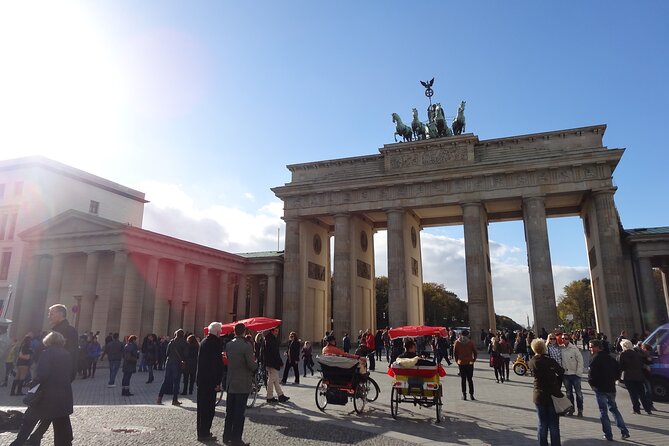
The tour begins at Ebertstrasse, near the Brandenburg Gate. You get about 15 minutes at this first stop, enough to take photographs and hear why the gate was built, how it became linked with Prussian and German power, and why it mattered so much during the Cold War.
The gate is often treated as a simple photo stop. It is more useful when you see it as a marker of changing political systems. The same monument has been tied to monarchy, militarism, division, protest, and reunification. Ask your guide to point out the details you might otherwise miss, and ask for a group photo if you want one.
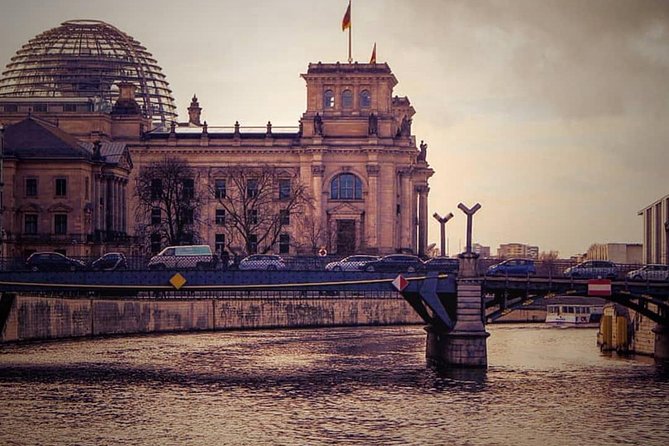
The nearby Reichstag receives another 15-minute explanation from outside. You hear about the Hohenzollerns, the building’s construction, its role in the Nazi seizure of power in 1933, the fierce fighting during the Soviet capture of Berlin, and its later place in reunified Germany.
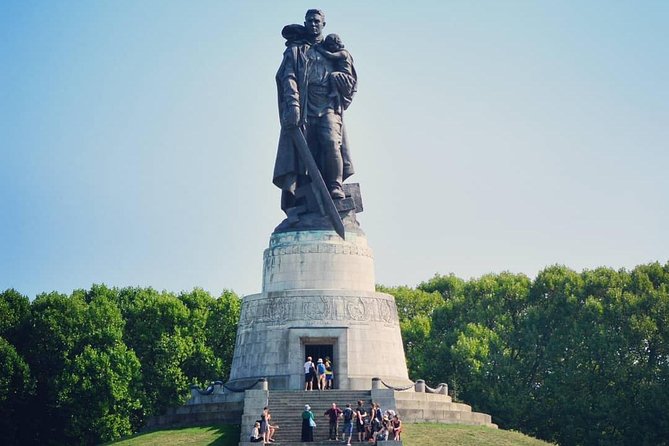
You then enter Tiergarten, Berlin’s large central park. The route includes the Soviet Memorial Tiergarten, the only Soviet memorial located in what was West Berlin. Its construction, building materials, symbols, and political complications make it a more interesting stop than its formal appearance might suggest.
The walk through the park is brief, about 10 minutes, followed by a view of the Victory Column from a distance. This is not a long stop, but the guide explains why it was built and where it originally stood. If you want a detailed look at the column, this tour does not promise that. The emphasis is on the story and the wider route.
Memorials to Nazi crimes and resistance
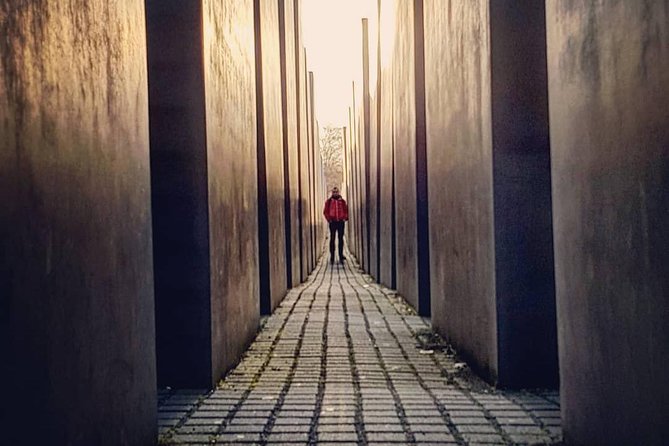
The Holocaust Memorial is one of the day’s most serious stops. You have about 15 minutes among the concrete blocks, with your guide providing context for the Memorial to the Murdered Jews of Europe and its place in present-day Berlin.
This is a site that rewards a little quiet time. The regular grid and uneven ground create a different feeling as you move through it, but the tour is not designed as an extended visit. If you want time to walk alone or read every detail at length, plan to return later.
The former Führerbunker is now an ordinary-looking parking area. That contrast is the point. Your guide explains where Hitler spent his final days and why the location was not preserved as a shrine. You should expect discussion of the site, not an underground bunker visit.
The Johann Georg Elser sculpture adds a less familiar story. Elser attempted to kill Hitler in 1939 and came close to changing the course of the war. This stop gives the tour a human angle beyond the better-known leaders and battles.
At the former Aviation Ministry, you see a large building that has been in continuous use since 1936. Its survival through the Nazi period, the war, and the postwar years makes it a useful example of how Berlin often repurposed buildings instead of erasing them.
The Topography of Terror is one of the strongest parts of the route. The site once held the headquarters of the SS, Gestapo, and SD. The tour includes entry to the site, where the guide discusses Nazi repression and what happened to the location after the war.
These stops require a respectful tone. The day is not built around sensational stories, and that is a strength. The best guides connect individual choices and political systems without turning the material into entertainment.
The Berlin Wall, Checkpoint Charlie, and Friedrichstrasse
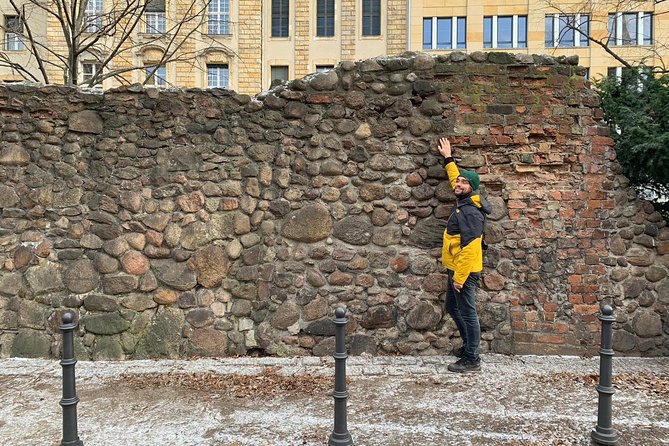
The Memorial of the Berlin Wall shifts the focus from Nazi Germany to the divided city. You see a remaining section of wall and learn why and when it was built, how people tried to escape, and how some died attempting to cross.
This is a useful correction to the common image of the wall as a simple painted barrier. It was a border system with different layers, controlled crossings, surveillance, and deadly consequences. Your guide can help you understand where the wall ran and how it cut through ordinary neighborhoods.
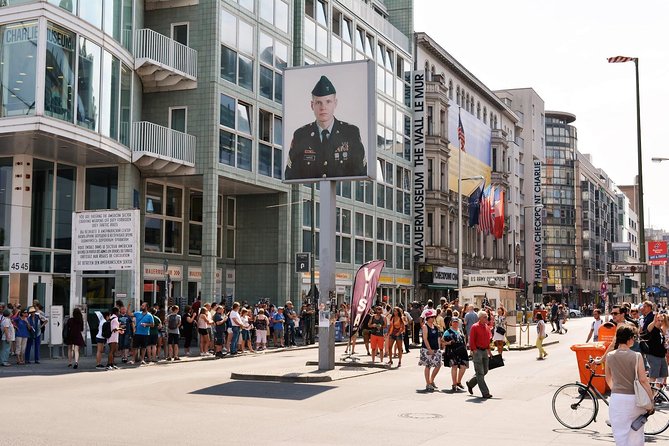
Checkpoint Charlie follows. It is the most famous of Berlin’s former border crossings, and today it is also one of the city’s most commercialized sights. The tour helps separate the Cold War importance of the checkpoint from the modern photo opportunity.
You then walk along Friedrichstrasse, once known as the Cabaret Mile. The stop is brief, but it adds social and cultural history to a route otherwise heavy with government, war, and political repression. It also gives the day a change of rhythm before the grand squares of central Berlin.
The route does not use a private vehicle. Your guide walks with you throughout, and the pace follows the group. That makes the tour flexible, but it also means you should wear comfortable shoes and think carefully about the season and weather.
More Walking Tours in Berlin
- Discover Berlin Half-Day Walking Tour
★ 5.0 · 9,624 reviews - Berlin: Third Reich and Cold War 2 Hour Walking Tour
★ 4.9 · 6,830 reviews - Berlin: Discover Berlin Walking Tour
★ 4.9 · 5,998 reviews - Berlin’s Best: 2 Hour Walking Tour Third Reich and the Cold War
★ 5.0 · 5,486 reviews
Gendarmenmarkt, Bebelplatz, and Unter den Linden
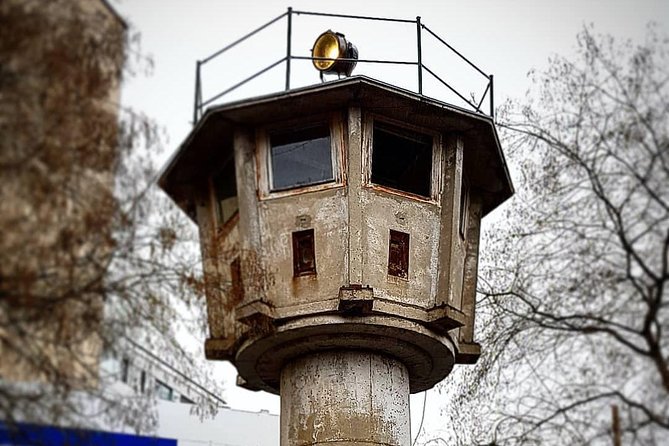
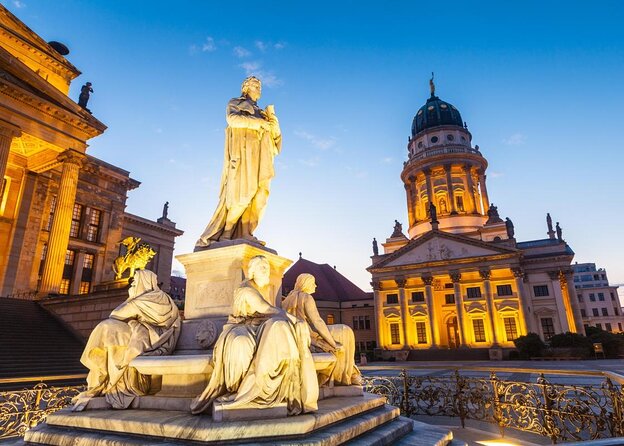
Gendarmenmarkt is presented as Berlin’s most beautiful square, with an explanation of its origins and architectural development. You have around 15 minutes here, enough to understand the layout and appreciate the square’s formal design.
Bebelplatz brings together several major institutions: St. Hedwig’s Cathedral, Humboldt University’s law faculty, and the State Opera House. The square is also linked to the Nazi book burning of 1933. The underground memorial, visible through a glass panel, is a quiet and unsettling reminder of that event.
This part of the walk is especially useful because the architecture can distract you from the politics. Your guide makes the square readable as both an elegant 18th-century setting and a place marked by an attack on free thought.
At Humboldt University, the focus shifts to the building, the university, and the Humboldt family. This is a short stop, around 10 minutes, but it helps explain Berlin’s importance as a center of education and ideas.
Neue Wache is one of the most moving interiors on the route. The building has changed political meaning more than once and now serves as a memorial. Your guide explains those changes before taking you inside, if conditions allow. The central memorial space is spare and quiet, so it can provide a needed pause after the heavier Nazi and Cold War stops.
You also see the German Historical Museum from outside, in one of the oldest surviving buildings on Unter den Linden. The tour does not include a museum visit, so plan a separate return if you want exhibitions and extended indoor time.
Museum Island, Humboldt Forum, and Alexanderplatz
Museum Island is a UNESCO World Heritage site made up of several museums, the Berlin Cathedral, and important buildings by major architects. The tour gives you a clear introduction to how the island developed, but 15 minutes is not enough to visit the collections.
That limitation is worth keeping in mind. The route gives you orientation and context, then leaves you with a list of places to explore later. If museums are your main reason for coming to Berlin, you will need extra time on another day.
The Humboldt Forum is another stop with a complicated recent story. Its history involves the site itself, the building’s design, and the questions raised by rebuilding and presenting this part of Berlin. The guide helps place it in the wider story of the city rather than treating it as just another new cultural center.
St. Mary’s Church is a welcome architectural pause. It is described as the oldest church in Berlin that has been in continuous use, and you may be able to go inside. The visit depends on access at the time, so do not treat interior entry as guaranteed.
The walk ends at Alexanderplatz, about 10 minutes from the finish. The square was rebuilt after the war as the capital of the German Democratic Republic, giving the tour a final look at East Berlin’s postwar identity.
Ending here is practical. Alexanderplatz has public transport connections, shops, and places to eat, so you can continue exploring without needing to retrace the route. You also finish with a better sense of how East Berlin differed from the royal and government center farther west.
What $253.95 per person buys you
At $253.95 per person, this is not a budget walking tour. The value depends on the size of your private group and how much you want a guide to shape the day around your questions.
For a couple or small family, the price can be reasonable if you would otherwise book several shorter tours or spend time trying to connect the sites yourself. You are paying for a private English-speaking guide, not transport, meals, or admission to most attractions. The main benefit is the guide’s attention and the time saved in building a sensible route.
The strongest value comes from the explanations. A building such as the Reichstag or the former Aviation Ministry can seem interesting but opaque without context. A good guide turns it into part of a larger story and answers questions as they arise.
For a larger group, group discounts may improve the price per person. Ask about the final group rate before booking. The tour is offered in English, and confirmation is provided at booking. Pickup can be arranged on foot, but there is no vehicle pickup.
Free cancellation is available when you cancel at least 24 hours before the start time. Changes or cancellations inside that window are not accepted for a refund.
Who will enjoy this long walking day
I would choose this tour for a first full day in Berlin, especially if you want to decide later which places deserve a longer visit. It gives you historical bearings quickly and covers much of Mitte without wasting time on transfers.
It suits people who enjoy asking questions. The private format lets you pause over a subject, move on from something that does not interest you, or adjust the pace. The guides have handled groups ranging from teenagers to older adults, and one account describes a short break for younger members during the day.
You should be comfortable walking for several hours. Most stops are short, often 10 to 15 minutes, but the distances between them add up. One account records about 5.5 miles, so this is not a gentle stroll between two nearby monuments.
The tour works less well if you want long museum visits, extensive time inside churches, or a relaxed meal-based schedule. Food and drinks are not included, though a guide may help fit in a lunch break. The entire day remains primarily an outdoor walking experience.
Should you book the Berlin Private Complete History Tour?
Book it if you want one focused day of Berlin’s major political and historical sites, especially World War II and Cold War locations. The private format is the main reason to pay more: you get a guide’s full attention and a route that can respond to your group.
I would not choose it for a slow-paced sightseeing day or if long walking is difficult. The itinerary is packed, and several stops are viewed from outside or covered in a short explanation.
For most first-time visitors who can manage the distance, this is a strong way to get your bearings. You will finish at Alexanderplatz with a working map of Berlin’s past and a clearer idea of which memorials, museums, and neighborhoods deserve your return.
FAQ
How long is the Berlin private history walking tour?
The tour lasts approximately six hours.
How much does the tour cost?
The listed price is $253.95 per person. Group discounts are offered.
Is the tour private?
Yes. Only your group participates, so the guide’s attention is directed to your party.
What language is the tour offered in?
The tour is offered in English.
Does the tour use a private vehicle?
No. This is entirely a walking tour, and private transportation is not included.
Where does the tour start and end?
It starts at Ebertstrasse 24, 10117 Berlin, near the Brandenburg Gate area, and ends at Alexanderplatz, 10178 Berlin.
What major sights are included?
The route includes Brandenburg Gate, the Reichstag, the Soviet Memorial in Tiergarten, the Holocaust Memorial, the Führerbunker site, Topography of Terror, the Berlin Wall Memorial, Checkpoint Charlie, Gendarmenmarkt, Bebelplatz, Neue Wache, Museum Island, Humboldt Forum, St. Mary’s Church, and Alexanderplatz.
Are food and drinks included?
No. Food and drinks are not included. The tour information indicates that a lunch break may be possible during the day.
Can I cancel for a full refund?
Yes, if you cancel at least 24 hours before the experience starts. Cancellations or changes made less than 24 hours before the start time are not accepted for a refund.
More Full-Day in Berlin
- From Munich: Neuschwanstein & Linderhof Castle Full-Day Trip
★ 4.5 · 12,494 reviews - From Munich: Neuschwanstein Castle Full-Day Trip
★ 4.7 · 3,977 reviews - From Munich: Dachau Memorial Site Full-Day Tour
★ 4.9 · 1,406 reviews - From Munich: Neuschwanstein Castle Full-Day Trip by Van
★ 4.8 · 1,177 reviews
Just added in Berlin
- Berlin & The Third Reich Private Guided Tour★ 5.0 · 3 reviews
- Private Analogue Photography Experience in Berlin★ 5.0 · 3 reviews
- Third Reich Quest Experience in Berlin★ 4.5 · 7 reviews
- Berlin Urbex Adventure and History Tour★ 5.0 · 9 reviews
- The Beauty of Berlin by Bike: Private Tour★ 5.0 · 59 reviews
- Berlin: Guided Bike tour of the Berlin Wall and Third Reich★ 5.0 · 160 reviews
- Beyond Currywurst: Berlin’s Hidden Street Food & Culture Tour★ 5.0 · 100 reviews
- Berlin Third Reich & Cold War Walking Tour With A Guide★ 5.0 · 7 reviews
Historical Tours, compared.
City History Canal Sightseeing Tour on a Motorboat
Read our review →


Browse the lists this tour appears in