
Reviewed · HISTORICAL TOURS
Elbfloren: Historical city tour
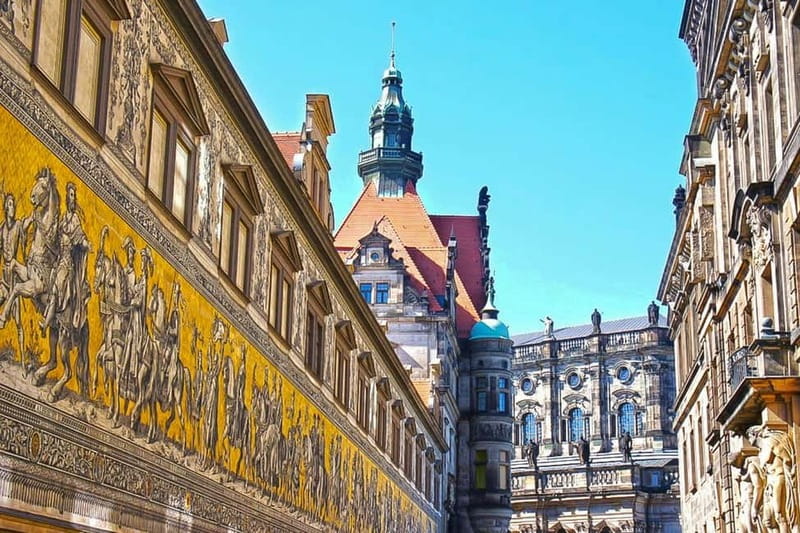
Dresden’s old center unfolds like a royal stage on this two-hour walk from Dresden Castle to Theater Square. You follow the world of Augustus the Strong, see the Fürstenzug and Zwinger, and step inside the Frauenkirche if its doors are open.
I like the strong focus on Baroque Dresden and the way the route links major sights instead of treating them as isolated monuments. I also like the guide’s emphasis on stories, poetry, and amusing details about Augustus, not just dates and building names.
The main catch is language: this tour is conducted in German. Church entry also depends on opening hours, and the Zwinger and Semper Opera House are viewed from the outside rather than entered as museum or performance venues.
Key points to know before booking
- Start at Dresden Castle: Meet at the corner of Schlossstraße and Taschenberg, under the sign.
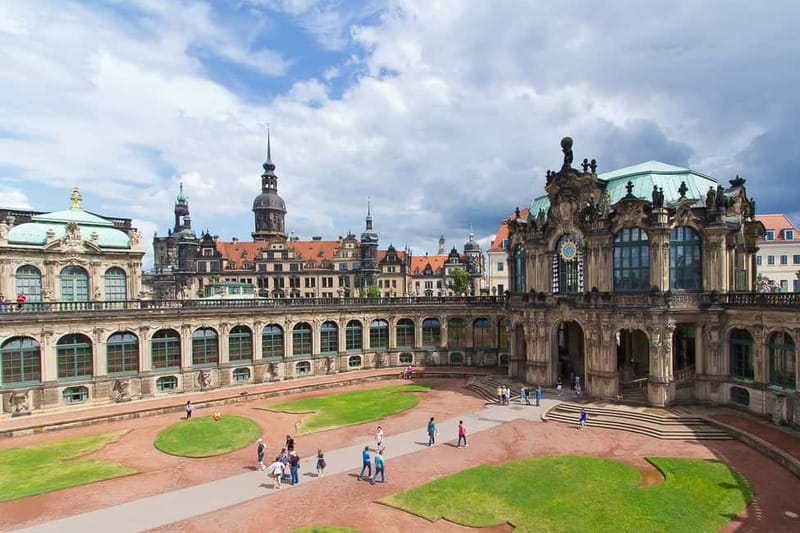
- See Dresden’s royal core: The route includes the castle, stable yard, Fürstenzug, Taschenbergpalais, Frauenkirche, Zwinger, cathedral, and Semper Opera House.
- Hear the Augustus stories: The guide adds background and amusing details about Saxony’s famous ruler.
- Enter the Frauenkirche when possible: Interior access depends on the church’s opening hours.
- German-language tour: The live guide speaks German, so basic German is important for getting full value.
- Good low-cost orientation: At $15 per person, the walk gives you a clear introduction before you decide which buildings deserve a longer visit.
Why Dresden’s old center works so well on foot
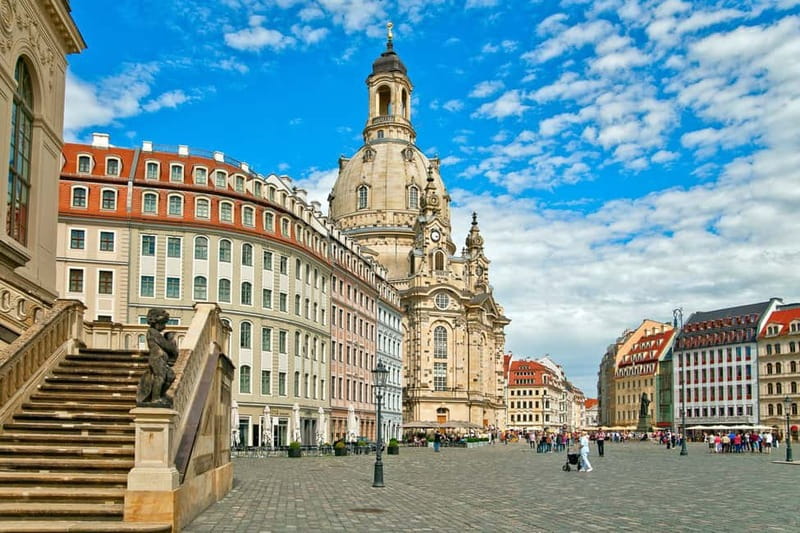
Dresden is sometimes called Florence on the Elbe, a nickname pointing to its grand art, architecture, and riverfront setting. You do not need a long bus ride to see the historic center. The main sights sit close together, making a walking tour a sensible way to get your bearings.
This route concentrates on the section rebuilt and restored after the destruction of Dresden in the Second World War. That point matters. The buildings you see are not simply untouched relics from the eighteenth century. Many have been reconstructed with great care, and the tour gives you a way to understand both the old royal city and the modern effort to bring its center back.
I especially like that the walk begins at Dresden Castle rather than at a less meaningful meeting spot. You start among the former royal buildings, then move through courtyards and squares toward the city’s best-known church and opera house. The route feels connected from beginning to end.
The tour lasts two hours, which is long enough for useful context without taking over your day. You will not get a full museum visit or an extended architectural study of every building. Instead, you get a brisk introduction to Dresden’s main Baroque sights.
More History Tours in Dresden
- Historic Dresden Small-Group Walking Tour in English
★ 5.0 · 160 reviews - Dresden: Guided Beer Tour of the Historic Old City
★ 4.8 · 95 reviews - Historic Dresden Private Walking Tour
★ 5.0 · 32 reviews
Meeting Augustus the Strong at Dresden Castle
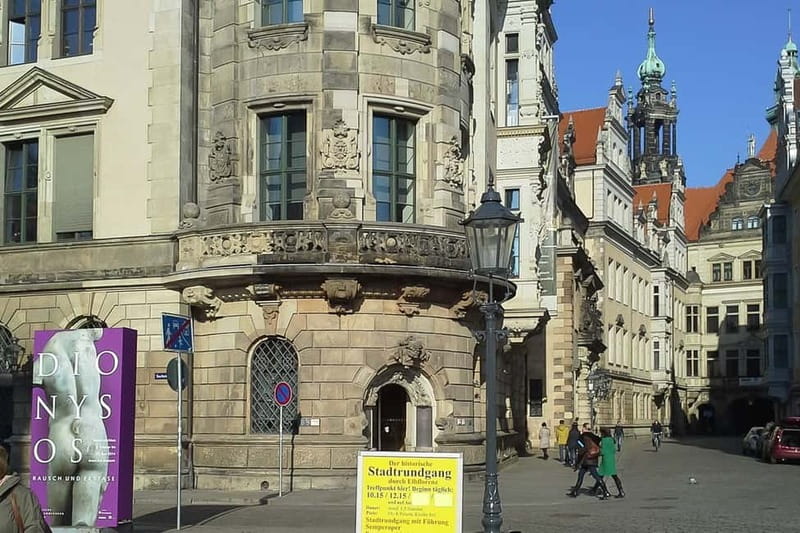
The meeting point is in front of Dresden Castle, at the corner of Schlossstraße and Taschenberg, under the sign. Arrive with enough time to locate the exact corner, since large historic squares can be confusing when several streets meet.
Dresden Castle is the right place to begin because it ties together Saxony’s rulers, art collections, royal ceremonies, and city planning. The tour includes a short guided section at the castle. That is not the same as a complete museum visit, so you should not book this walk expecting access to every collection or interior room.
The castle area gives you an early look at the mixture of styles found across Dresden. Royal power, religious buildings, ceremonial courtyards, and grand public architecture all sit within a compact area. As the guide explains Augustus the Strong, the buildings become easier to read as parts of one ambitious courtly project.
Augustus is a natural character for this tour. His reign is closely tied to Dresden’s Baroque image, and the guide uses stories about him to add personality to the stonework. Expect historical explanation mixed with amusing details rather than a dry list of construction dates.
For me, that storytelling is one of the tour’s best features. A guide who explains why a ruler wanted a certain kind of city helps you remember the places long after the names have blurred together.
The Fürstenzug and the castle’s stable yard
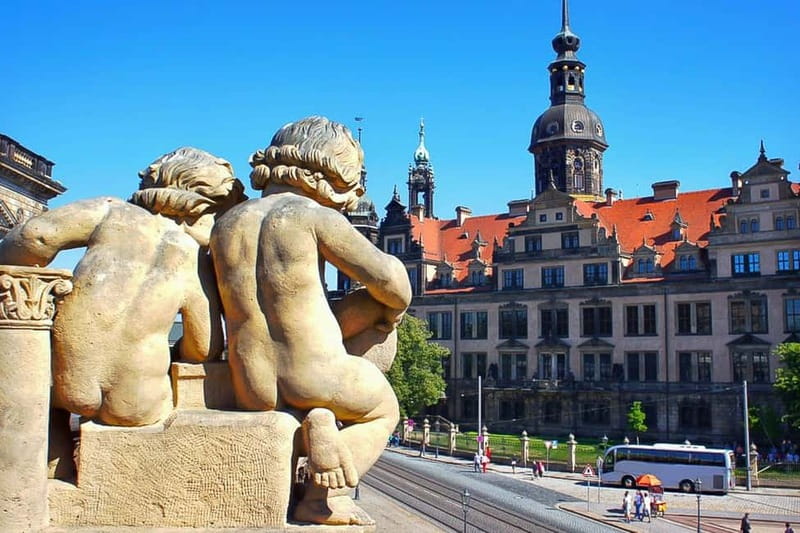
From the castle, the route continues to the Fürstenzug, one of Dresden’s most recognizable historical displays. The long mural presents Saxon rulers in a procession, giving you a visual introduction to the dynasty that shaped the region.
This is a good stop for a guide because the artwork can otherwise become a quick photo pause. You will get more from it if you understand what the procession represents and why it matters to Saxon history. The guide also helps connect the figures on the wall to the castle and the wider royal district.
The walk then reaches the stable yard of Dresden Castle. Courtyards can be easy to overlook when you are moving between famous landmarks, but this is where the royal setting becomes more physical. You see how the castle complex worked as a place of ceremony, residence, and service.
The Taschenbergpalais appears along the way. The tour does not promise an extended palace visit, so think of this section as an architectural and historical orientation rather than an indoor tour. You will see how several important buildings fit together around the castle quarter.
This part of the walk also gives you a useful sense of scale. Dresden’s central sights are close, but each courtyard and passage changes the mood. A good guide makes those small transitions meaningful.
Inside the Frauenkirche when the doors are open
The Frauenkirche, or Church of Our Lady, is the emotional center of the route. Its large stone dome and carefully restored exterior make it one of Dresden’s defining sights. The tour gives you the chance to see the interior too, but only when opening hours allow.
That condition is important. Church access is not guaranteed at every starting time, and religious services or other closures can affect the visit. If entering the church matters greatly to you, check the available time carefully and keep your expectations flexible.
Inside, the building offers a different experience from the broad palace spaces outside. The interior is designed for worship, and the scale of the dome becomes easier to understand from below. The guide’s role here is to provide context without turning the church into a rushed photo stop.
Dogs are not allowed inside churches, and pets are not permitted on the tour. The activity is wheelchair accessible, which makes this central stop easier to include for people who need step-free access, though the exact ease of movement can still depend on temporary conditions inside the church.
The Frauenkirche also gives the tour a useful pause. After several royal and civic buildings, you move into a place with a more focused religious purpose. That change helps the two-hour route avoid feeling like one long procession of palace façades.
Same city, a completely different kind of day:
- Dresden: Semperoper Tickets and Guided Tour
★ 4.7 · 12,102 reviews - Dresden: The Original Night Watchman Tour in Lantern Light
★ 4.6 · 6,653 reviews - Dresden: Semperoper and Old Town Tour
★ 4.8 · 5,735 reviews - Dresden: River Sightseeing Boat Cruise
★ 4.3 · 5,323 reviews
The Zwinger, Dresden’s Baroque showpiece
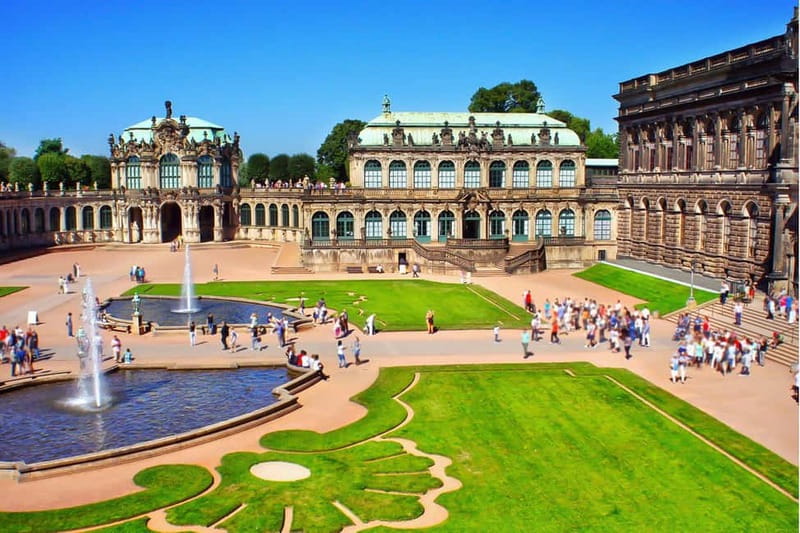
No first walk through central Dresden should skip the Zwinger. This late Baroque complex is one of the city’s most elaborate architectural set pieces, with formal courtyards, sculptural detail, and a strong sense of ceremony.
The tour includes a guided visit to the Zwinger area, but the admission fee is not included. You should understand the difference between a guided look at the complex and a museum visit. The tour helps you appreciate the architecture and layout, while a separate museum ticket would be needed for the collections housed there.
I like this arrangement for a short orientation. You can see the Zwinger’s main spaces and learn why it was built without committing several more hours to indoor galleries. If you already know you want the museums, plan a separate visit when you can take your time.
The Zwinger is also a good place to pay attention to small details. Look up at the sculpture and decorative work rather than focusing only on the broad courtyard. The guide’s background about Dresden’s Baroque period helps explain why the building feels so theatrical.
Because no entrance to the Zwinger is included, the $15 price remains easy to understand. You are paying for the walking tour and live explanation, not a bundled museum pass. That keeps the cost low, but it also means you should budget separately if you want to explore the collections.
Ending at the cathedral and Semper Opera House
The walk ends at Theater Square, where the cathedral and Semper Opera House face one another as two of Dresden’s most important landmarks. This is a strong finish because the square gathers religion, music, court culture, and civic life in one view.
The cathedral gives the square a grand vertical presence and adds another layer to the story of Dresden’s rulers and institutions. The Semper Opera House represents the city’s musical and cultural identity. You will see the opera house from outside, but admission is not part of this activity.
That distinction is useful when planning the rest of your day. If you want a performance, guided interior visit, or museum collection, arrange it separately. The historical walk gives you the setting and context, then leaves you free to return later without spending more time than you want.
Although the listed end point is Theater Square, the activity finishes back at the meeting point according to the tour details. Confirm the exact return arrangement with the guide at the start, especially if you have a timed booking afterward.
The route’s ending also makes sense as a recap. You have moved from the royal castle through the old center and arrived at a square where Dresden’s major public buildings come together. The city’s Baroque ambition is easiest to grasp from here.
What the German-language format means for you
The live tour is conducted in German, and that should be the first practical question you ask yourself. If you understand conversational German, you can expect a detailed spoken explanation, including the background and amusing stories that make the walk more than a sightseeing checklist.
If you do not understand German, the architecture will still be there, but you will miss much of the value. This is not an audio guide with multiple language options. The supplied language is German, and no English-language version is listed.
The guide’s storytelling is the part most likely to make the experience worthwhile. The strongest praise focuses on clear narration and plenty of background information. That tells you where the tour puts its effort: spoken history, context, and connections between the sights.
The provider is Touristik-Service Dresden Natalie Blau. No individual guide name is supplied, so you should not book expecting a particular named guide. What is clear is that the experience includes a live German-speaking guide rather than a self-guided route.
Is $15 a fair price for two hours?
Yes, provided you want orientation rather than full admission to Dresden’s museums. At $15 per person, the tour offers a low-cost way to see the city’s central landmarks with a historical thread tying them together.
The price includes the walking tour, German-speaking guide, short guided castle tour, and guided Zwinger visit. It does not include museum admission, entry to the Zwinger museums, or entry to the Semper Opera House. Frauenkirche access depends on opening hours rather than a guaranteed ticket.
That makes this especially useful on a first day in Dresden. You can learn the layout, identify the buildings you want to revisit, and then spend your remaining time inside the places that interest you most.
The walk also offers free cancellation up to 24 hours before the start time, and you can reserve now and pay later. Those terms help if your schedule is still shifting, though they should not replace checking the exact start time before you book.
Who should book this Dresden walk?
I would choose this tour if you want a short, affordable introduction to Dresden’s historic center and you understand German. It suits first-time visitors, architecture fans, and anyone who wants the major sights explained in one connected route.
It is also a good choice if you prefer stories over museum interiors. You will hear about Augustus the Strong, Saxon history, and Dresden’s Baroque period while seeing the main buildings up close.
I would choose something else if you need English, want extensive time inside the castle or Zwinger museums, or hope to tour the Semper Opera House. Those are reasonable goals, but they are outside this activity’s scope.
The tour is wheelchair accessible, and pets are not allowed. Since the walk covers historic streets and several major public buildings, wear comfortable shoes and allow time around the two-hour schedule, though the supplied information does not specify the exact walking distance.
Should you book it?
Book it if your priority is a clear German-language overview of Dresden’s royal center at a modest price. The route covers the city’s essential Baroque sights, and the guide’s storytelling adds the background that façades alone cannot provide.
Skip it if you need an English tour or guaranteed entry to the Frauenkirche, Zwinger museums, castle collections, or Semper Opera House. For German speakers, though, this is a practical way to meet Dresden through its grandest buildings and its most colorful ruler.
FAQ
How long does the historical Dresden tour last?
The tour lasts two hours. Starting times vary, so check availability when booking.
Where does the tour begin?
It begins in front of Dresden Castle, at the corner of Schlossstraße and Taschenberg, under the sign.
Where does the tour end?
The activity ends back at the meeting point.
What language is the tour conducted in?
The live tour is conducted in German, with a German-speaking guide.
Is the Frauenkirche included?
The tour includes a visit to the Frauenkirche when opening hours allow. Entry is not guaranteed at every starting time.
Can I visit the Zwinger museums during the tour?
The guide provides a guided tour of the Zwinger area, but entrance to the Zwinger and its museums is not included.
Is the Semper Opera House included?
The Semper Opera House is viewed during the walk, but entrance is not included.
Is the tour wheelchair accessible?
Yes, the activity is listed as wheelchair accessible.
Are pets allowed?
No. Pets are not allowed, and dogs cannot enter the churches.
Just added in Dresden
- Test Drive Electric Vehicles from the VW brand (ID. model)★ 4.8 · 190 reviews
- SRF CoBi | City Tour by ConferenceBike★ 4.7 · 38 reviews
- Dresden: Scavenger Hunt to Elbe River & Castles★ 4.7 · 15 reviews
- Dresden: Bike Rental – City Bike with Option Children Seat★ 4.5 · 13 reviews
- Private trip from Prague to Dresden, Moritzburg & Meissen★ 5.0 · 5 reviews
- Moritzburg: Scavenger Hunt Self-Guided Walking Tour★ 4.8 · 12 reviews
- Historical tour of the old town including a Saxon dinner★ 4.7 · 23 reviews
- Climb the mountains together with goats★ 4.8 · 8 reviews
Historical Tours, compared.
City History Canal Sightseeing Tour on a Motorboat
Read our review →



Browse the lists this tour appears in