
Reviewed · BERLIN WALL AND COLD WAR TOURS
Berlin: Cold War Era History Guided Bike Tour
Berlin’s Cold War story makes far more sense when you follow the old border by bicycle. This route links Mauerpark, Bernauerstraße, Checkpoint Charlie, a surviving watchtower, and Brandenburg Gate, while your guide explains how a concrete barrier split homes, streets, and families for nearly three decades.
I like the easy 15-kilometer pace and the way the tour uses bike paths and quieter streets to cover ground without turning into a workout. I also like the human scale of it: guides such as Paul, Lauren, Oleg, Anna, and Andy have been praised for clear stories, humor, patience, and useful photos or diagrams.
The main drawback is that this is still a city ride. Road closures, races, or other events can force a route change, and a large group may take longer to gather and cross streets. You’ll also need to feel comfortable on a bicycle and wear practical clothes.
Key points to know before you book

- Follow the former Wall line: Visit Wall remains, former border crossings, escape sites, and one of the last watchtowers.
- Cover 15 kilometers at a relaxed pace: The ride is designed for sightseeing rather than speed.
- See more than the Wall: The route includes Brandenburg Gate, Checkpoint Charlie, Mauerpark, Bernauerstraße, and Kulturbrauerei.
- Choose from a large bike fleet: You can select a bicycle that suits you, with helmets and gloves available on request.
- Expect strong storytelling: Guides including Paul, Lauren, Oleg, Anna, and Andy have led tours praised for humor, detail, and clear English.
- Start and finish at Kulturbrauerei: The depot is a short U-Bahn ride from Alexanderplatz.
Why a bike is the right way to see Berlin’s Wall story
Berlin is spread out, and the former Wall did not follow one neat tourist corridor. By bicycle, you can connect the northern border areas with central landmarks in one morning or afternoon. Walking the same route would take much longer, while a bus would leave you with less freedom to stop at small Wall remains and former crossing points.
The ride covers about 15 kilometers, but the pace is relaxed. That matters because the value here comes from stopping, listening, and asking questions. You are not simply ticking off monuments. You are following the old line of division and seeing how it cut through ordinary parts of the city.
The cycling itself is not presented as a sporting challenge. Past groups have found the route comfortable, and the guides have been able to keep large groups together while adjusting the route when needed. Still, you should be happy riding in an urban setting. Bring comfortable shoes and clothes, and remember that Berlin’s streets can be busy even when the route uses bike paths.
More Bike Tours in Berlin
- Berlin: Sights and Highlights Bike Tour with a Local Guide
★ 4.8 · 2,698 reviews - Berlin Highlights 3-Hour Bike Tour
★ 5.0 · 948 reviews - Berlin City Bike Tour with Beer Garden Stop
★ 5.0 · 917 reviews
Starting inside Prenzlauer Berg’s Kulturbrauerei
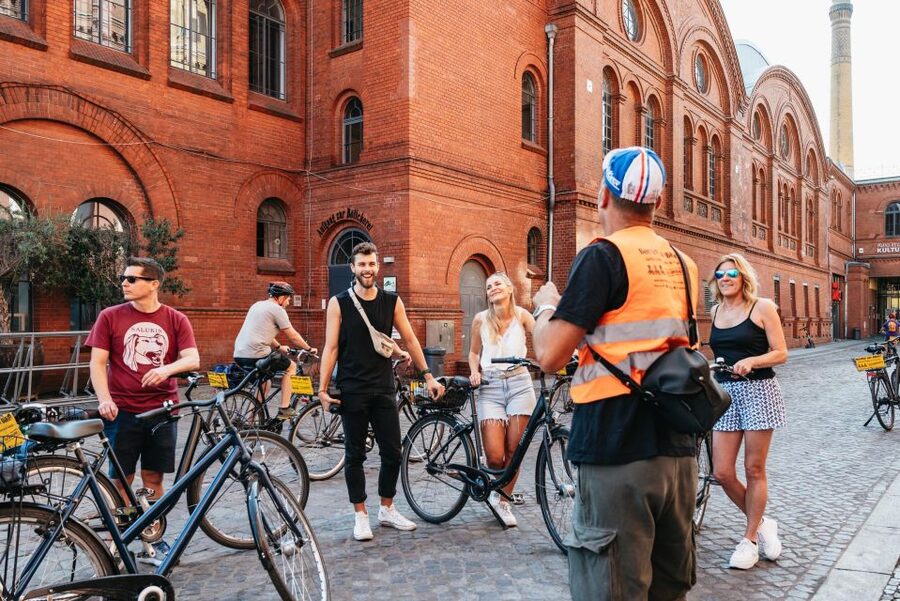
The tour begins at the Berlin on Bike depot inside Kulturbrauerei, a handsome 19th-century brewery complex in Prenzlauer Berg. It is a more atmospheric starting point than a generic storefront, and the setting gives you an immediate sense of Berlin’s ability to reuse old industrial spaces.
Getting there from Alexanderplatz is simple. Take the red U2 toward Pankow for three stops and leave at Eberswalder Straße. Use the exit marked for Kulturbrauerei, walk along Danziger Straße for about 150 meters, turn onto Knaackstraße, and enter through the large doorway. Yellow signs point you to the bicycle depot.
Allow enough time to find the entrance. The depot is inside the complex rather than directly on the main street, and arriving rushed is a poor way to begin a bike tour. At the shop, you can choose from a broad selection of bicycles. Helmets and gloves are available if you request them, and the staff can help you find a suitable bike.
One useful tip comes from the practical side of the setup: test the brakes and gears before leaving. A past participant specifically noted that coaster brakes can feel unfamiliar if you are used to hand brakes. Choose the bike that feels natural to you, not simply the one that looks best.
Mauerpark and Bornholmerstraße: where the border became personal
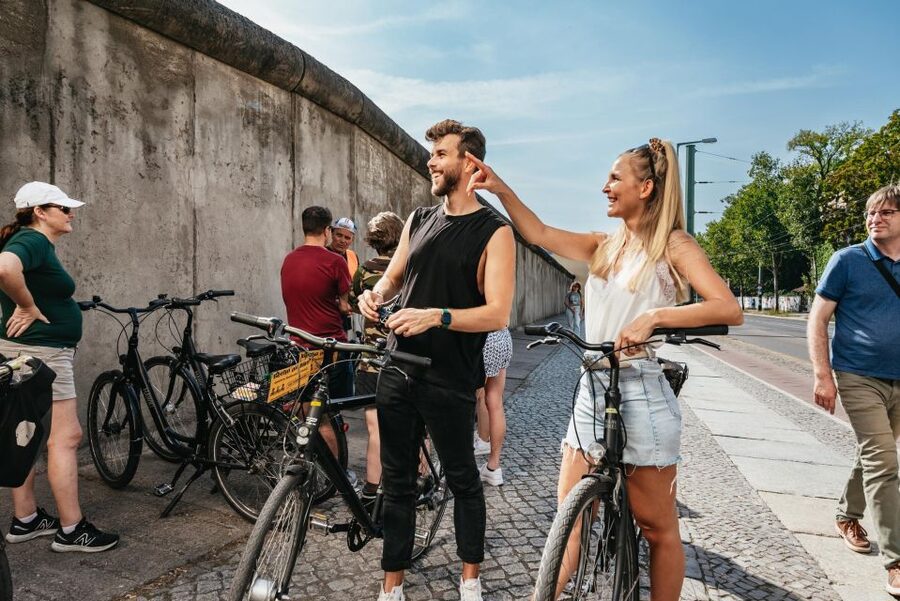
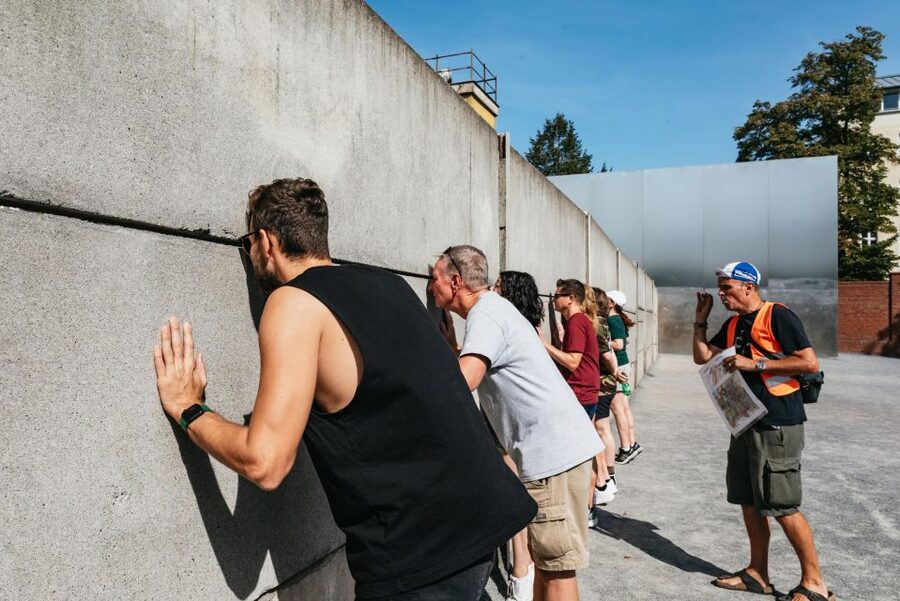
From Kulturbrauerei, the ride heads toward Mauerpark and the former border around Bernauerstraße. This area is especially useful for understanding that the Wall was not just a line between two political systems. It ran through neighborhoods and changed the daily lives of people who lived beside it.
Mauerpark occupies part of the former border zone. Its name refers to the Wall, and the open space helps you picture how the area once functioned as a controlled strip rather than a public park. Your guide can add the political background, but the physical setting does much of the work. The route shows you how a place once designed to divide people has been given a new public life.
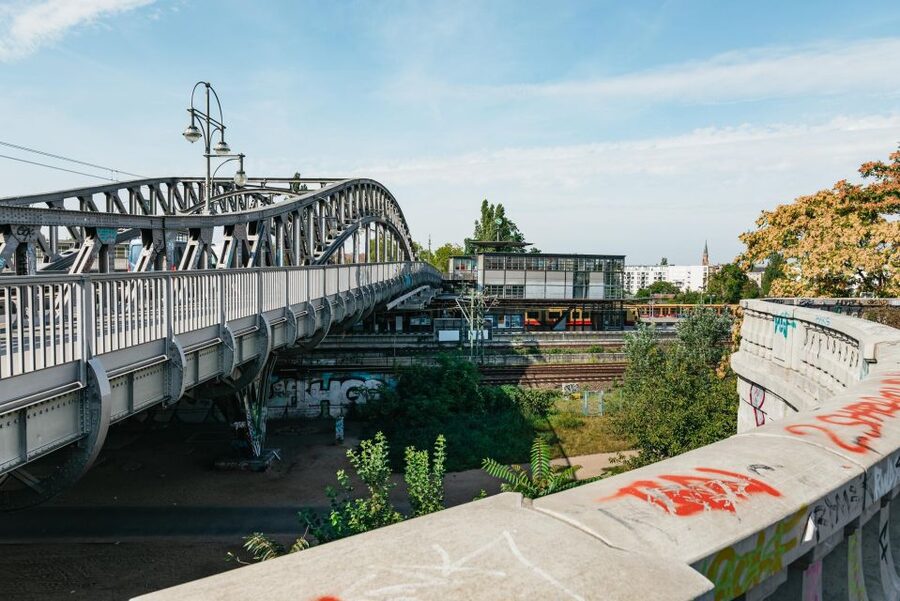
At Bornholmerstraße, the story turns toward the border crossings and the Wall’s final hours. This was one of the places where the border opened on the night of November 9, 1989. The important detail is not only that the Wall came down, but how quickly a system that had shaped Berlin for almost 30 years began to fail.
This is one of the tour’s strongest sections because the bicycle lets you move through several connected sites without losing the thread. You can ask questions as you go, and guides have been praised for explaining the political events alongside personal stories of escape, separation, and reunion.
Bernauerstraße and the human cost of the Wall
Bernauerstraße is one of the most powerful stops on the route. The Wall once ran directly beside apartment buildings here, producing scenes that remain central to Berlin’s Cold War story. Windows, doorways, and entire buildings became part of the border problem.
The area helps you understand why escape attempts were so dangerous. A person might live in the East but have a doorway or family connection on the other side. The border was not an abstract line on a map. It could appear outside a bedroom window or at the end of a familiar street.
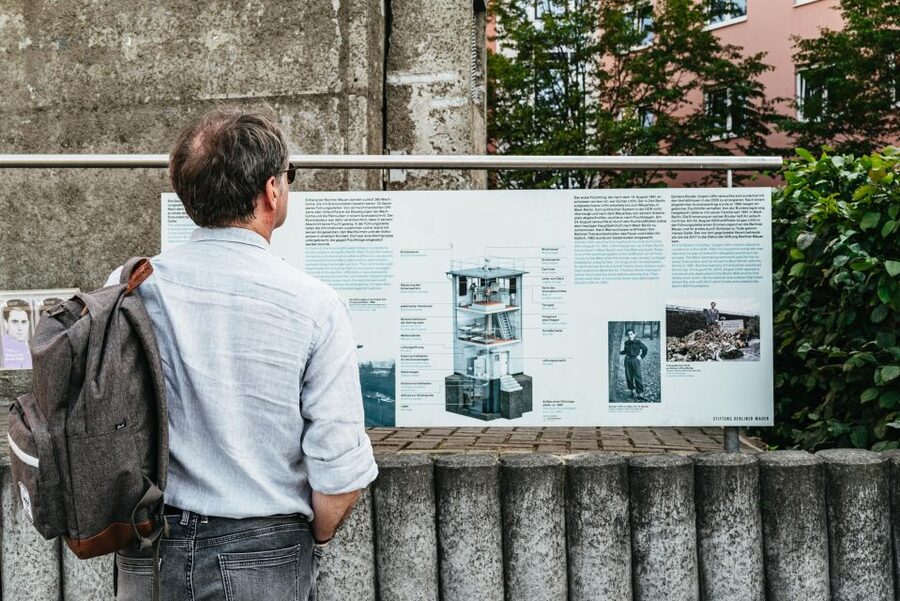
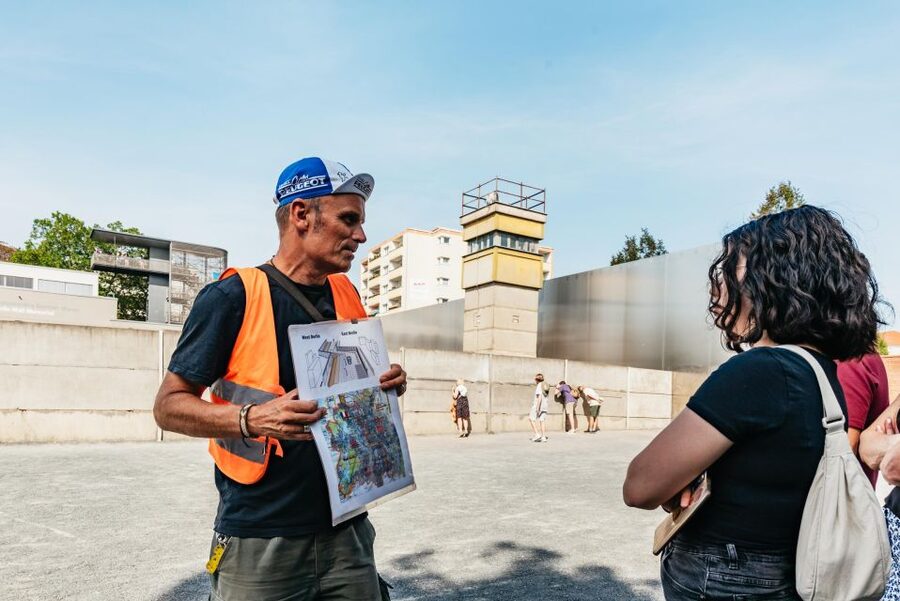
Your guide will also explain successful and tragic attempts to get across. That subject can be heavy, but the cycling pace allows time to take in the details rather than rushing from one display to the next. A guide may use photos or diagrams to show how the Wall changed over time and how people tried to get through, over, or under it.
If you want a full museum visit at Bernauerstraße, plan that separately. This tour focuses on the outdoor sites and the broader route, so you should not expect a long indoor exhibition stop. The advantage is that you see several parts of Berlin in one outing. The tradeoff is less time at any single memorial.
More History Tours in Berlin
- Berlin: Natural History Museum Entrance Ticket
★ 4.6 · 3,382 reviews - Berlin Historical Highlights Walking Tour
★ 4.9 · 657 reviews - Berlin Private Complete History All Day Walking Tour
★ 5.0 · 474 reviews - Berlin: Historic Boat Sightseeing City Center Tour
★ 4.5 · 415 reviews
Checkpoint Charlie and the Cold War symbols
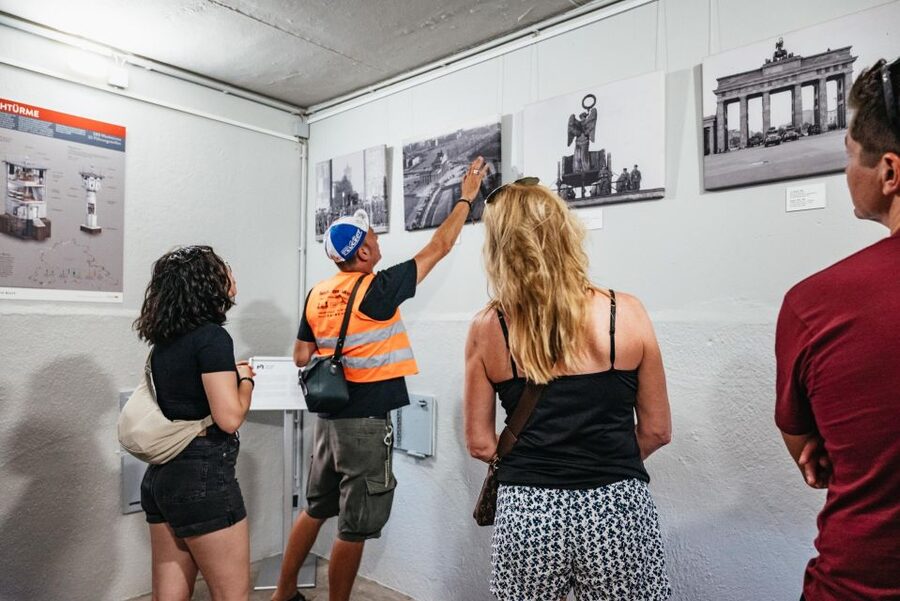
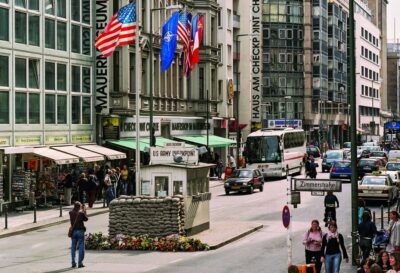
The route continues to Checkpoint Charlie, probably Berlin’s best-known Cold War crossing point. The name sounds dramatic because the location became a major symbol of the confrontation between the United States and the Soviet Union. Today, the surrounding area is heavily visited, and the surviving checkpoint structure is not a complete preserved border scene.
That makes a guide especially useful. Without context, Checkpoint Charlie can feel like a quick photo stop. With a clear explanation, you can understand its role as one of the crossing points between East and West Berlin, and why it became tied to military tension, espionage stories, and escape attempts.
The tour also includes one of the last remaining watchtowers. This is an important contrast with Checkpoint Charlie. The famous crossing is a symbol, while the watchtower gives you a more direct sense of the machinery used to control the border.
I appreciate that the route does not treat the Wall as a single attraction. You see fragments, former crossings, open spaces, street lines, and surviving structures. Together, these pieces show how much of the original barrier has disappeared and how much of its route still shapes Berlin.
Reaching Brandenburg Gate by bicycle
The ride from Mauerpark and Bernauerstraße toward Brandenburg Gate gives the tour a strong finish. Brandenburg Gate began as an 18th-century royal entrance, but it later became one of the clearest symbols of Berlin’s division. During the Cold War, it stood near the Wall and was inaccessible to ordinary people on both sides.
Today, the gate is one of Berlin’s most photographed sights. The guide’s historical explanation helps you see more than its columns and famous chariot sculpture. You learn why this old city entrance became tied to the divided capital and why its image gained fresh meaning after the Wall opened.
Arriving by bike is also practical. You do not need to build a separate walking route between northern Wall sites and central Berlin. You can stop, listen, take photographs, and then ride back to the depot.
The route finishes at the original meeting point, so you do not need to arrange transport from a distant final stop. That is helpful if you have a later museum booking or want to continue exploring Prenzlauer Berg after the tour.
Guides, group pace, and the quality of the storytelling
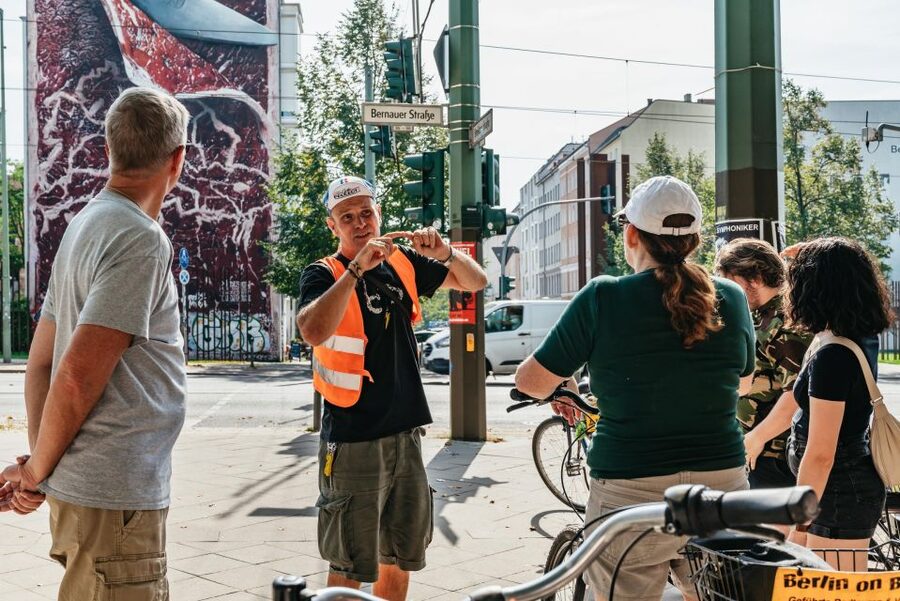
The strongest part of this activity is the guide. Names associated with past departures include Paul, Paul T, Lauren, Oleg, Anna, Ana, Andy, Geoff, James, Almar, and Guv. You cannot choose a particular guide unless a private booking or availability allows it, but the range of praise points to a consistent focus on storytelling and questions.
The best guides on this route do more than recite dates. They explain how the Wall affected ordinary Berliners, why escape attempts worked or failed, and how the border opened so suddenly. Paul has been praised for keeping a large group together and changing the route when circumstances required it. Lauren and Anna have been noted for making the Wall’s stories clear and personal. Oleg and Almar have been described as especially strong on historical detail.
A relaxed pace also gives guides room to be flexible. One group had a rest stop where people could get coffee, sandwiches, and use the restroom. Treat that as a possible feature rather than a guaranteed scheduled stop, since the route can change with traffic, events, and the guide’s judgment.
Private groups are available. That may be worthwhile if your party wants a slower pace, has specific questions, or prefers to avoid the rhythm of a larger group. For most visitors, though, the regular tour offers good value because the price is modest and the route covers a wide section of Berlin.
What $35 buys you
At $35 per person, this is a strong-value introduction to Berlin’s Cold War sites. The fee includes the bicycle and guide, while helmets and gloves are available on request. Sunscreen, trouser clips, and rain ponchos are also provided as needed.
The value is not just the bike rental. A bicycle for several hours would give you mobility, but it would not explain why Bornholmerstraße mattered, how Bernauerstraße changed, or why Brandenburg Gate carried such political weight. The guide connects the sites into one story.
You are also covering a substantial distance without paying for separate transport between stops. If you tried to visit all these areas independently, you would spend time planning transit and reading signs. The tour trades some freedom for a clear route and live explanation.
The price looks less attractive if you want long visits inside museums or a slow photo tour. This is an active sightseeing ride, not a private historian-led walk. You are paying for coverage, interpretation, and efficient movement through the city.
Who will enjoy this ride most
I recommend this tour for first-time visitors who want a firm grasp of Berlin’s division before visiting more museums. It also suits people who find city history easier to remember when they can see the actual streets and border spaces involved.
You should book it if you:
- Enjoy learning through stories and real places
- Are comfortable cycling about 15 kilometers
- Want to see several Wall locations in one outing
- Prefer a relaxed ride to a fast group cycle
- Have limited time in Berlin
- Want an English, German, French, or Dutch-speaking guide
It may not suit you if cycling feels stressful, if you want a fully indoor activity, or if you need a tour built around long stops at each memorial. Children under eight are not accepted, and the route is best for anyone able to manage an urban bicycle ride.
The tour is also a good choice for repeat visitors. Berlin changes quickly, and the former Wall line is easy to miss when you focus only on the big central sights. This ride takes you to less obvious sections and gives you a clearer sense of how the border cut through the city.
Practical details that make the ride easier
Wear comfortable clothes and shoes. You can request a helmet and gloves, and rain ponchos are available in bad weather, but you should still check the forecast and dress for several hours outdoors.
Arrive with enough time to find the depot inside Kulturbrauerei and choose a bike. If you are unfamiliar with coaster brakes, ask for a bicycle with hand brakes or get a quick explanation before setting off.
Tours run for about 3 to 3.5 hours, with starting times depending on availability. The guide languages are English, German, French, and Dutch. The activity begins and ends at Berlin on Bike’s depot.
You can cancel up to 24 hours before the start for a full refund, and the reserve-now, pay-later option keeps your plans flexible. That is useful in Berlin, where weather and changing schedules can affect an outdoor day.
Should you book the Berlin Cold War bike tour?
Book it if you want Berlin’s Wall story explained across the actual city, not reduced to one famous checkpoint. The combination of a relaxed ride, strong guides, and a route from Mauerpark to Brandenburg Gate gives you both scale and detail.
The best reason to choose it is the balance. You cover enough ground to see how widespread the border was, but you stop often enough to understand what you are seeing. At $35, with the bike and guide included, it offers good value for an active half-day.
Skip it if you dislike cycling or need extended museum time. Otherwise, this is one of the more useful ways to get your bearings in Berlin’s divided past, especially early in your visit.
FAQ
How long does the Berlin Cold War bike tour last?
The tour lasts about 3 to 3.5 hours. Starting times depend on availability.
How far do you cycle?
You cycle approximately 15 kilometers at a relaxed pace.
Where does the tour start?
It starts at the Berlin on Bike depot inside Kulturbrauerei in Prenzlauer Berg. The nearest U-Bahn station is Eberswalder Straße.
How do I reach the meeting point from Alexanderplatz?
Take the U2 red line toward Pankow for three stops and get off at Eberswalder Straße. Follow the exit marked Kulturbrauerei, walk along Danziger Straße, turn onto Knaackstraße, and follow the yellow signs inside the complex to the bicycle depot.
What sights are included?
The route includes Kulturbrauerei, Mauerpark, Bernauerstraße, Bornholmerstraße, former Wall sections and border crossings, Checkpoint Charlie, a remaining watchtower, and Brandenburg Gate.
Is a bicycle provided?
Yes. A bicycle is included, and you can choose from a large fleet. Helmets and gloves are available on request.
Which languages are available?
The live guides can lead tours in English, German, French, or Dutch.
Is the tour suitable for young children?
The tour is not suitable for children under eight years old.
Can I cancel the booking?
You can cancel up to 24 hours in advance for a full refund. A reserve-now, pay-later option is also available.
More Berlin Wall and Cold War Tours in Berlin
- Berlin: Third Reich and Cold War 2 Hour Walking Tour
★ 4.9 · 6,830 reviews - Berlin’s Best: 2 Hour Walking Tour Third Reich and the Cold War
★ 5.0 · 5,486 reviews - Berlin: DDR Museum Tickets
★ 4.3 · 3,443 reviews - Skip-the-Line: Berlin Wall Museum at Checkpoint Charlie
★ 4.1 · 2,041 reviews
Just added in Berlin
- Berlin & The Third Reich Private Guided Tour★ 5.0 · 3 reviews
- Private Analogue Photography Experience in Berlin★ 5.0 · 3 reviews
- Third Reich Quest Experience in Berlin★ 4.5 · 7 reviews
- Berlin Urbex Adventure and History Tour★ 5.0 · 9 reviews
- The Beauty of Berlin by Bike: Private Tour★ 5.0 · 59 reviews
- Berlin: Guided Bike tour of the Berlin Wall and Third Reich★ 5.0 · 160 reviews
- Beyond Currywurst: Berlin’s Hidden Street Food & Culture Tour★ 5.0 · 100 reviews
- Berlin Third Reich & Cold War Walking Tour With A Guide★ 5.0 · 7 reviews
Berlin Wall and Cold War Tours, compared.


Berlin’s Best: 2 Hour Walking Tour Third Reich and the Cold War
Read our review →
Skip-the-Line: Berlin Wall Museum at Checkpoint Charlie
Read our review →
East Side Gallery Spree Cruise in a Solar Catamaran
Read our review →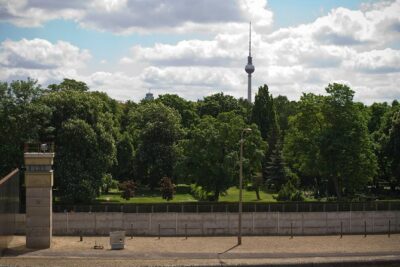
Cold War, Berlin Wall, Spies and the East Side Gallery
Read our review →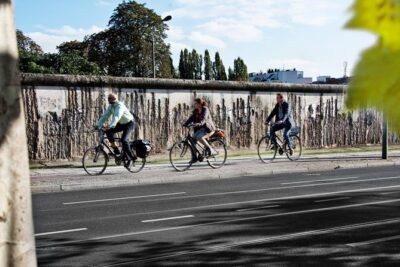
Guided Bike Tour of the Berlin Wall and Third Reich
Read our review →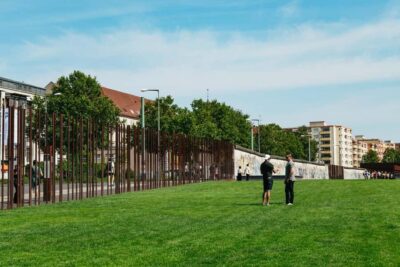
Browse the lists this tour appears in