
Reviewed · BERLIN WALL AND COLD WAR TOURS
Cold War, Berlin Wall, Spies and the East Side Gallery
Berlin’s Cold War story is most powerful when you see it at street level. This three-hour walk takes you from Friedrichstrasse and the Palace of Tears to the old death strip, East Berlin’s grand boulevards and the painted remains of the Wall. You get more than dates and political speeches. You hear about escape attempts, surveillance, family separations and what ordinary life felt like behind the border.
I like two things here: the route links major sights with less obvious traces of division, and the guides bring plenty of personal detail. Guides including Klaus, Nikolai, Paul, Jamie and Tobi have been praised for clear explanations and firsthand stories. The main drawback is the amount of ground covered, plus a required public transport ticket and a meeting-point description that you should check carefully before setting out.
Key points to know before booking
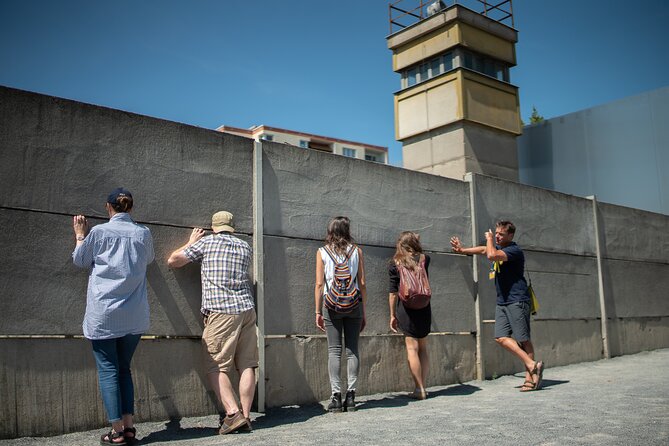
- See the Wall from the former death strip: Some of the most sobering views come from the Berlin Wall Memorial and old border zone.
- Visit the Palace of Tears: This former crossing point explains the human cost of a divided city through family separations and escape stories.
- Use Berlin public transport: A Zone AB ticket costs €10 per person and is not included.
- Finish at East Side Gallery: The tour ends beside the longest remaining painted section of the Berlin Wall.
- Expect a strong guide-led history lesson: Klaus, Nikolai, Paul, Jamie, Tobi and others are praised for answering questions and making the subject clear.
- Allow more than three hours: One guide ran over time because of questions, while another experience was criticized for poor pacing and organization.
Why Cold War Berlin makes sense on foot
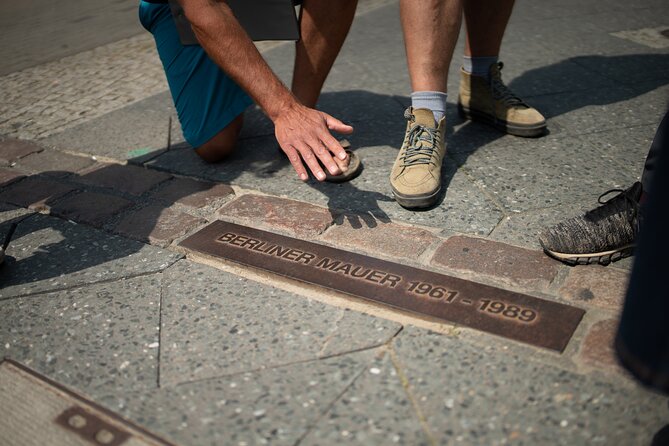
Berlin can leave you with a pile of disconnected sights: a Wall fragment here, a watchtower there, a museum somewhere across town. This route gives those places a story. You start in the center of the old divided city and gradually move toward East Berlin’s political heart, then end with the Wall transformed into public art.
The Cold War was not only a contest between the United States and the Soviet Union. It shaped where Berliners could work, whom they could visit and how safely they could speak. The tour explains the tension between NATO and the Soviet-led Eastern Bloc, then brings that large conflict down to the level of train stations, apartment blocks, border checks and police files.
That approach suits you if you want context rather than a quick photo stop. It also helps if you already know the basic Wall story and want to understand how the city functioned before and after reunification.
The group size can reach 22 people. That is small enough for a personal feel, but not so small that everyone will always be standing close to the guide. Several guides are praised for keeping groups together and answering questions. One negative experience points to a real concern: on any group tour, sound and organization can vary depending on the guide and crowd.
More Museum Tours in Berlin
- Berlin: Jewish Museum Berlin Entrance Ticket
★ 4.5 · 8,393 reviews - Berlin: DDR Museum Tickets
★ 4.3 · 3,443 reviews - Berlin: Natural History Museum Entrance Ticket
★ 4.6 · 3,382 reviews
Starting at Friedrichstrasse and the so-called ghost train
The advertised meeting area is Friedrichstrasse, a fitting place to begin. The station sat at the border between East and West Berlin and became a place of tense crossings, farewells and scrutiny. You receive an introduction to the day here, including the political setup after World War II and Berlin’s unusual role as a divided city inside East Germany.
The route includes an underground connection known as the ghost train. During the Cold War, some train lines passed beneath East Berlin while serving stations in the West. These stations were closed, guarded and largely invisible to East Berliners, creating eerie gaps in the city’s transport system.
That detail is useful because it shows how division affected ordinary movement. The Wall was not just a concrete barrier above ground. It reached into railway maps, commuting routes and daily routines.
One practical warning matters here. The information gives both Friedrichstrasse Station and Reichstagufer 17 as the meeting location. Those points are close, but you should check the exact confirmation map and arrive at least 15 minutes early. A missed start is especially costly on a tour that uses public transport.
Admiralspalast and the birth of East Germany’s ruling party
The short stop at Admiralspalast marks the founding of the SED in 1946. The party became the main political force of East Germany, formally known as the German Democratic Republic.
You will not spend long here, but the stop helps explain how Soviet influence turned into a one-party state. This is not a grand museum visit. It is a street-level history lesson, with the guide using the building and its setting to connect postwar politics with the system that followed.
That format works best when you listen closely. A good guide can make five minutes useful. Guides such as Klaus, Maria and Cameron have been praised for giving clear background before moving on. If your guide is less structured, this brief stop may feel thin.
The Palace of Tears and the personal cost of the Wall
The Tränenpalast, or Palace of Tears, is one of the strongest stops on the route. Located at Friedrichstrasse Station, it was a border crossing where people said goodbye after visits between East and West Berlin. Many farewells were not temporary in any comfortable sense. Families could be separated by a political system that controlled who could leave and who could return.
Today, the building contains a museum with displays on border procedures, escape attempts, separation and reunification. Admission is free as part of the visit. The setting is important because the emotion here comes from real movement through a controlled space, not from an abstract lecture.
I would give this stop your full attention. The grand monuments in Berlin often get the photographs, but the Palace of Tears explains what division felt like inside a family. It also offers a useful pause after the opening discussion of military blocs and political power.
The listed stop lasts about 20 minutes. That is enough for an introduction, but not enough for a slow museum visit. If you want to read every display in detail, plan to return on your own.
More Berlin Wall and Cold War Tours in Berlin:
- Berlin: Third Reich and Cold War 2 Hour Walking Tour
★ 4.9 · 6,830 reviews - Berlin’s Best: 2 Hour Walking Tour Third Reich and the Cold War
★ 5.0 · 5,486 reviews - Skip-the-Line: Berlin Wall Museum at Checkpoint Charlie
★ 4.1 · 2,041 reviews - Berlin: East Side Gallery Spree Cruise in a Solar Catamaran
★ 4.0 · 1,039 reviews
Alexanderplatz, where East Berlin met daily life
Alexanderplatz was the main public square of East Berlin. It served as a setting for official rallies and communist symbolism, but it was also a place for shopping, meetings and everyday errands. That mix makes it a useful stop for understanding how ideology and ordinary life occupied the same space.
Here, the guide explains the visible side of the GDR: monumental buildings, socialist planning and public messages about the state. Just as important is the quieter side: surveillance, limits on speech and the need to be careful about what you said and to whom.
The tour’s treatment of CIA, KGB and Stasi methods adds a spy-story angle, but the better value is the connection to real life. Surveillance was not only a matter of dramatic agents and secret exchanges. It could affect employment, travel, friendships and family trust.
You spend about 15 minutes at Alexanderplatz. That is a good introduction, not a full architectural tour. If you are especially interested in East German design or urban planning, you may want to return later.
Karl-Marx-Allee and the showpiece of socialism
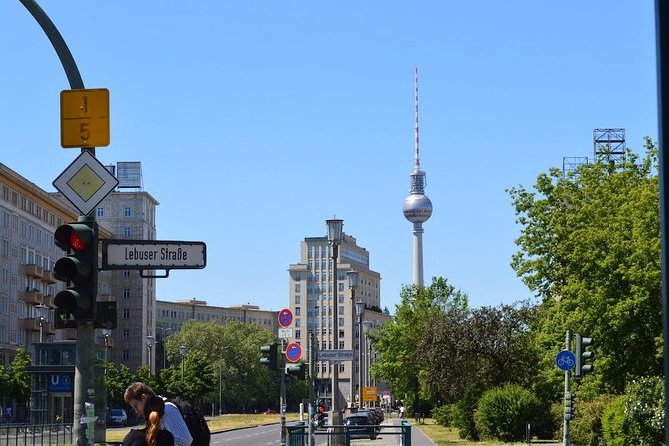
Karl-Marx-Allee was East Germany’s grand showcase boulevard. Its broad scale and monumental Stalinist buildings were designed to project order, power and success. The architecture tells you how the state wanted East Germany to appear, both to its own people and to the outside world.
The guide uses this avenue to discuss the gap between official presentation and daily reality. Large buildings and political slogans could suggest strength, while shortages, restrictions and fear shaped private life. That contrast is one of the most useful themes of the whole walk.
The stop lasts about 20 minutes. The listing notes that admission is not included, though the experience appears to focus on seeing and discussing the boulevard rather than entering a major paid site. Ask your guide if you are unsure what, if anything, requires a separate ticket.
This section also adds variety to the route. You are not looking only at surviving Wall segments. You are seeing the city the GDR built, then learning how architecture served a political message.
The Wall Memorial and views across the death strip
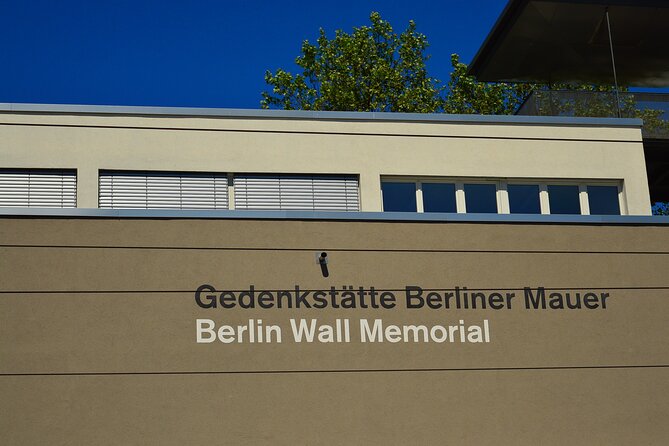
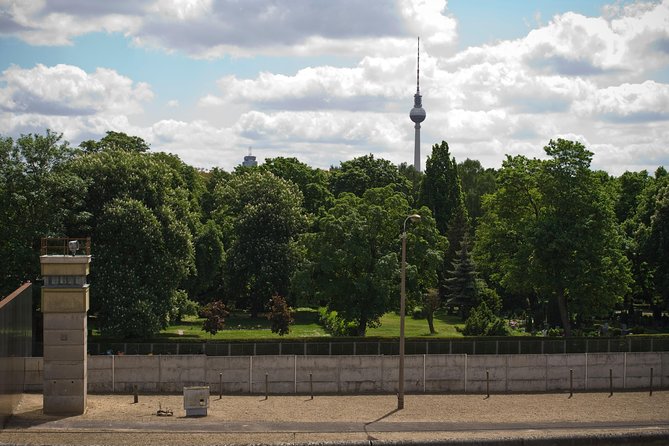
The old death strip is where the tour becomes especially stark. At the Berlin Wall Memorial, you can see surviving parts of the border system and understand the space between East and West as more than a single wall.
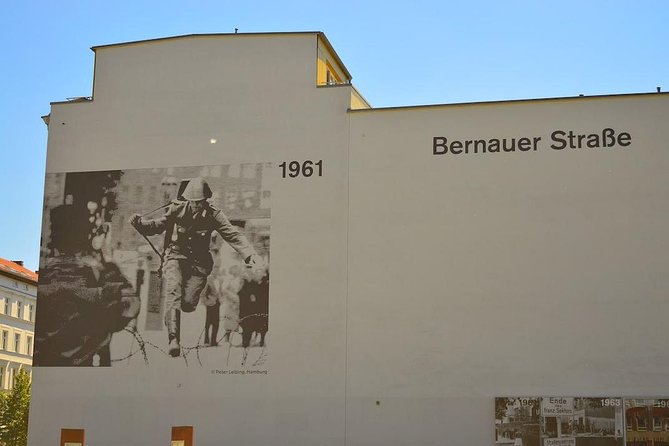
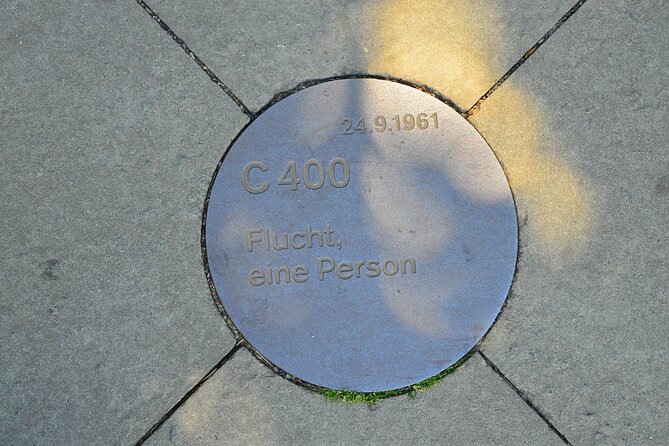
Escape attempts along Bernauer Strasse are a key part of the story. People tried to flee through tunnels, windows, hidden compartments and other risky routes. Some succeeded. Others were caught or killed. The guide explains how barriers, patrols and surveillance worked together.
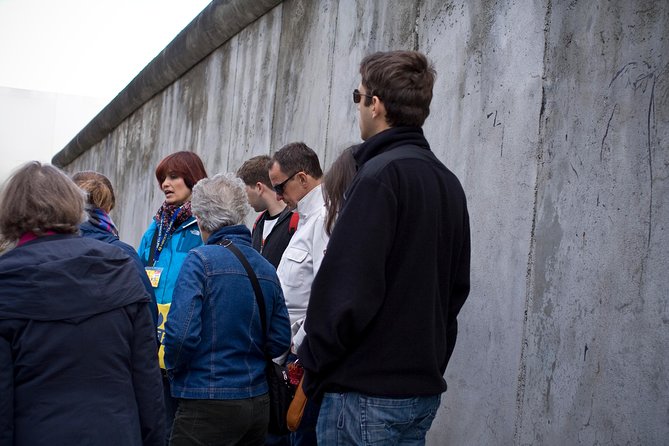
One of the most affecting details comes from viewing the western side of the Wall through an opening from the eastern side, across the former death zone. That angle helps you grasp the physical separation in a way a restored Wall panel cannot. It is a quiet, sobering moment rather than a dramatic attraction.
The tour also covers the former Stasi, East Germany’s secret police. You learn how the state gathered information and watched its own citizens. This is where the spy theme connects directly to homes, workplaces and personal relationships.
The route does not appear to include a full Stasi museum visit. If the secret police are your main interest, add the Stasi Museum separately, as one guide specifically suggested. The walking tour gives you the framework. A longer museum visit can supply the documents and objects.
Brandenburg Gate and the meaning of a changed symbol
The walk includes the Brandenburg Gate, one of Berlin’s best-known monuments. During the Cold War, it symbolized division because it stood within the restricted border zone. After reunification, it became a national symbol of peace and unity.
That change in meaning is exactly why the stop belongs on a Cold War route. The gate itself did not move. Berlin changed around it. A guide can use the site to explain how the same monument carried different messages under Nazi rule, communist rule and reunified Germany.
The stop also gives you a chance to connect the city’s longer story with the Cold War. The tour begins with Berlin’s earlier development, then moves through war, occupation, division and reunification. That wider frame helps keep the Cold War from feeling like an isolated chapter.
East Side Gallery, where concrete became a canvas
The tour ends at East Side Gallery, a long surviving section of the Berlin Wall covered with murals. Once part of a deadly border, it now carries paintings about freedom, hope, resistance and the end of division.
This is a fitting final stop because it changes the mood. The earlier Wall sites focus on control and danger. East Side Gallery shows how the same structure was claimed by artists and the public after the border opened.
You get about 25 minutes here. That is enough to see several famous works and hear why the gallery matters, but not enough for a slow look at every painting. The route ends at Mühlenstrasse, close to many public transport options, so you can continue your day without returning to central Berlin.
Keep in mind that the murals are exposed to weather and wear. The value lies in seeing the whole stretch as a public statement, not in treating it like a pristine art museum.
What the guides add to the experience
The subject is serious, but the best guides keep it human and easy to follow. Klaus is praised for an encyclopedic grasp of the Cold War, an easy style and patience with questions. Nikolai brings personal family connections to the Iron Curtain, while Tobi has spoken about growing up in East Germany.
Paul uses photographs on an iPad to show how places looked during the divided years. Cameron is described as a historian with real passion for Berlin, and Jasper is praised for pacing, group control and helping people understand familiar sights in a new way. Jamie, Ariel, Maria, Tina, Rohan, Eran, Aran, Glen, Grayson and James are also singled out for clear explanations, lively storytelling or careful answers.
That range is encouraging, but it also shows why your exact experience can vary. One negative account described weak structure, poor audibility, missed sites and too much time spent on guessing games. If you have trouble hearing, move near the guide and speak up early. A small group and an engaged guide make this tour much better.
Price, transport and the real value
At $18.04 per person, the tour is priced below many long guided city walks. The local expert guide is included, and the route covers several major Cold War sites across central and eastern Berlin.
You must buy a Berlin AB Zone transport ticket separately. The stated price is €10 per person. Since the route uses public transport, this is not an optional extra in practical terms. Add it when comparing the total cost with other walking tours.
The value is strongest if you want interpretation. You can visit the East Side Gallery or Brandenburg Gate alone, but you will not automatically understand the old border layouts, the closed train stations, the Stasi system or the human stories connected with them.
The tour is usually booked about 31 days ahead, so reserve early if your Berlin dates are fixed. Free cancellation is available up to 24 hours before the start time. After that, changes and refunds are not accepted.
Who should book this Cold War walk
I would choose this tour if you want a clear introduction to divided Berlin in one morning. It suits history-minded adults, families with older children and anyone who prefers stories tied to real places.
It is also a good choice if you want to combine famous sights with less obvious history. The Palace of Tears and the former death strip carry more emotional force than a standard city-center sightseeing route.
You may want something else if you dislike walking, public transport or group pacing. You should also choose a longer museum-based experience if you want detailed Stasi documents, military history or a slow study of East German architecture.
FAQ
How long does the Cold War Berlin tour last?
The tour lasts approximately three hours, though the exact finish can vary. One guide continued beyond the planned length to answer questions.
Where does the tour begin?
The meeting information gives Reichstagufer 17 in Berlin and also identifies Friedrichstrasse Station as the meeting area. Check your booking confirmation for the exact map pin and arrive 15 minutes early.
Where does the tour end?
The tour ends at East Side Gallery on Mühlenstrasse, 10243 Berlin. The area has several public transport choices for continuing your day.
Is public transportation included?
No. You need a Berlin Zone AB transport ticket, listed at €10 per person. The tour uses Berlin’s public transport system during the route.
Is the tour offered in English?
Yes. The experience is offered in English and includes a local expert guide.
What is included in the price?
The local expert guide is included. Hotel pickup and drop-off, food, drinks and the Berlin transport ticket are not included.
Can I cancel for a full refund?
Yes, if you cancel at least 24 hours before the scheduled start time. Cancellations or changes made less than 24 hours before the start are not refunded or accepted.
Should you book it?
Book this walk if you want Berlin’s Cold War story explained through border stations, family separations, escape routes, surveillance and changing monuments. The route is affordable, the East Side Gallery finish is well chosen and the strongest guides bring real warmth and personal detail to a difficult subject.
Before booking, confirm the meeting point, add the €10 transport cost and be ready for a brisk, guide-led morning. If those conditions suit you, this is a smart way to understand why Berlin’s Wall was far more than concrete, and why its traces still matter.
Just added in Berlin
- Berlin & The Third Reich Private Guided Tour★ 5.0 · 3 reviews
- Third Reich Quest Experience in Berlin★ 4.5 · 7 reviews
- Private Analogue Photography Experience in Berlin★ 5.0 · 3 reviews
- Berlin Urbex Adventure and History Tour★ 5.0 · 9 reviews
- The Beauty of Berlin by Bike: Private Tour★ 5.0 · 59 reviews
- Berlin: Guided Bike tour of the Berlin Wall and Third Reich★ 5.0 · 160 reviews
- Beyond Currywurst: Berlin’s Hidden Street Food & Culture Tour★ 5.0 · 100 reviews
- Berlin Third Reich & Cold War Walking Tour With A Guide★ 5.0 · 7 reviews
Berlin Wall and Cold War Tours, compared.

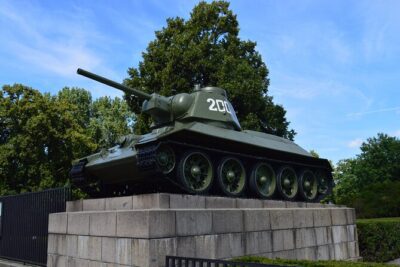
Berlin’s Best: 2 Hour Walking Tour Third Reich and the Cold War
Read our review →
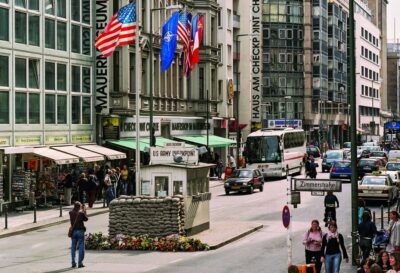
Skip-the-Line: Berlin Wall Museum at Checkpoint Charlie
Read our review →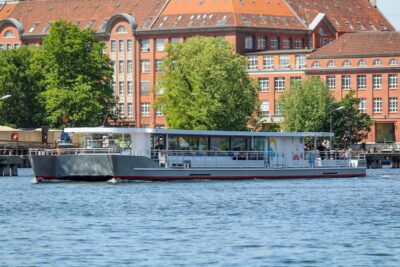
East Side Gallery Spree Cruise in a Solar Catamaran
Read our review →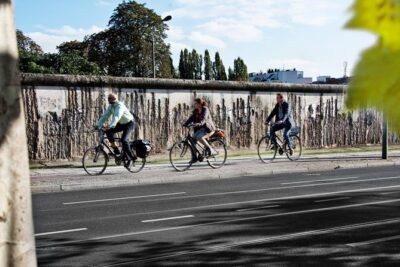
Guided Bike Tour of the Berlin Wall and Third Reich
Read our review →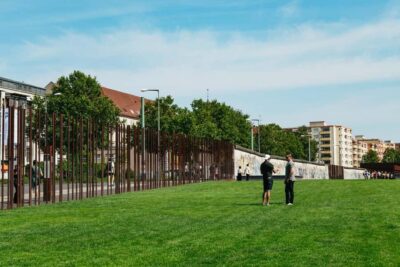
Browse the lists this tour appears in