
Reviewed · UNDERGROUND AND BUNKER TOURS
Berlin: Berlin Story Bunker Entry Ticket
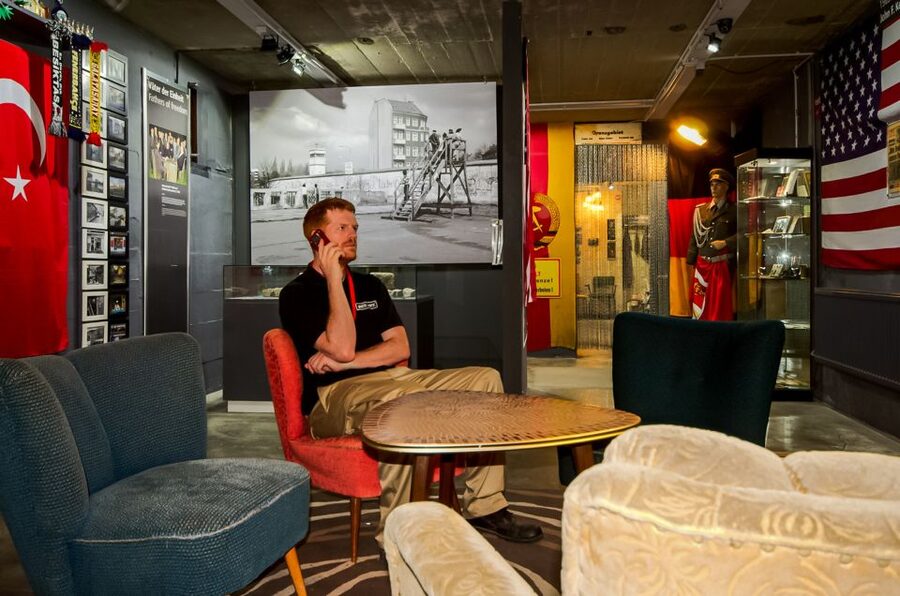
Berlin Story Bunker puts one of Berlin’s darkest chapters inside a real Second World War bunker. Across three floors, you follow Berlin’s story from Imperial Germany through Hitler’s rise, the Nazi dictatorship, the war, and the fall of the Berlin Wall. The final sections include a model of Hitler’s Führerbunker, the underground command post where the Nazi regime ended.
I like the chronological layout, because it gives you a clear path through a complicated subject. I also like the freedom to set your own pace with an audio guide available in 11 languages. The main drawback is the sheer amount of material. Two hours gives you only a brisk look, while careful readers can spend four to six hours inside.
Key points to know before you go
- A real wartime bunker: The museum occupies the huge Berlin Story Bunker near Anhalter Bahnhof and Potsdamer Platz.
- Fifty historical stations: Large displays, photographs, installations, documents, and short films trace Berlin’s past.
- Hitler’s full story: The presentation follows his life, rise to power, dictatorship, war, and death.
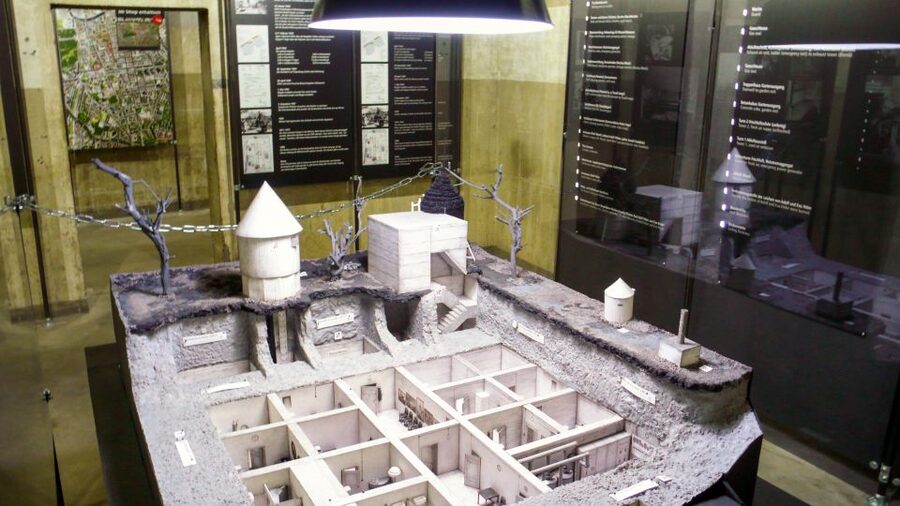
- Führerbunker replica: A full-scale reproduction gives you an idea of the underground setting at the end of the war.
- Audio guide included: Choose from Spanish, English, French, German, Italian, Danish, Dutch, Russian, Hebrew, Portuguese, or Ukrainian.
- Allow more time than expected: Most people need at least two to three hours, and serious readers can use most of a day.
Entering the Berlin Story Bunker
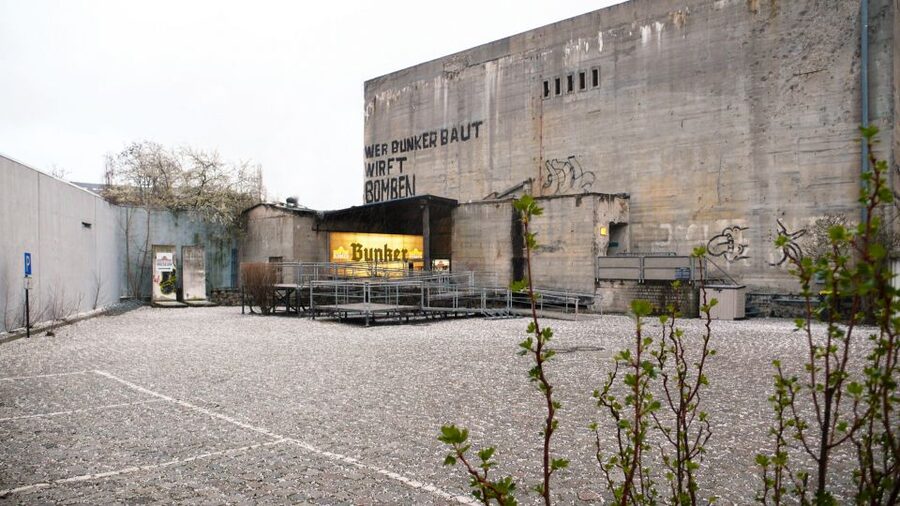
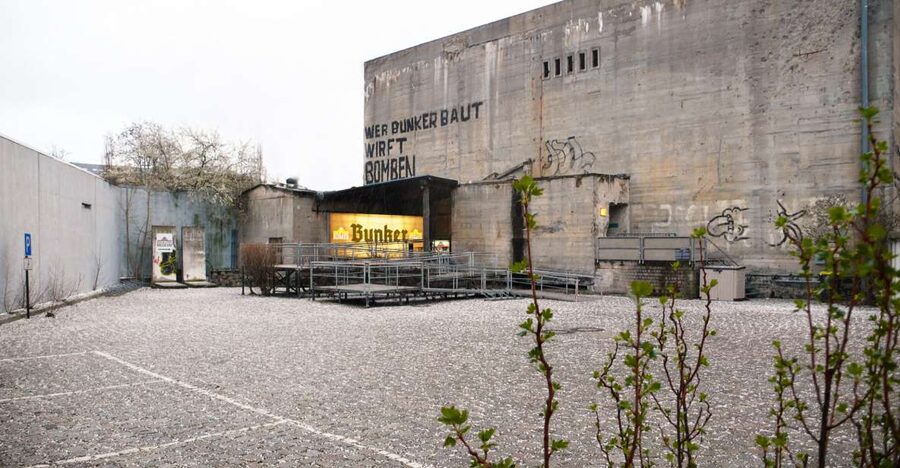
The entrance is at the ticket office on Schöneberger Str. 23a, 10963 Berlin. The location is close to Anhalter Bahnhof and Potsdamer Platz, so it fits neatly into a day focused on Berlin’s twentieth-century past.
You enter a genuine bunker rather than a purpose-built modern gallery. That setting changes the mood at once. The thick walls, enclosed rooms, and underground atmosphere are not decoration. They are part of the subject, and they give the exhibition a sober sense of place.
This is not a quick attraction you squeeze between two major sights. The ticket is valid for one day, and the last entrance is at 5:30 PM. If you arrive late, you may get inside, but you will not have enough time to read the displays properly. I would enter by midafternoon at the latest, and earlier if you want to follow the full story.
The museum does not allow photography or video recording. That may frustrate you if you like to document every stop, but it also keeps the rooms quieter and more respectful. The subject includes disturbing images, so the no-camera rule feels appropriate here.
More Attraction Tickets in Berlin
- Berlin: Jewish Museum Berlin Entrance Ticket
★ 4.5 · 8,393 reviews - Berlin: Illuseum Berlin Entrance Ticket
★ 4.1 · 3,970 reviews - Berlin: Madame Tussauds Admission Ticket
★ 4.6 · 3,941 reviews
How the 50 stations tell Berlin’s story
The exhibition is arranged in a chronological order. You begin with Berlin’s earlier political and imperial past, then move through the events that helped create the conditions for National Socialism. The later stations follow Hitler’s rise, the Nazi state, the war, the Holocaust era, Germany’s defeat, and Berlin’s division.
I find this order useful because it prevents the Nazi period from appearing as an isolated event. You see the political setting before Hitler, the machinery of power as it developed, and the consequences that followed. The exhibition also carries the story beyond 1945, continuing to the Berlin Wall and its fall.
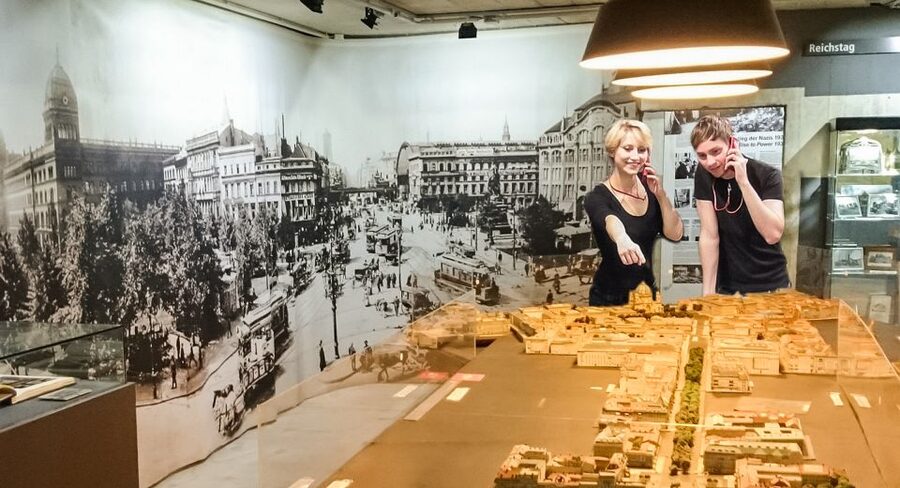
Large installations break up the many information panels. Photographs, posters, newspapers, documents, and short film sequences add faces and visual evidence to the printed text. There are plenty of facts, but the presentation keeps returning to the human cost of dictatorship, racism, war, and political repression.
The displays are mainly in German and English. If you read slowly, you will need more time than someone using only the audio guide. I would not try to absorb every panel on a first visit. Pick the subjects that matter most to you, then use the audio guide for the wider outline.
Some images are graphic. This is an honest presentation of Nazi crimes and wartime suffering, not a softened version designed for easy viewing. Parents should decide how much their children are ready to see. One family found the material accessible for an 11-year-old interested in history, but the intensity varies from room to room.
Hitler’s rise and the Nazi dictatorship
A major part of the museum follows Hitler from childhood through his political career and death. The material explains how he moved from a marginal political figure to the head of a dictatorship, then shows how propaganda, racism, terror, and war shaped life under the Nazi regime.
The value here is the full sequence. You do not see only the familiar wartime images. You also see the stages before the war, the growth of the movement, and the political decisions that allowed it to take control. That broader view helps you understand how a dictatorship develops rather than treating it as a sudden event.
The exhibition is blunt about fascism and racism. It asks difficult questions instead of presenting the past as a neat chain of dates. That makes the visit emotionally heavy, but also worthwhile for anyone who wants more than a quick look at Hitler’s bunker.
Some rooms contain a large amount of text. If you are not a history enthusiast, you may find the middle sections intense or tiring. Chairs are available in parts of the exhibition, which helps if you need a break while still listening or reading.
The audio guide gives you a useful overview of each section. It is available in 11 languages, including English, Spanish, French, German, Italian, Danish, Dutch, Russian, Hebrew, Portuguese, and Ukrainian. The device is simple to use, although entering station numbers can occasionally be awkward. Pressing the next button for the following section may be easier than typing every number.
The Führerbunker replica and underground setting
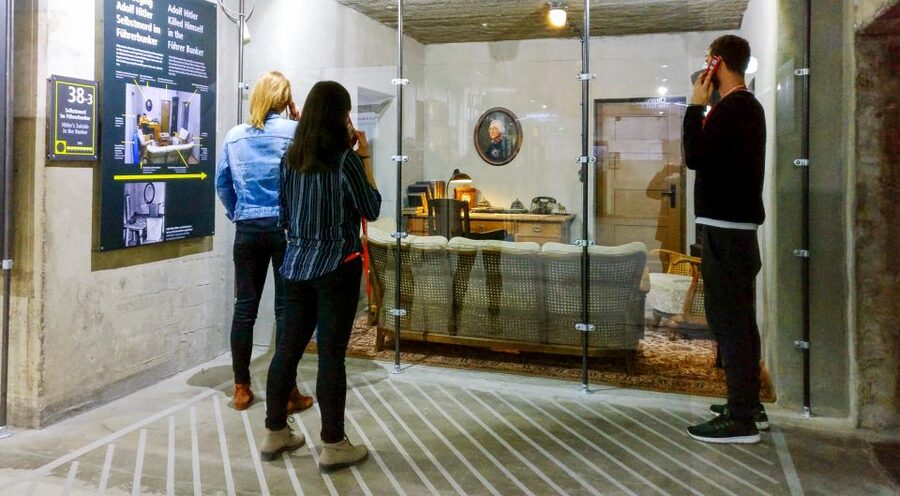
The replica of Hitler’s Führerbunker is one of the most memorable parts of the visit. It is not the original bunker, and you should not expect a preserved room filled with original objects. Instead, the model helps you picture the confined command center where the Nazi leadership spent the final days of the war.
The lower section carries extra weight because you have already followed the events that led there. By the time you reach the replica, the bunker no longer feels like an isolated curiosity. It becomes the endpoint of the political and military story presented throughout the museum.
The museum also includes bunker areas preserved from the 1940s. These spaces offer a more direct sense of the building’s wartime use. The setting can feel enclosed, although the rooms are generally large and fans provide air movement. I would not describe the whole visit as claustrophobic, but anyone uneasy in underground spaces should be prepared for the possibility.
The replica is the part many people expect to see first, but it works better after the main exhibition. Do not rush straight to it and leave. The surrounding displays explain why the place matters and what happened in Berlin as the regime collapsed.
More Underground Tours in Berlin:
- Berlin: Underground Party Tour
★ 4.6 · 61 reviews - Shared Underground Party Tour in Berlin
★ 4.5 · 9 reviews - Berlin: Premium Underground Party Tour
★ 5.0 · 6 reviews - Bremen: Underground Guided Tour
★ 4.1 · 1,408 reviews
How much time should you allow?
The official ticket is valid for one day, but that does not mean you need to spend a full day there. Two hours is enough for a fast visit focused on the main story. Three to four hours is a better target if you want to listen to the audio guide and read a fair amount of the material.
If you stop for nearly every panel, six hours is possible. Some visitors have needed a second visit because they could not finish the displays in one day. That is useful to know when planning around other Berlin sights.
I would divide the visit into sections:
- Spend the first hour getting the overall Berlin timeline.
- Use the next hour or two for the Nazi period, photographs, documents, and films.
- Save time for the preserved bunker areas and Führerbunker replica.
- Take short pauses rather than trying to absorb the entire exhibition without a break.
The museum can be warm, and there is plenty of standing and walking. Wear comfortable shoes and bring water. The attraction has toilets and a café, which makes a longer stay easier.
Is the $21 ticket good value?
At $21 per person, the ticket is reasonable if you give the museum enough time. You are paying for access to a large exhibition, the bunker setting, the audio guide, and the chance to move through the displays independently. It is not a ten-minute photo stop.
The value depends on your habits. If you plan to spend only an hour, the price may feel high because you will see only part of the material. If you enjoy museums, listen to the guide, and read the displays, you can easily make the visit worth the cost.
The self-guided format is another advantage. You are not tied to a group schedule, and you can stop when a photograph or document catches your attention. A few visitors have preferred to use their own headphones and take more time with the printed displays, though the supplied audio guide remains useful for orientation.
The booking terms also help if your Berlin plans are uncertain. You can reserve now and pay later, and cancellation is free up to 24 hours before the visit for a full refund. Check the available starting times before booking, since the museum has a firm last entrance at 5:30 PM.
Who will appreciate this museum most?
This is a strong choice if you want to understand Berlin’s role as the center of Nazi power. It suits adults interested in the Second World War, German history, political history, and the Berlin Wall.
It can also work for older children and teenagers who already have an interest in the subject. The chronological layout and audio guide make the story easier to follow, but the graphic photographs require parental judgment.
You may not enjoy it if you prefer hands-on exhibits, a short guided walk, or a light historical attraction. There are installations and films, but much of the visit involves reading, listening, and standing in front of photographs and documents. The tone is serious from beginning to end.
Mobility is another practical concern. The experience is not suitable for people with mobility impairments, and the three floors, stairs, walking, and standing make comfortable footwear important.
Tips for a more rewarding visit
Start with enough time. The most common mistake is allowing 90 minutes and then rushing the final rooms. Three hours gives you a much more relaxed visit.
Use the audio guide as a framework, not as a replacement for the displays. Listen to the overview, then read the sections that interest you. This works better than trying to hear every audio track while also studying every panel.
Take a pause before the final bunker section. The material becomes increasingly heavy, and a few minutes at the café or in a seating area can help you stay focused.
Do not plan a packed schedule immediately afterward. The museum deals with genocide, dictatorship, war, and destruction in direct terms. You may want something quieter after leaving.
Remember that cameras and video equipment cannot be used inside. If you want notes, bring a small notebook, but follow the museum rules and do not treat the rooms like a standard sightseeing backdrop.
Should you book the Berlin Story Bunker?
Book it if you want a serious, detailed account of Berlin under National Socialism and you have at least three hours to give it. The real bunker, chronological displays, wide language choice, and Führerbunker replica make this more than a basic war exhibit.
Skip it if you dislike reading-heavy museums, enclosed spaces, or graphic wartime material. For everyone else, it is one of the more useful places in Berlin for connecting Hitler’s rise, the Nazi regime, the war, and the city’s later division. Go early, wear comfortable shoes, and let the museum set the pace.
FAQ
Where is the Berlin Story Bunker?
The meeting point is the ticket office at Schöneberger Str. 23a, 10963 Berlin, near Anhalter Bahnhof and Potsdamer Platz.
How long does the visit take?
You can see the main sections in about two hours, but three to four hours is more comfortable. If you read nearly every display, you could spend five or six hours, and the ticket is valid for one day.
Is an audio guide included?
Yes. Audio guides are included in Spanish, English, French, German, Italian, Danish, Dutch, Russian, Hebrew, Portuguese, and Ukrainian.
Can I take photographs inside?
No. Photography and video recording are not allowed inside the museum.
Is the museum suitable for people with mobility impairments?
No. The experience is not suitable for people with mobility impairments. Expect walking, standing, stairs, and three floors of exhibition space.
What is the latest entrance time?
Last entrance is at 5:30 PM. Check the available starting times and arrive early enough to see the sections you want without rushing.
Just added in Berlin
- Berlin & The Third Reich Private Guided Tour★ 5.0 · 3 reviews
- Third Reich Quest Experience in Berlin★ 4.5 · 7 reviews
- Private Analogue Photography Experience in Berlin★ 5.0 · 3 reviews
- Berlin: Guided Bike tour of the Berlin Wall and Third Reich★ 5.0 · 160 reviews
- Berlin Urbex Adventure and History Tour★ 5.0 · 9 reviews
- The Beauty of Berlin by Bike: Private Tour★ 5.0 · 59 reviews
- Beyond Currywurst: Berlin’s Hidden Street Food & Culture Tour★ 5.0 · 100 reviews
- Berlin Third Reich & Cold War Walking Tour With A Guide★ 5.0 · 7 reviews
Underground and Bunker Tours, compared.

From Munich: Königssee Day Trip with Boat Ride and Salt Mine
Read our review →

From Munich: Königssee Boat Ride & Berchtesgaden Salt Mine
Read our review →Browse the lists this tour appears in