
Reviewed · HISTORICAL TOURS
Berlin‘s Jewish Heritage Private Tour With Jacob
Berlin’s Jewish story is written across central Berlin, not in one museum or memorial. With Nadav Jacob, you move from the Holocaust Memorial and Bebelplatz to former Jewish neighborhood sites, a cemetery, a workshop that helped blind Jewish workers, and the New Synagogue. The route connects Jewish life before the Nazis, the destruction of the Holocaust, and the effort to rebuild Jewish life in modern Germany.
I like two things here. First, it is a private tour for up to six people, so you can ask questions and set the pace more easily than on a large group walk. Second, hotel pickup and help with the route make the tour simple to start, especially if Berlin’s public transport system is still new to you. The main consideration is time: 2.5 hours gives you a strong introduction, but most stops are brief and the tour cannot explore every site in depth.
Key points to know before booking
- A compact route through central Berlin: The tour covers major memorials and Jewish heritage sites in 2.5 hours.
- A private English-language guide: Nadav Jacob leads your group, with space for questions and discussion.
- Several short visits, not one long museum session: You see the Holocaust Memorial, Bebelplatz, Haus Schwarzenberg, Otto Weidt’s Workshop for the Blind, and the New Synagogue.
- Public transport connects the route: A ticket costs about €3 to €6 and is not included.
- Hotel pickup is included: Give the hotel name when booking so the guide can meet you at reception.
- Walking is manageable but real: Taxi, van, or subway transfers can be arranged at extra cost if needed.
Why Berlin’s Jewish story works best as a walking route
This tour is built around change. You begin with the place where Jewish life and persecution are remembered, then move through streets tied to earlier Jewish communities, wartime courage, destruction, and modern renewal.
That order matters. Berlin can feel like a city of isolated memorials, each with its own difficult subject. A guide helps you connect them. You hear how Jewish people in Germany lived with exclusion and persecution, later gained full citizenship, and took important roles in business, science, culture, and democratic politics before the Nazis took power.
You also get a sense of the difference between remembrance and living history. The Holocaust Memorial speaks through its stark design. The New Synagogue points toward contemporary Jewish life. Between them are places where individual people made choices, including Otto Weidt’s workshop and the Block of Women.
I would choose this experience if you want a focused introduction rather than a full-day study of Berlin’s Jewish past. The private format is particularly useful for families, couples, or a small group with mixed levels of historical interest.
More History Tours in Berlin
- Berlin: Natural History Museum Entrance Ticket
★ 4.6 · 3,382 reviews - Berlin Historical Highlights Walking Tour
★ 4.9 · 657 reviews - Berlin Private Complete History All Day Walking Tour
★ 5.0 · 474 reviews
Starting from your Berlin hotel
The guide picks you up at your hotel reception. This is a useful touch, since you do not need to find an unfamiliar meeting point in central Berlin.
The tour then uses public transport for about 15 minutes. Your ticket is separate and costs approximately €3 to €6. That extra cost is modest, but remember to buy the correct ticket before the journey. If walking or public transport presents a problem, the tour provider can arrange a taxi, van, or subway transfer between stops at an additional cost.
The route is described as wheelchair accessible, and the walking is generally manageable for people with mobility issues. Still, this is a walking tour with several outdoor stops and changes of location. If you need to avoid walking, arrange the alternative transport in advance rather than hoping to adjust everything on the day.
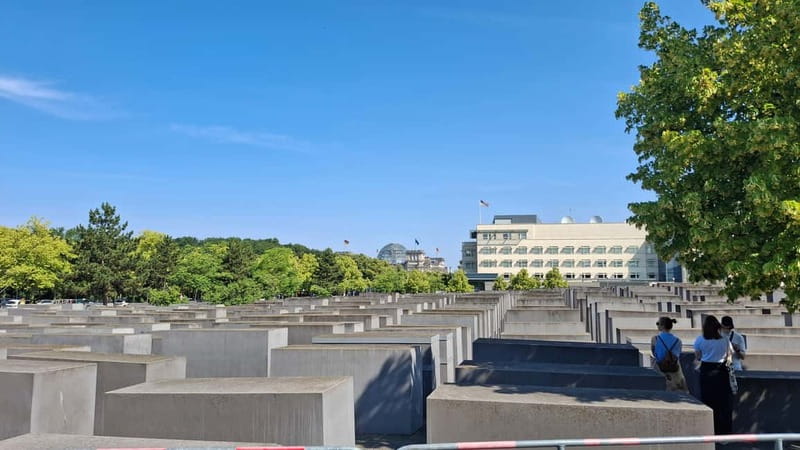
The Holocaust Memorial: starting with the weight of memory
The first major stop is the Holocaust Memorial, where the guide spends about 20 minutes with you.
This is a powerful opening because it places the Holocaust at the center of the story without treating it as an isolated event. The wider tour explains how Jewish people in Germany moved from exclusion and persecution toward full citizenship and significant public roles, only to face the Nazi seizure of power and the destruction of Jewish life.
Twenty minutes is enough for an introduction and guided explanation, but not for every question the memorial may raise. You should see this stop as a starting point for understanding Berlin’s approach to remembrance. The site is open and visually striking, but its meaning is not always obvious from a quick look. A guide helps you read the place with care.
Because the memorial is outdoors, weather can affect your experience. Comfortable shoes and suitable clothing will make the route easier.
Bebelplatz and the public memory of Nazi persecution
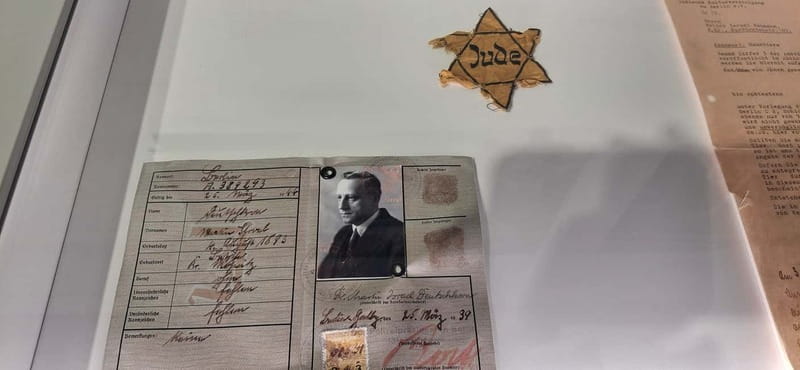
From the Holocaust Memorial, the tour continues to Bebelplatz for about 15 minutes of guided discussion.
Bebelplatz is important because it shows how persecution entered public life. The stop adds another layer to the tour’s account of Nazi Germany, moving you from the broad memory of the Holocaust to a specific place associated with the suppression of ideas and Jewish life.
The visit is short, so listen closely and ask questions while you are there. This is one of the places where the guide’s role matters most. A square can look like just another handsome central Berlin site if you do not know what happened there.
The sequence also keeps the history connected. You are not simply checking off famous addresses. You are moving from remembrance to the machinery of exclusion and persecution, then toward the people and places that resisted it.
More Jewish Heritage Tours in Berlin:
- Berlin: Jewish Museum Berlin Entrance Ticket
★ 4.5 · 8,393 reviews - Nazi Berlin and the Jewish Community Tour
★ 4.8 · 55 reviews - Path of Resistance: Berlin’s Hidden Holocaust Stories
★ 5.0 · 33 reviews - Private Tour: Jewish Heritage Walking Tour of Berlin
★ 5.0 · 29 reviews
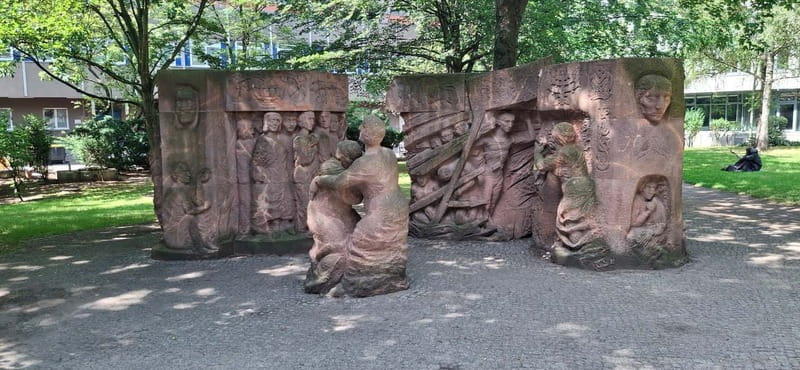
The Block of Women and the value of individual stories
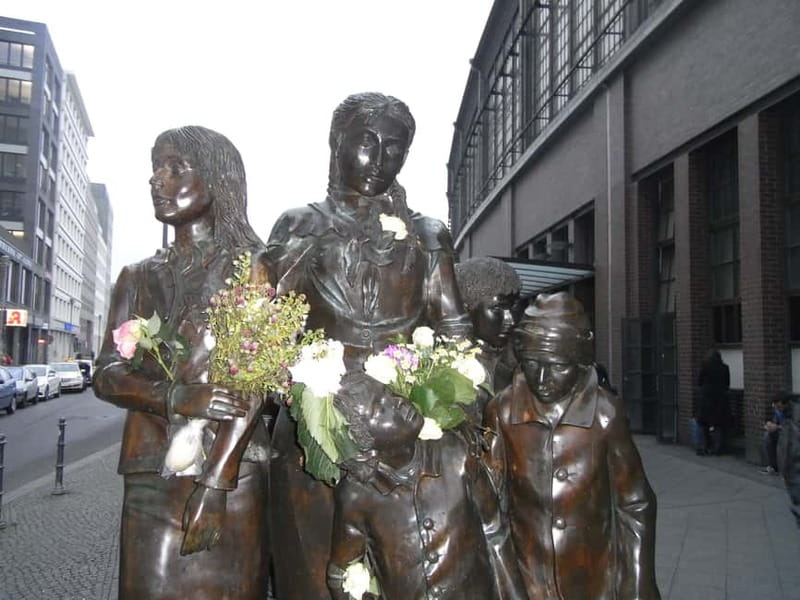
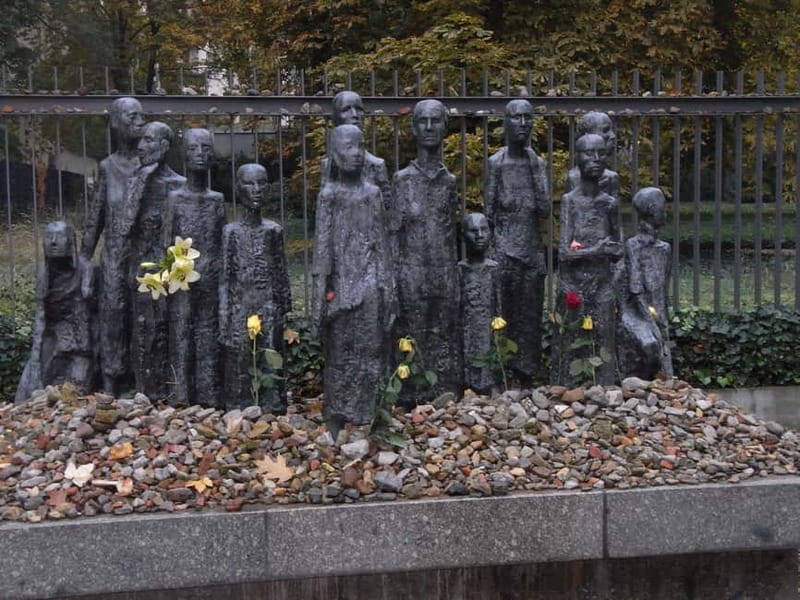
The Block of Women receives about 10 minutes. This stop gives the tour a more personal focus.
Large memorials can make history feel distant. The Block of Women brings attention back to individual action and public pressure during the Nazi period. The supplied tour information identifies it as a Jewish memorial stop, and its position on the route helps balance the larger sites with a story centered on people rather than architecture.
Ten minutes is brief, but that can be an advantage. You get a clear explanation without losing too much time from the later Jewish quarter. If a particular story interests you, this is a good place to ask Jacob for more context before the group moves on.
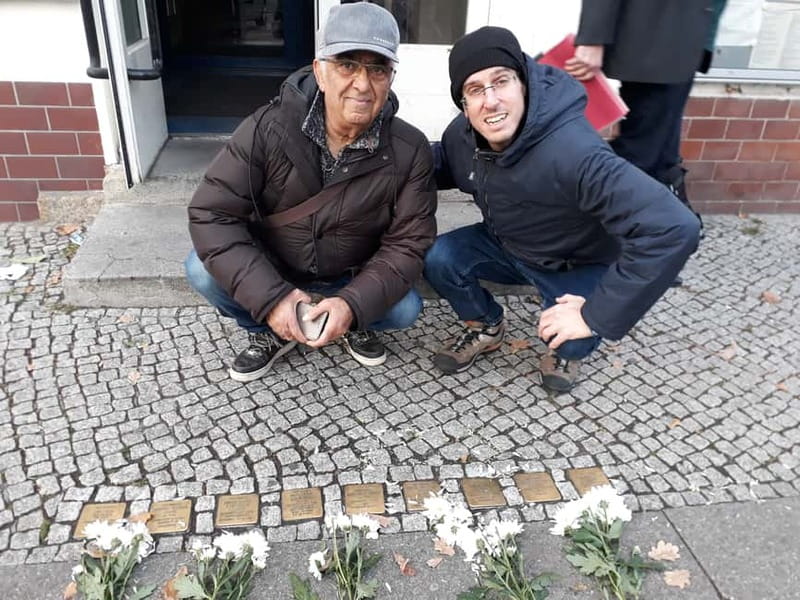
Hackescher Markt and the old Jewish quarter
The route then reaches Hackescher Markt, with about 20 minutes spent walking through the area.
This part of the tour is less about standing at one memorial and more about reading the neighborhood. You begin to see how Jewish life fit into the city’s streets, businesses, institutions, and communities before the Nazis took power.
The walk helps connect the separate stops. After the formal memorials, you are in a district associated with Berlin’s old Jewish quarter. The guide can explain the area as part of the broader story of Jewish settlement, community life, persecution, and survival.
Do not expect a preserved historic quarter in the sense of a single enclosed attraction. The value is in seeing the area as part of present-day Berlin while learning what it meant in earlier periods. The neighborhood has changed, and that contrast is part of the lesson.
Haus Schwarzenberg: an alternative side of Jewish Berlin
Haus Schwarzenberg is the next guided stop, with about 10 minutes here.
This site adds a different visual and cultural note to the route. It is not presented as another large memorial. Instead, it forms part of the Jewish heritage walk through the old quarter and helps show how historical places can take on new cultural meaning.
The stop is short, so the guide’s explanation will shape what you take away. I like the inclusion of places such as Haus Schwarzenberg because a Jewish heritage tour should not focus only on tragedy. Jewish history in Berlin includes community, creativity, work, politics, and cultural life as well as persecution.
For you, this is a useful point to pause and consider the tour’s larger theme: Jewish life was not simply present in Berlin before the Holocaust, it was active and influential.
Otto Weidt’s Workshop for the Blind

The tour then visits Otto Weidt’s Workshop for the Blind for about 15 minutes.
This is one of the most personal stops. The workshop connects the history of the Holocaust to a specific workplace and to efforts to protect Jewish people during Nazi rule. The tour description presents it as a place tied to blind Jewish workers, giving you a human-scale story after the larger memorials and public squares.
A short visit cannot cover every detail, but the site gives the route emotional balance. Instead of only hearing about policies and persecution, you encounter a place connected with daily work and individual decisions.
I especially like this kind of stop for first-time visitors to Berlin’s Jewish history. It helps you understand that the period was lived in offices, workshops, homes, and neighborhoods, not only at official sites of remembrance.
Grosse Hamburger Strasse Cemetery
The route continues on foot to the Grosse Hamburger Strasse Cemetery, with about 15 minutes for the walk and stop.
The cemetery brings the tour back to the long history of Jewish life in Berlin. After hearing about persecution under the Nazis, you return to a place associated with the community that existed before that destruction.
Cemeteries require a quieter pace. The visit is not designed as a long independent exploration, but the guide can place the site within the story of Berlin’s Jewish community. This makes it an important bridge between the past and the present.
The walk to the cemetery also gives you time to absorb the earlier stops. The route is not rushed from one indoor attraction to the next. You spend time moving through the city, which helps you understand that these events took place in ordinary urban spaces.
The New Synagogue and contemporary Jewish life
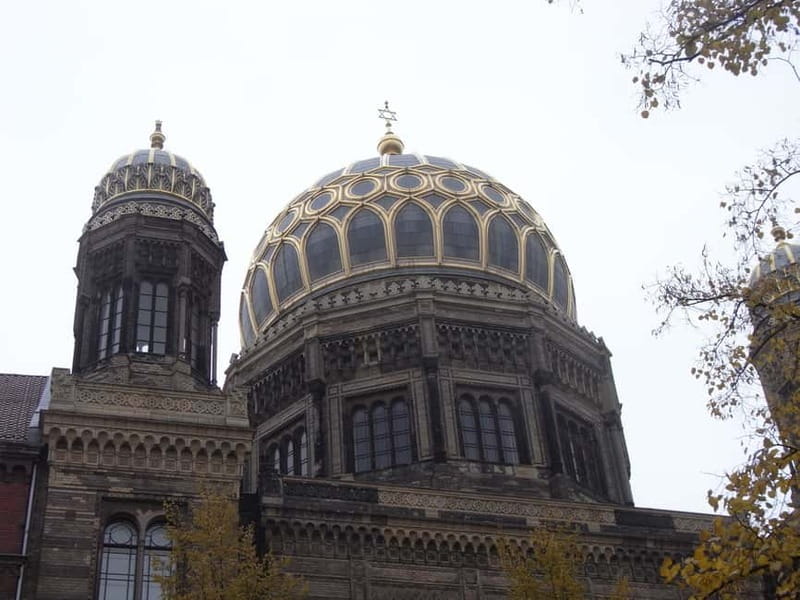
The final major stop is the New Synagogue Berlin, also called the Jewish Centre. The guided visit lasts about 15 minutes.
This is a fitting close because the tour does not end with the Holocaust. It also explains the attempt by united Germany to revive contemporary Jewish life. The New Synagogue represents that forward-looking part of the story.
The time here is limited, so do not expect a full museum visit or an extended tour of every feature. Instead, the stop gives you a final point of reference for Jewish life in present-day Berlin.
That ending makes the route more balanced. You begin with remembrance, pass through persecution and personal stories, and finish by considering the continuing presence of Jewish communities in Germany. For me, that is a stronger approach than treating Jewish Berlin only as a subject from the past.
What the private format changes
The price is $303 per group of up to six people. That works out to about $50.50 per person if six people share the cost, before the public transport ticket. For two people, the per-person cost is much higher, but you are paying for a private guide rather than joining a large group.
The main value is control. You can ask about a family interest, slow down at a memorial, or clarify a difficult point without competing with a busload of people. Nadav Jacob leads the experience in English, and the private setting makes it easier to have a real conversation.
There is also practical value in hotel pickup. You start with a guide who knows where you are, then follow a planned route through central Berlin. That can save time and reduce the stress of navigating between sites.
The tradeoff is that the tour is short. Each stop receives roughly 10 to 20 minutes, and the whole experience lasts 2.5 hours. If you want detailed museum time, long discussions, or independent time at each memorial, you may find the schedule too tight.
The experience has a rating of 5 from seven submitted reviews. That is a small sample, so I would treat it as encouraging rather than final proof. The stronger evidence is the clear route, the private format, the named guide, and the mix of memorials, neighborhood sites, and contemporary Jewish history.
Who should book this tour
I would recommend it to:
- First-time visitors who want a clear introduction to Jewish Berlin
- Small families or private groups who prefer a flexible guide
- Visitors interested in the Holocaust but also in Jewish life before and after it
- People who want hotel pickup and help with the city route
- Anyone who prefers a short overview before choosing longer museum visits
You may want something else if you prefer to spend a full morning inside one museum, avoid all walking, or study a narrow topic in great detail. The route is broad by design. It gives you several connected places, rather than one long visit at a single site.
The tour also suits people who want a serious subject handled in a direct, human way. The stops are not presented as entertainment. Expect memorials, difficult history, and time for reflection, balanced by stories of community, work, culture, and survival.
Final call: is the Berlin Jewish Heritage Private Tour worth it?
Book this tour if you want a focused, private introduction to Berlin’s Jewish past and present, especially if you are traveling with up to six people and value hotel pickup. The route includes major memorials and less obvious sites, and the final visit to the New Synagogue keeps the story from ending in 1945.
The $303 group price is easier to justify with four to six people. Add the €3 to €6 public transport fare, wear comfortable shoes, and expect a steady schedule with short stops. If you want the freedom to ask questions and connect the Holocaust Memorial, Bebelplatz, the old Jewish quarter, Otto Weidt’s workshop, and the New Synagogue into one clear story, this is a sensible choice.
FAQ
How long does the tour last?
The tour lasts 2.5 hours.
What language is the tour in?
The live tour guide speaks English.
Is this a private tour?
Yes. It is a private group experience for up to six people.
Is hotel pickup included?
Yes. Pickup from the reception of your Berlin hotel is included. You need to provide the hotel name when booking.
Do I need to pay for public transport?
Yes. A public transport ticket is not included and costs approximately €3 to €6 for the tour.
Is the tour wheelchair accessible?
Yes. The activity is listed as wheelchair accessible, and the walking is generally manageable for people with mobility issues.
Can I avoid walking between stops?
Yes. Arrangements can be made to travel by taxi, van, or subway between stops at an additional cost.
Can I cancel for a full refund?
Yes. You can cancel up to 24 hours in advance for a full refund.
Just added in Berlin
- Berlin & The Third Reich Private Guided Tour★ 5.0 · 3 reviews
- Third Reich Quest Experience in Berlin★ 4.5 · 7 reviews
- Private Analogue Photography Experience in Berlin★ 5.0 · 3 reviews
- Berlin Urbex Adventure and History Tour★ 5.0 · 9 reviews
- The Beauty of Berlin by Bike: Private Tour★ 5.0 · 59 reviews
- Berlin: Guided Bike tour of the Berlin Wall and Third Reich★ 5.0 · 160 reviews
- Beyond Currywurst: Berlin’s Hidden Street Food & Culture Tour★ 5.0 · 100 reviews
- Berlin Third Reich & Cold War Walking Tour With A Guide★ 5.0 · 7 reviews
Historical Tours, compared.
City History Canal Sightseeing Tour on a Motorboat
Read our review →

Browse the lists this tour appears in