
Reviewed · JEWISH HERITAGE TOURS
Path of Resistance: Berlin’s Hidden Holocaust Stories
The most moving part of this Berlin walk is its focus on people who resisted in ordinary, often quiet ways. You’ll visit the workshop where Otto Weidt protected blind and deaf Jewish workers, hear how women at Rosenstraße demanded the release of their Jewish husbands, and pause at the place where Nazi book burning attacked free thought.
I like the personal scale of the tour, which connects major events to homes, schools, workshops, and memorial stones. I also like the guides’ use of old photographs and maps, plus the chance to ask questions in a small group. The main consideration is emotional: this is a serious walk through deportation, persecution, and genocide, not a light sightseeing outing.
Key points at a glance
- Otto Weidt’s workshop: Learn how a Berlin brushmaker tried to shield blind and deaf Jewish employees from Nazi persecution.
- Rosenstraße protest: Hear the story of German women who publicly demanded the release of their Jewish husbands.
- Bebelplatz book burning site: Look into the empty library memorial marking the Nazi attack on intellectual freedom in 1933.
- Old Jewish quarter: Connect the New Synagogue, Moses Mendelssohn school, cemetery, Stolpersteine, and deportation sites.
- Small-group format: The group is limited to 10 people, allowing room for questions and discussion.
- Practical walking plan: The tour lasts about 2.5 hours, runs in all weather, and requires comfortable shoes and rain protection.
Why this Berlin history walk feels different
Berlin has many memorials to Nazi persecution, but it can be hard to understand how they fit together when you visit them alone. This walk gives you a clear route through the old Jewish quarter and nearby central Berlin, using individual stories to explain larger events.
You’ll look at how antisemitism became state policy, how the Nazis classified people by supposed race, and how ordinary Germans responded. Some resisted openly. Others helped in small, practical ways. Many did nothing. That last point matters, and the tour does not reduce the period to a simple story of heroes and villains.
The guides are presented as World War II specialists, and the experience is built around research, local knowledge, historical maps, and Then and Now photographs. Tom has been praised for handling sensitive subjects with care, while Hannah is especially strong at telling lesser-known stories with energy and feeling. Your guide may be someone else, but the format is designed for an informed, discussion-based walk rather than a scripted march between landmarks.
You should expect a respectful tone. The tour does not turn suffering into spectacle, and it gives attention to people whose names may not appear in standard schoolbooks.
More Jewish Heritage Tours in Berlin:
- Berlin: Jewish Museum Berlin Entrance Ticket
★ 4.5 · 8,393 reviews - Nazi Berlin and the Jewish Community Tour
★ 4.8 · 55 reviews - Private Tour: Jewish Heritage Walking Tour of Berlin
★ 5.0 · 29 reviews
Starting at the former Imperial Post Office
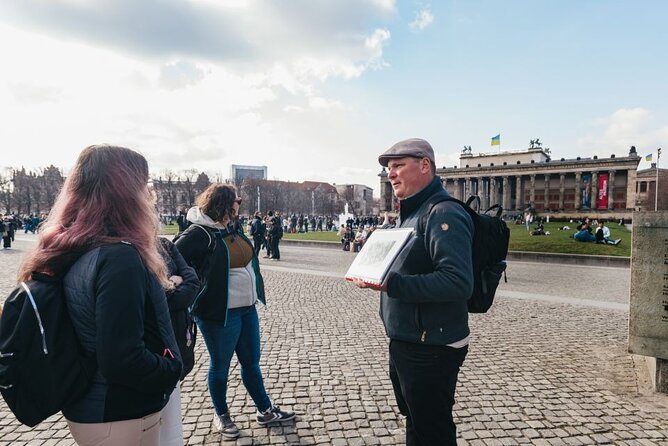
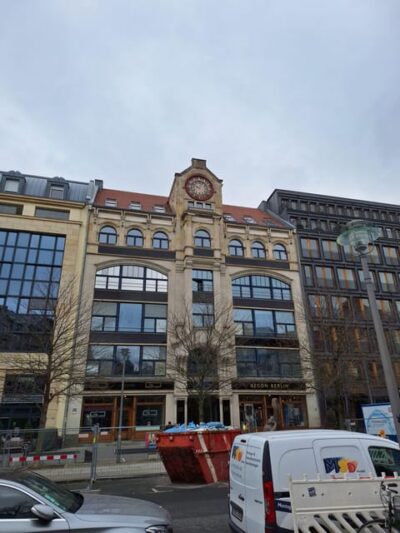
The meeting point is the former Imperial Post Office. Arrive 10 minutes early and look for the guide at the main entrance with a blue umbrella.
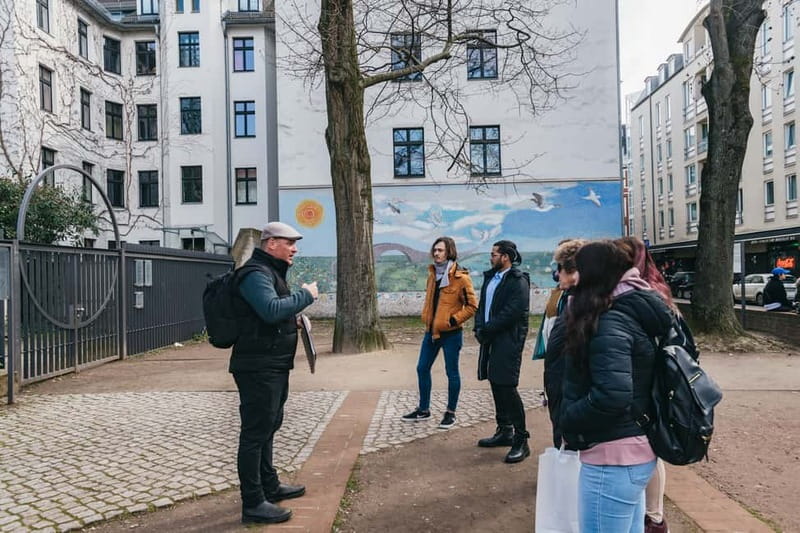
That small visual detail matters in central Berlin, where several buildings and public spaces can look similar at a glance. The tour is conducted in English, and the group is limited to 10 participants. A small group is useful here because many stops involve short explanations, questions, and pauses for reflection rather than simple photo stops.
The route is a walking tour, so public transport tickets are not required. The exact balance of walking and standing may still feel demanding if you have limited mobility, though the activity is listed as wheelchair accessible. Wear comfortable shoes, bring water, and carry an umbrella or other weather protection. The walk goes ahead in rain or sun.
The New Synagogue and Moses Mendelssohn school
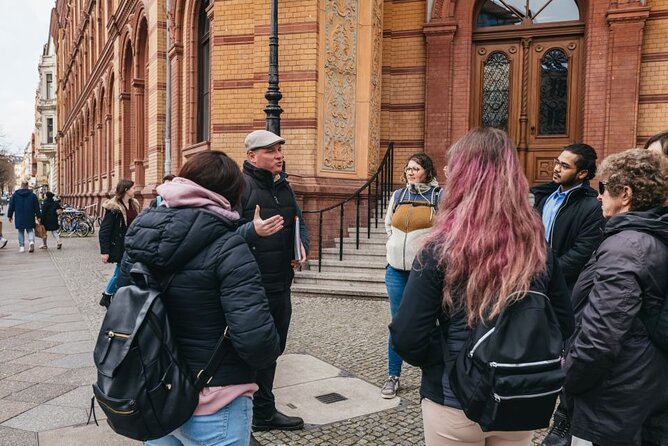
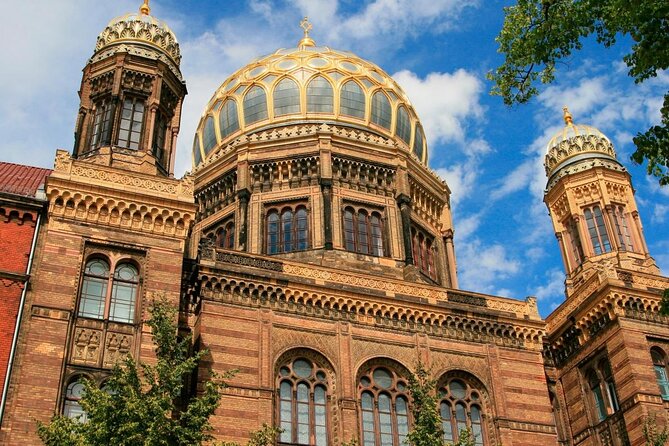
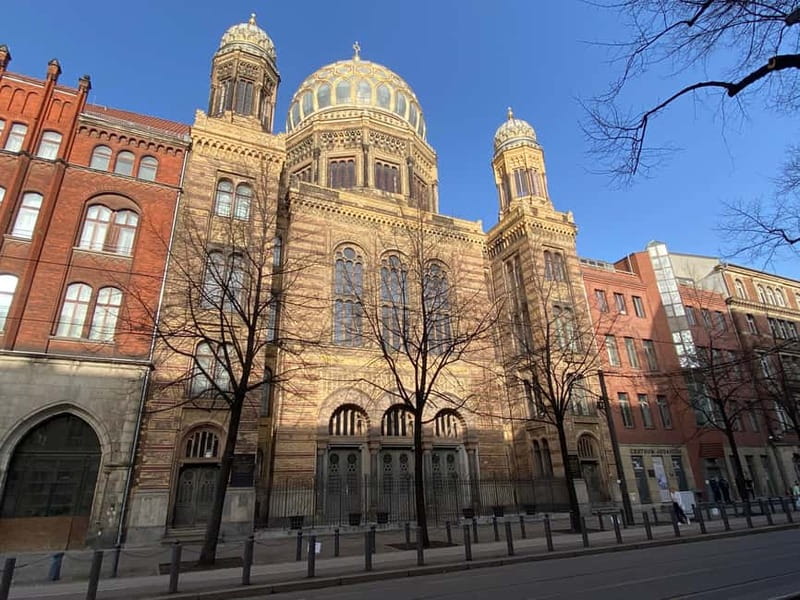
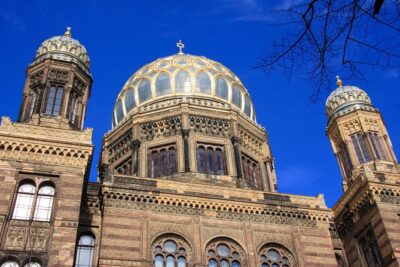
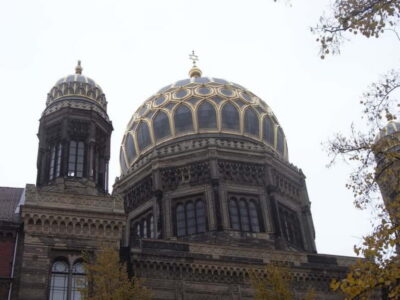
The first major stop is the New Synagogue Berlin, also known as the Jewish Centre. Its presence helps you understand the scale and importance of Berlin’s Jewish community before the Nazi period and the destruction that followed.
From there, the tour continues to the Jüdisches Gymnasium Moses Mendelssohn. A school is a useful place to pause because Nazi persecution affected children, families, teachers, and institutions, not only political leaders or prominent adults. The stop gives the guide a chance to connect education, identity, and the dismantling of Jewish life.
You’ll spend about 15 minutes at the synagogue and 10 minutes at the school. That is enough time for context without turning the walk into a full museum visit. If you want extended time inside the New Synagogue or other sites, plan a separate visit on another day.
Grosse Hamburger Strasse Cemetery and the old Jewish quarter
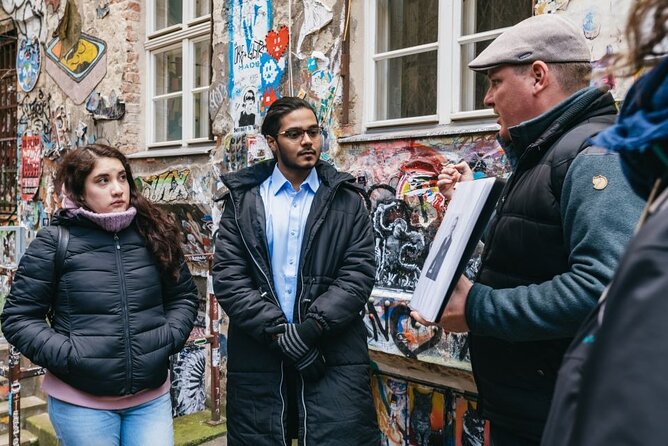
At Grosse Hamburger Strasse Cemetery, the tour shifts from institutions to remembrance. Berlin’s old Jewish quarter is filled with places where the past is easy to miss. A plaque, a courtyard, or a quiet stretch of pavement may be all that remains visible, so the guide’s explanation is important.
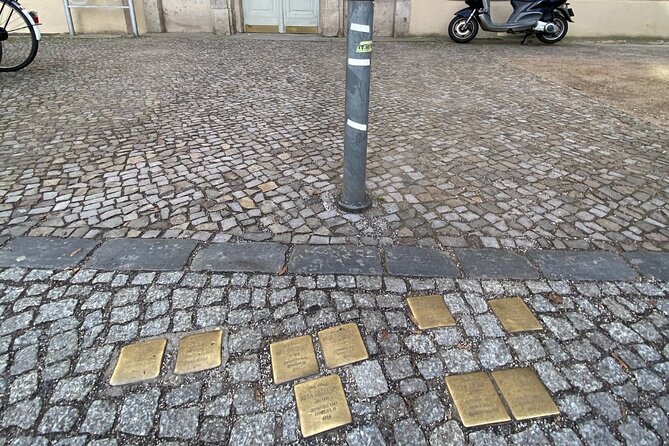
This is where the walk earns its title. The stories are not confined to large monuments. They appear in the traces left around the neighborhood, including Stolpersteine, the small brass memorial stones set into pavements outside former homes. These markers identify people who lived at each address and were persecuted, deported, or killed under the Nazi regime.
The Stolpersteine are powerful because they return the story to a specific place. Instead of thinking only in terms of statistics, you are asked to picture a family connected to one doorway. The format also demands attention. You may need to look down, read carefully, and accept that some memorials are easy to pass without noticing.
The tour also addresses the former deportation centre. This is one of the most difficult parts of the route because it connects ordinary streets with the forced removal of Jewish families. The guide’s role is to explain how persecution moved from hostile laws and public humiliation to organized deportation and mass murder.
A few more half-days in Berlin worth comparing
- Berlin: Reichstag, Dome and Government District Guided Tour
★ 4.7 · 18,288 reviews - Berlin: 1-Hour City Tour by Boat with Guaranteed Seating
★ 4.3 · 16,993 reviews - Berlin: Boat Tour Along the River Spree
★ 4.4 · 11,252 reviews - Discover Berlin Half-Day Walking Tour
★ 5.0 · 9,624 reviews
Otto Weidt’s workshop for the blind
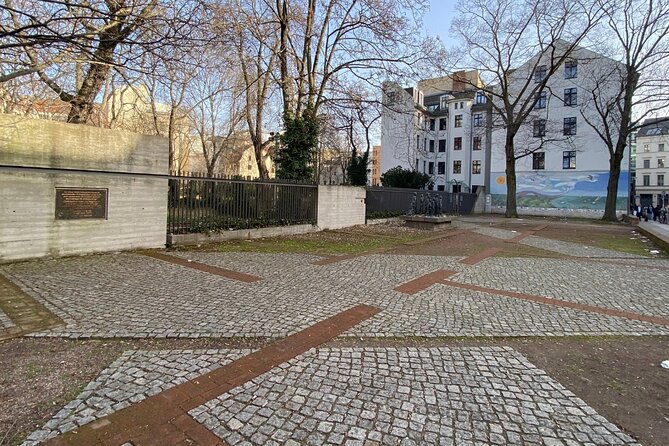
Otto Weidt’s workshop is the emotional center of the walk. Weidt operated a brush workshop and employed blind and deaf Jewish workers. During the Nazi period, he tried to protect them from arrest and deportation.
The stop is valuable because it shows resistance as a series of practical acts. Protection did not always look like a dramatic public gesture. It could involve hiding someone, using work and personal contacts as cover, or trying to persuade officials that a worker was essential.
You’ll spend about 15 minutes here with a guided visit. The workshop is a rare location where the setting and the story meet. Rather than hearing only about a distant event, you are shown the kind of modest workplace in which courage took shape.
I would give this stop your full attention. It is easy to admire famous rescuers from a safe distance, but Weidt’s story raises harder questions about risk, fear, and responsibility. It also avoids the false idea that resistance required a grand political movement. Sometimes it began with one person refusing to abandon the people who depended on him.
Rosenstraße and the Block of Women
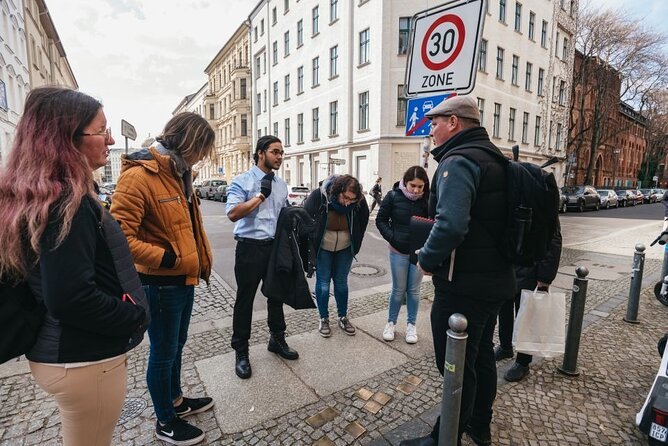
The next major story concerns the protest now remembered at Rosenstraße, also called the Block of Women. German women gathered there to demand the release of their Jewish husbands, who had been arrested and held by the Nazis.
The story is important for two reasons. First, it shows that public protest was possible even under dictatorship, though it carried serious danger. Second, it complicates the picture of German society. Resistance was not limited to secret political groups or military plots. In this case, women used collective pressure and persistence to challenge the authorities.
The tour spends about 15 minutes at the site. Expect the guide to explain the setting and the people involved rather than offer a long architectural description. The value is in understanding what the protest meant within the machinery of persecution.
This stop also helps answer one of the tour’s central questions: why did some people resist while others remained silent? The answer is never simple. Personal relationships, social position, fear, courage, and the willingness to act in public all mattered.
Museum Island and Neue Wache
The route then passes through Museum Island, with about 20 minutes of guided sightseeing. Here, the setting broadens from the Jewish quarter to Berlin’s central civic core. The guide can place Nazi policy within the larger story of the city, its institutions, and its public spaces.
At Neue Wache, you’ll encounter one of Berlin’s major memorial sites. The stop offers time to consider how Germany has remembered war, dictatorship, and loss across different political periods. Memorials are not neutral objects. Their meaning can change depending on who built them, what they emphasize, and how later generations interpret them.
This part of the tour may feel less intimate than the cemetery or workshop. That is not a weakness. It gives you room to connect individual stories with the broader question of public memory. If you have already visited several central Berlin monuments, the guide’s historical framing will help keep this section from feeling like a repeat of familiar sightseeing.
Bebelplatz and the May 10, 1933 book burning
At Bebelplatz, the tour examines the Nazi book burning of May 10, 1933. The event signalled an attack on free thought, intellectual life, and anyone whose ideas did not fit Nazi ideology.
The memorial is easy to miss if you do not know where to look. It is set into the square and recalls the thousands of books destroyed. The emptiness is the point: the absence of books becomes a warning about censorship and the deliberate destruction of culture.
This is a short stop of around 10 minutes, but it carries a large idea. The Nazi campaign did not begin with extermination camps. It developed through propaganda, exclusion, censorship, discriminatory laws, and the steady removal of people from public life. Seeing Bebelplatz after the earlier stops gives that progression a clearer shape.
I like this part of the route because it asks you to think beyond the physical damage of war. A society can be weakened by attacking its teachers, writers, artists, scientists, and schools long before buildings are destroyed.
Trains to Life, Trains to Death
The final memorial stop is Trains to Life, Trains to Death. Its name points to the different fates facing Jewish children during the Nazi period, including those who escaped through rescue efforts and those who were deported and killed.
The tour also introduces Nicholas Winton, the British organizer who helped hundreds of Jewish children escape the Holocaust. His story gives the route another example of resistance through administration, persistence, and personal action. It belongs beside Otto Weidt and the women of Rosenstraße, even though the setting and methods were different.
The contrast between life and death is stark, and the guide uses it to bring the tour’s main themes together. Rescue was possible, but it depended on people acting before the window closed. The memorial also helps you consider the thousands who did not escape and the families separated by deportation.
The scheduled walk finishes around Berlin Friedrichstraße station. The meeting information also describes the activity as ending back at the meeting point, so check the exact end point when you book. In either case, you finish in a central part of Berlin with good access to the rest of the city.
How much value do you get for $56?
At $56 per person, this is not the cheapest way to spend 2.5 hours in Berlin. You can visit several public memorials on your own for little or no cost. The fee makes sense if you want a clear route, an expert English-speaking guide, entry to museums and memorials, and access to stories that are easy to miss without local context.
The small group is part of the value. With a maximum of 10 people, you have a better chance to ask about a particular memorial, clarify a difficult point, or discuss why a resistance act mattered. You also receive historical maps and Then and Now photographs, which can make changed streets and vanished buildings easier to understand.
The price includes the guide and entry to museums and memorials, but not food or drinks. You will not need public transport during the walk. Bring water and eat beforehand, since the route is built around stops rather than a meal break.
If your main aim is to cover as many famous Berlin sights as possible, this may not be your best choice. If you want a focused history walk that ties places to individual lives, the cost is reasonable.
Who should book this walk?
I would recommend it to anyone with a serious interest in the Holocaust, World War II, Jewish Berlin, or the moral choices people faced under dictatorship. It also suits first-time visitors who want a careful introduction rather than a long list of dates.
You do not need to arrive with specialist knowledge. The guides explain the setting, the Nazi belief in Aryan superiority, the classification of supposed sub-races, and the shift from antisemitism to state-sponsored genocide. At the same time, the personal stories give experienced history readers more than a basic overview.
Families with older teenagers may find the route useful, though the subject matter is painful. The walk also suits solo visitors because the small-group discussion gives the experience some shared focus without making it feel crowded.
I would think twice if you want a relaxed stroll, dislike standing outdoors, or prefer architecture and food to political history. Berlin weather can change quickly, and the tour operates in all conditions. Comfortable shoes and proper rain or sun protection are not optional extras here.
Final call: book it if you want people, not just dates
Book this tour if you want Berlin’s Holocaust history explained through named people and specific places. Otto Weidt’s workshop, the Rosenstraße protest, the Stolpersteine, and the Bebelplatz memorial give you a strong mix of quiet courage, public protest, rescue, persecution, and remembrance.
The best reason to choose it is the guide-led connection between sites. You could pass several of them alone without understanding what happened there. With a specialist guide, the walk turns scattered traces into a coherent account of how Jewish life was attacked and how some people pushed back.
Skip it if you are looking for a broad city tour or a cheerful afternoon activity. This is thoughtful, sometimes upsetting, and worth booking for the care given to difficult material. Free cancellation up to 24 hours before the start and reserve-now, pay-later booking make it easier to fit into a changing Berlin schedule.
FAQ
How long does the Path of Resistance tour last?
The walking tour lasts about 2.5 hours. Starting times vary, so check availability when booking.
What language is the tour conducted in?
The tour is conducted in English by a live guide.
Where does the tour meet?
Meet at the former Imperial Post Office. Arrive 10 minutes early and look for the guide at the main entrance with a blue umbrella.
What locations are included?
Stops include the New Synagogue Berlin, Jüdisches Gymnasium Moses Mendelssohn, Grosse Hamburger Strasse Cemetery, Otto Weidt’s Workshop for the Blind, the Block of Women at Rosenstraße, Museum Island, Neue Wache, the May 10, 1933 book-burning memorial at Bebelplatz, and Trains to Life, Trains to Death.
Is public transport needed?
No. Public transport tickets are not required for this walking tour.
What should I bring?
Bring comfortable shoes, water, and an umbrella or other protection from rain and sun. The tour runs in all weather conditions.
Just added in Berlin
- Berlin & The Third Reich Private Guided Tour★ 5.0 · 3 reviews
- Third Reich Quest Experience in Berlin★ 4.5 · 7 reviews
- Private Analogue Photography Experience in Berlin★ 5.0 · 3 reviews
- Berlin Urbex Adventure and History Tour★ 5.0 · 9 reviews
- The Beauty of Berlin by Bike: Private Tour★ 5.0 · 59 reviews
- Berlin: Guided Bike tour of the Berlin Wall and Third Reich★ 5.0 · 160 reviews
- Beyond Currywurst: Berlin’s Hidden Street Food & Culture Tour★ 5.0 · 100 reviews
- Berlin Third Reich & Cold War Walking Tour With A Guide★ 5.0 · 7 reviews
Jewish Heritage Tours, compared.
Private Tour: Jewish Heritage Walking Tour of Berlin
Read our review →
Historic Jewish walking tour through the city center
Read our review →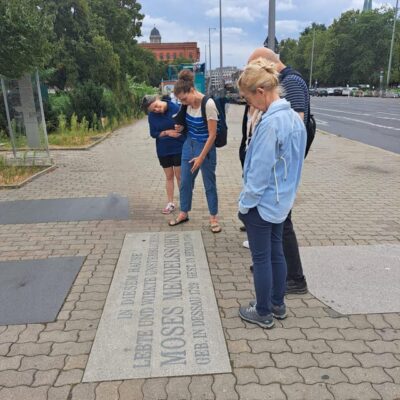

Third Reich and the Holocaust in Berlin Private Guided Tour
Read our review →Browse the lists this tour appears in