
Reviewed · MUSEUMS
Berlin: Jewish Museum Highlights Tour
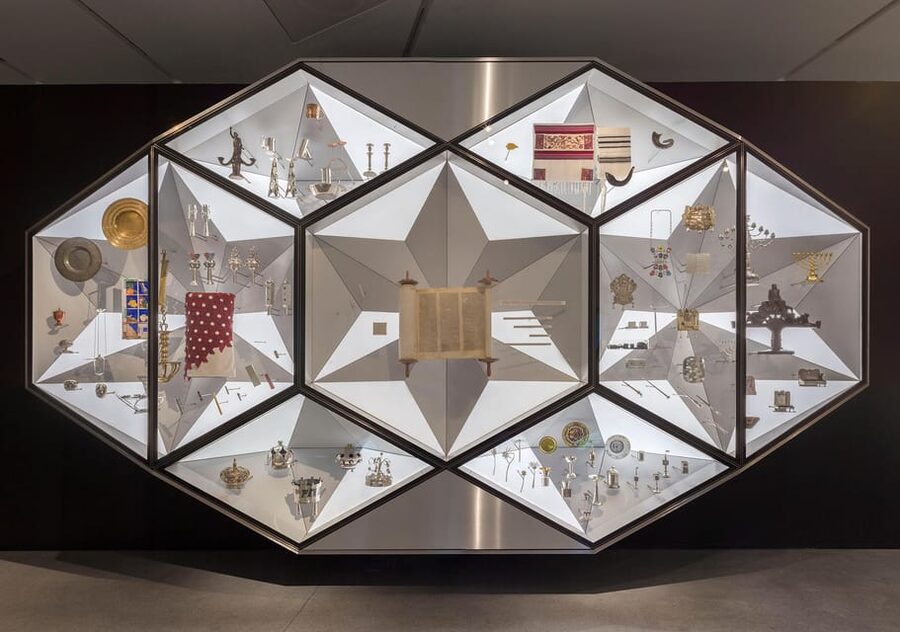
The most striking part of this tour is the way history, art, and architecture work together. In 90 minutes, you follow Jewish life in Germany from the Middle Ages to the present, with special attention to the Nazi era and the decades after 1945. The building itself is part of the lesson, not just a container for it.
I like the clear time frame and the use of real objects, video installations, art, and media stations. I also like that the tour presents Jewish history from a Jewish perspective, while allowing for different and sometimes opposing views. The main drawback is that 90 minutes gives you a strong first look, not enough time to absorb every room or stop.
Key points to know before you go
- Five historical chapters trace Jewish life in Germany from the Middle Ages to the present.
- Eight rooms on art and culture examine belonging, exclusion, identity, and Jewish life today.
- The building’s symbolic architecture is explained as part of the museum experience.
- Selected objects and media stations keep the tour focused instead of sending you through every display.
- English guiding and an English audio guide give you two ways to follow the material.
- The $7 price is unusually low for a guided museum visit, though you must also collect a free core exhibition ticket at the entrance.
Why this 90-minute tour works well

Berlin has plenty of museums that ask for a half day. The Jewish Museum can easily do that, too, but this tour gives you a useful first map in just an hour and a half. You are not left to guess which objects matter or how the rooms connect.
The tour focuses on the new core exhibition. Its five historical chapters move from the Middle Ages to the present day, while eight rooms on art and culture examine the relationship between belonging and exclusion. That pairing matters. You are not only following dates and events. You are also being asked to think about how Jewish identity has been shown, restricted, protected, and understood over time.
The guide selects particular stations and objects rather than trying to explain everything. I find that approach especially helpful in a museum with difficult subjects and strong visual design. A focused explanation can give you the context you need before you return later on your own.
The tour is offered in English, and an English audio guide is included. The live guide gives you a human explanation and a chance to follow the story as it unfolds. The audio guide offers added support if you want to revisit material at your own pace.
More Museum Tours in Berlin
- Berlin: Jewish Museum Berlin Entrance Ticket
★ 4.5 · 8,393 reviews - Berlin: DDR Museum Tickets
★ 4.3 · 3,443 reviews - Berlin: Natural History Museum Entrance Ticket
★ 4.6 · 3,382 reviews
Entering through the glass courtyard
You meet your guide in the old building, on the ground level in the glass courtyard. This is an important detail, since the museum has more than one architectural element and the meeting point is specific.
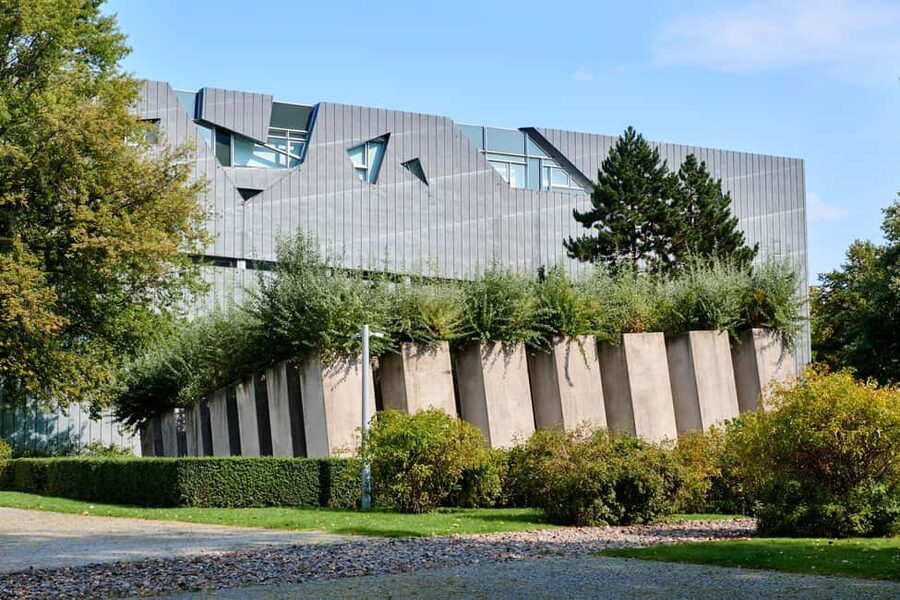
The tour begins with the museum setting itself. The architecture is symbolic, and the guide explains how its spaces relate to the subjects in the exhibition. This is one of the best reasons to take the tour rather than simply walk in with a ticket. Without context, the building may look dramatic or unusual. With context, its design becomes part of the museum’s argument about memory, absence, belonging, and exclusion.
The architecture received some of the strongest praise in the available feedback, and that makes sense. You do not need to be an architecture specialist to appreciate it. The guide connects the physical spaces to the historical material, helping you see why the building feels so closely tied to the exhibition.
Do not expect a light introduction to Berlin. The tone is serious, and some parts may be emotionally hard. That is fitting for the subject, but it is worth knowing before you arrive.
Five chapters from the Middle Ages to the present
The central historical route covers Jewish life in Germany across a long period. You begin in the Middle Ages and move toward the present, with the story shaped by changing relationships between Jewish communities and the societies around them.
This broad time span is useful because it prevents the museum from becoming only a Holocaust museum. The Nazi era is a major focus, as it should be, but the tour places it within a much longer story. You see Jewish life as more than a record of persecution. The exhibition also addresses culture, identity, daily life, and the question of what it means to belong.
That wider frame gives the later sections more weight. When the tour reaches the Nazi period, you have already seen that Jewish history in Germany did not begin with the rise of Nazism. You can better grasp what was destroyed, what was forced into silence, and what continued after 1945.
The route also avoids presenting history as a simple line with one fixed meaning. The exhibition brings together different positions, including views that can be tense or contradictory. That can require concentration, but it is one of the tour’s strengths. You are encouraged to think rather than simply receive a polished conclusion.
Objects, film, and art instead of a wall of dates
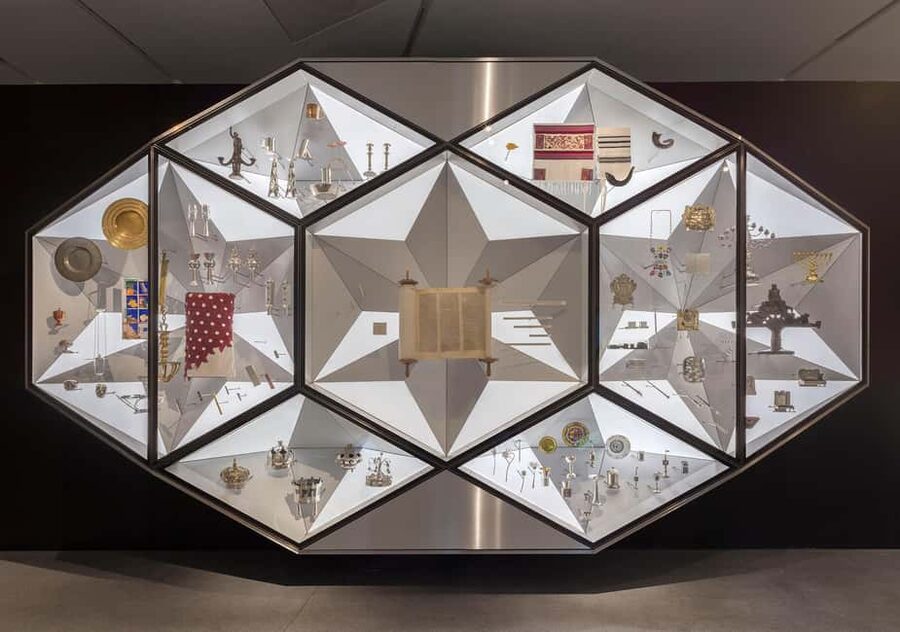
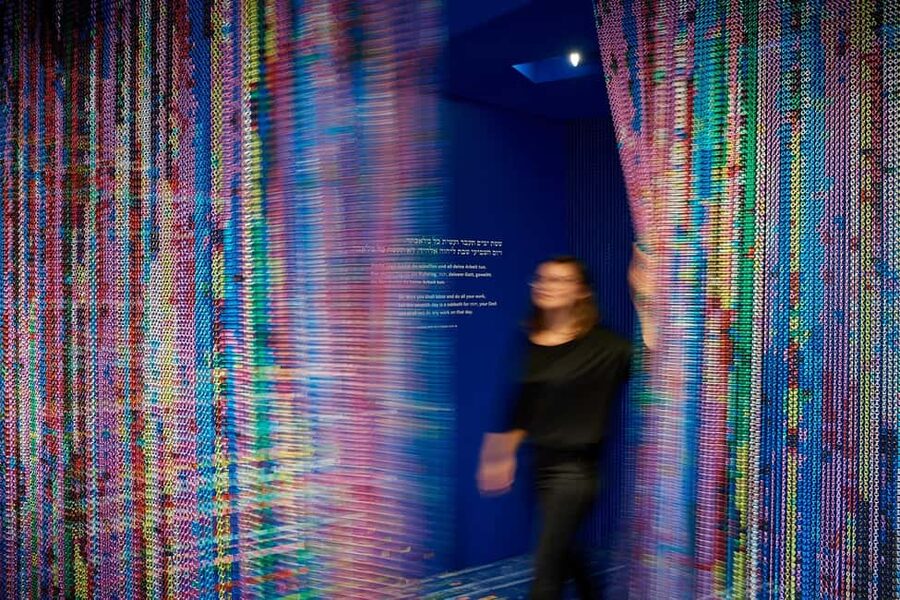
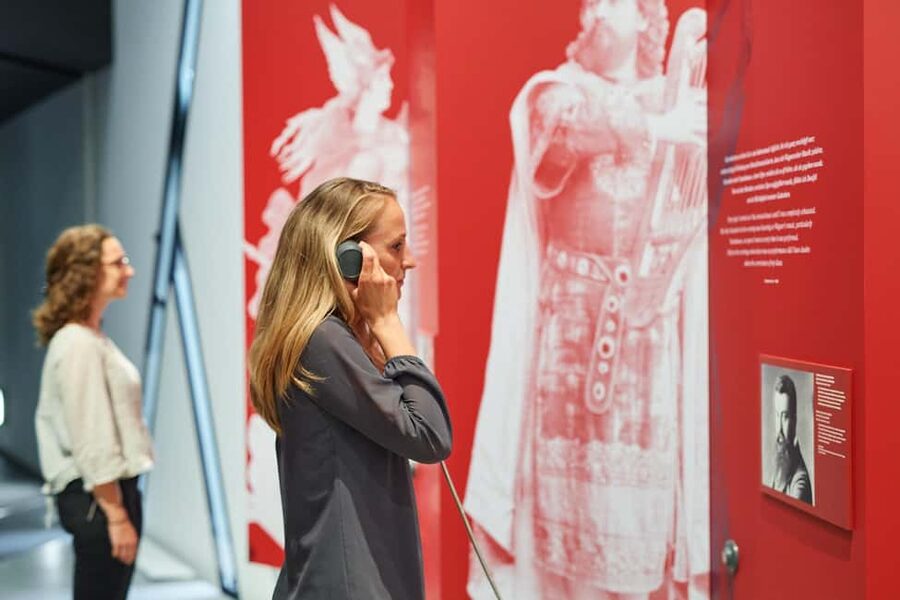
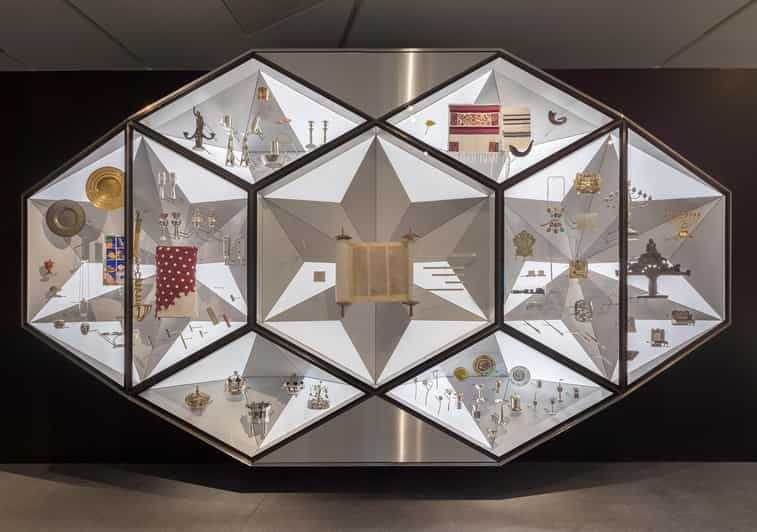
The collection includes historical objects, media stations, video installations, and works of art. This variety keeps the tour from becoming a lecture beside a series of labels.
A historical object can give a period a physical presence. A video or media station can offer another voice or a more personal angle. Art can express experiences that dates and official records cannot capture. The guide uses selected examples to show how the exhibition builds its story from several kinds of evidence.
I like this method because it makes room for Jewish culture as well as Jewish suffering. The tour looks at the question of what it means to be Jewish today, not only at what happened in the past. That makes the visit relevant to the present without pretending that history is settled.
You should still expect a great deal of information. The exhibition deals with centuries of history and several major themes. If you try to remember every name, date, and object, the 90 minutes may feel packed. Instead, I suggest listening for the main ideas and noting which stations you want to revisit after the tour.
More Jewish Heritage Tours in Berlin:
- Nazi Berlin and the Jewish Community Tour
★ 4.8 · 55 reviews - Path of Resistance: Berlin’s Hidden Holocaust Stories
★ 5.0 · 33 reviews - Private Tour: Jewish Heritage Walking Tour of Berlin
★ 5.0 · 29 reviews - Berlin‘s Jewish Heritage Private Tour With Jacob
★ 5.0 · 7 reviews
The Nazi era and the years after 1945
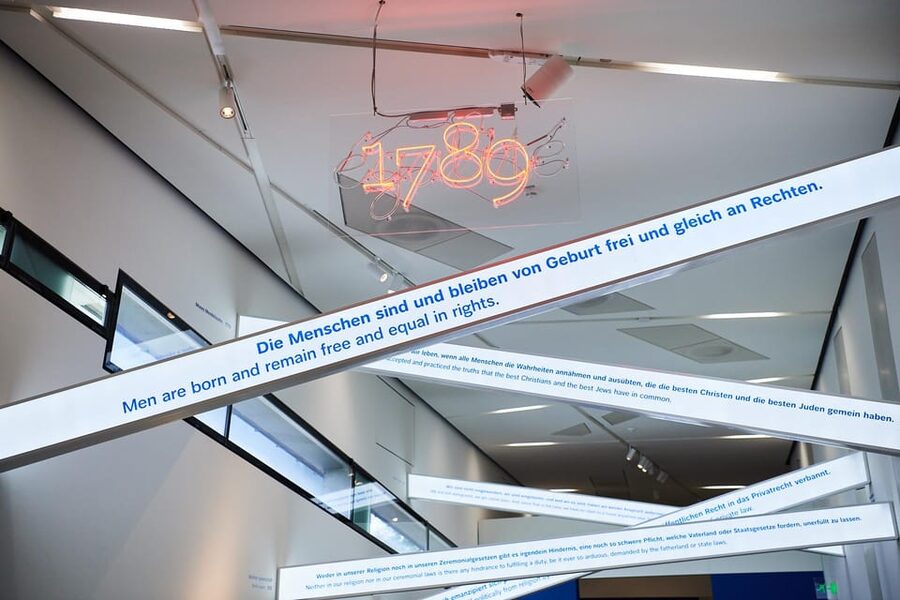
The Nazi era receives particular attention, followed by the years after 1945. These sections are likely to be the most demanding part of the visit, both in subject matter and in the questions they raise.
The tour does not treat 1945 as a neat ending. The years after the war bring their own issues of memory, responsibility, identity, and Jewish life in Germany. That makes the historical structure more honest. Liberation did not erase the consequences of persecution, and the story of Jewish life continued in complex ways.
The guide’s role is especially valuable here. A live explanation can connect an object or installation to the larger historical question, rather than leaving you alone with a difficult display. The strongest response to the tour described the exhibition as poignant and praised the guide’s storytelling. That captures the kind of visit to expect: serious, carefully explained, and emotionally direct.
At the same time, this is not a tour designed to entertain you every minute. If you want a quick list of Berlin sights, choose something else. If you want a thoughtful introduction to Jewish history in Germany, the pace and tone are well suited.
A Jewish perspective with room for disagreement
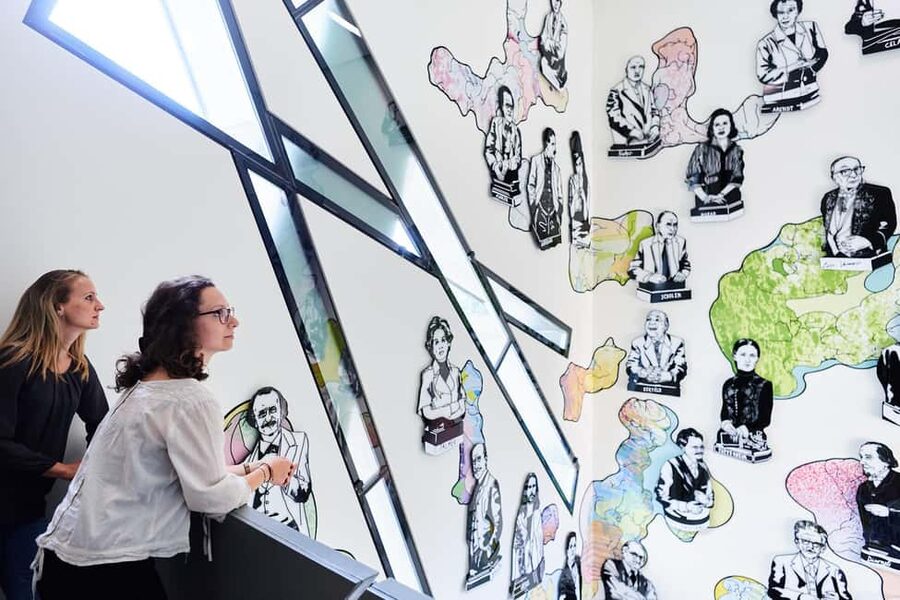
The tour presents the exhibition from a Jewish perspective. That does not mean every topic is reduced to a single official view. Instead, the material brings forward several voices and positions, including ideas that may not fit neatly together.
This is important for anyone who wants a simple, tidy explanation. You may find that the exhibition asks more questions than it answers. Themes such as belonging and exclusion do not stay confined to one century. They return in different forms across the historical chapters and the art and culture rooms.
One useful effect of this approach is that Jewish culture is not shown as a single, fixed thing. The exhibition addresses diversity within Jewish life and the meaning of being Jewish today. That gives the tour more range than a visit focused only on persecution and survival.
The tour can also prompt you to think about displaced minorities beyond the museum’s immediate subject. One visitor left with a broader appreciation of the challenges faced by Jews and other displaced minorities. That is a reasonable expectation, but the museum keeps Jewish history at the center rather than turning the subject into a general lesson detached from its context.
How to use your time after the guided visit
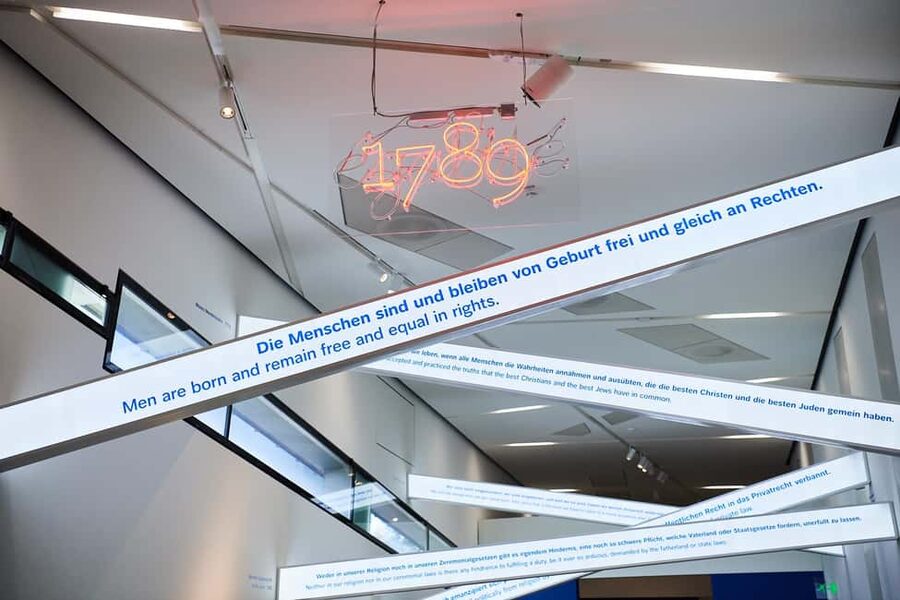
The tour lasts 1.5 hours, so treat it as an introduction. You will see selected stations and objects, not every part of the permanent exhibition in equal detail.
If you have time, use what you learn to return to the displays that caught your attention. The English audio guide can help you continue independently. You may also find that the architecture deserves another look once the guide has explained its symbolic role.
The $7 price makes this a strong value for a first visit. Entry and the guided tour are included, and the activity includes skip-the-ticket-line access. Still, you must get a free ticket for the core exhibition at the museum ticket desk when you arrive. Allow a little time for that step, even though it does not add a cost.
Food, drinks, and transport to and from the museum are not included. You arrange your own way to the museum and make your own plans for refreshments.
Practical details that affect your choice
The tour is held in English, with an English-speaking live guide and an English audio guide. No guide names are provided in advance, so you should choose it for the museum content rather than expecting a particular individual.
The meeting point is in the old building on the ground level in the glass courtyard. Wheelchair access is available. Starting times vary, so check availability for your date before booking.
The reservation policy is flexible. You can reserve now and pay later, and you can cancel up to 24 hours before the activity for a full refund. That is useful if your Berlin schedule is still shifting.
A perfect rating from 17 ratings points to a consistently strong experience, especially in guiding, storytelling, architecture, and the emotional effect of the exhibition. Still, the small sample does not tell you that every tour will feel identical. The guide’s style can shape the visit, and the subject may affect people differently.
Who should book this Jewish Museum tour?
I would choose this tour if you are visiting the Jewish Museum for the first time and want a clear route through a demanding exhibition. It suits people who value context, careful storytelling, and the link between architecture and history.
It is also a good pick if your Berlin schedule is tight. Ninety minutes gives you a serious introduction without requiring a full morning or afternoon. Families with older children and adults who prefer guided museum visits may find the structure helpful, though the subject matter calls for maturity and attention.
I would skip it if you want to wander entirely alone, dislike guided pacing, or plan to study every display in detail. The tour is a starting point, not a replacement for a longer museum visit.
Should you book it?
For $7, this is an easy recommendation for most first-time visitors to the Jewish Museum. You get a live English tour, an audio guide, museum entry, and a focused explanation of one of Berlin’s most important cultural sites.
Book it if you want help reading the building, placing the Nazi era within a longer Jewish history, and making sense of the exhibition’s different voices. Just arrive ready for serious material, collect the free core exhibition ticket at the entrance, and plan to return to the rooms that deserve more time.
FAQ
How long does the Jewish Museum Highlights Tour last?
The tour lasts 1.5 hours.
What language is the guided tour in?
The live guided tour is held in English.
Is an audio guide included?
Yes. An English audio guide is included.
Where do I meet the guide?
Meet the guide in the old building on the ground level in the glass courtyard.
Is museum entry included?
Entry is included with the activity. You must also get a free ticket for the core exhibition at the museum ticket desk at the museum entrance.
What does the tour cover?
It covers selected stations and objects from the new core exhibition, including five historical chapters and eight rooms focused on art and culture. The story runs from the Middle Ages to the present, with particular attention to the Nazi era and the years after 1945.
Is the museum wheelchair accessible?
Yes, the activity is wheelchair accessible.
Can I cancel the booking?
Yes. You can cancel up to 24 hours in advance for a full refund.
Do I have to pay when I reserve?
No. The reserve now and pay later option lets you book your spot without paying immediately.
Just added in Berlin
- Berlin & The Third Reich Private Guided Tour★ 5.0 · 3 reviews
- Third Reich Quest Experience in Berlin★ 4.5 · 7 reviews
- Private Analogue Photography Experience in Berlin★ 5.0 · 3 reviews
- Berlin Urbex Adventure and History Tour★ 5.0 · 9 reviews
- The Beauty of Berlin by Bike: Private Tour★ 5.0 · 59 reviews
- Berlin: Guided Bike tour of the Berlin Wall and Third Reich★ 5.0 · 160 reviews
- Beyond Currywurst: Berlin’s Hidden Street Food & Culture Tour★ 5.0 · 100 reviews
- Berlin Third Reich & Cold War Walking Tour With A Guide★ 5.0 · 7 reviews
Museums, compared.



Skip-the-Line: Berlin Wall Museum at Checkpoint Charlie
Read our review →
Browse the lists this tour appears in