
Reviewed · HISTORICAL TOURS
Berlin: Historic Jewish walking tour through the city center
Berlin’s former Jewish tailoring district tells a sharp, easily missed story: how a successful industry helped shape the capital, then suffered under political extremism and persecution. I like the focus on the lost Konfektion industry, and I like that the route stays compact, linking Hausvogteiplatz, Werderscher Markt, and Jägerstraße in one hour. The guide also connects the area’s past to Berlin after the Wall fell.
The main drawback is the short running time. One hour is enough for a focused introduction, but not for a full treatment of Berlin’s Jewish history. The advertised price is just $1.70, while the tour description also refers to donation-based booking, so confirm the payment arrangement before you go.
Key points at a glance
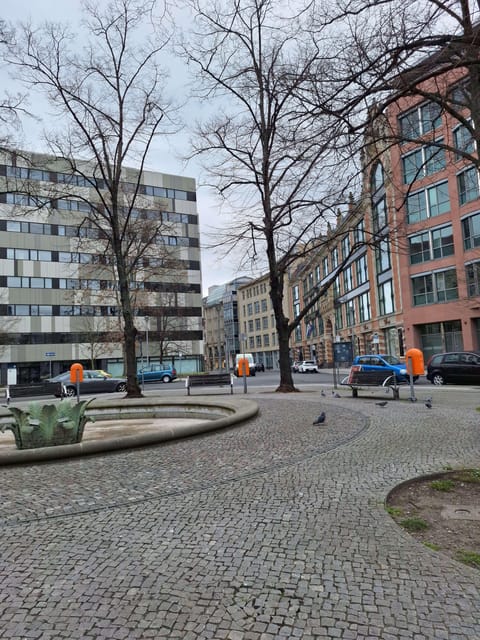
- Hausvogteiplatz is the central story point: Begin and end beside the fountain, near the U2 station.
- The Konfektion industry takes center stage: Learn how Jewish businesses helped drive Berlin’s fashion and clothing trade before the Second World War.
- Three central Berlin stops keep the walk efficient: The route covers Hausvogteiplatz, Werderscher Markt, and Jägerstraße.
- The timeline reaches beyond the Nazi period: Your guide links Prussian Berlin and the Roaring Twenties with the divided city and Berlin today.
- This is a history walk, not a sightseeing checklist: The main reward is context about people, commerce, persecution, and urban change.
- The format is practical: It lasts one hour, is conducted in English, and ends where it begins.
Why Berlin’s tailoring story matters
Most visitors come to central Berlin looking for grand political sights. This walk points to something less obvious: the clothing trade that once helped power the city’s economy.
The focus is the Konfektion industry, the ready-to-wear clothing business that grew into a major economic force before the Second World War. Jewish residents played a central role in developing and running this trade. That makes the subject useful for understanding Berlin not only as a political capital, but also as a place shaped by shops, workshops, fashion, money, and family businesses.
I like this approach because it gives you a clear human scale. Instead of treating Jewish history as a separate chapter detached from the city, the tour shows how Jewish Berliners helped build everyday urban life. Their work affected commerce, style, employment, and the look of the city center.
The story then turns painful. Political extremism did not simply harm individuals. It attacked businesses, professions, neighborhoods, and the economic networks that had made Berlin successful. The tour uses the tailoring trade to show how quickly an industry can be damaged when a regime targets a population.
That connection is one of the strongest reasons to book. You are not only learning what happened to Berlin’s Jewish population. You are also seeing how persecution altered the city’s economy and public life.
More History Tours in Berlin
- Berlin: Natural History Museum Entrance Ticket
★ 4.6 · 3,382 reviews - Berlin Historical Highlights Walking Tour
★ 4.9 · 657 reviews - Berlin Private Complete History All Day Walking Tour
★ 5.0 · 474 reviews
Starting at Hausvogteiplatz near the U2
Meet your guide at Hausvogteiplatz square, close to the water fountain and the U2 train station. Look for the guide carrying a white side bag. This is a practical meeting point in central Berlin, and the fact that the walk returns here makes the outing easy to fit into a busy sightseeing day.
Hausvogteiplatz receives about 30 minutes of guided attention, making it the main stop rather than a quick introduction. Here, the guide sets up the wider story of Berlin during the Prussian Empire, the fashionable 1920s, the years of Nazi rule, the period before the Wall fell, and the city after reunification.
The square also gives the tour a useful sense of place. You are not receiving a general lecture about Jewish Berlin from far away. You are standing in the district connected with the economic life being discussed.
The information provided does not name an individual guide, so you should not expect to request a particular person. The tour is conducted in English, and the guide supplies a map and an ordered list of activities. Those materials should help you follow the route and keep the changing periods straight.
Because the walk begins beside the fountain, arriving a little early is sensible. Hausvogteiplatz is near public transport, but central Berlin can still be confusing if you are watching street signs, checking a phone, and looking for a guide at the same time.
Werderscher Markt and the city’s changing center
The next stop is Werderscher Markt, with about 15 minutes set aside for the visit. The stop forms part of the short walk through the former economic center and helps connect the tailoring story to Berlin’s wider cityscape.
Here, you can expect the guide to point out historic buildings and areas linked to the district’s changing role. The purpose is not simply to admire architecture. It is to understand how a commercial quarter can gain importance, lose its population and businesses, and later become part of a rebuilt or reinterpreted city center.
The tour’s timeline gives this stop extra weight. Berlin changed greatly between Prussian rule, the glamour of the 1920s, the destruction and persecution of the Nazi period, the division of the city, and the years after the Wall fell. Werderscher Markt is one point from which the guide can explain those shifts without sending you across half of Berlin.
Do not expect a long stop with entry to a museum or interior attraction. This is an outdoor walking tour, and the value comes from the explanation attached to the surroundings. If you prefer major monuments, panoramic views, or formal museum displays, this portion may feel modest. If you like seeing ordinary streets with a strong historical connection, it should be more rewarding.
Jägerstraße and the final 15 minutes
The last listed stop is Jägerstraße, where the tour spends another 15 minutes before returning to Hausvogteiplatz. Like Werderscher Markt, Jägerstraße is part of the city-center route rather than a separate attraction with a ticketed entrance.
This final section helps complete the picture of the former Jewish commercial district. By this point, you will have heard how Jewish residents developed and strengthened their place in Berlin, how some survived, and how political regimes damaged both people and business.
The route also looks at what happened after the Wall fell. That matters because Berlin’s recent changes can make old districts hard to read. New uses, rebuilt spaces, and modern city life may cover the traces of earlier commerce. The guide’s job is to help you connect the present streets with the lost industry that once operated there.
I would treat Jägerstraße as a closing chapter rather than a grand finale. The walk is built around links between places, not a single spectacular monument. You finish with a better understanding of how the district changed over time, then walk back to the original meeting point.
More Walking Tours in Berlin
- Discover Berlin Half-Day Walking Tour
★ 5.0 · 9,624 reviews - Berlin: Third Reich and Cold War 2 Hour Walking Tour
★ 4.9 · 6,830 reviews - Berlin: Discover Berlin Walking Tour
★ 4.9 · 5,998 reviews - Berlin’s Best: 2 Hour Walking Tour Third Reich and the Cold War
★ 5.0 · 5,486 reviews
What the one-hour format gives you
A one-hour tour can be a real advantage in Berlin. You get a concentrated history lesson without giving up half a day, and you can easily pair it with another central sightseeing plan.
The route has three main locations, with roughly 30 minutes at Hausvogteiplatz and 15 minutes each at Werderscher Markt and Jägerstraße. That structure keeps the guide from racing constantly between stops. It also makes clear that Hausvogteiplatz is the heart of the discussion.
The tradeoff is depth. Berlin’s Jewish history stretches across centuries and includes religion, migration, culture, politics, family life, persecution, and postwar memory. This experience cannot cover all of that in an hour. It concentrates on the city center and the tailoring industry, which is a strength if you want a focused topic, but a limit if you want a broad survey.
I would book it as an introduction or as a specialist walk within a larger Berlin visit. You will get the most from it if you already plan to see the city’s better-known historical sights and want one hour devoted to an economic story that those sights may not explain.
Price, payment, and overall value
At $1.70 per person, the listed price is extremely low for a guided city walk. Even with only an hour, that makes the experience a good-value way to add historical context to your day.
There is an important point to clarify before booking. The description also says the tour is offered on a donation basis and asks you to contact the provider to arrange it. Those details do not perfectly match a fixed $1.70 price, so confirm whether the amount is a booking price, a suggested contribution, or part of the provider’s donation system.
The value here is not based on the number of attractions. You are paying for interpretation, a route through a significant district, and a clearer understanding of how commerce and persecution shaped Berlin. If that subject interests you, the short format works in your favor.
The map and ordered activity list add some practical value. You can use them to follow the route during the walk and remember the stops afterward. Do not expect a large printed guidebook or a stack of historical documents. The materials are meant to support a compact walking experience.
Who will get the most from this walk
I would recommend this tour to anyone interested in Jewish history, Berlin’s economic past, urban change, or the effect of political extremism on ordinary city life.
It also suits people who want a short English-language activity near a central U2 station. The start and finish at Hausvogteiplatz make it easy to place between other plans, and the one-hour length does not demand a full morning or afternoon.
The tour may be especially useful if you have already seen Berlin’s famous political landmarks. Those sights explain power and war on a national scale. This walk adds the commercial and personal scale, showing how a city’s economy can depend on communities that later become targets of persecution.
Children under six are not permitted. Older children may find the subject heavy, so consider the age and attention span of your group. The tour is wheelchair accessible, which makes the short central route available to more visitors, although the supplied information does not give details about every pavement surface or restroom access.
This is not the best choice if you want shopping, food tastings, nightlife, or a long architecture tour. It is also not designed as a full memorial tour. Its subject is narrower and more economic: Berlin’s lost Jewish tailoring industry and the city around it.
A thoughtful way to fit it into your Berlin day
Because the walk starts and ends at Hausvogteiplatz, you can plan your day around central Berlin without arranging a complicated transfer. The nearby U2 station is the clearest transport reference, and the return to the same square removes the worry of finishing in an unfamiliar neighborhood.
Bring comfortable shoes. The route is only an hour, but it is entirely on foot, and the guide will be speaking while you move between outdoor stops. A small notebook or phone note may be useful because the story crosses several periods and includes economic changes that are easy to forget.
Arrive with an open mind about what counts as a major sight. The most important details may be a street, a square, or a building mentioned in passing rather than an impressive monument. The guide’s explanation is what turns the setting into a historical stop.
You should also allow room for the emotional weight of the subject. The story includes persecution, destroyed livelihoods, and the fact that some people survived while many did not. The tone is educational, but the history itself is difficult.
Should you book this Berlin Jewish history tour?
Book it if you want a short, inexpensive, English-language walk that explains Berlin through its former Jewish tailoring trade. The focus on the Konfektion industry gives you a fresh way to understand the city, and the links between Prussian Berlin, the 1920s, Nazi rule, the divided city, and today add useful historical range.
Skip it if you want a broad Jewish history tour, museum admissions, or a longer route with many major landmarks. One hour cannot cover everything.
For most visitors with an interest in Berlin’s less visible stories, I think the experience is worth fitting in. Just confirm the donation or payment arrangement in advance, meet by the fountain with the white side bag in sight, and treat the walk as a focused introduction rather than a complete history of Jewish Berlin.
FAQ
Where does the walking tour start?
The tour starts at Hausvogteiplatz square, near the water fountain and close to the U2 train station.
How do I identify the guide?
The guide will be carrying a white side bag.
Where does the tour finish?
The activity ends back at Hausvogteiplatz, the original meeting point.
How long does the tour last?
The walking tour lasts one hour.
What language is the tour conducted in?
The live tour guide speaks English, and English is the listed tour language.
Which places does the route visit?
The route includes Hausvogteiplatz, Werderscher Markt, and Jägerstraße before returning to Hausvogteiplatz.
Is the tour wheelchair accessible?
Yes, the activity is listed as wheelchair accessible.
Are young children allowed to join?
The tour is not suitable for children under six years old.
More Jewish Heritage Tours in Berlin
- Berlin: Jewish Museum Berlin Entrance Ticket
★ 4.5 · 8,393 reviews - Nazi Berlin and the Jewish Community Tour
★ 4.8 · 55 reviews - Path of Resistance: Berlin’s Hidden Holocaust Stories
★ 5.0 · 33 reviews - Private Tour: Jewish Heritage Walking Tour of Berlin
★ 5.0 · 29 reviews
Just added in Berlin
- Berlin & The Third Reich Private Guided Tour★ 5.0 · 3 reviews
- Third Reich Quest Experience in Berlin★ 4.5 · 7 reviews
- Private Analogue Photography Experience in Berlin★ 5.0 · 3 reviews
- Berlin Urbex Adventure and History Tour★ 5.0 · 9 reviews
- The Beauty of Berlin by Bike: Private Tour★ 5.0 · 59 reviews
- Berlin: Guided Bike tour of the Berlin Wall and Third Reich★ 5.0 · 160 reviews
- Beyond Currywurst: Berlin’s Hidden Street Food & Culture Tour★ 5.0 · 100 reviews
- Berlin Third Reich & Cold War Walking Tour With A Guide★ 5.0 · 7 reviews
Historical Tours, compared.
City History Canal Sightseeing Tour on a Motorboat
Read our review →


Browse the lists this tour appears in