
Reviewed · THIRD REICH TOURS
Munich: Third Reich Guided City Walking Tour
Munich’s Nazi past is not tucked away in a distant museum. It is written into the city center, from the political drama around Odeonsplatz to the grand buildings used for propaganda and diplomacy. This 2.5-hour walking tour connects those places in a clear historical sequence, beginning at Marienplatz and ending around Königsplatz.
I like the focus on specific sites and the attention given to German resistance figures, not only Adolf Hitler and the Nazi leadership. I also like the low price, $23, for a long guided walk. The main drawback is important: this is a Spanish-language tour only, and children under 13 cannot join.
Key points to know before booking
- Spanish only: You must speak Spanish to take part.
- A route through central Munich: The walk begins at Marienplatz and includes Odeonsplatz, Hofbräuhaus, Haus der Kunst, Führerbau, and Königsplatz.
- The Beer Hall Putsch gets serious attention: You’ll learn how Hitler’s failed 1923 coup helped shape the Nazi movement.
- Art and propaganda are part of the story: Haus der Kunst provides a useful look at Nazi cultural policy and the attack on degenerate art.
- Resistance is included: Georg Elser and the White Rose receive space alongside the better-known Nazi figures.
- Plan for a full walking morning or afternoon: The tour lasts 2.5 hours, so comfortable shoes matter.
Why this Munich walk is worth your time
Many tours about the Third Reich stay at the level of dates and famous names. This one is more useful because it ties political events to actual addresses. You move through places where speeches were made, parties organized, propaganda displayed, and major diplomatic decisions signed.
That physical connection matters in Munich. The Nazi movement did not begin as a distant force that suddenly arrived in the city. Its political roots grew here, in familiar public spaces and meeting halls. Walking between those locations gives you a better sense of how a movement developed through organization, publicity, political violence, and the exploitation of public anger.
The price also works in your favor. At $23 per person, this is a fairly economical way to spend 2.5 hours with a guide rather than trying to piece together the story from plaques and a map. You are paying for interpretation and sequence, not entry to a collection of museums. Food, drinks, and admissions are not included, though the listed route centers on exterior locations.
The tour has a strong rating of 4.9 from 34 reviews, with particular praise for the large amount of historical information, friendly guiding, and well-paced route. I would treat that as a sign that the guide keeps the material moving instead of turning the walk into a long lecture at one corner.
More Third Reich Tours in Munich
- Munich: Third Reich & WWII Walking Tour
★ 4.6 · 6,181 reviews - Third Reich Walking Tour Munich
★ 4.5 · 4,291 reviews - Munich: Birthplace of the Third Reich Guided Walking Tour
★ 4.6 · 771 reviews
Starting at Marienplatz
Meet your guide in front of the Tourist Information Office at Marienplatz. This is a practical starting point because it is easy to identify, central, and familiar to most people staying in Munich.
From here, the guide sets up the city’s role in the rise of National Socialism. The opening matters because the tour is not simply a march from one Nazi building to another. You first get the political background needed to understand why Munich became so important to Hitler and the early Nazi party.
Expect the first portion to orient you to the main events and locations ahead. Marienplatz itself is a busy public square, so listen closely at the start and stay near the guide. The precise meeting point is in front of the Tourist Information Office, not just somewhere in the square.
The route then moves toward Odeonsplatz. Since the tour is entirely on foot, you will want shoes that can handle 2.5 hours of city walking. There is no food or drink included, so carry water if you need it.
Odeonsplatz and the Beer Hall Putsch
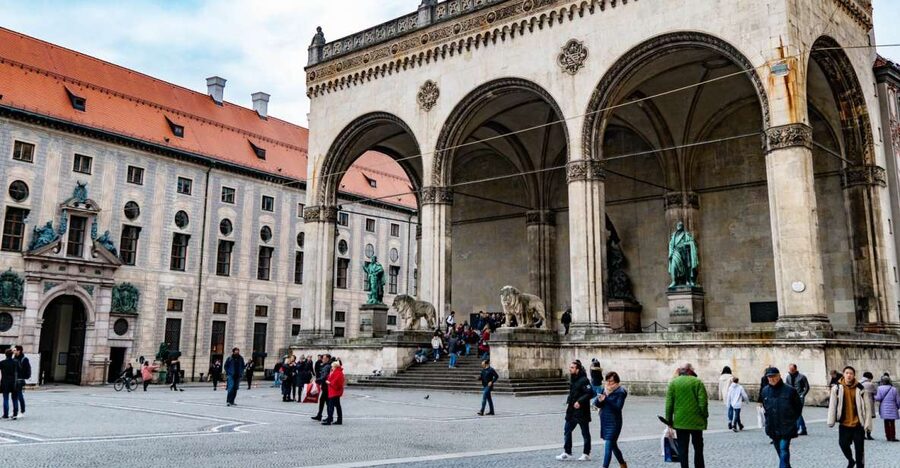
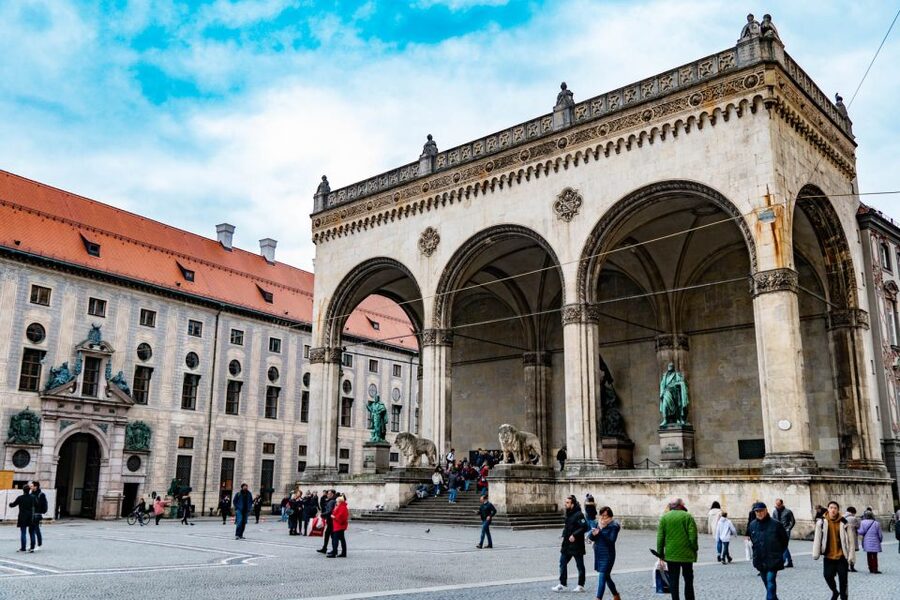
Odeonsplatz is one of the key places on the route because it links Munich’s public spaces with Hitler’s attempted seizure of power. Here, the story turns from political origins to the Beer Hall Putsch, the failed 1923 coup that became one of the defining episodes in Hitler’s early career.
You’ll hear how the putsch fit into the growth of the National Socialist German Workers’ Party and why Munich served as an important base for the movement. The useful point is not only that the coup failed. The event helped create a political legend around Hitler and gave the Nazi movement a story of sacrifice, conflict, and supposed national rescue.
That distinction is worth keeping in mind. The Beer Hall Putsch was a failure in immediate practical terms, but it became useful propaganda later. A good guide can show you how political movements turn defeat into a recruitment tool, and this stop gives the tour a clear example.
The walk also includes Hofbräuhaus, a name most people associate with beer halls and Bavarian food. On this tour, you see it through a political lens. The focus is on Hitler’s putsch and the early development of the Nazi party, not on sampling beer or eating a meal.
That makes Hofbräuhaus an interesting stop, but also one where expectations matter. You are not receiving a restaurant visit or a tasting. You are learning about the building’s connection to Munich’s political past. If you want to visit inside for food or drinks, plan that separately.
Hofbräuhaus and the Nazi party’s early years
The Hofbräuhaus section helps explain how political organization took place in settings that were part of ordinary Munich life. The Nazi movement did not grow only through official government buildings. Meetings, speeches, party disputes, and public persuasion all mattered.
You’ll examine the beginnings of the Nazi party in Munich and the path that brought Hitler into its political orbit. The tour’s value here comes from linking personal ambition with the broader machinery of a political organization.
This is also one of the places where the guide’s pacing matters. There is a lot to cover: Hitler’s early political role, the party’s formation, the putsch, and the later importance of these events. The available feedback specifically praises the amount of information and the well-paced presentation, which is encouraging for anyone worried about a hurried list of dates.
Still, expect serious subject matter. This is not a light city walk with a few dark anecdotes added for atmosphere. The focus is the rise of a criminal dictatorship and the systems that helped it gain power. The best approach is to come ready to listen rather than looking for entertainment.
More Walking Tours in Munich
- Munich: Night Watchman Walking Tour
★ 4.7 · 2,092 reviews - Munich Ghosts and Spirits Evening Walking Tour
★ 5.0 · 1,900 reviews - Munich Old Town Walking Tour
★ 4.5 · 1,287 reviews - Munich: Walking Tour Old Town and Viktualienmarkt
★ 4.7 · 839 reviews
Haus der Kunst and Nazi control of art
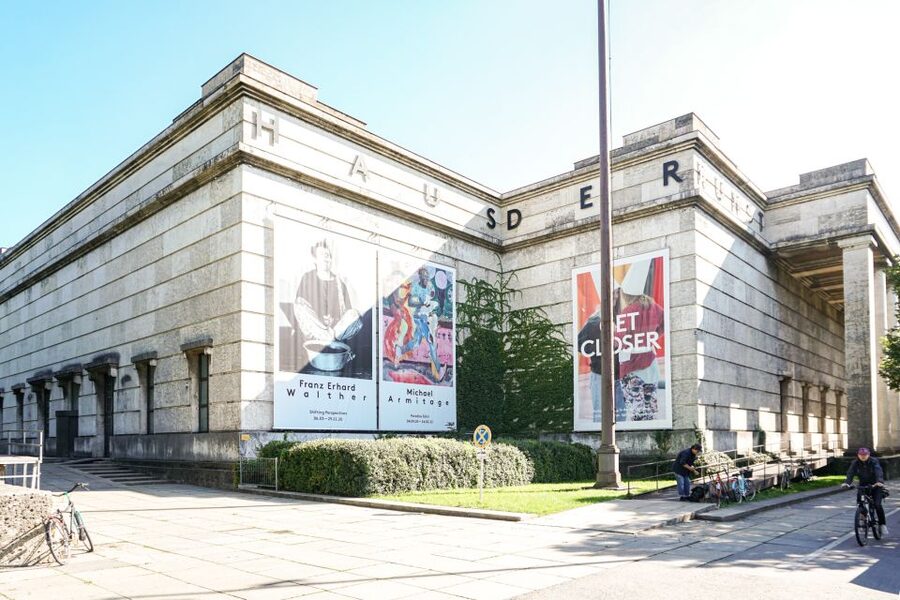
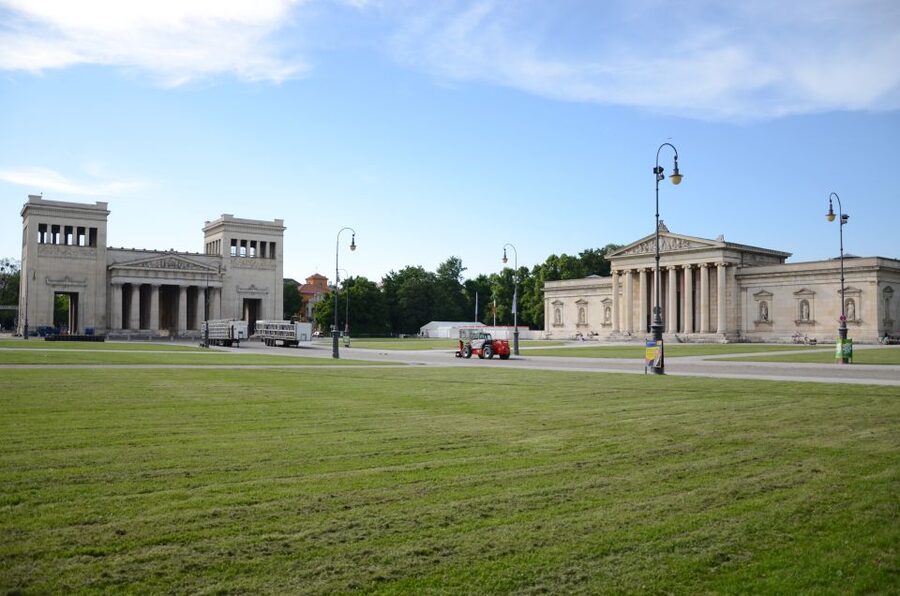
The next major stop is the front of Haus der Kunst, described as the first propaganda building in Nazi Germany. Here the tour widens beyond political meetings and street-level conflict to show how the regime tried to control culture.
You’ll hear about the building’s role in Nazi propaganda and the regime’s attack on degenerate art. This is an important part of the tour because propaganda was not limited to speeches, posters, or party rallies. Art, exhibitions, public buildings, and official taste were also used to define who belonged and what ideas were acceptable.
The discussion of degenerate art can help you see the cultural side of Nazi power. The regime labeled certain modern and politically unwanted works as corrupt, then used that label to attack artists and shape public opinion. The subject shows how authoritarian governments can use cultural policy to police identity and silence opposition.
The stop takes place at the front of the building. That means you should not expect an indoor museum visit or included gallery admission. You receive the historical explanation outdoors, as part of the walking route. If you want to explore Munich’s art collections, that requires a separate plan and ticket.
I like this section because it prevents the tour from becoming a narrow account of Hitler’s speeches and military decisions. You see how political power reached into daily ideas about art, taste, and national identity.
German resistance: Georg Elser and the White Rose
The tour also covers the German Resistance Movement, including Georg Elser and the White Rose. This is one of its strongest features because it gives you a more complete picture of Munich during the Nazi period.
Georg Elser is associated with an early attempt to kill Hitler, while the White Rose is remembered for its student-led opposition to the regime. Their inclusion shifts the focus from what the Nazis did to how some Germans resisted them, despite the risks.
That matters for historical accuracy and moral clarity. A city’s Nazi-era story should not suggest that every person accepted the regime. At the same time, the tour does not appear to treat resistance as a simple heroic footnote. Within a 2.5-hour route, the guide has to place these figures in the larger story of fear, surveillance, political pressure, and public silence.
You should pay close attention during this part. Resistance stories can easily become a list of names, but their real value comes from understanding the choices people faced. The tour’s Spanish-language format may be especially useful if you want to discuss these subjects naturally and ask questions in Spanish.
No specific guide names are provided, so you should not book this expecting a particular individual. The activity includes a live Spanish-speaking guide, and the feedback highlights friendly delivery and strong command of the subject, but guide assignments may vary.
Führerbau and the Munich Agreement
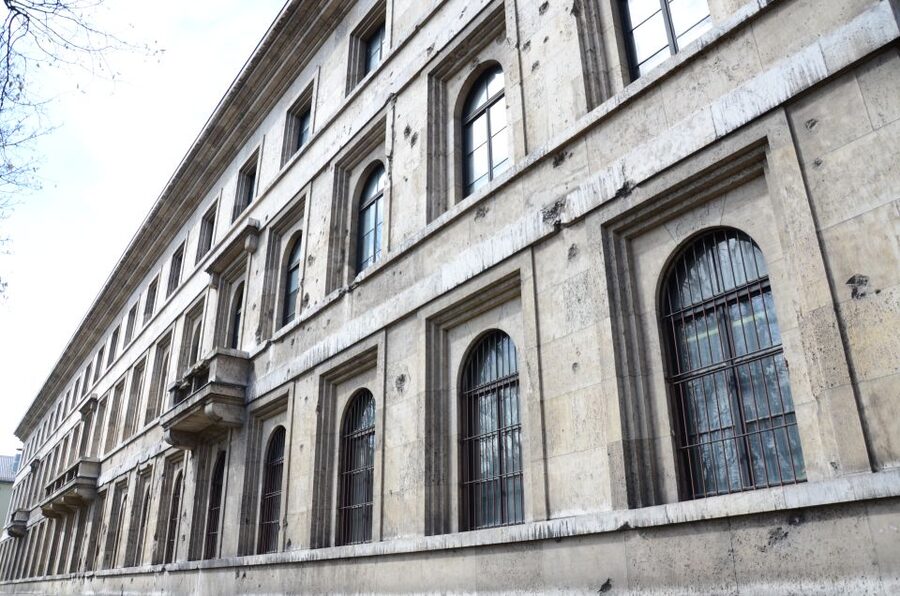
The route continues to Führerbau, the building where the Munich Agreement was signed in 1938. This stop takes the story from the Nazi movement’s early Munich years to its growing international power.
The Munich Agreement is a crucial point in the road toward the Second World War. It shows how Nazi Germany used diplomatic pressure and how other European powers responded to Hitler’s demands. The building gives that event a physical address, making the diplomatic story easier to place in the city.
For you, the main benefit is the connection between local and international history. Earlier stops examine party organization, propaganda, art, and resistance. Führerbau shows how the movement’s influence reached beyond Munich and into decisions affecting all of Europe.
Again, the tour focuses on the outside of significant buildings and public places. You should not assume that the activity includes interior access to Führerbau. Its value comes from the guide’s explanation of what occurred there and why the location matters.
Ending at Königsplatz
The walking route concludes at Königsplatz, one of the most important Nazi-era spaces in Munich. Reaching this area gives the tour a fitting final setting because the route has moved from the party’s early political activity to the grand public image the regime wanted to project.
Königsplatz helps bring together several themes from the walk: spectacle, architecture, propaganda, party power, and the transformation of public space. By the final stop, you have followed the story from political beginnings to dictatorship and international crisis.
The supplied activity details identify the end as back at the meeting point, while the route description says it concludes at Königsplatz. Because those details do not perfectly match, I would confirm the exact ending when you book. Either way, allow time after the scheduled 2.5 hours in case you want to continue exploring or need to return to Marienplatz.
Timing, language, and who should book
This tour is designed for Spanish speakers. The language restriction is firm: it is not open to people who do not speak Spanish. That makes it a good choice for Spanish-speaking visitors who want to discuss difficult history without working through a second language.
Children under 13 are not allowed to participate. The subject matter is serious, and the walking format requires sustained attention, so families with younger children should choose another activity.
The tour requires at least four participants to operate. If that minimum is not met, the local provider will contact you and offer an alternative. Keep that condition in mind if your schedule is tight.
You can cancel up to 24 hours in advance for a full refund, and you can reserve now while paying later. Those policies are useful if your Munich plans are still shifting, though the minimum-participant rule can still affect the departure.
Is $23 a fair price?
I think $23 is a good value if you want a structured introduction to Munich’s Nazi history. The tour covers several significant places over 2.5 hours, and the guide supplies the connections that make those sites meaningful.
You are not paying for museum admission, transport, food, or drinks. That keeps the price low, but it also means you should not compare this directly with an indoor museum tour or a full-day historical program.
The strongest value comes from the route and the explanation. Without a guide, Hofbräuhaus is easy to treat as a famous beer hall, Haus der Kunst as an imposing art building, and Königsplatz as a grand square. With historical context, each becomes part of a larger story.
The main question is language. If you speak Spanish, the price is attractive. If you do not, this is not the right booking, regardless of the low cost.
My recommendation for this Munich history tour
Book this walk if you speak Spanish, want a focused introduction to the Nazi movement in Munich, and prefer learning through real city locations. The route gives you political origins, the Beer Hall Putsch, Nazi art policy, German resistance, the Munich Agreement, and Königsplatz in one compact outing.
I especially recommend it for first-time visitors who want historical context before exploring Munich on their own. The tour is also a good fit if Georg Elser, the White Rose, and cultural propaganda interest you, since those subjects receive attention alongside Hitler and the Nazi party.
Skip it if you need an English-language tour, are traveling with children under 13, or want extensive indoor access to museums and historic buildings. For the right audience, though, $23 buys a well-paced and serious walk through the places where Munich’s most troubling political chapter took shape.
FAQ
Where does the tour begin?
Meet your Spanish-speaking guide in front of the Tourist Information Office at Marienplatz.
How long does the tour last?
The guided walking tour lasts 2.5 hours.
What language is the tour conducted in?
The tour is conducted in Spanish only. It is not open to people who do not speak Spanish.
Which Munich locations are included?
The route includes Marienplatz, Odeonsplatz, Hofbräuhaus, the front of Haus der Kunst, Führerbau, and Königsplatz.
Does the tour cover the Beer Hall Putsch?
Yes. The tour explains Hitler’s putsch, the beginnings of the Nazi party in Munich, and the political background of the Beer Hall Putsch.
Does the tour discuss German resistance?
Yes. The tour includes the German Resistance Movement and figures such as Georg Elser and the White Rose.
Are children allowed to join?
Children under 13 are not allowed to participate.
What happens if fewer than four people book?
The tour requires a minimum of four participants. If that number is not reached, the local provider will contact you and offer an alternative.
Just added in Munich
- Private transfer: Vilshofen to Munich with 2h sightseeing stop★ 5.0 · 6 reviews
- Pub crawl incl. Oktoberfest museum guided tour with beer tasting (private)★ 5.0 · 5 reviews
- South Tyrolean specialties and wine tasting★ 5.0 · 5 reviews
- Size Matters Beer Tour Munich★ 4.6 · 105 reviews
- Short & sweet: Tasting the Viktualienmarkt★ 4.8 · 37 reviews
- Secret Food Tours Munich★ 4.8 · 5 reviews
- Munich: Romantic Wine Experience for Two at Viktualienmarkt★ 4.2 · 14 reviews
- Munich: Resistance against Hitler – Historical Walking Tour★ 5.0 · 5 reviews
Third Reich Tours, compared.

Berlin’s Best: 2 Hour Walking Tour Third Reich and the Cold War
Read our review →
Third Reich Berlin: Hitler and WWII Walking Tour
Read our review →
Walking Tour of Former Nazi Party Rally Grounds
Read our review →
Berlin Third Reich Sites: Half-Day Walking Tour
Read our review →Browse the lists this tour appears in