
Reviewed · OLD TOWN TOURS
Munich: Walking Tour Old Town and Viktualienmarkt
Munich’s best introduction may be a walk that connects its grandest squares with its most everyday pleasures. This 90-minute route moves from the bells and statues of Marienplatz to the food stalls of Viktualienmarkt, then on through old lanes, beer-hall country, royal buildings, and grand boulevards.
I like the way the route mixes major sights with local texture, especially the market and the narrow Platzlgassen alleys. I also like the guide-led format: guides such as Karen, Claudia, Gitti, and Gerhard have adjusted the walk to family interests, history questions, architecture, and even a child practicing German.
The main drawback is the tight timing. Ten minutes at each listed stop is enough for an introduction, not a full visit, and entrance fees are not included. The meeting point around the Mariensäule can also be hard to spot, so arrive early and confirm exactly where your guide will wait.
Key points to know before you book
- The route covers nine central sights in 90 minutes, making it a useful first look at Munich rather than a detailed museum tour.
- Viktualienmarkt adds food and daily life to a route otherwise filled with churches, palaces, monuments, and formal squares.
- The guide can shape the walk around your group, with past tours adapting to history, architecture, children, German practice, and local food questions.
- The price is $282 per group of up to 30, so it makes more sense for a full private group than for one or two people booking alone.
- The walk runs in rain or shine, and comfortable shoes matter on the Old Town streets.
- Private and shared formats are available, with German and English guiding.
Why this 90-minute walk works as a Munich introduction
Munich’s historic center is compact enough to explore on foot, but its story can feel scattered if you simply wander from one handsome building to the next. This route gives you a clear line through the city, beginning at its central square and ending at one of its grandest ceremonial spaces.
You get architecture, food culture, royal history, beer traditions, shopping, and a few quiet lanes in one short outing. That mix is the real strength. You are not spending the whole time looking at façades, and you are not spending the whole time inside a market or beer hall.
The pace should suit you if you have only a morning or afternoon to get oriented. It also works well near the start of a Munich stay, since the guides can point you toward places to eat and visit later. Melinda’s guide, Gerhard, gave recommendations for food and other city activities, while several guides adjusted the material to suit the people in front of them.
Still, 90 minutes goes quickly. You should think of this as a guided overview, not a substitute for visiting the Residenz, entering St. Peter’s Church, or spending time at the market on your own. If you want interior visits, plan those separately.
More Old Town Tours in Munich
- Munich: Old Town & Viktualienmarkt City Walk in German
★ 4.7 · 2,304 reviews - Munich Old Town Walking Tour
★ 4.5 · 1,287 reviews - Munich: Spooky Tour of Old Town in German
★ 4.6 · 1,112 reviews
Marienplatz and the New Town Hall
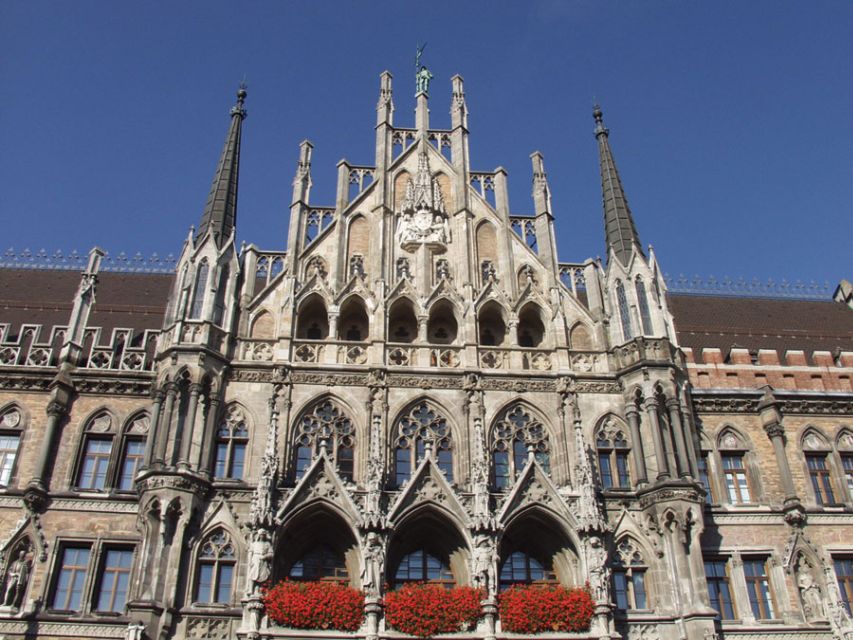
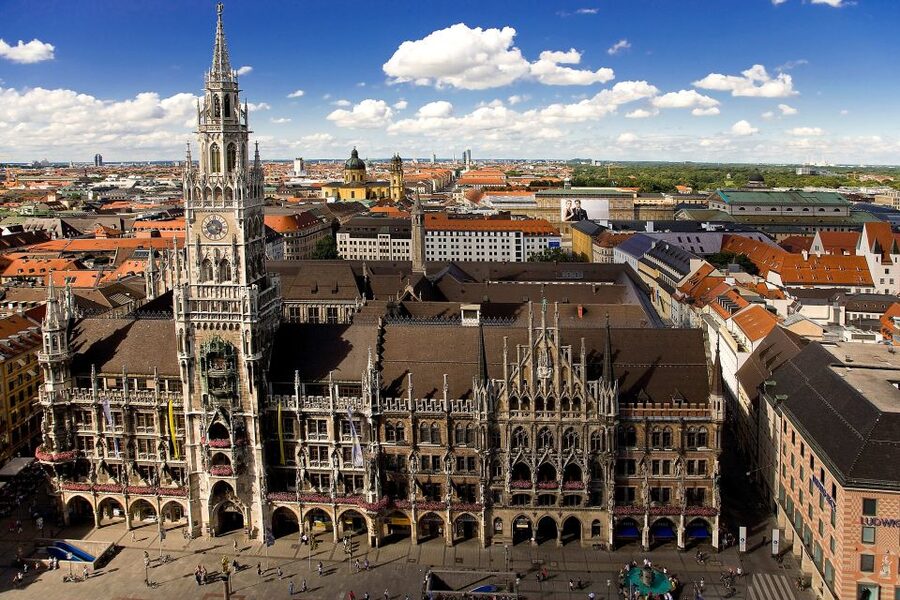
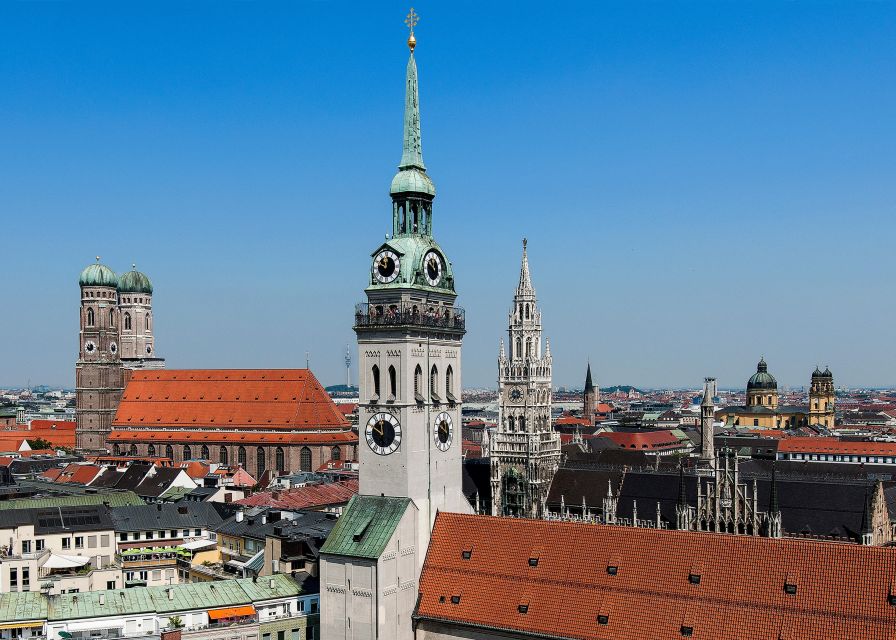
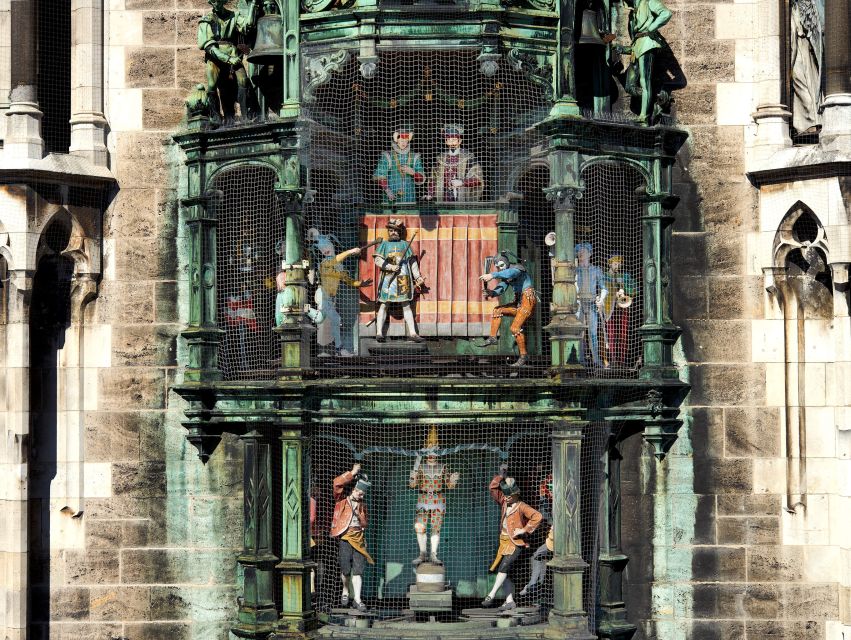
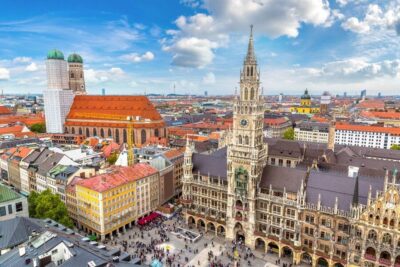
The walk begins at the Mariensäule on Marienplatz, the central square of Munich. The New Town Hall, or Neues Rathaus, supplies the dramatic backdrop, with its Neo-Gothic façade and famous Glockenspiel.
This is the right place to begin because it puts Munich’s public face in front of you at once. You can expect the guide to explain the square, the town hall, and the city’s role as Bavaria’s capital before moving into the surrounding streets.
Allow extra care at the meeting point. Marienplatz has a lot of open space around the column, and one person had trouble knowing exactly where to find the guide. The practical fix is simple: arrive 15 minutes early, look for the guide near the Mariensäule, and keep your phone available in case the meeting instructions specify a more exact spot.
The New Town Hall is mainly a sightseeing stop on this walk. You should not expect an extended interior visit or a full Glockenspiel presentation as part of the 10-minute stop.
St. Peter’s Church and Munich’s oldest parish church
From Marienplatz, the route continues to St. Peter’s Church, Munich’s oldest parish church. The short stop gives the guide room to place the church within the city’s early development and explain why this part of the Old Town matters.
The church is a useful contrast to the newer-looking town hall. Munich can appear almost uniformly polished at first glance, but this stop helps you see the layers beneath the grand central square.
You will have about 10 minutes here, so the focus is sightseeing and explanation rather than a leisurely church visit. If you want to study the interior or pursue the city’s religious architecture, save time for a return visit.
This is also a good point to ask questions. The strongest guides on this walk appear to be comfortable moving beyond memorized dates. Claudia, for example, has been praised for connecting architecture with broader stories about the city, while other guides have mixed historical facts with lighter local anecdotes.
Viktualienmarkt: Munich through food
Viktualienmarkt is the route’s most sensory stop. Munich’s largest and most traditional food market spreads through the Old Town with stalls selling fresh bread, cheeses, sausages, and other delicacies.
I especially like this part because it gives you something more useful than another photograph of a façade. You can see how food fits into city life, notice what locals buy, and return later if you want a snack or a closer look.
The tour allows roughly 10 minutes here, which is enough for an introduction but not enough for a full market visit. Do not expect a dedicated tasting session. Meals and drinks are not included, so any food or beer you choose to buy comes at your own cost.
If you are interested in Bavarian food, ask your guide for suggestions while you are there. The market is best understood as part of the city, not just as a collection of stalls. Its location also makes it an easy place to revisit after the walk.
More Walking Tours in Munich
- Munich: Third Reich & WWII Walking Tour
★ 4.6 · 6,181 reviews - Third Reich Walking Tour Munich
★ 4.5 · 4,291 reviews - Munich: Night Watchman Walking Tour
★ 4.7 · 2,092 reviews - Munich Ghosts and Spirits Evening Walking Tour
★ 5.0 · 1,900 reviews
Alter Hof and Burgstraße
Next comes the Alter Hof, or Old Court, reached by way of Burgstraße, one of Munich’s oldest streets. The Alter Hof was once the seat of the Wittelsbach dukes, so this stop shifts the story from civic Munich to the ruling family that shaped Bavaria.
The value here is connection. You have just seen the public square, the parish church, and the food market. Now the route shows you where dynastic power fitted into the medieval city.
Burgstraße and the surrounding lanes also give the walk a change of scale. After Marienplatz’s broad open space, you move into older streets where the city feels less formal. The stop is brief, but the guide can help you read the buildings rather than simply pass them.
If royal history interests you, listen closely here and ask follow-up questions. The tour has limited time, but guides have shown a willingness to focus more heavily on history when that is what a group wants.
Platzlgassen and the Hofbräuhaus
The walk then threads through the Platzlgassen alleys before reaching the Hofbräuhaus. These lanes offer a glimpse of Munich’s older street pattern, while the famous beer hall brings the city’s public drinking culture into view.
The Hofbräuhaus is one of those places that can feel overfamiliar before you arrive. A good guide makes it more useful by explaining its place in Munich life and the stories connected with locals, visitors, and royalty. One guide has even tailored a walk for a stag party with a balance of history and traditional bars.
This is sightseeing, not a reserved meal or beer-hall visit. Food and drinks are extra, and the 10-minute stop is too short for a proper evening there. If you want to eat or drink inside, return after the tour and give yourself more time.
For many people, the beer culture is one of the most enjoyable parts of understanding Munich. The key is to see the Hofbräuhaus as one part of the city, not the whole Bavarian story. This route helps by placing it between royal history, old streets, and the market.
Maximilianstraße and Munich’s luxury side
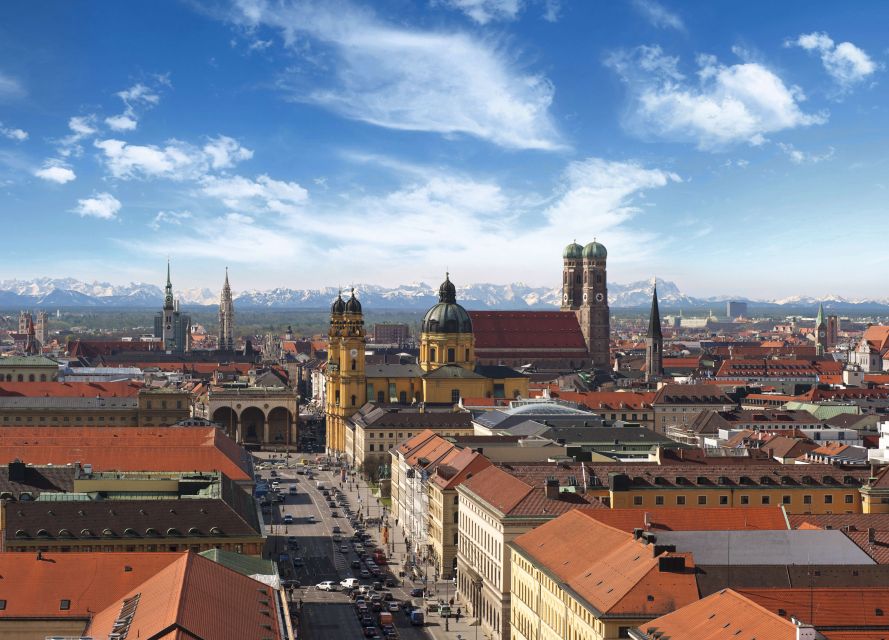
From the old lanes, the route moves toward Maximilianstraße, Germany’s most exclusive shopping street. The mood changes quickly. Instead of food stalls and medieval alleys, you see luxury boutiques, jewelers, and designer showrooms.
This is a useful reminder that Munich is not only a historic city or a beer city. It is also a wealthy modern center with a taste for polished storefronts and grand urban design.
You may not care to shop here, and that is fine. The value of this stop is visual and social. It shows how the city’s royal and commercial ambitions continue into the present.
The stop is short, so you should expect an outside look rather than time inside individual shops. If high-end shopping is a priority, ask your guide for orientation, but do not treat this walk as a shopping tour.
The Residenz and Bavarian royal power
The route continues past the Munich Residenz, the former seat of Bavarian royalty. Along with the nearby Bavarian State Opera, it introduces the formal heart of Munich’s royal and cultural life.
The Residenz deserves much more time than this walk can provide. Its significance is clear from the outside, but the palace interiors and collections require a separate visit, with entrance fees not included in the tour.
That limitation is not a flaw if you use the walk correctly. A guide can give you the context you need to decide if the Residenz belongs on your personal schedule. You will also understand its position within the wider city instead of arriving with no sense of how it connects to Munich’s other landmarks.
The Bavarian State Opera adds another layer. Here, royal authority, classical architecture, and modern cultural life meet within a small part of the center. Architecture fans may want to request extra attention in this area, as one guide spent additional time discussing architecture with an interested group.
Odeonsplatz and the Italian Baroque finish
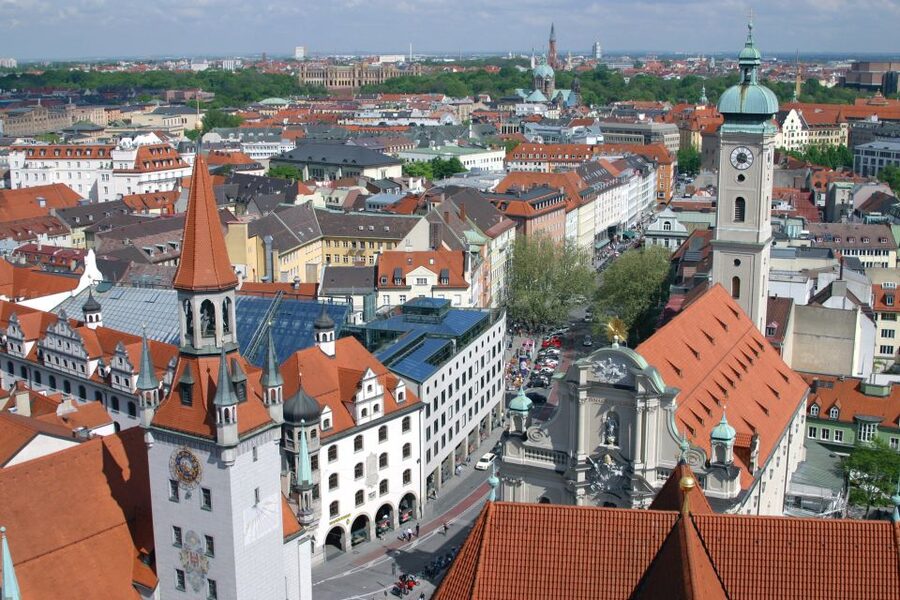
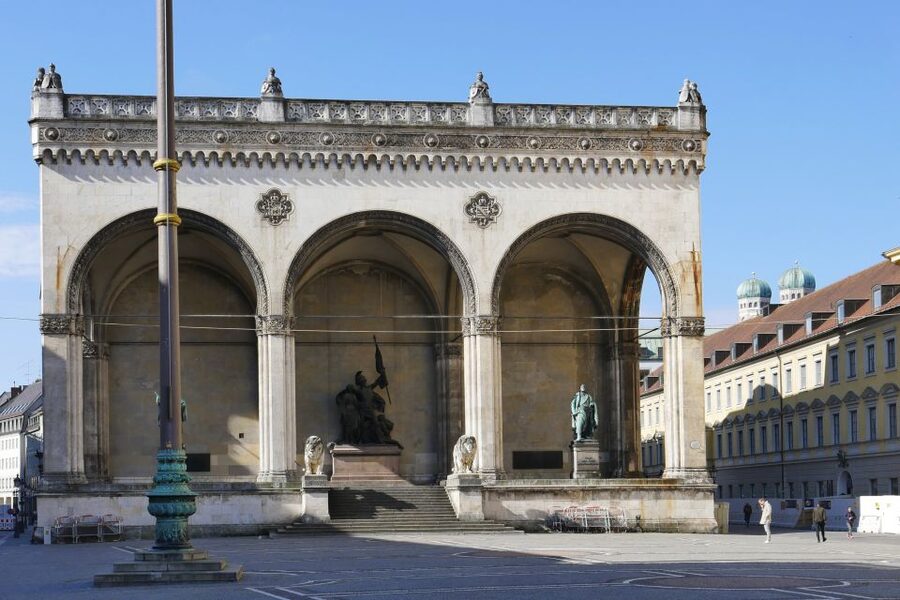
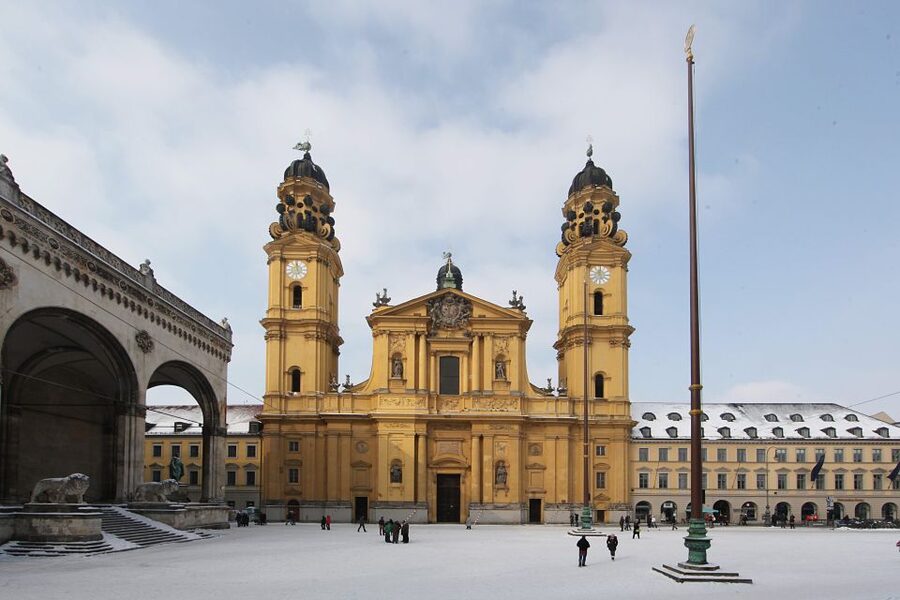
The final major stop is Odeonsplatz, a grand square framed by the Feldherrnhalle and the Theatinerkirche. The church’s Italian Baroque style helps explain Munich’s reputation as the northernmost city of Italy.
This is a strong ending because the square gathers many of the themes introduced earlier: political power, royal display, religion, architecture, and the city’s connection to Italy and wider Europe.
You can pause here to take in the scale of the buildings and ask final questions. The tour does not include a full church or palace visit, but the guide’s explanation can help you decide what deserves a return visit.
By the end, you have crossed from the central medieval core toward the grander ceremonial side of Munich. That geographic movement gives the walk a satisfying shape, even though each stop receives only a short introduction.
Guides, group size, and the human side of the walk
The guide matters more here than the route alone. The strongest part of the experience is the ability to adjust the storytelling to the group. Karen has worked well with families and children, including a 10-year-old, while Claudia has focused closely on history and architecture for guests who wanted more depth.
Gitti has been described as attentive to a group’s existing knowledge and interests, including the city before the 1850s and the development of beer culture. Sabine handled a rainy outing with warmth and flexibility, and Christina mixed historical facts with local stories and lighter details.
These examples suggest that you should speak up at the start. Tell the guide if you care most about architecture, royal history, food, beer, family-friendly explanations, or practical city advice. The walk is short, so clear priorities help the guide use the time well.
A group of 20 has worked successfully, but a large shared group can make it harder to hear and ask questions. The private option offers more room for personal attention. At $282 for up to 30 people, the price is steep for one or two people, but it can be reasonable when divided among a larger private group.
Weather, walking, and practical limits
The tour runs rain or shine. Munich weather can change, and the route includes outdoor streets and squares, so wear comfortable shoes and bring suitable protection for wet weather.
There is conflicting information about access. The activity is described as wheelchair accessible, but it is also marked as not suitable for people with mobility impairments. Because of that mismatch, contact the provider before booking if you need step-free access or have difficulty with extended walking.
Transportation to Marienplatz is not included. You need to make your own way to the selected meeting point, and the exact meeting place can vary by booking option. Plan extra time, especially if you are arriving by train or changing transport in the city.
The free cancellation period extends to 24 hours before the tour, and you can reserve now while paying later. Those terms are useful if your Munich schedule is still shifting, but they do not change the core issue: confirm the meeting point and plan for an outdoor walk.
Who should book this Munich walk?
I would choose this tour if you want a fast, well-organized introduction to central Munich with a guide who can explain the city in plain terms. It is especially suitable for first-time visitors, families, small private groups, and anyone who wants practical ideas for the rest of a stay.
It also suits you if you enjoy stories more than long museum visits. The guide can connect places to people, politics, architecture, food, and local customs without asking you to spend hours inside one building.
I would hesitate if you want substantial time at the market, a guided interior visit to the Residenz, or a relaxed meal at the Hofbräuhaus. The route shows you where to go, but you must return later for a fuller visit.
At the quoted group price, compare the shared and private options carefully. A larger group can make the cost sensible, while a solo visitor or couple may find a shorter self-guided walk better value. The high rating of 4.7 from 839 bookings points to a dependable format, but your satisfaction will still depend on group size, guide fit, and how much detail you want.
Should you book it?
Book this walk if you want the big Munich picture in 90 minutes and value a guide who can respond to your interests. The combination of Marienplatz, Viktualienmarkt, old lanes, Hofbräuhaus, Maximilianstraße, the Residenz, and Odeonsplatz covers an impressive amount of ground.
Skip it if you mainly want food tastings, palace interiors, or a slow market morning. For everyone else, it is a practical first step into Munich, especially when you tell the guide what you want to learn and leave time afterward to revisit the places that catch your eye.
FAQ
Where does the tour start?
The listed starting point is the Mariensäule at Marienplatz, but the exact meeting point may vary depending on the option you book.
How long does the tour last?
The walking tour lasts 1.5 hours.
What sights are included?
The route includes the New Town Hall, St. Peter’s Church, Viktualienmarkt, Alter Hof, Hofbräuhaus, Maximilianstraße, the Munich Residenz, and Odeonsplatz.
Is the tour offered in English?
Yes. Live guiding is available in English and German.
Is this a private tour?
You can choose between a private group and a shared group tour, depending on the booking option.
How much does the tour cost?
The listed price is $282 per group of up to 30 people.
Are food and drinks included?
No. Meals and drinks are not included.
Are entrance fees included?
No. Entrance fees are not included, and the route is primarily an outdoor sightseeing walk.
What should I bring?
Bring comfortable shoes. The tour runs in rain or shine, so prepare for outdoor weather.
Just added in Munich
- Private transfer: Vilshofen to Munich with 2h sightseeing stop★ 5.0 · 6 reviews
- Pub crawl incl. Oktoberfest museum guided tour with beer tasting (private)★ 5.0 · 5 reviews
- South Tyrolean specialties and wine tasting★ 5.0 · 5 reviews
- Size Matters Beer Tour Munich★ 4.6 · 105 reviews
- Short & sweet: Tasting the Viktualienmarkt★ 4.8 · 37 reviews
- Secret Food Tours Munich★ 4.8 · 5 reviews
- Munich: Romantic Wine Experience for Two at Viktualienmarkt★ 4.2 · 14 reviews
- Munich: Resistance against Hitler – Historical Walking Tour★ 5.0 · 5 reviews
Old Town Tours, compared.
Old Town & Viktualienmarkt City Walk in German
Read our review →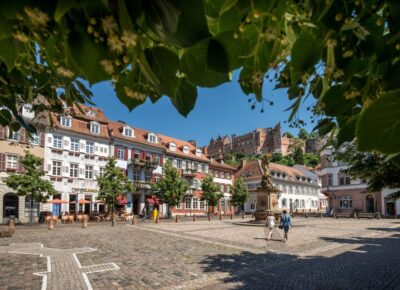
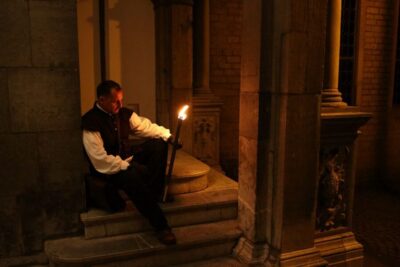
The Night Watchman Old Town Walking Tour in German
Read our review →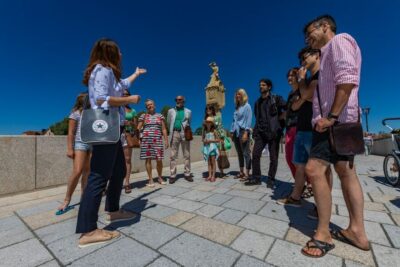
New Old Town and Highlights German-Language Tour
Read our review →Browse the lists this tour appears in