
Reviewed · THIRD REICH TOURS
Third Reich Berlin: Hitler and WWII Walking Tour
Berlin’s darkest history is often easy to miss. A modern government quarter, a parking lot, or an ordinary street can hide the former headquarters of a dictatorship. This walking tour connects those scattered places, from the Reichstag fire and Nazi ministries to Hitler’s bunker site and the memorials that force you to face what followed.
I like two things right away. First, the route gives you a useful map of Nazi Berlin instead of treating each sight as an isolated photo stop. Second, the guides bring human scale to the subject, including resistance figures, Jewish deportations, air raids, and daily life under dictatorship. The main drawback is simple: you walk for three hours, often briskly, and almost all of it takes place outdoors.
Key points to know before you book
- Hitler’s bunker is a location, not a preserved interior: You stand above the former bunker site and learn what happened there in April 1945.
- The route links major Nazi sites: See the Reichstag, Brandenburg Gate, former Air Ministry, Wilhelmstrasse, and Goebbels’ propaganda headquarters.
- The Holocaust Memorial adds essential context: Its concrete slabs make the history physical and unsettling, not just academic.
- Expect about 5,000 steps: Wear comfortable shoes and prepare for cold, wind, or rain.
- Guides shape the experience: Paul, Maria, Ru, Chris, Ciarán, Tina, and others are praised for clear explanations and strong storytelling.
- The $24.07 price is good value: You get three hours with a local guide, but not hotel transport or admission inside buildings.
Why this three-hour walk works in Berlin
Berlin is a city where history often hides in plain sight. The Nazi government quarter was damaged, cleared, rebuilt, or put to new use after the war. Without a guide, you could easily walk past the former Reich Air Ministry or the site of the Reich Chancellery without knowing what took place there.
This tour gives those places a story. It explains how Adolf Hitler and the Nazi Party gained power, how democracy was dismantled, how war and racial persecution became state policy, and how the final Soviet attack closed in on Berlin in 1945.
The route also avoids treating the Third Reich as a story only about famous men. You hear about Berliners living through air raids, the deportation of Jewish families, resistance figures such as Henning von Tresckow, Hans Oster, and Claus von Stauffenberg, and the choices made by people inside and outside the regime.
That balance matters. A good tour of this subject should explain the machinery of power without making Nazi leaders seem glamorous. It should also show that the end of the dictatorship involved enormous human suffering, not just a dramatic military finale.
More Third Reich Tours in Berlin
- Berlin: Third Reich and Cold War 2 Hour Walking Tour
★ 4.9 · 6,830 reviews - Berlin’s Best: 2 Hour Walking Tour Third Reich and the Cold War
★ 5.0 · 5,486 reviews - Berlin: Third Reich, Hitler, and WWII Walking Tour
★ 4.9 · 1,133 reviews
Starting near Friedrichstrasse Station
The meeting point is listed at Reichstagufer 17, near Friedrichstrasse Station. Arrive 15 minutes early. This part of Berlin has several busy streets and transit connections, so giving yourself a little extra time is sensible.
The opening overview helps you get your bearings. The guide introduces the main sites ahead, including the Reichstag, Wilhelmstrasse, the former Nazi ministries, Hitler’s bunker location, and the Soviet War Memorial.
This opening is useful because the route covers a lot of ground. You are not simply walking from one famous building to the next. You are following the geography of power, propaganda, repression, and the final battle.
The group can include up to 25 people. That is not a private tour, but it is still small enough for a guide to answer questions and keep the group together. The walk is offered in English, and the strongest praise goes to guides who explain complicated events in plain language rather than burying you in dates.
Trains to Life, Trains to Death
One of the early stops is the Trains to Life, Trains to Death memorial. It recalls the deportation of Jewish people from Berlin to Nazi concentration camps during World War II.
The memorial is brief but important. It shifts the focus from Nazi offices and military plans to the people who were forcibly removed from their homes. The title itself captures the cruel divide between children who escaped on rescue transports and those sent to their deaths.
You spend about ten minutes here. Do not expect a large museum visit. This is an outdoor memorial stop, and the guide supplies the context that makes it meaningful.
The Reichstag and the collapse of democracy
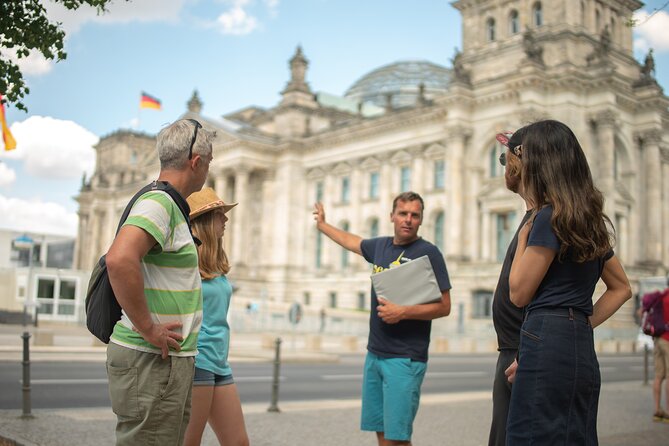
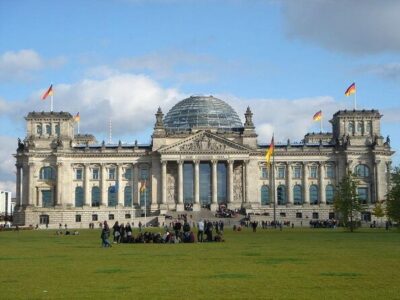
The Reichstag is one of Berlin’s most important political symbols. In 1933, a fire damaged the building, and the Nazis used it as a reason to suspend civil liberties and crush political opposition.
The guide explains how this event helped the Nazi government dismantle Germany’s democracy. That is one of the most useful parts of the tour because it shows that dictatorship did not arrive in one single instant. Emergency measures, political pressure, propaganda, and the removal of civil rights all played a part.
You view the building from outside. The tour does not include admission inside the Reichstag, so do not book this walk expecting to visit the dome. The focus here is the building’s political meaning and its role in the final Battle of Berlin.
In 1945, Soviet troops raised their flag over the Reichstag after fierce fighting. The scene became one of the most famous images of the war in Europe. Your guide links that symbolic moment to the final Soviet assault and the collapse of Nazi rule.
More Walking Tours in Berlin
- Discover Berlin Half-Day Walking Tour
★ 5.0 · 9,624 reviews - Berlin: Discover Berlin Walking Tour
★ 4.9 · 5,998 reviews - Berlin: Hidden Backyards Guided Walking Tour
★ 4.8 · 5,360 reviews - Berlin: Alternative Berlin Walking Tour
★ 4.6 · 1,204 reviews
The Soviet War Memorial in Tiergarten
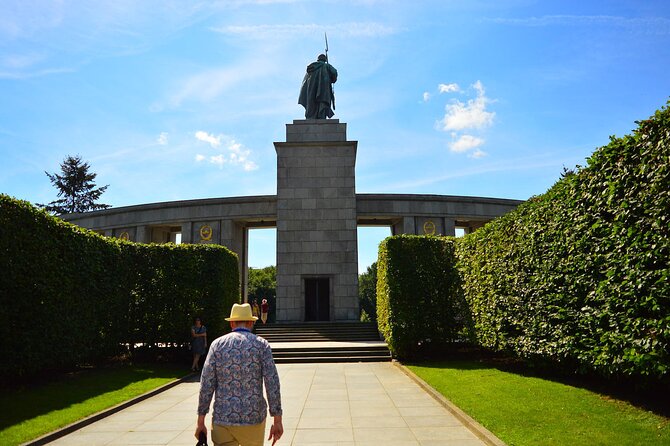
The Soviet War Memorial in Tiergarten commemorates Red Army soldiers who died in the Battle of Berlin. It includes a large Soviet soldier statue and a military cemetery.
This is not a simple victory monument. It raises difficult questions about the enormous cost of defeating Nazi Germany and about the Soviet role in the final stages of the war. The guide can place the memorial within the fighting for Berlin and explain why the Soviet assault mattered so much to the fall of the regime.
The site is open and solemn. It also gives you a break from the dense city streets, though you remain outdoors. In cold weather, the wind can make this part of the walk feel longer than expected, so dress warmly.
Brandenburg Gate and the use of symbols
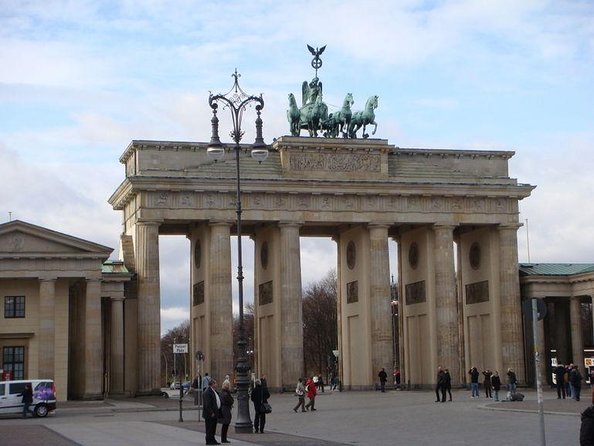
The Brandenburg Gate is usually associated with Berlin’s reunification, but the tour examines its Nazi-era use. The gate became a backdrop for rallies, public displays, and images of regime power.
This is a useful reminder that architecture can be turned into political theater. The gate itself did not change its basic form, but the Nazis changed the meaning attached to it through flags, ceremonies, and propaganda.
You spend around ten minutes here. It is a short stop, and the area can feel busy, but the guide helps you look beyond the familiar landmark. You learn how the regime used public spaces to project control and create a sense of national unity.
The Academy of Arts and Nazi architecture
Near the Academy of Arts, the discussion turns toward culture, architecture, and the image the Nazis wanted to create. Albert Speer, Hitler’s chief architect and later armaments minister, promoted monumental neoclassical designs meant to suggest order, strength, and permanence.
The Academy itself is now associated with contemporary arts, but its location fits the wider story of institutions forced to reckon with their connection to the Nazi period. The stop helps show that propaganda was not limited to speeches or newspapers. Buildings, public ceremonies, art, and city planning all helped shape the regime’s message.
This part may be most useful if you are interested in architecture or the way governments use design. If you want only military history, it may feel less direct, but it adds needed breadth to the tour.
The Holocaust Memorial
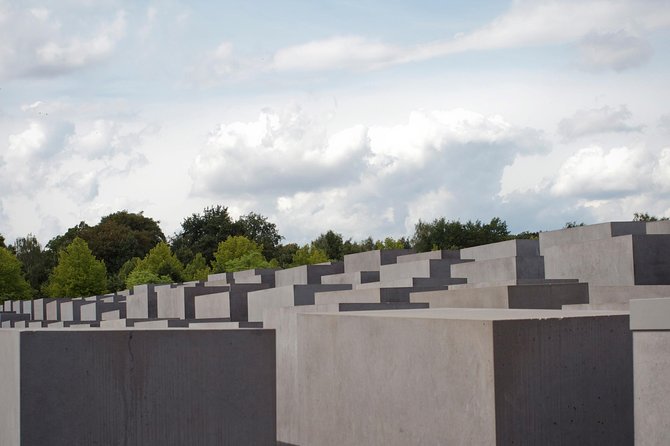
The Memorial to the Murdered Jews of Europe consists of 2,711 concrete slabs set across an uneven field. You walk among them for about ten minutes.
The design is intentionally hard to read at a glance. The slabs vary in height, and the paths shift as you move through the field. The effect is quiet, disorienting, and physical. It does not give you a simple list of facts. It asks you to confront the scale and uncertainty of the Holocaust.
The tour does not replace the memorial’s underground Information Centre, and the supplied details do not include an interior visit. You should treat this stop as a guided introduction and return later if you want more time with the documentation and individual stories.
I like this part of the route because it keeps the tour from becoming a parade of Nazi buildings. The story returns to those who were persecuted and murdered, not only to the officials who planned the system.
Hitler’s bunker site and the last days of the war
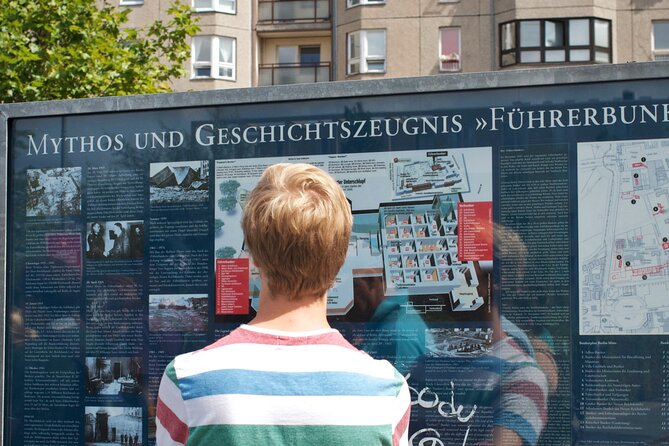
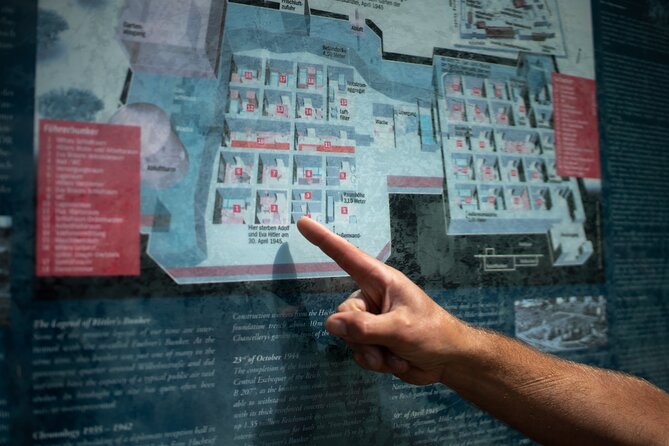
At the former Führerbunker, you stand above the location where Hitler spent his last days. The bunker itself is not presented as an attraction, and there is no preserved interior to enter.
That absence is important. The site is now ordinary in appearance, which can be more unsettling than a dramatic ruin. The guide explains the nearby New Reich Chancellery, designed by Speer, and the events surrounding Hitler’s death in April 1945.
One guide, Eran, reportedly made this stop especially effective by waiting until the group reached the site marker before revealing exactly where they were. That approach works because you first walk through an ordinary part of Berlin, then realize you are above one of the most notorious locations of the twentieth century.
Do not expect sensational stories or theatrical treatment. The best guides handle this stop with restraint and put the bunker into the wider story of a collapsing regime, a ruined city, and a war that had already killed millions.
Wilhelmstrasse and the machinery of power
Wilhelmstrasse was the center of Nazi government administration. The street included the Reich Chancellery, the Foreign Ministry, the Ministry of Propaganda, and offices used by senior officials such as Joseph Goebbels.
Today, much of the original setting has been destroyed, repurposed, or absorbed into newer development. That makes a guide especially valuable. You need someone to point out what was here and explain how decisions made in these offices affected the battlefield, German civilians, Jewish communities, and occupied countries.
This stop also helps explain the difference between Hitler’s personal headquarters and the wider Nazi state. The dictatorship depended on ministries, officials, police organizations, military offices, and a large administrative system. The tour makes that network easier to picture.
Goebbels, Göring, and the former Nazi ministries
The route includes the former Air Ministry, once associated with Hermann Göring and the Luftwaffe. The building housed offices involved in Germany’s air force and military administration.
You also hear about Goebbels’ propaganda headquarters, where speeches and public messaging helped shape the regime’s image. The point is not simply that Goebbels made propaganda. The guide explains how propaganda supported militarism, persecution, and public obedience.
These buildings are especially easy to miss on your own because they may not look like traditional memorial sites. The tour gives you the historical labels and connects them to the broader story of Nazi expansion, the Battle of Britain, and the war effort.
The Topography of Terror finale
The tour ends at the Topography of Terror on Niederkirchnerstrasse, close to Checkpoint Charlie. The museum and memorial occupy the former site of the SS and Gestapo headquarters.
The exhibitions focus on state terror, persecution, and the Holocaust. Photographs, documents, and personal accounts show how the SS and Gestapo enforced Nazi rule.
Ending here makes sense. You have followed the regime from political power and propaganda to war, deportation, and repression. The Topography of Terror gives you a place to continue learning after the walk, although the three-hour tour itself does not mean you have completed the museum.
The end point is practical, too. You can continue to Checkpoint Charlie, visit the museum, or use public transport from central Berlin. The tour does not include hotel pickup or drop-off, so plan your onward route from this area.
Guides, pace, and the value of the experience
The guide can make or break a history walk. Names praised in the supplied feedback include Paul, Maria, Ru, Chris from Toronto, Ciarán, Tina, Tom, Jim, Pete, Emma, Callam, Georgia, Hannah, Jamie G, Thomas, Xavier, and Irish Paul.
The repeated strengths are clear explanations, strong storytelling, patience with questions, and the ability to connect separate events. Callam was praised for checking that the group understood the material. Ciarán was noted for a comfortable pace and clear treatment of difficult subjects. Several guides were also described as friendly and good-humored without making light of the subject.
You should still expect variation in personality. You cannot choose a specific guide in advance based on the information provided. What you can count on is an English-language walking tour built around a local guide rather than an audio recording.
The route covers about 5,000 steps according to one detailed account. That is manageable for most people, but it is not a gentle stroll with long indoor breaks. Wear shoes you can walk in and bring water. In winter, layer up. The walk has been enjoyed even in temperatures around minus 7 degrees Celsius, but that does not make warm clothing optional.
At about $24.07 per person, I consider the tour a strong value. You receive three hours of guided interpretation across many central sites, and most stops have no separate admission fee. The price does not include entry to the Reichstag or hotel transport, but those exclusions are reasonable for an outdoor walking tour.
Who should book this Berlin history walk?
I would choose this tour for a first visit to Berlin if you want a clear introduction to the Third Reich and World War II sites. It is also a good fit for history fans who want resistance, propaganda, architecture, and civilian life included alongside battlefield events.
Families with older children and teenagers can find plenty to hold their attention. One account specifically notes that a 15-year-old stayed engaged, helped by the guide’s stories and the chance to see real locations rather than only read dates in a book.
I would be more cautious if you dislike long outdoor walks, need regular indoor seating, or want extensive time inside museums. The subject is also heavy. The Holocaust Memorial, deportation memorial, and former Gestapo site are not casual sightseeing stops.
Should you book the Third Reich Berlin walking tour?
Book it if you want context, structure, and access to places you might otherwise pass without noticing. The tour turns a wide area of central Berlin into a connected story, from the Reichstag fire to the fall of Hitler’s government.
Skip it if you prefer to explore at your own pace or want a museum-heavy day. For everyone else, $24.07 is a sensible spend for three hours with an English-speaking guide, especially early in your Berlin visit. Wear good shoes, check the forecast, and leave room afterward for the Topography of Terror or another museum near Checkpoint Charlie.
FAQ
How long does the Third Reich Berlin walking tour last?
The tour lasts approximately three hours.
Where does the tour begin?
The meeting point is Reichstagufer 17, 10117 Berlin, near Friedrichstrasse Station. You should arrive 15 minutes before the start time.
Where does the tour end?
The tour ends at the Topography of Terror, Niederkirchnerstrasse 8, 10963 Berlin. The end point is very close to Checkpoint Charlie.
What language is the tour offered in?
The tour is offered in English.
What sites are included?
The route includes the Reichstag, Soviet War Memorial in Tiergarten, Brandenburg Gate, Academy of Arts, Holocaust Memorial, Hitler’s former bunker location, Wilhelmstrasse, the former Air Ministry, Goebbels’ propaganda headquarters, and Topography of Terror.
Can I enter Hitler’s bunker?
No. You stand above the location of the former bunker and hear about Hitler’s final days. The bunker interior is not open as part of this tour.
Is admission to the Reichstag included?
No. The Reichstag is viewed as part of the walking route, but admission is not included.
How many people can join the tour?
The tour has a maximum group size of 25 people.
Is hotel pickup included?
No. You must make your own way to the meeting point, and the tour does not include hotel pickup or drop-off.
What happens if I need to cancel?
You can cancel up to 24 hours before the experience for a full refund. Cancellations or changes made less than 24 hours before the start time are not accepted for a refund.
Just added in Berlin
- Berlin & The Third Reich Private Guided Tour★ 5.0 · 3 reviews
- Third Reich Quest Experience in Berlin★ 4.5 · 7 reviews
- Private Analogue Photography Experience in Berlin★ 5.0 · 3 reviews
- Berlin Urbex Adventure and History Tour★ 5.0 · 9 reviews
- The Beauty of Berlin by Bike: Private Tour★ 5.0 · 59 reviews
- Berlin: Guided Bike tour of the Berlin Wall and Third Reich★ 5.0 · 160 reviews
- Beyond Currywurst: Berlin’s Hidden Street Food & Culture Tour★ 5.0 · 100 reviews
- Berlin Third Reich & Cold War Walking Tour With A Guide★ 5.0 · 7 reviews
Third Reich Tours, compared.



Berlin’s Best: 2 Hour Walking Tour Third Reich and the Cold War
Read our review →
Walking Tour of Former Nazi Party Rally Grounds
Read our review →
Berlin Third Reich Sites: Half-Day Walking Tour
Read our review →
Birthplace of the Third Reich Guided Walking Tour
Read our review →Browse the lists this tour appears in