
Reviewed · WALKING TOURS
Berlin: Alternative Berlin Walking Tour
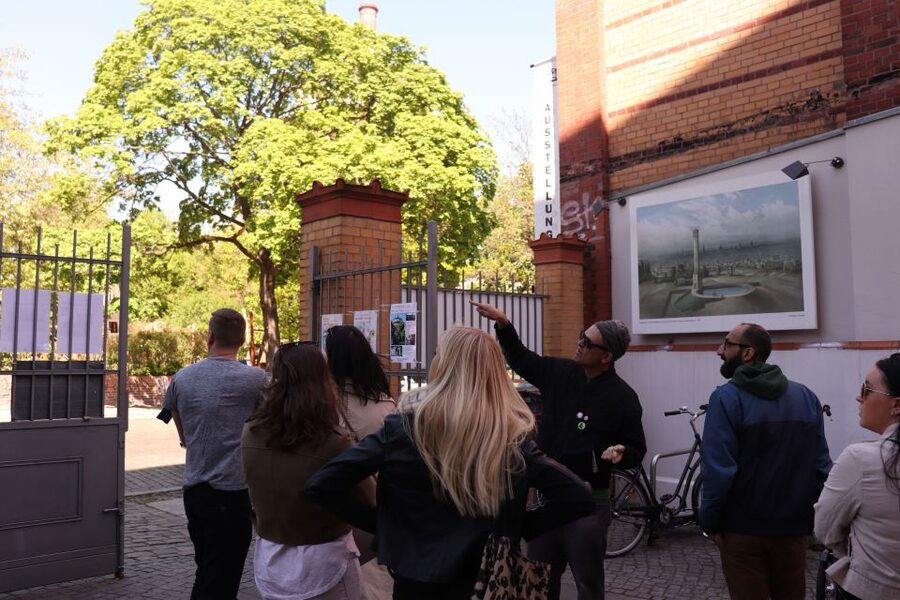
Berlin’s alternative side is not tucked into one museum. It appears in old squats, graffiti-covered walls, Turkish food shops, punk record stores, canals, cafés, community projects, and neighborhoods shaped by migration and protest. This four-hour walk connects those pieces across Mitte, Kreuzberg, and Friedrichshain, giving you a view of Berlin beyond the usual Wall and war-history route.
I like the tour’s strong focus on ordinary places with unusual stories, especially the origins of currywurst and döner, the Prater Beer Garden, African and former Jewish communities, and Berlin’s music and LGBTQ+ scenes. I also like that guides such as Rhys, Reece, Jake, Jonathan, Damien, and Antonio bring personal energy and humor to a subject that could otherwise become a long history lecture.
The main drawback is pace. You walk for four hours, often moving between districts, and the route may require public transport. It runs in snow, rain, and cold, so good shoes, warm clothing, and a plan for the AB transit ticket matter.
Key points to know before you book
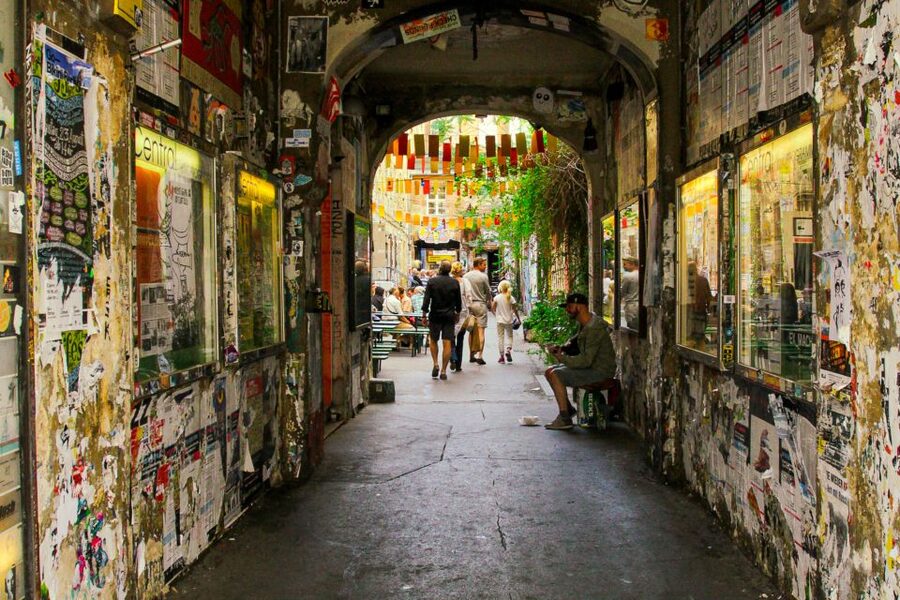
- Mitte and Kreuzberg reveal different sides of Berlin: You compare central cafés and shopping streets with immigrant neighborhoods, street art, music venues, and political spaces.
- The stories reach beyond the Berlin Wall: Expect attention to squats, graffiti, punk, dance culture, LGBTQ+ life, migration, and urban change.
- Food is part of the history: Currywurst and döner are treated as Berlin cultural markers, not just quick snacks.
- The route finishes in Friedrichshain: You do not simply loop around Alexanderplatz, so the end point can help you plan your next stop.
- The guide shapes the experience: Rhys, Reece, Jake, Jonathan, Damien, Antonio, Ben, and others are praised for humor, storytelling, and personal insight.
- Prepare for a full walking day: The tour runs in all weather, and an AB ticket may be needed unless you choose the option with transport included.
A different way to read Berlin
Many first-time Berlin tours follow the city’s major political chapters: Prussia, the Nazi period, the Berlin Wall, and reunification. Those subjects matter, but this walk asks what happened next, and how Berliners used abandoned buildings, empty lots, clubs, walls, cafés, and public spaces to build a new city culture.
That is the tour’s central idea. Berlin is not presented as a polished capital with a tidy past. You see a place where old identities overlap with new ones. East and West, local and immigrant, official and underground, serious politics and nightlife all meet on the same streets.
I find that approach useful because it explains why Berlin can feel loose, experimental, and unfinished. Instead of simply pointing at a mural, a squat, or a café, the guide connects it to wider changes in housing, music, migration, art, and city government.
The tour has earned a 4.6 rating from 1,204 reviews, and the praise is especially consistent about guide quality. Rhys is repeatedly singled out for humor and strong storytelling. Reece is praised for mixing history with cultural detail. Jake receives credit for adapting well to snow and keeping the group warm and engaged. Jonathan, Damien, Antonio, Ady, and Ben are also praised for bringing different personal viewpoints to the route.
That matters here. Alternative Berlin is not a collection of monuments with neat labels. Much of the interest comes from explanation, timing, and the guide’s ability to make an ordinary street corner worth your attention.
More Walking Tours in Berlin
- Discover Berlin Half-Day Walking Tour
★ 5.0 · 9,624 reviews - Berlin: Third Reich and Cold War 2 Hour Walking Tour
★ 4.9 · 6,830 reviews - Berlin: Discover Berlin Walking Tour
★ 4.9 · 5,998 reviews
Starting at Alexanderplatz and entering Mitte
You meet in front of Vapiano by the Alexanderplatz TV Tower. This is a practical starting point, easy to identify and well connected, but it is also a useful symbol for the tour. Alexanderplatz is one of Berlin’s most recognizable central spaces, associated with the former East Berlin and its large-scale modern architecture.
From there, the first major section takes about an hour in Mitte. The route covers café districts and local shopping areas, along with places tied to Berlin’s creative and social life.
Mitte can seem familiar at first. It has major sights, busy streets, restaurants, and plenty of visitors. The value of this part is learning to look beyond the obvious. A café, gallery, courtyard, or shop may tell you more about present-day Berlin than another grand building.
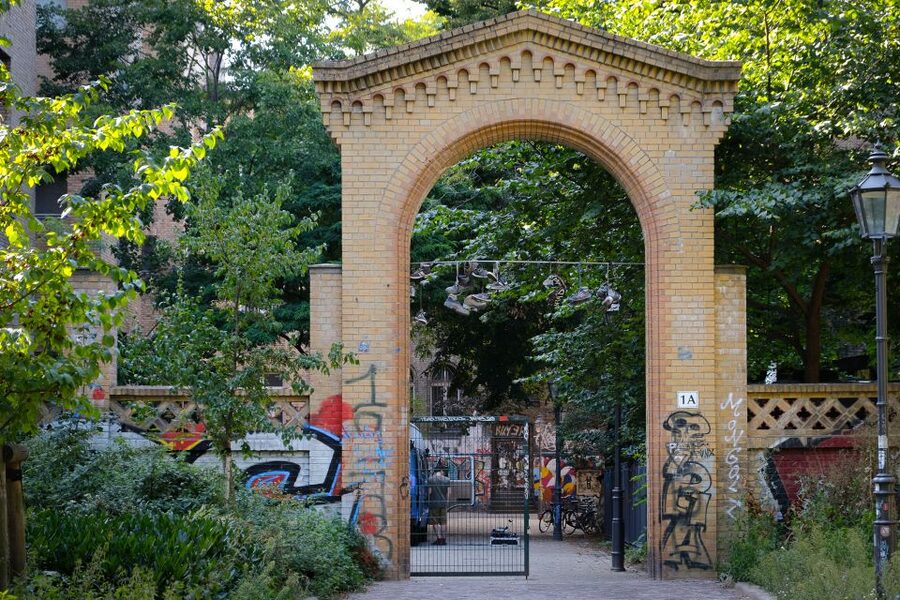
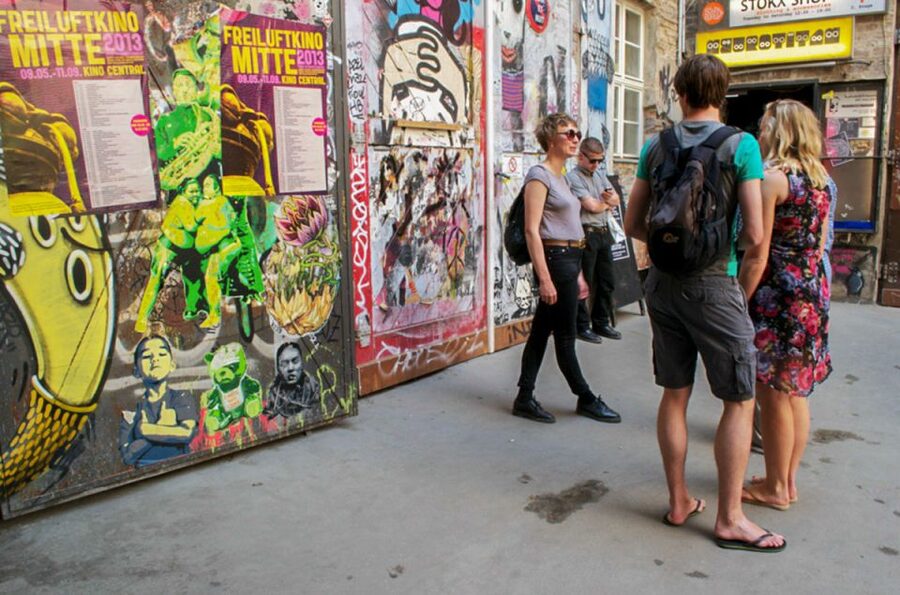
The route may include underground galleries and striking street art. These are not presented as decoration alone. You learn how Berlin’s art culture grew through informal spaces, shared buildings, and a willingness to reuse places that other cities might have cleared away.
You may also hear about former Jewish communities and the way Berlin’s districts have changed over time. The tour does not treat community history as a separate museum subject. Instead, it places those stories alongside current cultural movements, showing how the same areas can carry several identities at once.
This opening hour is a good fit if you have already seen Berlin’s major monuments and want help reading the city between them. If you are new to Berlin, it also gives you useful context before you begin exploring on your own.
Crossing into Kreuzberg for two hours of street-level culture
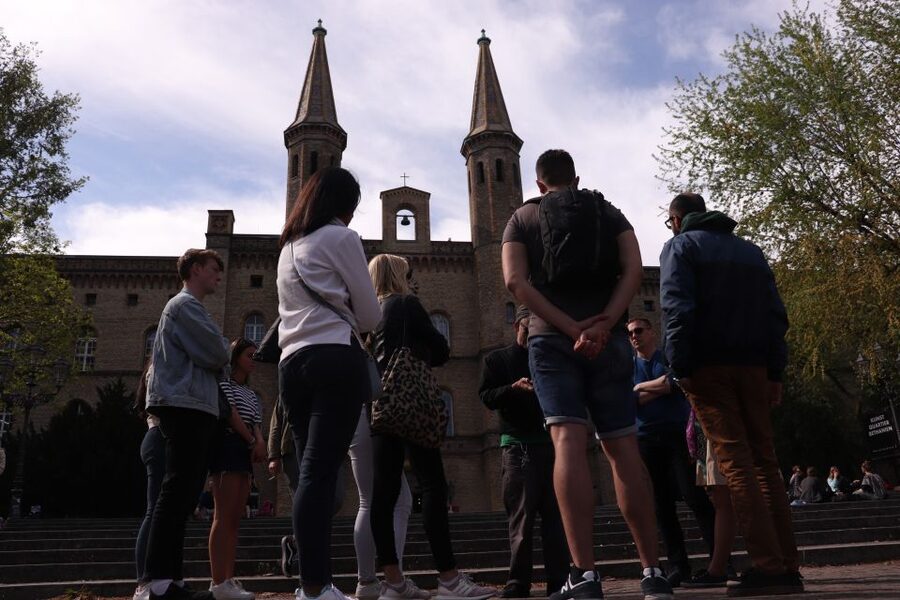
Kreuzberg is the heart of the tour, with roughly two hours devoted to its neighborhoods and stories. Here the route shifts toward Turkish communities, immigrant life, music, nightlife, political movements, and public art.
Kreuzberg is often reduced to a few stereotypes: kebab shops, clubs, graffiti, and alternative nightlife. The tour gives those details more meaning. You hear about how migration shaped the district, how different communities made their mark, and how Berlin’s counterculture developed in spaces outside traditional institutions.
The Turkish influence is especially important. Berlin’s döner culture is tied to the city’s immigrant story, and the tour explains the origins of the dish as part of that larger connection. You also learn about currywurst, one of the city’s most familiar foods, and how quick meals became part of Berlin’s identity.
A food stop may include currywurst at a local fast-food place. Food is not included as a full meal, so think of this as a chance to taste or discuss a city staple rather than a scheduled lunch. If you need a proper meal, plan to eat before or after the tour.
Kreuzberg also brings Berlin’s African communities into the story. The route includes a colorful African beach bar and market connected with the city’s music scene. That detail helps broaden the usual picture of Berlin’s alternative culture. The city’s creative life is not only punk clubs and German artists. It also reflects migration, international music, and communities from many parts of the world.
You may also hear about Berlin’s gay community and visit one of the city’s more extravagant neighborhoods. This is useful for understanding Berlin’s reputation for tolerance and personal freedom, but the tour also gives that reputation social and political context.
Street art receives plenty of attention. You see large murals and graffiti close up, while the guide explains the people, movements, and arguments behind them. Some art may be celebrated, some controversial, and some temporary. That uncertainty is part of the point. Berlin’s walls change, and the city’s alternative culture is always being argued over.
Squats, punk, and the politics of reused space
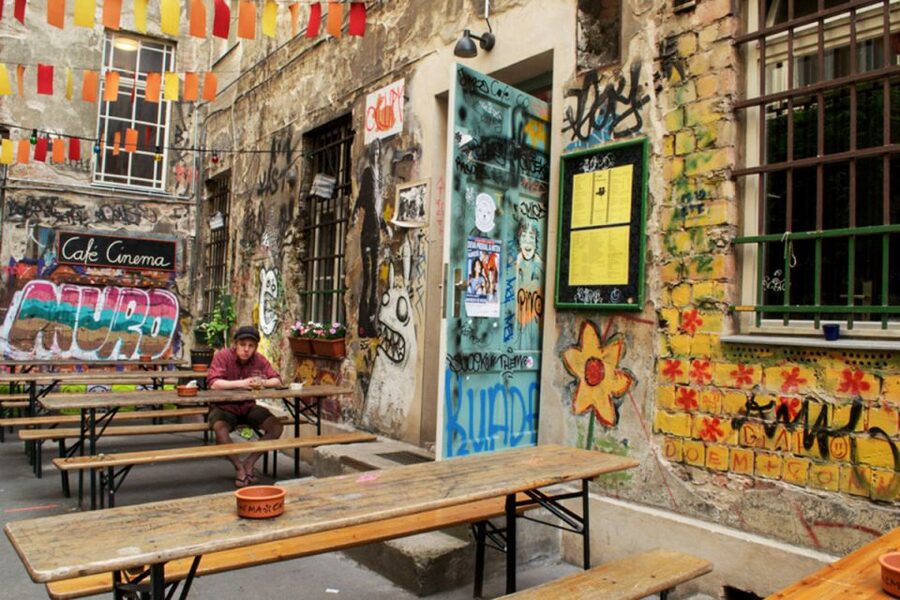
One of the most interesting themes is the reuse of buildings and land. Berlin’s alternative housing history includes long-term squats, community projects, and spaces that developed outside normal commercial patterns.
The guide may discuss how governance and housing policy shaped the built environment. That gives you a more practical way to understand Berlin’s counterculture. Squats were not just eccentric housing choices, and graffiti was not just visual noise. These things grew from particular political conditions, economic pressures, and ideas about who gets to control urban space.
You may also hear about punk record stores, musicians, dance culture, and specific graffiti artists. The strongest guides use these details to connect the personal with the political. A musician’s venue, an artist’s wall, or a community garden can become a small window into much larger changes.
Some of the tour’s appeal comes from these small places. You may walk past something you would normally ignore, then learn why it matters. The tour does not promise a list of grand monuments. It gives you a way to notice Berlin’s less obvious clues.
The route may include community-funded urban farms and relaxing canals. These places add breathing room to a walk that otherwise focuses on dense neighborhoods and busy streets. They also show another part of Berlin’s alternative culture: shared green space, local food projects, and community control.
That mix keeps the tour from becoming a nonstop wall of graffiti. You get art, food, music, housing, migration, gardens, canals, and nightlife. The connecting thread is how Berliners create a life around spaces that were not designed for one fixed purpose.
Same city, a completely different kind of day:
- Berlin: Reichstag, Dome and Government District Guided Tour
★ 4.7 · 18,288 reviews - Berlin: 1-Hour City Tour by Boat with Guaranteed Seating
★ 4.3 · 16,993 reviews - Berlin: Boat Tour Along the River Spree
★ 4.4 · 11,252 reviews - Berlin: Hop-on Hop-off Bus Tour with Live Commentary
★ 4.3 · 8,579 reviews
The Prater Beer Garden and everyday Berlin traditions
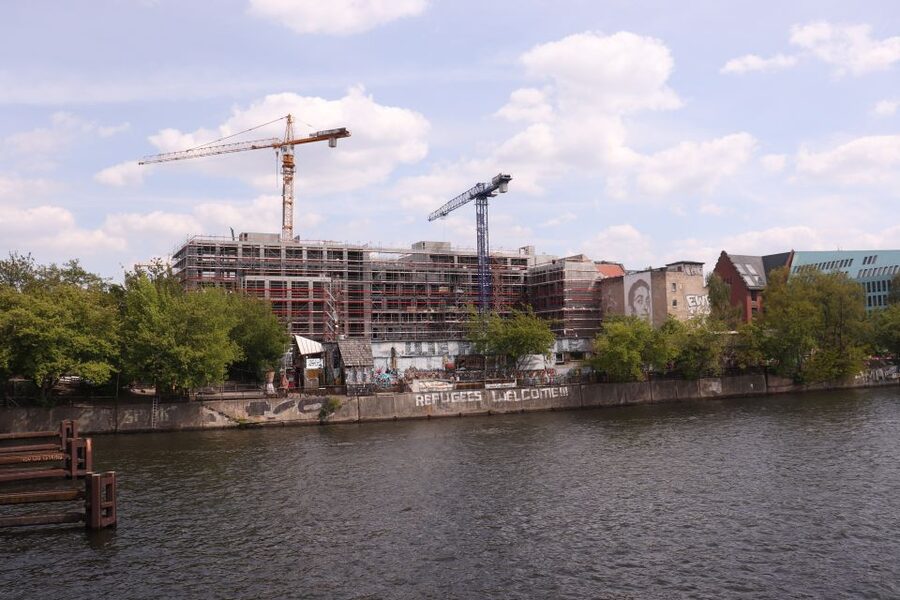
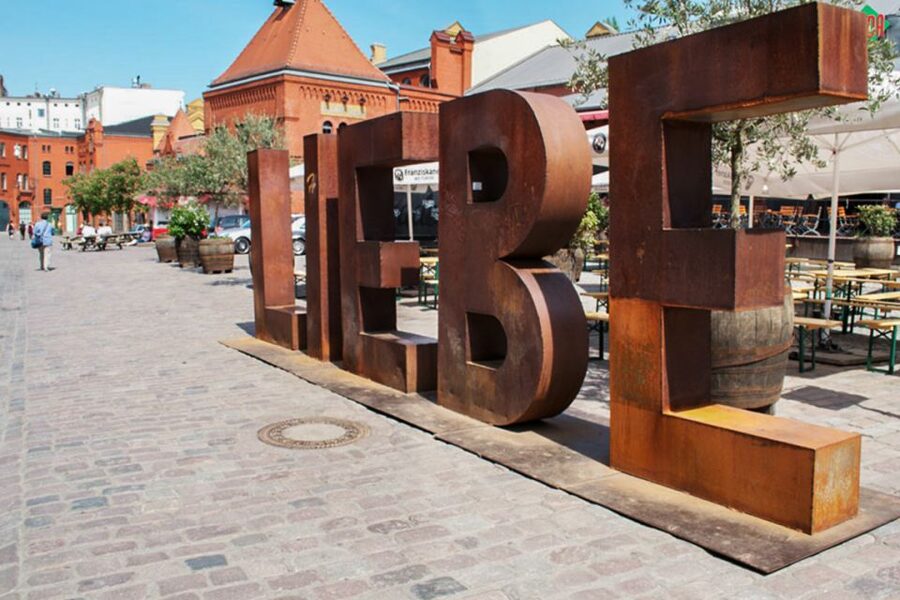
The Prater Beer Garden is another useful stop because it links ordinary leisure with the city’s longer story. Beer gardens are easy to treat as simple tourist stops, but the Prater helps show how public social life fits into Berlin’s neighborhoods.
The tour’s food and drink references also make Berlin easier to understand in practical terms. Currywurst, döner, beer gardens, cafés, and market stalls are not side notes. They are places where people meet, work, argue, relax, and share the city.
Refreshment breaks are included, but the exact stop and route can vary. The tour description notes that the route may change according to current art and tour conditions, so you should not treat every stop as guaranteed in the same order.
That flexibility is sensible for an alternative walk. Street art disappears, businesses change, and community spaces do not always fit a rigid sightseeing schedule. The tradeoff is that you should book this for the overall theme and guide, not for a strict checklist of exact locations.
Finishing in Friedrichshain
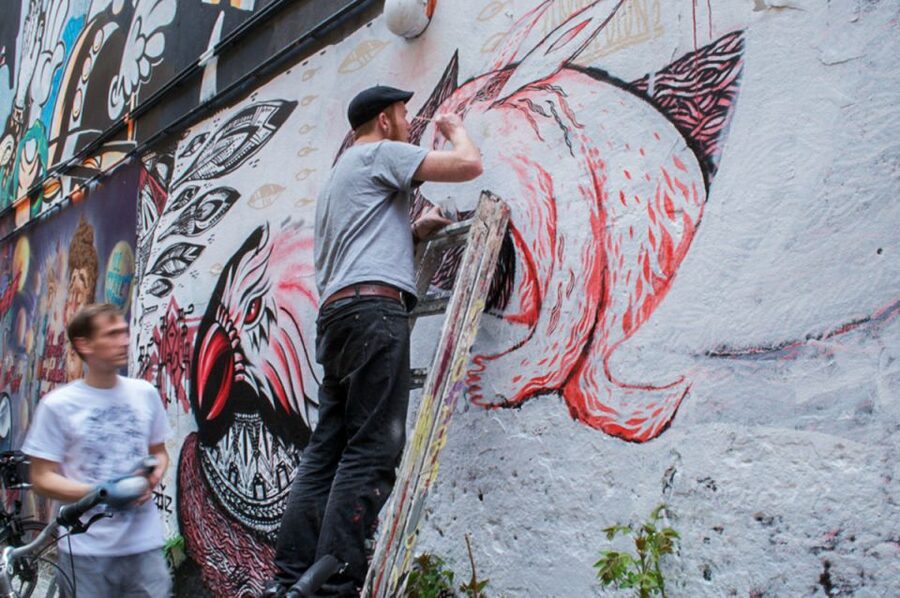
The tour ends in Friedrichshain, after the route has moved through several different parts of Berlin. This ending is useful because Friedrichshain has its own connection to music, nightlife, street art, and alternative culture.
You do not finish where you began, so plan your evening around the final location. The end point can be convenient if you want to continue exploring eastern Berlin, but it may require extra transit if your hotel is near Alexanderplatz or elsewhere in central Berlin.
The route’s movement across Mitte, Kreuzberg, and Friedrichshain is one of its strengths. You see how the city’s alternative identity changes from district to district instead of treating it as one uniform scene.
It also explains why the tour takes four hours. This is not a short neighborhood stroll. You cover a broad section of Berlin and may use trains or trams between parts of the route. An AB public transport ticket may be required, depending on the day’s route. If you do not want to buy tickets during the tour, select the option that includes BVG transport.
Pace, weather, and group comfort
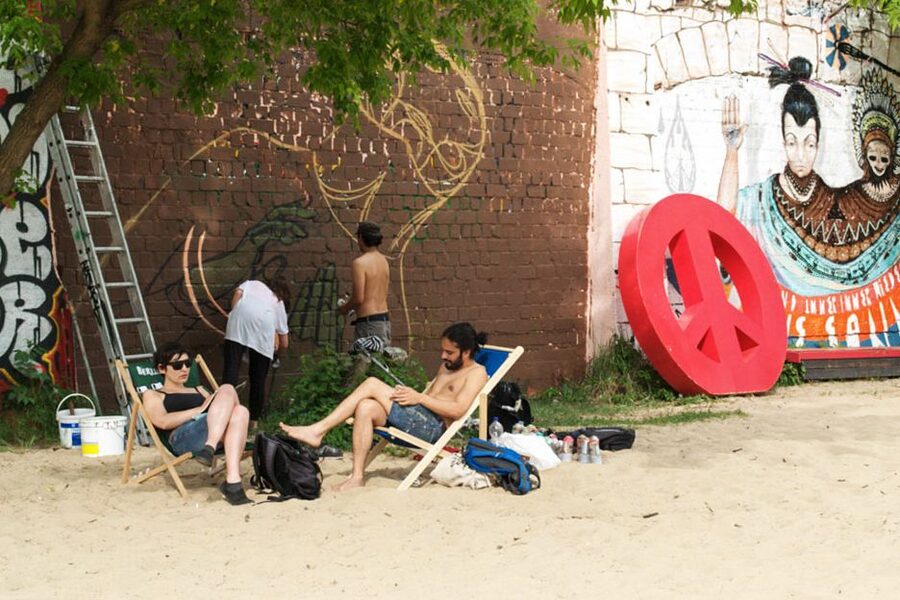
The tour runs all year and in all weather. That is good news if your schedule is tight, but it also means you need to take the conditions seriously. Recent tours have gone ahead in freezing temperatures, snow, and rain, with guides adapting the route and presentation as needed.
Wear shoes that can handle several hours of walking. Bring a waterproof layer in wet weather and warm clothing in winter. There is no promise of a long mid-tour rest period, so use café or refreshment breaks wisely and consider your own need for food and bathroom stops.
The pace can be quick. One detailed account specifically warns that the walk may not suit people with mobility issues. The route covers multiple districts, and the use of public transport adds transitions rather than reducing the day to one easy stroll.
Group size can vary. One group was about 15 people, while other groups may be larger or smaller. Strong guides such as Antonio and Rhys are praised for keeping groups engaged, but a larger group can make street corners, narrow spaces, and conversations less personal.
What the $29 price gets you
At $29 per person, this is a reasonable price for a four-hour guided experience, especially if you value interpretation more than admission tickets. The price includes the guide, local tips, photo opportunities, and refreshment breaks, but not necessarily public transport unless you select the BVG-included option.
The value comes from access to context. You can walk through Kreuzberg and Mitte alone for free, but you would not automatically know the stories behind the communities, murals, music scenes, food traditions, and reused buildings.
It is also a good way to collect ideas for the rest of your stay. Guides offer tips for places to eat and things to do after the walk. If you are in Berlin for several days, those suggestions can help you spend later afternoons and evenings beyond the standard sightseeing circuit.
The price is less attractive if you dislike long walks, prefer museums, or want a fixed list of famous monuments. It is also not the right pick if you need a full meal during the activity. Think of it as a cultural orientation with substantial walking, not a hop-on, hop-off sightseeing trip.
Who should book this Berlin walking tour?
I would choose this tour if you want to understand why Berlin feels different from other European capitals. It suits first-time visitors who want more than the standard historical route, as well as repeat visitors who have already seen the main sights.
It is especially useful for people interested in street art, punk, music, migration, LGBTQ+ culture, urban politics, cafés, food, and alternative housing. You do not need prior knowledge of Berlin’s subcultures. The guides explain the setting as they go.
The tour also works well for solo visitors and socially curious couples. The multinational groups described in the tour material often create room for conversation, and the guide’s recommendations can help you continue exploring after the walk.
I would hesitate if you have mobility limitations, dislike changing neighborhoods, or want a relaxed pace with frequent seated breaks. The tour can be fast and weather does not cancel it automatically.
FAQ
Where does the Alternative Berlin Walking Tour start?
It starts in front of Vapiano at the Alexanderplatz TV Tower in Berlin.
Where does the tour finish?
The tour finishes in Friedrichshain, Berlin.
How long does the tour last?
The walking tour lasts four hours.
What language is the tour offered in?
The tour is conducted in English with a live guide.
Is public transport included?
An AB metro ticket may be required depending on the current route. You can bring your own ticket, buy one at a station, or book the option that includes BVG transport.
Does the tour run in bad weather?
Yes. Tours run throughout the year and in all weather conditions.
Can I cancel for a full refund?
Yes. You can cancel up to 24 hours in advance for a full refund. You can also reserve now and pay later.
Should you book it?
Book this tour if you want Berlin’s social and creative story alongside its famous political history. The strongest reason to go is the guide-led connection between places that might otherwise seem unrelated: a kebab shop, a graffiti wall, an old squat, a beer garden, a canal, a market, and a music venue.
At $29, it offers solid value for four hours of local context and practical tips. Just bring the right shoes, prepare for the weather, check the BVG option, and expect a brisk route rather than a gentle stroll. If that sounds like your kind of Berlin, this is a smart way to see the city from street level.
Just added in Berlin
- Berlin & The Third Reich Private Guided Tour★ 5.0 · 3 reviews
- Third Reich Quest Experience in Berlin★ 4.5 · 7 reviews
- Private Analogue Photography Experience in Berlin★ 5.0 · 3 reviews
- Berlin Urbex Adventure and History Tour★ 5.0 · 9 reviews
- The Beauty of Berlin by Bike: Private Tour★ 5.0 · 59 reviews
- Berlin: Guided Bike tour of the Berlin Wall and Third Reich★ 5.0 · 160 reviews
- Beyond Currywurst: Berlin’s Hidden Street Food & Culture Tour★ 5.0 · 100 reviews
- Berlin Third Reich & Cold War Walking Tour With A Guide★ 5.0 · 7 reviews
Walking Tours, compared.

Berlin’s Best: 2 Hour Walking Tour Third Reich and the Cold War
Read our review →
Third Reich Berlin: Hitler and WWII Walking Tour
Read our review →Browse the lists this tour appears in