
Reviewed · THIRD REICH TOURS
Berlin Third Reich Sites: Half-Day Walking Tour
Berlin’s Nazi past is scattered across the city, often marked by a plaque, a ruined wall, or a quiet memorial. This four-hour walking tour links those pieces into a clear story, moving from Jewish life and persecution to dictatorship, war, resistance, and the final days of 1945. A historian-guide supplies the context that can be hard to find when you visit these places alone.
I like the efficient route and the mix of major memorials with less obvious stops, such as the Johann Georg Elser sculpture and the former Aviation Ministry. I also like the short format: you get a serious history lesson in the morning and still have the afternoon for museums or independent exploring. The main drawback is the walking. Even with a manageable pace, you should wear comfortable shoes and prepare for four hours outdoors in changing weather.
Key points to know before you book
- A clear route through Berlin’s Nazi past: The tour connects Jewish Berlin, former Nazi offices, memorials, resistance sites, and the Reichstag.
- Strong guide-led context: Guides including Peter, Hannah, Tom, Jonathan, Gregor, and James are praised for clear explanations, thoughtful answers, and well-timed humor.
- Mostly outdoor history: You see and discuss the sites, but the tour price does not include museum admission or indoor entries.
- A serious but approachable subject: The discussion covers persecution of Jewish people, Sinti and Roma, homosexuals, and political opponents.
- Useful half-day timing: The 10 a.m. start and four-hour length leave the rest of the day open.
- Good value at $21.77: The price includes the professional English-speaking guide, while the AB transport ticket costs about €3.80 extra.
Why this walking route works in Berlin
Berlin’s Third Reich sites are not gathered in one tidy museum district. They are spread between former government buildings, railway ruins, memorials, and streets where the Nazi state made decisions that affected millions of people. The route helps you connect those places instead of seeing each one as an isolated stop.
You begin near Hackescher Markt, at Neue Promenade 3, close to public transportation. The guide first sets the political stage, explaining Adolf Hitler, the Nazi Party, and how dictatorship took hold between 1933 and 1945. That opening matters. Without it, the later buildings can feel like disconnected locations. With it, you have a framework for understanding how propaganda, law, policing, bureaucracy, and violence worked together.
The group can include up to 25 people. That is not a private tour, but it is still small enough for questions and conversation. Several guides are singled out for being easy to hear and for handling questions well. If you enjoy asking about details, this is a useful feature rather than a quick march from plaque to plaque.
More Third Reich Tours in Berlin
- Berlin: Third Reich and Cold War 2 Hour Walking Tour
★ 4.9 · 6,830 reviews - Berlin’s Best: 2 Hour Walking Tour Third Reich and the Cold War
★ 5.0 · 5,486 reviews - Third Reich Berlin: Hitler and WWII Walking Tour
★ 5.0 · 3,301 reviews
Jewish Berlin before the Nazi dictatorship
The first two stops introduce Jewish life and persecution in Berlin. At the Museum Blindenwerkstatt Otto Weidt, your guide explains the history of Otto Weidt and the people connected with the workshop. The site offers a more personal way into the subject than a broad political introduction alone.
You also stop near the Neue Synagoge Berlin and the Centrum Judaicum. The guide explains the place and its role in Berlin’s Jewish story. The stop is brief, listed at about five minutes, so do not expect a full synagogue visit or an extended museum session. Its value is in placing Jewish Berlin within the wider city before the route turns more directly toward deportation and state terror.
These early stops are especially useful if you want the tour to cover more than Hitler and military events. The history here is about communities, institutions, and people whose lives were reshaped by Nazi policy. The focus then becomes more direct and painful at Anhalter Bahnhof.
Anhalter Bahnhof and the machinery of deportation
The ruins of Anhalter Bahnhof are one of the tour’s most striking locations. Once a major railway station, it became connected with the deportation of many of Berlin’s Jewish residents to concentration camps. Today, the remaining structure gives you a physical sense of loss and interruption.
Your guide explains what happened here and places the station within the Nazi system of persecution. This is not just a story about trains. It shows how ordinary infrastructure was used by the state to carry out organized removal and murder.
The stop is brief, listed at about five minutes, but the site itself carries considerable weight. You may wish there were more time for quiet reflection, yet the short visit also keeps the route moving. This is a walking tour rather than a museum program, and its strength comes from the way many locations build on one another.
The Topography of Terror and former SS headquarters
The route continues to what was once Prinz-Albrecht-Strasse, the former home of the SS and Gestapo headquarters. The area is now associated with the Topography of Terror museum, one of Berlin’s key places for understanding how Nazi repression operated.
The guide explains the roles of the SS and Gestapo and how the regime enforced its policies. This is one of the most important stops because it moves the discussion from ideology to administration. Persecution required offices, police forces, records, interrogations, and people willing to carry out orders. The site helps you see that the Nazi system was not only driven by speeches and battlefield decisions.
The tour allows about 15 minutes here. That is enough for an introduction and orientation, but not enough to study the museum’s full exhibition. If you want to read every panel, return on your own later. The half-day tour gives you the map and the context, while a separate museum visit gives you time with the documents and photographs.
More Walking Tours in Berlin
- Discover Berlin Half-Day Walking Tour
★ 5.0 · 9,624 reviews - Berlin: Discover Berlin Walking Tour
★ 4.9 · 5,998 reviews - Berlin: Hidden Backyards Guided Walking Tour
★ 4.8 · 5,360 reviews - Berlin: Alternative Berlin Walking Tour
★ 4.6 · 1,204 reviews
The Aviation Ministry and the reach of Nazi power
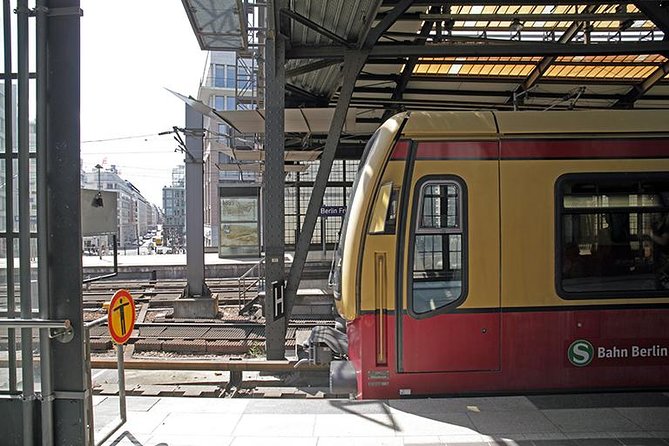
At the former Aviation Ministry, the guide discusses the old Luftwaffe headquarters and the consequences of Nazi rule for Jewish people and Sinti and Roma communities. The building provides another useful angle because it shows how the dictatorship occupied the machinery of government.
This stop also helps prevent the tour from becoming too narrow. The Nazi system persecuted many groups, not only Jewish people, and the route makes room for that wider picture. You hear about the impact on Sinti and Roma communities alongside the broader structure of the regime.
The stop is listed at about ten minutes. Again, the focus is on explanation from outside rather than a full interior tour. That is worth remembering when comparing this experience with a museum ticket or a specialist indoor tour.
Resistance at the Johann Georg Elser sculpture
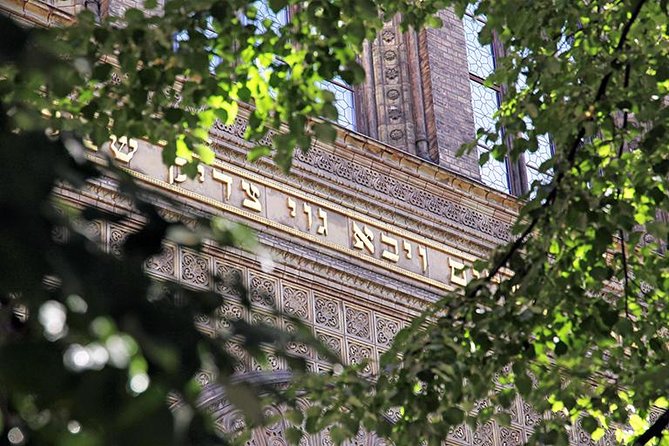
The Johann Georg Elser sculpture marks one of the tour’s more personal stories. Your guide explains Elser’s attempt to kill Hitler, a reminder that opposition to the regime existed even when resistance was dangerous and isolated.
This stop adds needed variety to the route. Much of the morning concerns the power of the Nazi state and the suffering it caused. Elser’s story brings in the question of individual action, moral choice, and the limits of resistance under dictatorship.
The visit lasts about five minutes. That is enough to understand why the sculpture is there, but you should not expect a long study of German resistance movements. If this subject interests you, ask your guide questions while the group is gathered. Guides such as James, Jimmy, and Jonathan are praised for using questions and stories to make difficult material easier to follow.
Memorials at the heart of modern Berlin
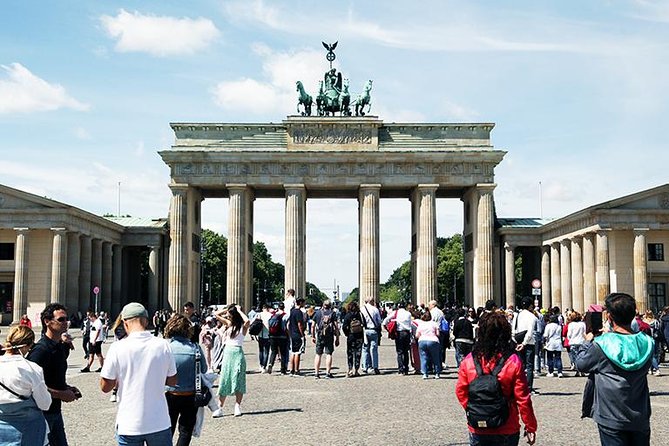
The Holocaust Memorial, formally the Memorial to the Murdered Jews of Europe, is one of the tour’s central stops. The guide explains the meaning and history of the site, giving you a chance to consider how modern Germany remembers the Holocaust in the middle of its capital.
The memorial is not presented as a simple monument with one easy message. Its physical form invites a personal response, while the guide supplies the historical frame. The listed visit lasts about ten minutes. You may want extra time to walk through the memorial area quietly after the tour or return another day.
Nearby, the Monument to Homosexuals Persecuted Under the National Socialist Regime broadens the discussion again. The guide explains the persecution of homosexual people under Nazi rule and the purpose of the memorial today. This is a valuable inclusion because it shows how remembrance in Berlin addresses several groups targeted by the regime.
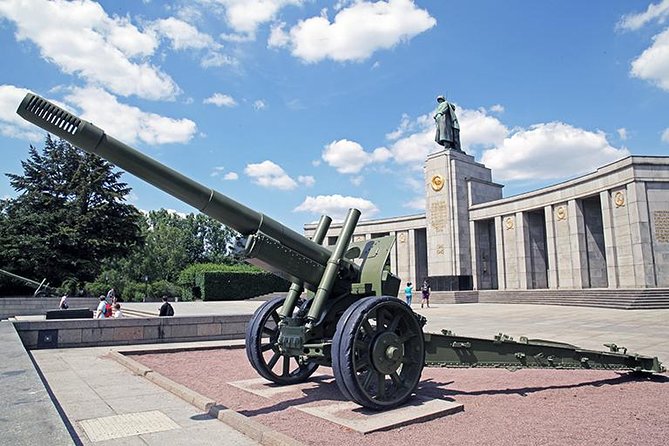
The route then reaches the Soviet Memorial in the Tiergarten. Here, the guide explains the site and its connection with the final phase of the war. The memorial adds a different political and military perspective, linking Berlin’s Nazi period with the Soviet advance and the city’s defeat in 1945.
These memorial stops are close enough in the broader central Berlin area to work well as part of one route, but the day still involves substantial walking. Some sections may feel like a brisk city walk rather than a slow memorial visit. If you prefer long periods of quiet at each site, plan to revisit the most important ones afterward.
Ending at the Reichstag
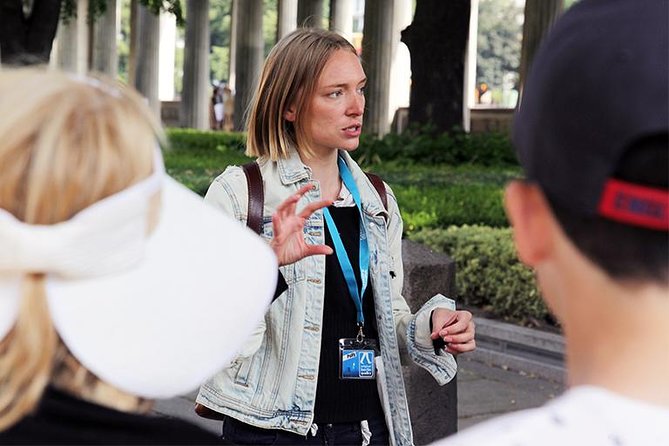
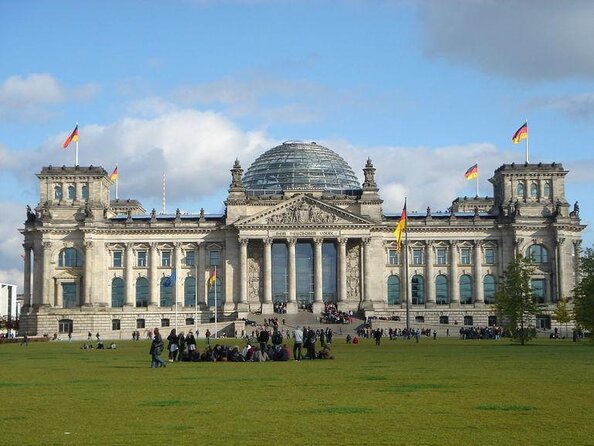
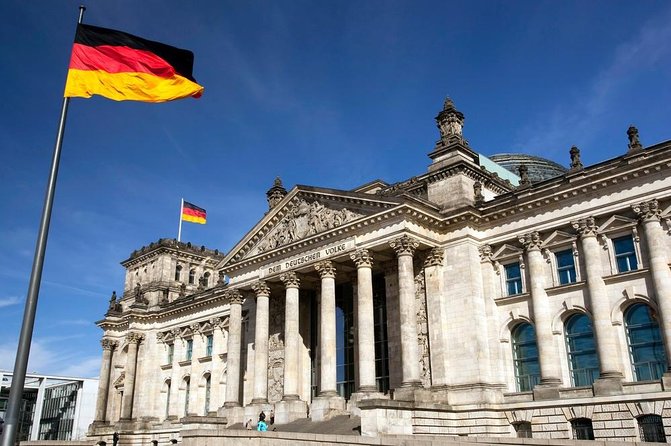
The tour finishes outside the Reichstag, Germany’s parliament building. Your guide explains its place in the Nazi rise to power in 1933 and its importance during the final days of World War II in 1945.
Ending here gives the route a strong sense of time passing. You begin with the rise of Hitler and the Nazi Party, then move through repression, deportation, resistance, war, and collapse. The Reichstag is not simply a famous building at the end of a sightseeing route. It represents the political center of Germany, the destruction of parliamentary democracy, and the later rebuilding of democratic government.
The tour ends at Platz der Republik 1. Because the experience finishes outside the Reichstag, you can continue exploring central Berlin from there. The tour does not include a Reichstag interior visit, and no admission tickets are included. Check your plans before booking if you specifically want to enter the building.
What the guide adds to the experience
The best reason to book this tour is the guide. Berlin’s memorials often provide basic information, but they cannot always explain how one event led to another or why a site matters in the larger story.
The guide style appears to vary by person, as you would expect from a rotating team, but the strongest qualities are consistent. Peter is described as fun, clear, and sensitive to the subject. Hannah is praised for passion and for making four hours pass quickly. Tom is noted for answering questions from different generations. Jonathan is praised for strong historical summaries and personal detail. Gregor is described as connecting Nazi events with the way Germany still deals with the war today.
You may also encounter guides such as Rohan, Giles, James, Scott, Anja, Benjamin, Rebecca, Johnathan N., Jonny, or Eran. The useful point is not to book around a single promised guide, since assignments can change. Instead, expect an English-speaking professional who should make time for questions and use the sites as visual reference points.
A few practical guide-related tips will help. Stay close enough to hear, especially near busy streets. Ask about subjects you want covered, since the route includes more material than four hours can fully explain. And remember that a little humor may appear, but the subject remains serious. The best guides use lightness to keep the group focused, not to make the history feel casual.
Price, walking, and the small practical details
At $21.77 per person, this is a strong value if you want a guided introduction to Berlin’s Nazi-era sites. You are paying mainly for the guide’s time, route planning, and explanations. That matters in a city where many important sites are free but scattered and easy to misunderstand.
The extra cost is the AB Zone transport ticket, about €3.80 per person, available at the station near the meeting point. The transport ticket is not included, so add it to your budget. The tour begins at 10 a.m., lasts about four hours, and ends near the Reichstag. That timing leaves the afternoon open for the Topography of Terror museum, the Reichstag area, or another Berlin attraction.
Dress for the weather. The tour operates in all conditions, and most of it takes place outdoors. Comfortable shoes are essential. One person completed the walk while recovering from leg surgery, and another with foot trouble found it manageable, but that does not mean the route will feel easy for everyone. Four hours on city pavements can be tiring, especially in rain or cold.
Service animals are allowed, and the tour is near public transportation. Most people can take part, but you should think honestly about your comfort with a long walking session and frequent standing. A maximum group size of 25 keeps the experience from becoming huge, though it is not a private walk.
You receive confirmation at booking. Free cancellation is available up to 24 hours before the start time for a full refund. Changes or cancellations made less than 24 hours before the start time are not accepted for a refund.
Who should book this tour?
I would choose this tour if you are visiting Berlin for a short stay and want a focused introduction to the Third Reich in one morning. It is also a good fit if you learn best by seeing places in person and asking questions as you go.
Families with older children or teenagers may find the format useful, especially with a guide who can explain the material in plain language. The subject is difficult, but the route does not rely only on dates and names. It connects politics with buildings, memorials, and individual stories.
You should consider another option if you want extensive museum time, indoor comfort, or a specialist study of one topic such as resistance, Jewish Berlin, or the Holocaust Memorial. This tour offers breadth across ten stops, not long sessions at each one. It also stays tightly focused on Nazi and wartime history, so you will not get a broad tour of every Berlin landmark along the way.
Should you book the Berlin Third Reich Sites walking tour?
For most first-time visitors interested in Berlin’s 20th-century history, I would book it. The route covers more ground than most people manage alone, the price is modest, and the guides add the connections that make the sites meaningful.
Go in ready for a serious morning, plenty of walking, and a subject that can be emotionally heavy. Wear good shoes, bring weather protection, budget the extra €3.80 transport ticket, and save time afterward if you want to explore the Topography of Terror or revisit a memorial at your own pace. If you want a clear starting point for understanding Nazi Berlin, this half-day tour makes a sensible choice.
FAQ
Where does the tour begin?
The tour begins at Neue Promenade 3, 10178 Berlin, Germany, near Hackescher Markt S-Bahn station.
What time does the tour start?
The scheduled start time is 10:00 a.m.
How long does the walking tour last?
The tour lasts approximately four hours.
Is transportation included in the price?
No. An AB Zone transport ticket costs approximately €3.80 per person and can be bought at the station near the meeting point.
Does the tour include museum or building admission?
No admission tickets are included. The guide explains the sites, including the Topography of Terror, the Reichstag, and the memorials, but the tour ends outside the Reichstag.
What happens if the weather is bad?
The tour operates in all weather conditions, so you should dress appropriately for rain, cold, or other outdoor conditions.
More Half-Day in Berlin
- Half-Day Berlin Highlights Segway Expedition
★ 4.6 · 60 reviews - Half-Day Guided Bike Tour of Central Berlin’s Highlights
★ 4.5 · 32 reviews - From Munich: Dachau Memorial Site Half-Day Trip
★ 4.7 · 2,526 reviews - Early-Start Dachau Memorial Half-Day Tour from Munich
★ 5.0 · 942 reviews
Just added in Berlin
- Berlin & The Third Reich Private Guided Tour★ 5.0 · 3 reviews
- Third Reich Quest Experience in Berlin★ 4.5 · 7 reviews
- Private Analogue Photography Experience in Berlin★ 5.0 · 3 reviews
- Berlin Urbex Adventure and History Tour★ 5.0 · 9 reviews
- The Beauty of Berlin by Bike: Private Tour★ 5.0 · 59 reviews
- Berlin: Guided Bike tour of the Berlin Wall and Third Reich★ 5.0 · 160 reviews
- Beyond Currywurst: Berlin’s Hidden Street Food & Culture Tour★ 5.0 · 100 reviews
- Berlin Third Reich & Cold War Walking Tour With A Guide★ 5.0 · 7 reviews
Third Reich Tours, compared.


Berlin’s Best: 2 Hour Walking Tour Third Reich and the Cold War
Read our review →
Third Reich Berlin: Hitler and WWII Walking Tour
Read our review →
Walking Tour of Former Nazi Party Rally Grounds
Read our review →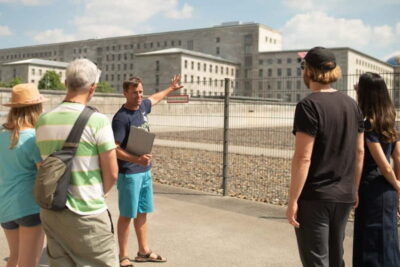
Birthplace of the Third Reich Guided Walking Tour
Read our review →Browse the lists this tour appears in