
Reviewed · THIRD REICH TOURS
Munich: Private or Group Third Reich and WWII Walking Tour
Munich’s Nazi past is not tucked away in a distant museum. It runs through the city center, from the Marian Column at Marienplatz to the grand buildings around Königsplatz. This two-hour walk shows where the Nazi Party grew, where Hitler made his early speeches, and where Munich was turned into the Capital of the Movement. I especially like the use of original sites and old photographs, which help you see the gap between today’s city and the one shaped by Hitler’s regime.
I also like the focus on resistance and victims, not just on Hitler’s rise. Guides such as Karl and Ina have been praised for making the subject personal and responsive rather than simply reciting dates. The main drawback is the tight two-hour format: this is a focused introduction, not a full study of Munich under Nazism, and the subject matter is heavy. Comfortable shoes and a willingness to discuss difficult history are essential.
Key points to know before booking
- Marienplatz begins the story: Meet at the golden Marian Column, where the tour starts in the center of Munich.
- Original locations carry the weight: Visit former Nazi buildings, beer halls, party sites, memorials, and places marked by war damage.
- Historic photos sharpen the view: Your guide uses documents and images to show what each location looked like during the Nazi era.
- The route links power and resistance: Learn about Hitler’s rise alongside people who opposed his ideology.
- Two hours keeps the pace manageable: You get a concentrated Old Town and Königsplatz overview without spending half a day walking.
- Private groups offer more room for questions: The advertised rate is $259 for a group of up to 25, making the value strongest when shared by several people.
Why Munich is the right place for this difficult history
Munich is often sold through palaces, beer halls, elegant squares, and Bavarian charm. That picture is real, but incomplete. The city was also Adolf Hitler’s adopted home, the birthplace of the Nazi Party, and the place where his movement first gathered serious local support.
The tour gives you a way to hold both sides of Munich in view. You walk through familiar streets while learning how the same city became the political center of National Socialism. In 1935, the Nazi regime officially called Munich the Hauptstadt der Bewegung, or Capital of the Movement.
That title was not just a slogan. Munich housed the national party headquarters and served as a setting for major Nazi ceremonies, speeches, marches, and acts of intimidation. General Eisenhower later called the city the cradle of the Nazi beast, a phrase that captures why this subject matters here.
I find a walking tour useful for this topic because the locations are close enough to connect. A classroom can explain the Beer Hall Putsch, anti-Semitic violence, the destruction of synagogues, and the book burnings. On foot, you also see how these events were tied to everyday streets, public squares, and buildings that people still pass today.
More Third Reich Tours in Munich
- Munich: Third Reich & WWII Walking Tour
★ 4.6 · 6,181 reviews - Third Reich Walking Tour Munich
★ 4.5 · 4,291 reviews - Munich: Birthplace of the Third Reich Guided Walking Tour
★ 4.6 · 771 reviews
Meeting at the Marian Column in Marienplatz
Your meeting point is the Mariensäule, the golden statue on a tall red marble column in the middle of Marienplatz. Look for a guide carrying a blue bag marked Weis(s)er Stadtvogel. This is a clear central meeting spot, but Marienplatz can be busy, so give yourself enough time to find the column rather than arriving at the last minute.
The opening location works well. Marienplatz is one of Munich’s best-known public spaces, and it lets the guide begin with the contrast between the city you see now and the political theater that once took place here. From this point, the story moves from the unsettled years after World War I into the growth of Hitler’s following.
You will hear how Hitler became known locally as a forceful beer hall speaker before he became a national figure. His audience was initially small, but his speeches helped turn frustration and resentment into organized political support.
This early section matters because it avoids presenting Hitler’s rise as sudden or inevitable. The guide can show how a failed democracy, postwar anger, propaganda, and organized street violence created the conditions for the Nazi Party to grow.
Beer halls, backstreets, and the failed Beer Hall Putsch
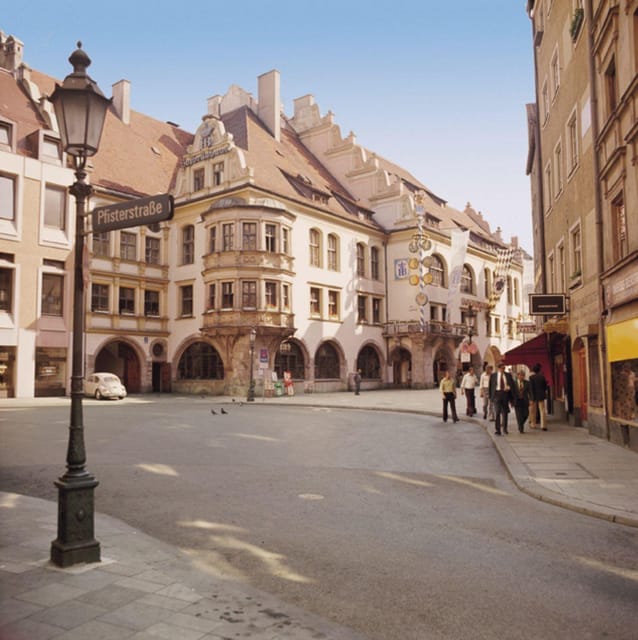
Munich’s beer halls and backstreets form an important part of the story. They were places where political speeches reached ordinary people, where supporters gathered, and where the Nazi movement built its early public identity.
The tour covers the Beer Hall Putsch, Hitler’s first attempt to seize power. The coup failed in Munich, but the event became useful to Nazi propaganda. A failed uprising was turned into a story of sacrifice and political destiny, helping Hitler build a stronger public image after his release from prison.
At the relevant locations, your guide uses photographs and documents to show what happened there. This is one of the most useful features of the walk. A building can look ordinary until you see an old image of a packed hall, a party gathering, or a street controlled by uniformed men.
You should not expect a theatrical reenactment. The value comes from connecting a present-day place with the choices made there. The guide also discusses the Brownshirts and the terror they spread, showing that political violence was not a side issue. It helped the movement intimidate opponents and reshape public life.
From party headquarters to the Capital of the Movement
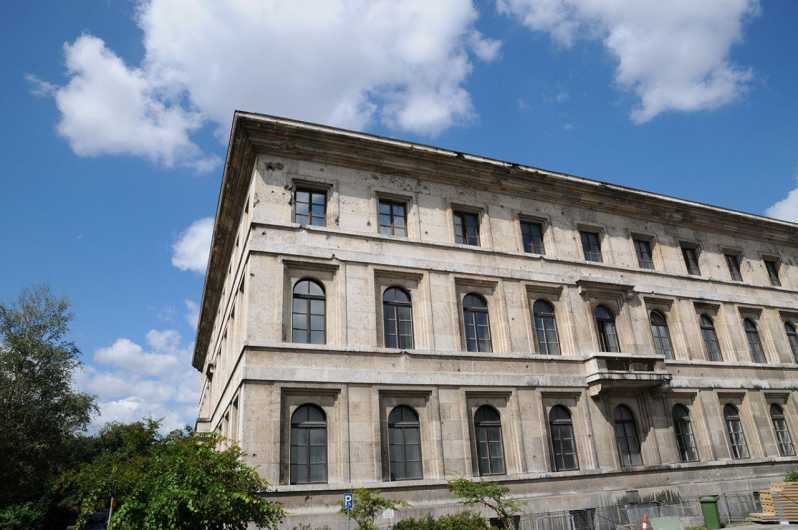
As the walk continues, the focus shifts from a fringe political group to a regime with national power. You see sites linked to the former Nazi headquarters and the official machinery that helped Munich become the movement’s center.
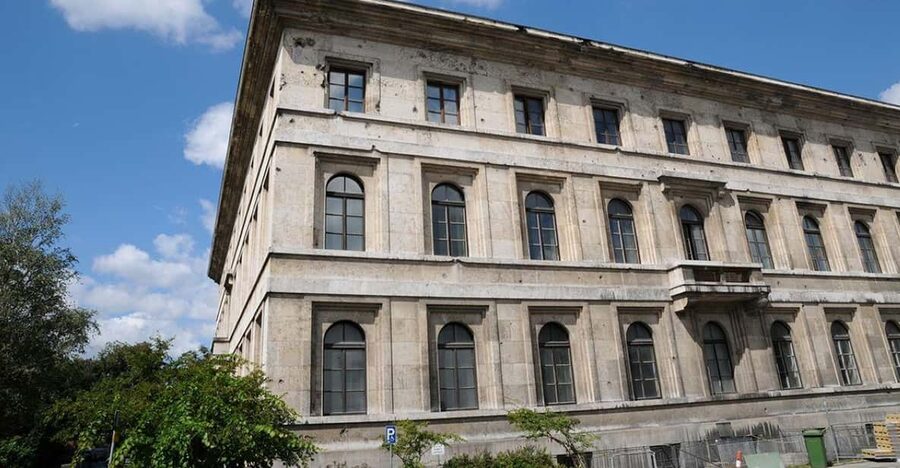
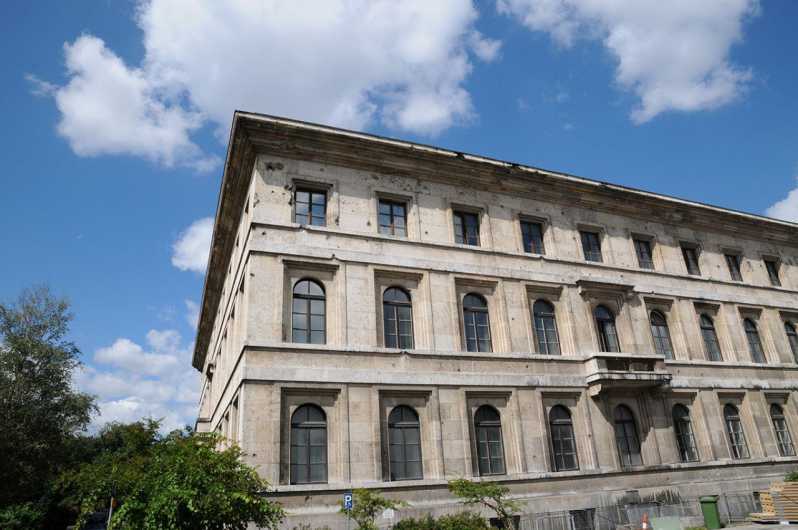
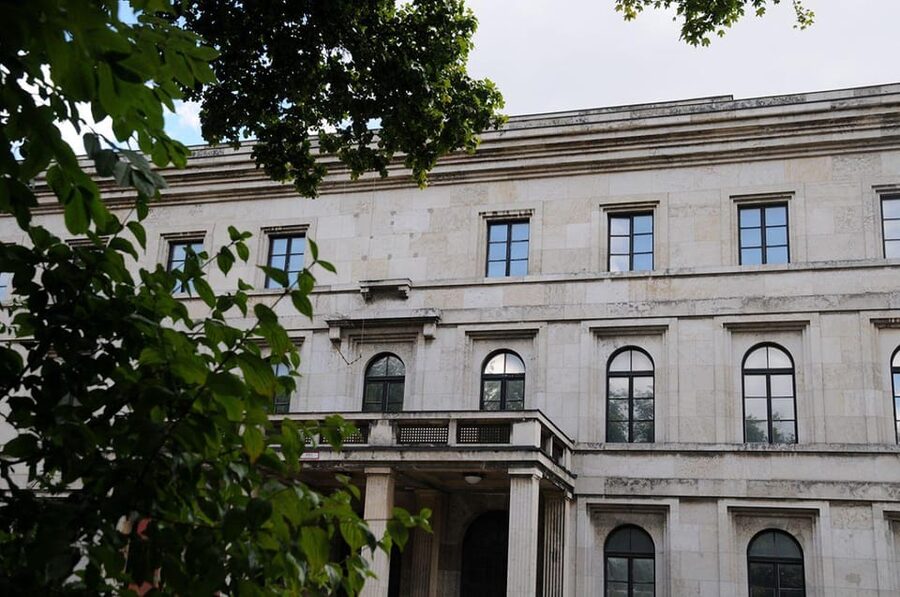
The grand buildings from the Third Reich era are especially revealing. Many were designed to project authority, discipline, and permanence. Some survived the war even though much of central Munich was heavily damaged by Allied bombing. Their survival creates an unsettling contrast: buildings meant to celebrate Nazi power remain, while many ordinary parts of the city disappeared.
Your guide’s old photographs help make this contrast visible. You can compare the clean lines and monumental scale of the surviving structures with wartime destruction and the altered streets around them.
I like this part of the route because it asks you to look at architecture as political messaging. These were not simply offices or public buildings. Their scale and placement were meant to make the regime appear strong and lasting. Seeing them in person gives the political story a physical presence without turning the buildings into attractions to admire uncritically.
More Walking Tours in Munich
- Munich: Night Watchman Walking Tour
★ 4.7 · 2,092 reviews - Munich Ghosts and Spirits Evening Walking Tour
★ 5.0 · 1,900 reviews - Munich Old Town Walking Tour
★ 4.5 · 1,287 reviews - Munich: Walking Tour Old Town and Viktualienmarkt
★ 4.7 · 839 reviews
Königsplatz and the grand Nazi stage
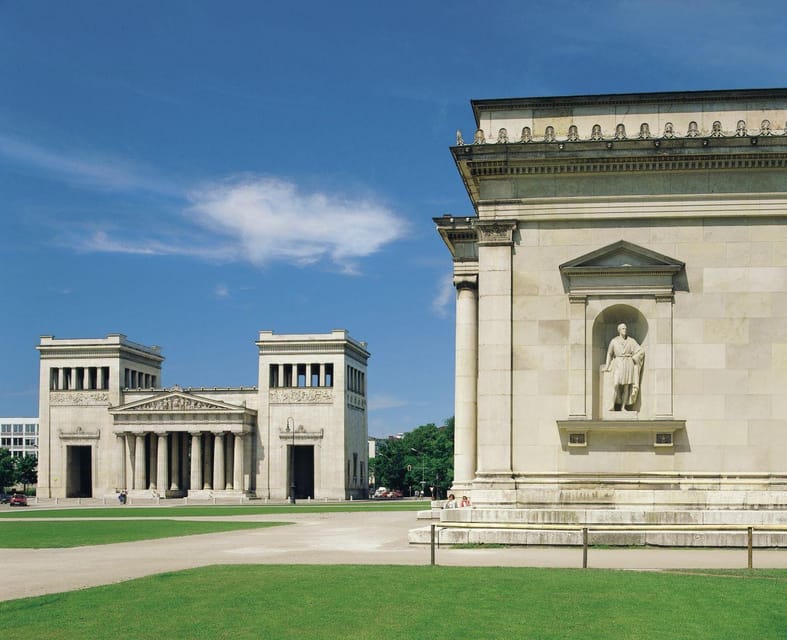
Königsplatz is one of the most important stops on the walk. Its open space and monumental buildings made it suitable for large Nazi events, ceremonies, and displays of power. The setting helps explain how public space can be reshaped to serve an ideology.
Here, the tour links grand architecture with mass politics. You learn how the regime used buildings, ceremonies, symbols, and crowds to create a feeling of unity while excluding and persecuting anyone who did not fit its vision.
Königsplatz also helps show the difference between private belief and public pressure. Nazi power was not sustained by speeches alone. It was reinforced through institutions, intimidation, public rituals, and the removal of democratic opposition.
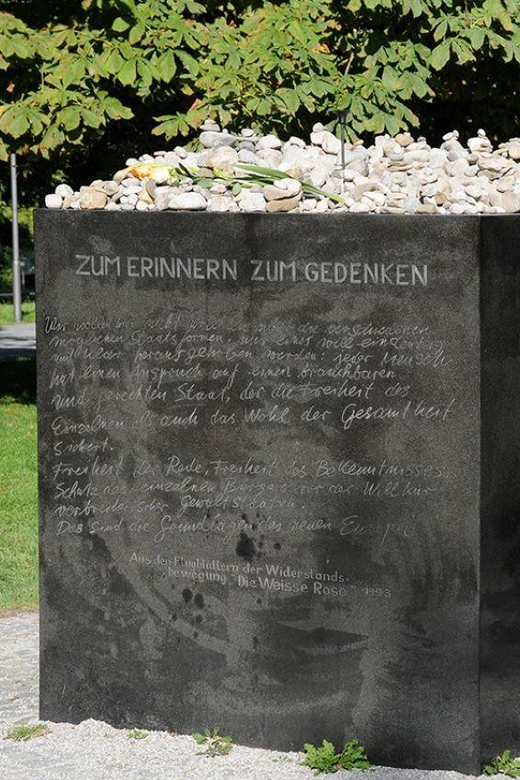
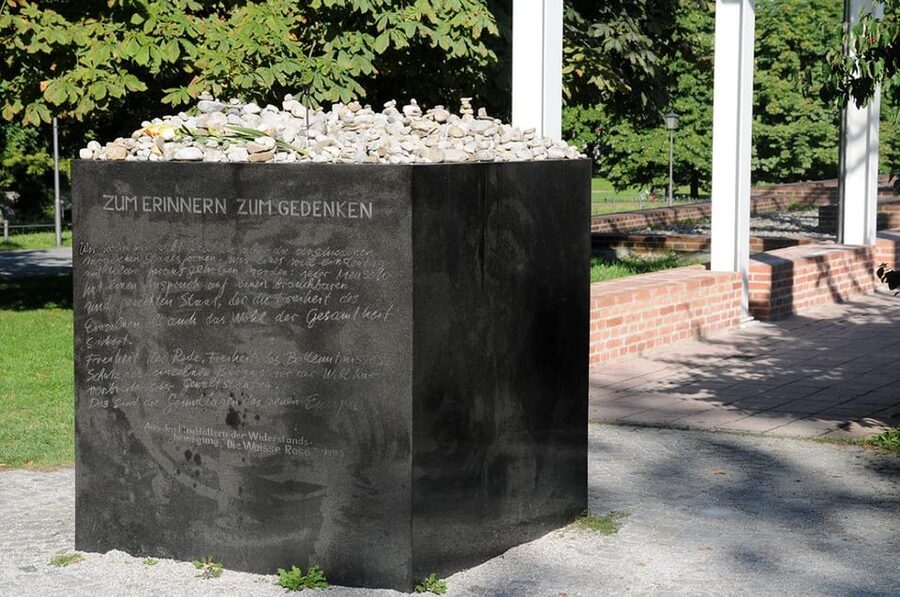
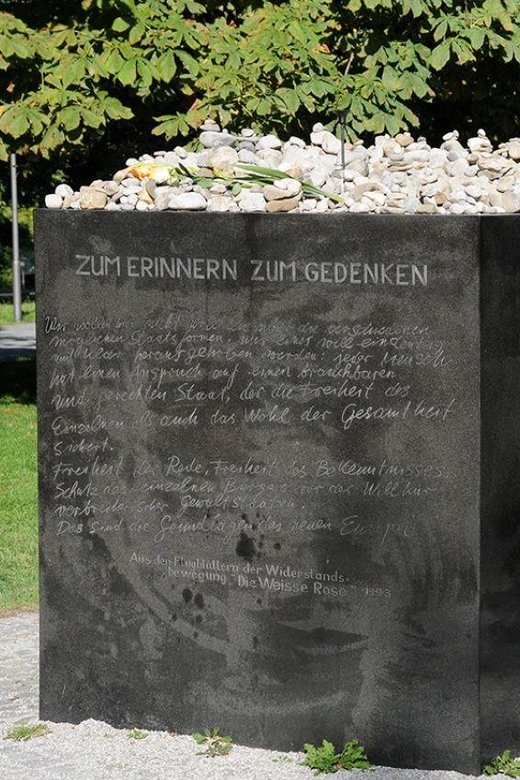
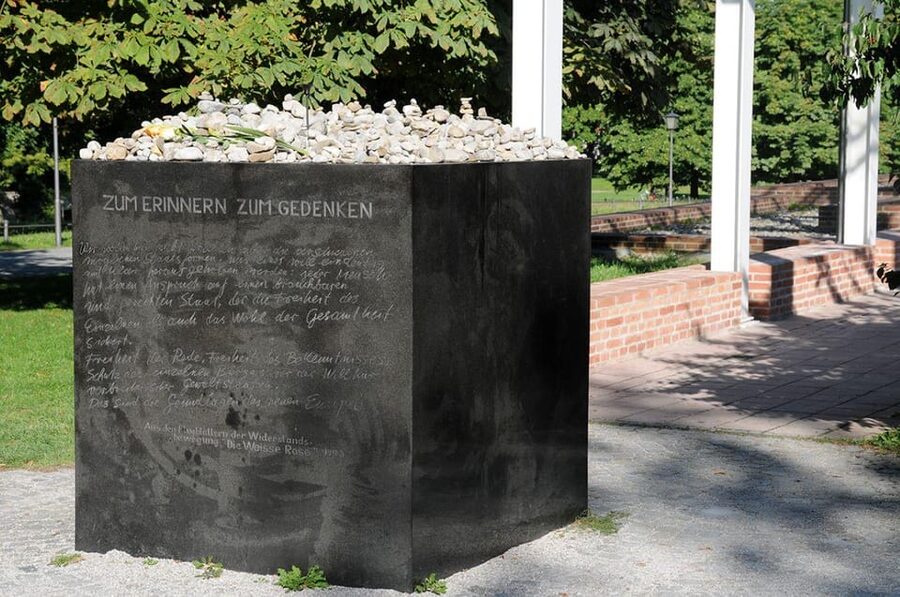
The route also points out memorials dedicated to people who resisted Hitler and to those murdered or persecuted under the regime. That balance is important. A tour that only follows Hitler’s movements can accidentally give him too much attention. This experience also asks you to remember the people who opposed him and the victims whose lives were destroyed.
War damage, destroyed synagogues, and the victims of Nazi rule
Munich’s streets still carry physical traces of the period. Some buildings bear scars from the war, while others were rebuilt or altered after the bombing. Your guide places these visible marks beside the political events that led to the conflict.
The tour addresses anti-Semitic pogroms, the destruction of synagogues, and the public burning of books. These subjects make clear that persecution was not limited to secret orders or distant camps. It entered public life through attacks, censorship, intimidation, and the removal of Jewish people from the community.
This is also where the subject can become emotionally difficult. The tour is not designed as light sightseeing, and the two-hour route includes acts of cruelty that may be upsetting. I would not book it as a casual activity between shopping and lunch, especially if you have young children.
The stated minimum age is 10, although one past booking included an eight-year-old whose guide was patient and attentive. The formal guidance still says the experience is not suitable for children under 10, so families should follow that rule when deciding.
A guide who uses evidence instead of a script
The quality of this tour depends heavily on the guide. A certified guide leads the walk in English or German and brings documents and photographs to explain the locations. That approach is more useful than a simple list of dates because it gives you something to examine while you listen.
Karl has been praised for his warm manner and strong command of the subject, while Ina has been described as heartfelt and responsive to questions. You may not get either guide, but these examples show the kind of guiding the experience aims for: informed, interactive, and able to adjust to the people in the group.
Another guide was praised for taking the group to the most relevant places and showing how the buildings looked during the Nazi regime. That is a practical strength. You do not need to memorize every name before arriving, because the images help you understand why each stop matters.
The best questions here are often simple ones. Why did this building matter? Who used this space? What changed after the war? How did ordinary people respond? A private group gives you more freedom to ask questions and may let the guide spend extra time on the parts your group finds most important.
Is $259 good value for a private group?
The listed price is $259 per group of up to 25 people. That price makes the most sense for a family, school-related group, or set of friends who will share the cost. For 10 people, it works out to about $26 per person. For four people, it is about $65 each. For only one or two people, the price feels much steeper.
The private format is the main value. You are not just paying for two hours of walking. You are paying for a certified guide who can use photographs, explain sensitive events, and respond to your group’s questions without having to follow a fixed public commentary.
The activity information also describes private or group options, while the additional details identify the group type as private. Check the option shown when you book so you know whether you are choosing a private tour or joining a scheduled group.
There is no transportation included. That is not a major problem because the experience is a walking tour beginning in central Marienplatz, but you should plan your own route to the meeting point. The advertised price includes the guide and walking tour, not transfers.
The practical side of a two-hour walk
Two hours is a useful length for this subject. It is long enough to connect Marienplatz, Nazi-era locations, war damage, and Königsplatz, but short enough to fit into a busy Munich day.
You should wear comfortable shoes. The tour takes place on foot, and the guide’s route includes several sites rather than one indoor building. Bring a drink, especially if you are walking in warm weather.
The tour is wheelchair accessible, which is important for a route through central Munich. Still, the experience remains a city walk, so it is sensible to confirm any personal mobility needs when booking.
The tour is offered in English and German. Video recording is not allowed, so you should plan to listen and take mental notes rather than film the guide. Since the material depends on photographs and documents, ask before taking still pictures if you are unsure about what is permitted.
Free cancellation is available up to 24 hours in advance for a full refund. You can also reserve now and pay later, which helps if your Munich schedule is still shifting.
Who will get the most from this experience?
I would choose this walk if you want historical context for Munich beyond its palaces, churches, and beer halls. It is especially useful early in your stay, since it can change how you read the city for the rest of your visit.
It suits adults, older children who can handle serious material, history students, and anyone interested in how democratic systems can be damaged from within. Solo visitors can also benefit from the format. The experience has received praise for welcoming people who attend alone.
A private group is a strong choice for families and friends because you can ask direct questions and set the pace within the allotted time. It is also a good fit if one person in your group already knows a great deal about the period and wants to explore specific details.
I would skip it if you want a cheerful introduction to Munich or if your schedule allows only a quick look at the city’s main sights. The subject is grim, and the tour asks for attention. It is not a sightseeing walk with a few Nazi-era facts added for color.
Should you book the Munich Third Reich and WWII walk?
Book it if you want to understand why Munich was central to the Nazi movement and prefer to learn through real places rather than a museum display alone. The strongest features are the original buildings, the old photographs, the clear route from Marienplatz to Königsplatz, and the attention given to resistance and victims.
The $259 group price is fair when divided among several people, but less attractive for a very small private party. Two hours gives you a strong introduction, not every site connected with the period.
If you can handle difficult history and arrive ready to listen, this tour can add necessary context to a beautiful city. Just bring comfortable shoes, meet at the Marian Column, and leave room afterward to process what you have seen.
FAQ
How long does the tour last?
The walking tour lasts two hours.
Where do I meet the guide?
Meet at the Mariensäule, the golden statue on a tall red marble column in the center of Marienplatz. Look for a guide carrying a blue bag marked Weis(s)er Stadtvogel.
What languages are available?
The tour is offered in English and German.
Is the tour private?
The activity information offers private or group choices, and the additional details identify the group type as private. Check the booking option carefully when you reserve.
How much does the tour cost?
The listed price is $259 per group of up to 25 people.
What is included in the price?
A certified guide and the walking tour are included. Transportation is not included.
Is the route wheelchair accessible?
Yes, the tour is listed as wheelchair accessible.
Are children allowed to join?
The tour is not suitable for children under 10. One past booking included an eight-year-old, but the stated age guidance is 10 and older.
Can I cancel or pay later?
You can cancel up to 24 hours in advance for a full refund. Reserve now and pay later is also available.
Just added in Munich
- Private transfer: Vilshofen to Munich with 2h sightseeing stop★ 5.0 · 6 reviews
- Pub crawl incl. Oktoberfest museum guided tour with beer tasting (private)★ 5.0 · 5 reviews
- South Tyrolean specialties and wine tasting★ 5.0 · 5 reviews
- Size Matters Beer Tour Munich★ 4.6 · 105 reviews
- Short & sweet: Tasting the Viktualienmarkt★ 4.8 · 37 reviews
- Secret Food Tours Munich★ 4.8 · 5 reviews
- Munich: Romantic Wine Experience for Two at Viktualienmarkt★ 4.2 · 14 reviews
- Munich: Resistance against Hitler – Historical Walking Tour★ 5.0 · 5 reviews
Third Reich Tours, compared.



Berlin’s Best: 2 Hour Walking Tour Third Reich and the Cold War
Read our review →

Third Reich Berlin: Hitler and WWII Walking Tour
Read our review →
Walking Tour of Former Nazi Party Rally Grounds
Read our review →
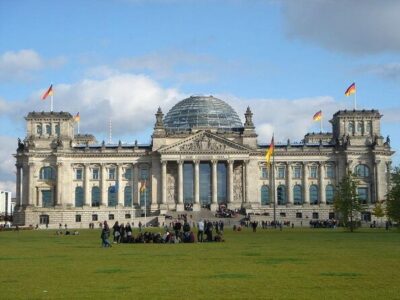
Berlin Third Reich Sites: Half-Day Walking Tour
Read our review →Browse the lists this tour appears in