
Reviewed · THIRD REICH TOURS
Munich: Historical Walking Tour on the Rise of Hitler
Munich’s Nazi past is not tucked away in a distant museum. It is written into the streets, squares, and government buildings you pass in the city center. This walking tour follows that history in order, showing how Munich became the center of the Nazi movement and how propaganda reshaped the city. I especially like Alex’s local connection and the way the tour links buildings to the political events that took place around them. The chronological approach also makes a complicated subject easier to follow.
The main thing to consider is the language: the tour is conducted in German. The subject is serious, too, even though Alex aims to keep the atmosphere open and occasionally light. You will be walking for about two and a half hours in all weather, so comfortable shoes and suitable clothing matter.
Key points to know before booking
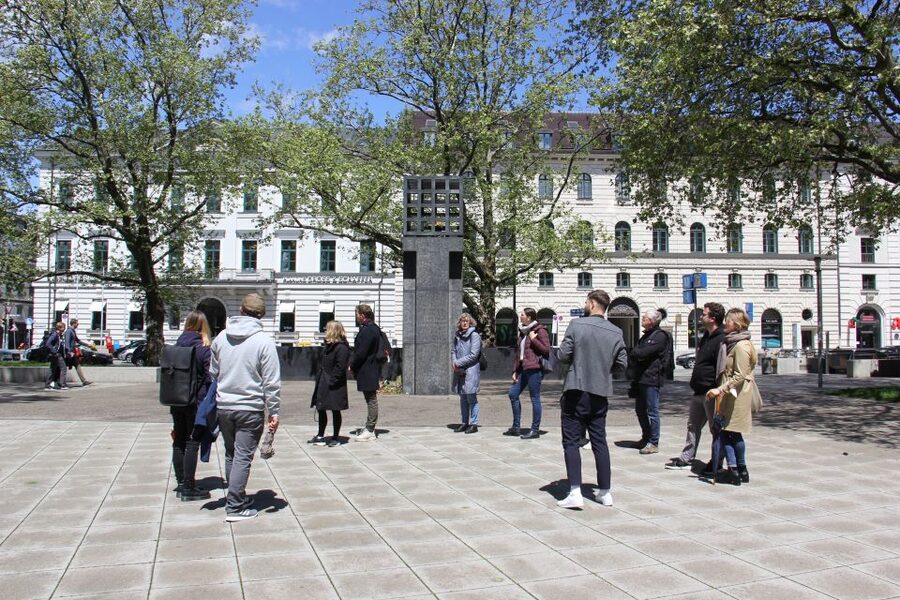
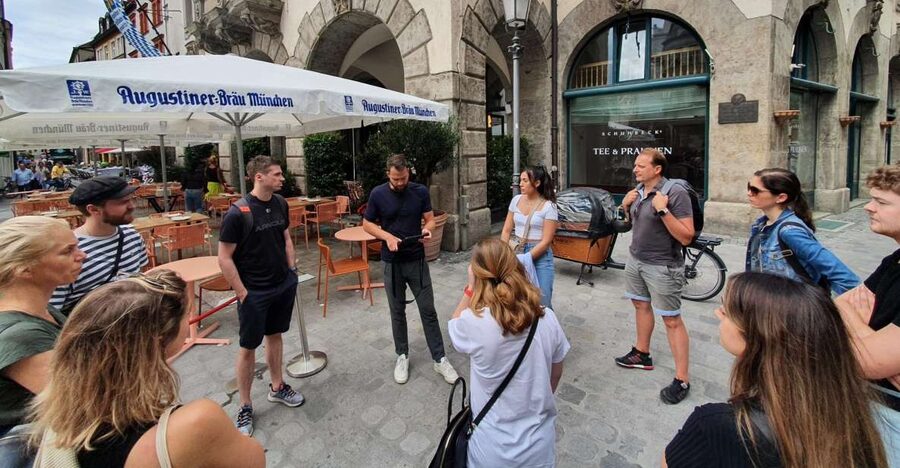
- Meet at Marienplatz: Find Alex beside the Marian Column, the large column with the small golden statue in the center of the square.
- Follow Munich’s Nazi-era story: The route connects speeches, parades, propaganda buildings, places of worship, and wartime destruction.
- Guide Alex is Munich-born: His personal interest in the subject began when he was young, and he brings local context to the walk.
- German-language tour: The tour is fully guided in German and lasts about 2.5 hours.
- Serious but approachable: Alex presents the subject clearly without turning the walk into a dry lecture.
- Good value at $30: You get a focused historical tour, local recommendations, and a guide-led route through important central locations.
Why Munich is the right place for this history walk
Munich is often sold as a city of beer halls, grand churches, museums, and handsome squares. That picture is true, but incomplete. The city also played a key role in the rise of National Socialism, and many of the places connected with that period remain part of everyday Munich.
The tour begins from the idea that Munich was not simply a backdrop. It was where Adolf Hitler first built a political network in Germany, where the Nazi movement gained early support, and where its public image took shape. The city was later given the propaganda title of capital of the movement.
That makes this a useful tour for visitors who want more than a general account of the Third Reich. Instead of treating the subject as a distant national story, Alex places it on specific streets and at recognizable buildings. You can see how political gatherings, public ceremonies, propaganda, and architecture worked together.
I find that approach valuable because history becomes easier to understand when you can connect it to a place. A square used for a Nazi parade is no longer just an attractive urban space. A government building is not only a piece of architecture. The walk asks you to consider how public places can be used to create power, loyalty, and fear.
More History Tours in Munich
- Munich: Guided Tour of the historic Town Hall on Marienplatz
★ 4.8 · 63 reviews - Munich Craft Beer & Cultural Tour With Snack
★ 5.0 · 46 reviews - Munich History Tour: Private & Personalized with a Local Guide
★ 4.5 · 33 reviews
Meeting Alex at Marienplatz
The meeting point is easy to reach: Marienplatz, Munich’s central square, beside the Marian Column. Look for the large column with the small golden statue in the middle. This is a practical starting point because you are already in the heart of the historic center, with public transport and many other sights nearby.
The tour does not include hotel pickup, so you need to make your own way to the square. Plan to arrive with enough time to find the column without rushing. Marienplatz can be busy, and the meeting point is a specific landmark rather than a hotel or shop entrance.
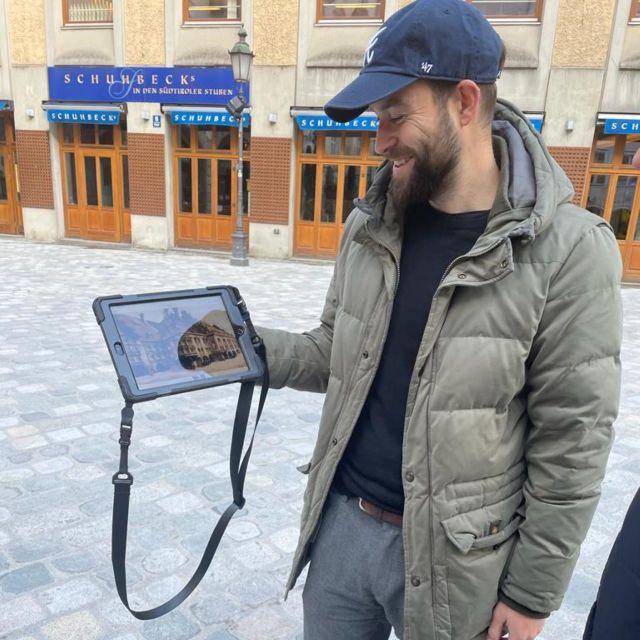
Alex is a Munich local, born and raised in the city. That matters on a tour like this. His interest in the subject is personal and long-running, but his role is not simply to recite dates. He aims to explain how the movement developed and why Munich became so important to it.
The available feedback gives a clear picture of his teaching style. He is described as engaged, sympathetic, good-humored, and willing to answer questions. One detailed account also notes that he built in short pauses along the route, which is welcome during a nearly three-hour walk.
A chronological route through Munich’s Nazi past
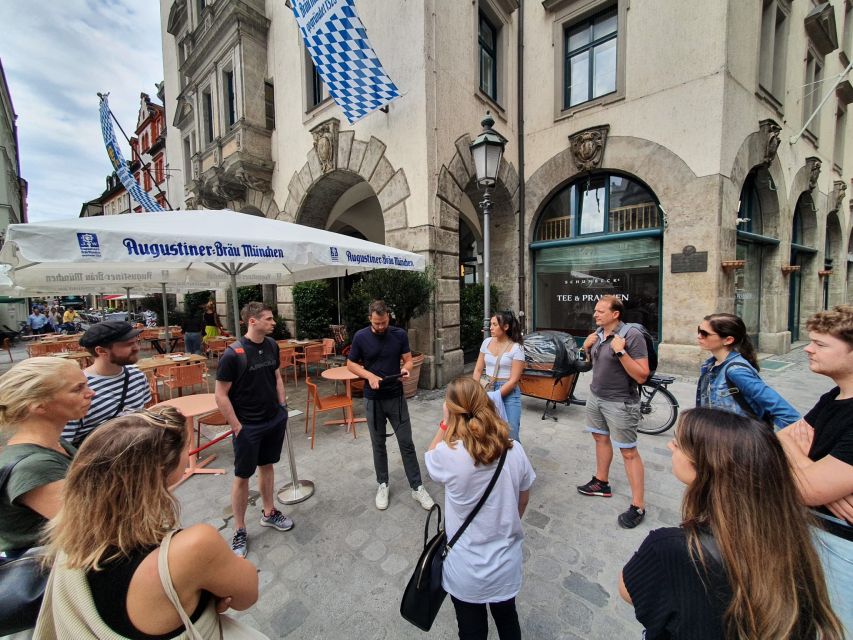
The tour follows the historical events in chronological order. This is one of its best choices. National Socialism can become a blur of names, dates, organizations, and atrocities, especially if you are encountering the subject for the first time. A clear sequence helps you see cause and effect.
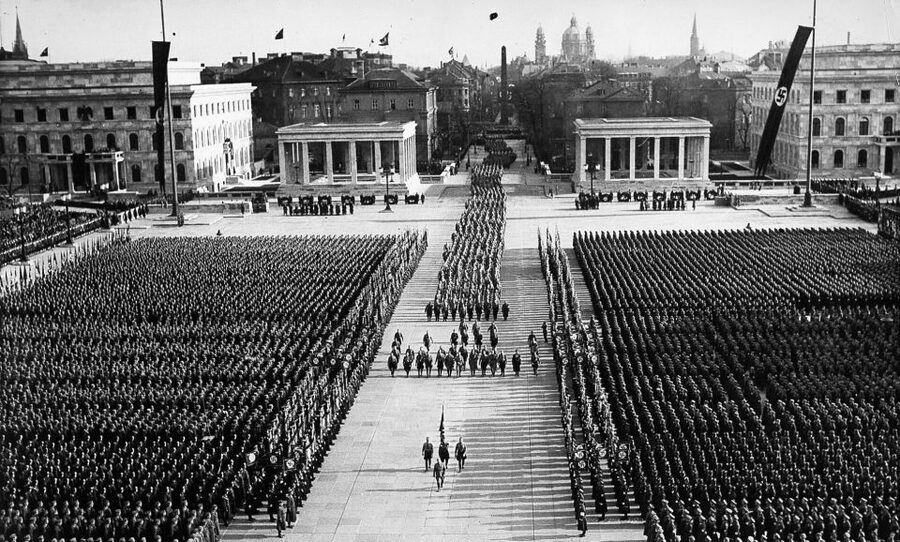
You begin with the conditions that allowed an unknown Austrian soldier to become one of the most feared dictators in modern European history. From there, the walk moves through the places where Hitler made early speeches, where the Nazi movement gained a public platform, and where Munich became an important center of political activity.
The tour also looks at the buildings erected for Nazi propaganda and administration. Many survived the war with little damage, so they remain visible in the modern city. That creates an uncomfortable but useful contrast. You are not looking at a vanished world. You are seeing how the past still shares space with today’s Munich.
The route includes squares and buildings that were used for Nazi ceremonies, rallies, or public displays of loyalty. These locations help explain how the movement presented itself to the public. Architecture was not neutral in this setting. Large government buildings, formal spaces, and carefully staged events helped project authority and permanence.
Alex also connects the tour to the bombing war that Munich endured. This broadens the story beyond political rise and propaganda. You learn how the city experienced the consequences of the dictatorship and the war it helped support.
Exact stop names and the order of every location are not provided, so you should think of this as a guided historical route rather than a fixed checklist of famous landmarks. The value is in the explanation at each place, not in collecting a set number of photo stops.
Seeing propaganda buildings in their modern setting
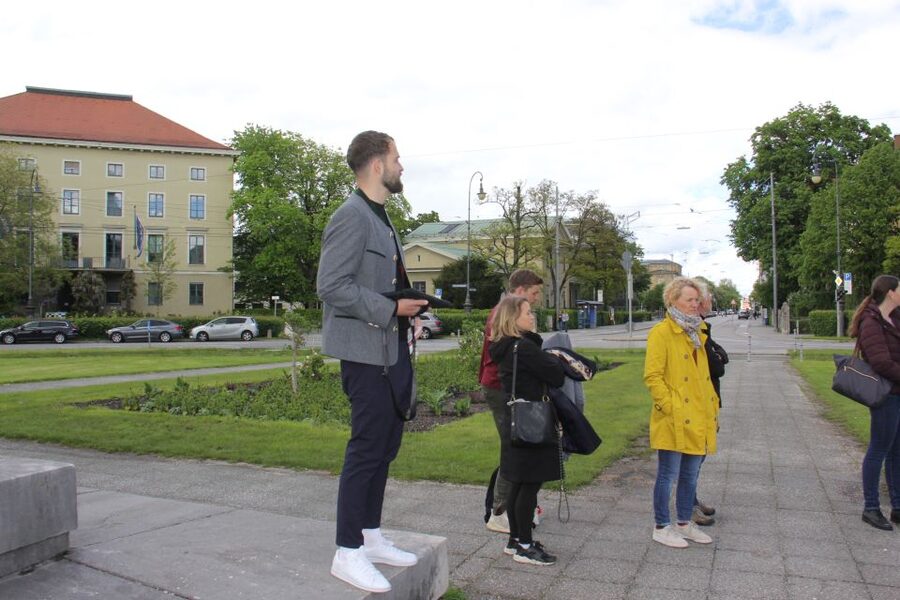
One striking feature of this walk is the attention given to buildings from the Nazi period. The description refers to important structures built by the National Socialists or used as places of worship by the movement. Many remain standing, which means you can study the physical city as part of the historical record.
This is where a local guide can add real value. On your own, you might pass a large formal building and appreciate its design without knowing why it was built, who used it, or what public message it was meant to send. Alex provides that missing context.
The buildings also raise difficult questions about preservation. How should a city live with structures connected to dictatorship? What should be explained, marked, or remembered? The tour does not turn these issues into an abstract debate. It puts them in front of you through the actual streets of Munich.
Do not expect a museum-style display at every stop. This is an outdoor walking tour, and much of the story comes through Alex’s explanation. If you prefer artifacts, documents, and indoor exhibits, you may want to pair the walk with a museum visit. If you want to understand how Nazi power occupied the city itself, the street setting is the point.
More Third Reich Tours in Munich
- Munich: Third Reich & WWII Walking Tour
★ 4.6 · 6,181 reviews - Third Reich Walking Tour Munich
★ 4.5 · 4,291 reviews - Munich: Birthplace of the Third Reich Guided Walking Tour
★ 4.6 · 771 reviews - Munich City Walking Tour, includes Third Reich & Viktualienmarkt
★ 5.0 · 458 reviews
From speeches and parades to wartime destruction
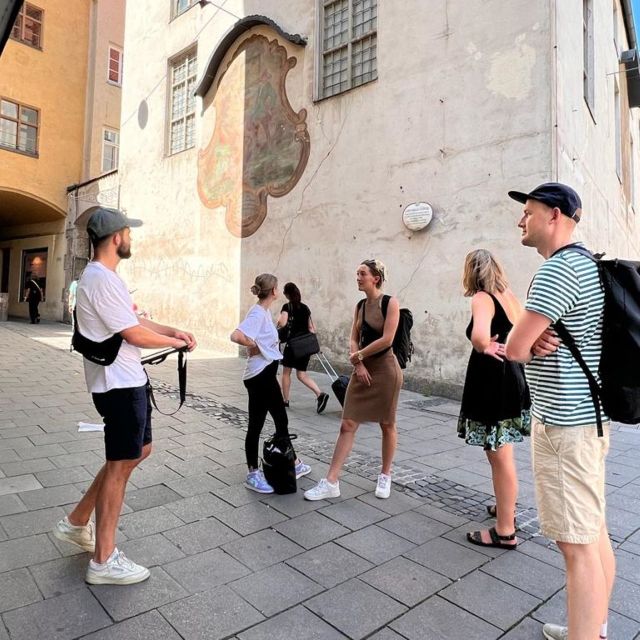
The route visits places linked to Hitler’s early public speeches and to Nazi parades. These stops show how the movement used public space to build a sense of shared identity and control. A speech was not only about the words spoken. The crowd, setting, symbols, and repeated ceremony all helped create political theater.
That part of the tour should appeal to you if you are interested in how propaganda works. Alex’s focus is not limited to Hitler as an individual. He also explores the wider political and social setting that allowed National Socialism to grow.
The story then moves toward the war years and Munich’s experience of bombing. This is an important shift. It reminds you that propaganda buildings and public ceremonies were connected to real decisions that caused suffering far beyond the city.
The tour’s strength is the link between ordinary urban spaces and major historical events. You might be looking at a square where people now cross on the way to work, while hearing about a time when the same space was filled with Nazi ceremony. That contrast can make the past feel close, but the tone remains focused on explanation rather than spectacle.
Alex’s teaching style and the tone of the tour
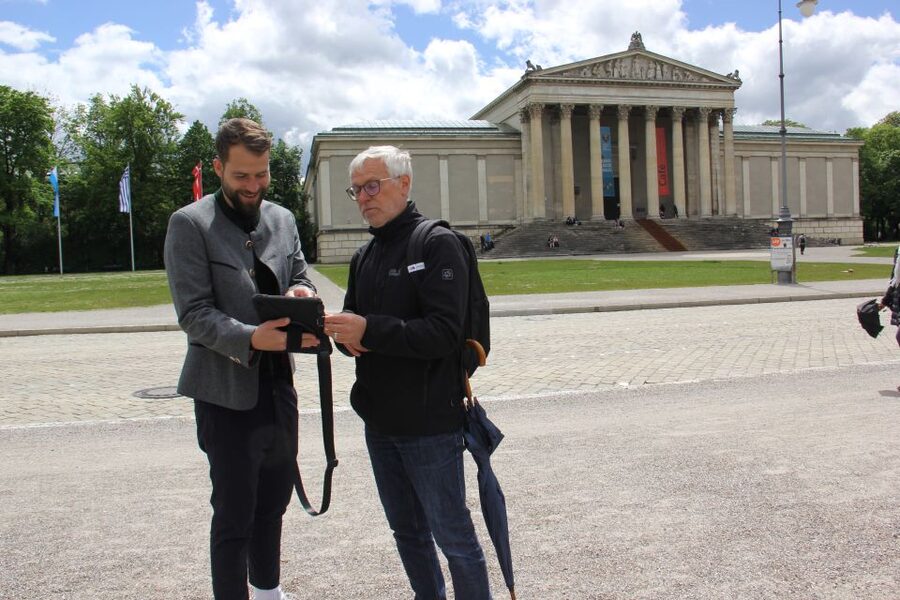
This is a serious subject, but Alex does not treat seriousness as a reason to be stiff. He says a guided tour should also be enjoyable, and the feedback describes him as entertaining without becoming shallow. That balance is important here.
A guide can mishandle this topic in two ways. The presentation can become a flat list of crimes and dates, or it can become too casual and lose sight of the human cost. Alex’s approach appears to sit between those extremes. He uses an approachable manner while keeping the history central.
You do not need to be a history specialist to take the tour. The chronological structure helps beginners, while the political links and architectural details give more experienced visitors something to think about. It also suits people who already live in Munich. One local participant found that the tour revealed details that were easy to miss in a familiar city.
Alex welcomes questions and adapts to the group. That is useful because this subject often raises difficult points about responsibility, public memory, and how ordinary people responded to political change. A good guide should give you room to ask without turning the tour into a debate club.
The available rating is 5 out of 5 from 13 reviews, with repeated praise for Alex’s clarity, enthusiasm, and ability to remain engaging without being superficial. One person said the tour ran close to three hours because there was so much to explain, yet it did not feel too long. That suggests the timing may stretch slightly when questions and pauses add to the scheduled two and a half hours.
What the $30 price gets you
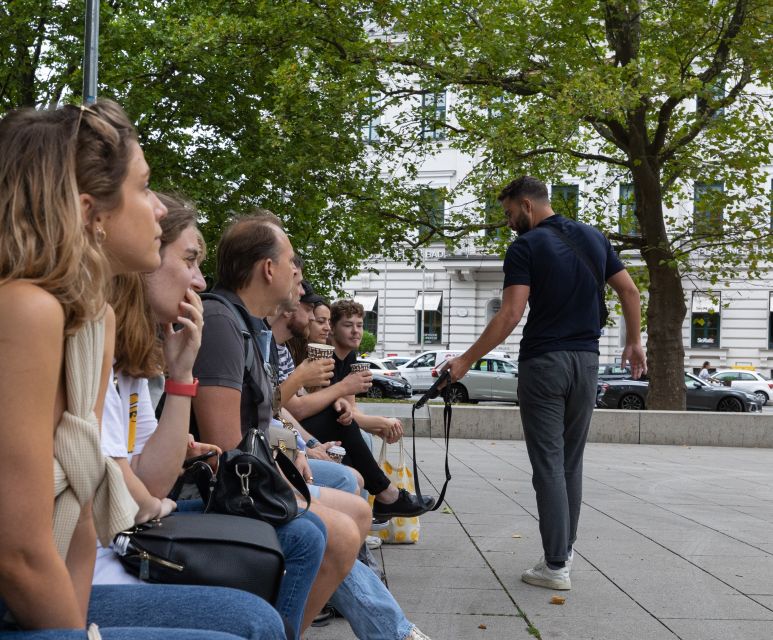
At $30 per person, this is a reasonable price for a focused, fully guided city walk. You are paying for Alex’s time, his historical preparation, and the interpretation of places that could otherwise be easy to overlook.
The value is strongest if you are genuinely interested in German history, politics, architecture, or public memory. You are not paying for entry to a major attraction, transport, food, or hotel pickup. The experience is built around the guide and the route.
I would compare it with the cost of wandering through central Munich without context. You can see some of the same buildings for free, but you will not necessarily understand why they matter or how they fit into the rise of National Socialism. For a visitor who wants a structured introduction, $30 is fair.
The tour also includes personal recommendations for exploring Munich like a local. That is a small but useful extra, especially if you take the walk early in your stay and use Alex’s suggestions for the rest of your visit.
The main limit is language. Since the tour is conducted in German, you should be comfortable following a detailed historical explanation in German. The activity information does not list another language option, so do not assume that an English version is available.
Comfort, timing, and weather
The tour lasts about 2.5 hours and takes place outdoors. Wear comfortable shoes. That advice is basic, but it matters more on a history walk than on a short stroll between attractions.
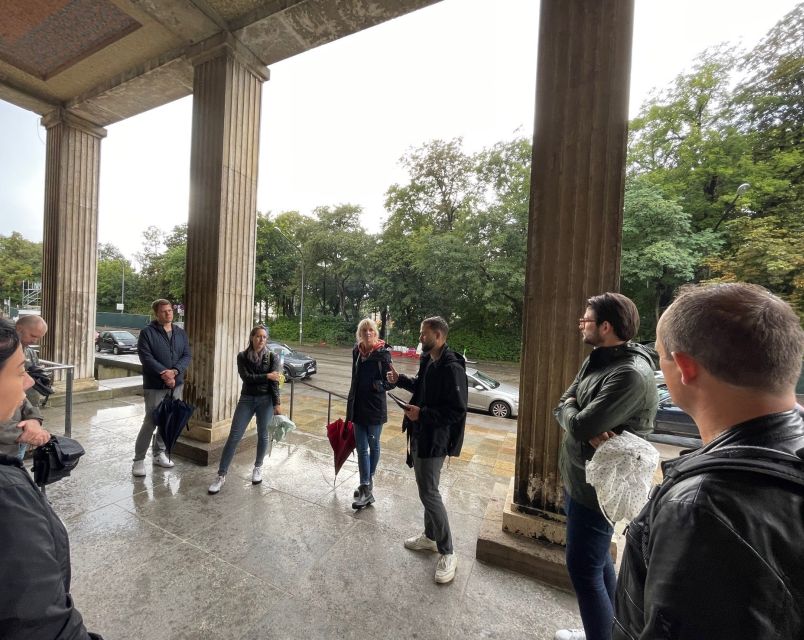
The tour runs rain or shine. Bring suitable clothing for the forecast, since the route is not designed around indoor shelter. On a wet day, the buildings and squares may still be meaningful, but the experience will be less comfortable.
The tour is wheelchair accessible, which makes it a practical choice for many visitors. You should still consider your own comfort with a long outdoor route and check the exact meeting arrangements when booking if you have specific mobility needs.
Free cancellation is available up to 24 hours before the start for a full refund. You can also reserve now and pay later, which helps if your Munich plans are still shifting.
Who should take this tour
I would recommend it to you if you want to understand why Munich mattered so much in the Nazi rise to power. It is also a good fit if you prefer history connected to streets and buildings rather than a lecture in a classroom.
It suits first-time visitors who want a serious introduction, as well as Munich residents who suspect there are parts of the city they have never properly noticed. The tour works for young and older participants, provided they are ready for a sustained walk and a difficult subject.
You may want to choose something else if you only have a short time in Munich and want to focus on palaces, art museums, food, or Bavarian traditions. You should also think twice if you are not comfortable following a German-language tour.
This is not a light sightseeing loop with a few Nazi-era references added for color. The entire walk is about the rise of Hitler, the political importance of Munich, propaganda architecture, and the damage caused by the dictatorship. That focus is its strength, but it will not suit every itinerary.
Should you book Alex’s Munich history walk?
Book it if you want a clear, place-based explanation of Munich’s role in National Socialism, especially if German is comfortable for you. Alex’s local background, chronological storytelling, willingness to answer questions, and relaxed but respectful manner make the tour feel more personal than a standard list of dates.
The $30 price is good for a 2.5-hour guided walk, and the chance to see Nazi-era buildings in their present-day setting adds real value. Wear good shoes, prepare for rain, and allow the possibility that a thoughtful group may run closer to three hours.
Skip it if you want a purely scenic tour or an indoor museum experience. For everyone else, this is a useful way to meet Munich’s difficult past directly, without reducing it to either a dull lecture or a sensational story.
FAQ
Where does the tour meet?
Meet Alex at Marienplatz beside the Marian Column. It is the large column with the small golden statue in the center of the square.
How long does the tour last?
The scheduled duration is 2.5 hours. A detailed experience may run close to three hours if the group spends extra time on questions and explanations.
How much does the tour cost?
The price is $30 per person.
What language is the tour conducted in?
The live guided tour is conducted in German.
Is hotel pickup included?
No. Hotel pickup is not included, so you need to reach the Marienplatz meeting point yourself.
Is the tour wheelchair accessible?
Yes, the activity is listed as wheelchair accessible.
What should I bring?
Bring comfortable shoes. The tour takes place outdoors and runs rain or shine, so weather-appropriate clothing is also sensible.
Can I cancel or pay later?
You can cancel up to 24 hours in advance for a full refund. You can also reserve your place and pay later.
More Walking Tours in Munich
- Munich: Night Watchman Walking Tour
★ 4.7 · 2,092 reviews - Munich Ghosts and Spirits Evening Walking Tour
★ 5.0 · 1,900 reviews - Munich Old Town Walking Tour
★ 4.5 · 1,287 reviews - Munich: Walking Tour Old Town and Viktualienmarkt
★ 4.7 · 839 reviews
Just added in Munich
- Private transfer: Vilshofen to Munich with 2h sightseeing stop★ 5.0 · 6 reviews
- Pub crawl incl. Oktoberfest museum guided tour with beer tasting (private)★ 5.0 · 5 reviews
- South Tyrolean specialties and wine tasting★ 5.0 · 5 reviews
- Size Matters Beer Tour Munich★ 4.6 · 105 reviews
- Short & sweet: Tasting the Viktualienmarkt★ 4.8 · 37 reviews
- Secret Food Tours Munich★ 4.8 · 5 reviews
- Munich: Romantic Wine Experience for Two at Viktualienmarkt★ 4.2 · 14 reviews
- Munich: Resistance against Hitler – Historical Walking Tour★ 5.0 · 5 reviews
Third Reich Tours, compared.



Berlin’s Best: 2 Hour Walking Tour Third Reich and the Cold War
Read our review →

Third Reich Berlin: Hitler and WWII Walking Tour
Read our review →
Walking Tour of Former Nazi Party Rally Grounds
Read our review →
Berlin Third Reich Sites: Half-Day Walking Tour
Read our review →Browse the lists this tour appears in