
Reviewed · HISTORICAL TOURS
Explore Berlin Tour: History and Highlights
Berlin’s past is packed into this three-hour walking route, from Prussian power and imperial Berlin to Nazi crimes, wartime ruins, the Wall, and reunification. You move through the city’s historic core rather than viewing it from a bus, so the links between sites become easier to understand.
I like the way the tour combines major sights with difficult history, including the Holocaust Memorial, Hitler’s bunker site, and the Topography of Terror. I also like the practical start: you get a quick sense of central Berlin and how its main areas connect. The main drawback is the amount of talking. One small group found the guide informative but wanted more time for photos and quiet looking.
Key things to know before you book
- The route covers 13 central stops, including Brandenburg Gate, the Reichstag, Checkpoint Charlie, Gendarmenmarkt, Bebelplatz, and Museum Island.
- The history runs from medieval Berlin to reunification, with strong attention to Prussia, the First World War, the Second World War, and the Berlin Wall.
- Guide Al received especially warm praise for adapting his explanations to the group and checking on everyone’s progress and comfort.
- The tour is conducted in English and is advertised as wheelchair accessible.
- The $31 price is fair for a three-hour guided overview, especially if you want context before exploring museums or memorials on your own.
- Bring patience for long explanations, since the experience may feel closer to an outdoor history class than a casual sightseeing stroll.
Why this route works for a first look at Berlin
Berlin is not a city where every important sight fits neatly into one old center. Its key places are spread across former royal, government, Nazi, Cold War, and reunited districts. A good walking route has to do more than point at monuments. It needs to explain why the city feels fragmented and why certain empty spaces matter.
This tour makes that connection its main purpose. You begin near Brandenburg Gate and then follow a route through government buildings, memorials, former Nazi sites, Cold War checkpoints, grand squares, the old royal boulevard, and Museum Island.
I would use it early in a Berlin visit. After three hours, you should know where several major sights are and have a working outline of the city’s past. That makes later visits to museums and memorials more meaningful, since you will already have the basic map in your head.
The route is also useful if your time is short. You will not enter every attraction, and the tour cannot give each location the time it deserves. But you can see the outside of a long list of important places without spending your first day working out Berlin’s geography alone.
More History Tours in Berlin
- Berlin: Natural History Museum Entrance Ticket
★ 4.6 · 3,382 reviews - Berlin Historical Highlights Walking Tour
★ 4.9 · 657 reviews - Berlin Private Complete History All Day Walking Tour
★ 5.0 · 474 reviews
Starting beside Brandenburg Gate
The meeting point is outside Hopfingerbräu on Ebertstraße, right beside Brandenburg Gate. This is a practical location, but look for the guide carefully. One participant had trouble finding the group because the guide was not holding a flag or another obvious sign.
That is a small issue with an easy fix: arrive a little early, check the area around the restaurant, and have the tour details ready on your phone. The meeting point is central, so it should be simple to reach, but the open space around Brandenburg Gate can make a small group hard to spot.
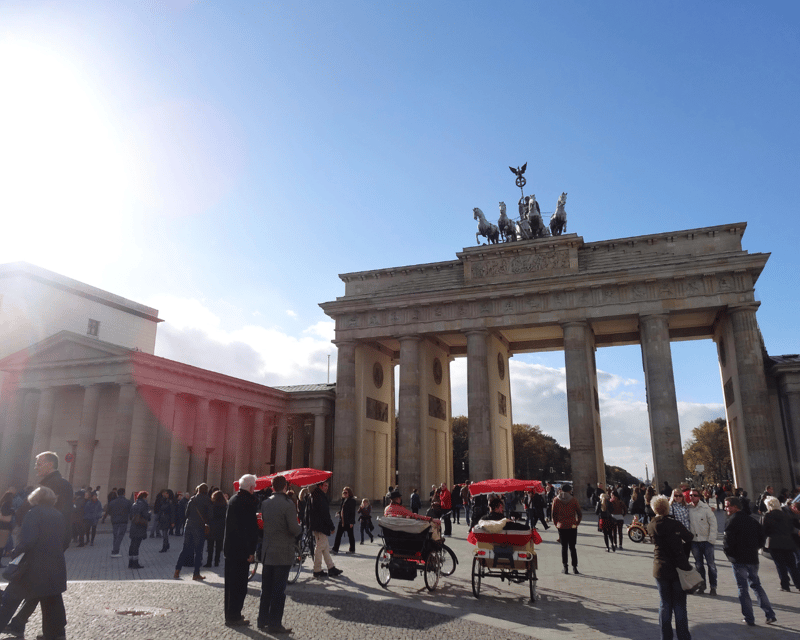
Brandenburg Gate is the natural place to begin. It once marked a city entrance and later became a symbol of division, protest, and reunification. Your guide spends about 20 minutes here, which gives you time to understand its political meaning rather than treating it as a quick photo stop.
I like starting here because the gate helps frame the whole tour. It is not just an attractive neoclassical monument. It is a place where different versions of Berlin’s identity have been displayed and contested.
Reichstag and the government quarter
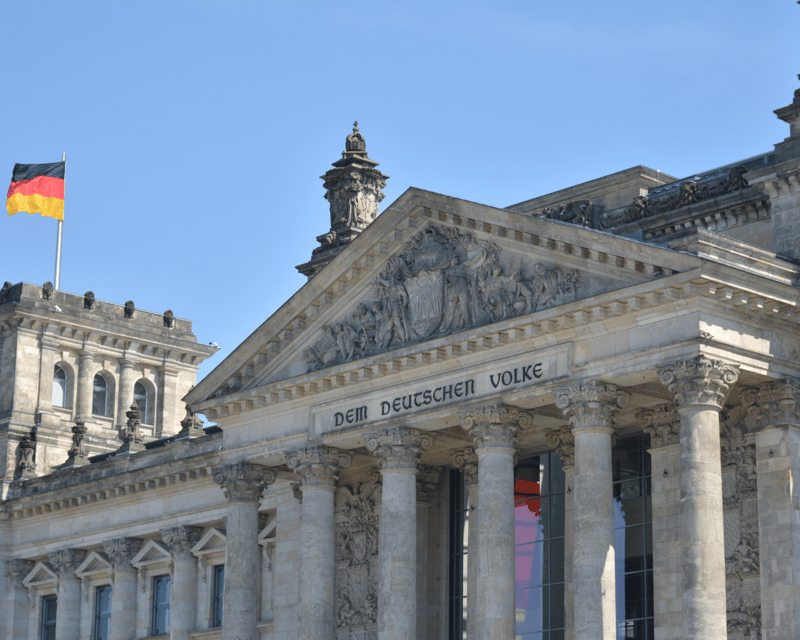
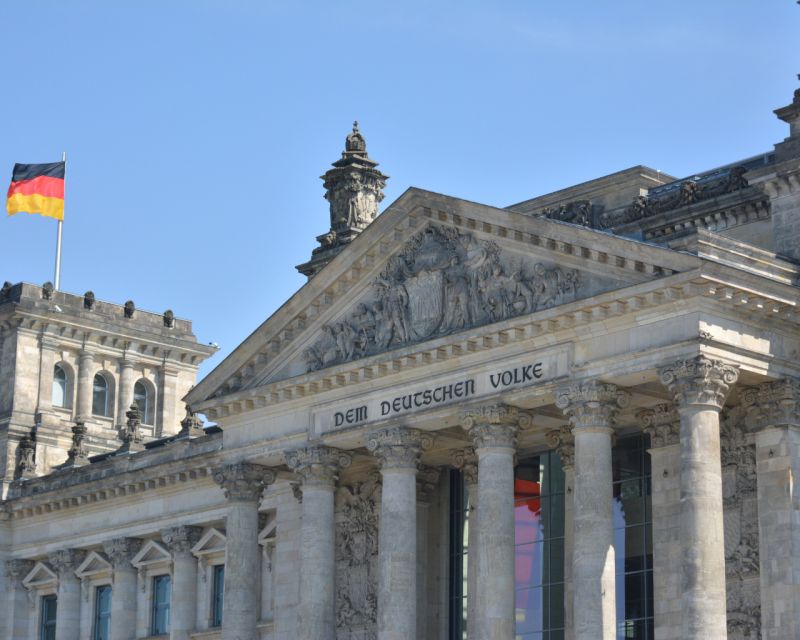
The next stop is the Reichstag, about 20 minutes of sightseeing. The tour focuses on the exterior and its place in German political life rather than taking you inside. That distinction matters if you are expecting a dome visit or an interior tour. This experience is about the city’s historical setting, not building access.
The Reichstag gives the guide a chance to explain Berlin as a capital shaped by political breaks. The building connects imperial Germany, the troubled parliamentary period after the First World War, the Nazi era, and the present federal government.
You will not be standing inside a museum gallery with labels in front of you. Instead, the guide has to make the building readable from the street. That is one reason the guide’s skill matters so much here. The strongest explanations connect what you see now with the events that changed the building’s meaning.
Holocaust Memorial and the bunker site
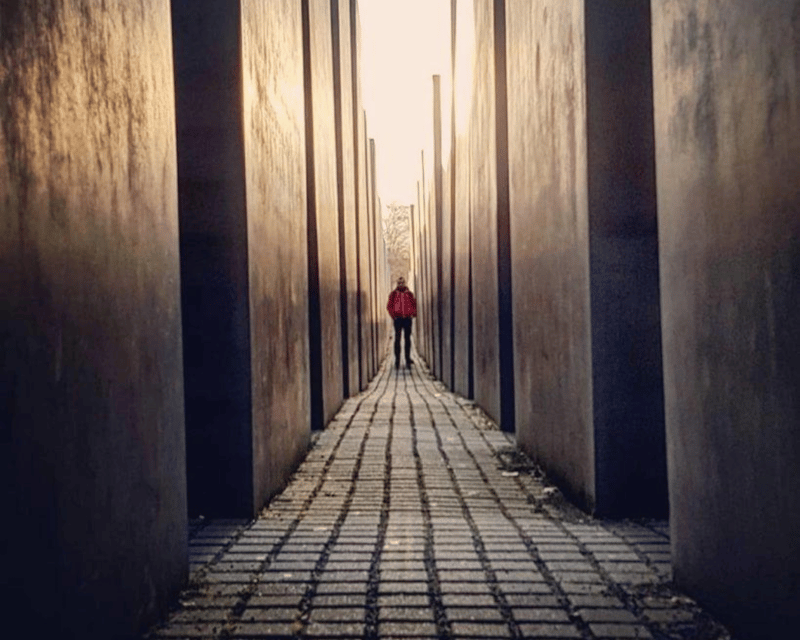
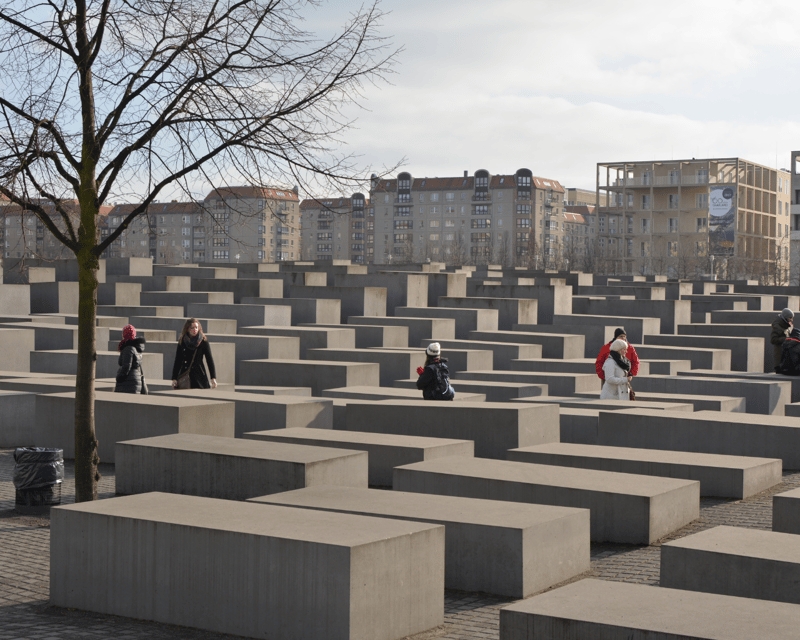
The Holocaust Memorial receives about 15 minutes of guided attention. Its concrete slabs create a serious, uneasy space in the middle of Berlin, and the tour treats it as more than a landmark to photograph.
Your guide can help place the memorial within the larger story of Nazi persecution and the murder of Europe’s Jews. This is one of the points where a clear explanation is especially important. The site is open and visually simple, but its meaning is not simple.
The nearby Hitler’s bunker site gets another 15 minutes of sightseeing. There is no grand ruin to enter or dramatic structure to inspect. The point is the location and what happened there, including the final days of the Nazi leadership.
I appreciate the inclusion of this stop because it corrects a common expectation. You are not visiting a preserved underground attraction. You are looking at an ordinary urban setting connected to an extraordinary and terrible chapter. The guide’s words carry much of the weight.
Same city, a completely different kind of day:
- Berlin: Reichstag, Dome and Government District Guided Tour
★ 4.7 · 18,288 reviews - Berlin: 1-Hour City Tour by Boat with Guaranteed Seating
★ 4.3 · 16,993 reviews - Berlin: Boat Tour Along the River Spree
★ 4.4 · 11,252 reviews - Discover Berlin Half-Day Walking Tour
★ 5.0 · 9,624 reviews
The German Finance Ministry and Nazi Berlin
The German Finance Ministry follows, with about 15 minutes of sightseeing. The building offers another chance to discuss the political machinery of Nazi Germany and the way Berlin’s government quarter changed through war and later reconstruction.
A route like this works best when it keeps buildings connected to systems and decisions. You are not only seeing façades. You are hearing how power operated from this part of Berlin and how the city’s present government spaces sit on top of older political layers.
This part of the tour may feel less immediately dramatic than Brandenburg Gate or Checkpoint Charlie. Still, it helps fill in the gaps between famous landmarks. If you prefer a walk made only of photo stops, you may find this section slower. If you want the causes and context behind the monuments, it earns its place.
Topography of Terror and the Nazi past
The Topography of Terror receives roughly 20 minutes of guided time. The documentation center focuses on the institutions of Nazi persecution, and even an exterior visit gives the guide a strong place to explain how terror was organized.
The stop is valuable because it shifts attention away from Hitler alone. Berlin’s Nazi history was not created by one person working in isolation. It involved offices, police structures, officials, and a system of control. A short explanation here can make the period more concrete.
You should not expect to complete the indoor exhibition during this tour. The walking experience gives you an introduction and a reason to return if you want the full museum treatment. Plan separate time later if this subject is central to your trip.
Checkpoint Charlie and the divided city
Checkpoint Charlie gets about 20 minutes. The crossing point is one of Berlin’s best-known Cold War symbols, though the present setting can feel more commercial than solemn. That contrast is part of what makes a guide useful.
You can learn how the checkpoint functioned and how the Wall divided daily life, movement, and political power. The guide also helps you see the difference between the original historical site and the modern presentation around it.
This is a good place to ask questions about the Wall era. The tour’s description promises coverage of division and reunification, and Checkpoint Charlie is the clearest point on the route for that subject. It also helps you understand that the Wall was not simply a single barrier. It shaped streets, families, workplaces, and an entire city.
Gendarmenmarkt and Bebelplatz
Gendarmenmarkt gets about 15 minutes of guided attention. The square is one of central Berlin’s grandest urban spaces, with formal architecture and a strong connection to Prussian and later German history.
After several stops focused on dictatorship and war, Gendarmenmarkt changes the tone. It lets you see the city’s older taste for ceremony, power, and planned public space. Your guide can place the square within the story of Berlin before the twentieth-century disasters.
Bebelplatz follows, also for about 15 minutes. This location is tied to the Nazi book burning of 1933, making it another place where a beautiful urban setting carries a dark memory.
The value of these stops lies in the contrast. Berlin’s history is not confined to ruined buildings or stark memorials. It is also written into elegant squares and ordinary streets. You may find the explanations here more memorable because the surroundings look so polished.
Unter den Linden and Museum Island
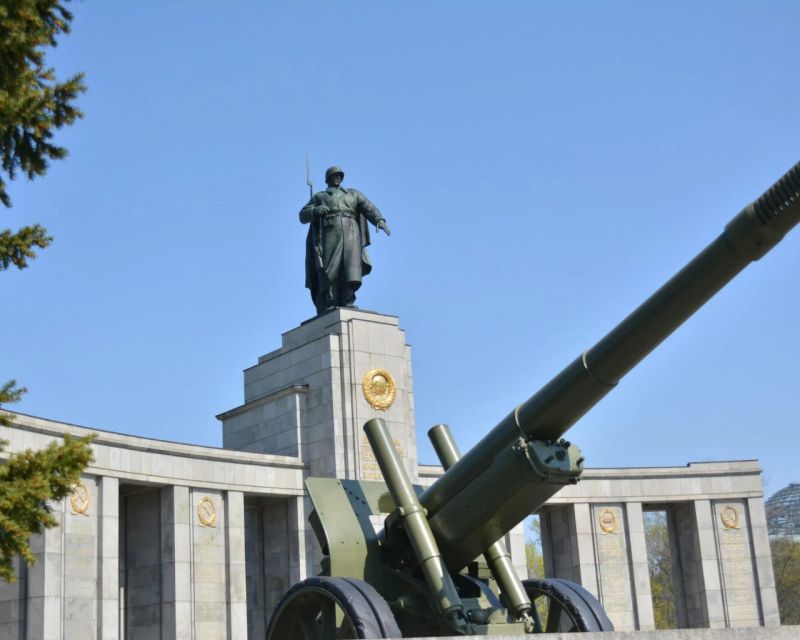
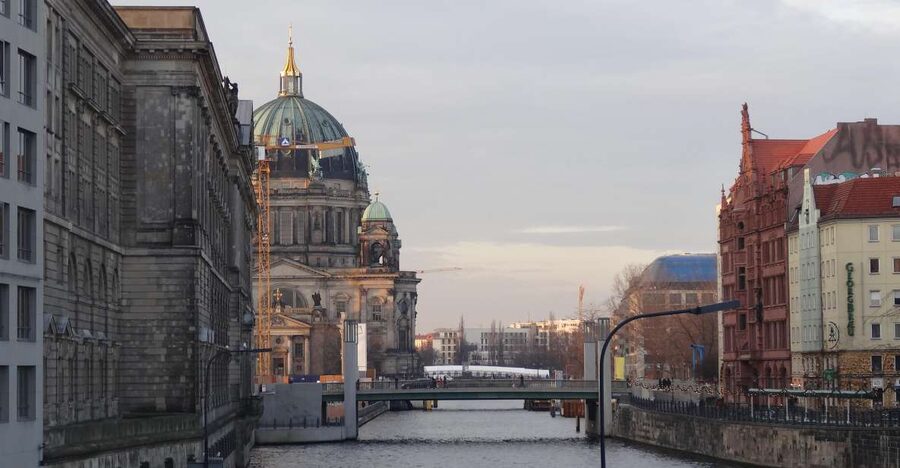
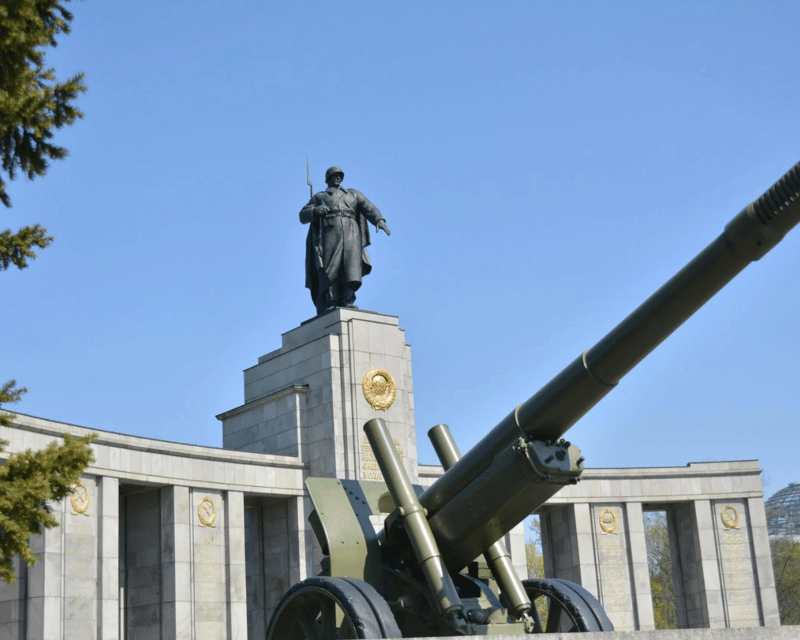
The walk continues along Unter den Linden, with about 20 minutes of guided time. This famous boulevard links several major parts of central Berlin and gives you a sense of the city’s old ceremonial axis.
A boulevard can be easy to admire without understanding. The guide helps connect it to Berlin’s royal and political past, then to the changes that followed war and division. It is also a useful orientation point for independent exploring after the tour.
The final major stop is Museum Island, with about 20 minutes of sightseeing. You will see the district from outside, not take a full museum tour. That is important when planning your day. Museum Island contains enough museums to fill many hours, but this walk only introduces the setting and its role in Berlin’s cultural history.
The group then returns to Ebertstraße 24. That loop is handy because you finish where you began, near Brandenburg Gate and central transport links. You can continue sightseeing nearby or use the route as a map for the rest of your stay.
A history lesson on foot, not a photo sprint
The tour is advertised as a three-hour walk, and the scheduled stops leave little room for long breaks. The route includes many sites, so you should expect steady movement and regular periods of standing.
One especially useful report praised guide Al for tailoring his explanations to the people in the group, sharing details beyond standard textbook material, checking on everyone’s well-being, and keeping the group updated on progress. That is the best version of this tour: personal, clear, and aware that people have different levels of interest.
The possible downside is equally clear. A small group found the guide too talkative and felt there was not enough time to take photos or look around. You should book this with the right expectation. It is not a loosely guided stroll where you stop for ten minutes at each sight and wander at your own pace. It is a structured history walk.
If you like asking questions and listening closely, the format can be rewarding. If you want to photograph every landmark, you may feel rushed. You can always return to the places that catch your eye, but you will need to plan that extra time yourself.
What $31 buys you in Berlin
At $31 per person, the price is reasonable for a three-hour walking overview with a live English-speaking guide. You are paying for interpretation and route planning, not entry tickets, food, drinks, or extended time inside museums.
The value is strongest for a first visit. In three hours, you reach a wide range of major places that would take effort to connect on your own. You also get a historical thread running from medieval beginnings through Prussia, the First World War, the Second World War, division, and reunification.
The value is lower if you already know central Berlin well or prefer to read display panels at your own pace. In that case, the long explanations may feel repetitive, and you may prefer separate visits to the Topography of Terror, Museum Island, and the memorials.
The tour offers free cancellation up to 24 hours before the start and a reserve now, pay later option. It is also advertised as wheelchair accessible. Since the route includes a long urban walk and several outdoor stops, anyone who needs specific access details should confirm the arrangements before booking.
Who should book this walking tour?
I would recommend it to first-time visitors, families with older children, and anyone who wants a solid historical framework before exploring Berlin alone. It also suits people who prefer a guide who can explain difficult subjects without reducing the city to a list of dates.
The tour may work well for mixed-age groups. A 21-year-old joined one family group and found the experience worthwhile, which suggests the material can suit adults and older young people when the guide adjusts the presentation.
I would be more cautious if your priority is photography, free time, or indoor sightseeing. You will see many places, but most are exterior stops. You should also be comfortable standing and listening for long stretches.
Should you book the Explore Berlin Tour?
Book it if you want one well-packed introduction to central Berlin, especially if you value explanation more than entry tickets. The route covers an impressive range for $31, and guide Al’s relaxed, adaptable style is a strong sign of what the experience can offer.
Skip it if you want a slow walk with lots of independent time at each stop. Arrive early so you can find the guide, wear comfortable shoes, and treat the tour as a foundation for later visits rather than the final word on Berlin’s museums and memorials.
FAQ
How long is the Explore Berlin Tour?
The walking tour lasts three hours.
What language is the tour conducted in?
The live tour guide speaks English.
Where does the tour meet?
The meeting point is outside Hopfingerbräu at Ebertstr. 24, 10117 Berlin, next to Brandenburg Gate.
Does the tour return to its starting point?
Yes. The route returns to Ebertstraße 24 after visiting the central Berlin sights.
Which major places are included?
The route includes Brandenburg Gate, the Reichstag, the Holocaust Memorial, Hitler’s bunker site, the German Finance Ministry, Topography of Terror, Checkpoint Charlie, Gendarmenmarkt, Bebelplatz, Unter den Linden, and Museum Island.
Is the tour wheelchair accessible?
The activity is advertised as wheelchair accessible.
What is included in the price?
The price includes a three-hour walking tour with an expert guide. Food and drinks are not included.
Just added in Berlin
- Berlin & The Third Reich Private Guided Tour★ 5.0 · 3 reviews
- Third Reich Quest Experience in Berlin★ 4.5 · 7 reviews
- Private Analogue Photography Experience in Berlin★ 5.0 · 3 reviews
- Berlin Urbex Adventure and History Tour★ 5.0 · 9 reviews
- The Beauty of Berlin by Bike: Private Tour★ 5.0 · 59 reviews
- Berlin: Guided Bike tour of the Berlin Wall and Third Reich★ 5.0 · 160 reviews
- Beyond Currywurst: Berlin’s Hidden Street Food & Culture Tour★ 5.0 · 100 reviews
- Berlin Third Reich & Cold War Walking Tour With A Guide★ 5.0 · 7 reviews
Historical Tours, compared.

City History Canal Sightseeing Tour on a Motorboat
Read our review →



Browse the lists this tour appears in