
Reviewed · MUSEUMS
Dresden: Albertinum Museum Entry Ticket
The Albertinum makes a strong first impression with Auguste Rodin’s The Thinker greeting you at the start. I like the way the museum brings painting and sculpture into one visit, and I like the clear sweep from nineteenth-century Romanticism to present-day art.
I also like the chance to see important works by Caspar David Friedrich, then shift gears toward sculpture made from unusual modern materials. The main drawback is timing: technical construction closes the second floor from April 7 through April 17, so check the current museum notice before you go.
Key points
- Rodin’s The Thinker comes first, giving the visit an immediate focal point.
- Caspar David Friedrich’s paintings offer the strongest reason for many art lovers to visit.
- Two major collections share one ticket, the Galerie Neue Meister and the Sculpture Collection.
- The collection runs from Romanticism to contemporary art, so you can compare very different ideas about art in one building.
- Tony Cragg and Birgit Diecker add unusual modern works beyond the better-known nineteenth-century names.
- The $16 ticket is flexible for one day, with free entry for children under 17 when accompanied by an adult.
Why the Albertinum is more than a painting museum

The Albertinum is a good choice if you want more than a quick stop for one famous artist. Its two main collections let you move between painting and sculpture, with works dating from the nineteenth century to the present.
That range matters because the visit is not locked into one style. You can begin with the inward mood of German Romanticism, look at the human figure through sculpture, then reach contemporary works that use wood, fabric scraps, loose-leaf binders, and mathematical forms.
I find this kind of museum useful on a city trip because it gives you a broad view without requiring several separate admission tickets. You are not only seeing individual masterpieces. You are also watching artistic ideas change over time.
The museum presents a meeting point between East and West, and between older traditions and newer experiments. The supplied information does not provide a detailed room-by-room route, so you should treat the visit as a self-guided museum stop rather than a formal tour with a named guide.
More Attraction Tickets in Dresden
- Dresden: Zwinger Museum Entry Ticket
★ 4.7 · 1,436 reviews - Dresden Castle General Admission Ticket
★ 4.6 · 1,328 reviews - Dresden: Dresden Transport Museum Entrance Ticket
★ 4.6 · 189 reviews
Starting with Rodin’s The Thinker
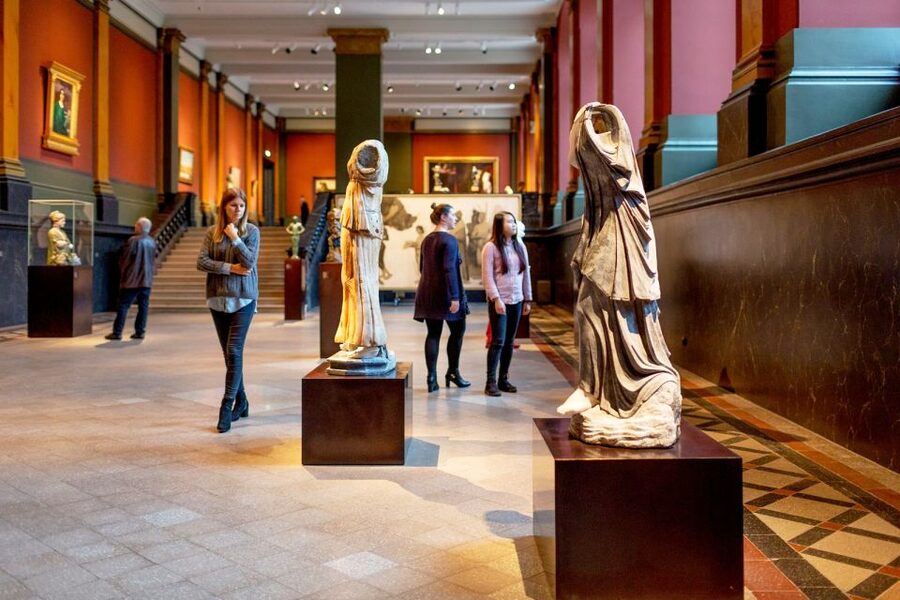
The first work you see is The Thinker by Auguste Rodin. That placement gives the visit a clear beginning. You do not need to search through a large collection before finding a familiar name.
Rodin is important here not only because The Thinker is famous. The work also points toward the artistic changes that became more visible in the twentieth century. Its presence at the start helps frame the sculpture collection as a story of changing ideas, not just a display of statues.
Take a moment with it before rushing onward. A famous sculpture can become background decoration when you have seen it in books and photographs. In person, the useful question is not simply whether you recognize it. Look at how the figure communicates thought through posture and form.
Because this is an entry ticket rather than a guided experience, you control the pace. You can spend longer with Rodin, move quickly through a familiar section, or return to a work later in the day if the ticket conditions and museum opening hours allow it.
Caspar David Friedrich and the Romantic mood
For many people, the paintings by Caspar David Friedrich will be the main reason to choose the Albertinum. Friedrich is one of the defining artists of German Romanticism, and his work gives the museum a strong emotional center.
The information provided does not name individual Friedrich paintings, so I would not plan your visit around one specific title. Instead, expect to encounter his masterworks within the Galerie Neue Meister and give yourself time to see how they set the tone for the period.
Romantic art often asks you to consider feeling, nature, solitude, and the position of the individual in the world. Friedrich’s work is especially useful for that kind of looking. You will get more from it if you pause rather than treat each painting as a box to check.
This is also where the collection’s time span becomes useful. You can compare Friedrich’s approach with later works and see that modern art did not appear from nowhere. Artists kept revisiting questions about the human figure, the natural world, emotion, and the meaning of beauty, even when their materials and methods changed.
If you have limited time, put the Galerie Neue Meister near the top of your list. If Friedrich is your main interest, you may want to begin there after seeing The Thinker, rather than giving equal time to every room.
The Galerie Neue Meister from the nineteenth century onward
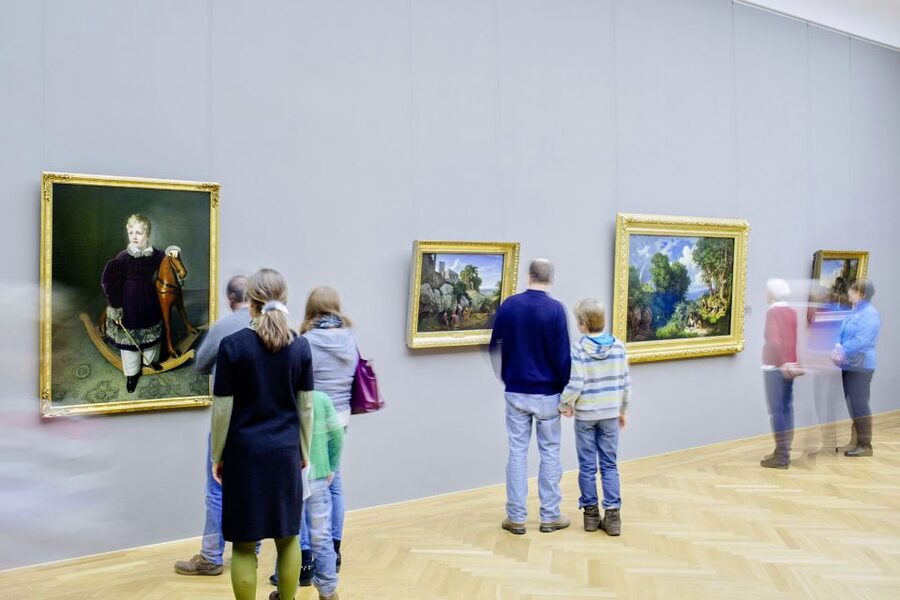
The Galerie Neue Meister, or New Masters Gallery, covers art from the nineteenth century through the present. That broad date range makes the collection suitable for people who want a general look at modern European art rather than one narrow period.
The phrase New Masters can sound more specialized than it is. Here, the important point is that the gallery connects Romanticism with later developments. You can use the collection to trace how artists moved from established traditions toward more personal, abstract, or experimental ways of working.
The museum does not promise a single, simple path. The supplied details name artists from very different periods, including Friedrich, Birgit Diecker, and Tony Cragg. That mix means you should expect changes in scale, material, and visual language as you proceed.
I recommend resisting the urge to judge contemporary pieces by the same rules you use for Romantic paintings. A Friedrich work may reward atmosphere and symbolism. A later work may ask you to think about process, construction, material, or the limits of sculpture and painting.
That contrast is one of the ticket’s best features. You do not need to be an expert in modern art to notice the shift. The museum gives you a chance to compare what artists believe a work of art can be.
More Museum Tours in Dresden
- Dresden: Church of Our Lady Guided Tour of Gallery
★ 4.7 · 2,421 reviews - Dresden: Guided Walking Tour and Chocolate Museum Ticket
★ 4.5 · 385 reviews - Dresden: Ticket + Tour Gallery Old Masters
★ 5.0 · 107 reviews - Dresden: Semperoper and Old Masters Picture Gallery
★ 4.5 · 91 reviews
The Sculpture Collection and its changing materials
The Sculpture Collection covers sculpture from 1800 onward. This makes it a useful companion to the paintings because it follows many of the same artistic changes through three-dimensional form.
You will see traditional figurative work alongside later pieces that challenge familiar ideas about what sculpture should look like. Wilhelm Lehmbruck’s 1911 Kneeling Woman provides an important example from the early twentieth century.
Lehmbruck’s work helps bridge the gap between older figurative sculpture and the more stripped-back forms that followed. The date matters: 1911 places it at a time when European art was changing quickly. It belongs to the human figure tradition, yet it also points toward a more modern treatment of the body.
The collection then reaches much later artists. Birgit Diecker’s Seelenfänger is one of the named works to watch for. The title suggests a work concerned with the intangible, although the available information does not describe its exact materials or appearance. Use the piece as a chance to see how contemporary sculpture can carry an idea without relying on a conventional statue.
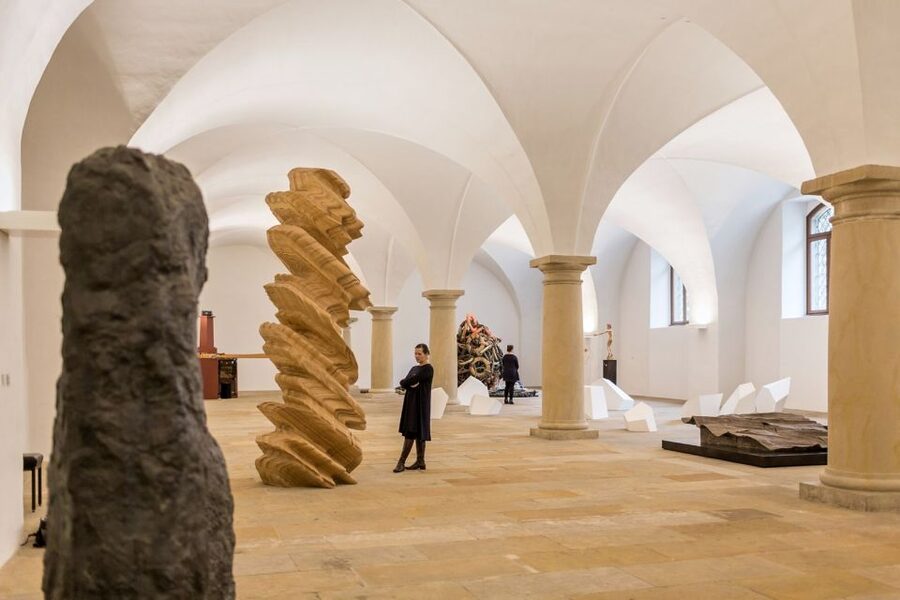
Tony Cragg’s mathematically stacked cube is another unusual stop. It is made from wood, fabric scraps, and loose-leaf binders. Those materials are worth noting because they challenge the old expectation that sculpture must be carved from stone or cast in metal.
When you see a work like this, look at how ordinary pieces become part of a larger structure. The cube’s mathematical arrangement gives order to materials that might otherwise seem random. That tension between strict form and everyday matter is a good example of the kind of question contemporary sculpture can raise.
A practical route through the collections
The experience is valid for one day, with the exact starting times and opening hours subject to availability and current museum information. Since no guided route or fixed schedule is provided, you should plan a visit that matches your interest rather than trying to follow a timed itinerary.
A useful approach is:
- Begin with The Thinker, which serves as the first major orientation point.
- Give priority to the Galerie Neue Meister if Friedrich is your main goal.
- Move to the Sculpture Collection for Rodin, Lehmbruck, Diecker, and Cragg.
- Compare one older work with one modern work before moving on.
- Keep time for a second look at your favorite piece.
You do not need to see every work with equal attention. Museum fatigue arrives quickly when you treat every object as an assignment. I would rather spend ten thoughtful minutes with a few important pieces than rush through the entire building.
The one-day validity gives you some flexibility, but the available information does not confirm that you may leave and re-enter. Before relying on that plan, check the current conditions with the museum or booking provider.
Comfortable shoes are sensible. The building contains two substantial collections, and standing in galleries can become tiring even when the visit feels relaxed. A camera is listed as something to bring, but you should follow the museum’s current photography rules in each exhibition area.
Is the $16 ticket good value?
At $16 per person, the ticket is fairly priced if you want both painting and sculpture in one museum visit. You are not paying only to see one famous work. The admission includes the Galerie Neue Meister and the Sculpture Collection, with art spanning from Romanticism to contemporary practice.
The value is strongest for three types of visitor. First, it suits anyone specifically interested in Caspar David Friedrich. Second, it works well for people who want a broad museum experience without buying separate tickets for different collections. Third, it is useful for anyone who enjoys comparing traditional figurative art with modern materials and forms.
The value is weaker if you want a short, tightly focused attraction. If you only want to see The Thinker, the ticket includes far more art than you may have time or interest for. Likewise, if your Dresden plans already contain several large museums, you may need to decide how much time you can give the Albertinum.
Children under 17 can enter the exhibition free when accompanied by an adult, but you should book a child ticket. That makes the museum a more practical choice for families, especially if young visitors have a specific interest in sculpture or painting.
The booking terms add useful flexibility. You can cancel up to 24 hours in advance for a full refund, and the reserve now, pay later option lets you keep your plans open. These policies do not change the museum itself, but they reduce the risk of booking too early.
The April 7 through April 17 closure
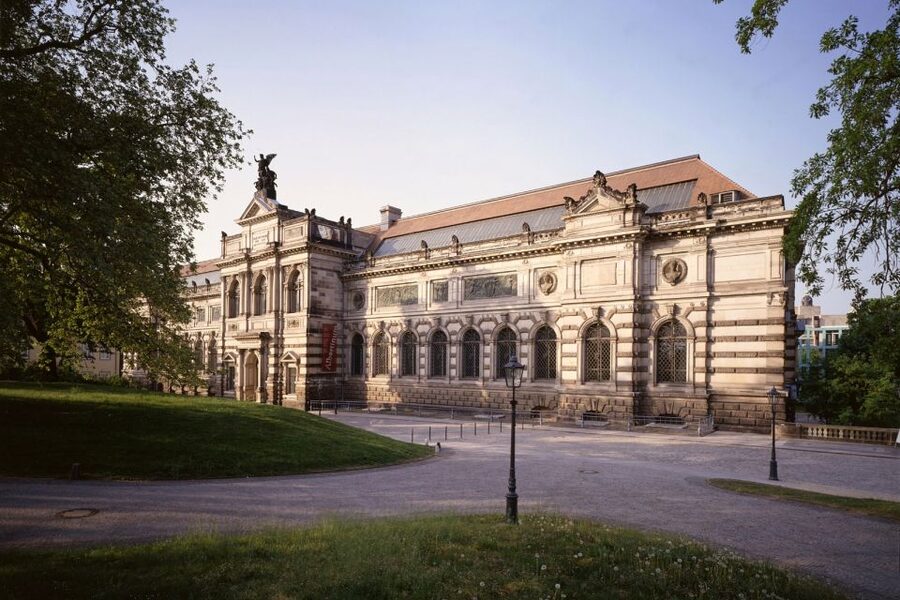
Technical construction closes the second floor from April 7 through April 17. This is the main practical warning attached to the visit.
The available information does not specify which individual works or rooms are affected. That means you should not assume that every named artist will be available during those dates. If Friedrich, Rodin, or a particular contemporary work is the reason you are going, check the official museum website before booking or visiting.
Even outside that period, opening hours can change. Use the local partner’s official website for the latest hours for all museums. The ticket is valid for one day, but the useful length of that day depends on when the building is open and how much time you want to spend with the art.
Who should book the Albertinum?
I would recommend this ticket to an art lover who wants Romanticism, modern art, and sculpture in one stop. It is especially suitable if Caspar David Friedrich is high on your Dresden list, or if you enjoy seeing how artists moved from traditional subjects toward new materials and shapes.
It also works for a mixed-interest group. One person can focus on Friedrich, another can spend time with Rodin or Lehmbruck, and someone else can look for contemporary works by Diecker and Cragg. That range is more useful than a museum devoted to a single artist when everyone in your group has different tastes.
Families can benefit from the free admission for children under 17, though the museum is likely to work best when young visitors have some interest in art. The free child entry reduces the cost, but it does not guarantee that a long gallery visit will suit every child.
You may want to skip it if your schedule allows only a very short stop, especially during the second-floor construction period. You should also check the current opening hours before setting aside a precise time.
Should you book this Dresden museum ticket?
Book it if you want a self-guided visit with real range. The combination of Friedrich, Rodin, Lehmbruck, Diecker, and Cragg gives you more than a single famous painting or sculpture. At $16, the ticket makes sense for a full museum visit, particularly when you have time to compare the collections rather than rush through them.
My practical advice is simple: check the official opening hours, confirm the April construction dates if they affect your trip, and plan your visit around the works that matter most to you. If those details fit your schedule, the Albertinum is a strong choice for seeing Dresden’s art from Romanticism to the present.
FAQ
How much does the Albertinum entry ticket cost?
The ticket costs $16 per person.
How long is the ticket valid?
The ticket is valid for one day. Check availability for the current starting times.
Which collections are included?
Admission includes the Galerie Neue Meister, also called the New Masters Gallery, and the Sculpture Collection from 1800 onward.
Which artists and works can I see?
Named works and artists include Auguste Rodin’s The Thinker, Caspar David Friedrich, Wilhelm Lehmbruck’s 1911 Kneeling Woman, Birgit Diecker’s Seelenfänger, and Tony Cragg’s mathematically stacked cube made from wood, fabric scraps, and loose-leaf binders.
Can children enter for free?
Children under 17 can enter the exhibition for free when accompanied by an adult. You should book a child ticket.
Is the Albertinum wheelchair accessible?
Yes, the activity is listed as wheelchair accessible.
Can I cancel the booking?
Yes. You can cancel up to 24 hours in advance for a full refund. The reserve now, pay later option is also available.
Just added in Dresden
- Test Drive Electric Vehicles from the VW brand (ID. model)★ 4.8 · 190 reviews
- SRF CoBi | City Tour by ConferenceBike★ 4.7 · 38 reviews
- Dresden: Scavenger Hunt to Elbe River & Castles★ 4.7 · 15 reviews
- Dresden: Bike Rental – City Bike with Option Children Seat★ 4.5 · 13 reviews
- Private trip from Prague to Dresden, Moritzburg & Meissen★ 5.0 · 5 reviews
- Moritzburg: Scavenger Hunt Self-Guided Walking Tour★ 4.8 · 12 reviews
- Historical tour of the old town including a Saxon dinner★ 4.7 · 23 reviews
- Climb the mountains together with goats★ 4.8 · 8 reviews
Museums, compared.




Skip-the-Line: Berlin Wall Museum at Checkpoint Charlie
Read our review →
Browse the lists this tour appears in