

Reviewed · MUSEUMS
Dortmund: German Football Museum
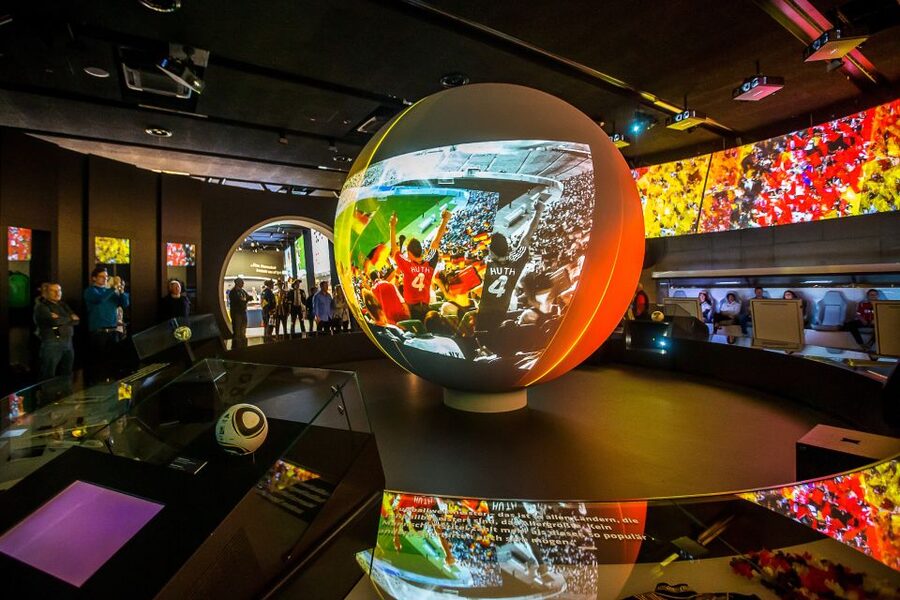
The German Football Museum turns football history into something you can see, hear, and play. You move from the Miracle of Bern to the 2014 world champions, then step into a reporter’s booth or onto a small pitch to test your own skills. It is part museum, part interactive sports center, and a useful stop even if your football knowledge has a few holes.
I like the mix of serious history and hands-on fun. The roughly 1,600 exhibits give the museum weight, while the 3D cinema and Sky Reporter Room keep it from feeling like a row of glass cases. The main drawback is simple: your admission covers the museum only, so food, drinks, and any personal guide cost extra.
Key points
- The Miracle of Bern: Revisit the famous 1954 World Cup story through the museum’s historical displays.
- Around 1,600 exhibits: German football is presented through national teams, clubs, referees, amateurs, professionals, and women’s and men’s football.
- Sky Reporter Room: Take the microphone and try calling a match like a professional commentator.
- 2014 world champions in 3D: See Germany’s title-winning team presented through a cinema experience.
- Small indoor playing field: Children can grab a ball and test their football skills in the multifunctional arena.
- Flexible one-day visit: Entry costs about $23 per person, with cancellation up to 24 hours before the visit and a reserve-now, pay-later option.
Starting at Platz der Deutschen Einheit 1 in Dortmund
The German Football Museum is at Platz der Deutschen Einheit 1, 44137 Dortmund. That central address makes it an easy stop to add to a Dortmund day, especially if you are already spending time in the city.
Your ticket provides access to the museum for one day. This is not a guided tour with a named guide, so you set your own pace and decide how long to spend with the historical displays, cinema, commentary booth, and play area.
That self-guided format is useful for mixed groups. A serious football fan can spend time studying key moments, while someone less interested in tactics can move toward the interactive sections. Families can also split up for a while, then meet again at the next major display.
The ticket includes skip-the-line entry, which matters most if you are visiting at a busy time. You still need to check the available starting times when booking, since the activity is listed with scheduled availability even though the visit itself lasts one day.
More Museum Tours in the Ruhr:
- Dortmund: Borusseum Borussia Dortmund Museum Entry Ticket
★ 4.6 · 315 reviews - Bochum: VW T2 Bulli Mining Museum
★ 4.2 · 11 reviews - Berlin: Jewish Museum Berlin Entrance Ticket
★ 4.5 · 8,393 reviews
Meeting the Miracle of Bern
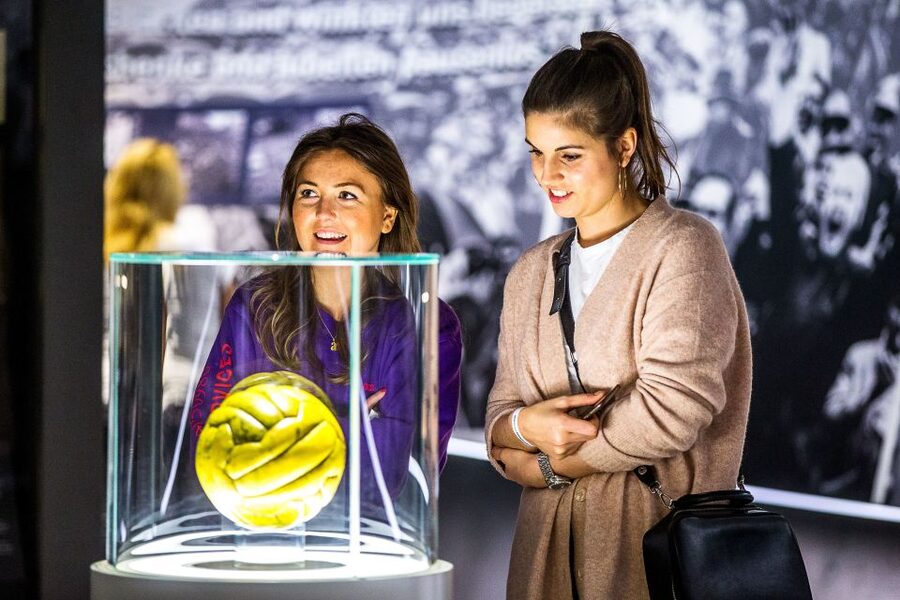
One of the museum’s main historical anchors is the Miracle of Bern. This refers to West Germany’s 1954 World Cup victory, a match and national moment that still carries great meaning in German football.
You do not need to know every player or statistic to understand why this section matters. The museum places the event within the wider story of German football, so the victory becomes more than a final score. It shows how the national team, major tournaments, and public memory connect.
I like this kind of starting point because it gives the museum an emotional center. Football history can become a blur of dates and trophies. A major event such as the Miracle of Bern gives you a clear story to follow before the exhibition moves into later generations.
The exact amount of time you spend here is up to you. If you have a strong interest in German football, you may want to read closely and linger over the displays. If you are with young children, this is likely one of the quieter parts of the visit before the more active stations.
Seeing the 2014 world champions in 3D
The museum also presents Germany’s 2014 world champions in a 3D cinema. This is a sharp change of pace from traditional exhibition displays.
The 2014 team is an important part of modern German football, and the cinema presentation gives that achievement a more immediate feel. Instead of only reading about a tournament, you get a visual presentation built around the players and their victory.
For you, the value is the contrast. The Miracle of Bern represents an earlier era, while the 2014 section brings the story closer to the present. Placing both moments in the same museum helps show how Germany’s football identity has changed across generations.
The cinema is also a good pause in the visit. Museum fatigue is real, especially for children. A short visual experience can reset your attention before you continue through the rest of the displays.
Taking the microphone in the Sky Reporter Room
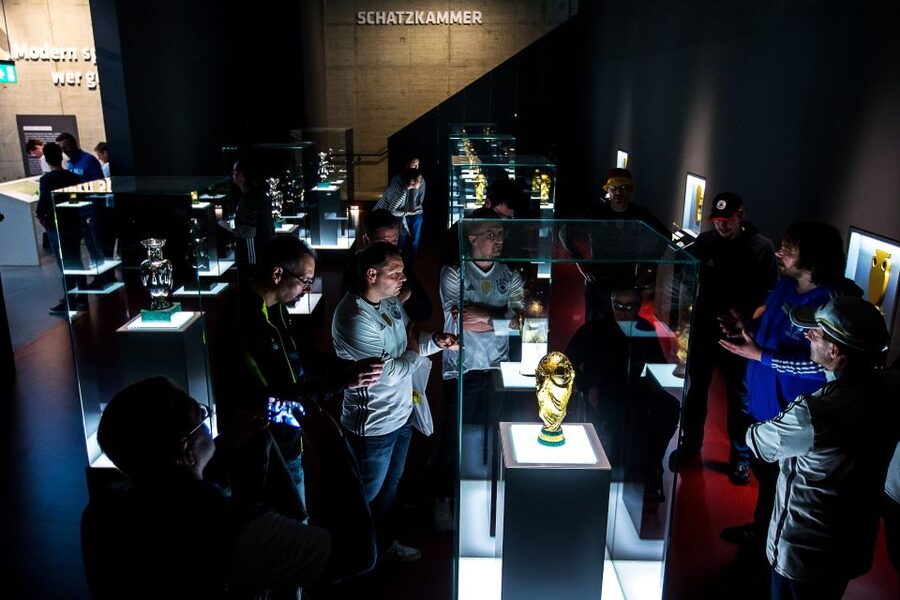
The Sky Reporter Room is one of the museum’s best interactive ideas. You can become the commentator instead of simply watching someone else describe the action.
Try it with a friend or family member and take the role seriously for a minute. Describe the play, build the tension, and see if your voice sounds convincing when the match moves quickly. You may discover that calling football is harder than it looks.
This station adds a little humor to the visit, but it also teaches you something. A commentator must notice movement, make quick decisions, and turn a few seconds of play into a clear story. The experience gives you a small sense of what happens behind a televised match.
It is especially useful for groups with different interests. A football fan can practice the details, while a casual visitor can simply have fun with the microphone. If the room is busy, you may need to wait for a turn, since the activity is designed for individual participation rather than a large guided group.
A few more half-days in the Ruhr worth comparing
- BVB Signal Iduna Park: Stadium Access and Self-Guided Tour
★ 4.4 · 2,332 reviews - Bottrop: Movie Park Full-Day Admission Ticket
★ 4.4 · 511 reviews - Münster: Old Town Highlights Guided Tour
★ 4.7 · 286 reviews - Oberhausen: HOUSE OF MAGIC – powered by Ehrlich Brothers
★ 4.3 · 252 reviews
Testing your skills on the multifunctional arena
The museum’s small playing field gives children a chance to grab a ball and see what they can do. This is not a full stadium or a long football lesson. It is a short, active station within the exhibition.
That distinction matters when you plan your visit. Parents should think of the playing field as an interactive break, not as a separate sports session. Children can release some energy, try their footwork, and feel part of the football story instead of only looking at displays.
The playing area also helps explain why the museum works for different ages. Football is not only about famous professionals. It is also about the simple act of kicking a ball, joining a team, and testing yourself.
The description specifically highlights the little ones, so this feature is aimed most clearly at children. Adults can enjoy watching or joining in if permitted, but you should not expect a full-size pitch or a competitive match.
A football story that includes more than stars
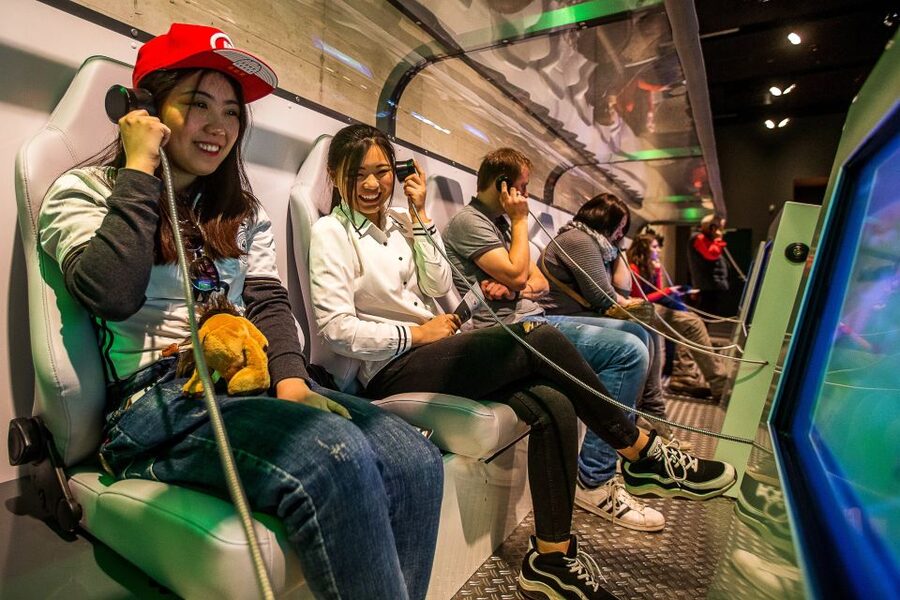
The exhibition brings together fans and referees, amateurs and professionals, and women’s and men’s football. That broad approach gives the museum more balance than a display focused only on World Cup winners.
Referees are part of the game but often disappear from the popular story. Fans are just as important, since football exists in the stands and streets as well as on the field. Including these roles helps you see the sport as a social activity, not just a list of elite players.
The same is true of amateur football. Many people experience the game through local clubs, school teams, or casual matches long before they follow a national side. The museum’s wider scope gives those everyday connections a place beside the big tournament moments.
The inclusion of women’s and men’s football is also important for a museum presenting the full German game. It signals that the story is not limited to one competition or one type of player.
How the exhibition feels from room to room
The museum uses modern exhibition design and interactive presentation. The goal is to connect several senses rather than ask you to read long blocks of text at every stop.
You can expect a blend of historical material, visual displays, cinema content, and activities. The result should feel more like a staged football experience than a traditional quiet museum. That will suit you if you like to participate. It may be less appealing if you prefer a slow, object-by-object museum visit.
The word spectacular is used to describe the exhibition design, but the practical point is that the setting is built to create movement and atmosphere. You are not simply walking past one case after another. The museum shifts between national memory, football culture, media, and play.
That variety is one reason a one-day ticket works well. You can take breaks, revisit a favorite section, and avoid rushing through every display. The experience is flexible enough for a short visit, but the number of exhibits gives committed fans plenty to examine.
What the $23 price gets you
At about $23 per person, the admission is reasonable if you plan to use the interactive features and spend time with the historical displays. You are paying for access to the full German Football Museum, not just a single exhibition room.
The value is strongest for football fans, families, and anyone interested in German national football. The 3D cinema, Sky Reporter Room, and playing field add experiences that you would not get from a standard history display.
The value is weaker if you only want a quick look at famous trophies. Since food, drinks, and a guide are not included, your final spending can rise if you make the museum part of a longer outing.
I would treat the $23 as a fair museum admission rather than a bargain attraction. You get a complete one-day entry and a wide mix of displays, but you should choose it because you want the football content, not because you are seeking a cheap indoor activity.
There is also a practical booking advantage. You can reserve now and pay later, which helps if your Dortmund schedule is still shifting. Free cancellation up to 24 hours before the visit gives you some protection if your plans change.
Food breaks and visit rhythm
Food and drinks are not included, but the museum has a variety of dining options for a half-time break. That makes it easier to treat the visit as a main activity rather than a quick stop between meals.
Plan your visit around your group’s attention span. Start with the historical sections while everyone is fresh, take in the 3D cinema, then use the interactive stations as the visit becomes more active. Families may prefer to reach the playing field before younger children lose patience.
If you are visiting alone or with another adult, you can move at a more focused pace. Spend longer with the Miracle of Bern and the national team story, then use the reporter station as a change of mood.
The lack of an included guide is not necessarily a problem. The museum is designed as an interactive, self-directed experience, and you are free to pause whenever you want. Still, visitors who want detailed explanation at every stop should know that they will not have a guide automatically provided with admission.
Who will enjoy the German Football Museum most
I would recommend this museum first to:
- Football fans who want German national team history in one place
- Families looking for an indoor activity with something for children to do
- Visitors who enjoy interactive exhibits more than quiet galleries
- People interested in the connection between fans, referees, media, and players
- Casual football followers who want a clear introduction to major German football moments
You do not need to be an expert to enjoy the museum. The interactive sections give casual visitors an easy way in, while the historical material offers more depth for serious fans.
It is less suitable if you are looking for a stadium tour, a live match, or a full football training session. The small pitch is a museum activity, not a replacement for playing at a proper sports ground. The reporter booth is a short interactive feature, not a professional broadcasting course.
The museum also works well for a mixed group because everyone can choose a different level of interest. One person can focus on the history, another can watch the 3D cinema, and children can spend time with the ball.
Practical booking advice for Dortmund
Check the available starting times before you commit to a date. The ticket is valid for one day, but the activity information directs you to availability for entry times.
Bring enough time to enjoy the museum without racing through it. You can make this a short visit, but the variety of exhibits and interactive stations rewards a slower pace.
Remember that the address is Platz der Deutschen Einheit 1 in Dortmund, and the admission is for the German Football Museum. Food and drinks are separate, and no guide is included.
The overall rating is 4.6 from 484 reviews, with especially strong praise for the informative content, the enjoyable experience, and the friendly, helpful staff. That matches the museum’s main strength: it combines a serious national story with activities that keep the visit from feeling like homework.
Should you book the German Football Museum?
Book it if you want a full football museum visit rather than a quick display of trophies. The Miracle of Bern, the 2014 3D cinema, Sky Reporter Room, and children’s playing field create a good mix of history and action.
For about $23, you receive one-day access to a large, modern exhibition with around 1,600 exhibits. I would especially choose it for a family, a football-focused day in Dortmund, or a rainy afternoon when you want more than a passive museum.
Skip it if you have little interest in football or if your schedule allows only a rushed walk-through. For everyone else, the flexible format and strong range of activities make this a useful and entertaining Dortmund stop.
FAQ
Where is the German Football Museum?
The museum is at Platz der Deutschen Einheit 1, 44137 Dortmund, Germany.
How much does admission cost?
The listed price is about $23 per person. It includes access to the German Football Museum.
How long is the ticket valid?
The ticket is valid for one day. You should check availability for the available starting times when booking.
Is a guide included?
No. A guide is not included, so you visit the museum independently.
Are food and drinks included?
No. Food and drinks are not included, although dining options are available for a half-time break.
Can I cancel my booking?
Yes. You can cancel up to 24 hours in advance for a full refund. You can also reserve now and pay later.
Just added in the Ruhr
- Adventure Darkness – Guided tour in the dark★ 4.6 · 32 reviews
- Schimmi tour pure (without catering)★ 4.9 · 19 reviews
- Private crime city tour by rickshaw including guide★ 5.0 · 21 reviews
- Oberhausen: Legoland Discovery Center Ticket★ 4.1 · 110 reviews
- Paderborn: “Beschwipste” Nachtwächter-Führung (mit Umtrunk)★ 4.6 · 27 reviews
- Osnabrück: “Beschwipste” Nachtwächter-Führung (mit Umtrunk)★ 5.0 · 4 reviews
- Osnabrück: “Gallows, graves & crooks” (adventure tour)★ 4.8 · 22 reviews
- Osnabrück: Altstadt-Highlights (Stadtführung)★ 4.7 · 42 reviews
Museums, compared.


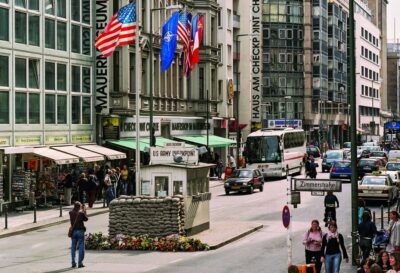
Skip-the-Line: Berlin Wall Museum at Checkpoint Charlie
Read our review →
Browse the lists this tour appears in