
Reviewed · RUHR TOURS
Adventure Darkness – Guided tour in the dark
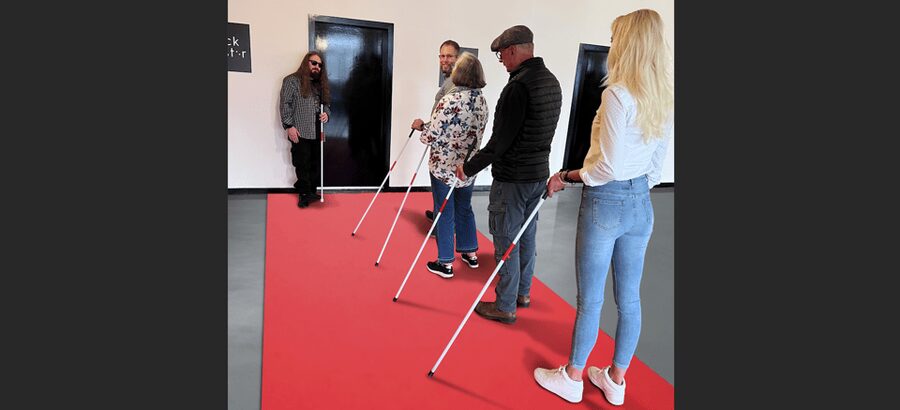
The first thing you notice is what is missing: light. At Adventure Darkness, you move through a series of rooms with a long cane while a blind or severely visually impaired guide leads you by voice and touch. Everyday scenes become unfamiliar puzzles, from crossing a road to handling a sporting challenge.
I like two things right away. First, the tour gives you a real sensory task rather than a simple talk about visual impairment. Second, it puts blind guides in charge, giving you a more direct understanding of how sight loss changes daily life. The small group of up to eight people also leaves room for questions and personal guidance.
The main drawback is simple but important: this is conducted in German, and the complete darkness may feel uncomfortable for some people. One practical note is confusing: the activity is described as wheelchair accessible in one place but also marked as not suitable for wheelchair users. Confirm access with Stockfinster before booking if that matters to you.
Key points to know before you book
- Complete darkness lasts about 60 minutes: Expect a sustained sensory challenge, not a short blackout room.
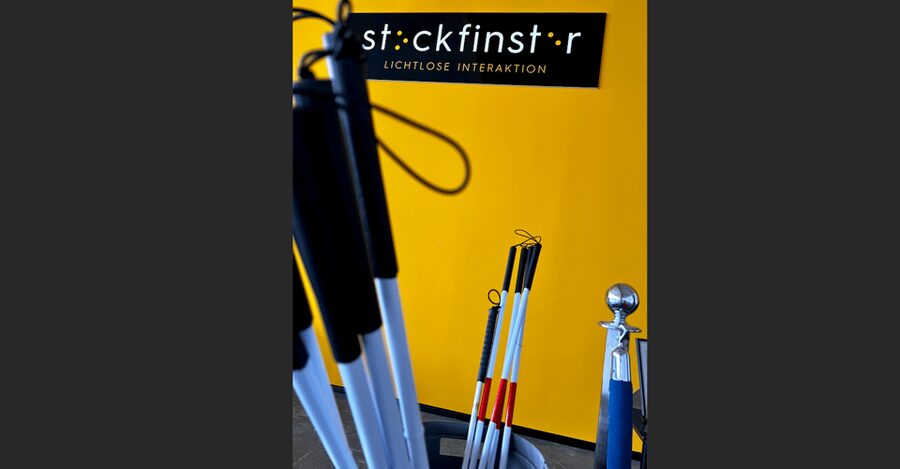
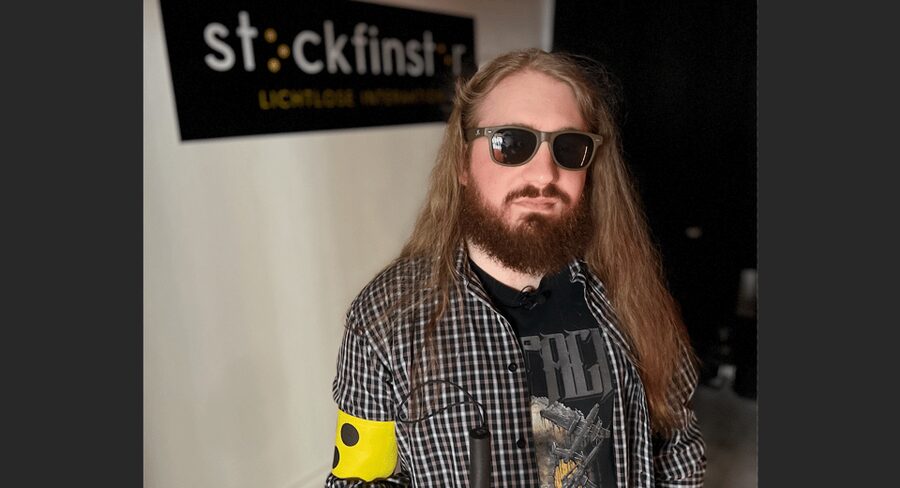
- Blind guides lead the experience: Guides use long canes and verbal direction while you work through each scene.
- The route uses more than sound: Touch, smell, and taste all help build the experience.
- A road-crossing scene and sporting challenge add variety: These sections turn an idea into a physical task.
- The final dark bar allows reflection: After about an hour, you can talk with your guide over coffee, beer, or fritz-kola.
- German is the only listed language: Book only if you can follow German instructions or have confirmed language support.
What the 90-minute tour actually does
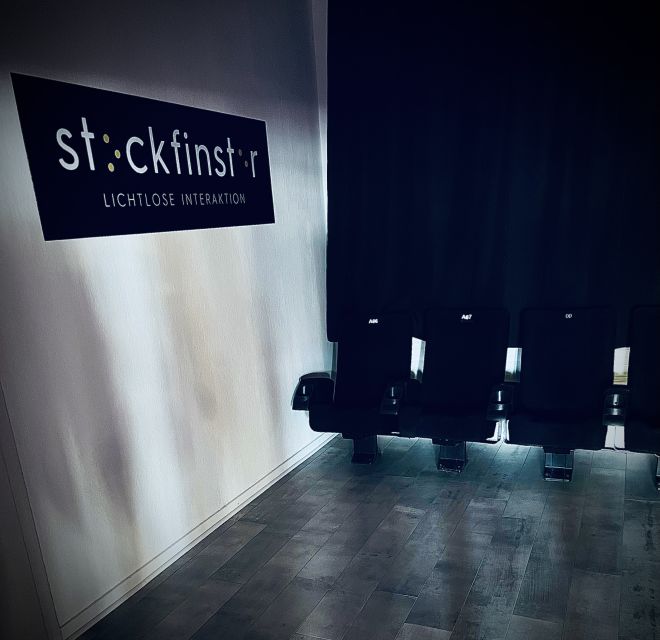
Adventure Darkness is built around a basic reversal: your guide knows the space, while you do not. You are given a long cane and led into rooms where ordinary visual clues disappear. There are no windows to glance toward, no signs to read, and no easy way to check what lies ahead.
The first few minutes are likely to feel awkward. A cane becomes your main tool for finding edges and obstacles, while your ears search for the guide’s voice and the sounds around you. Your brain pays close attention to small signals because sight is no longer doing its usual work.
This is not presented as a simulation that can reproduce blindness. One and a half hours in controlled rooms cannot show you the full reality of living with severe visual impairment. It can, however, make you notice how much you normally depend on vision for simple actions.
The guide leads the group through several adventure rooms. The exact order is not given, but the activities recreate typical daily situations along with special challenges. That mix matters. A dramatic task may be memorable, but ordinary actions often show the greatest gap between confidence with sight and uncertainty without it.
A few more half-days in the Ruhr worth comparing
- BVB Signal Iduna Park: Stadium Access and Self-Guided Tour
★ 4.4 · 2,332 reviews - Bottrop: Movie Park Full-Day Admission Ticket
★ 4.4 · 511 reviews - Dortmund: German Football Museum
★ 4.6 · 484 reviews
The first dark rooms: finding your way by sound and touch
The tour addresses you through several senses, with sound and touch doing most of the work. Smell and taste also appear, so the experience is not just a test of hearing. You may find that the dark makes small noises seem more important and ordinary surfaces more noticeable.
The guide’s instructions become central. Instead of watching a demonstration, you have to listen, ask questions, and respond. This creates a useful lesson in communication. Clear directions matter, and so does trust in the person guiding you.
The long cane gives you information in a narrow area directly ahead. It does not tell you the whole shape of a room, and it cannot replace visual awareness. That limitation makes the early part of the tour especially revealing. You have to slow down and use the information available instead of rushing ahead.
The small group helps here. With no more than eight participants, the guide can keep the group together and respond to questions. A larger crowd would risk turning the experience into a line of people waiting for their turn. This format should feel more personal, though the quality of the exchange will still depend on the guide and the group.
Florian has guided the experience for at least some recent sessions, and the available feedback describes him as sympathetic, engaging, and good at responding to the group. That personal contact is one of the strongest parts of the format. You are not left alone in a dark room with a set of props. A guide is present to direct you and later discuss what happened.
Everyday situations become the real lesson
The tour recreates typical daily situations, though the available details do not list every scene. This approach gives the experience practical weight. Instead of hearing general statements about accessibility, you face tasks in which the absence of sight changes your decisions.
Crossing a road is one of the clearest examples. Without visual traffic signals or a view of the street, you must depend on sound and instruction. A road-crossing scene can show why traffic noise, signal design, and predictable public spaces matter to someone who cannot see.
This section has one known weakness. A recent participant found that the sound effects in the fictional street situation did not work properly. That matters because an auditory scene needs clear, well-placed sound to make sense. If the audio fails, the exercise may become confusing for reasons unrelated to visual impairment.
Still, the idea is strong. A simulated street crossing places you in a situation where you cannot simply look around and solve the problem. It encourages you to think about how much public life assumes that everyone can see signs, vehicles, curbs, and signals.
You may also encounter familiar objects and surfaces in the other rooms. Since the information does not specify each prop, I would not book this expecting a fixed list of scenes. The appeal is the sensory method and the guided discussion, not ticking off a set of attractions.
The sporting challenge adds movement and uncertainty
One special experience is a sporting challenge. The details of the sport are not provided, so you should expect a physical task without assuming a particular game or level of exertion.
This part gives the tour a different pace. The road scene focuses on safety and listening, while a sport-related task tests coordination and spatial awareness. You may discover how hard it is to judge distance, direction, or timing when your eyes offer no help.
It also shows why adaptive sports and inclusive design matter. The point is not that blind people cannot take part in sport. The point is that rules, equipment, communication, and surroundings may need to work differently. A guided activity can make that idea easier to grasp than a short explanation.
I would treat the sporting section as a challenge, not a competition. The goal is awareness and participation. If you dislike activities that put you under pressure, tell the guide early and follow the instructions at your own pace.
Same city, a completely different kind of day:
- Dortmund: Borusseum Borussia Dortmund Museum Entry Ticket
★ 4.6 · 315 reviews - Münster: Old Town Highlights Guided Tour
★ 4.7 · 286 reviews - Oberhausen: HOUSE OF MAGIC – powered by Ehrlich Brothers
★ 4.3 · 252 reviews - Münster: Nachtwächter-Führung (Erlebnistour)
★ 4.4 · 213 reviews
Smell, taste, and the dark bar
Sound and touch are the main tools, but Adventure Darkness also uses smell and taste. These senses can be easy to ignore in daily life because vision normally provides quick information. In darkness, a smell or flavor may become a stronger marker of place and action.
The multi-sensory design keeps the tour from feeling like a simple walking exercise. You are not only trying to avoid obstacles. You are learning how your mind builds a picture of a place from fragments.
After roughly 60 minutes, the route reaches a dark bar. You can sit with the guide and discuss what you have experienced while having a glass of fritz-kola, a cup of coffee, or a cold beer. This closing conversation is important. It gives you time to sort out the difference between surprise, discomfort, and genuine understanding.
The bar is still in darkness, so the conversation continues the main idea rather than ending it at the door. You can ask how the guide experienced your group, discuss the tasks, and think about which assumptions changed. A tour about inclusion needs this space for questions. Without it, the activity could remain a clever sensory stunt.
The refreshments are modest, but they add a useful social finish. At $21 per person, you are paying for a structured 90-minute experience led by a specialist guide, not for a meal or a long sightseeing route. The price is fair if you value thoughtful participation and discussion. It is less attractive if you want a standard tourist attraction with plenty of visual spectacle.
Why the blind guide matters
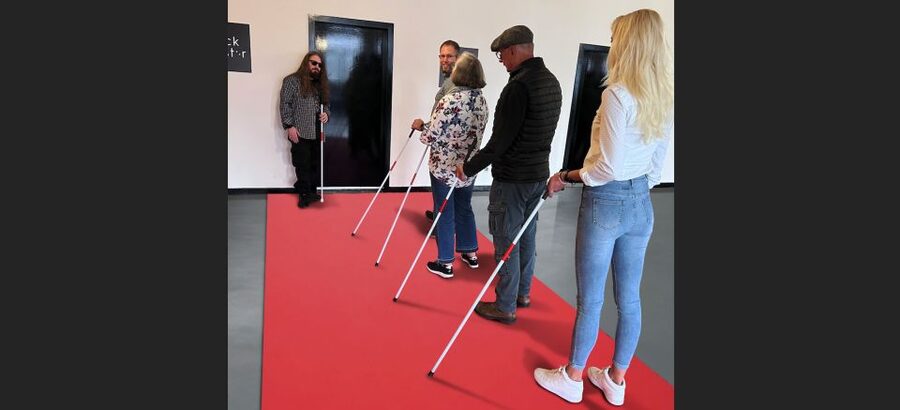
The guide is not simply a narrator standing beside an exhibit. A blind or severely visually impaired guide leads you through the rooms with a long cane and directs your attention to other senses.
That changes the tone of the experience. You are not being asked to imagine everything from a distance. You must follow a person who is more at home in the dark than you are. This can make the power balance feel different from a typical museum visit, where the sighted visitor looks and the guide explains.
The best moments are likely to come from small exchanges. You may ask for another instruction, misread a sound, or discover that your group is relying too heavily on sight-based habits. The guide can help connect that moment to daily access and communication.
Recent feedback gives Florian particular credit for being friendly and adapting well to the group. Another person described the experience as impressive, while others valued the insight into how the world can feel without sight. That combination of warmth and challenge seems central to the activity.
Keep in mind that the tour is in German. If you understand only basic German, the instructions may be difficult to follow in a room where you already lack visual clues. Ask Stockfinster about language options before paying, since German is the only listed tour language.
Group size, timing, and practical comfort
The maximum group size is eight people. That is small enough for the guide to manage voices and movement, but you should still expect to share the rooms and discussion with other participants.
The full duration is 90 minutes. About 60 minutes are devoted to the dark adventure rooms, followed by time at the dark bar. Allow yourself enough time to arrive calmly. Rushing into complete darkness is not an ideal start.
Cameras, cellphones, flashlights, and jewelry are not allowed. These rules protect the dark environment and help prevent distractions or accidental light. Remove jewelry before arrival, and do not count on keeping your phone in your hand for reassurance.
You must show your voucher in the app or as a printout. An appointment is required by phone with the voucher code, and the voucher is valid for six months from purchase. Cancel at least 24 hours ahead for a full refund. A late cancellation or missed appointment does not guarantee another date.
The experience is not suitable for children under five. The information about wheelchair access is inconsistent, with wheelchair accessibility listed in one section and wheelchair users listed as unsuitable in another. Contact the provider directly before booking rather than relying on the general accessibility label.
Who will get the most from Adventure Darkness
I would recommend this to adults, older children who meet the age requirement, students, families, and groups interested in disability awareness. It also suits people who prefer an active cultural experience over a lecture or a conventional museum.
It works especially well for anyone willing to be uncomfortable for a short time. You need patience, trust in the guide, and a willingness to ask for help. The tour does not promise relaxation, and the loss of visual control can be intense.
I would think twice if you dislike enclosed or dark spaces. You should also reconsider if you cannot follow German instructions, since safety and understanding depend on communication. People looking for a major Ruhr landmark or a visual photo opportunity will not find that here.
The activity can also be valuable for a group with different levels of familiarity with visual impairment. The dark rooms give everyone the same starting problem, while the final conversation creates room to compare reactions without turning the experience into a contest.
Is $21 a fair price?
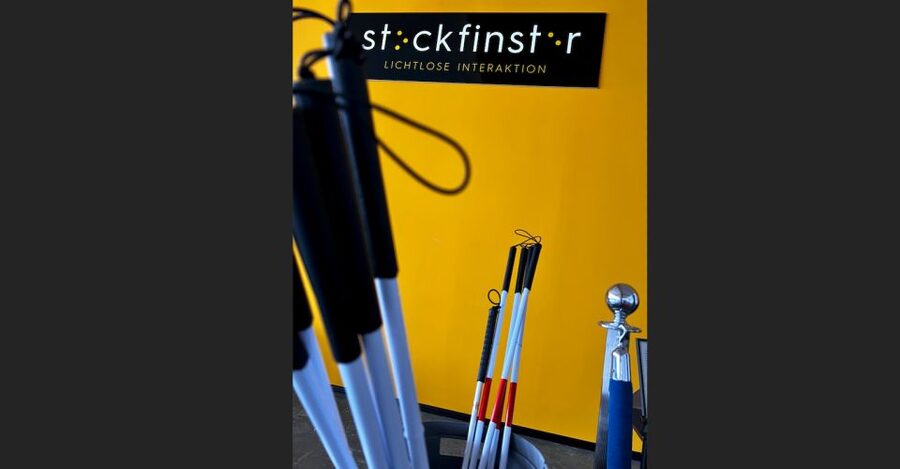
At $21, the cost is reasonable for a 90-minute guided activity, especially with a small group capped at eight people. The value comes from the guide, the purpose-built rooms, the different sensory tasks, and the chance to discuss the experience over a drink.
It is not a bargain in the sense of free public entertainment, and the tour does not include a full meal or a long list of attractions. You are paying for a focused encounter that asks you to take part. For a meaningful activity in the Ruhr Area, I consider the price fair.
The high rating of 4.6 from 32 ratings supports the idea that the format works well for many people, but it does not remove the practical limits. The German-only format, strict no-device rules, and possible accessibility concern should guide your decision more than the score.
Should you book Adventure Darkness?
Book it if you want a short, serious, hands-on way to think about visual impairment and inclusion. The blind guides, small group, everyday situations, sporting challenge, and dark-bar discussion give the tour more substance than a simple novelty attraction.
Before booking, confirm the wheelchair policy and make sure you can follow German. If complete darkness sounds manageable and you are ready to rely on sound, touch, smell, and taste, Adventure Darkness offers a useful change of viewpoint for $21. If you need a visual tour, a multilingual guide, or a relaxed sightseeing stop, choose another Ruhr Area activity.
FAQ
Where does Adventure Darkness take place?
The experience takes place in the Ruhr Area of Germany.
How long does the tour last?
The tour lasts 1.5 hours, or 90 minutes.
How much does Adventure Darkness cost?
The listed price is $21 per person.
What language is the tour in?
The live tour guide speaks German. German is the only listed language.
How many people can join the group?
The group is limited to eight participants.
Who leads the tour?
A blind or severely visually impaired guide leads the group using a long cane. Florian is named as a recent guide.
What happens during the dark-room portion?
You move through completely dark adventure rooms and encounter everyday situations along with special activities, including a sporting challenge and a road-crossing scene.
Is there food or drink during the experience?
After about 60 minutes, you reach a dark bar where you can have fritz-kola, coffee, or a cold beer while discussing the experience with your guide.
What items are not allowed?
Cameras, jewelry, flashlights, and cellphones are not allowed.
Can I cancel for a refund?
You can cancel up to 24 hours in advance for a full refund. A missed appointment or later cancellation does not guarantee a replacement date.
Just added in the Ruhr
- Schimmi tour pure (without catering)★ 4.9 · 19 reviews
- Private crime city tour by rickshaw including guide★ 5.0 · 21 reviews
- Oberhausen: Legoland Discovery Center Ticket★ 4.1 · 110 reviews
- Paderborn: “Beschwipste” Nachtwächter-Führung (mit Umtrunk)★ 4.6 · 27 reviews
- Osnabrück: “Beschwipste” Nachtwächter-Führung (mit Umtrunk)★ 5.0 · 4 reviews
- Osnabrück: “Gallows, graves & crooks” (adventure tour)★ 4.8 · 22 reviews
- Osnabrück: Altstadt-Highlights (Stadtführung)★ 4.7 · 42 reviews
- Oberhausen: SEA LIFE Ticket and Behind the Scenes Tour★ 4.3 · 29 reviews
Ruhr Tours, compared.
BVB Signal Iduna Park: Stadium Access and Self-Guided Tour
Read our review →
Borusseum Borussia Dortmund Museum Entry Ticket
Read our review →
Oberhausen: HOUSE OF MAGIC – powered by Ehrlich Brothers
Read our review →
Browse the lists this tour appears in