

Reviewed · OLD TOWN TOURS
Münster: Old Town Highlights Guided Tour
Münster’s old town is a lesson in how power shapes a city. On this 90-minute walking tour, you connect the cathedral, merchant square, churches, town hall, and Baroque palaces through stories of clergy, traders, rebels, and peace negotiators. The oddest detail is hard to miss: iron cages still hang from St. Lambertus Church, a grim reminder of the Anabaptist revolt.
I like the compact route, which gives you Münster’s main sights without taking half a day. I also like the guide’s role in making architecture useful rather than decorative, explaining why a church tower has no spire and why the Peace Hall matters. The main consideration is simple: this tour is held in German, so you need a solid grasp of the language to follow the history.
Key details at a glance

- The cathedral begins the story: Learn how the small Saxon settlement of Mimigernaford became Münster and what cathedral immunity meant.
- Anabaptist history feels unusually close: The headless saints at Überwasserkirche and the cages at St. Lambertus bring the 16th-century conflict into view.
- The Peace Hall gives the tour weight: Münster was one of the places where the Peace of Westphalia was signed in 1648.
- Prinzipalmarkt links commerce and power: The old market area helps explain the long struggle between merchants and clergy.
- Baroque Münster appears near the end: Erbdrostenhof and Clemenskirche show the influence of Johann Conrad Schlaun.
- Children under six join free: That makes the $16 price easier for families to manage.
Why Münster’s old town works well on foot
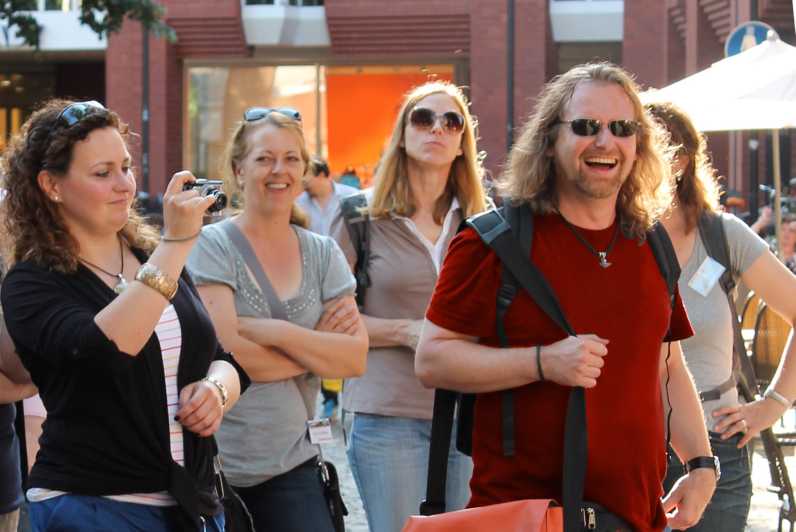
Münster is a good city for a short orientation walk. The key sights sit close together, and the route moves through the historic center rather than sending you to far-flung attractions. In 1.5 hours, you get a useful framework for exploring on your own afterward.
The tour is not just a parade of façades. Its central question is who controlled Münster at different points in its history. The cathedral represents ecclesiastical power. Prinzipalmarkt represents trade and civic life. The churches preserve the marks of religious conflict. The town hall recalls diplomacy and war. The Baroque buildings show how taste and authority changed later.
That structure gives the walk a clear purpose. You are not simply memorizing dates. You are watching Münster change from a small Saxon settlement into a major religious, commercial, and political center.
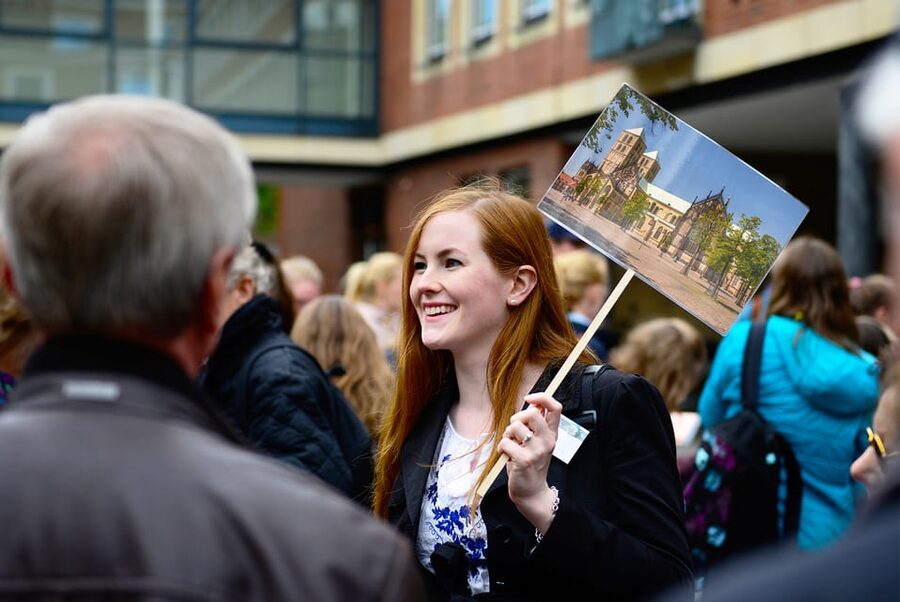
The meeting point is opposite the historic town hall, beneath the sign marked Michaelisplatz, close to the Rathausrelief. Look for the guide carrying an orange bag with the k3 sign. Arrive a few minutes early, since the starting point is in the middle of the old town and can be easy to miss if you are scanning only for a large tour group.
More Old Town Tours in the Ruhr
- Münster: Night watchman tour through the picturesque old town by lantern light
★ 4.8 · 65 reviews - Münster: Old Town Historical Walking Tour by “Geo Epoche”
★ 4.7 · 51 reviews - Münster: Old Town Crime Mystery Tour
★ 4.0 · 35 reviews
St. Paul’s Cathedral and the making of Münster
The cathedral is the right place to begin because it introduces Münster’s earliest identity. Here you learn how Mimigernaford, described as a small Saxon settlement, developed into the city of Münster.
The cathedral was not only a place of worship. The idea of cathedral immunity helps explain how church authority operated. In practical terms, the area connected with the cathedral had its own legal and political importance. The clergy formed a power center within the growing town, and that arrangement shaped Münster’s streets and institutions.
This is also where the tour begins explaining the friction between church leaders and merchants. A medieval city was never just one community with one shared interest. Clergy, traders, local officials, and residents all wanted influence. Once you understand that tension, the old town’s layout becomes easier to read.
The cathedral stop should appeal to anyone who likes history with a physical clue attached. Instead of hearing that church authority mattered and then moving on, you can look at the city around you and connect that authority to the buildings and public spaces.
The drawback is that the cathedral section carries a fair amount of background information early in the walk. If you prefer a tour that begins with quick visual highlights, this opening may feel more historical than scenic. If you want to understand the city rather than collect photographs, it is a useful start.
Prinzipalmarkt and the struggle between merchants and clergy
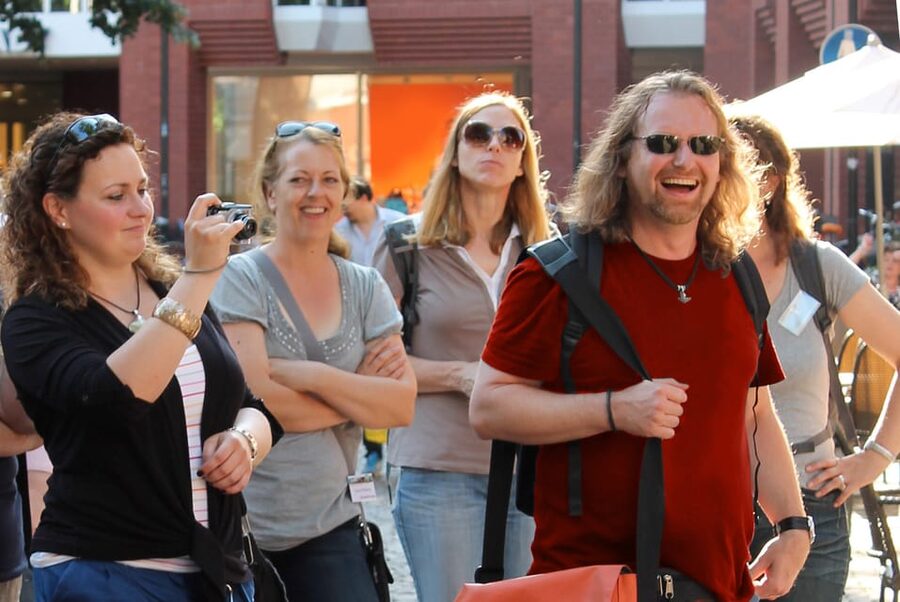
From the cathedral area, the tour turns toward Münster’s civic and commercial heart. Prinzipalmarkt is one of the places where the old dispute between merchants and clergy still affects the cityscape.
This is where the tour can help you read the city at street level. Markets were about more than buying and selling goods. They were places where merchants gained wealth, influence, and a stronger voice in civic affairs. The clergy, meanwhile, controlled important religious institutions and held their own authority.
You will hear how those competing interests shaped Münster. The story gives the market area more meaning than its handsome façades alone provide. Look at the buildings as evidence of a town where commercial power and religious power had to negotiate, compete, and sometimes clash.
The route includes the historic city hall, so the market and town hall work together as a civic chapter. You get a sense of how trade, government, and public life met in one central area.
I especially like this part for first-time visitors because it offers a way to get your bearings quickly. After the tour, you can return to Prinzipalmarkt and recognize it as more than a photogenic square. It is part of the city’s long argument over who gets to shape urban life.
The Anabaptists, Überwasserkirche, and the missing spire
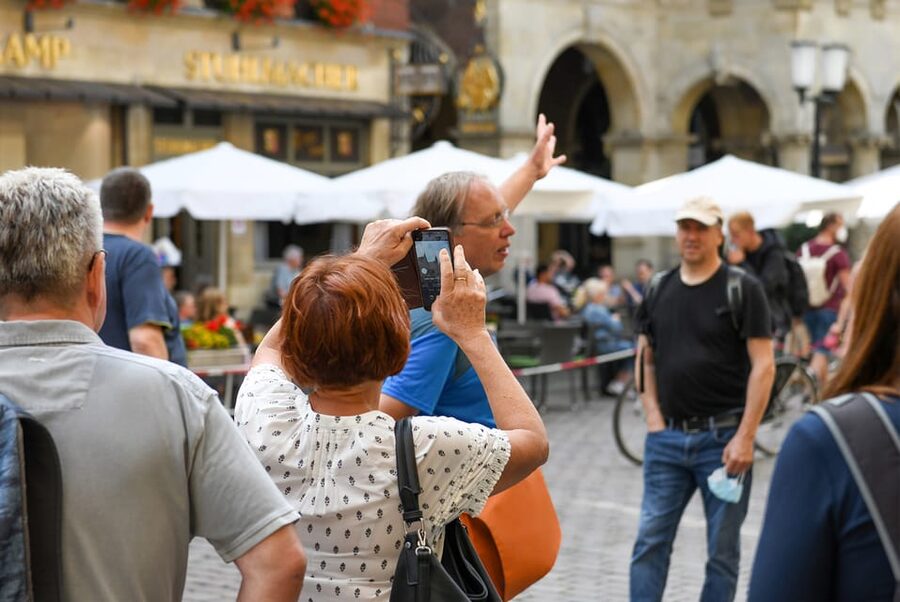
Münster’s Anabaptist episode is the most dramatic part of the route. In the 16th century, Anabaptist rule changed the city and left physical traces that remain visible.
At Überwasserkirche, the tower still stands without a point. Some saints there also remain headless. Those details are striking because they show how political and religious conflict could damage sacred images and buildings, not just alter official policy.
The tour explains the events rather than treating the remains as odd curiosities. The missing spire and headless statues become clues to a period when the established order was challenged and then forcefully restored.
For you, this stop is likely to be the most memorable if you enjoy stories with a clear connection to what you can see. Münster’s past is not locked away in a museum. It appears in the shape of a tower and the condition of religious figures.
It is worth keeping the wider context in mind. The Anabaptist story is not a simple tale of heroes and villains. The tour’s value lies in showing how a movement could take control, how that rule affected the city, and how its defeat remained visible afterward.
Because the tour is in German, this may be one of the places where language matters most. The subject includes religious terms, political change, and several connected events. If your German is limited, you may recognize the buildings but miss the explanation that makes them significant.
More Old Town Tours in Munster:
- Münster Old Town: Outdoor Escape Game
★ 4.1 · 14 reviews - Dresden: Semperoper and Old Town Tour
★ 4.8 · 5,735 reviews - Nuremberg: Old Town Guided Walking Tour
★ 4.6 · 2,416 reviews - Munich: Old Town & Viktualienmarkt City Walk in German
★ 4.7 · 2,304 reviews
St. Lambertus and the cages over the market
The tower of St. Lambertus brings the Anabaptist story to a darker conclusion. The cages associated with the end of the movement can still be seen on the church tower. The tower keeper also worked there, adding another human detail to a building that otherwise might seem like a standard historic church.
This is an unusually direct reminder of Münster’s past. Many cities tell you that a rebellion ended badly. Here, the symbols of that ending remain attached to a central landmark. The effect is sobering, and the guide’s explanation helps prevent the stop from becoming mere shock value.
St. Lambertus also keeps the tour focused on how public buildings communicated authority. A tower could guide residents, mark the center of town, and display the consequences of rebellion. The city’s architecture carried messages.
You will likely spend only part of the 1.5 hours at the church, but the stop has a strong payoff. It combines location, architecture, and political history in one view.
A practical tip: pay attention to the tower rather than looking only at street level. The cages are easy to miss if you are moving quickly through the market area. This is exactly the kind of detail that makes a guided walk more useful than a casual stroll.
The historic town hall and the Peace Hall
The historic town hall is one of the tour’s main sights and one of Münster’s most important places. Inside the town hall, the Peace Hall recalls the negotiations that helped end the Thirty Years’ War in 1648.
Münster was one of the locations involved in the Westphalian peace negotiations. The Peace Hall is particularly linked with the agreement between the Dutch and the Spaniards. That makes the room more than an attractive historic interior. It represents the painstaking work of ending a long and destructive conflict.
This stop gives the tour a welcome change of pace. The cathedral and churches focus on religious authority and revolt. The town hall shifts attention to diplomacy, negotiation, and the effort to settle conflicts through formal agreements.
I find the Peace Hall especially valuable for visitors who want a wider European connection. Münster’s old town is not only about local stories. A decision made here in 1648 helped mark the end of the horrors of the Thirty Years’ War, a conflict that had affected much of Europe.
The town hall also returns you to the question of civic power. Earlier, you hear about the relationship between merchants and clergy. Here, public government and international diplomacy take center stage. The sequence makes the old town feel connected, not random.
The tour includes the historic city hall among its main highlights, but the exact amount of time available inside each site can depend on the guide and the pace of the group. If the Peace Hall is your main priority, check what is included when you book rather than assuming the walk is a full interior tour of every building.
Erbdrostenhof and Clemenskirche: Münster’s Baroque face
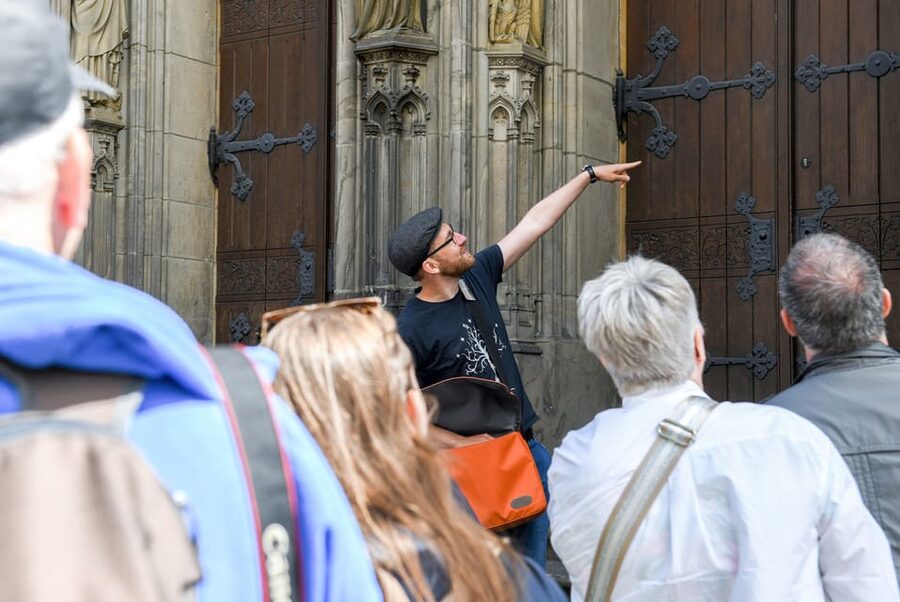
The later part of the route introduces two buildings by Johann Conrad Schlaun, a major Baroque master builder associated with Münster. Erbdrostenhof and Clemenskirche show how the city’s appearance changed after the medieval and Reformation-era events covered earlier.
These buildings matter because they broaden the story. Münster is not frozen in its oldest period. Its architecture reflects later wealth, taste, and civic ambition. Baroque design brought a different sense of order and display to the city.
Erbdrostenhof gives you one example of that style in a grand urban setting. Clemenskirche adds a religious counterpart. Together, the two buildings show how one architect’s work helped shape the city’s visual character.
This section is a good reminder to look beyond Münster’s famous medieval sights. If you spend all your attention on the cathedral and Prinzipalmarkt, you can miss the later layers that make the city more varied.
The Baroque stops may feel quieter than the Anabaptist story or the Peace Hall. That is not a weakness. They work as a calmer finish, allowing you to compare different periods and see how Münster’s public image changed over time.
Guide quality and the German-language format
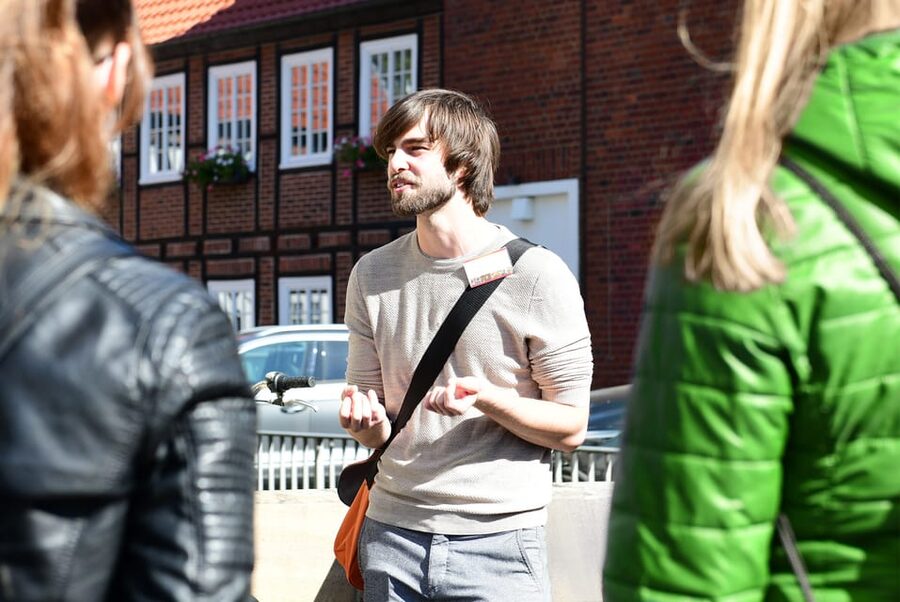
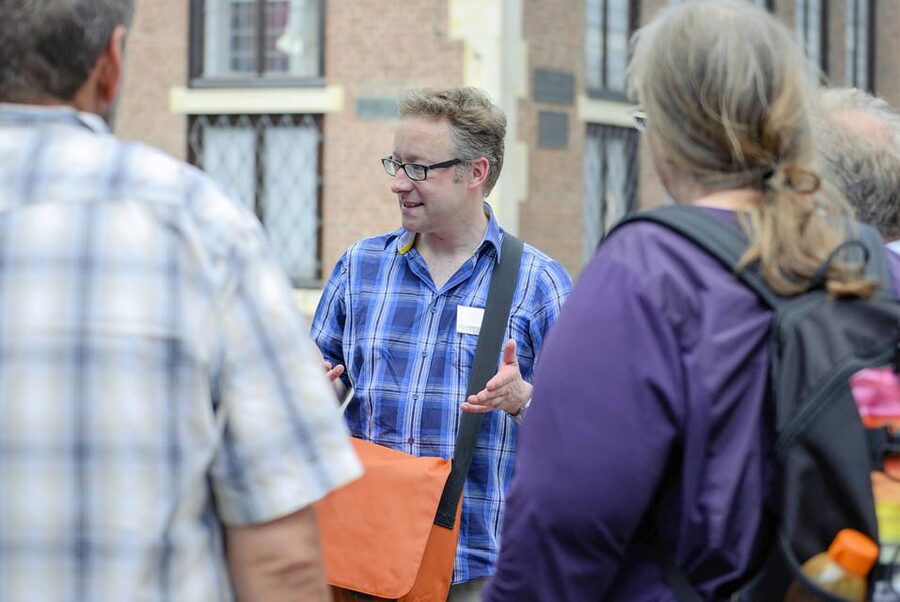
The guide is described as competent, entertaining, punctual, and ready to answer questions. Those traits matter on a short walk. With only 90 minutes, the guide needs to keep the group moving without making the tour feel rushed.
A particularly good guide will connect the stops instead of treating each one as an isolated fact. The strongest version of this walk moves from cathedral authority to merchant power, from Anabaptist rule to civic punishment, then from war and diplomacy to Baroque rebuilding.
You should also expect a personable delivery. One guide received especially positive attention for starting on time, answering every question, and showing a strong command of the subject. No guide name is provided in the booking information, so you should not book this expecting a particular named guide.
The language is German only. That is the single biggest factor in deciding if this tour fits you. Children can join free from ages zero through five, but a family will get the most from the walk if the adults or older children can follow a German explanation of complex events.
The tour sounds best suited to people who want a lively local history lesson rather than a silent photo walk. It also suits visitors who appreciate questions and a guide who can adapt the explanation to the group.
Is $16 a fair price for 90 minutes?
At $16 per person, the tour offers good value if you want a quick, focused introduction to Münster. You cover the cathedral, Prinzipalmarkt, St. Lambertus, the historic town hall, and two Baroque landmarks, while also getting the stories that link them.
The value is strongest on a first visit. You can spend your remaining time returning to the sights that interest you most, now with a better sense of their place in the city. A short tour also fits neatly into a day that includes museums, shopping, or a longer regional itinerary.
The price is less compelling if you already know Münster well or mainly want access to interiors. The experience is built around a guided walk and explanation. Its strength is context, not a long visit at every stop.
Children under six join free, which helps families. Free cancellation up to 24 hours before the start and the option to reserve now and pay later also make the booking less restrictive, especially if your schedule in Münster may change.
Who should book this Münster walk?
Book it if you want to understand why Münster looks the way it does. The tour links its religious, commercial, political, and Baroque layers in a manageable 1.5-hour route.
It is a strong choice for first-time visitors, history fans, families with young children, and anyone who prefers a guide to point out details that are easy to miss, such as the missing spire, headless saints, and cages on St. Lambertus.
Think twice if you need an English-language tour or if you want a slow, interior-focused visit. This is a German-language overview with several stops and a clear walking pace. Your German ability will shape the experience more than the low price will.
FAQ
How long does the Münster old town tour last?
The tour lasts 1.5 hours.
What language is the tour held in?
The tour is held in German, with a live German-speaking guide.
How much does the tour cost?
The listed price is $16 per person.
Can children under six join the tour?
Yes. Children aged zero through five can take part for free.
Where is the meeting point?
Meet opposite the historic town hall beneath the sign Michaelisplatz, close to the Rathausrelief.
How do I identify the guide?
The guide wears an orange bag with the k3 sign on it.
Which Münster sights are included?
The tour includes sights such as St. Paul’s Cathedral, St. Lambertus Church, Prinzipalmarkt, and the historic city hall. It also covers Erbdrostenhof and Clemenskirche.
Does the tour explain the Anabaptist period?
Yes. It covers the Anabaptist rule and points out the tower without a spire at Überwasserkirche, headless saints, and the cages at St. Lambertus.
Does the tour cover the Peace of Westphalia?
Yes. At the historic town hall, you learn about the Westphalian peace negotiations and the Peace Hall, where peace was signed between the Dutch and the Spaniards.
Can I cancel for a full refund?
Yes. You can cancel up to 24 hours in advance for a full refund. You can also reserve now and pay later.
Should you book it?
If you can follow German, I would book this tour early in your Münster visit. Its 90-minute length is practical, the $16 price is modest, and the route gives you a clear way to read the city. You will come away with more than a list of buildings: you will understand the struggle between clergy and merchants, the scars left by the Anabaptists, the importance of the Peace Hall, and the later Baroque redesign of Münster.
If you need English, or if your priority is spending a long time inside each landmark, choose another format. For a concise German-language introduction led by a punctual and engaging guide, this walk makes a sensible first step.
Just added in Munster
- Private crime city tour by rickshaw including guide★ 5.0 · 21 reviews
- Münster: Private pub crawl with insider guide & free shots★ 4.6 · 11 reviews
- Münster Old Town: Outdoor Escape Game★ 4.1 · 14 reviews
- Münster: Private Guided Sculptures Tour on a Rickshaw★ 5.0 · 12 reviews
- Münster: Private Guided Rickshaw City Tour★ 4.8 · 143 reviews
- Münster: Beer Tasting Rickshaw Tour★ 4.7 · 56 reviews
- Münster Escape Tour Kreuzviertel★ 4.2 · 8 reviews
- Münster: Old Town Crime Mystery Tour★ 4.0 · 35 reviews
Old Town Tours, compared.

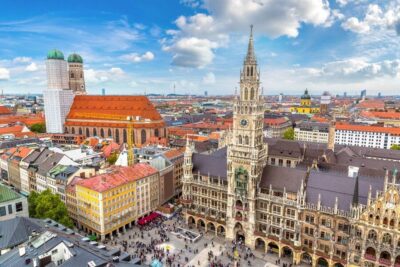
Old Town & Viktualienmarkt City Walk in German
Read our review →
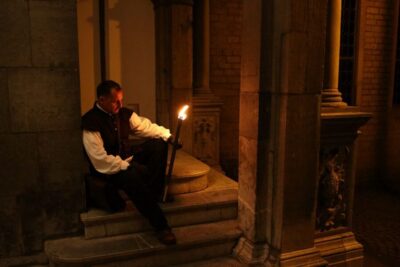
The Night Watchman Old Town Walking Tour in German
Read our review →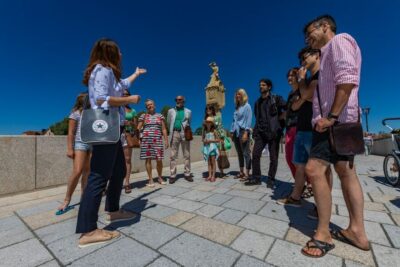
New Old Town and Highlights German-Language Tour
Read our review →Browse the lists this tour appears in