
Reviewed · MUSEUMS
Berlin: Samurai Museum Entry Ticket
Berlin’s Samurai Museum turns a private collection of armor, swords, tea utensils, and artwork into a hands-on cultural visit. The best part is the mix of 900 authentic objects with touchscreens, projections, holograms, and an AI fox guide called Kitsune.
I like the Japanese-built Noh theater and tea house, which give the displays a physical sense of place. I also like the family-friendly approach: children can explore ninja techniques and answer Kitsune’s questions while adults examine craftsmanship and symbolism. The main drawback is that the technology may appeal more to some visitors than others, especially if you prefer a quiet, traditional museum.
Key points
- A 4,000-object private collection: The museum presents selected pieces from the Peter Janssen Collection, including armor, weapons, tea equipment, and a palanquin.
- Interactive learning: Touchscreens, projections, holograms, and the fox guide Kitsune make the visit active rather than purely visual.
- Japanese-built spaces: The Noh theater and tea house were constructed in Japan, then taken apart and rebuilt in Berlin.
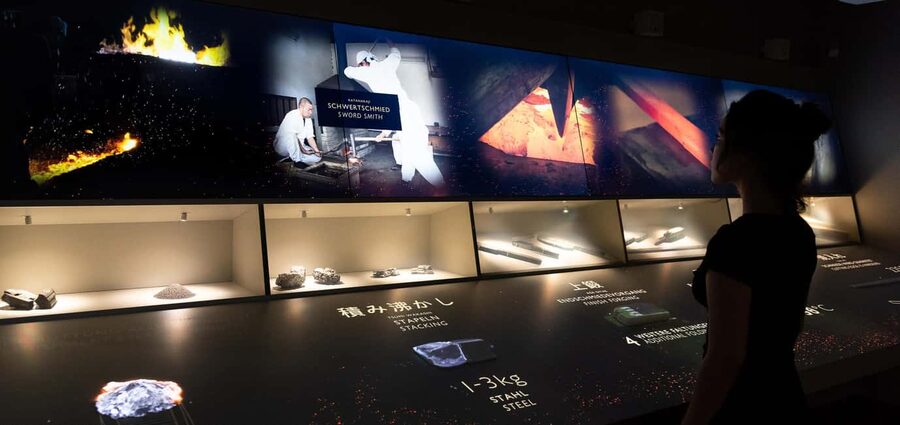
- Sword craftsmanship: The collection and digital displays explain how legendary Japanese blades were produced.
- Good location: The museum is on Auguststraße in Berlin-Mitte, close to Alexanderplatz, Museum Island, cafés, and restaurants.
- Flexible entry: The ticket costs $15, is valid for a selected period of 1 to 14 days, and allows you to choose your visit time within the available schedule.
What the $15 ticket gives you
For $15, you receive entry to the Samurai Museum Berlin. The ticket does not include an exhibition catalog, guided tour, food, or drinks, so the value rests in how much time you spend with the displays.
This is not a quick room of decorative swords. The museum combines a substantial private collection with digital interpretation. You can look closely at armor and weapons, then use an interactive station to learn how they were made or how they fit into Japanese culture.
The ticket is especially good value if you enjoy museums that explain objects rather than simply place them behind glass. It also works well for families because the digital elements give younger visitors something to do while adults take in the details.
Your entry is valid for a period of 1 to 14 days, depending on the ticket selected and availability. That flexibility matters in Berlin, where rain, museum closures, and long sightseeing days can quickly disrupt a fixed plan. Check the available starting times before booking, then use your smartphone ticket directly at the entrance barrier.
More Attraction Tickets in Berlin
- Berlin: Jewish Museum Berlin Entrance Ticket
★ 4.5 · 8,393 reviews - Berlin: Berlin Story Bunker Entry Ticket
★ 4.6 · 6,759 reviews - Berlin: Illuseum Berlin Entrance Ticket
★ 4.1 · 3,970 reviews
Beginning with the Peter Janssen Collection
The museum grew from collector Peter Janssen’s purchase at a Berlin flea market. That first find led to a private collection of more than 4,000 objects. The museum presents part of it, with pieces dating from the late Kofun period through the early Meiji period, covering roughly the sixth to nineteenth centuries.
That range gives you a chance to see change over time rather than one frozen image of the samurai. Armor, weapons, household objects, and ceremonial items reflect different periods of Japanese craftsmanship and social life.
Among the notable objects are an eighteenth-century palanquin, seventeenth-century armor associated with the Matsudaira clan, and tea utensils linked to the period of Sen no Rikyū, who lived from 1522 to 1591. These objects help move the subject beyond battlefield legends.
Look at the armor as both protection and design. Details in its construction show that samurai equipment had a practical purpose, but it also carried rank, identity, and visual impact. The sword collection offers a similar lesson: a blade was not simply a weapon, but the product of skilled metalworking and careful tradition.
The museum’s scale is useful here. With so many objects connected to samurai culture, you can compare forms and materials instead of treating one famous piece as the whole story.
Armor, weapons, and the craft of the sword
The sword displays are one of the museum’s strongest sections. You learn about the art of swordsmithing and the steps behind the production of legendary blades.
The museum uses digital material to explain what can be difficult to understand from a finished sword alone. A polished blade may look simple at first glance, but the craft behind it involved highly specialized techniques. The interactive presentation helps you connect the final object with the work that produced it.
Armor is equally rewarding for close observation. The collection includes authentic pieces rather than modern costumes, so you can examine construction, decoration, and the way individual parts worked together.
Do not rush past the less dramatic objects. Tea utensils and other works of art show how samurai culture reached beyond combat. They point to ceremony, taste, discipline, and the social importance of objects used in daily and formal life.
If you come mainly for swords, allow time for the surrounding displays. The museum’s larger value lies in showing how weapons, armor, theater, tea, and folklore all fit within a wider cultural world.
The Noh theater and tea house
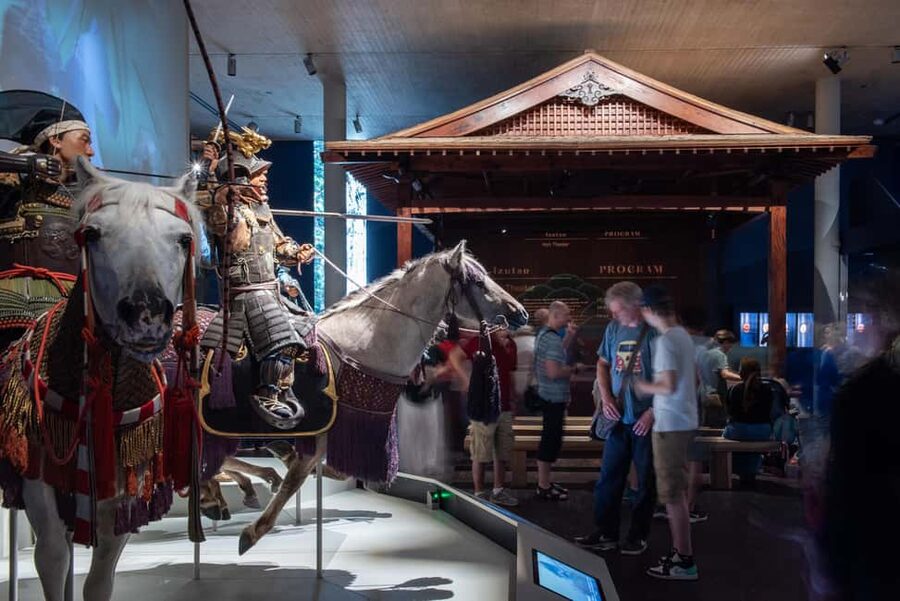
Two large installations give the museum a welcome sense of place: a Noh theater and a tea house. Both were built in Japan with traditional materials and techniques before being taken apart and rebuilt in Berlin.
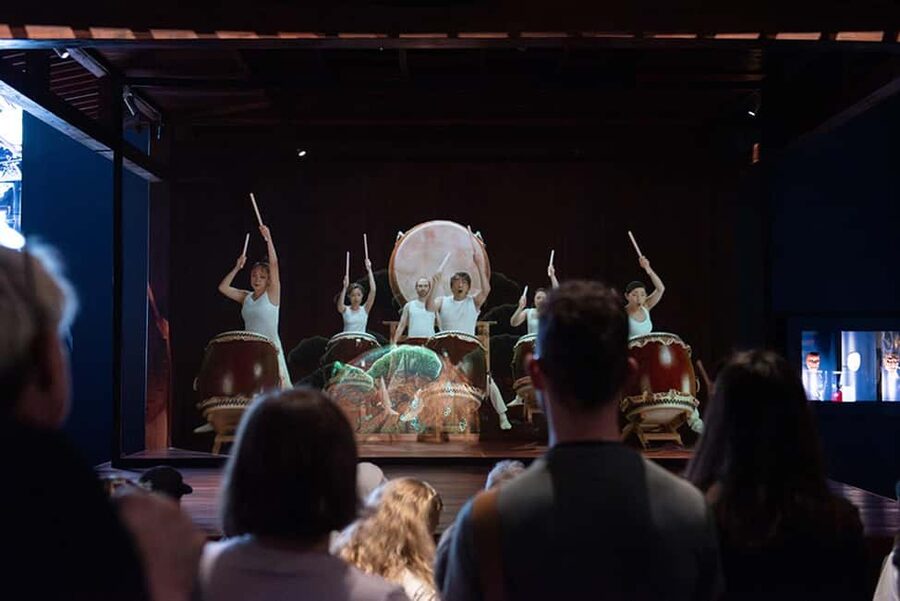
The Noh theater is more than a decorative backdrop. It introduces a form of Japanese performance tied to long cultural traditions. Realistic projections bring the space to life, and the museum presents unique performances within the theater setting.
The tea house offers a different mood. Here, the focus is on the process of the centuries-old tea ceremony. You can see how the ceremony depends on careful movement, selected objects, and a controlled setting.
These spaces are worth your attention even if you know little about Noh or tea. They show that the samurai world was not limited to armor and warfare. Cultural influence also appeared in theater, architecture, ceremony, and the handling of everyday objects.
The limitation is simple: projections and digital presentations cannot replace a live performance or a full tea ceremony. Still, they provide useful context without requiring a separate trip or specialist background.
More Museum Tours in Berlin
- Berlin: DDR Museum Tickets
★ 4.3 · 3,443 reviews - Berlin: Natural History Museum Entrance Ticket
★ 4.6 · 3,382 reviews - Berlin: Neues Museum Entry Ticket
★ 4.6 · 3,261 reviews - Skip-the-Line: Berlin Wall Museum at Checkpoint Charlie
★ 4.1 · 2,041 reviews
Ninja, yōkai, and the Kitsune guide

The museum widens its subject beyond the samurai to include ninja and yōkai, the supernatural figures of Japanese folklore. Interactive stations invite you to learn ninja techniques and explore the more mysterious side of Japanese culture.
A fox character called Kitsune asks questions as you move through the displays. The idea is clearly aimed at making the museum more approachable for children, but it can also help adults organize what they have seen.
One child-friendly review praised the interaction system and compared Kitsune’s appearance to the nine-tailed fox Kurama from the anime Naruto. That comparison tells you something useful about the tone: this is not a solemn, silent museum. The presentation uses familiar fantasy elements and playful technology to draw people into the subject.
You should expect some noise and movement around the interactive displays. If you want a quiet study of every object, visit at a less busy time and give yourself room to pause. If you are visiting with children, the interactive features may keep the group engaged longer than a conventional armor collection would.
Holograms, projections, and high-tech displays
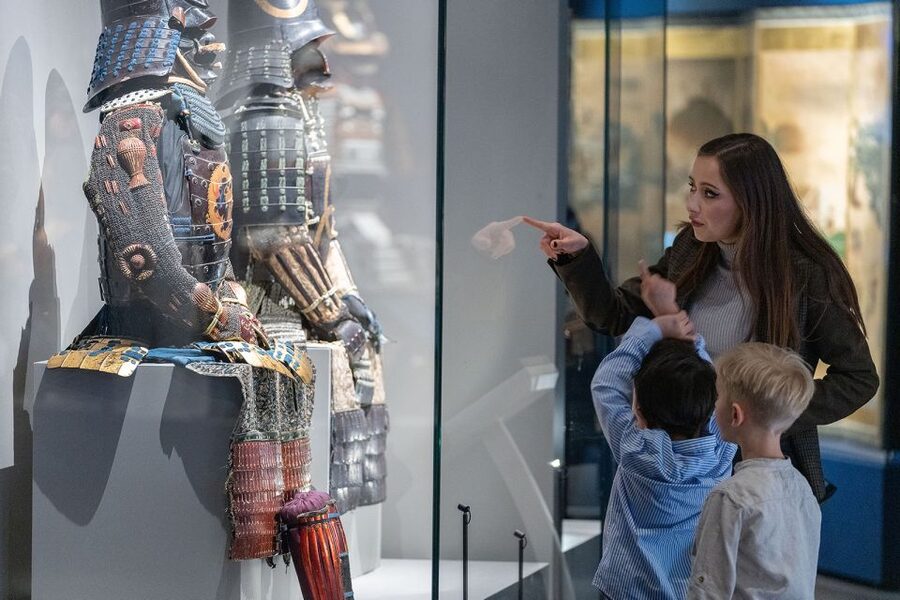
The museum’s central idea is a conversation between old objects and new technology. Projections and touchscreens guide you through the exhibits, while a holographic drum performance adds a theatrical moment.
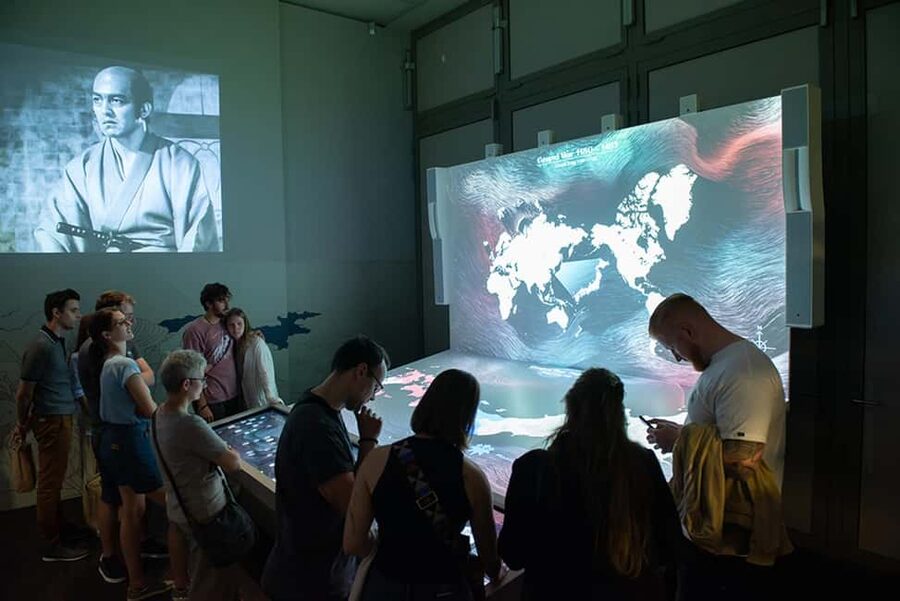
This approach works best when the technology answers a clear question. A projection can show how a Noh theater is used. An interactive station can explain sword production. A touch screen can offer extra information in German and English without crowding the object labels.
The bilingual presentation is helpful if you are visiting Berlin without German. You can read information in English and still follow the main themes without relying on a guide.
The technology also gives you several ways to approach the collection. You can begin with the physical object, then use the screen for context, or start with the digital explanation and return to the armor or weapon with a better eye for detail.
There is a possible tradeoff. The displays are designed to be engaging, so they may feel less traditional than a quiet museum devoted only to objects and labels. I would choose this museum for interpretation and atmosphere, not for a completely silent viewing experience.
How long to allow and how to plan your visit
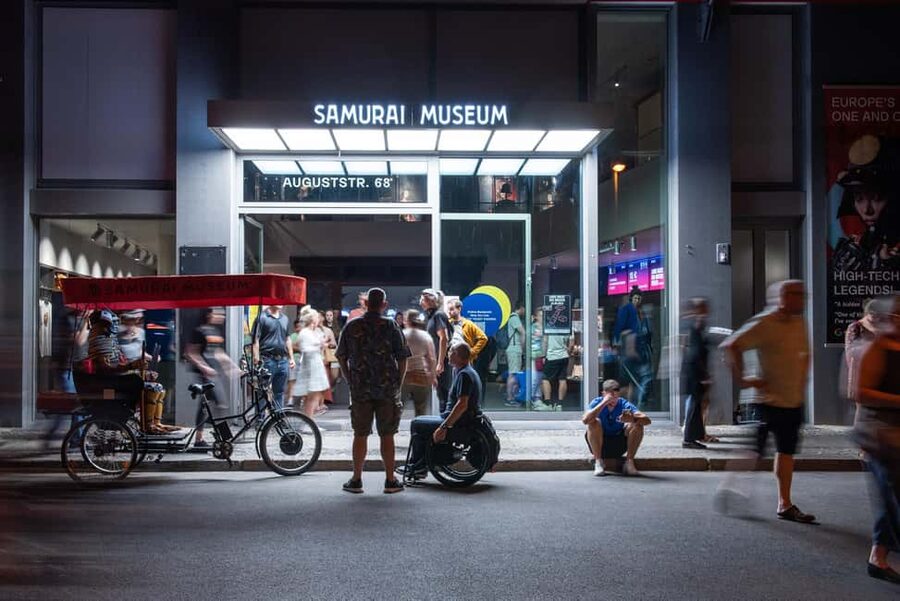
The ticket is valid for 1 to 14 days, with starting times shown during booking. The supplied information does not set a fixed visit length, so plan your time according to your interest.
If you want a brisk look at the main objects and installations, you might find a shorter visit sufficient. If you enjoy reading the explanations, comparing armor, and trying the interactive stations, allow more time.
The museum works well as part of a Berlin-Mitte day. You can visit before or after Museum Island, walk toward Alexanderplatz, or stop at one of the nearby cafés and restaurants. Its position on Auguststraße makes it easy to fit into a wider plan rather than treating it as a remote destination.
The flexible ticket helps with that approach. You can build the museum around your day instead of forcing the rest of Berlin around one strict appointment. Still, do not assume every time is open. Check availability and select the period that fits your schedule.
Getting to Auguststraße in Berlin-Mitte
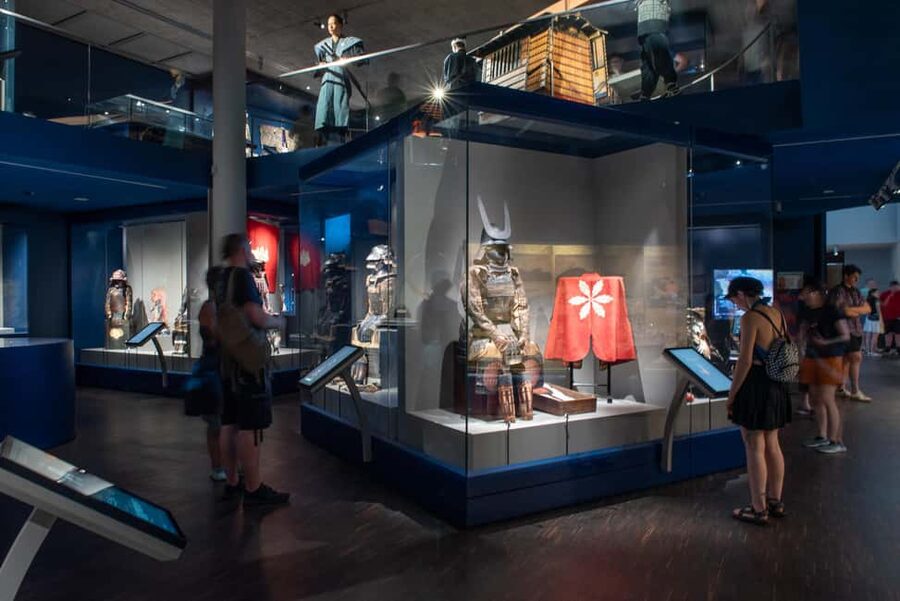
The Samurai Museum is located on Auguststraße in Berlin-Mitte, near Alexanderplatz and Museum Island. It is served by several public transport routes.
The nearest listed U-Bahn options are Oranienburger Tor on the U6 and Rosenthaler Platz on the U8. S-Bahn choices include Oranienburger Straße on the S1, S2, S25, and S26. Tram routes M1 and M5 serve Oranienburger Straße, while M8 serves Rosenthaler Platz.
You can also use bus 142 to Tucholskystraße or M41 to Abgeordnetenhaus. Check the local transport network on the day of your visit, since Berlin connections can change with construction or service interruptions.
Because the museum is in central Berlin, combine it with nearby sightseeing rather than making a separate cross-city journey. Museum Island, Alexanderplatz, and other Mitte landmarks are close enough to form a full day of culture and walking.
Practical rules at the entrance
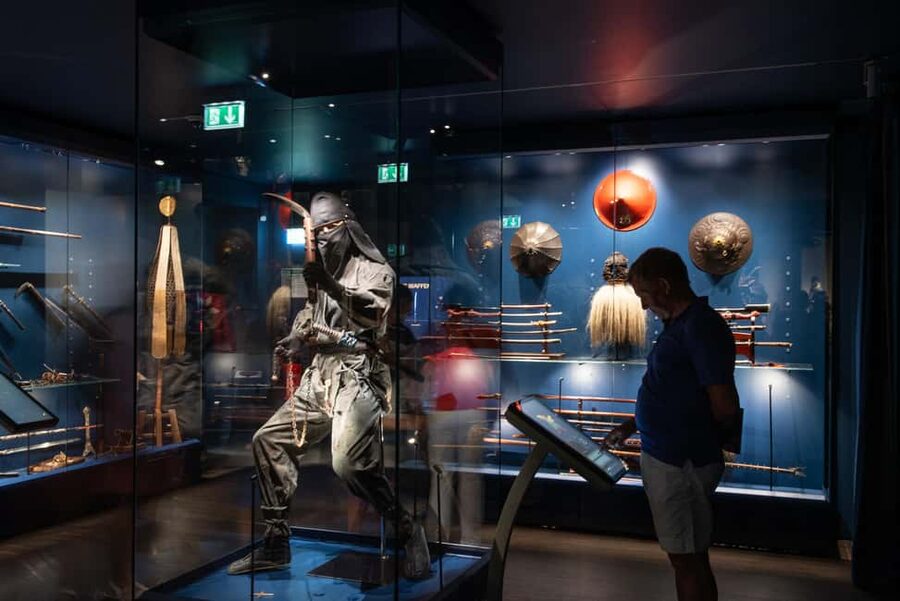
The museum accepts a smartphone ticket at the entrance barrier, so you can go directly to the entry point rather than first looking for a separate ticket counter. Keep your phone charged and have the code ready.
Large bags and luggage are not allowed. Pets are also not allowed, and food and drinks cannot be taken inside. If you are arriving with suitcases or a large day bag, make a plan before heading to the museum.
The museum is wheelchair accessible. That makes the ticket suitable for visitors who need an accessible cultural attraction in central Berlin, though you may still want to confirm current access details if your needs are specific.
Free cancellation is available up to 24 hours in advance for a full refund. You can also reserve now and pay later, which is useful when your Berlin plans are still changing.
Who will enjoy the Samurai Museum most
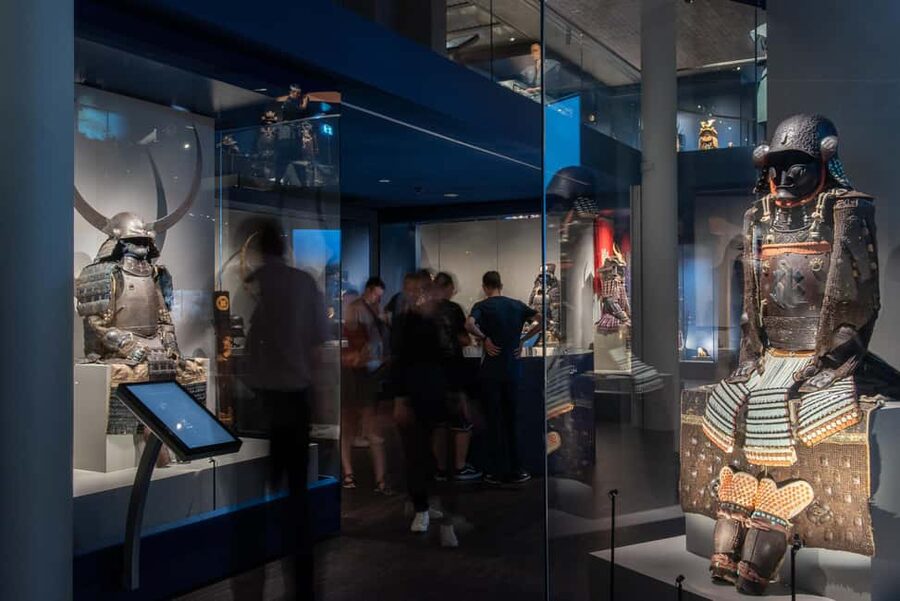
I would recommend this museum to families, first-time visitors curious about Japanese culture, and anyone who likes objects explained through visual technology. Children have interactive questions, ninja activities, and a fox character to follow, while adults can spend time with the craftsmanship and historical periods.
It is also a good choice for visitors who are already planning time in Mitte. The location makes it easy to pair with Museum Island or Alexanderplatz, and the flexible entry period reduces pressure on a busy sightseeing day.
You may prefer a different attraction if you want a specialist museum devoted only to Japanese art, a live tea ceremony, or a full guided lecture. This experience offers a broad introduction, with technology playing a major role.
No specific guide is included with the standard entry ticket. If you want more explanation from a person, the museum also offers exclusive guided tours, but those are separate from the basic admission described here.
Should you book the Samurai Museum?
Book it if you want more than a display of swords and helmets. The museum gives you authentic objects, a Japanese-built theater and tea house, bilingual digital explanations, holographic performances, and interactive features for children.
At $15, the ticket is fairly priced for a central Berlin attraction with this amount of material and flexibility. Its best value comes when you take time to use the screens and installations rather than making a quick pass through the cases.
Skip it if you dislike touchscreens, projections, or playful interpretation. For everyone else, especially families and curious first-time visitors, the Samurai Museum offers a clear and entertaining introduction to samurai culture without requiring prior knowledge.
FAQ
Where is the Samurai Museum Berlin located?
The museum is on Auguststraße in Berlin-Mitte, near Alexanderplatz and Museum Island.
How much does entry cost?
The listed price is $15 per person.
How long is the ticket valid?
The ticket is valid for a period of 1 to 14 days, depending on the available option. Check the available starting times when booking.
Can I choose my visit time?
Yes. The Samurai Flex Ticket lets you choose your day and time spontaneously within the available schedule.
Is the museum wheelchair accessible?
Yes, the activity is listed as wheelchair accessible.
Can I use my phone to enter?
Yes. You can go directly to the entrance barrier with your ticket on your smartphone.
Is a guided tour included?
No. The standard activity includes an entry ticket only. Exclusive guided tours are available separately.
Are food and drinks allowed inside?
No. Food and drinks are not allowed in the museum.
Can I bring luggage or a large bag?
No. Luggage and large bags are not allowed.
What public transport can I use?
You can use U-Bahn lines U6 to Oranienburger Tor or U8 to Rosenthaler Platz. S-Bahn lines S1, S2, S25, and S26 stop at Oranienburger Straße. Several tram and bus routes also serve the area.
Just added in Berlin
- Berlin & The Third Reich Private Guided Tour★ 5.0 · 3 reviews
- Third Reich Quest Experience in Berlin★ 4.5 · 7 reviews
- Private Analogue Photography Experience in Berlin★ 5.0 · 3 reviews
- Berlin Urbex Adventure and History Tour★ 5.0 · 9 reviews
- The Beauty of Berlin by Bike: Private Tour★ 5.0 · 59 reviews
- Berlin: Guided Bike tour of the Berlin Wall and Third Reich★ 5.0 · 160 reviews
- Beyond Currywurst: Berlin’s Hidden Street Food & Culture Tour★ 5.0 · 100 reviews
- Berlin Third Reich & Cold War Walking Tour With A Guide★ 5.0 · 7 reviews
Museums, compared.



Skip-the-Line: Berlin Wall Museum at Checkpoint Charlie
Read our review →
Browse the lists this tour appears in