

Reviewed · HISTORICAL TOURS
Berlin: Charité Hospital History Walking Tour
Charité began as a simple plague house in 1710, but this tour quickly moves beyond old buildings. You’ll hear how bloodletting, mercury, and amputation once shaped treatment, then meet the scientists and doctors who pushed medicine forward. The Veterinary Anatomy Theatre gives the walk its most unusual stop.
I like the mix of medical breakthroughs and social history, especially the story of Rachel Hirsch, the first woman to hold a medical professorship in Prussia. I also like the way the tour handles Charité’s darker years under the Nazi regime and East Germany, rather than polishing the hospital’s past.
The main drawback is practical: this is largely an outdoor walk, and you’ll spend about two hours on your feet. Cold weather can make the experience less comfortable, and the theatre may occasionally close for internal events or public holidays.
Key points to know before you book

- A plague house became one of Berlin’s great medical institutions: The tour begins with Charité’s foundation in 1710 and follows its long change from emergency shelter to major hospital.
- The Veterinary Anatomy Theatre is the tour’s special interior stop: This 18th-century building explains how doctors studied illness in livestock and cavalry horses.
- Robert Koch and Rudolf Virchow anchor the medical story: Their work helps put Charité’s scientific importance into plain historical context.
- Rachel Hirsch adds a valuable social angle: Her 1913 appointment shows how women began pushing into German medicine, even when the institution resisted.
- The Nazi and East German chapters are treated directly: You’ll hear about racial hygiene, psychiatric patient killings, state pressure, and windows bricked up toward West Berlin.
- Guide quality matters here: Martina is one named guide praised for clear, lively explanations and strong historical analysis.
From plague house to Charité: where the walk begins
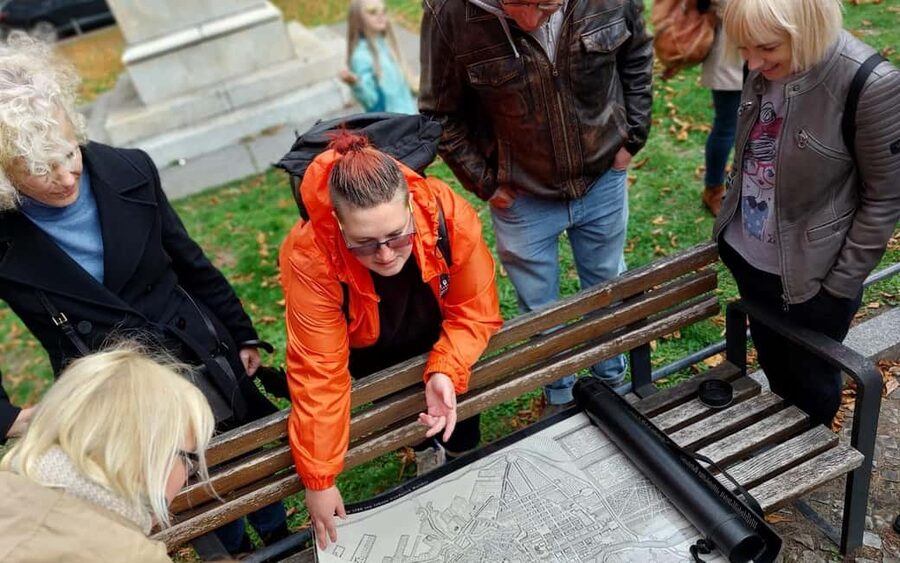
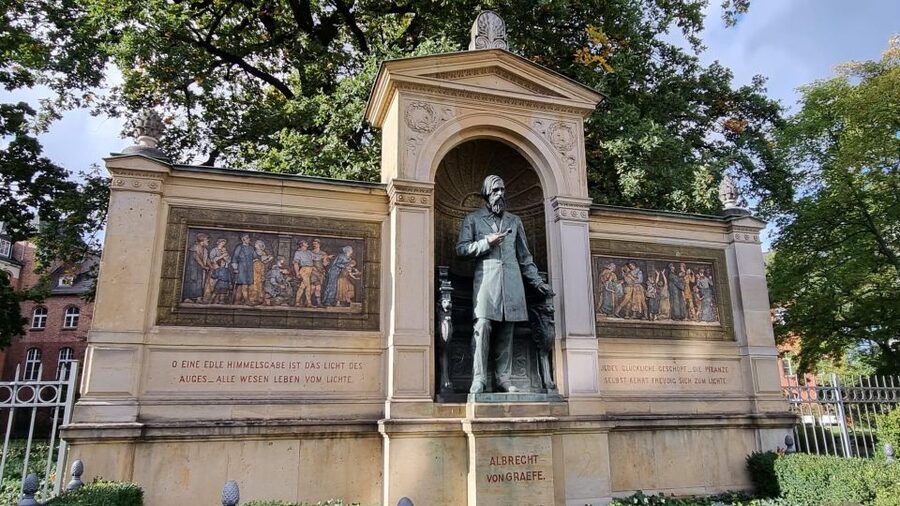
Meet by the Robert Koch statue at Robert-Koch-Platz. Your guide will be holding an orange umbrella, a useful marker in a city where a statue and a square can otherwise blend into the scenery.
The opening story reaches back to 1710, when Berlin faced an approaching epidemic. Charité was first built as a simple plague house, a practical response to a public health crisis. That beginning gives the tour a good frame: this was not originally a grand medical center, but an emergency institution shaped by fear, disease, and the limits of 18th-century medicine.
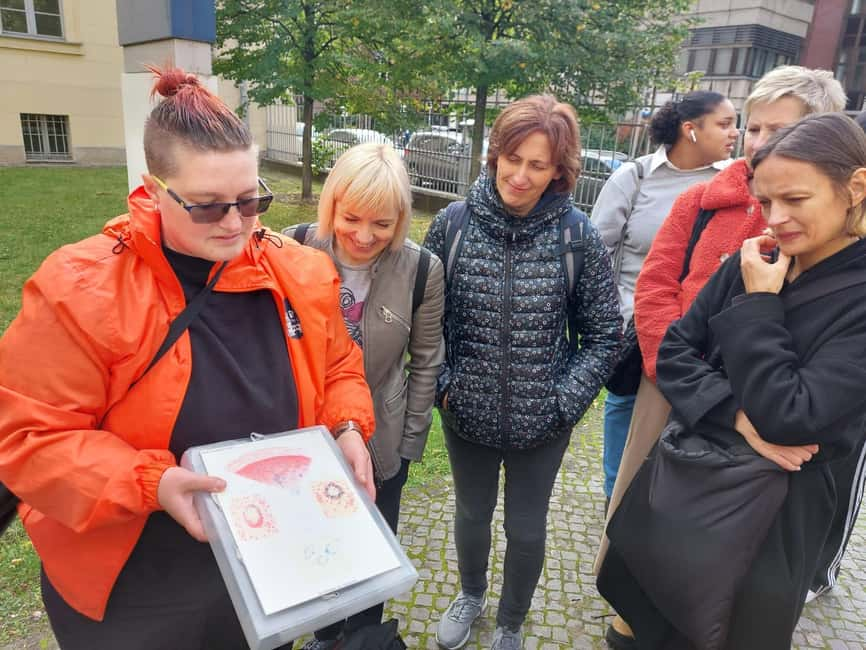
You’ll hear about treatments that now sound harsh, including bloodletting, mercury, and amputations. The value of this section is not shock for its own sake. It shows how doctors worked before modern ideas about germs, infection, and evidence-based treatment became standard.
I like starting here because it keeps the later scientific achievements in proportion. Robert Koch’s discoveries mean more when you first understand how uncertain medical care once was. The tour connects medicine to the tools and beliefs of each period, rather than treating old doctors as if they had today’s knowledge.
The walk also gives you a sense of Charité as a working campus, not simply a museum. Some buildings remain connected to hospital or university activity, and those interiors are not part of the tour. You’ll see the historic setting from outside, but you should not expect access to every doorway or courtyard.
More History Tours in Berlin
- Berlin: Natural History Museum Entrance Ticket
★ 4.6 · 3,382 reviews - Berlin Historical Highlights Walking Tour
★ 4.9 · 657 reviews - Berlin Private Complete History All Day Walking Tour
★ 5.0 · 474 reviews
Inside the Veterinary Anatomy Theatre
The Veterinary Anatomy Theatre is the most distinctive part of the route. You’ll spend about 15 minutes visiting this old academic building, described as the oldest of its kind still in existence in Berlin.
The building takes you back to the 18th century, when the health of livestock and cavalry horses mattered to both city life and the military. Studying animal illness was not a side issue. Sick animals could damage food supplies, transport, farm work, and military strength.
This stop broadens the usual hospital story. Instead of looking only at human patients, you see how anatomy and veterinary medicine developed together. The theatre also offers a change of pace from the campus walk, giving you a chance to look closely at an actual historic academic interior.
The visit is short, so keep your expectations sensible. This is not a long museum visit with time to examine every display at leisure. Its value comes from the guide’s explanation and from seeing the building in person. If the theatre is closed for an internal event or public holiday, this part may not be available.
That possibility is worth checking if this is the main reason you want to book. The rest of the tour still covers Charité’s history, but the theatre is the clearest physical link to the institution’s early academic work.
Walking the neo-Gothic Charité campus
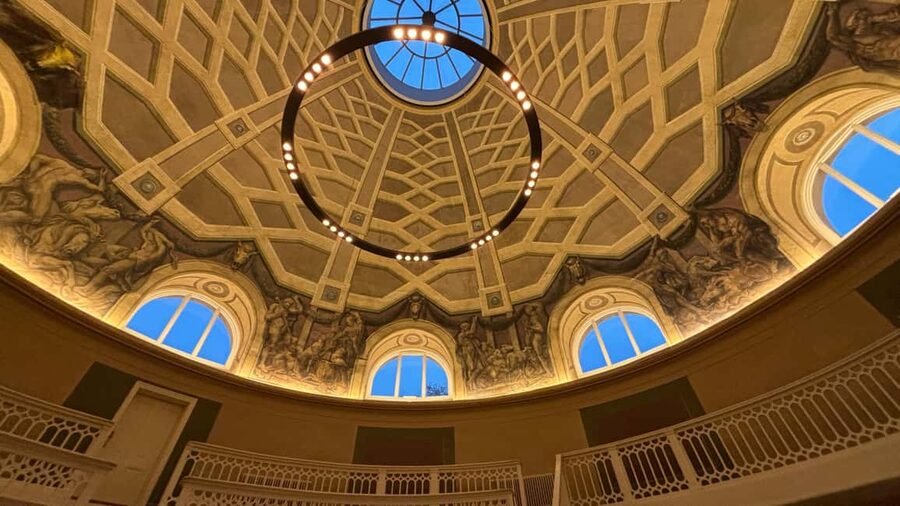
After the theatre, the route circles the historic Charité campus. The neo-Gothic architecture gives the walk a strong visual setting, with large institutional buildings that reflect the hospital’s growth and ambition.
The tour pauses at several locations for guided explanations. The published schedule identifies two further guided-tour stops of about 15 minutes each, but the real value comes from how the guide links these points into one story. You are not simply stopping to hear dates. You are following the people and ideas that changed German medicine.
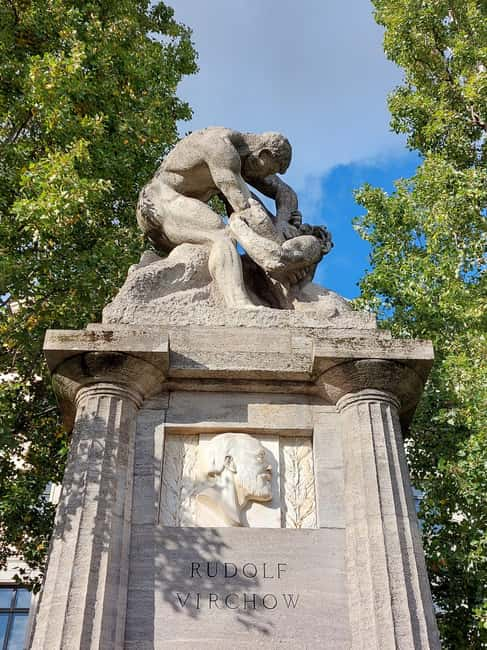
Robert Koch is one of the central names. Rudolf Virchow is another. Both represent Charité’s role in medical research, but their importance is easier to understand when presented on site, among the buildings where the institution developed.
The walk is especially useful if you like history that connects science with daily life. Charité is not presented as an isolated laboratory. Its work affected how people understood illness, public health, hospitals, and the human body.
At the same time, you should expect the tone to be academic at points. This is not a light sightseeing stroll built around postcard views. The tour asks you to listen, think, and keep track of several people and political periods. That is why the suggested age is 14 and up, with minors accompanied by an adult.
Rachel Hirsch and the fight for women in medicine

One of the strongest stories is Rachel Hirsch’s appointment in 1913. She became the first woman to hold a medical professorship in Prussia, a major step for women in medicine.
The important detail is that her appointment did not mean the institution had suddenly become welcoming. She faced resistance within Charité, and that tension makes the story more useful than a simple first-woman achievement.
I like this part because it connects a medical institution to wider social change. The tour shows that progress can arrive through one appointment while old attitudes remain firmly in place. You get a more honest picture of how women entered professional medicine in the early 20th century.
This is also where the tour becomes more than a parade of famous male scientists. Koch and Virchow matter, but Rachel Hirsch gives the walk a necessary social balance. Her story helps you see who was allowed to take part in medical authority, and who had to fight for recognition.
The guide’s role is important here. The tour is at its best when a name becomes a person facing real resistance, not just a line in a timeline. Martina, one of the named guides, is praised for adding careful analysis and historical detail, which suits this part of the route especially well.
More Walking Tours in Berlin
- Discover Berlin Half-Day Walking Tour
★ 5.0 · 9,624 reviews - Berlin: Third Reich and Cold War 2 Hour Walking Tour
★ 4.9 · 6,830 reviews - Berlin: Discover Berlin Walking Tour
★ 4.9 · 5,998 reviews - Berlin’s Best: 2 Hour Walking Tour Third Reich and the Cold War
★ 5.0 · 5,486 reviews
Charité under the Nazi regime
The Nazi period is the darkest chapter on the walk, and it is handled directly. Medical ethics were cast aside, while racial hygiene was imposed with deadly force.
You’ll hear that some doctors stayed silent, while others helped organize the killing of psychiatric patients. This is difficult material, but it belongs in the story of a major hospital. A tour of medical history that only celebrates breakthroughs would leave out the ways doctors and institutions can be used to harm people.
The setting makes the discussion more serious. You are hearing about a real institution with a long scientific reputation, not a distant political history lesson. The walk asks you to consider how professional status and medical language were used under dictatorship.
This section may feel heavy compared with the opening stories about early treatment or the scientific work of Koch and Virchow. That contrast is intentional. Charité’s past includes care, discovery, exclusion, silence, and active wrongdoing.
If you prefer a cheerful architecture walk, this tour may not suit your mood. If you want a fuller account of Berlin’s medical and political past, this honesty is one of its strengths.
East Germany and the hospital facing West Berlin
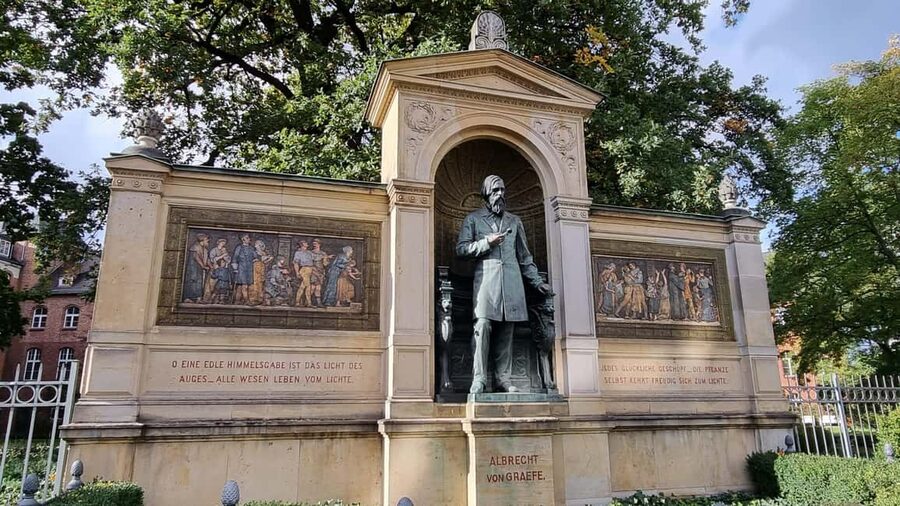
The story continues after 1945, when East Germany took pride in Charité’s medical achievements. The hospital became part of the socialist state’s public image, even as political division shaped the campus.
One memorable detail is that windows facing the capitalist West were bricked up. It is a small physical act with a large political meaning. The hospital was not only a place of research and treatment. It also sat inside a divided city where even a view could carry ideological weight.
This part gives the tour a strong Berlin connection. You are not learning only about medicine in the abstract. You are seeing how the Cold War affected buildings, movement, public institutions, and daily life.
The Nazi and socialist sections together show why Charité is such a useful place for understanding Germany. Its history follows the country through epidemic fear, scientific advance, dictatorship, division, and political change.
The guide may use extra material to illustrate parts of the story. That can help when the subject involves people, policies, or buildings that are no longer easy to interpret from the street. The tour’s strongest guides do not simply recite information. They explain why each episode mattered.
What the two-hour format feels like

The tour lasts about two hours, with much of the time spent outside. You’ll walk between stops, listen while standing, and circle the historic campus before finishing near Alexanderufer and Berlin Central Station.
The end point is useful for a day of sightseeing. You can continue exploring central Berlin from there, and the location makes the tour easy to combine with other plans. The meeting details also describe the activity as ending back at the meeting point, so confirm the precise end location when you book if that matters for your schedule.
Wear comfortable shoes and bring water. In cold weather, dress more warmly than you think you need. The architecture may be the visual draw, but the experience depends on listening outdoors for much of the two hours.
The tour is listed as wheelchair accessible, though the route still involves walking and standing for approximately two hours. If you need a seated break or have specific mobility needs, ask about the current route before booking. The theatre and some campus areas can have access limits tied to operations or special events.
The tour is offered in English and German. Guide quality will shape the experience, especially because the subject includes technical medical terms and difficult political history. Martina is specifically associated with an entertaining, well-planned tour, and the strongest feedback praises clear explanations, enthusiasm, and added material.
Is $28 a fair price for this Charité walk?
At $28 per person, the tour is priced as a focused historical walk rather than a full museum visit. Admission to the Veterinary Anatomy Theatre is included, and an expert local guide leads the route.
The value depends on what you want from Berlin. If you are mainly looking for famous landmarks and sweeping city views, this may not be the best use of two hours. The campus architecture is attractive, but the tour’s main reward is the story.
For anyone interested in medicine, social change, Berlin under dictatorship, or the division of Germany, the price is reasonable. You are paying for a structured explanation that would be difficult to assemble alone, especially across several centuries and political systems.
The tour also has good practical flexibility. You can reserve now and pay later, and cancellation is free up to 24 hours before the activity for a full refund. Those terms help if your Berlin schedule is still shifting.
Who should book this experience?
I would choose this tour for adults, older teenagers, history-minded visitors, and anyone who has seen Berlin’s major sights and wants a more focused subject. It also suits people who enjoy the connection between science and politics.
You should be comfortable walking and standing for roughly two hours. The suggested age is 14 and up because the material includes medical practices, Nazi crimes, and the killing of psychiatric patients.
This is a good choice if you like:
- Medical history explained through real people and institutions
- Berlin history away from the usual memorial circuit
- Historic architecture with a clear reason for being there
- Serious discussion balanced with engaging storytelling
- A short tour that finishes near Central Station
You may want to skip it if you dislike outdoor walking in cold weather, want extensive interior access, or prefer a tour with little discussion of war, dictatorship, and institutional failure.
Should you book the Charité Hospital History Walking Tour?
Book it if you want to understand why Charité matters, not just see its buildings. The combination of the plague house, Veterinary Anatomy Theatre, Koch and Virchow, Rachel Hirsch, Nazi medical crimes, and East German politics gives the two hours a clear purpose.
The biggest practical caution is the weather and the theatre’s occasional closure. Check the date, wear warm clothes, and confirm access if the anatomy building is your priority. For most history-focused visitors, the guide’s storytelling will remain the main reason to go.
At $28, this is a fair, specialized Berlin tour with strong value for curious adults and older teenagers. It offers a side of the city that standard sightseeing often misses, and it sends you onward near Central Station with a better sense of how medicine and politics shaped Berlin.
FAQ
Where does the tour begin?
Meet by the Robert Koch statue at Robert-Koch-Platz. Look for the guide holding an orange umbrella.
How long does the Charité Hospital History Walking Tour last?
The tour lasts two hours. Starting times vary, so check availability when booking.
Which languages are available?
The tour is offered in English and German.
Is the Veterinary Anatomy Theatre included?
Yes. Admission to the Veterinary Anatomy Theatre is included in the tour price, although the theatre can sometimes close for internal events or public holidays.
Is the tour wheelchair accessible?
The activity is listed as wheelchair accessible. It is still a walking tour with approximately two hours of walking and standing, so check the current route if you have specific mobility needs.
Is the tour suitable for children?
There is no strict age restriction, but it is recommended for ages 14 and up because of the historical subject matter. Minors must be accompanied by an adult.
What happens if I need to cancel?
You can cancel up to 24 hours in advance for a full refund. You can also reserve your place and pay later.
Just added in Berlin
- Berlin & The Third Reich Private Guided Tour★ 5.0 · 3 reviews
- Third Reich Quest Experience in Berlin★ 4.5 · 7 reviews
- Private Analogue Photography Experience in Berlin★ 5.0 · 3 reviews
- The Beauty of Berlin by Bike: Private Tour★ 5.0 · 59 reviews
- Berlin: Guided Bike tour of the Berlin Wall and Third Reich★ 5.0 · 160 reviews
- Berlin Urbex Adventure and History Tour★ 5.0 · 9 reviews
- Beyond Currywurst: Berlin’s Hidden Street Food & Culture Tour★ 5.0 · 100 reviews
- Berlin Third Reich & Cold War Walking Tour With A Guide★ 5.0 · 7 reviews
Historical Tours, compared.

City History Canal Sightseeing Tour on a Motorboat
Read our review →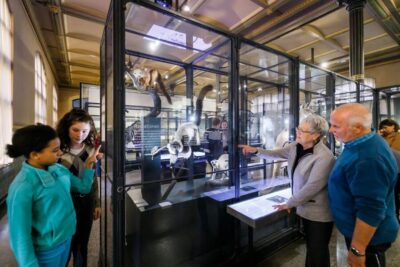





Browse the lists this tour appears in