
Reviewed · BERLIN WALL AND COLD WAR TOURS
Berlin: World War Two Third Reich and Cold War Walking Tour
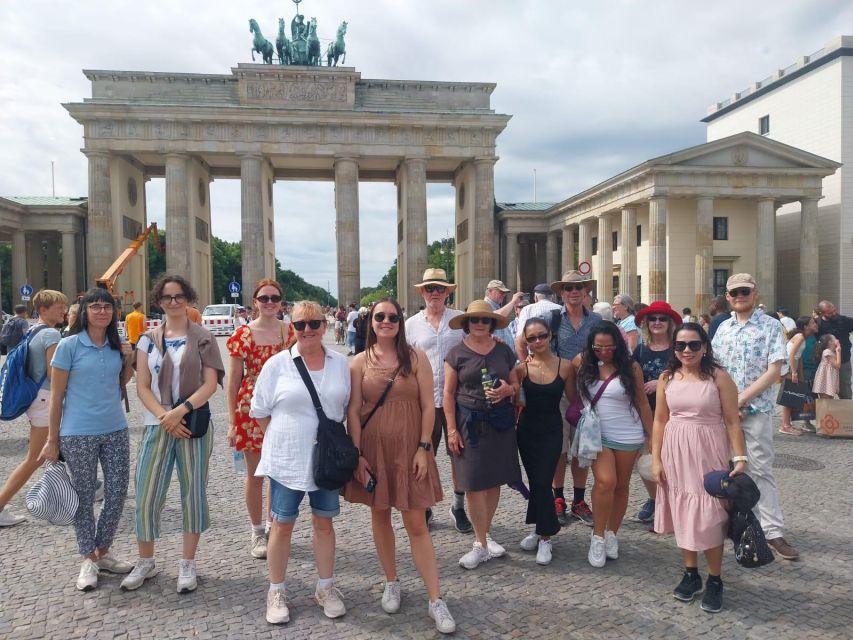
Berlin’s past is written into its streets, bunkers, wall fragments, government buildings, and empty spaces. This five-hour walk links the Third Reich, World War II, and the Cold War into one long story, showing how Berlin helped shape the modern world.
I like the route’s broad sweep, from the Reichstag and Hitler’s bunker site to the Berlin Wall and Eastside Gallery. I also like the chance to hear these events explained by a local historian rather than simply ticking off monuments. The main drawback is the meeting-point organization: one reported booking found the group division chaotic, with the advertised tour not clearly forming, so you should arrive early and confirm your exact group before setting off.
Key points to know before booking
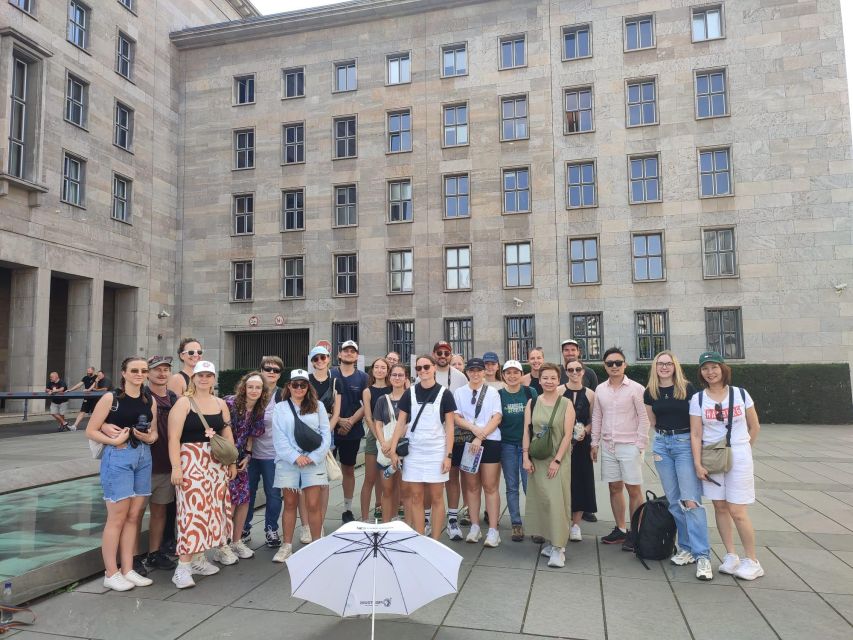
- Five hours on foot: This is a serious city walk, not a quick highlights tour. Wear comfortable shoes and bring water.
- A full twentieth-century story: The route connects Nazi Germany, wartime destruction, East Communism, the Cold War, and the Berlin Wall.
- Several major sites: Expect references to the Reichstag, Hitler’s bunker, Flak Tower, Russian-German war museum, Berlin Wall Memorial, and Eastside Gallery.
- English-speaking local historian: The guide’s job is to connect places with people, decisions, escape attempts, and everyday life.
- Starts at Alexanderplatz: Look for the white umbrella on the corner in front of Generator Berlin Alexanderplatz.
- Good value at $21: For five hours of guided sightseeing, the price is low, though meals, drinks, and hotel transfers are not included.
Why this Berlin walk covers more ground than most history tours
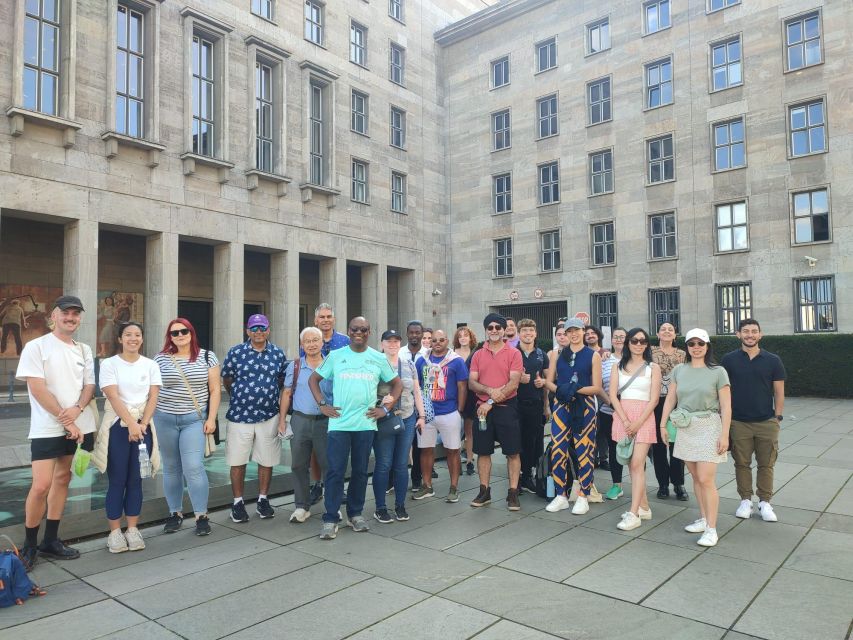
Many Berlin history walks focus on one period. This one tries to connect the city’s Nazi past with the divided city that followed. That matters because Berlin’s twentieth-century story does not break neatly into separate chapters.
The decisions made under the Third Reich led to war, occupation, division, and the political split that shaped Europe for decades. The Cold War, in turn, was not an abstract contest between superpowers. It affected where Berliners could live, work, travel, and meet their families.
I like this wider frame. You are not simply looking at a wall fragment or a government building. You are asked to consider how one event led to the next. That approach can make familiar places more meaningful, especially if you are new to Berlin or have only a general knowledge of German history.
The tour lasts about five hours, so you should expect a steady walking experience. The exact starting time depends on availability, and the route begins at Alexanderplatz. You will need to bring your own snacks and drinks. Cash is also listed as useful, along with weather-appropriate clothing.
More Third Reich Tours in Berlin
- Berlin: Third Reich and Cold War 2 Hour Walking Tour
★ 4.9 · 6,830 reviews - Berlin’s Best: 2 Hour Walking Tour Third Reich and the Cold War
★ 5.0 · 5,486 reviews - Third Reich Berlin: Hitler and WWII Walking Tour
★ 5.0 · 3,301 reviews
Alexanderplatz and the start beneath the white umbrella
The meeting point is on the corner in front of Generator Berlin Alexanderplatz. Look for the white umbrella. This is a simple landmark, but the area can be busy with several people gathering for different walks.
One important practical point is group organization. A reported experience found that several tours appeared to gather at the same spot, with people then expected to separate into groups. The process was described as confusing, and the advertised tour did not clearly form as expected.
I would arrive early, locate the white umbrella, and ask directly for the World War Two Third Reich and Cold War Walking Tour. Do not assume that standing near the general gathering point is enough. Confirm the guide, language, and route before the group leaves.
That issue is worth mentioning because the tour’s value depends heavily on getting the right guide and itinerary. The provider is Original Tours Holding Limited, and the advertised language is English. No guide names are provided, so you cannot choose a particular historian in advance.
From Nazi Berlin to the Reichstag
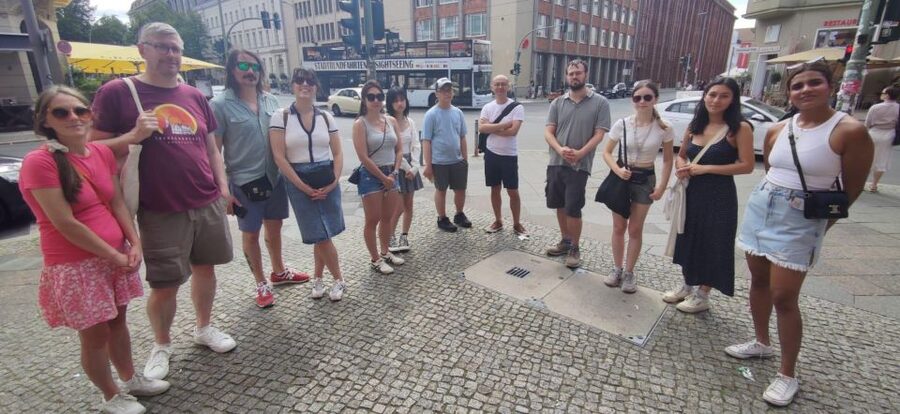
The opening section places you in the story of the Third Reich. The Reichstag is an especially useful starting point because it connects Berlin’s political past with its modern identity.
The building has witnessed several different versions of Germany. On this tour, it serves as a way into the political changes that led to dictatorship and war. Your guide can explain the building’s role within the wider story rather than treating it as a photo stop.
The strength of this section is context. Berlin has many famous buildings, but their importance is not always obvious from the pavement. A guide helps explain what happened here, why the location mattered, and how the political system changed around it.
You should also keep your expectations clear. The supplied information names the Reichstag as part of the journey, but it does not promise a tour of the interior or access to the dome. Think of it as a stop within a walking route, not a separate Reichstag admission visit.
Hitler’s bunker site and the physical traces of war
The route also includes Hitler’s bunker site. This is one of Berlin’s more difficult places to understand because the physical remains do not present themselves like a grand monument. The site is tied to the final days of the Nazi government and the collapse of the regime.
That makes the guide especially important. You are likely to gain more from the explanation of what happened here than from the appearance of the location itself. The stop can also help you understand why Berlin treats certain Nazi sites with restraint rather than spectacle.
The route refers to the site as Hitler’s bunker, but the information does not specify interior access. You should not expect to enter a preserved underground complex. The value lies in the historical explanation and in seeing how a location connected to such major events fits into the present-day city.
The same principle applies to several stops on this tour. Berlin’s most important sites are not always dramatic. Some are marked by a plaque, an open space, a fragment of wall, or a building that has been altered over time.
More Walking Tours in Berlin
- Discover Berlin Half-Day Walking Tour
★ 5.0 · 9,624 reviews - Berlin: Discover Berlin Walking Tour
★ 4.9 · 5,998 reviews - Berlin: Hidden Backyards Guided Walking Tour
★ 4.8 · 5,360 reviews - Berlin: Alternative Berlin Walking Tour
★ 4.6 · 1,204 reviews
Flak Tower and the Russian-German war museum
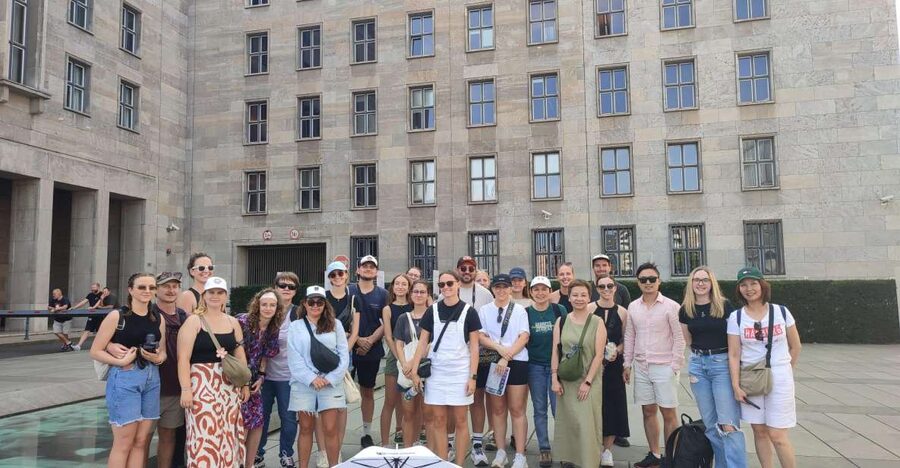
The tour also brings in military sites connected with the Second World War, including a Flak Tower and a Russian-German war museum. These locations broaden the story beyond political leaders and government offices.
A Flak Tower points to the practical reality of wartime Berlin. Such structures were built for air defense and were massive, difficult buildings to remove. Their presence helps explain the scale of the city’s wartime preparation and the lasting physical impact of the conflict.
The Russian-German war museum adds another viewpoint. The relationship between Germany and the Soviet Union was central to the war’s outcome and later became central to the division of Berlin. A museum focused on both sides can help place the city within the larger military and political struggle.
The supplied information does not give the museum’s exact name, opening hours, or a promise of an interior visit. Treat this portion as a guided stop connected to the site or museum, and check the day’s details with the guide. If museum entry is important to you, confirm what is included before booking.
The Berlin Wall, escape routes, and life in East Berlin
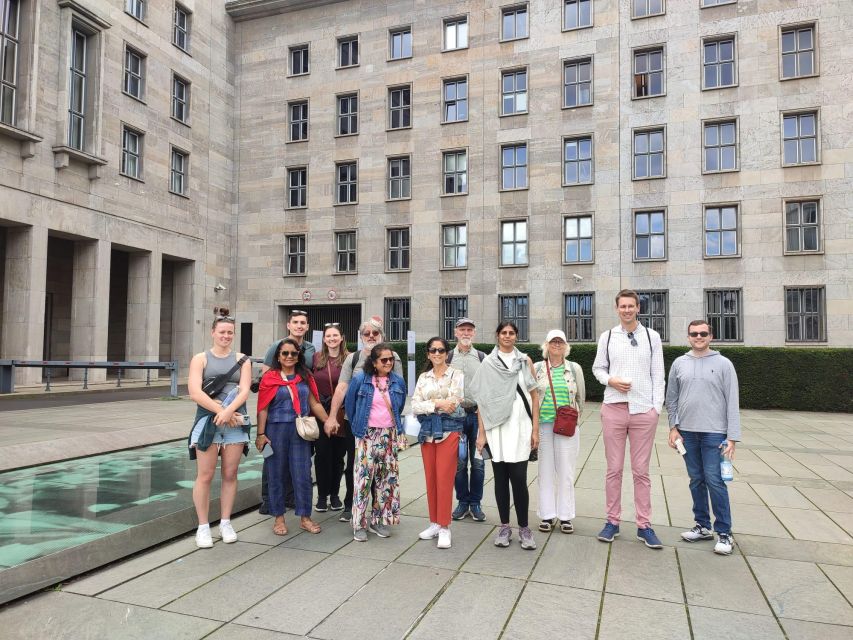
The Cold War section is likely to be the most moving part of the walk. You will learn about East Communism, life behind the Berlin Wall, guard towers, escape routes, and the people who tried to cross the border.
The wall was not just a concrete barrier. It cut through streets, homes, transport lines, cemeteries, and families. A good guide can help you picture how ordinary life changed when movement between East and West became tightly controlled.
The route includes the Berlin Wall Memorial and other surviving sections. These remains are valuable because they show the wall as a system, not just as a painted surface. You may encounter references to guard towers, restricted areas, and escape attempts. Each detail makes the border more real.
I appreciate that the tour focuses on personal consequences as well as political events. The Cold War can sound like a story about presidents, armies, and nuclear weapons. In Berlin, it was also about missed birthdays, divided families, surveillance, and the risk of trying to leave.
The information promises attention to lesser-seen wall sections and escape routes, but it does not list every exact stop. The route may vary with timing, access, or the guide’s judgment. You should expect the wall story to be a major part of the day, but not assume that every named location will receive equal time.
Eastside Gallery and the wall after 1989
Eastside Gallery offers a different mood from the more solemn wall sites. The remaining section is known for its murals and for the way artists turned part of the former border into a public record of change.
This stop connects politics with Berlin’s cultural life. The wall once divided people. Later, parts of it became a canvas for artists from many places. The result is not a simple celebration, since the paintings also sit on a structure built to control movement and prevent escape.
The tour description also points to Berlin’s influence on music, art, and political change. Eastside Gallery is where that cultural side of the city becomes easiest to see. It shows how Berlin’s past continues to shape its public image.
You should allow for the possibility that this section feels more open and less tightly guided than a museum visit. The murals are spread along a long wall section, and the experience depends on the guide’s explanation as much as on the artwork itself.
Architecture that survived Berlin’s hardest years
One of the tour’s useful features is its attention to buildings. Berlin’s architecture records damage, rebuilding, division, and reunification. You will see places that survived the war, places altered under East German rule, and buildings now used for a very different purpose.
This helps you read the city as you walk. A large concrete structure may point to wartime defense. A government building may reflect a new political order. A wall fragment may mark a former border that is almost invisible elsewhere.
The route’s architectural focus also keeps the day from becoming a string of political speeches. You are moving through real streets and seeing how the city was reshaped. That physical evidence can be easier to remember than a list of dates.
Still, five hours is a long time to spend on foot. If you prefer a short introduction before exploring independently, this may feel too demanding. If you want a serious orientation to Berlin’s twentieth-century sites, the length is part of the value.
What $21 buys you
At $21 per person, this is inexpensive for a five-hour guided walk. You are paying for a local historian, an English-speaking explanation, and access to a route that links several major sites. For a first visit, that can be a strong deal.
The main value is not admission to a long list of interiors. Meals and refreshments are not included, and the information does not specify separate ticketed entries for every location. You are paying mainly for interpretation, route planning, and the ability to ask questions as you walk.
That can be worthwhile in Berlin, where important places are spread across the city and their meaning is not always clear. A good guide saves you from treating the Reichstag, bunker site, wall, and Eastside Gallery as unrelated sights.
The low price also means you should keep the practical limits in mind. Bring snacks, drinks, and cash. Hotel pickup and drop-off are not included, so you must make your own way to Alexanderplatz and return from the meeting point when the walk ends.
Who will get the most from this tour
I would recommend this walk to you if you want one substantial introduction to Berlin’s Nazi and Cold War past. It suits first-time visitors who want an organized route, as well as repeat visitors who want the connections between sites explained.
It is also a good fit if you learn best by walking through places rather than reading museum labels. The route gives you physical reference points and a guide to tie them together.
You may want a different option if you dislike long walks, need frequent breaks, or want guaranteed interior entry at specific museums and buildings. The five-hour duration requires stamina, and the route’s exact balance between exterior sites and indoor visits is not fully specified.
The tour is listed as wheelchair accessible, which is useful information. Even so, you should confirm the day’s route and any access details when booking, since the information does not describe pavement conditions, restroom access, or the interior arrangements at individual sites.
Free cancellation is available up to 24 hours before the activity for a full refund, and you can reserve now and pay later. Those policies make it easier to fit the walk into a changing Berlin schedule.
Should you book the Berlin Third Reich and Cold War walk?
Book it if you want a long, serious walking lesson in Berlin’s twentieth century at a modest price. The route brings together Nazi government, wartime structures, the bunker site, Soviet and German military history, the Berlin Wall, escape routes, and Eastside Gallery.
I would book with two cautions. First, arrive early and make sure your group is clearly identified at the white umbrella. Second, wear good shoes and carry water and food, because five hours on foot is no small outing.
The tour earns a listed rating of 4.3 from 17 reviews, but the reported organization problem deserves attention. If the meeting process works properly, the combination of route and guide could offer excellent value. If you need a tightly controlled group, a named guide, or guaranteed entry into specific buildings, confirm those details before paying.
FAQ
How long does the tour last?
The walking tour lasts five hours.
Where does the tour begin?
It begins at the white umbrella on the corner in front of Generator Berlin Alexanderplatz.
Where does the tour end?
The activity ends back at the meeting point.
What language is the tour conducted in?
The live tour guide speaks English.
What historical periods does the tour cover?
It covers World War II and the Third Reich, East Communism, the Cold War, and the history of the Berlin Wall.
Which Berlin sites are included?
The route includes the Reichstag, Hitler’s bunker site, a Flak Tower, a Russian-German war museum, the Berlin Wall Memorial, Eastside Gallery, and other wall remains.
Are meals and drinks included?
No. Meals and refreshments are not included. You should bring your own snacks and drinks.
Is hotel pickup and drop-off provided?
No. Hotel pickup and drop-off are not included.
Can I cancel for a full refund?
Yes. You can cancel up to 24 hours in advance for a full refund.
More Berlin Wall and Cold War Tours in Berlin
- Berlin: DDR Museum Tickets
★ 4.3 · 3,443 reviews - Skip-the-Line: Berlin Wall Museum at Checkpoint Charlie
★ 4.1 · 2,041 reviews - Berlin: East Side Gallery Spree Cruise in a Solar Catamaran
★ 4.0 · 1,039 reviews - Cold War, Berlin Wall, Spies and the East Side Gallery
★ 5.0 · 1,024 reviews
Just added in Berlin
- Berlin & The Third Reich Private Guided Tour★ 5.0 · 3 reviews
- Third Reich Quest Experience in Berlin★ 4.5 · 7 reviews
- Private Analogue Photography Experience in Berlin★ 5.0 · 3 reviews
- Berlin Urbex Adventure and History Tour★ 5.0 · 9 reviews
- The Beauty of Berlin by Bike: Private Tour★ 5.0 · 59 reviews
- Berlin: Guided Bike tour of the Berlin Wall and Third Reich★ 5.0 · 160 reviews
- Beyond Currywurst: Berlin’s Hidden Street Food & Culture Tour★ 5.0 · 100 reviews
- Berlin Third Reich & Cold War Walking Tour With A Guide★ 5.0 · 7 reviews
Berlin Wall and Cold War Tours, compared.


Berlin’s Best: 2 Hour Walking Tour Third Reich and the Cold War
Read our review →
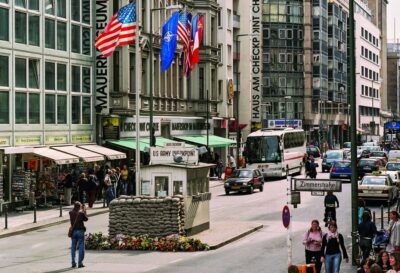
Skip-the-Line: Berlin Wall Museum at Checkpoint Charlie
Read our review →
East Side Gallery Spree Cruise in a Solar Catamaran
Read our review →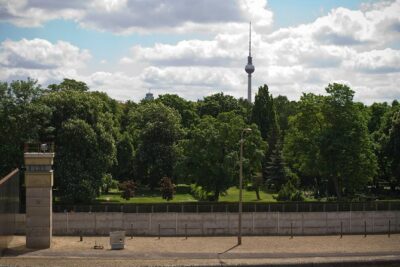
Cold War, Berlin Wall, Spies and the East Side Gallery
Read our review →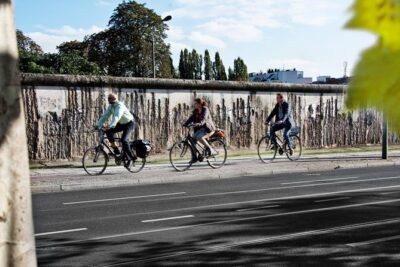
Guided Bike Tour of the Berlin Wall and Third Reich
Read our review →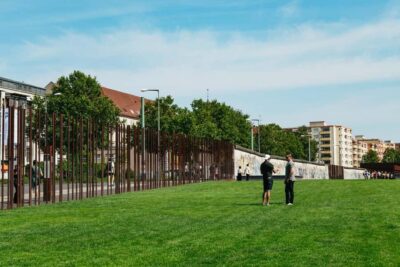
Browse the lists this tour appears in