
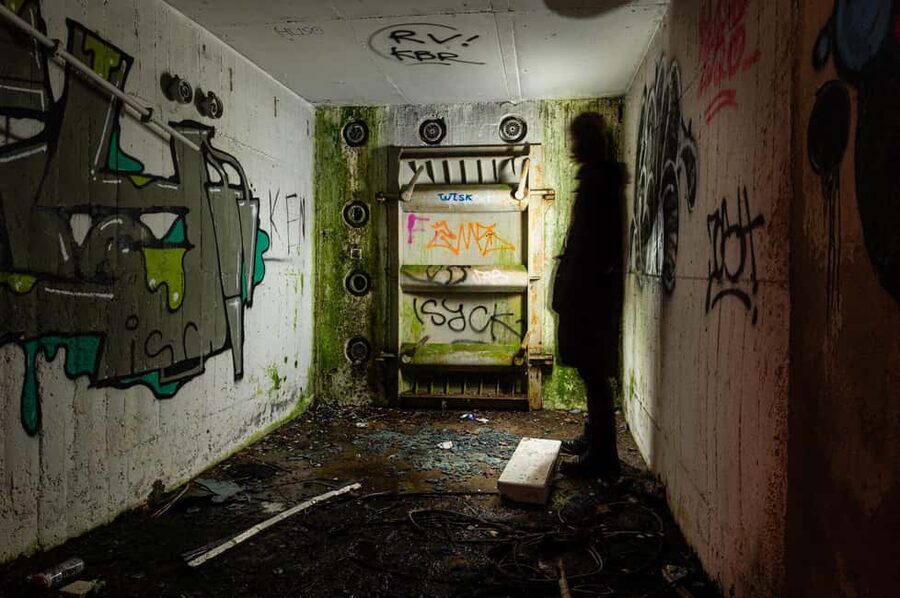
Reviewed · HISTORICAL TOURS
Berlin: Urbex Abandoned Places & History Tour
Berlin’s old Stasi hospitals offer something few standard city tours can: a chance to walk through rooms built for a secret police force, then head into dark tunnels and up toward rooftop views. The setting is raw, strange, and far from polished museum Berlin. Yoorii guides the visit with history, humor, and practical advice about urban exploration.
I like the small group of six or fewer, which gives you room to ask questions and take photographs without being herded along. I also like the mix of original details, graffiti, underground passages, and broad views from above. The main caution is the condition of the site. Broken glass, burned areas, and restricted sections can make parts of the visit feel rougher than the price suggests.
Key points at a glance
- Former Stasi hospital complex: See the remains of a secret medical system built for East German agents and senior officials.
- Three levels of exploration: The tour combines abandoned interiors, underground passages, and rooftop viewpoints.
- Yoorii as your guide: Expect English commentary, urban exploration know-how, humor, and help moving safely through the site.
- Photography-friendly format: Bring a tripod if you want careful low-light shots, and use the supplied torches in tunnels and dark rooms.
- Small group setting: With no more than six people, you can stop for photographs and questions without losing the guide.
- Rough conditions: Wear clothes that can get dirty, cover your head, and avoid large backpacks, high heels, and delicate footwear.
Inside Berlin’s abandoned Stasi hospitals
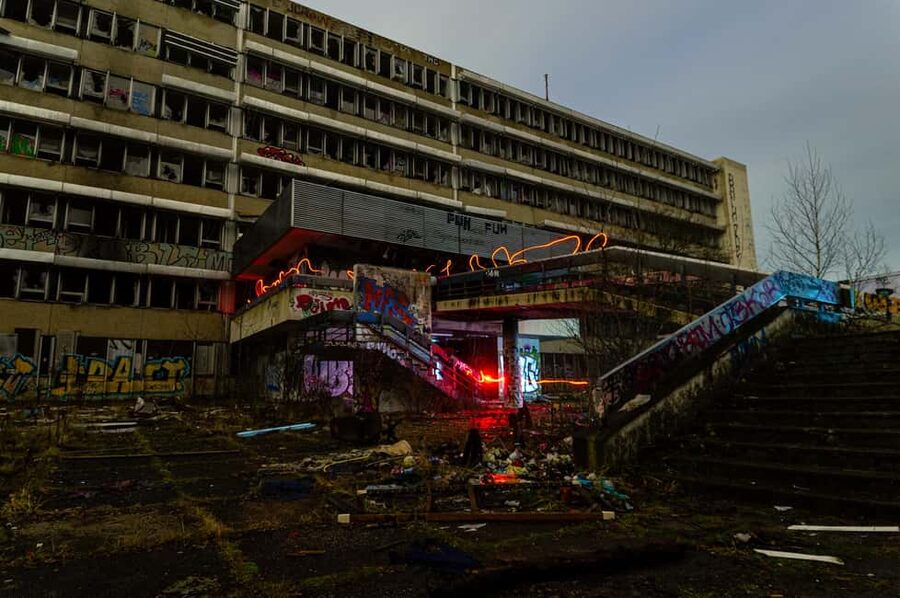
The most compelling part of this tour is the place itself. These abandoned hospitals were linked to the Stasi, East Germany’s secret police force. They served agents and senior officials through a closed medical system designed to keep treatment away from public view and foreign intelligence services.
That purpose gives the buildings a different feel from an ordinary empty factory or forgotten office block. The silence, sealed-off rooms, and institutional design point to a state built on secrecy and control. After the Berlin Wall fell in 1989 and East Germany collapsed, the hospitals lost their role and were left to decay.
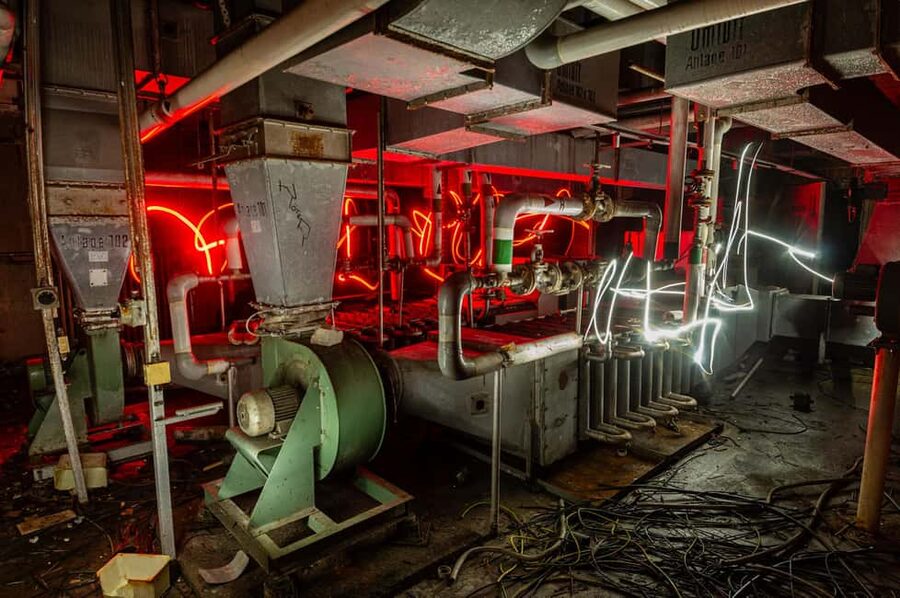
You are not simply looking at peeling walls. You are moving through a site connected to the machinery of a vanished government. That context makes small details matter, including old flooring, documents, and the remains of medical spaces. The guide’s explanations help you read the building instead of seeing only dust and graffiti.
The site has changed over time. Some areas have been damaged, burned, or stripped by unauthorized visitors. One report also noted that the bunker was no longer accessible. That means the exact route and condition of certain rooms can change, so you should approach the tour as an exploration of a living ruin, not a perfectly preserved museum.
More History Tours in Berlin
- Berlin: Natural History Museum Entrance Ticket
★ 4.6 · 3,382 reviews - Berlin Historical Highlights Walking Tour
★ 4.9 · 657 reviews - Berlin Private Complete History All Day Walking Tour
★ 5.0 · 474 reviews
Meeting Yoorii near S-Bahn Buch
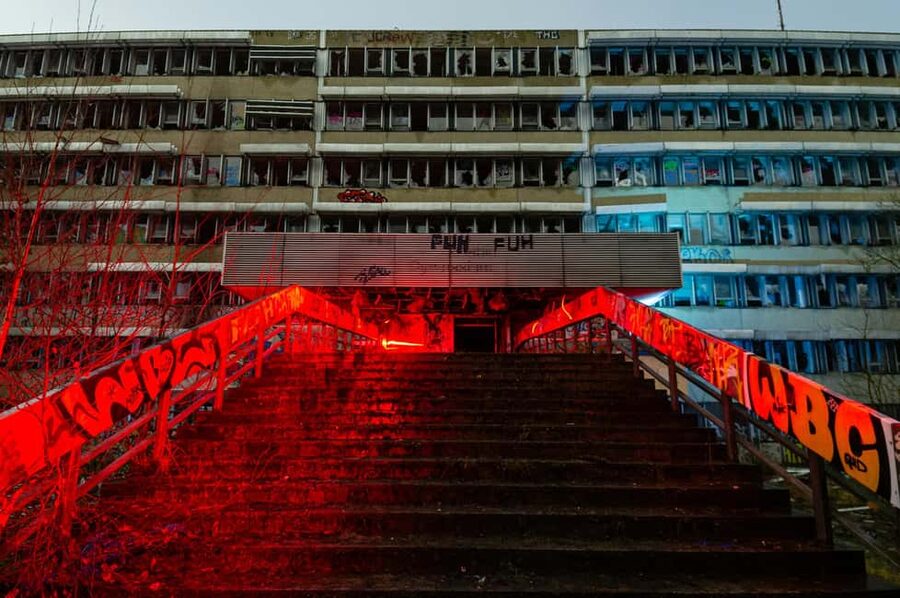
The meeting point is outside the exit of S-Bahn Buch, on the side leading toward the Netto supermarket. After coming downstairs, turn left. This is a useful detail to note before you leave central Berlin, since the meeting spot is not at one of the city center’s famous landmarks.
The tour lasts three hours, long enough to see a substantial part of the site without turning the visit into an all-day outing. A small group makes the meeting simple. You will not be joining a large coach party or waiting for dozens of people to gather.
Yoorii leads the tour in English and brings experience as an urban explorer. His role is more than pointing toward interesting rooms. He explains how to move through an abandoned site, where to watch your footing, and how to make the most of the available light. His style includes humor, but the safety side is treated seriously.
That matters here. An abandoned building can look easy to enter in photographs and feel quite different in person. A guide helps you spend time on the worthwhile areas rather than wandering through repeated corridors or empty rooms.
Reading the hospital’s secret past
The hospital’s story adds weight to the physical setting. The Stasi operated a medical network mainly for its own personnel and high-ranking officials. These facilities had modern equipment for their time and medical staff bound to secrecy.
The purpose was practical and political. A secret police officer injured during an operation could receive treatment inside a controlled system. Medical experiments and sensitive cases could take place away from public attention. The buildings were not ordinary public hospitals, and that restricted role is part of what makes them unusual today.
As you walk through the complex, try to picture the contrast between its earlier function and its present state. Rooms once kept clean and controlled now show decay, graffiti, and damage. Original flooring and scattered documents can provide a stronger sense of place than a grand monument would.
I find this kind of history most useful when it stays tied to what you can see. A guide can explain why the site was secluded, then point out how its layout supported privacy and control. The physical evidence gives the story a sharper edge.
Going below ground with a torch
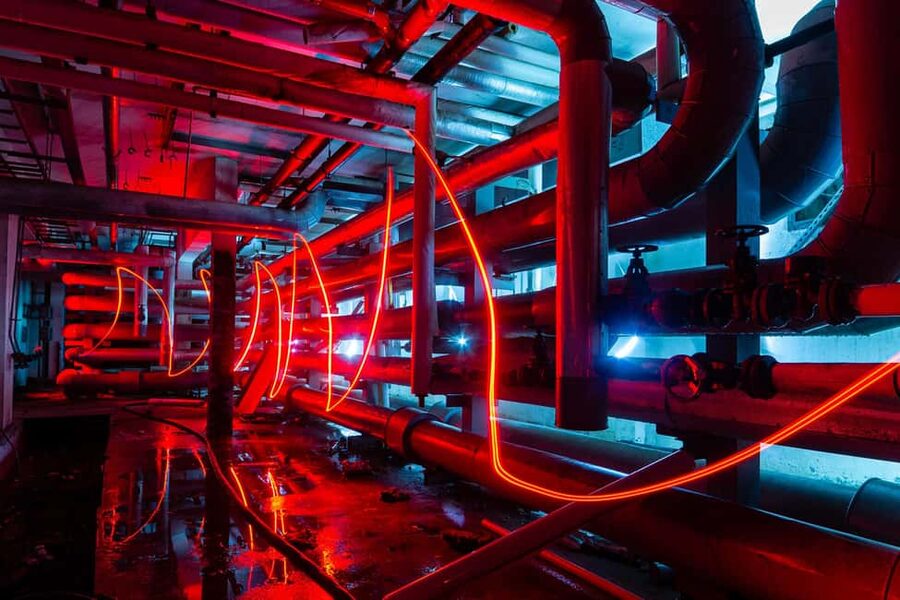
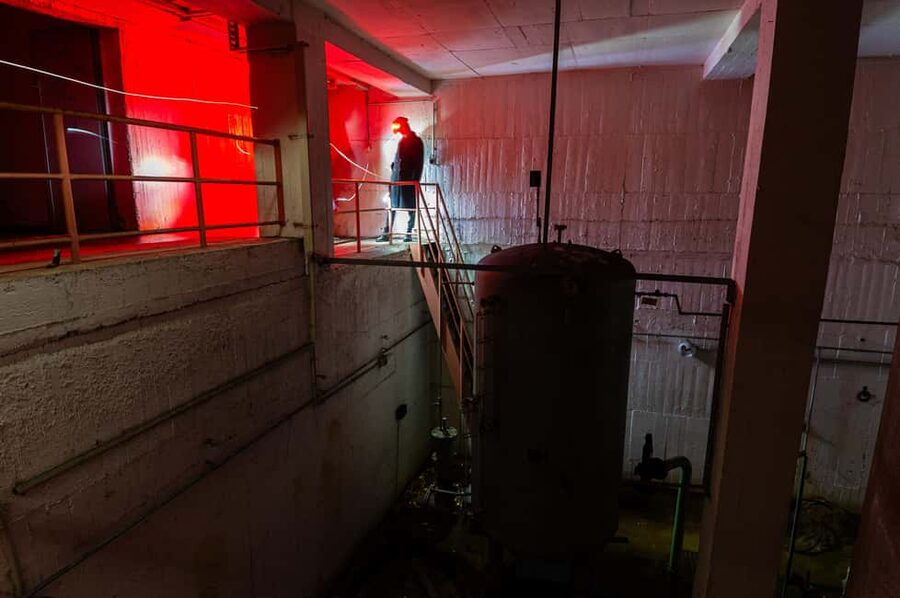
The underground portion is one of the tour’s most distinctive features. You receive a torch rental as part of the activity, which is important for the tunnels and darker interior spaces. The route can include descending into bunker-like or tunnel areas, though access to specific sections may change.
The darkness changes the mood. Graffiti appears under the beam of a headlamp, and spaces that seem plain in daylight can look completely different underground. This is also where a small group helps. You can stop to frame a photograph, hear the guide’s explanation, and keep track of your companions.
The practical side is just as important. Watch the floor, keep your hands free when possible, and do not bring a large backpack. The site may include broken glass and rough surfaces. Comfortable clothing that you do not mind getting dirty is a must.
A cap or other head covering is recommended. That is easy to overlook, but low ceilings, dust, and rough interiors are good reasons to protect your head. This is not the place for a tuxedo, high heels, or clothes you need to keep spotless.
Same city, a completely different kind of day:
- Berlin: Reichstag, Dome and Government District Guided Tour
★ 4.7 · 18,288 reviews - Berlin: 1-Hour City Tour by Boat with Guaranteed Seating
★ 4.3 · 16,993 reviews - Berlin: Boat Tour Along the River Spree
★ 4.4 · 11,252 reviews - Discover Berlin Half-Day Walking Tour
★ 5.0 · 9,624 reviews
Up to the rooftops and Berlin views
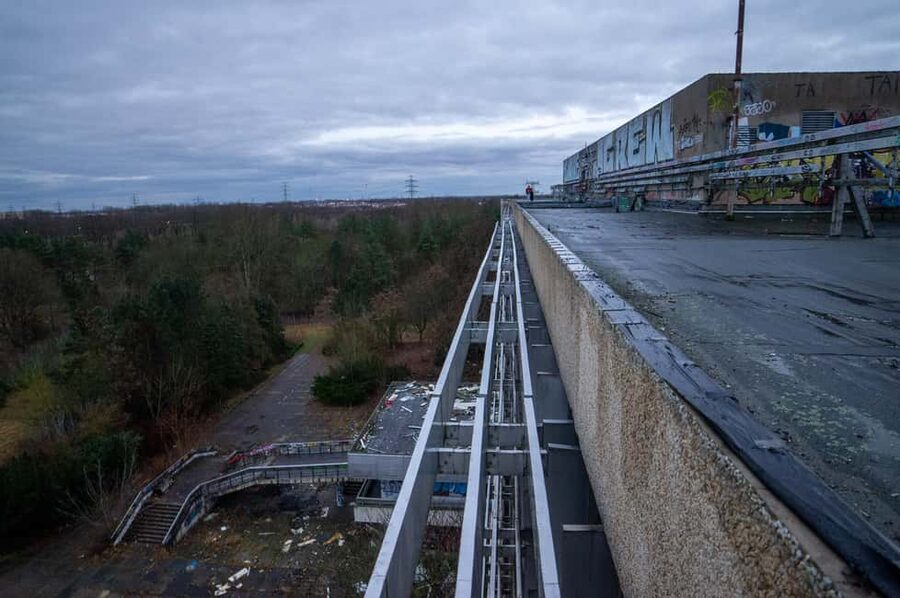
The tour also reaches higher ground, with rooftop areas and views included among its highlights. These viewpoints give you a break from the enclosed hospital rooms and tunnels. They also show how quickly Berlin can shift from city streets to abandoned industrial and institutional sites.
The rooftop portion is appealing for photographers because it offers a change in scale. Instead of focusing on a door, corridor, or piece of graffiti, you can frame the wider surroundings. Bring a tripod if photography is a major reason for booking. A tripod is especially useful in dim interiors and for slower, more careful compositions.
You should not expect a formal observation deck. The attraction is the rough setting and the contrast between the abandoned complex and the city beyond it. Access and conditions can depend on the site, so treat the rooftop stop as part of an urban exploration route rather than a guaranteed polished viewpoint.
What the photography side is really like
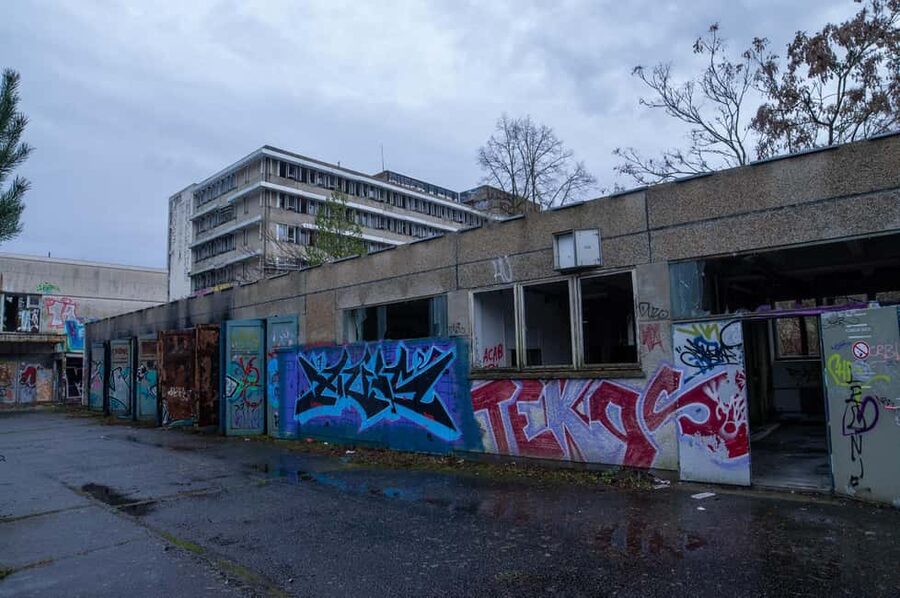
This tour works well if you enjoy photographs with texture and atmosphere. You may find old floors, damaged walls, graffiti, dark passages, and institutional rooms that reward close framing. The supplied torches help you light small details, while a tripod can help with darker scenes.
The guide can also save you time. Large abandoned complexes often contain repeated rooms and corridors. Without someone who knows the site, it is easy to spend half the visit walking through spaces that look much like the last one. A guide who knows where the unusual details are helps you make better use of three hours.
Still, this is not a controlled photography studio. Surfaces may be dirty, access may be limited, and some areas may have been altered by fire, vandalism, or demolition. If you expect every room to contain a preserved medical artifact, you may be disappointed.
I would bring a camera or phone, a tripod if you have one, and a small bag rather than a full camera pack. Keep equipment secure and avoid setting anything down where glass or damp surfaces could damage it.
The site’s rough edges and changing condition
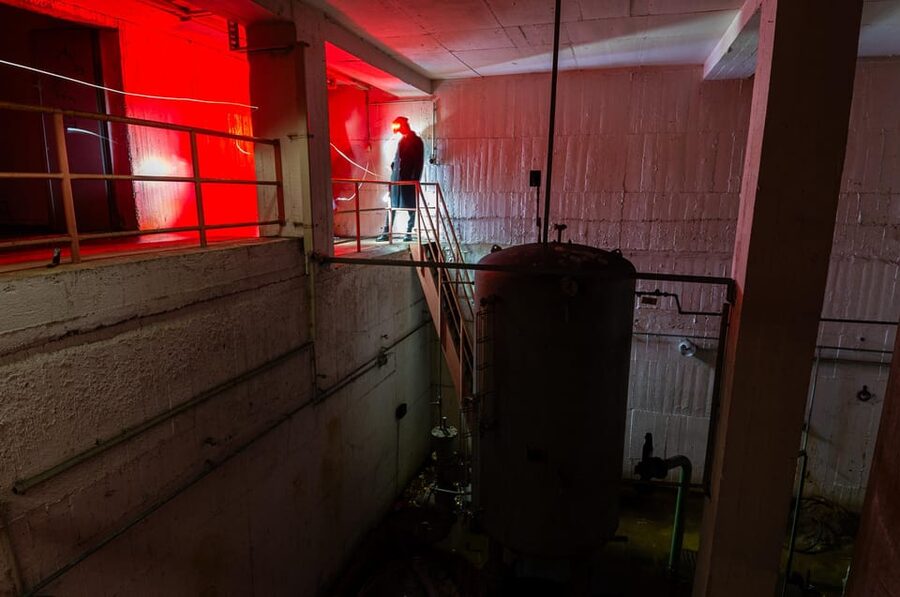
The strongest criticism of this experience concerns the condition of the buildings. One account described frequent broken glass, fire damage, and fewer preserved historical features than expected. It also noted that the bunker was not accessible at that time.
That criticism is fair to consider before spending $116. The tour is priced like a specialist experience, not a casual walk past ruins. You are paying for a small group, a guide with site knowledge, equipment support, and access to an unusual place. The value depends heavily on how much you want the urban exploration format.
If you need a clean, well-preserved historic attraction with clear displays and dependable access to every major room, this is not the best choice. If you enjoy atmospheric ruins and can accept that an abandoned site changes from year to year, the roughness is part of the point.
The guide helps protect the value. You are less likely to get lost, miss the most interesting areas, or spend too long in featureless sections. But a guide cannot restore demolished rooms or reopen a restricted bunker. Keep your expectations tied to the current condition of an abandoned complex.
Why the six-person limit matters
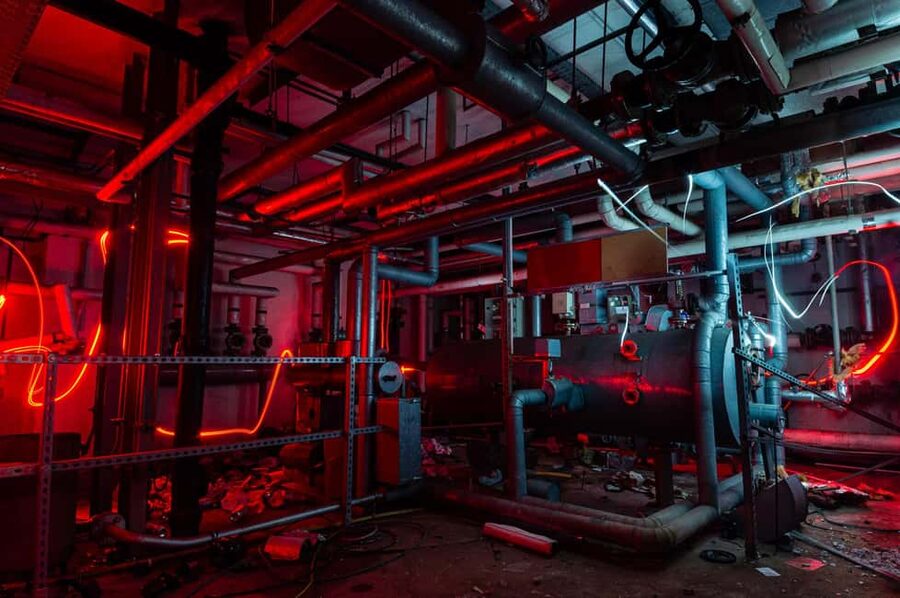
A group capped at six people suits this setting unusually well. In a tunnel, stairwell, or small hospital room, a large party would make the experience crowded and slow. A small group gives you space to listen, take photographs, and move through narrow areas with less fuss.
You also get more personal contact with Yoorii. That matters if you want to ask about the Stasi, the hospital buildings, or the practical side of urban exploration. It is easier to stop for a question when the guide is not trying to manage a crowd.
The format is also good for first-time explorers. You can learn how to approach an abandoned site in a legal and safer way without having to work out the route alone. The tour aims to push you beyond your comfort zone, but it does so with a guide and a planned setting.
Who should book this Berlin tour
I would recommend it most strongly to adults and older teens who like unusual history, photography, ruins, and places outside the standard city route. It is particularly suitable if you have already seen Berlin’s main museums and memorials and want a different way to think about the city’s divided past.
It also suits photographers who enjoy low light, graffiti, old documents, damaged interiors, and strong contrasts between decay and modern Berlin. The three-hour length gives you time to work on images without committing a whole day.
The tour is not suitable for children under 10, pregnant women, wheelchair users, people over 130 kilograms, people with high blood pressure, or people over 70. Those limits reflect the physical demands and uneven conditions of the site.
You should also skip it if you need step-free access, dislike enclosed or dark spaces, or are uncomfortable walking around broken surfaces. The activity is designed for exploration, not comfort.
Price, flexibility, and practical value
At $116 per person, this is a fairly costly three-hour tour. The price makes more sense if you value the small group, the specialist location, the English-speaking guide, the historical explanation, and the supplied torches.
The cost is harder to justify if you expect a fully intact hospital or guaranteed access to every underground feature. Conditions have changed, and parts of the complex may be damaged or closed. I would book it for the guide-led access and the unusual setting, not for a checklist of preserved rooms.
You can reserve now and pay later, and cancellation is free up to 24 hours before the start for a full refund. That flexibility helps if your Berlin plans are still moving around. Check the available starting time before booking because the tour runs for three hours and begins at S-Bahn Buch.
The overall rating is 4.8 from 18 ratings, and the praise centers on the guide’s energy, historical explanations, care for the group, and ability to bring the site to life. Those are the qualities that give this experience its best chance of being worth the price.
Should you book the Stasi hospital tour?
Book it if you want a gritty, guided urban exploration rather than a polished museum visit. Yoorii’s enthusiasm, the six-person limit, the tunnels, and the chance to see original details make this a memorable choice for curious adults and photographers.
Think twice if you need reliable access to a bunker, extensive preserved artifacts, or spotless walking conditions. Bring sturdy shoes, clothing that can get dirty, a head covering, and a small camera setup. If you accept the site’s rough and changing condition, this can be one of Berlin’s more unusual history experiences.
FAQ
Where does the tour meet?
The meeting point is at the exit of S-Bahn Buch on the side leading toward the Netto supermarket. After going downstairs, turn left.
How long does the tour last?
The tour lasts three hours.
What language is the tour in?
The live tour guide speaks English.
How large is the group?
The group is limited to six participants.
Are torches provided?
Yes. Torch rental is included in the tour.
What should I wear?
Wear comfortable clothes that you do not mind getting dirty. A cap or another head covering is recommended. High heels and formal clothing are not suitable.
Can I bring a tripod?
Yes. A tripod is recommended if you want to take photographs, especially in dark interior areas.
Who cannot take this tour?
The tour is not suitable for children under 10, pregnant women, wheelchair users, people over 130 kilograms, people with high blood pressure, or people over 70. Baby strollers, bikes, alcohol, and drugs are not allowed.
Just added in Berlin
- Berlin & The Third Reich Private Guided Tour★ 5.0 · 3 reviews
- Third Reich Quest Experience in Berlin★ 4.5 · 7 reviews
- Private Analogue Photography Experience in Berlin★ 5.0 · 3 reviews
- Berlin Urbex Adventure and History Tour★ 5.0 · 9 reviews
- The Beauty of Berlin by Bike: Private Tour★ 5.0 · 59 reviews
- Berlin: Guided Bike tour of the Berlin Wall and Third Reich★ 5.0 · 160 reviews
- Beyond Currywurst: Berlin’s Hidden Street Food & Culture Tour★ 5.0 · 100 reviews
- Berlin Third Reich & Cold War Walking Tour With A Guide★ 5.0 · 7 reviews
Historical Tours, compared.

City History Canal Sightseeing Tour on a Motorboat
Read our review →



Browse the lists this tour appears in