

Reviewed · BERLIN WALL AND COLD WAR TOURS
Berlin: Stasi Museum Private Guided Tour with Entry Ticket
The most revealing part of this Berlin tour is not a dramatic prison cell but an ordinary-looking office building where the East German secret police ran a vast system of surveillance. Inside the Stasi Museum, you see original rooms, spy equipment, and Erich Mielke’s famous red briefcase, then connect those objects to the daily fear of being watched.
I like the start at Alexanderplatz, where your guide places the museum visit in the story of East Germany’s 1989 protests. I also like the private format, since a good guide can explain propaganda, informants, and communist rule at your pace. The main drawback is the price: at $257 per person, this is a serious spend for three hours, especially if you already know the Cold War story.
Key points at a glance

- Original Stasi headquarters: The museum occupies the former Ministry of State Security building, giving the exhibits a real working setting.
- A useful Alexanderplatz beginning: You meet in the former center of East Berlin and hear about the huge 1989 demonstration before heading east.
- Private guide and fixed museum entry: Your guide travels with you, and a pre-booked time slot helps avoid an uncertain wait.
- Real surveillance tools: Expect bugs, hidden cameras, and other technology used to watch East German citizens.
- Mielke’s office and red briefcase: The minister’s office gives the visit a personal focus, not just a general political one.
- Public transport is covered: Return transit tickets are included, which makes the out-of-center museum easier to reach.
Starting at Alexanderplatz, the public face of East Germany
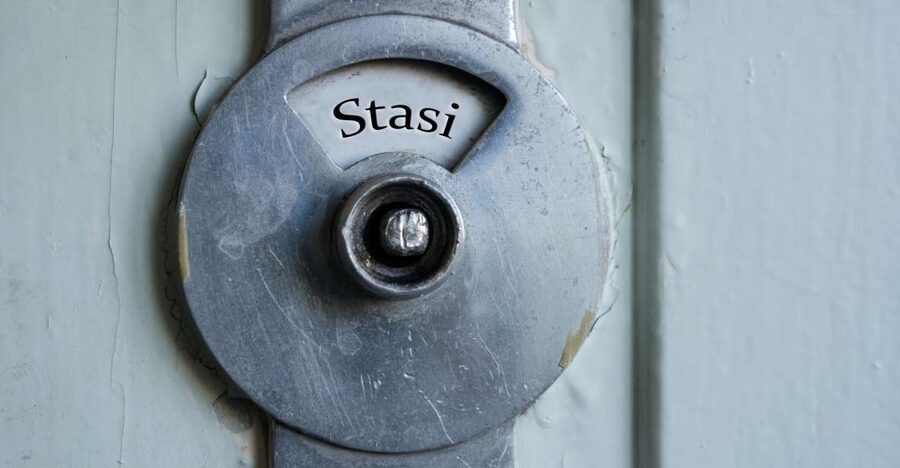
Your meeting point is in front of the dm drugstore at Alexanderplatz, 1, 10178 Berlin. That may sound like a plain urban meeting spot, but it is a smart place to begin.
Alexanderplatz was one of the best-known public spaces in the German Democratic Republic, or GDR. It represented the official face of East Berlin: large, open, planned, and watched. In 1989, it also became the setting for the largest demonstration in GDR history, when citizens openly demanded political change.
Your guide uses this opening to explain the difference between the government’s public message and ordinary life behind the Berlin Wall. That context matters. Without it, the museum can feel like a collection of old desks and odd spy gadgets. With it, you begin to see how the Stasi operated within a wider system of propaganda, party control, and restricted movement.
Arrive on time. The museum entry is tied to a pre-booked time slot, so this is not a tour where you can casually wander in twenty minutes late and catch up later. Check your email the day before for the exact meeting details and any schedule notes.
More Attraction Tickets in Berlin
- Berlin: Jewish Museum Berlin Entrance Ticket
★ 4.5 · 8,393 reviews - Berlin: Berlin Story Bunker Entry Ticket
★ 4.6 · 6,759 reviews - Berlin: Illuseum Berlin Entrance Ticket
★ 4.1 · 3,970 reviews
The ride to Normannenstraße
The Stasi Museum is outside Berlin’s central sightseeing zone, in the former headquarters complex at Normannenstraße. Two-way public transport tickets are included, and your guide accompanies you from Alexanderplatz.
I like this arrangement because it removes one of the small headaches of visiting a less central museum. You do not have to work out the route alone or wonder which ticket to buy. The ride also gives your guide time to continue the story of East Berlin before you arrive.
The transport portion is practical rather than scenic. Do not book this tour for a grand city tour by train. Book it because the guide handles the connection and keeps the three-hour schedule moving.
Since public transport is involved, wear shoes that are comfortable for a city outing. The activity is listed as wheelchair accessible, though the exact transport arrangements and meeting details should still be confirmed when booking if you use a wheelchair.
Entering the former Ministry of State Security
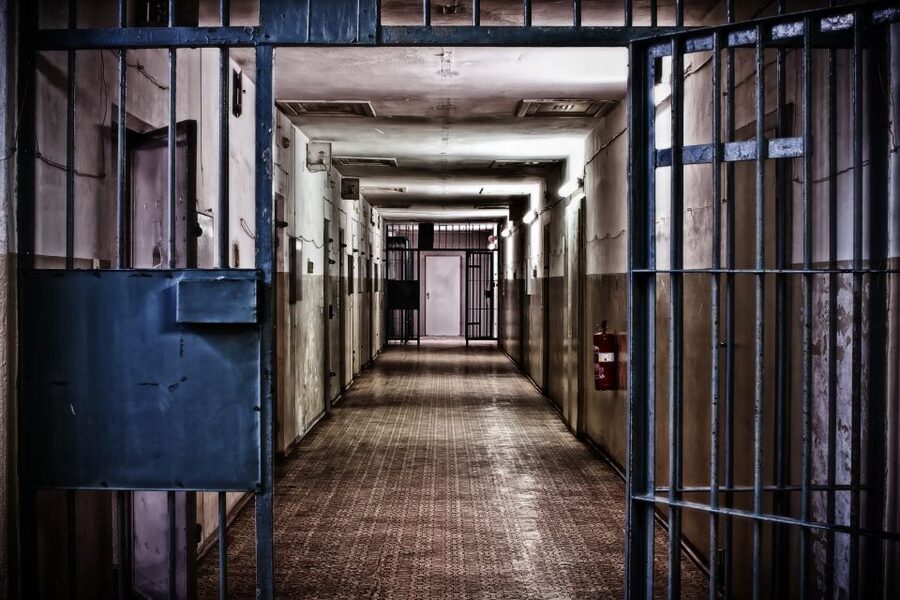
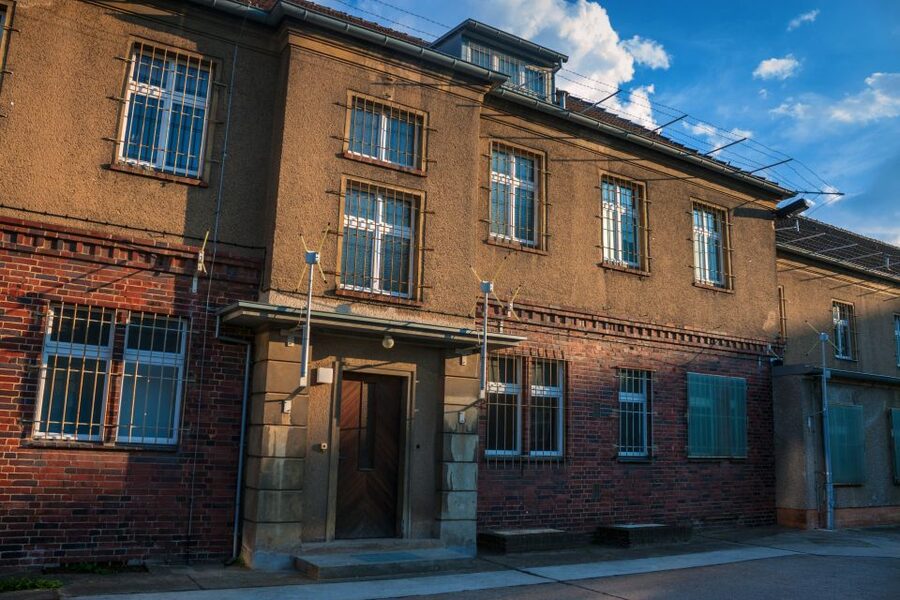
The museum is officially called the Forschungs- und Gedenkstätte Normannenstraße, or Stasi Museum. It is housed in the original building used by the Ministry of State Security, the institution commonly known as the Stasi.
That setting gives the visit its force. You are not only looking at reconstructed objects behind glass. You are moving through rooms connected to the people who directed surveillance in East Germany. Offices, furniture, and administrative spaces show how a dictatorship could look almost boring from the inside.
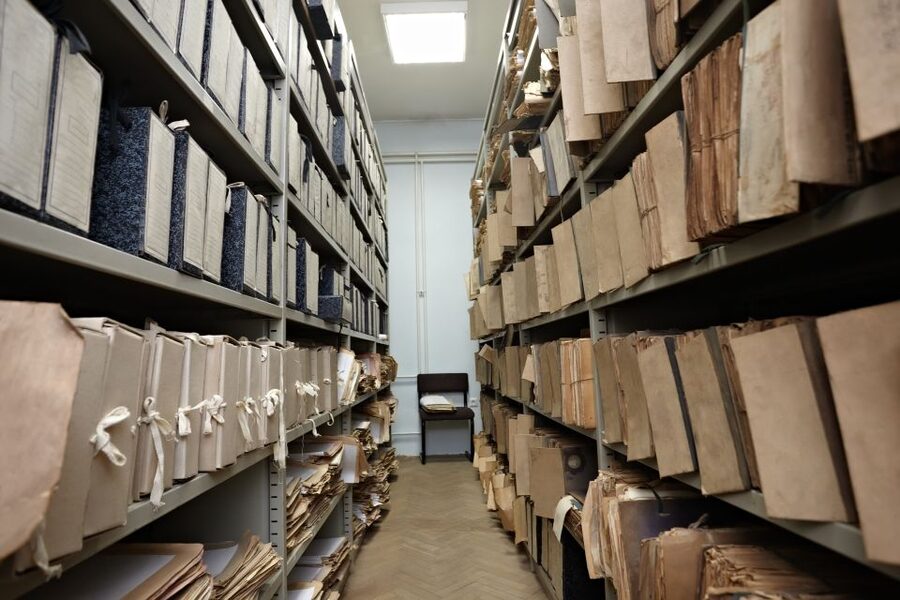
That ordinariness is part of the lesson. The Stasi was not only about secret agents in dark coats. It depended on paperwork, reporting systems, files, technology, and a large network of informants. Your guide explains how citizens were recruited to provide information and how surveillance could reach into workplaces, neighborhoods, and personal relationships.
The museum visit is especially useful if you want to understand how control worked in daily life. You will learn about the politics of the GDR, communist propaganda, and the ways the state tried to shape what citizens read, believed, and discussed.
Bugs, hidden cameras, and the mechanics of surveillance

The original spy technology is one of the most accessible parts of the visit. You can examine devices such as hidden cameras and listening equipment, rather than hearing only an abstract lecture about state surveillance.
These objects help you picture the work involved in watching people. A hidden camera or bug is interesting on its own, but the guide’s explanation gives it meaning. Who used it? Who was watched? How did the Stasi gather information, and what could happen to a person once a report entered the system?
Do not expect a gadget-filled spy museum in the Hollywood sense. The point is not clever technology for its own sake. The point is the power relationship behind each device. A camera placed where you could not see it meant that private space was never fully private.
This is where a private guide earns much of the tour price. A label can tell you what an object is. A guide can connect it to the methods of informants, political control, and fear. Several guide experiences have been praised for adding personal stories and extra material, which can make these displays feel less remote.
More Museum Tours in Berlin
- Berlin: DDR Museum Tickets
★ 4.3 · 3,443 reviews - Berlin: Natural History Museum Entrance Ticket
★ 4.6 · 3,382 reviews - Berlin: Neues Museum Entry Ticket
★ 4.6 · 3,261 reviews - Skip-the-Line: Berlin Wall Museum at Checkpoint Charlie
★ 4.1 · 2,041 reviews
Erich Mielke’s office and the red briefcase
The tour includes the ministerial offices and the office of Erich Mielke, the longtime head of the Stasi. His red briefcase is displayed there, said to have held highly sensitive information.
The briefcase is a small object, but it gives the visit a human scale. You move from the broad system of surveillance to the office of one of the men responsible for directing it. The room helps show how power was organized at the top, while the nearby displays explain how that power reached ordinary citizens.
I find this combination more useful than seeing only personal belongings or only political documents. You get the machinery of the institution and the people who managed it. Your guide can also answer questions in the moment, which is difficult to do in a large group or during a self-guided visit.
Guides such as Silvia have been praised for using personal stories to make the subject more immediate. That does not mean a personal anecdote replaces the evidence in the museum. It means the guide can help you connect official history with the experience of people who lived under the system.
What the tour explains about daily life in the GDR
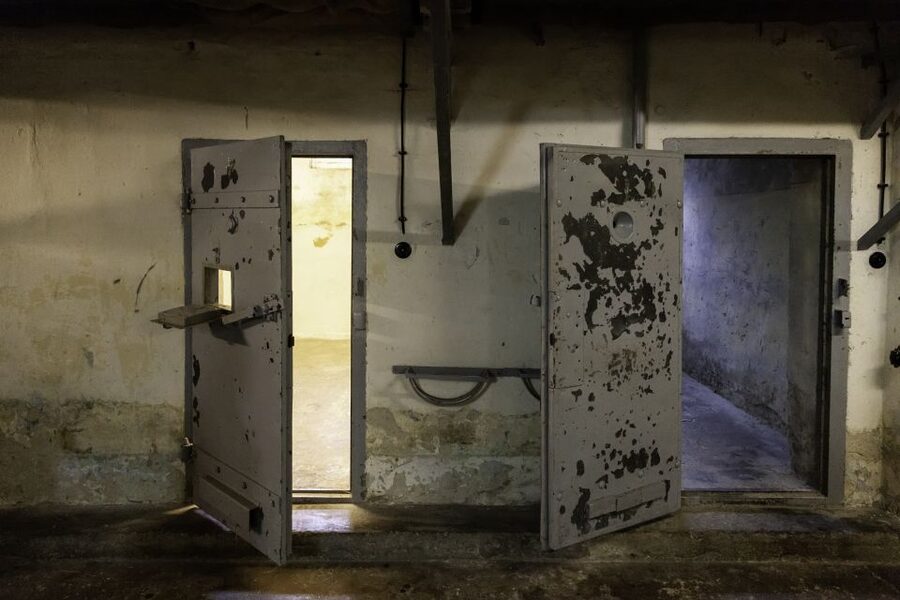
The central question is simple: what was it like to live in East Germany before the Berlin Wall fell?
The answer was not the same for everyone. The tour focuses on the structure of dictatorship and surveillance, rather than pretending that every citizen had an identical experience. You learn how the state monitored people, how informants were recruited, and why many citizens feared that private comments could be reported.
The guide also explains communist propaganda and the political division of Germany after the Second World War. This background is essential if you are visiting Berlin with family members or friends who know the Wall mainly as a landmark. The museum helps explain why the Wall mattered and why its fall in 1989 came after years of frustration and protest.
I would recommend this experience to anyone who wants more than a quick Cold War overview. It suits history buffs, but it also works for first-time visitors who want to understand what made East Berlin different from West Berlin. The subject is serious, and the museum is not designed as light entertainment. Give it your attention.
Why a private tour can be worth the high price
The listed price is $257 per person. That is expensive for a three-hour museum visit, and you should consider the cost carefully.
You are paying for more than entry. The price includes a private guide, museum admission, skip-the-line access through a reserved time slot, and two-way public transport tickets. You also get the chance to ask questions without waiting for a large group to move on.
That can be good value for a couple or family that wants a focused history lesson in a chosen language. It is especially useful if you are unsure how much context you need. A guide can spend more time on surveillance technology, political repression, or daily life, depending on your interests.
The value is weaker if you are happy to read exhibits on your own or already have a strong grasp of GDR history. The museum itself is the main attraction, not an elaborate series of activities. One past booking considered the cost far too high for what was delivered, and that is a fair warning.
I would compare this price with the cost of visiting the museum independently before booking. If you mainly want entry, self-guided access may suit you better. If you want a private explanation in English or German and the convenience of escorted transport, the extra cost has a clearer purpose.
Guide quality matters more than the transport
The strongest part of this experience is the guide. The museum provides the setting and the objects, but the guide provides the connection between them.
The guide is listed as a five-star licensed professional, with tours available in English or German. Past bookings have included Silvia, who was praised for personal stories and a strong grasp of the subject. One English booking also noted that the guide could speak Danish, though Danish is not listed as a standard tour language, so you should not assume it is available.
A good guide should help you distinguish between the Stasi as an institution, the ruling party, and the broader East German state. That distinction matters. It prevents the visit from becoming a vague story about communism and shows how specific offices, procedures, and people created a system of control.
You also have the advantage of a private group. If a particular display catches your attention, you can ask about it. If you prefer political background to technical details, you can say so. That flexibility is the main reason I would choose this tour over a large group option.
Do not confuse the Stasi Museum with Hohenschönhausen
Berlin has more than one major site connected with the Stasi, and the names can cause confusion.
This tour visits the Stasi Museum at Forschungs- und Gedenkstätte Normannenstraße, the former headquarters of the Ministry of State Security. It does not visit the former Stasi prison known as the Berlin-Hohenschönhausen Memorial, or Gedenkstätte Berlin-Hohenschönhausen.
The distinction is important because the two sites tell different parts of the story. This museum focuses on the organization, offices, surveillance systems, and administrative power of the Stasi. If you specifically want a former prison site, this is not the correct booking.
Read the German name carefully when comparing Berlin history tours. Normannenstraße is the location included here.
Timing, accessibility, and a few practical tips
The tour lasts three hours, including the meeting, public transport, and museum visit. Starting times vary, so check availability for the date you want.
The reserved entry time makes punctuality important. Meet at the Alexanderplatz location early enough to find the dm drugstore without stress. Berlin’s central squares can be busy and confusing, even when the address looks simple.
The activity is listed as wheelchair accessible. Public transport is included, but the information does not specify the exact vehicle, station, or route used on every departure. If you have specific mobility needs, contact the provider before booking and confirm the practical details.
The tour includes free cancellation up to 24 hours before the start and a reserve-now, pay-later option. Those terms are useful if your Berlin schedule is still shifting, but check the booking conditions shown for your selected date.
Who should book this Berlin history tour?
I would choose this tour if you want a serious, guided look at East Germany and prefer asking questions as you go. It is a strong fit for history-minded visitors, families with older children, and anyone who wants the Berlin Wall story explained through the machinery of government surveillance.
It is also a good choice if you want a private experience in English or German and do not want to plan the trip to Normannenstraße yourself. The included transport and fixed museum entry remove some practical work.
I would skip it if your main interests are Berlin’s art, architecture, nightlife, or famous outdoor Wall remains. I would also hesitate if $257 per person feels uncomfortable. The museum is worthwhile, but the private guiding is what makes this particular booking expensive.
Should you book it?
Book this tour if the Stasi’s methods and daily impact are central to your Berlin plans. The original offices, hidden cameras, bugs, ministerial rooms, and Mielke’s red briefcase give you concrete things to look at, while the private guide supplies the political and personal context.
Do not book it simply because it says skip-the-line. The real reason to choose it is the private explanation and the easy escorted trip from Alexanderplatz. If that sounds valuable to you, the cost can make sense. If you only need museum entry, visit independently and spend the savings elsewhere in Berlin.
FAQ
Where does the tour meet?
You meet your guide in front of the dm drugstore at Alexanderplatz, 1, 10178 Berlin.
How long does the tour last?
The tour lasts three hours.
Which museum does the tour visit?
It visits the Stasi Museum, officially called Forschungs- und Gedenkstätte Normannenstraße, in the former headquarters of the East German Ministry of State Security.
Does the tour visit Hohenschönhausen prison?
No. This tour visits the Stasi Museum at Normannenstraße, not the former Stasi prison known as the Berlin-Hohenschönhausen Memorial.
Is public transport included?
Yes. Two-way public transport tickets from Alexanderplatz to the museum and back are included.
What languages are available?
Live guided tours are available in English and German. You select the language when booking.
Is the tour private?
Yes. The activity is offered as a private group tour.
Is the museum entry included?
Yes. Museum admission and a pre-booked time slot are included.
Can I cancel the tour?
You can cancel up to 24 hours in advance for a full refund. A reserve-now, pay-later option is also available.
More Berlin Wall and Cold War Tours in Berlin
- Berlin: Third Reich and Cold War 2 Hour Walking Tour
★ 4.9 · 6,830 reviews - Berlin’s Best: 2 Hour Walking Tour Third Reich and the Cold War
★ 5.0 · 5,486 reviews - Berlin: East Side Gallery Spree Cruise in a Solar Catamaran
★ 4.0 · 1,039 reviews - Cold War, Berlin Wall, Spies and the East Side Gallery
★ 5.0 · 1,024 reviews
Just added in Berlin
- Berlin & The Third Reich Private Guided Tour★ 5.0 · 3 reviews
- Third Reich Quest Experience in Berlin★ 4.5 · 7 reviews
- Private Analogue Photography Experience in Berlin★ 5.0 · 3 reviews
- Berlin Urbex Adventure and History Tour★ 5.0 · 9 reviews
- The Beauty of Berlin by Bike: Private Tour★ 5.0 · 59 reviews
- Berlin: Guided Bike tour of the Berlin Wall and Third Reich★ 5.0 · 160 reviews
- Beyond Currywurst: Berlin’s Hidden Street Food & Culture Tour★ 5.0 · 100 reviews
- Berlin Third Reich & Cold War Walking Tour With A Guide★ 5.0 · 7 reviews
Berlin Wall and Cold War Tours, compared.

Berlin’s Best: 2 Hour Walking Tour Third Reich and the Cold War
Read our review →
Skip-the-Line: Berlin Wall Museum at Checkpoint Charlie
Read our review →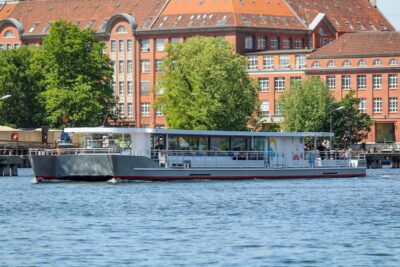
East Side Gallery Spree Cruise in a Solar Catamaran
Read our review →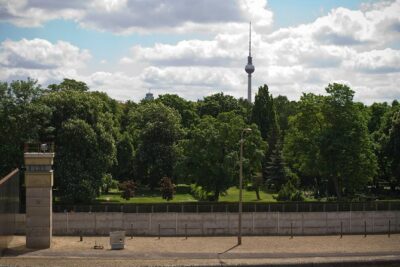
Cold War, Berlin Wall, Spies and the East Side Gallery
Read our review →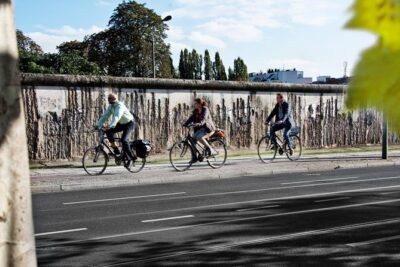
Guided Bike Tour of the Berlin Wall and Third Reich
Read our review →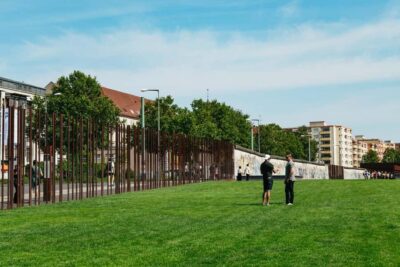
Browse the lists this tour appears in