
Reviewed · MUSEUMS
Berlin: Neues Museum Entry Ticket
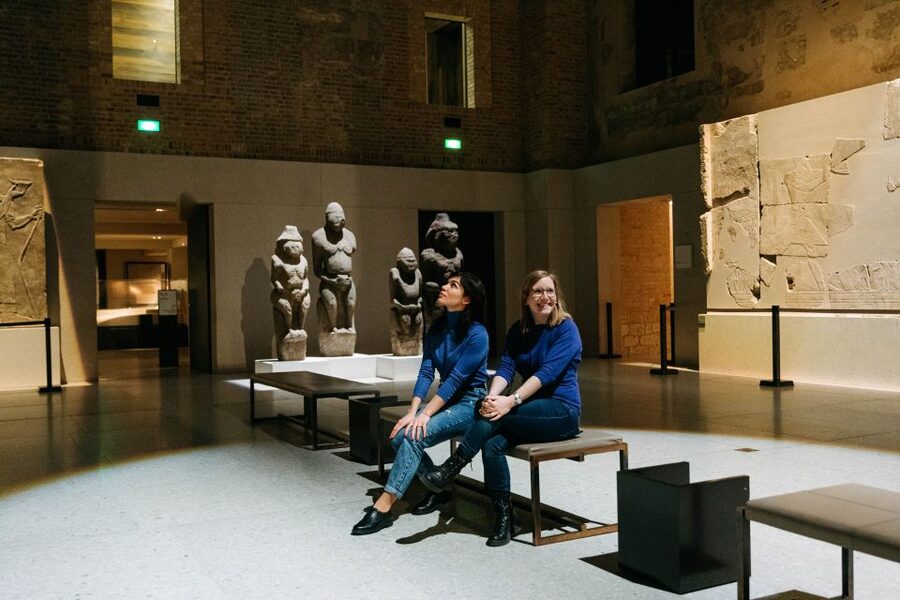
The bust of Nefertiti is the star, but it is only one reason to visit Berlin’s Neues Museum. This handsome, rebuilt museum brings Egyptian art, ancient objects, and prehistoric cultures together under one roof, with the building itself forming part of the story.
I like the ticket’s two practical strengths: it can help you avoid the ticket queue, and an audio guide is included in five languages. I also like the freedom to stay as long as you wish once inside. The main drawback is that the museum is much larger than the advertised 15-minute ticket duration suggests, and some displays can feel dim or have limited audio commentary.
Key points to know
- See Nefertiti’s famous bust: The Egyptian collection’s best-known object is displayed alongside other major works.
- Three collections in one building: Explore Egyptian art, the Museum of Prehistory and Early History, and the Antique Collection.
- Plan two to three hours: The 15-minute validity refers to activation or entry, not the amount of time you can spend inside.
- Use the audio guide: English, Spanish, French, German, and Italian options are included.
- Book ahead for busy periods: A mobile ticket can save time when the ticket counter queue is long.
- Pack light: Backpacks are not allowed in the exhibition areas, and cloakroom and locker space is limited.
Why the Neues Museum deserves a place on your Berlin list
Berlin’s Museum Island can feel like a buffet of grand museums. You could spend several days working through them, but the Neues Museum is an especially good choice if you want ancient Egypt, archaeology, and a memorable building in one visit.
The collection covers an enormous stretch of time and geography. You move from prehistoric cultures in the Middle East and North Africa to early European societies and classical antiquity. The material reaches from the Atlantic to Scandinavia, so this is not just a single-subject museum built around one famous face.
That range gives the museum its appeal, but it also creates a practical challenge. You need to pace yourself. If you rush straight to Nefertiti and leave, you will miss the museum’s strongest feature: the way its collections show how human societies developed, traded, worshiped, and made objects over thousands of years.
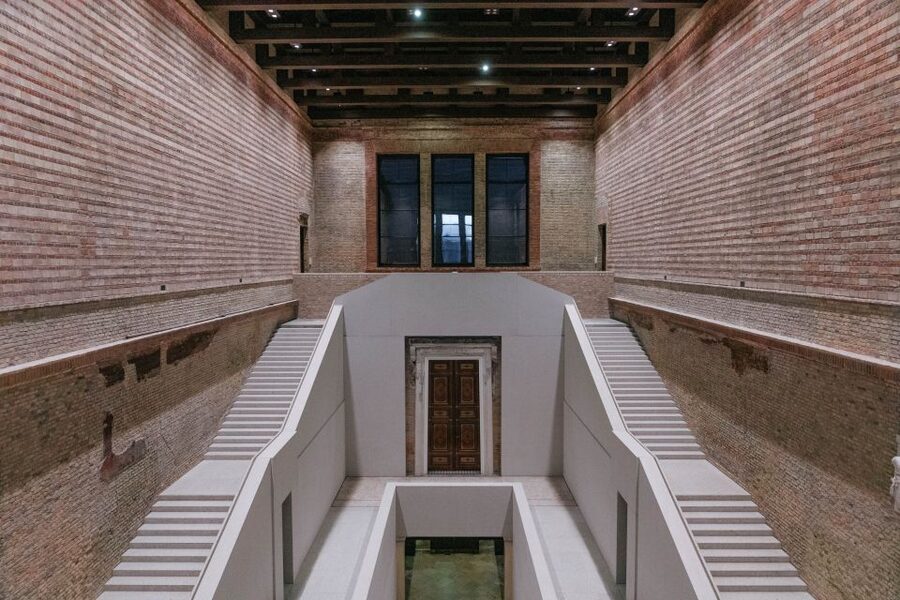
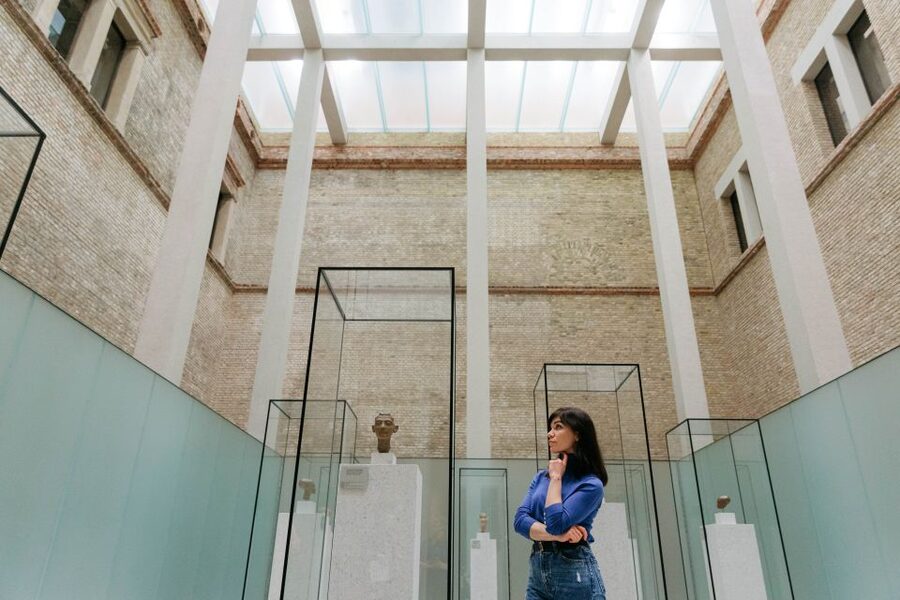
The building matters, too. The original museum suffered heavy damage during the Second World War. Its later restoration and reconstruction retained visible traces of that past while adding modern architectural work by David Chipperfield. High ceilings, broad stairways, open rooms, and weathered surfaces give the visit a different mood from a spotless modern gallery.
I would allow at least two hours. If ancient Egypt is your main interest, you can move more quickly through the prehistoric and classical displays. If you want to read labels and use the audio guide, three hours is a sensible plan.
More Attraction Tickets in Berlin
- Berlin: Jewish Museum Berlin Entrance Ticket
★ 4.5 · 8,393 reviews - Berlin: Berlin Story Bunker Entry Ticket
★ 4.6 · 6,759 reviews - Berlin: Illuseum Berlin Entrance Ticket
★ 4.1 · 3,970 reviews
Getting in through the James Simon Gallery
Your entrance is at the visitors’ entrance of the James Simon Gallery on Bodestrasse, 10178 Berlin. The ticket includes entry to the Neues Museum only, not the other museums on Museum Island.
The advance ticket is most useful when the ticket desk is busy. Several booking experiences describe walking past long queues, sometimes in poor weather, and entering with a phone voucher. That is a real benefit if you have a fixed Berlin sightseeing plan or only one day for Museum Island.
Do not assume the museum will always be crowded. At quieter times, you may find little or no queue. In that case, the ticket is less about saving time and more about having entry arranged before you arrive. It also removes one small decision from a busy day.
The advertised validity is 15 minutes from first activation. Treat that as your entry window, not as a 15-minute museum visit. Once admitted, you can stay for as long as you like. Some people have found staff flexible about arrival times, but I would not build your schedule around that. Arrive during the time shown on your ticket.
A useful warning: backpacks are not allowed in the exhibition. Locker and cloakroom capacity is limited, so avoid arriving with a large bag if you can. Small personal items are easier to manage, and leaving unnecessary luggage at your accommodation will make the visit simpler.
Three collections, one long route
The Neues Museum combines three main areas:
- The Egyptian Museum
- The Museum of Prehistory and Early History
- The Antique Collection
The arrangement gives you a broad tour of early human culture, but it can also make the visit feel large and slightly uneven. Some rooms are packed with objects, while others allow the architecture and empty space to make the point.
The route is easy enough to follow, and a map or audio guide can help you keep your bearings. One useful approach is to start on the upper floor, then work downward. This lets you see the major rooms early and reduces the chance of skipping an entire section.
Do not hurry through the building itself. The restored interiors combine surviving historical fabric with new work. You may notice damaged surfaces, reconstructed sections, and modern additions beside ancient objects. That contrast is not a distraction. It explains how Berlin’s museums survived war and how restoration decisions shape what you see today.
The Egyptian Museum and the moment with Nefertiti
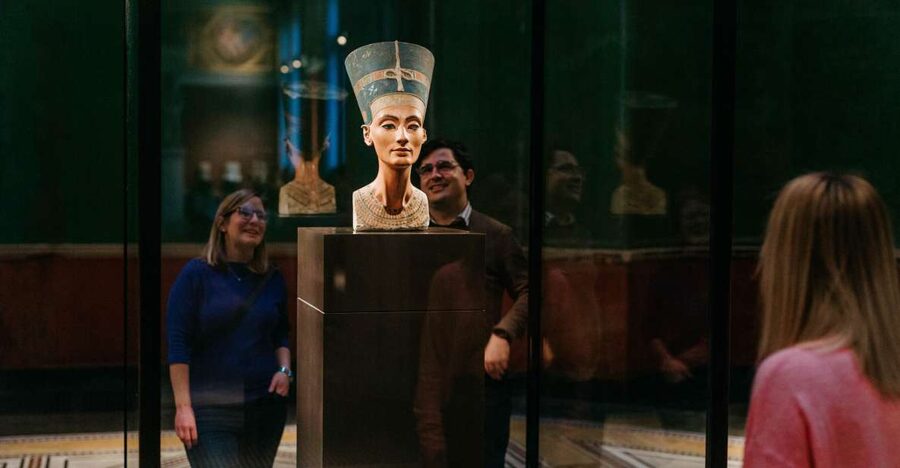
The Egyptian collection is the main reason many people choose this ticket. It includes sculpture, funerary objects, architectural pieces, and displays that help explain Egyptian beliefs and daily life.
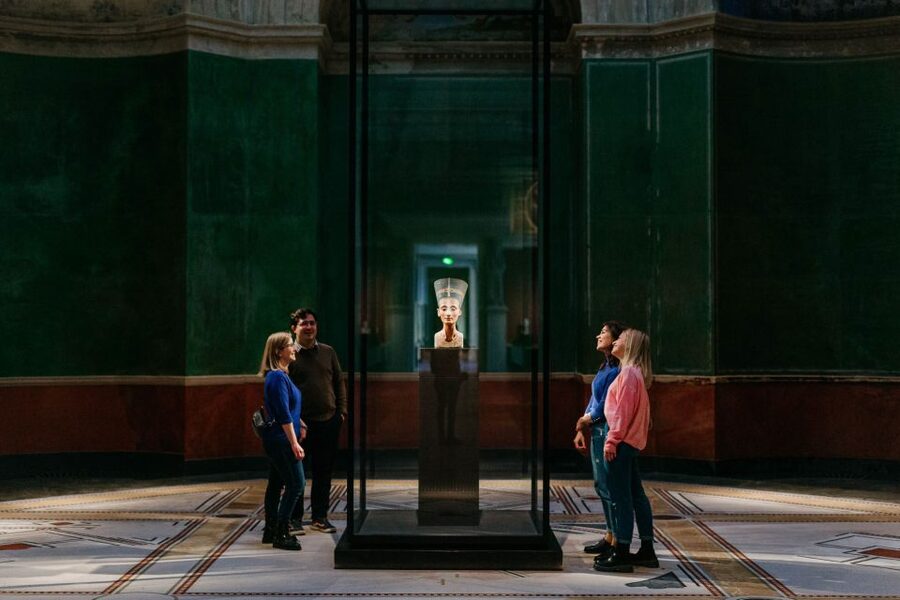
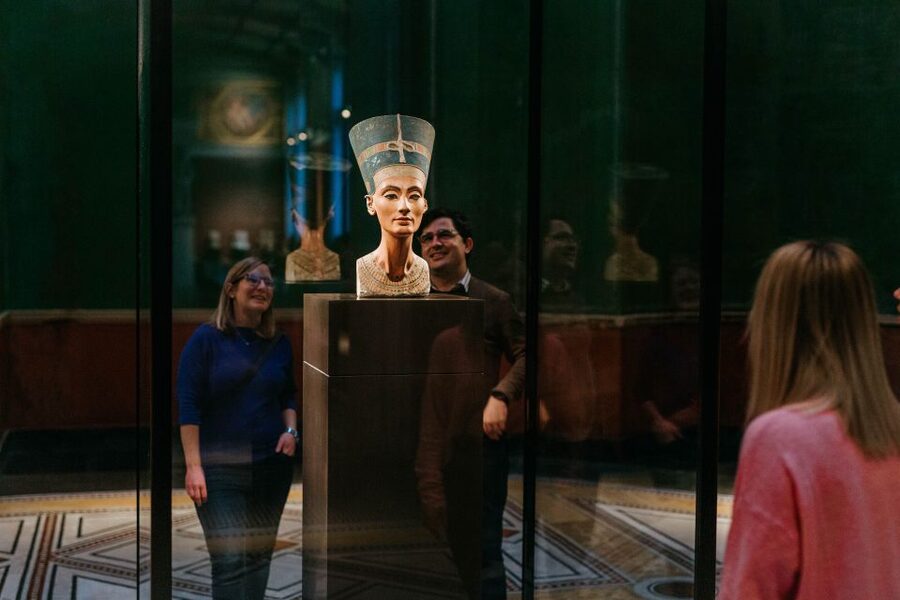
The bust of Nefertiti is the clear highlight. Its calm expression and painted surface make it easy to understand why the object has become one of Berlin’s most famous sights. The display is carefully controlled, and photography restrictions apply around the bust. You should not expect to take a close-up picture of it.
Some information indicates that a photograph may be possible from behind a marked line, but rules can change and staff instructions take priority. If taking a picture is important to you, check the signs when you arrive rather than assuming cameras are permitted.
The Green Head is another important Egyptian object. Its restrained expression has a different effect from the polished idealism of Nefertiti, and seeing both helps you appreciate the range of Egyptian portrait sculpture.
You will also find a replica of an Egyptian sarcophagus. A replica can sound less exciting than an original, but it helps explain how these objects were constructed and presented. The museum is at its best when it gives context instead of relying only on famous names.
The audio guide is especially useful in this section. It is available in English, Spanish, French, German, and Italian, and the commentary can add meaning to objects that might otherwise seem difficult to read. There have been occasions when certain English audio points were unavailable or being updated, so do not be surprised if a few stops are missing.
More Museum Tours in Berlin
- Berlin: DDR Museum Tickets
★ 4.3 · 3,443 reviews - Berlin: Natural History Museum Entrance Ticket
★ 4.6 · 3,382 reviews - Skip-the-Line: Berlin Wall Museum at Checkpoint Charlie
★ 4.1 · 2,041 reviews - Berlin: Museum Island Multiple Museum Entry Ticket
★ 4.4 · 2,007 reviews
Prehistory, archaeology, and Priam’s Treasure
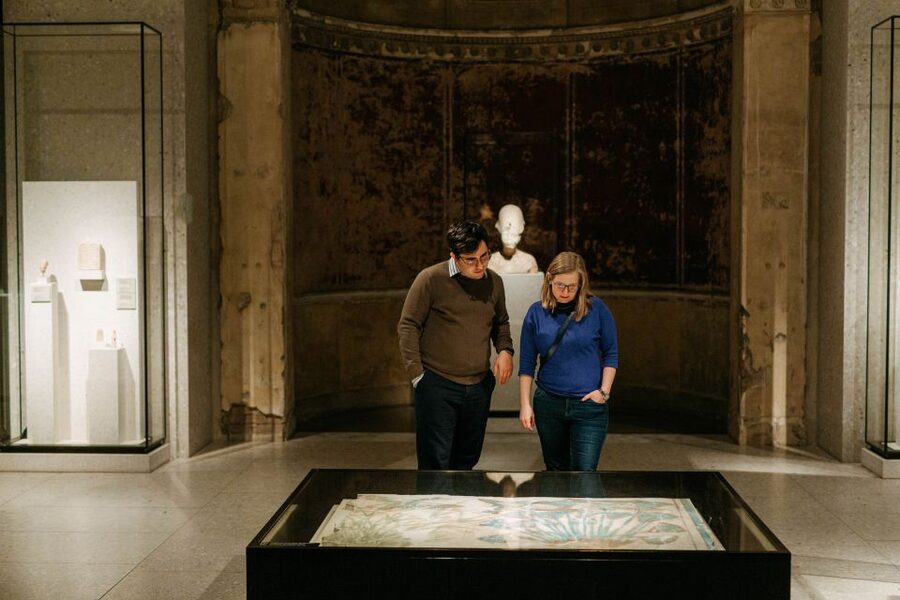
The Museum of Prehistory and Early History broadens the visit beyond Egypt. Here you can follow the development of prehistoric cultures across a wide area, from the Middle East and North Africa to northern Europe and Scandinavia.
This section is best for visitors who enjoy objects as evidence. Tools, ornaments, weapons, burial items, and other archaeological pieces can seem modest compared with a royal portrait, but they reveal how people lived and adapted long before written records became common.
Priam’s Treasure, linked with Heinrich Schliemann’s collection, is one of the better-known highlights. It brings questions about archaeology, collecting, and the movement of ancient objects into the museum experience. You can admire the craftsmanship while also thinking about how such treasures were acquired and why they are displayed far from their places of origin.
That question comes up especially strongly in the Egyptian galleries. The objects are extraordinary, but it is reasonable to wonder if some treasures should be in Egypt or another place connected to their original culture. The museum does not make that question disappear. For many people, it becomes part of the visit.
The Antique Collection and the Berlin Gold Hat
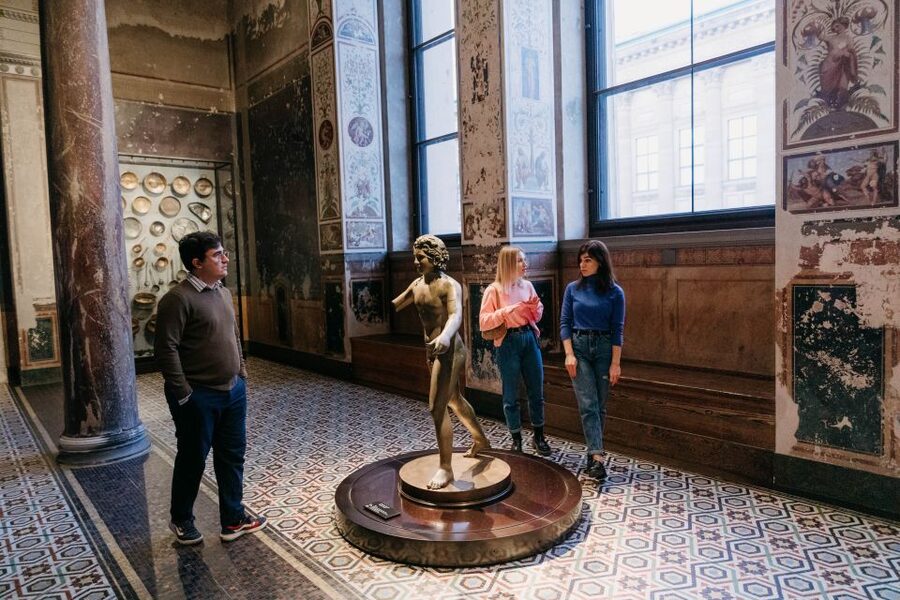
The Antique Collection adds Greek and Roman material to the Egyptian and prehistoric displays. This section gives you a chance to compare different ideas of the human body, religious imagery, burial, and political power.
Look for the statue of the Xanten Boy and one of the surviving statues of the Roman sun god Helios. These works give the classical section a clear visual focus, especially after the smaller archaeological objects in the prehistoric galleries.
The Berlin Gold Hat is another striking object. Its tall, decorated form looks unusual at first glance, and it raises questions about ceremony, status, and the technical skill needed to work precious metal. It is the kind of object that rewards a slower look, even if you arrived mainly for Nefertiti.
The antique galleries are not as immediately famous as the Egyptian rooms, but they help make the museum feel like three institutions in one. I would not skip them. If your energy is fading, use the seating along the route, then continue at a slower pace rather than trying to absorb every label.
The architecture is part of the exhibit
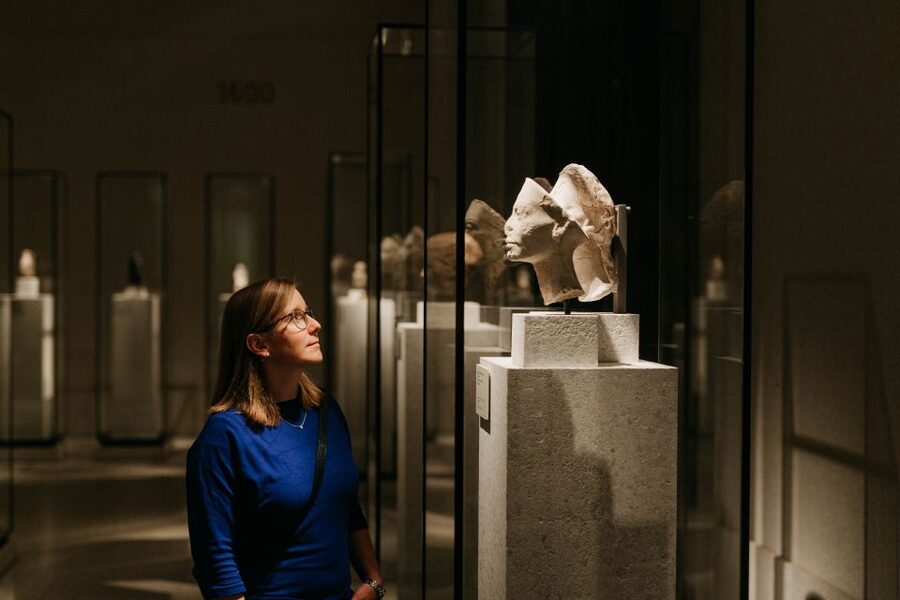
The Neues Museum is not simply a container for objects. Its rooms, stairs, walls, and scars give the visit a strong sense of place.
David Chipperfield’s restoration is especially noticeable in the main staircase and large open rooms. The work does not try to make every surface look new. Instead, older damaged sections sit beside clean modern materials, creating a visible conversation between past and present.
Some people come for the collections and end up spending almost as much time looking at the building. High ceilings give the major galleries breathing room, while the spacious layout prevents the museum from feeling cramped even when it is busy.
The drawback is that lighting is not perfect everywhere. A few display cases may feel too dark, and some objects are harder to see than they should be. If you have trouble reading or viewing a case, move closer when possible, adjust your position, and use the audio guide for help.
How long should you allow?
The ticket information lists 15 minutes, but that does not describe the full visit. It refers to validity from first activation or to the entry period. Inside, you can remain as long as you want.
For planning purposes:
- Allow about two hours for a solid visit with the major highlights.
- Allow two and a half to three hours if you want to read labels and use the audio guide.
- Allow longer if Egyptology, archaeology, or museum architecture is a main interest.
The route includes seating, which is welcome in a large museum. There is also a café where you can take a break, although the ticket does not include food or drinks.
The museum is clean and well organized, but do not expect to see every object carefully in a short stop. If you have other Museum Island appointments, decide in advance which sections matter most. Nefertiti, the Green Head, Priam’s Treasure, the Berlin Gold Hat, the Xanten Boy, and the Helios statue make a good priority list.
Is the $16 ticket good value?
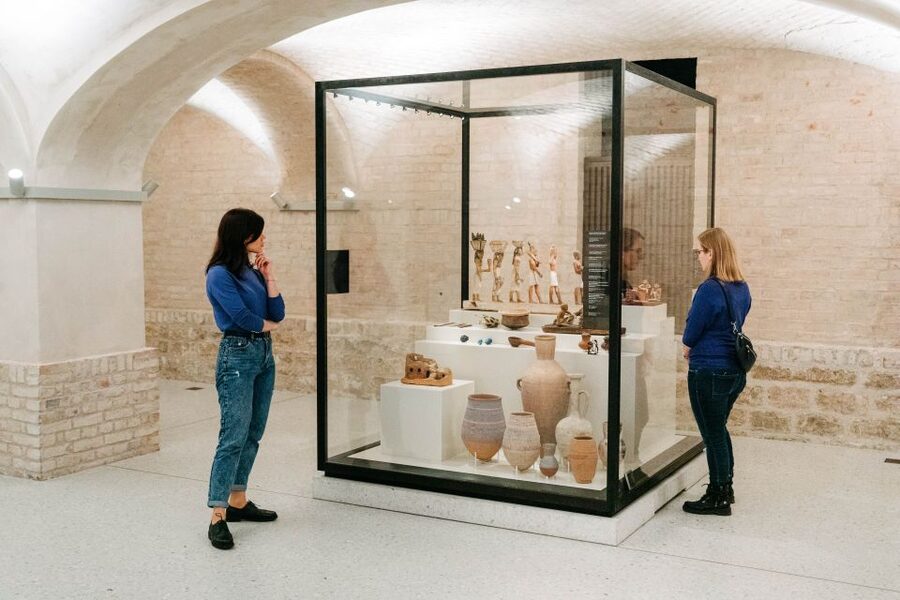
At $16 per person, this ticket is good value if you plan to spend two or more hours inside. You are paying for access to three substantial collections, not a single small gallery.
The included audio guide improves the value, particularly if you are visiting without a museum specialist. It gives you more help than simply wandering past display cases, although the coverage may not be complete in every language or room.
The advance booking is most valuable on rainy days, holidays, and busy periods when the ticket queue can eat into your sightseeing time. Several people have entered quickly with mobile tickets while other visitors waited to buy admission. That convenience may be worth more than the ticket price difference, especially for families or groups with a tight schedule.
Children may enter free under the relevant arrangements, but they still need a ticket. Bring the required identification for discounted admission. This is easy to overlook and can cause a delay at the desk.
The ticket does not include entry to the Pergamon Museum or the other museums on Museum Island. If you want to visit several institutions, compare this single-entry price with any wider Berlin museum pass or combination ticket available for your dates.
Who should book this experience?
I would recommend this ticket to you if you want:
- Nefertiti and major Egyptian objects
- A broad introduction to archaeology and early cultures
- An audio guide in one of five languages
- A museum visit lasting two to three hours
- A way to reduce uncertainty at a busy ticket counter
- Architecture that is as interesting as the collection
It is less suitable if you want a short 15-minute stop, a fully guided tour with a named expert, or entry to several Museum Island museums under one ticket. There is no live guide listed, and the audio guide may have gaps.
Families can make it work, especially because there are seats and plenty of visual objects. Still, large bags are awkward, children need their own tickets even when admission is free, and the size of the museum can test short attention spans.
Wheelchair users should find the whole building accessible. The main practical concern for anyone is the limited cloakroom and locker space, not the building itself.
Should you book the Neues Museum ticket?
Yes, if Nefertiti is on your Berlin wish list or you want one museum that combines Egypt, prehistory, classical antiquity, and modern restoration. The $16 price is fair for the amount of time you can spend inside, and the included audio guide adds useful context.
Book ahead if you are visiting during a busy period or want to protect a tight schedule. Travel light, arrive during your stated entry time, and allow at least two hours. If you can do that, the Neues Museum gives you far more than a quick look at a famous bust. It offers a thoughtful visit through ancient cultures, difficult collecting questions, and one of Berlin’s most memorable restored interiors.
FAQ
Where is the entrance to the Neues Museum?
The visitors’ entrance is at the James Simon Gallery on Bodestrasse, 10178 Berlin.
What does the ticket include?
It includes entry to the Neues Museum and an audio guide.
Does the ticket include other Museum Island museums?
No. The ticket covers the Neues Museum only. Entry to other museums on Museum Island is not included.
How long can I stay inside the museum?
You can stay in the museum for as long as you like once admitted. The 15-minute validity refers to the activation or entry period, not the length of the museum visit.
Which languages are available for the audio guide?
The audio guide is available in Spanish, English, French, German, and Italian.
Are backpacks allowed inside?
No. Backpacks are not allowed in the exhibition areas. Locker and cloakroom space is limited, so bringing only small personal items is advisable.
Just added in Berlin
- Berlin & The Third Reich Private Guided Tour★ 5.0 · 3 reviews
- Third Reich Quest Experience in Berlin★ 4.5 · 7 reviews
- Private Analogue Photography Experience in Berlin★ 5.0 · 3 reviews
- Berlin Urbex Adventure and History Tour★ 5.0 · 9 reviews
- The Beauty of Berlin by Bike: Private Tour★ 5.0 · 59 reviews
- Berlin: Guided Bike tour of the Berlin Wall and Third Reich★ 5.0 · 160 reviews
- Beyond Currywurst: Berlin’s Hidden Street Food & Culture Tour★ 5.0 · 100 reviews
- Berlin Third Reich & Cold War Walking Tour With A Guide★ 5.0 · 7 reviews
Museums, compared.





Skip-the-Line: Berlin Wall Museum at Checkpoint Charlie
Read our review →
Browse the lists this tour appears in