
Reviewed · THIRD REICH TOURS
Berlin: Third Reich, Hitler, and WWII Walking Tour
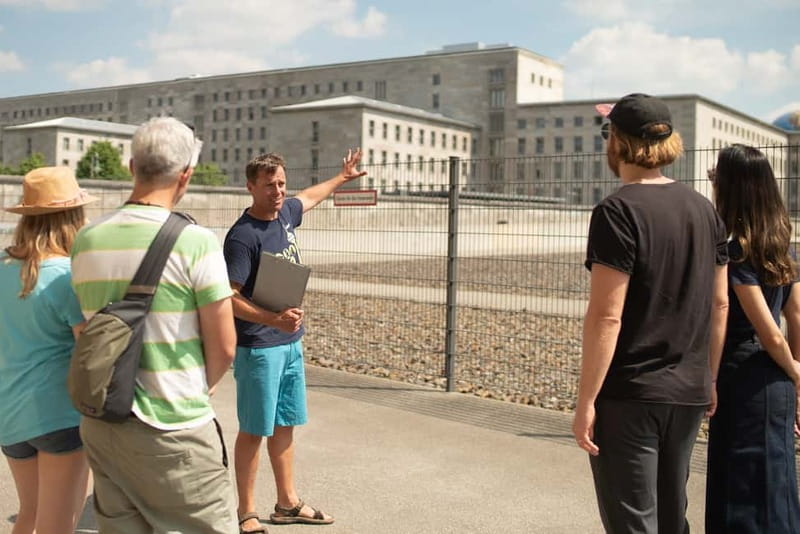
Berlin’s Nazi past becomes painfully real when you stand above the Führer Bunker, walk past the former ministries that directed war and terror, and follow the Soviet assault toward the Reichstag. This is not a tour of grand surviving interiors. Much of the power center is gone, buried, rebuilt, or marked only by a plaque, which makes a good guide essential.
I like the route’s two strong points: it connects political decisions with actual places, and it adds the Soviet War Memorial and Cold War layers to the story. Guides including Hannah, Mikhail, Jimmy, Martin, and Will are praised for clear explanations and thoughtful handling of difficult material. The drawback is simple: three hours on foot means no planned water or toilet stop, and a large group can make it harder to hear.
Key points to know before you book
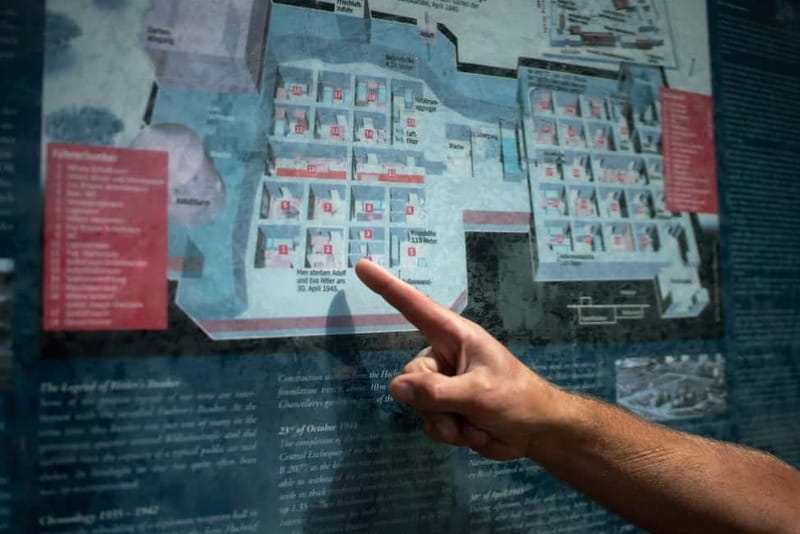
- The Führer Bunker location: Learn how Hitler’s final days unfolded while standing above the site where the bunker once lay.
- Nazi power in one walking route: Pass the former Luftwaffe, propaganda, SS, and Gestapo headquarters.
- The Topography of Terror: Use this important exhibit to connect Nazi institutions with persecution and mass violence.
- A battlefield ending: Follow the route toward the Reichstag, then see Soviet tanks and artillery at the Soviet War Memorial.
- Strong guide-led experience: English, German, and Spanish tours are available, with private and small-group options.
- Bring your own water: The tour runs rain or shine, and there are no scheduled water or toilet breaks.
Why this Berlin history walk works
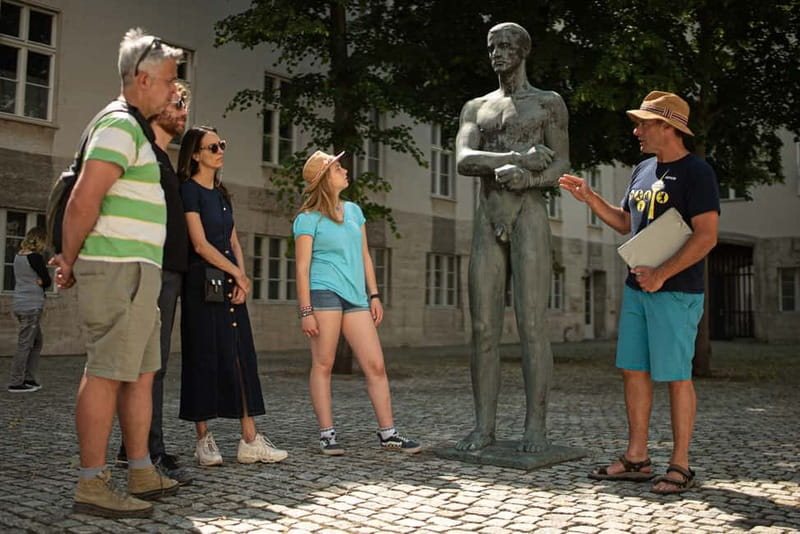
This tour does something that a museum alone cannot. It puts you in the streets where Nazi government offices operated, then asks you to picture how those offices worked together. The route links military planning, propaganda, police terror, Hitler’s personal headquarters, and the final destruction of Berlin.
That physical connection matters. You do not just hear about the Gestapo, SS, Luftwaffe, and propaganda machine as separate subjects. You see where their offices once stood and how close they were to the center of state power.
The tour also avoids ending the story with Hitler’s death. It carries on toward the Reichstag and Soviet War Memorial, showing how the war ended in Berlin and how the city’s political meaning changed after 1945. That wider frame gives the walk more value than a narrow Hitler-focused outing.
The tone is serious, as it should be. The best guides use plain language, answer questions directly, and avoid turning Nazi history into spectacle. Several guides are praised for handling sensitive subjects with care while still keeping the walk lively and easy to follow.
More Third Reich Tours in Berlin
- Berlin: Third Reich and Cold War 2 Hour Walking Tour
★ 4.9 · 6,830 reviews - Berlin’s Best: 2 Hour Walking Tour Third Reich and the Cold War
★ 5.0 · 5,486 reviews - Third Reich Berlin: Hitler and WWII Walking Tour
★ 5.0 · 3,301 reviews
Starting at Friedrichstraße and the Palace of Tears
The meeting point is outside Friedrichstraße train station, on the square between the station and the Tränenpalast, also called the Palace of Tears. Look for a guide wearing a blue lanyard and yellow name tag, usually holding a yellow umbrella.
This is a useful meeting place because Friedrichstraße is easy to reach by public transport and the Tränenpalast adds an immediate reminder that Berlin’s history did not end in 1945. The building is tied to the later division of the city, so even before the tour begins, you are near a place shaped by border controls and separation.
The tour ends back at the same meeting point. That makes planning easier, especially if you want to continue sightseeing from central Berlin afterward.
Arrive ready to walk. Wear comfortable shoes and clothing suited to the weather. The tour operates in rain or sunshine, and the route has no planned water or toilet breaks. I would bring a bottle of water before meeting the guide, particularly on a warm day.
Seeing the machinery of Nazi power
Early in the route, the guide explains the rise of the Third Reich and the way Berlin became the center of Nazi rule. You pass the former locations of major government offices, including Göring’s Air Defence Ministry, the former Propaganda Ministry associated with Goebbels, and the SS and Gestapo headquarters linked to Himmler.
These sites are important because they show that Nazi rule was not carried out by one man in one building. The regime depended on military command, propaganda, policing, surveillance, and administrative control. Standing near the former offices helps you see how these systems operated together.
Many buildings have changed use or disappeared, so this part depends heavily on the guide’s ability to explain what once occupied the site. A strong guide will point out the position of each office, explain its role, and connect it to events elsewhere in Germany and Europe.
This is where guides such as Hannah, Mikhail, Will, and Martin receive especially strong praise. Hannah is noted for explaining difficult subjects respectfully and answering questions fully. Mikhail is praised for bringing locations to life while adding useful Cold War and general Berlin context. Will is described as especially engaging on fascism and political history.
You should expect a serious lesson rather than a parade of dramatic ruins. Nazi Berlin was heavily damaged, rebuilt, and deliberately stripped of much of its old symbolism. The absence of grand buildings is part of the story.
Walking along Hitler’s planned Germania axis
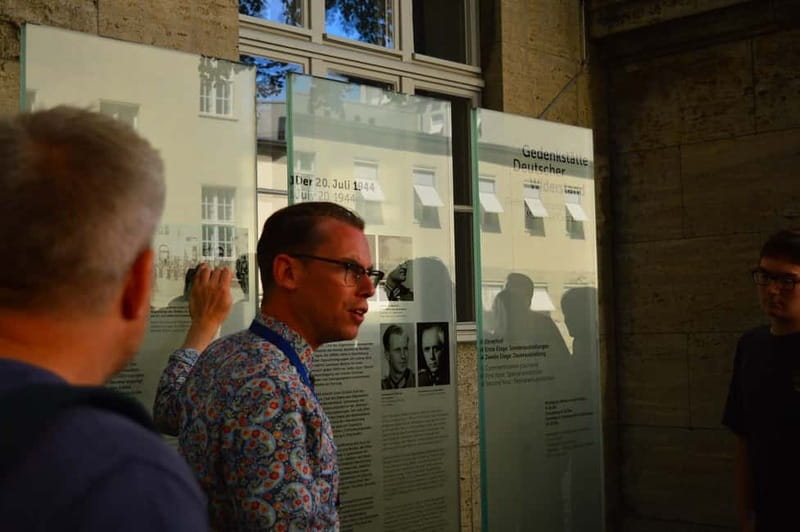
The route follows parts of the planned Germania axis, the vast redesign of Berlin associated with Hitler and architect Albert Speer. The plan was meant to turn Berlin into a monumental capital of Nazi Europe.
The value here is not only architectural. Germania reveals how dictators use city planning to project power. The proposed boulevards, oversized public buildings, and grand ceremonial spaces were designed to make the individual feel small and the state feel permanent.
Much of the plan was never completed, and the modern city does not look like the finished vision. That means you need to listen closely as the guide explains what was planned, what was built, and what war destroyed. If you enjoy urban history, this is one of the more useful parts of the walk because it links ideology to the shape of the city.
You may also hear about the human cost behind the construction plans. The information provided for this tour emphasizes the regime’s power structures and wartime history, so the exact level of detail can depend on the guide and group questions.
More Walking Tours in Berlin
- Discover Berlin Half-Day Walking Tour
★ 5.0 · 9,624 reviews - Berlin: Discover Berlin Walking Tour
★ 4.9 · 5,998 reviews - Berlin: Hidden Backyards Guided Walking Tour
★ 4.8 · 5,360 reviews - Berlin: Alternative Berlin Walking Tour
★ 4.6 · 1,204 reviews
Standing above the Führer Bunker
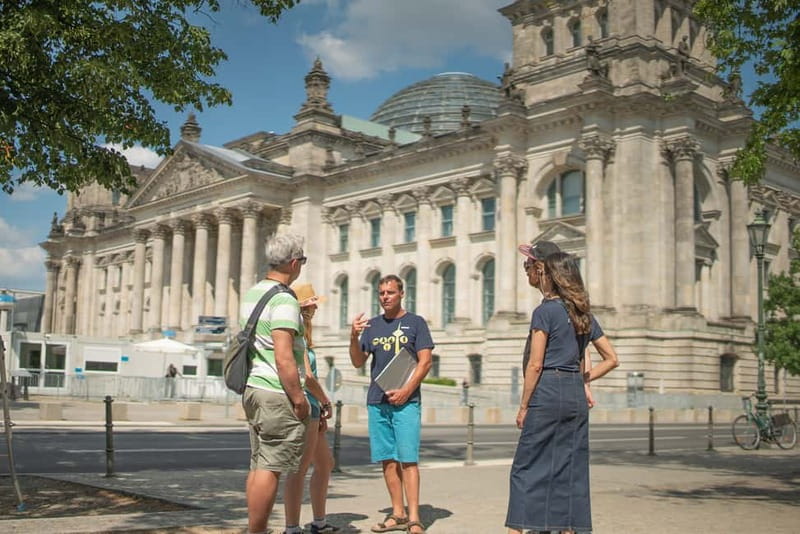
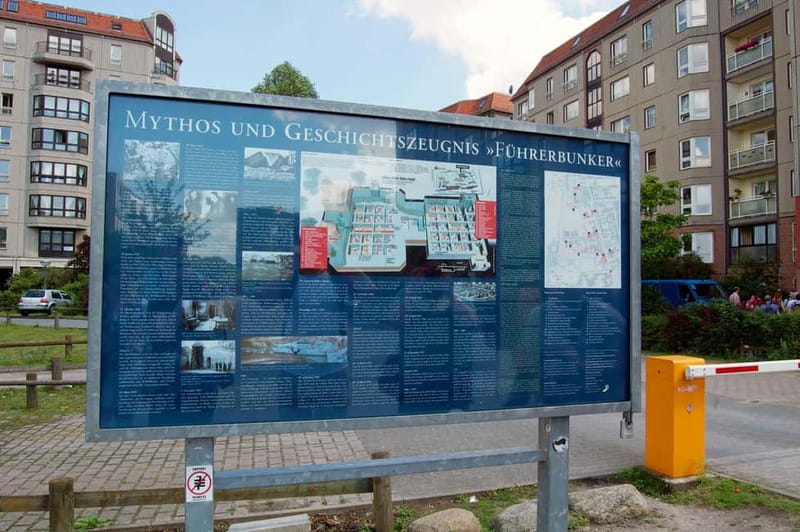
The Führer Bunker site is one of the tour’s most gripping stops. The bunker itself is not open as a visitor attraction, and there is no grand memorial marking it. Instead, you stand above the approximate location and learn what happened during Hitler’s last days.
The guide explains the collapse of the Nazi regime, Hitler’s suicide, and the fate of his remains. This is a useful approach because it strips away the mythology that often surrounds the bunker. The setting is ordinary and largely unremarkable, while the events connected to it changed the course of European history.
I appreciate that the stop treats the bunker as a place for historical explanation, not fascination. You are there to understand the end of a dictatorship, the decisions made inside its final headquarters, and the confusion surrounding the remains afterward.
This stop can be emotionally heavy. If you prefer a lighter sightseeing experience, this tour may not suit your mood. It focuses on genocide, dictatorship, war, and destruction without softening the subject.
The Topography of Terror and the institutions behind terror
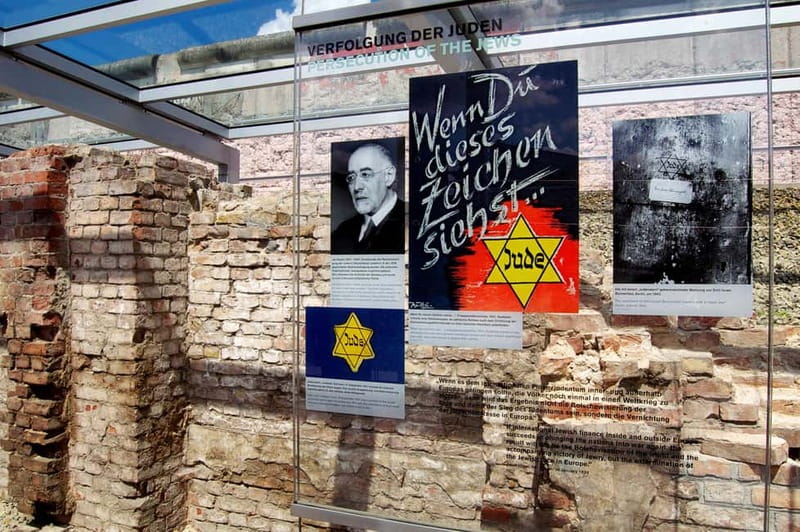
The Topography of Terror exhibit is one of the strongest points on the route. It examines the Nazi institutions that organized persecution and repression, including the Gestapo and SS.
A stop here gives the walking tour a firmer historical base. Instead of treating Nazi crimes as a series of battlefield events, it helps you understand the offices, officials, and systems that made terror possible. The location itself is linked to the former headquarters of the regime’s police and security organizations.
The tour does not replace a full visit to the exhibit. If you have time, you may want to return later for a slower look at the displays. The walking tour gives you context and a route through the city, while the exhibit offers a more focused presentation.
The balance between outdoor sites and this institutional history is one of the tour’s best features. You move from streets and buildings to the machinery of repression, then back into the central district to follow the final battle.
From the Brandenburg Gate to the Reichstag
The Brandenburg Gate is one of Berlin’s most recognizable sights, but this tour places it in several different periods. You hear about its use as a symbol of Nazi power, its position during the Cold War, and its place in modern Berlin.
That changing meaning is worth paying attention to. A monument can be used by different governments for very different purposes, and the Brandenburg Gate shows how political symbols are repeatedly claimed and reshaped.
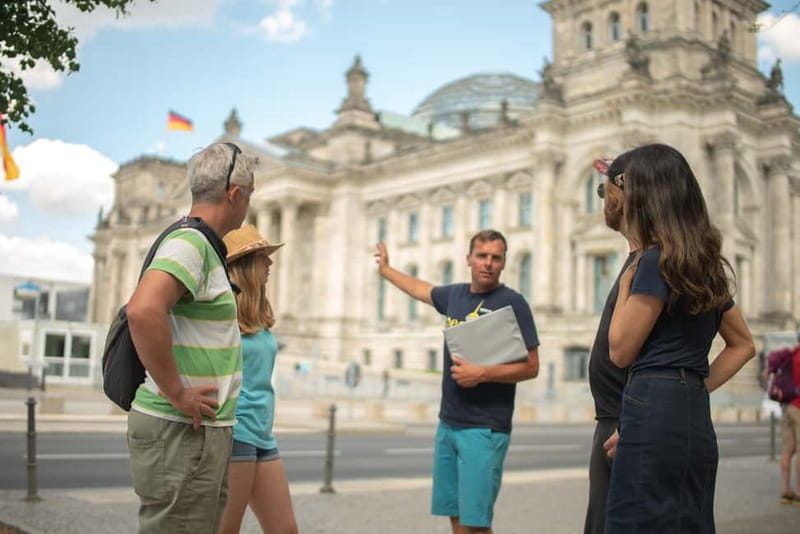
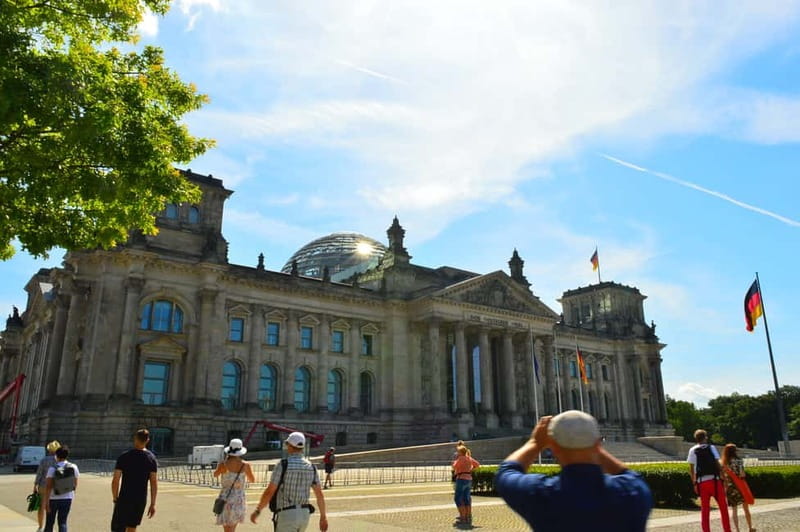
The walk then continues toward the Reichstag, which the tour presents as the final battlefield of Nazi Germany. This gives the ending of the war a strong physical setting. The Reichstag is not just a famous government building or a photo stop. It became a key symbol of the defeat of Nazi Germany and the Soviet capture of Berlin.
The route is especially useful if you are seeing these sights for the first time. You get the major landmarks, but the guide explains what they meant at the time rather than simply naming them.
The Soviet War Memorial and the end of the war
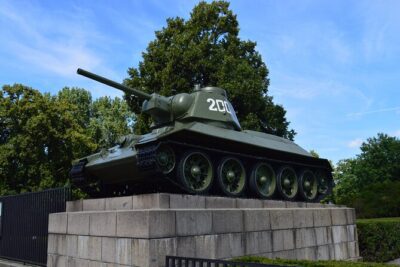
The tour ends its historical arc at the Soviet War Memorial, where T-34 tanks and Red Army howitzers flank the site. These pieces of military equipment make the final stage of the Battle of Berlin unusually concrete.
The memorial also adds a viewpoint that is sometimes missing from tours focused only on Hitler. The Soviet assault was central to the destruction of Nazi power in Berlin, and the memorial shows how the Soviet Union chose to remember its dead and its victory.
This is also a good place to consider the complicated afterlife of Berlin’s wartime monuments. The memorial is not simply a decoration. It reflects military sacrifice, Soviet power, and the political history of postwar Germany.
The route’s ending feels complete because it moves from the creation of Nazi power to its collapse. You begin with ministries and plans for a grand capital, then finish among the weapons and memorials of a ruined city.
Guide quality, pace, and group size
The guide is the heart of this experience. The tour is offered in English, German, and Spanish, and the individual style can vary. The strongest guides are described as passionate, approachable, funny when appropriate, and willing to answer questions.
Names that have drawn especially strong praise include Hannah, Mikhail, Jimmy, Martin, Will, Xavier, Jörg, Callum, Thomas, Artie, Josh, Jasper, Tina, Marty, Rafa, and Jim. That range suggests a large guiding team rather than one fixed personality, so do not book expecting one particular person unless your booking specifically confirms the guide.
Jimmy is praised for covering many major buildings and sites without rushing. Mikhail is noted for adding Cold War and broader Berlin history between stops. Hannah is especially well regarded for respectful treatment of sensitive material. Martin is praised for encouraging questions, which could be helpful if you are studying the period or visiting with a teenager.
Group size deserves attention. Private and small-group options are available, but the standard experience may have more people. One otherwise positive account specifically found the group too large. In a crowded group, you may stand farther from the guide and have less chance to ask questions.
If personal attention matters to you, choose the smallest available group or a private option. If price matters most, the standard tour still offers strong value at $20 per person, provided you are comfortable with a more public format.
Is $20 a fair price?
At $20, this is a good-value history tour if you want a clear introduction to Nazi Berlin. Three hours of guiding across several major sites would cost far more in a private format, and the route covers places that are scattered across central Berlin.
The value comes from interpretation rather than admission tickets. The walking tour includes a guide, but it does not promise entry to every museum or interior mentioned along the way. You are paying for the route, historical explanation, and the chance to ask questions.
A private or small-group option will likely cost more, but it may be worthwhile for families, students, or anyone who wants to discuss difficult topics in detail. For a first day in Berlin, the standard price is an efficient way to establish a strong historical framework before visiting museums on your own.
Free cancellation up to 24 hours before the start and reserve-now, pay-later booking make the plan easier to fit into a changing schedule. Still, the practical details matter more than the flexible booking: bring water, expect three hours outdoors, and plan for rain.
Who should book this walking tour?
I would choose this tour if you want a serious, place-based introduction to Berlin during the Nazi period and World War II. It suits history students, first-time visitors, and anyone who wants more than a photo at the Brandenburg Gate.
It is also a good choice if you want Nazi history placed within the wider story of Berlin. The route includes the rise of the regime, its central offices, Hitler’s final days, the Soviet assault, and later Cold War meaning.
You may want another type of experience if you dislike long walks, need regular breaks, or want to spend most of your time inside museums. The subject is grim, and the tour does not turn away from persecution, dictatorship, and mass violence.
If you are traveling with a teenager studying World War II, ask questions as you go. Guides such as Martin are praised for encouraging them. For a quieter and more personal experience, select a private or small-group option when available.
Should you book the Third Reich, Hitler, and WWII Walking Tour?
Book it if you want Berlin’s Nazi history explained at the places where decisions were made and battles ended. The route is strong, the price is modest, and the best guides bring clarity and care to a difficult subject.
Choose the small-group or private format if you dislike crowds or want plenty of time for questions. For the standard walk, wear good shoes, bring water, and prepare for serious material. This is not a casual city stroll, but it is a useful, carefully focused way to understand how Nazi Berlin rose, ruled, and fell.
FAQ
How long does the Berlin Third Reich walking tour last?
The tour lasts three hours.
Where does the tour begin?
It begins outside Friedrichstraße train station, on the square between the station and the Tränenpalast, also called the Palace of Tears.
How can I recognize the guide?
The guide will wear a blue lanyard and yellow name tag and hold yellow umbrellas.
Where does the tour end?
The tour ends back at the Friedrichstraße meeting point.
What languages are available?
The tour is available in English, German, and Spanish.
Does the tour include hotel pickup?
Hotel pickup is available only for private options. For those options, wait in the hotel lobby five minutes before the scheduled pickup time and look for a guide with a yellow name tag.
Does the tour operate in bad weather?
Yes. The tour operates rain or shine, so bring weather-appropriate clothing.
Can I cancel or pay later?
You can cancel up to 24 hours in advance for a full refund. Reserve-now, pay-later booking is also available.
Just added in Berlin
- Berlin & The Third Reich Private Guided Tour★ 5.0 · 3 reviews
- Third Reich Quest Experience in Berlin★ 4.5 · 7 reviews
- Private Analogue Photography Experience in Berlin★ 5.0 · 3 reviews
- Berlin Urbex Adventure and History Tour★ 5.0 · 9 reviews
- The Beauty of Berlin by Bike: Private Tour★ 5.0 · 59 reviews
- Berlin: Guided Bike tour of the Berlin Wall and Third Reich★ 5.0 · 160 reviews
- Beyond Currywurst: Berlin’s Hidden Street Food & Culture Tour★ 5.0 · 100 reviews
- Berlin Third Reich & Cold War Walking Tour With A Guide★ 5.0 · 7 reviews
Third Reich Tours, compared.

Berlin’s Best: 2 Hour Walking Tour Third Reich and the Cold War
Read our review →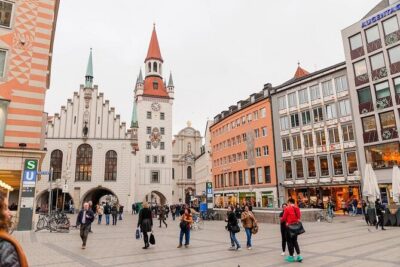
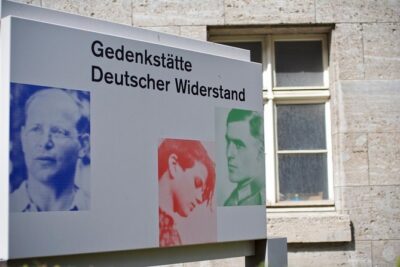
Third Reich Berlin: Hitler and WWII Walking Tour
Read our review →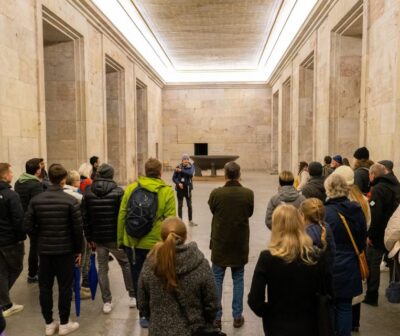
Walking Tour of Former Nazi Party Rally Grounds
Read our review →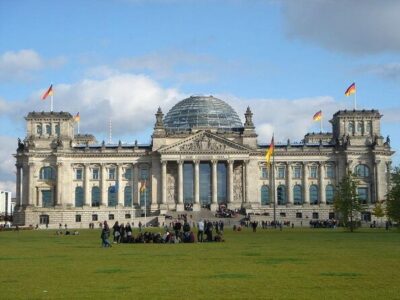
Berlin Third Reich Sites: Half-Day Walking Tour
Read our review →
Birthplace of the Third Reich Guided Walking Tour
Read our review →Browse the lists this tour appears in