
Reviewed · THIRD REICH TOURS
Munich: Resistance against Hitler – Historical Walking Tour
Munich was the birthplace of National Socialism, but this city also witnessed brave opposition to Hitler. This two-hour historical walk follows the people who risked everything to resist, from the White Rose students at LMU to a lone man who built a bomb for Hitler.
I like the route’s original locations and Alex’s personal connection to Munich. I also like that the tour goes beyond the White Rose, covering a military coup, youth resistance, and lesser-known stories. The main drawback is that the tour is in German, so it will not suit you if you need English explanations.
The walk is a good value at $28. It begins at the large fountain in front of Munich’s university and ends at Odeonsplatz, with no hotel pickup. Wear comfortable shoes, and plan for rain or shine.
Key points to know before booking
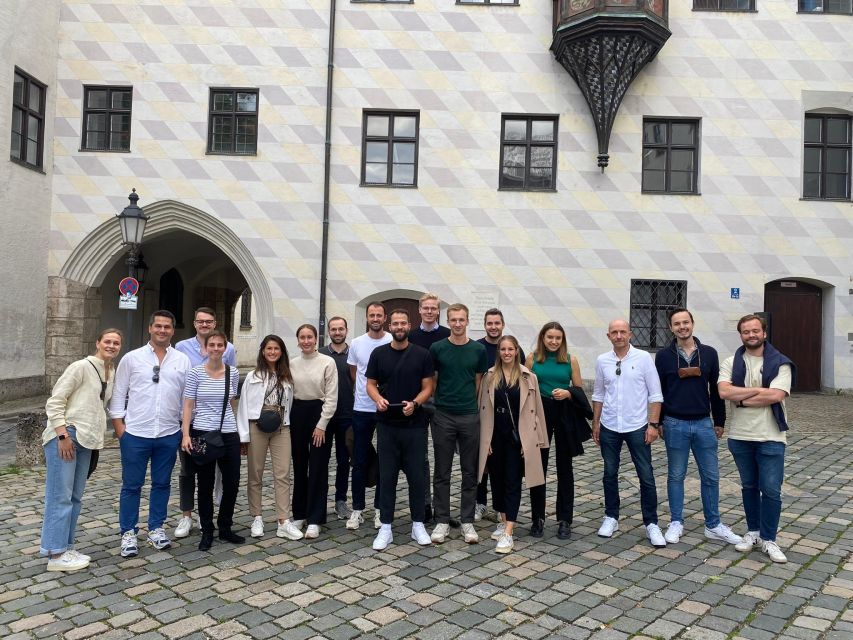
- Starts at LMU’s main entrance: Meet Alex at the large fountain at Geschwister-Scholl-Platz 1.
- Covers more than the White Rose: You’ll also hear about a secret military plot, youth resistance, and a lone assassination attempt.
- Uses original historical sites: The route includes the university’s main building and the former Central Ministry.
- Ends at Odeonsplatz: The final stop connects the tour to one of Munich’s most important public squares.
- Led by local guide Alex: His relaxed style, strong historical command, and use of unusual images add depth to the walk.
- German-language and wheelchair accessible: The tour runs for about two hours, in all weather.
Why Munich is the right place to study resistance

Munich is not a neutral backdrop for this subject. Hitler gave some of his first speeches here, the Nazi Party was founded here, and the city became a major center of Nazi propaganda. The tour uses that setting to show the contrast between the rise of the dictatorship and the people who opposed it.
That contrast gives the walk its force. You are not hearing about resistance in a distant place. You are tracing it through the city where Hitler built much of his political career and where the Nazi movement kept a firm grip until the end of the war.
The stories are serious and often tragic. Some people were executed. Others risked prison, torture, or the safety of their families. Yet the focus is not only on defeat. The tour also considers the moral courage involved in acting when many people chose silence or deliberately looked away.
I appreciate that balance. A tour on Nazi Germany can become either a list of dates or a grim parade of crimes. This one is framed around decisions made by individuals. You learn what people did, why they acted, and what made their choices so dangerous.
More History Tours in Munich
- Munich: Guided Tour of the historic Town Hall on Marienplatz
★ 4.8 · 63 reviews - Munich Craft Beer & Cultural Tour With Snack
★ 5.0 · 46 reviews - Munich History Tour: Private & Personalized with a Local Guide
★ 4.5 · 33 reviews
Starting at the LMU fountain and the White Rose
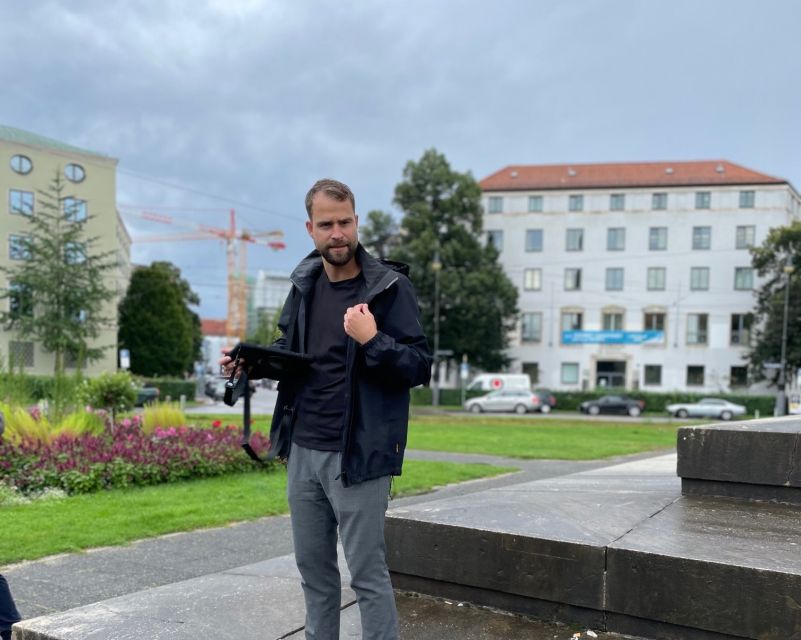
The meeting point is the large fountain in front of the main entrance to Ludwig Maximilian University, usually called LMU. The address is Geschwister-Scholl-Platz 1. This is a clear central meeting place, but give yourself time to find the correct fountain and main entrance.
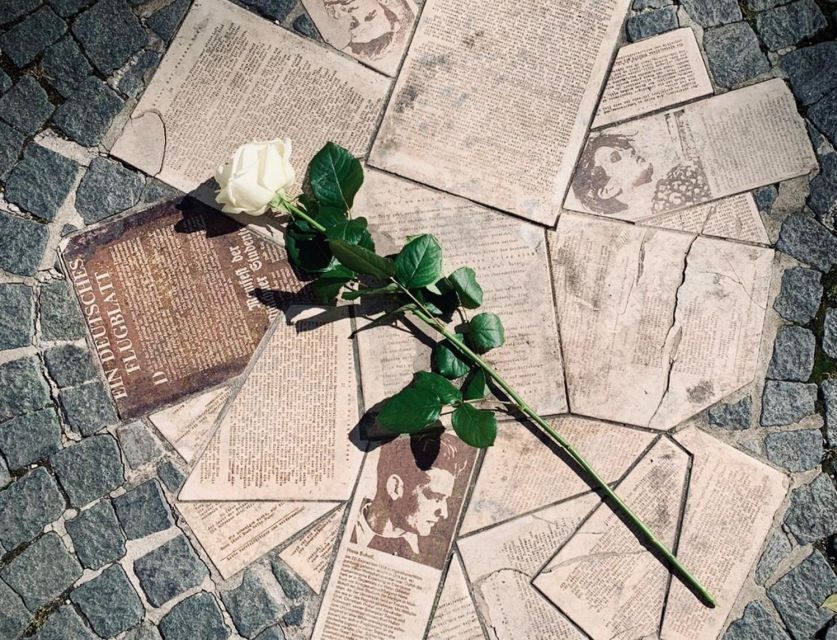
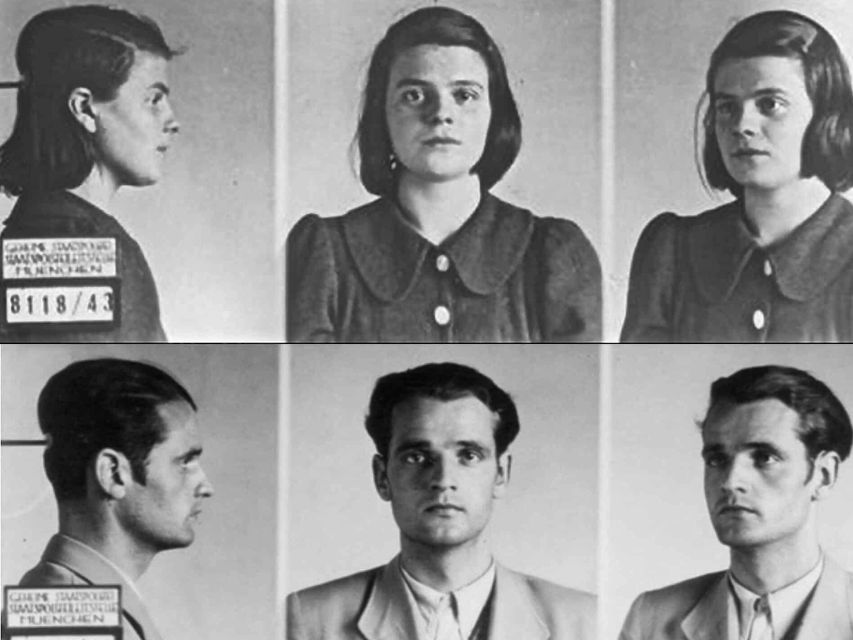
The university is the natural starting point because it was the setting for the best-known resistance story in Munich: the White Rose. The group included students who spoke out against the Nazi regime through leaflets and other acts of opposition. Their story is familiar to many people, but seeing the university as the starting point gives it a more direct connection to the city around you.
The route includes the university’s main building and original historical sites nearby. That matters because the setting helps you picture how young people moved through the building, distributed their material, and took the risk of challenging a government that used fear and violence to silence opposition.
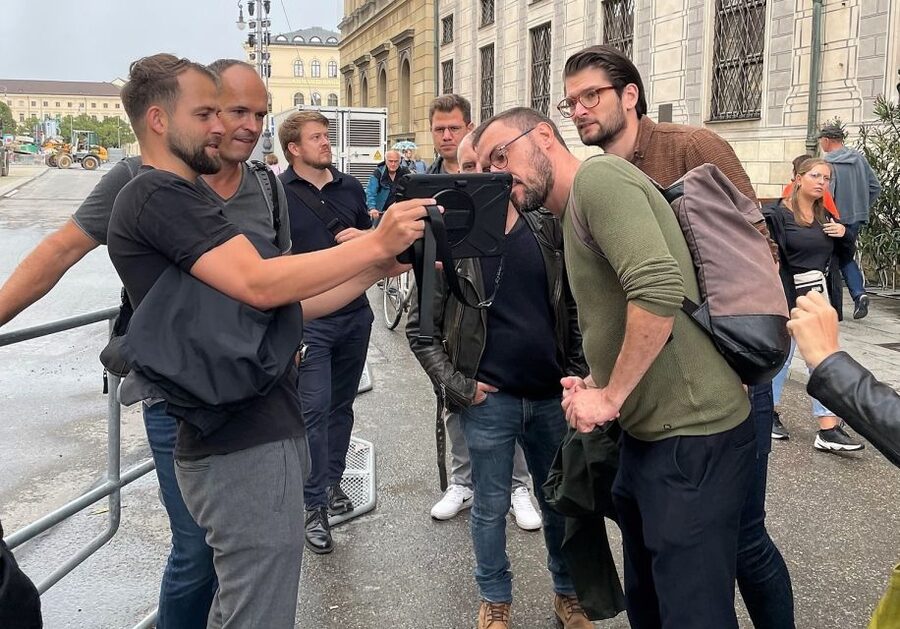
Alex also uses unusual historical images during the walk. These images are tied to the places you visit, so they are not just decoration. They help you compare the city as it looked during the Nazi period with the streets and buildings you see today.
The White Rose is only one part of the tour. If you already know that story, you should still find new material here. Alex covers resistance movements that receive less attention, including people who acted alone and groups whose plans never became widely known.
From famous students to overlooked acts of courage
One of the tour’s strongest features is its wider view of resistance. The White Rose is the obvious entry point, especially for visitors who know little about Munich’s wartime past. But the walk does not treat it as the whole story.
You also learn about Munich’s youth and the ways younger people were prepared to resist. The timing is important. The tour points out that some young people acted at a moment when many older Germans were choosing to look away. That adds a useful layer to the usual picture of resistance as the work of military officers or established political figures.
I find this part especially valuable because it prevents the story from becoming too tidy. Resistance did not come from one social class or one political camp. It took different forms, with different levels of planning and different chances of success.
Some acts were public and organized. Others were private, improvised, or nearly forgotten. The tour’s purpose is not to suggest that every act had the same impact. Instead, it shows the range of ways people tried to oppose the regime.
You should expect a thoughtful history walk rather than a light sightseeing stroll. The subject includes persecution, execution, and the machinery of dictatorship. Alex’s sympathetic and relaxed manner helps keep the atmosphere open enough for questions, but the tour does not make the material casual.
The lone bomber and the danger of acting alone
The route includes the story of a single courageous man who built a bomb to kill Hitler. The tour presents this as an assassination plan carried out by one person, rather than by a large political or military organization.
That story adds a different kind of tension. A group can share tasks, protect information, and support its members. A lone plotter has none of those safeguards. Every step depends on one person, and discovery can bring immediate danger.
The location connected with this story gives you another way to think about resistance. It was not only a matter of speeches, leaflets, or military orders. Some people tried to change the course of the war through direct action, even when the odds were poor.
The supplied details do not name this individual, so the tour itself is the place to get the full story and the exact site. What matters for planning is that this is one of the main narrative turns in the walk. If you are interested in assassination attempts and personal acts of defiance, you will find this section particularly compelling.
More Third Reich Tours in Munich
- Munich: Third Reich & WWII Walking Tour
★ 4.6 · 6,181 reviews - Third Reich Walking Tour Munich
★ 4.5 · 4,291 reviews - Munich: Birthplace of the Third Reich Guided Walking Tour
★ 4.6 · 771 reviews - Munich City Walking Tour, includes Third Reich & Viktualienmarkt
★ 5.0 · 458 reviews
The secret military plot and the former Central Ministry
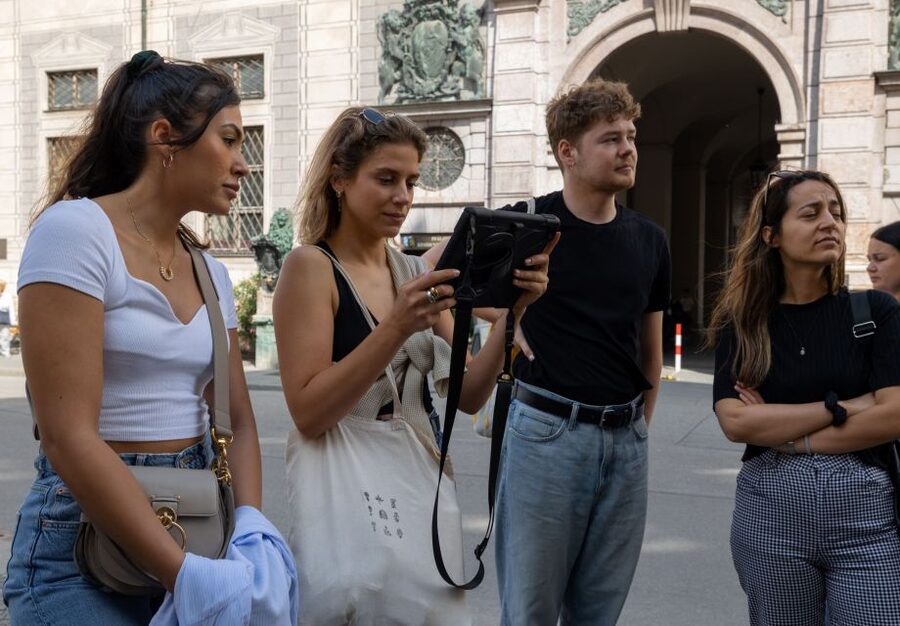
The tour also reaches original sites connected with a dramatic military coup against the Nazis. You visit the area of the former Central Ministry and hear how a secret military plan fit into the wider attempt to remove Hitler’s government.
This part broadens the story again. The resistance was not limited to students or isolated individuals. Some military figures also considered action against the regime, though their motives and political views could differ from those of other opponents.
A good guide needs to explain such distinctions without turning the walk into a dense lecture. Alex’s strength, based on the tour’s format and the detailed feedback about his historical answers, is his ability to connect the places with clear stories. He is also a Munich local, which gives the route a sense of place rather than making it feel like a classroom moved outdoors.
The military plot is especially useful for anyone who has already studied the White Rose. It shows that opposition developed along several tracks. Some plans were moral protests, some were acts of sabotage or assassination, and some were attempts to seize control of the state.
Do not expect every event to receive equal time. A two-hour walk has to choose its focus. The benefit is a route with a clear pace and several strong stories. The tradeoff is that you will not get a full political history of every resistance network in Germany.
Finishing at Odeonsplatz
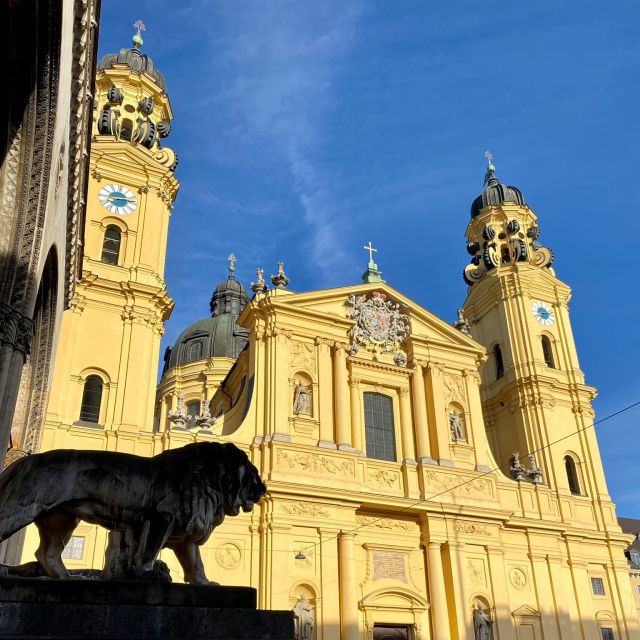
The final stop is Odeonsplatz, one of Munich’s most attractive and significant public squares. Ending here gives the tour a strong visual finish after the more concentrated university stops.
Odeonsplatz also fits the subject. Munich’s public spaces were used for ceremony, propaganda, political theater, and confrontation. The square helps bring the larger story back into the city’s open civic spaces.
I like this ending because you finish near a major Munich sight rather than at an obscure side street. You can continue exploring on your own, stop for food or coffee, or use Alex’s personal recommendations to see more of the city like a local.
The route’s endpoint also makes it easier to fit the walk into a sightseeing day. You do not return to the university, so consider that when planning your next stop. The tour takes about two hours, and the walk between locations is part of the experience, not simply a way to move from one lecture point to the next.
Alex’s guiding style and the value of the personal touch
Alex is the named guide for the tour and a real Munich local with a strong interest in history. His approach is one of the main reasons to choose this walk instead of trying to read about the sites independently.
The available feedback highlights several specific strengths. Alex explains lesser-known events clearly, answers questions well, and creates a relaxed atmosphere around a very serious subject. He also brings historical images connected to the places on the route.
That combination matters. A local guide can point out how the locations fit into modern Munich, while the images and stories keep the past from feeling abstract. You are not simply standing in front of a building and hearing a date. You are given a reason to look at the building differently.
I would choose this tour for the guide-led interpretation, not just for the stops. Munich has plenty of monuments and memorials that you can visit on your own, but the connections between them are harder to see without someone organizing the story.
The tour is listed as German-language only. That is the most important booking consideration. If you understand German well enough to follow a historical discussion, the walk may suit you very well. If not, you should look for an English-language alternative.
What the $28 price gets you
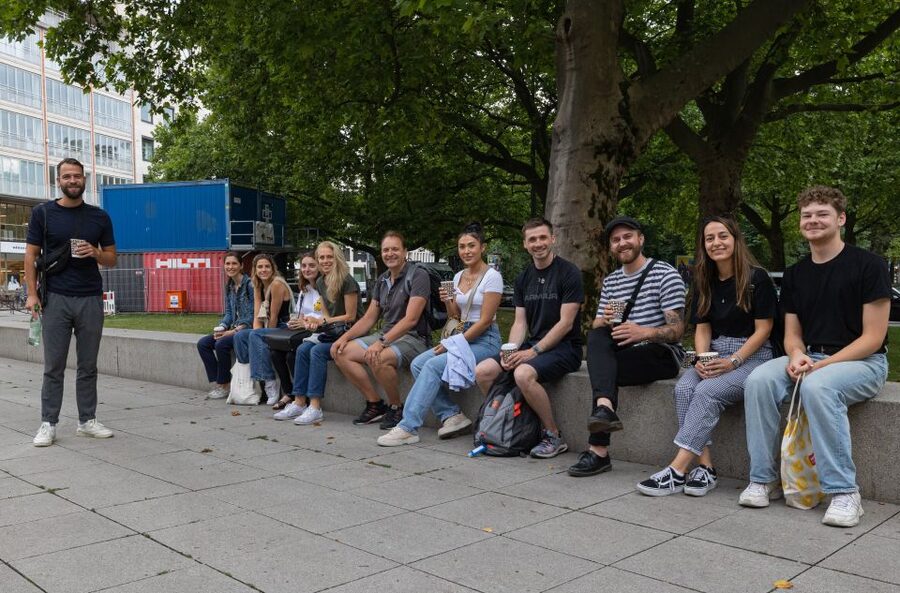
At $28 per person, this is a reasonable price for a two-hour guided city walk. You are paying for Alex’s preparation, live explanations, access to a planned route, and historical material that would take time to assemble on your own.
The value is strongest if you want context rather than a quick introduction. The tour covers several resistance movements and uses original sites, so it offers more than a single memorial stop or a general Nazi-era overview.
The price does not include hotel pickup, food, or any extras. That is normal for a walking tour, and the central meeting point keeps the format simple. You meet at LMU and make your own way there.
Free cancellation is available up to 24 hours before the tour for a full refund. You can also reserve now and pay later, which helps if your Munich schedule is still changing.
Practical advice for the two-hour walk
Wear comfortable shoes. The route runs between several central sites, and even a short walking tour is less enjoyable if you are worrying about your feet.
The tour operates rain or shine. Bring suitable clothing for the forecast, since the experience takes place outdoors as you move between buildings and squares. The supplied information does not specify a group size, so you should not assume a private or very small group.
The tour is wheelchair accessible. If you use a wheelchair and want to confirm the route’s exact surface or any site-specific details, check those points when booking, since the tour includes outdoor movement between historic locations.
Arrive at the large fountain by the main LMU entrance at Geschwister-Scholl-Platz 1. Because the university is a major city landmark, it is worth checking the starting address before leaving your hotel.
The tour is offered in German and lasts about two hours. It ends at Odeonsplatz, not back at LMU. That makes the finish convenient for further sightseeing, but it also means you should plan your transport and next activity from Odeonsplatz.
Who should book this Munich resistance tour?
I would recommend this tour to you if you want to understand Munich’s role in the Nazi period through personal stories and real locations. It suits visitors who already know the White Rose and want to learn about less familiar movements, as well as those starting with little background.
It is also a good fit for people who prefer a focused walk to a large museum visit. You get a clear two-hour story, original sites, and the chance to ask Alex questions as you go.
I would be more cautious if you want a broad overview of Munich’s architecture, food, or royal history. This is a serious history tour with one subject. It is also not the right choice if you need English guiding.
Book it if the German-language format works for you and you want to see Munich through the choices of people who resisted Hitler. Skip it if you prefer a general city tour or cannot comfortably follow German. At $28, the walk offers strong value for an attentive, history-minded visitor, especially because Alex adds lesser-known stories and visual material to places you could otherwise pass without noticing.
FAQ
Where does the tour begin?
The tour begins at the large fountain in front of the main entrance of the University of Munich, LMU. The address is Geschwister-Scholl-Platz 1.
Where does the tour end?
The final stop is Odeonsplatz in central Munich.
How long does the tour last?
The walking tour lasts about two hours.
What language is the tour in?
The live tour guide speaks German. German is the listed tour language.
Does the tour include the White Rose?
Yes. The tour covers the White Rose and its connection to Munich’s university.
What other resistance stories are included?
The tour also covers a secret military plot, a lone man’s plan to kill Hitler with a bomb, youth resistance, and other resistance movements.
Is the tour wheelchair accessible?
Yes, the activity is listed as wheelchair accessible.
What happens if it rains?
The tour takes place rain or shine. Comfortable shoes are recommended, along with clothing suited to the weather.
Is hotel pickup included?
No. Hotel pickup is not included. You make your own way to the meeting point at LMU.
More Walking Tours in Munich
- Munich: Night Watchman Walking Tour
★ 4.7 · 2,092 reviews - Munich Ghosts and Spirits Evening Walking Tour
★ 5.0 · 1,900 reviews - Munich Old Town Walking Tour
★ 4.5 · 1,287 reviews - Munich: Walking Tour Old Town and Viktualienmarkt
★ 4.7 · 839 reviews
Just added in Munich
- Private transfer: Vilshofen to Munich with 2h sightseeing stop★ 5.0 · 6 reviews
- Pub crawl incl. Oktoberfest museum guided tour with beer tasting (private)★ 5.0 · 5 reviews
- South Tyrolean specialties and wine tasting★ 5.0 · 5 reviews
- Size Matters Beer Tour Munich★ 4.6 · 105 reviews
- Short & sweet: Tasting the Viktualienmarkt★ 4.8 · 37 reviews
- Secret Food Tours Munich★ 4.8 · 5 reviews
- Munich: Romantic Wine Experience for Two at Viktualienmarkt★ 4.2 · 14 reviews
- Residence of Munich private tour with skip the line ticket★ 5.0 · 4 reviews
Third Reich Tours, compared.

Berlin’s Best: 2 Hour Walking Tour Third Reich and the Cold War
Read our review →
Third Reich Berlin: Hitler and WWII Walking Tour
Read our review →
Walking Tour of Former Nazi Party Rally Grounds
Read our review →
Berlin Third Reich Sites: Half-Day Walking Tour
Read our review →Browse the lists this tour appears in