
Reviewed · THIRD REICH TOURS
Munich: Third Reich & WWII Walking Tour
Munich’s Nazi past is not tucked away in a distant museum. It is written into the city center, from the Hofbräuhaus to the Feldherrnhalle and Königsplatz. This 2.5-hour walking tour connects those places into one clear story, showing how postwar anger, political chaos, and propaganda helped Hitler’s movement take root. I like that the tour also includes the White Rose resistance, giving you more than a story about Nazi power.
I especially like the focus on real places and the guides’ strong command of the subject. Guides including Michael, Steve, Alex, Josh, Danielle, and Florian are repeatedly praised for clear storytelling, thoughtful answers, and keeping difficult material respectful. The main drawback is simple: this is an outdoor walking tour, and Munich can be cold, wet, or snowy. One guest also found the busy starting point hard to locate, so arrive early and check your meeting details carefully.
Key points to know before you book
- Hitler’s Munich begins at the Hofbräuhaus: Learn how early Nazi gatherings used a famous beer hall as a stage for political organizing.
- The Feldherrnhalle explains the failed power grab: This is where the Beer Hall Putsch ended in 1923, an event that shaped Hitler’s later strategy.
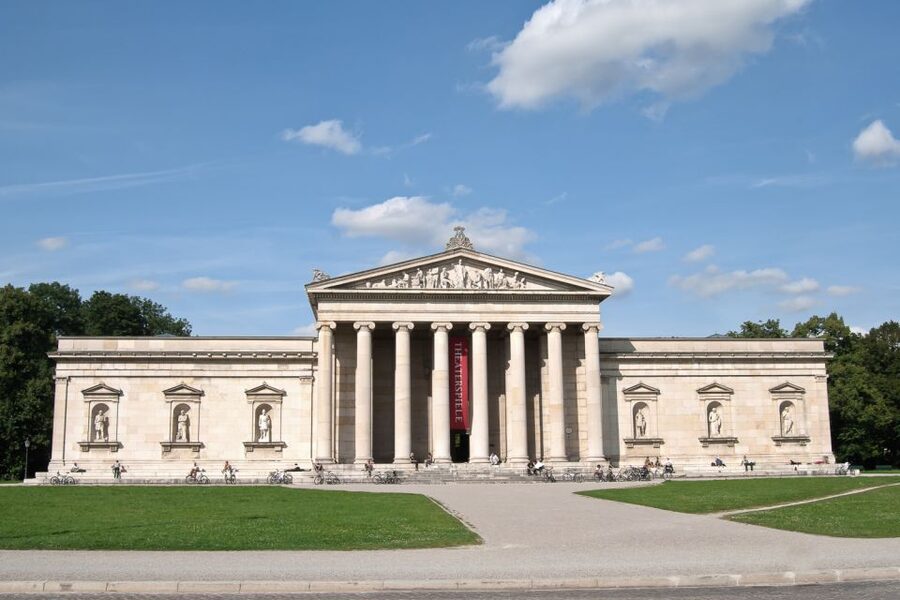
- Königsplatz shows propaganda in physical form: The square was used for Nazi rallies and remains one of the most important stops on the route.
- The White Rose adds a needed counterpoint: At the Hofgarten, the tour turns to Munich students who resisted the regime.
- The guides make or break the experience: Michael, Steve, Alex, Josh, and others are praised for strong voices, humor used with care, and clear explanations.
- Prepare for nearly three hours outside: Wear comfortable shoes and bring warm, weatherproof clothing, especially in winter.
Why this Munich history walk matters
I find this tour useful because it does not treat the Third Reich as an isolated chapter that began in Berlin. Munich was central to Hitler’s early career, and the route lets you see how a political movement grew through speeches, party meetings, public ritual, and calculated use of familiar city spaces.
The story begins in 1919, when Germany was defeated in World War I and struggling with political violence, revolution, assassination, and economic crisis. Bavaria was especially unsettled. That setting helps explain the appeal of radical movements, though it does not excuse the choices made by Hitler and his supporters.
Your guide connects the broad events to the streets around you. Instead of hearing only dates and names, you learn why a particular beer hall, square, monument, or government building mattered. That physical connection is the tour’s main strength. You can leave the route and still remember where the movement held meetings, attempted a coup, staged rallies, and faced opposition.
This is a serious subject, but the best guides keep the presentation human. The strongest feedback centers on guides who explain complex events in plain language, answer questions without losing the thread, and use occasional humor without making light of the crimes involved.
More Third Reich Tours in Munich
- Third Reich Walking Tour Munich
★ 4.5 · 4,291 reviews - Munich: Birthplace of the Third Reich Guided Walking Tour
★ 4.6 · 771 reviews - Munich City Walking Tour, includes Third Reich & Viktualienmarkt
★ 5.0 · 458 reviews
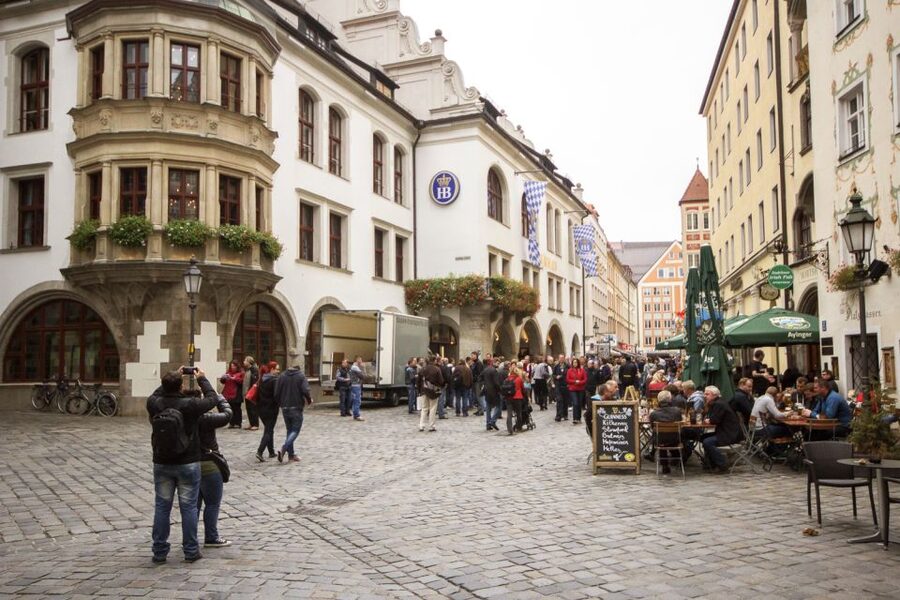
The Hofbräuhaus and the first Nazi gatherings
The Hofbräuhaus is one of Munich’s best-known beer halls, which makes it a striking place to discuss the early Nazi movement. Here, the tour covers the first mass meeting connected with Hitler’s party and explains how speeches and public gatherings helped turn a small political group into a movement with wider reach.
The value of this stop is the contrast. You are standing in a place associated today with food, beer, music, and Munich tradition, yet it also played a role in a much darker political story. Your guide helps separate the building’s long civic life from the ideology promoted there, while showing how the Nazi movement used popular meeting places to reach ordinary people.
This part of the walk is also where the tour begins to explain Hitler’s rise rather than simply recounting his later dictatorship. You hear how he developed his public image, how the party communicated its ideas, and how Munich’s unstable political climate offered opportunities.
The Hofbräuhaus can be busy and noisy. That matters because the guide’s voice needs to carry, particularly when the group gathers in a crowded city-center setting. Steve is praised for taking extra care with this issue, and one guest suggested that a small speaker could help when surrounding crowds are loud. If hearing every word is important to you, stay near the guide and avoid drifting to the rear.
The Feldherrnhalle and the failed Beer Hall Putsch
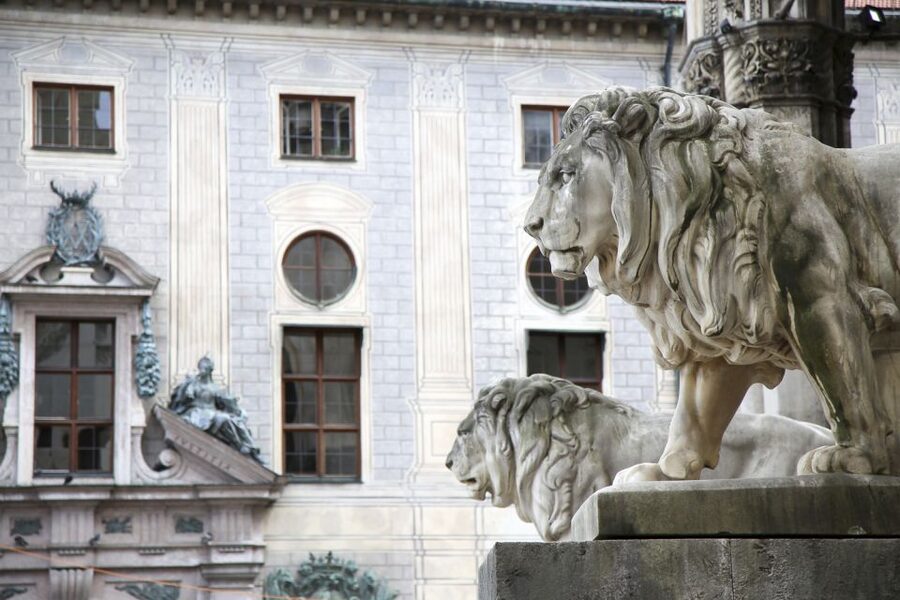
The route continues to the Feldherrnhalle, the monumental loggia on the Odeonsplatz. This is the site tied to Hitler’s failed attempt to seize power in 1923, often called the Beer Hall Putsch.
Your guide explains the event as more than a failed march. It showed that Hitler could not simply take control through a dramatic armed action, but the trial that followed gave him publicity and a larger platform. The experience helps you see how a political defeat could later be used as part of a successful strategy.
This stop works well for people who already know some Third Reich history because it adds a physical reference point to a familiar event. If you are new to the subject, the guide supplies the needed background before moving on. Several guides are praised for explaining the sequence without turning the tour into a jumble of dates.
The Feldherrnhalle is also a good example of how symbols can be repurposed. Nazi propaganda later treated the dead from the putsch as martyrs. Your guide may discuss how public spaces were used to reinforce loyalty and create a heroic version of the movement’s past.
There is not a long indoor visit here. You are listening outdoors, so the weather and street noise remain part of the experience. In cold conditions, the stop can feel long if you are underdressed. Warm socks, gloves, and a proper coat are not overkill.
The Hofgarten and the White Rose resistance
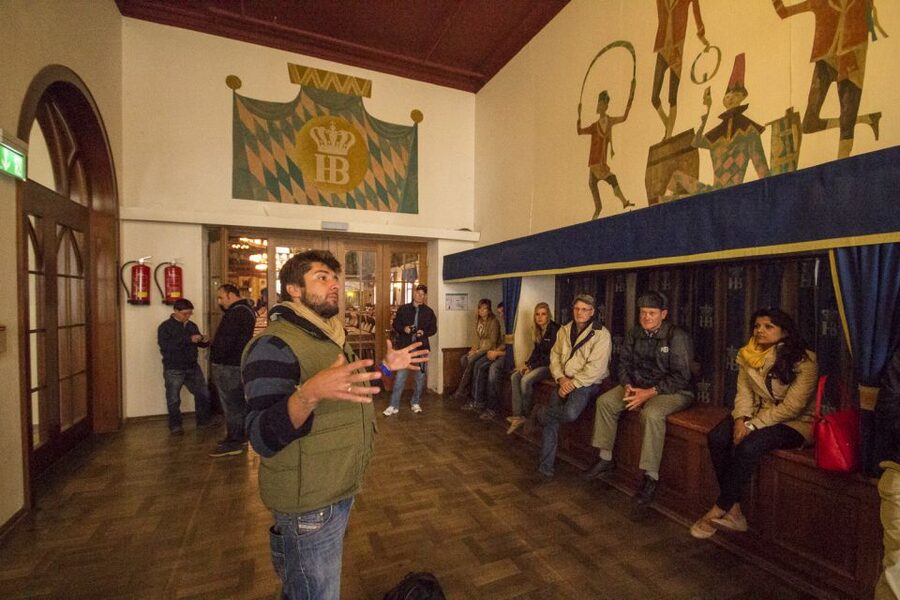
At the Hofgarten, the tour turns toward the White Rose resistance movement. This is one of the most important parts of the route because it reminds you that Munich’s wartime story was not only about Nazi leaders, party rallies, and state power.
The White Rose was a student-led resistance movement. Your guide explains its opposition to the regime and the courage involved in distributing anti-Nazi leaflets in a society where dissent could bring severe punishment. The stop gives the tour a moral and human balance, without suggesting that resistance was easy or widespread.
I value this part because it shifts the question from how the Nazis gained power to how individuals responded once that power had become dangerous. It also places young people at the center of the story, which can make the subject feel immediate for families and students.
The Hofgarten stop may be especially meaningful if you want a tour that addresses choices, responsibility, and resistance rather than focusing only on military events. The discussion remains tied to the city, so the White Rose is not treated as a separate footnote.
More Walking Tours in Munich
- Munich: Night Watchman Walking Tour
★ 4.7 · 2,092 reviews - Munich Ghosts and Spirits Evening Walking Tour
★ 5.0 · 1,900 reviews - Munich Old Town Walking Tour
★ 4.5 · 1,287 reviews - Munich: Walking Tour Old Town and Viktualienmarkt
★ 4.7 · 839 reviews
Königsplatz and the architecture of Nazi power
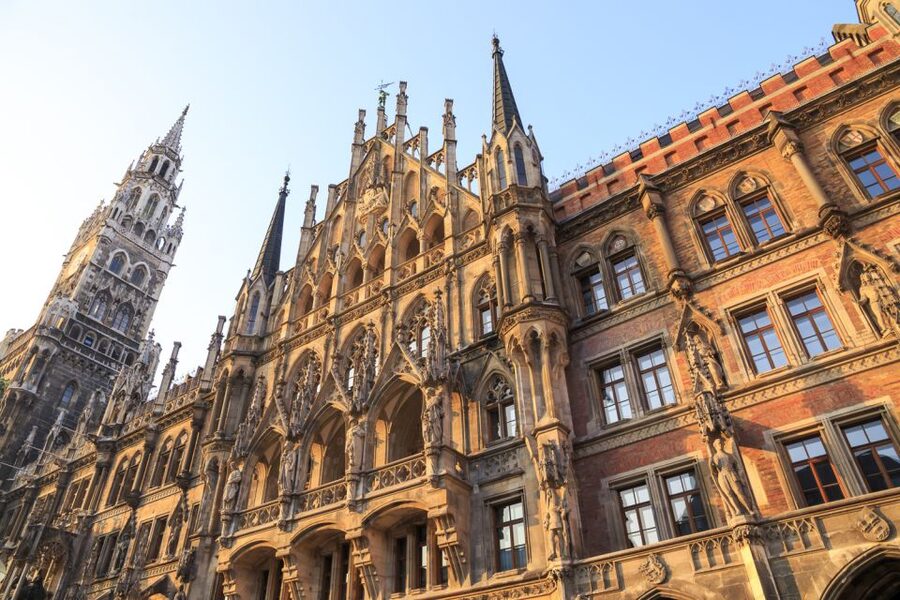
Königsplatz is the route’s major stop for Nazi rallies and public spectacle. The broad square was designed as a grand civic space, and the Nazi regime used it for mass gatherings that projected order, strength, and national unity.
Your guide explains how architecture and ceremony supported propaganda. The scale of the square matters. A large crowd, arranged with flags, uniforms, speeches, and controlled movement, could create a sense of power that was carefully staged.
This is also the point where Munich’s relationship with the Third Reich becomes hard to ignore. You are not merely hearing that rallies took place somewhere in the city. You are seeing the setting used to shape public emotion and political identity.
Königsplatz is generally listed as the ending point, and one person reported that the tour did not finish there on their particular departure. That suggests you should confirm the end point with your guide, especially if you plan to visit the Documentation Center of the Nazi Party Rally Grounds or another museum immediately afterward. Another guest found the nearby Documentation Center a useful follow-up after the walk.
The square can also be exposed to the weather. It is a good place to listen and reflect, but not a sheltered one. In winter, plan your clothing for the stop rather than only for the walk between locations.
A tour shaped by its guide
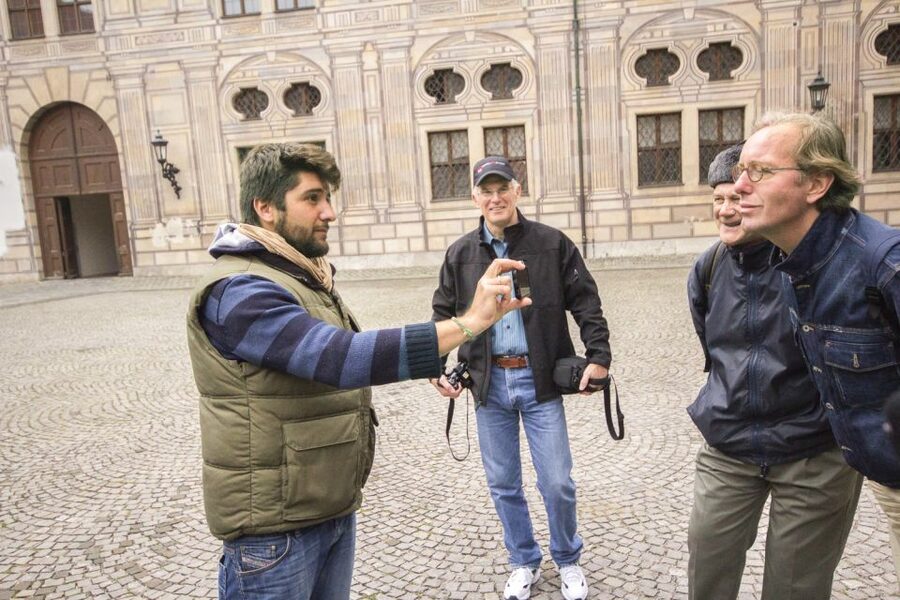
The published guide may vary by departure. Recent guides praised for this route include Michael, Steve, Alex, Josh, Danielle, Florian, Aileen, Brigit Muller, Ulrich, and others.
The names matter because the experience is strongly guide-led. The route itself is valuable, but the same sites can feel flat if the explanation is rushed or poorly organized. The most highly praised guides do three things well: they speak clearly, they give context before details, and they invite questions without letting the group lose its direction.
Josh receives especially strong praise for keeping a large group attentive for more than two hours and connecting the lessons of Munich’s past to the present. Steve is praised for carrying hot tea and seating pads on cold days, a small but useful touch when the group needs to pause outdoors. Michael is noted for enthusiasm and clear delivery, while Alex is repeatedly described as approachable and engaging.
Do not assume every guide will use the same examples or exact order. One repeat participant appreciated that Josh changed parts of his presentation while keeping the main stops. That can make a second visit worthwhile, though the basic route and subject remain the same.
One point to watch is group management. Large groups can mean more energy and more questions, but they can also make it harder to hear. A guest on one very large departure felt the guide gave frequent reminders about staying focused. That may be necessary in a crowded city, but it is worth knowing if you prefer a quiet, intimate tour. A private group option is available if you want a more personal format.
Pace, comfort, and practical planning
The advertised duration is 2.5 hours, or 165 minutes. Some descriptions refer to the tour as 2 hours and 45 minutes, so allow close to three hours in your schedule. Guides stop often enough for explanations, but you should still expect sustained outdoor walking.
Comfortable shoes are the one stated packing requirement, and it is good advice. Munich’s central streets can be hard on your feet after several stops, especially if you are combining this with a full day of sightseeing.
Your clothing matters just as much. Recent departures took place in cold, snowy, rainy, and wintry conditions. Bring a warm coat and weather protection. The fact that a guide may provide tea or cushioning is a welcome kindness, not a substitute for dressing properly.
The tour is wheelchair accessible, although the exact meeting point can vary by booking option. Check the location before setting out. The starting area is in the busy city center, and one person found it difficult to identify, so give yourself extra time and look for the guide rather than arriving at the last second.
English and German departures are available. If you are booking for a family, the tour can work well for older children and teenagers who can focus for a long history presentation. It is less suitable for very young children who need frequent entertainment or indoor breaks.
Is $31 a fair price?
At $31 per person, I consider this good value if you want a guided historical introduction to Munich. You are paying for 165 minutes of interpretation, not just a walk between famous buildings. A strong guide can explain political context, local details, propaganda, resistance, and the meaning of each site in a way that is difficult to reproduce from a map.
The value rises if you are new to the subject or have limited time in Munich. The tour gives you a framework that can improve later visits to museums and memorials. It also saves you from trying to connect scattered facts on your own.
The value is less certain if you already have extensive knowledge of Munich’s Nazi past and prefer to explore independently. You may find some introductory material familiar, though the physical route and guide’s local stories can still add something.
Free cancellation up to 24 hours before the start gives you useful flexibility. You can also reserve now and pay later, which helps when your schedule depends on weather or changing plans. Those policies do not improve the history lesson itself, but they reduce the risk of booking an outdoor activity too far ahead.
Who should book this walking tour?
I would choose this tour if you want to understand how Munich became a center of Nazi power, not simply see a list of related landmarks. It suits history students, families with older children, first-time visitors, and anyone planning to visit a Munich documentation center afterward.
It is also a good fit if you value a live guide who can adjust the explanation to questions. The repeated praise for Michael, Steve, Alex, Josh, Danielle, and Florian suggests a strong guide team, though your exact guide will depend on the departure.
I would think twice if you dislike outdoor walking, have difficulty standing in cold weather, or want a purely military account of World War II. This tour focuses more on political origins, Hitler’s rise, Munich’s role, Nazi public life, and the White Rose than on battlefield operations.
Should you book it?
Book it if you want a serious, place-based introduction to Munich’s darkest chapter and can give the guide your full attention for nearly three hours. The Hofbräuhaus, Feldherrnhalle, Hofgarten, and Königsplatz form a useful sequence, and the White Rose section gives the route a needed human counterpoint.
Skip it if you want a short photo stop or an indoor museum visit. Bring comfortable shoes, dress for the forecast, arrive early at the changing meeting point, and stay close enough to hear the guide. At $31, this is a sensible choice for anyone who wants the city’s difficult history explained with care rather than reduced to a few famous names.
FAQ
How long does the Munich Third Reich and WWII Walking Tour last?
The stated duration is 2.5 hours, or 165 minutes. Some tour details describe it as 2 hours and 45 minutes, so plan for close to three hours.
What places does the tour visit?
The route includes the Hofbräuhaus, Feldherrnhalle, Königsplatz, and the Hofgarten. These locations relate to Hitler’s rise, Nazi party activity, public rallies, and the White Rose resistance movement.
What languages are available?
The tour is offered in English and German.
Who guides the tour?
The guide depends on the departure. Named guides associated with recent tours include Michael, Steve, Alex, Josh, Danielle, Florian, Aileen, Brigit Muller, and Ulrich.
Is the tour wheelchair accessible?
Yes, the activity is listed as wheelchair accessible.
Is a private group option available?
Yes, private groups are available.
What should I bring?
Bring comfortable shoes. Warm and weatherproof clothing is also sensible because the tour takes place outdoors, including in cold and wet conditions.
Where does the tour meet?
The meeting point can vary depending on the option booked. Check your booking details carefully, especially because the city-center starting area can be difficult to identify.
How much does the tour cost?
The listed price is $31 per person.
Can I cancel the booking?
You can cancel up to 24 hours in advance for a full refund. A reserve-now-and-pay-later option is also available.
Just added in Munich
- Private transfer: Vilshofen to Munich with 2h sightseeing stop★ 5.0 · 6 reviews
- Pub crawl incl. Oktoberfest museum guided tour with beer tasting (private)★ 5.0 · 5 reviews
- South Tyrolean specialties and wine tasting★ 5.0 · 5 reviews
- Size Matters Beer Tour Munich★ 4.6 · 105 reviews
- Short & sweet: Tasting the Viktualienmarkt★ 4.8 · 37 reviews
- Secret Food Tours Munich★ 4.8 · 5 reviews
- Munich: Romantic Wine Experience for Two at Viktualienmarkt★ 4.2 · 14 reviews
- Munich: Resistance against Hitler – Historical Walking Tour★ 5.0 · 5 reviews
Third Reich Tours, compared.

Berlin’s Best: 2 Hour Walking Tour Third Reich and the Cold War
Read our review →
Third Reich Berlin: Hitler and WWII Walking Tour
Read our review →
Walking Tour of Former Nazi Party Rally Grounds
Read our review →
Berlin Third Reich Sites: Half-Day Walking Tour
Read our review →
Birthplace of the Third Reich Guided Walking Tour
Read our review →Browse the lists this tour appears in