
Reviewed · ARCHITECTURE TOURS
Munich’s 500 Years of Architecture Guided Tour
Munich’s story unfolds in stone on this 500-year architecture tour, moving from the late Gothic Frauenkirche to Renaissance, Baroque, Neo-Classicism, Historicism, Art Nouveau, and modern art. Philipp links grand churches and royal avenues with legends, darker chapters, and odd details that give the city a human scale.
I like the clear chronological route, which helps you understand why Munich looks the way it does. I also like the change of scene: you leave the Old Town for the quieter Isar River, then finish with Jugendstil, graffiti, and a striking modern museum. The main drawback is pace. Two hours covers a lot, and several stops are viewed quickly rather than explored at length.
- Starts at the Frauenkirche: Meet Philipp outside the main entrance at Frauenplatz 1, marked by a yellow winter hat, yellow backpack, and blue presentation folder.
- Architecture in sequence: Follow Munich from Gothic and Renaissance churches through Baroque, Neo-Classicism, Historicism, Art Nouveau, and modern design.
- A break from the Old Town: The route reaches the Isar River and includes St. Lukas and Müllersche Volksbad.
- Seasonal market stop: The tour includes multiple Christmas markets, including a distinctive medieval market in a memorable setting.
- A playful finish: The final section pairs Jugendstil, street art, and the Sudetendeutsches Museum.
- Best for mobile walkers: Expect two hours on foot, possible tram travel, church interiors, and uneven or demanding movement between sites.
From Gothic towers to modern art in two hours
This is not a tour that treats Munich as a collection of isolated photo stops. Its main idea is simple and useful: buildings reveal the city’s changing tastes, power, faith, and ambitions.
You begin in the late 15th century at the Frauenkirche, then move forward through time. The sequence gives you a mental map of Munich’s architecture. Gothic forms lead to the Renaissance, then to Baroque decoration and the ordered lines of Neo-Classicism. Historicism brings back earlier styles in new forms, while Jugendstil adds curves, ornament, and a more playful spirit.
Philipp’s approach is story-led. You can expect tales of Bavarian royalty, local legends, amusing details, and some of Munich’s darker episodes. That mix matters. A church is easier to remember when you know the human story attached to it, and a grand boulevard becomes more interesting when you understand who wanted it built and why.
The tour has a rating of five out of five from eight submitted reviews, with the strongest praise aimed at Philipp’s friendly manner, clear explanations, and ability to make the walk both meaningful and fun. That is important here because the route covers a lot. A guide who simply lists dates would make the experience feel rushed. Philipp’s personable style appears to be one of the main reasons the tour works.
Frauenkirche and the Gothic beginning
Meet outside the main entrance of Munich’s Frauenkirche at Frauenplatz 1. The meeting point is easy to spot if you look for Philipp’s yellow winter hat, yellow backpack, and large blue presentation folder.
The Frauenkirche introduces the late Gothic chapter. Its twin towers are among Munich’s most recognizable sights, but the value of beginning here is the architectural setting. You start with a building rooted in the city’s medieval religious world before moving into later centuries and different ideas about beauty and power.
You can visit the church as part of the tour, though the precise amount of interior time depends on the group and the day. Dress warmly in winter, but remember that comfortable shoes matter just as much. The route is not designed for sitting and watching. You will be walking between several locations.
The Old Town can feel especially busy around the Christmas markets. That energy is part of the appeal, yet it can also make it harder to hear. Stay close to the guide and expect the group to pause in crowded public spaces rather than in quiet rooms.
More architecture walks in Munich:
- Munich 3-Hour Segway Tour: Nazi Munich & Royal Architecture
★ 4.9 · 194 reviews - Munich’s Hidden Architecture Guided Tour
★ 4.9 · 47 reviews - Düsseldorf: Guided City Architecture Walking Tour
★ 4.6 · 61 reviews
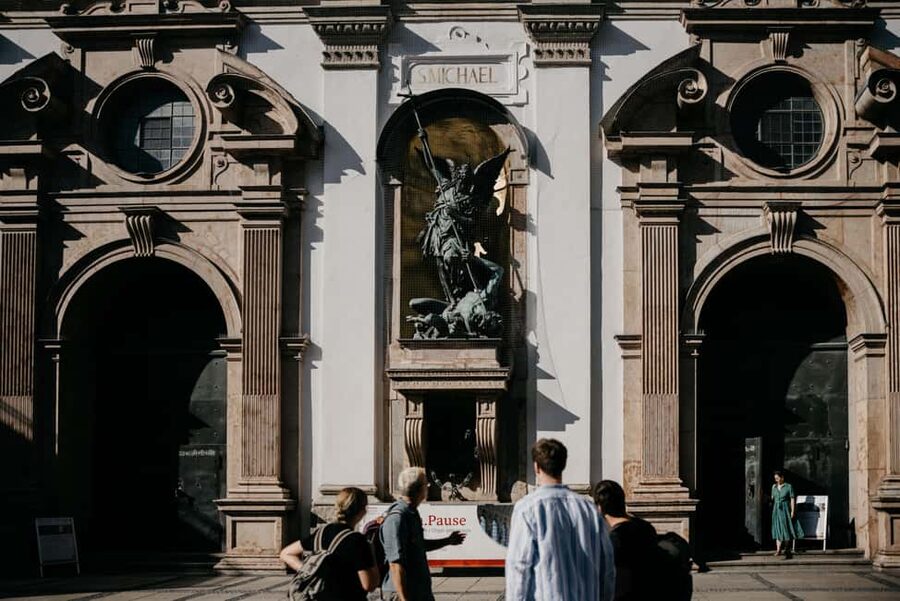
Renaissance ambition at St. Michael’s Church
The next major stop is St. Michael’s Church, a Renaissance masterpiece with a strong place in Munich’s architectural story. The tour describes it as a world-record-holding work, so this is one of the points where Philipp’s storytelling adds context that a quick independent visit may miss.
St. Michael’s helps you see the change from Gothic verticality to Renaissance confidence and order. It is not just another old church on a list. In the route’s timeline, it marks a new way of thinking about proportion, design, and the public image of power.
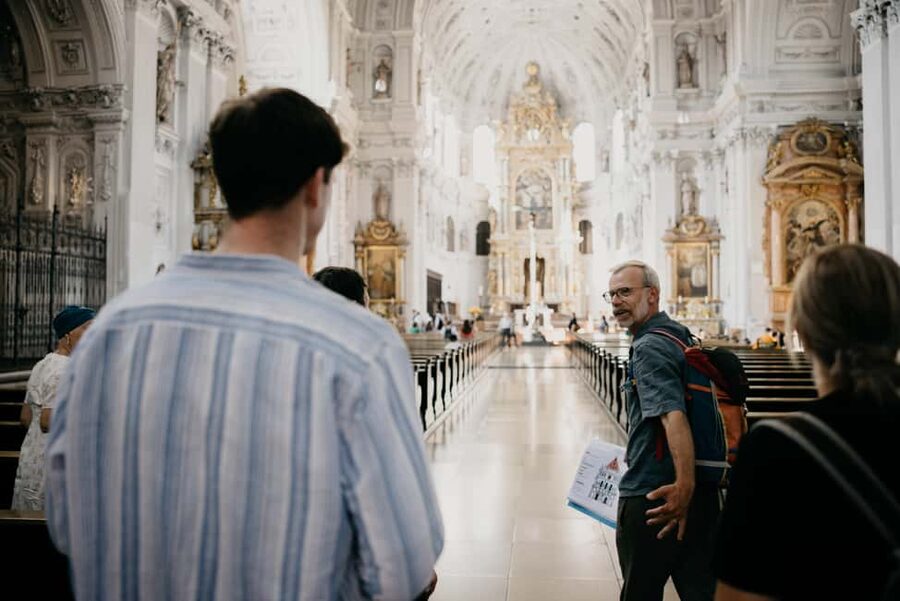
You may visit up to three impressive buildings from the inside during the tour. That does not mean every stop receives a full interior tour, so this experience suits you best if you want a broad architectural survey rather than a detailed study of every church.
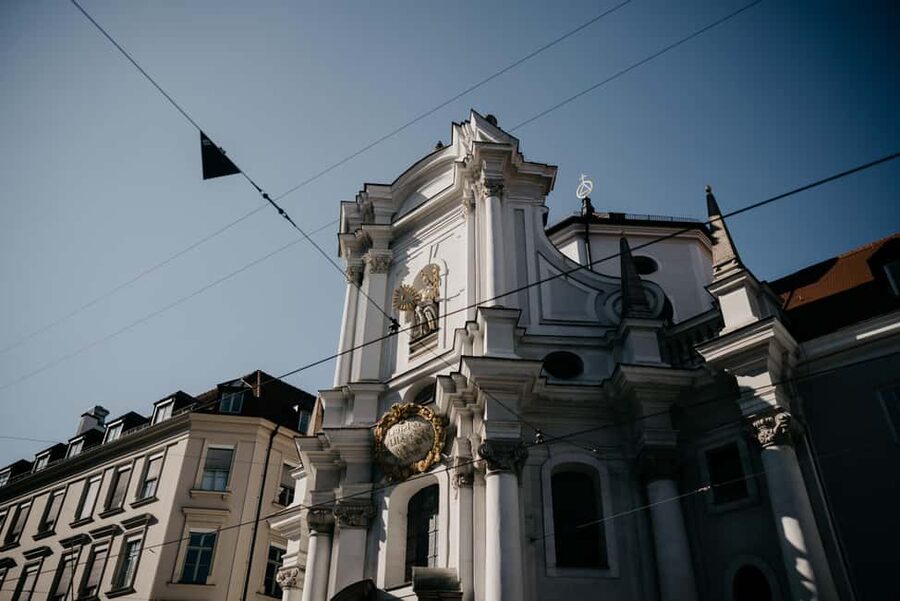
Baroque drama at Trinity and Theatine
Trinity Church and the Theatine Church carry the tour into Munich’s Baroque period. Here, the route shifts from the relatively restrained Renaissance to more theatrical design and decoration.
The two churches give you a useful comparison. Instead of hearing a general explanation of Baroque style, you can look at actual buildings and follow the changes in scale, ornament, and mood. Philipp also connects these places to royal stories and local legends, which keeps the architecture from becoming a dry art lesson.
The churches are valuable stops for people who like interiors, but they also create a practical issue. Religious buildings may have access limits or quiet periods, and the tour has only two hours. Think of these visits as focused introductions, not long periods for sitting, sketching, or taking every photograph you want.
Royal Munich along the opera and Maximilianstraße
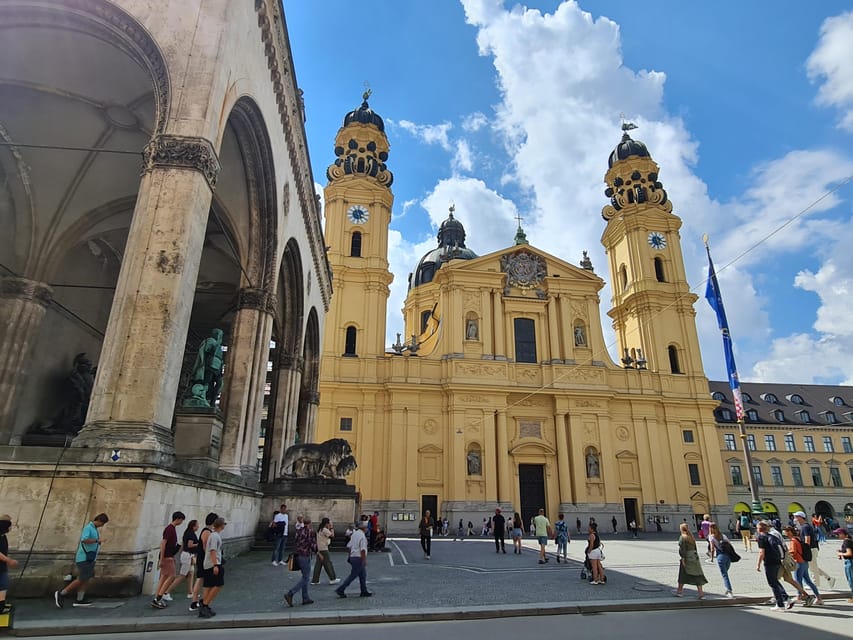
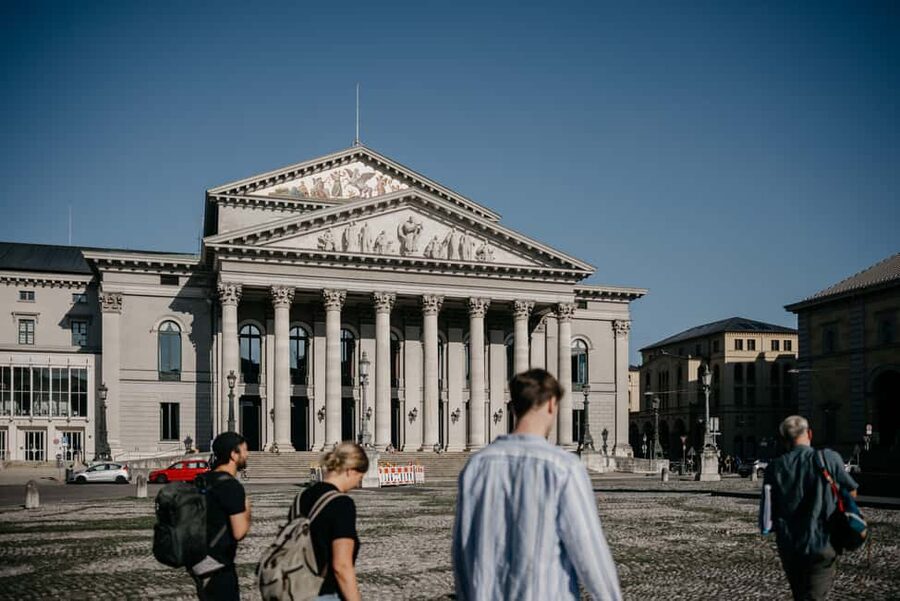
From the churches, the story reaches the Bavarian State Opera and Maximilianstraße. These stops shift attention from religious architecture to royal and civic Munich.
The opera area gives you a sense of the city’s public face. Maximilianstraße adds a grand urban setting, with architecture tied to royal ambition and the image Munich wanted to project. The guide’s stories about the royal family help connect these broad streets and formal buildings to people, politics, and status.
This section is also useful for orientation. If you are spending more time in Munich after the tour, you will recognize the route when you return to the Old Town, shops, museums, and opera area. The walk does not just show you buildings. It helps explain how central Munich fits together.
The tradeoff is that busy streets and market activity can compete with the guide’s voice. If you have trouble hearing, move toward Philipp rather than staying at the back. A small group or private booking should make this easier, and private groups are available.
A few more half-days in Munich worth comparing
- Munich: Third Reich & WWII Walking Tour
★ 4.6 · 6,181 reviews - Dachau Concentration Camp Memorial Site Tour from Munich by Train
★ 4.5 · 5,637 reviews - Third Reich Walking Tour Munich
★ 4.5 · 4,291 reviews - Munich Hop-On Hop-Off Tour: 1-Day or 2-Day Ticket
★ 4.3 · 4,161 reviews
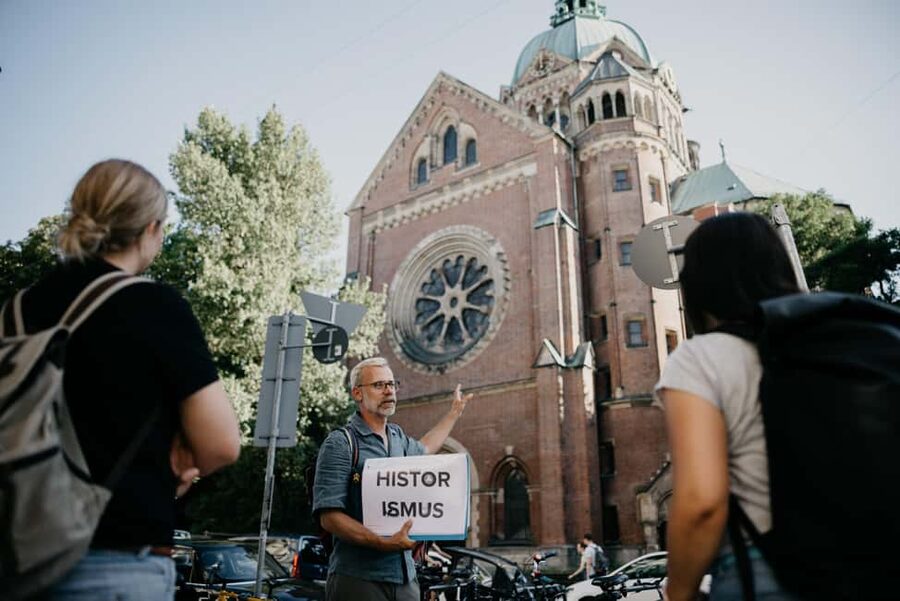
Leaving the center for St. Lukas and the Isar
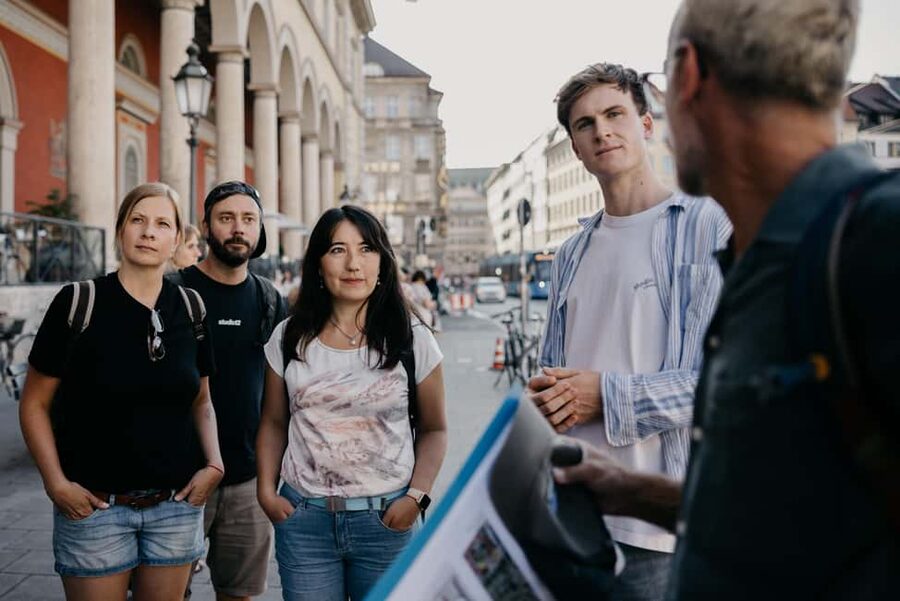
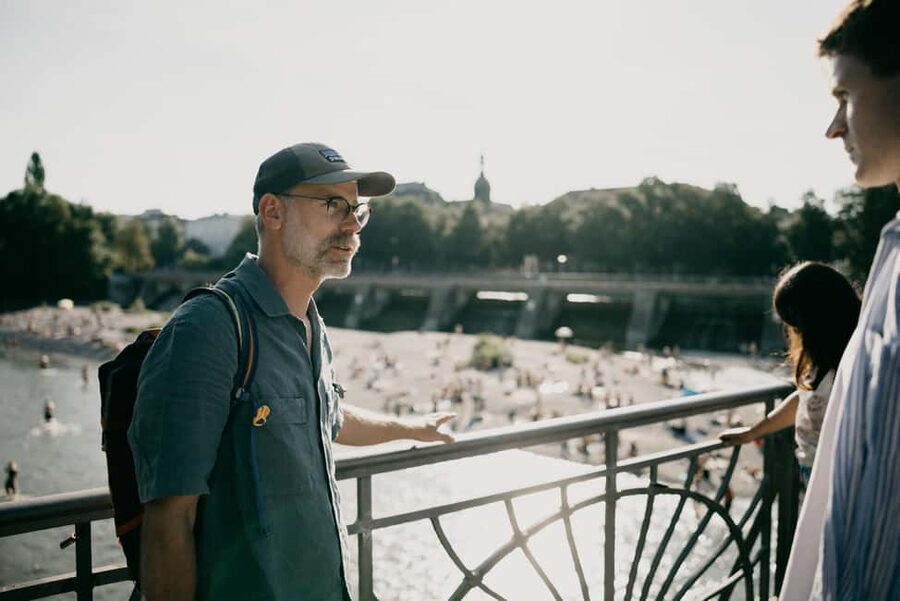
One of the most appealing choices is the move away from the Old Town toward the Isar River. The route includes St. Lukas, a church associated with Munich’s later architectural periods, and the Müllersche Volksbad, a well-known example of Jugendstil design.
This change gives the two-hour walk a needed pause. After the churches, royal avenues, and Christmas markets, the riverside setting feels calmer. The tour describes two more world records and surprising stories in this part of the route, though the specific records are not identified in the available details. You should ask Philipp about them if that is a major reason you are booking.
A tram ride is part of the planned journey away from the center. Transportation to and from the meeting point is not included, and the activity details do not clearly state how any internal tram fare is handled. I would carry a little extra money and confirm the transit arrangement before you set off.
This section suits you if you want more than central Munich’s familiar sights. It also makes the tour feel less like a standard Old Town circuit. The drawback is time: changing areas by tram uses part of a short tour, so the route cannot linger everywhere.
Jugendstil details at Müllersche Volksbad
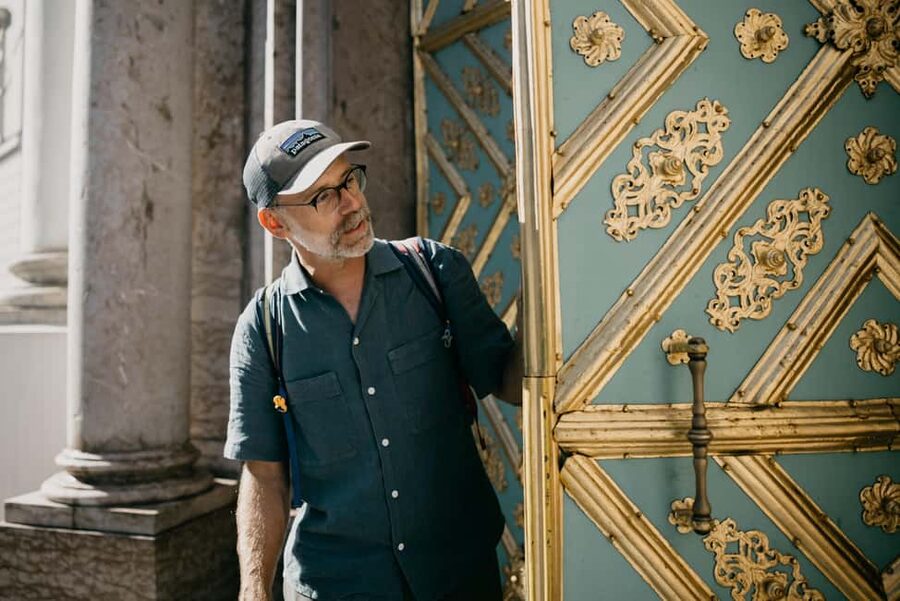
The Müllersche Volksbad is a highlight for anyone drawn to Art Nouveau, known in Germany as Jugendstil. Its design offers a very different mood from the Gothic churches and formal royal buildings earlier in the route.
Look for the playful details and decorative approach that define this period. The tour uses the building to show how Munich’s design language changed again, moving toward ornament, curves, and a more personal style.
You should not assume that this is a long interior visit. The itinerary describes it as a guided stop, and the overall tour also includes the river, street art, and a museum. Treat it as a carefully chosen example of Jugendstil rather than a complete architectural tour of the building.
Christmas markets and Munich’s seasonal side
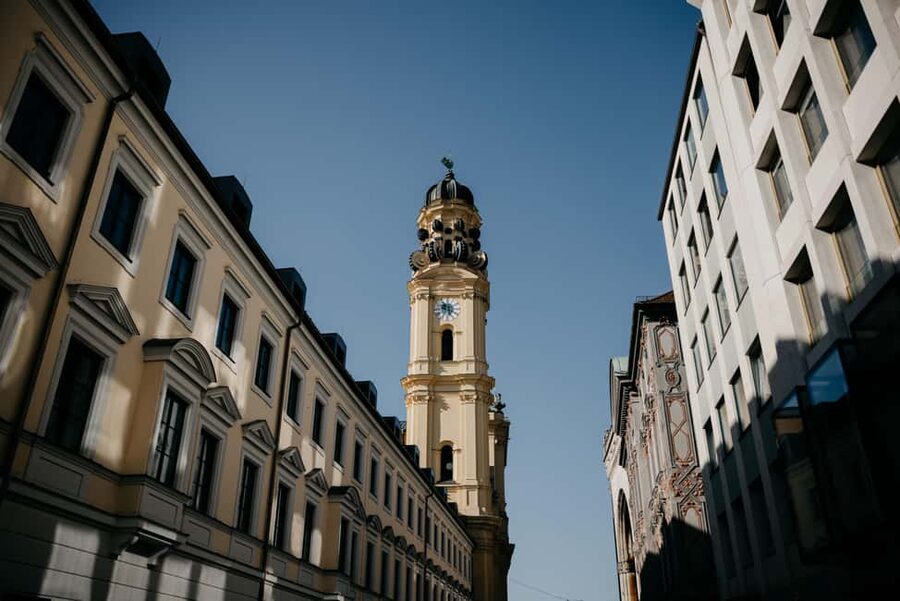
The experience includes multiple Christmas markets and a distinctive medieval Christmas market in a striking setting. This makes the tour especially appealing during the winter season, when the Old Town has a festive layer that is absent at other times of year.
The markets add sound, food smells, stalls, and local atmosphere to the architectural route. They also give Philipp a chance to share legends and lighter stories rather than keeping the talk strictly academic.
There is a practical catch. Winter in Munich can be cold, and the meeting point is outdoors. Bring warm clothing, wear shoes that can handle two hours of walking, and take a camera if you want to record the buildings and market scenes.
Food and drinks are not included, so plan to buy anything you want separately. A market stop may offer tempting snacks, but the tour should not be treated as a food tour. Its main focus remains architecture and history.
Graffiti and the Sudetendeutsches Museum
The closing section brings the route into the present with street art and the Sudetendeutsches Museum. This is a smart finish because it prevents the tour from suggesting that Munich’s architectural story ended with royal buildings or Jugendstil.
The combination of Art Nouveau, graffiti, and a modern museum gives you three very different ways to think about design. You see how style can serve religion, monarchy, public life, personal expression, and modern cultural memory.
The Sudetendeutsches Museum is listed as the final stop and finish. Elsewhere, the meeting information says the activity ends back at the meeting point, so you should confirm the exact endpoint when booking. That matters if you have a train, museum reservation, or restaurant booking soon afterward.
What $36 buys you
At $36 per person, the tour offers a lot of range for a two-hour experience. You receive a live guide in English or German, a planned route through several centuries, visits to historic buildings, Christmas market stops, the Isar area, and a modern museum finish.
The value is strongest if you want structure and interpretation. You could walk past the Frauenkirche, St. Michael’s, the Theatine Church, the opera, and Maximilianstraße on your own, but you would need to research the architectural sequence and find the connecting story yourself.
The price is less attractive if you want long interior visits or detailed museum time. This is a broad introduction. You are paying for Philipp’s route, explanations, and local connections, not for admission to a large set of ticketed attractions or a meal.
A private group is available if you want a more personal pace. That option may suit families, couples, or small groups with special requests. Philipp also accepts messages about private tours, vouchers, and other needs.
Who should book this walk
I would recommend it to first-time Munich visitors who want to understand the city beyond its most famous postcard views. It is also a good fit for architecture fans who enjoy comparing styles instead of spending a whole day inside one museum.
The tour should suit you if you:
- Enjoy churches, public buildings, urban design, and local stories.
- Want a guide who mixes serious history with legends and humor.
- Like seeing both central Munich and the Isar area.
- Are visiting during the Christmas season and want markets included.
- Can walk for two hours and manage tram travel if needed.
- Prefer a compact overview before exploring Munich independently.
It is a weaker choice for wheelchair users, people with mobility impairments, and anyone who needs a slow, highly accessible route. The activity is also not suitable for people over 95 according to the provided information. Smoking is not allowed.
Final call: book it for range and storytelling
Book this tour if you want a lively, compact introduction to Munich’s architecture and you like the idea of moving from Gothic churches to modern art in one outing. Philipp’s friendly, present style is a central part of the experience, and the route includes more variety than a standard Old Town walk.
Skip it if you want a specialist-level examination of one building, a food-focused market tour, or a relaxed pace with long stops. For everyone else, $36 is a fair price for a clear architectural timeline, a trip toward the Isar, seasonal markets, and a modern ending that keeps Munich’s story moving.
FAQ
How long does the Munich architecture tour last?
The tour lasts two hours. Starting times vary, so check availability when booking.
Where does the tour begin?
It begins outside the main entrance of the Frauenkirche at Frauenplatz 1 in Munich.
How will I recognize the guide?
Philipp will be wearing a yellow winter hat and carrying a yellow backpack and a large blue presentation folder.
Which languages are available?
The live tour is offered in English and German.
Does the tour include Christmas markets?
Yes. The experience includes multiple Christmas markets, including a unique medieval Christmas market in a memorable setting.
Is transportation included?
Transportation to and from the meeting point is not included. The route includes a tram ride toward the Isar area, so confirm the details of any local transit fare before departure.
What should I bring?
Bring comfortable walking shoes, warm clothing for winter weather, and a camera if you want to photograph the sights.
Is the tour suitable for wheelchair users?
No. The activity is not suitable for wheelchair users or people with mobility impairments. Participation is at your own risk.
Just added in Munich
- Private transfer: Vilshofen to Munich with 2h sightseeing stop★ 5.0 · 6 reviews
- Pub crawl incl. Oktoberfest museum guided tour with beer tasting (private)★ 5.0 · 5 reviews
- South Tyrolean specialties and wine tasting★ 5.0 · 5 reviews
- Size Matters Beer Tour Munich★ 4.6 · 105 reviews
- Short & sweet: Tasting the Viktualienmarkt★ 4.8 · 37 reviews
- Secret Food Tours Munich★ 4.8 · 5 reviews
- Munich: Romantic Wine Experience for Two at Viktualienmarkt★ 4.2 · 14 reviews
- Munich: Resistance against Hitler – Historical Walking Tour★ 5.0 · 5 reviews
Architecture Tours, compared.
Munich 3-Hour Segway Tour: Nazi Munich & Royal Architecture
Read our review →
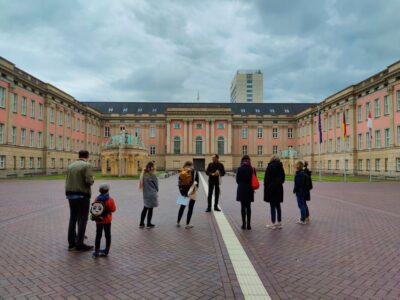
Guided Walking Tour of UNESCO Site and Architecture
Read our review →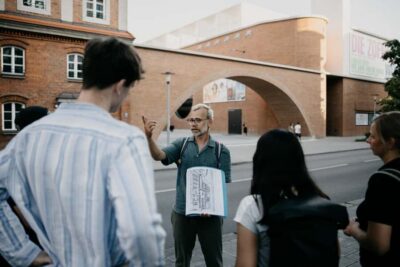
Browse the lists this tour appears in