
Reviewed · HISTORICAL TOURS
Lübeck: Private Historical and Architectural Walking Tour
Lübeck’s best story may be edible. This private walk takes you from the Holsten Gate through the old town to a traditional marzipan bakery, where you taste the sweet and hear how it became part of the city’s identity. Along the way, Gothic brick churches, salt storehouses, and merchant homes explain why Lübeck mattered around the Baltic Sea.
I like the private format, which gives your group room to ask questions and set the pace. I also like the mix of grand monuments and small local details, especially the little devil outside St. Mary’s Church and the stop connected with Thomas and Heinrich Mann. The main drawback is the short 90-minute schedule, which leaves no time for entry visits, and the tour is not suitable for wheelchair users or people with mobility impairments.
Key points to know before you book
- Holsten Gate dates to 1464: Begin beside one of Lübeck’s last surviving medieval city gates, a heavy brick symbol of the city’s freedom and power.
- The route links trade with architecture: Merchant wealth, Baltic Sea routes, salt storage, and brick Gothic design all come together in the old town.
- Marzipan is part of the sightseeing: You taste several varieties at a traditional bakery rather than simply hearing about the city’s famous sweet.
- Buddenbrook House adds a literary stop: Learn about Thomas Mann and Heinrich Mann in the setting tied to their family story.
- The group price works best for a full party: At $265 for up to 15 people, the per-person cost falls sharply when shared by a larger group.
- The guide makes or breaks the walk: Previous feedback praises the guide’s command of Lübeck, but you should confirm how to identify your guide at the meeting point.
Starting at Lübeck’s Holsten Gate
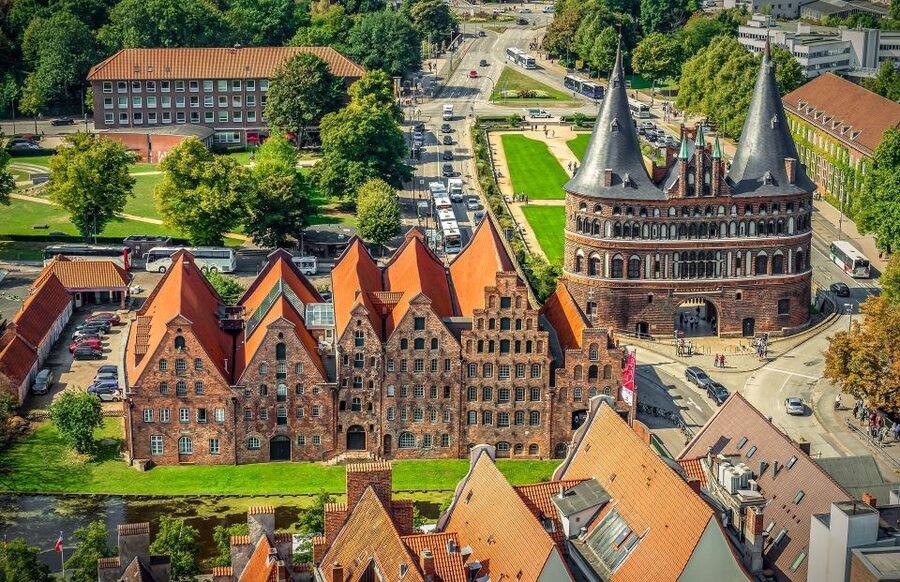
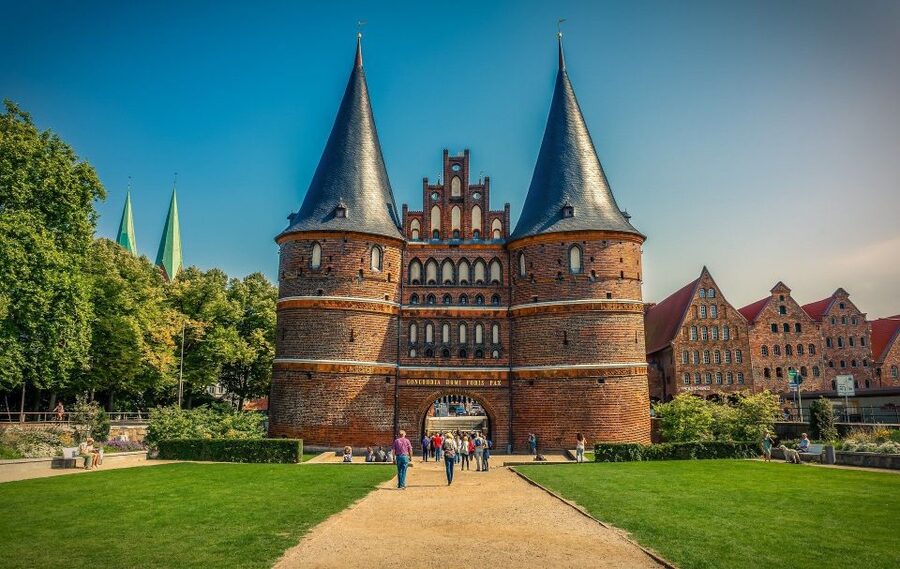
Meet your guide in front of the Holsten Gate, near Museum Holstentor. This is a practical starting point because the gate gives you an immediate picture of Lübeck’s medieval character before you even enter the old town.
Built in 1464, the Holsten Gate is one of only two remaining city gates and one of the last pieces of Lübeck’s medieval fortifications. Its tall brick construction looks more like a fortress than a welcoming doorway, which makes sense: it guarded a wealthy trading city that needed to protect its goods and independence.
Your guide explains how the gate came to symbolize freedom. That idea matters here. Lübeck was not simply an old town with attractive buildings. It was a major commercial power, and its brick walls, gates, churches, and merchant houses reflected money earned through trade.
The gate is also a useful orientation point. You begin outside the historic center, then move toward the old streets and church towers. Bring your camera, but do not spend the whole introduction photographing bricks. The wider story of why Lübeck grew wealthy is more useful than a close-up of every arch.
More architecture walks in Lubeck:
- Lübeck: Architecture and Local Craft Private Guided Tour
★ 4.0 · 6 reviews - Munich 3-Hour Segway Tour: Nazi Munich & Royal Architecture
★ 4.9 · 194 reviews - Düsseldorf: Guided City Architecture Walking Tour
★ 4.6 · 61 reviews
Reading the skyline from the old town
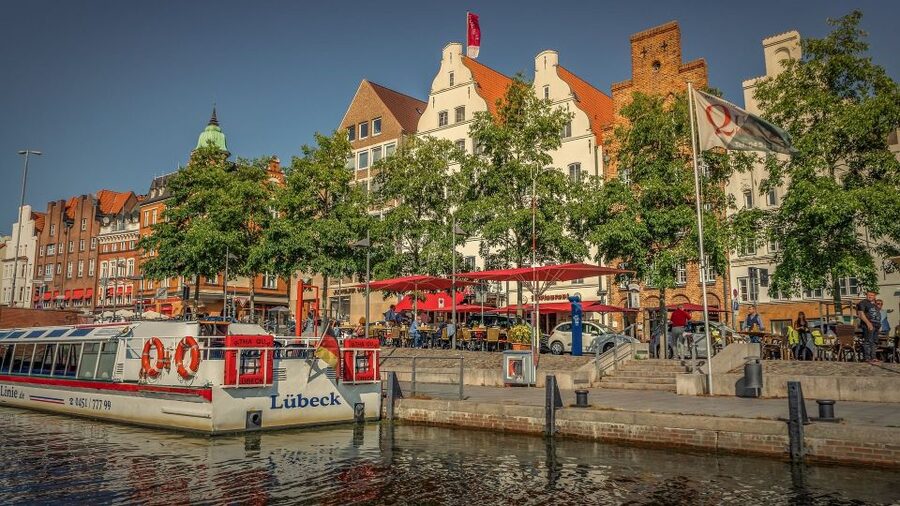
Lübeck is often called the City of Seven Spires, and the tour gives you views of its historic skyline. You can see five churches, salt storehouses, and grand brick homes linked to successful merchants.
This is one of the better parts of the walk for understanding how architecture records money. The churches show civic and religious ambition. The storehouses point to trade. The large homes reveal where prosperous merchants chose to live and how their success changed the city’s streets.
The salt storehouses are especially useful clues. Salt was an important trading product, and Lübeck’s position along Baltic Sea routes helped it connect goods and markets across northern Europe. Your guide places the buildings within that commercial story, so the old town feels less like a collection of pretty façades and more like a working port city shaped by business.
The route also passes luxurious brick homes built by wealthy merchants in the late 1700s. Their size and finish help show how long Lübeck’s commercial success continued to influence private life.
The views are not presented as a formal lookout visit. They come as part of the walk, so you should expect a quick look and explanation rather than a long photo stop. That is fine for a first orientation, but visitors who want detailed architectural study may find 90 minutes tight.
Buddenbrook House and Lübeck’s literary side
The stop at Buddenbrook House shifts the subject from trade to literature. Here, you learn about Thomas Mann and Heinrich Mann, two German writers whose family name is closely tied to Lübeck.
The house gives the tour a more personal angle. Instead of discussing only churches, gates, and civic wealth, your guide connects the city to the people who lived and wrote here. Following the footsteps of the Mann brothers adds another layer to Lübeck’s identity.
You should note that the experience includes an explanation of Buddenbrook House, not an entry ticket. Admission fees are not included, so the stop is best understood as part of the exterior walking route unless you arrange a separate visit.
This is a useful distinction when planning your day. The tour gives you context and a clear reason to return inside later, but it does not replace a museum visit. If the Mann family is a major reason for your visit, allow extra time after the walk and budget separately for admission.
St. Mary’s Church and the little devil
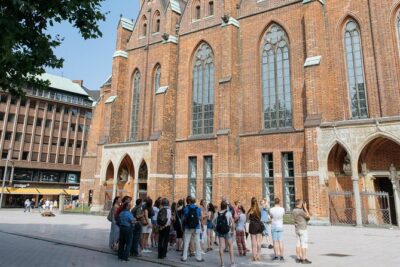
St. Mary’s Church is one of the major architectural stops. It is the third largest brick Gothic church in Germany, an impressive claim in a city known for brick construction.
The building also helps explain Lübeck’s style. In northern Germany, brick became a practical and distinctive building material, and the city used it for churches, civic buildings, fortifications, and private homes. St. Mary’s Church shows how that material could produce height and drama even without the pale stone often associated with Gothic architecture.
Your guide also tells the story of a little devil who sits outside the church. This small detail is exactly the sort of thing that can make a walking tour stick in your memory. Large churches can blur together after several days of sightseeing. A local tale gives you a simple detail to look for and remember.
You can expect the guide to explain the church’s place in the nearby Merchants’ Quarter as well. That connection matters because religious buildings and commercial districts were not separate worlds. The church formed part of the city’s public and economic center.
The tour does not include entry tickets. If you want to see the interior, confirm opening hours and admission separately. The information provided for this experience supports an exterior walking visit and storytelling, not a guaranteed interior tour.
More History Tours in Lubeck:
- Lübeck: Hanseatic League History Walking Tour
★ 4.9 · 57 reviews - Leipzig: City History Canal Sightseeing Tour on a Motorboat
★ 4.7 · 6,232 reviews - Berlin: Natural History Museum Entrance Ticket
★ 4.6 · 3,382 reviews - Leipzig: 1.5-Hour Historical Walking Tour in German
★ 4.7 · 2,217 reviews
The Merchants’ Quarter and Baltic trade
The Merchants’ Quarter is where the tour’s main ideas come together. Lübeck’s economic growth depended on trading routes along the Baltic Sea, and the district shows how that wealth reached the city itself.
As you walk, look for the relationship between streets, homes, churches, and storage buildings. The architecture is not random decoration. It reflects a city organized around shipping, buying, selling, storing, and protecting goods.
Your guide explains the merchants’ role in Lübeck’s economic development. That context is valuable because it answers a question many city walks leave hanging: who paid for all these large buildings? Here, the answer is tied to trade and to the merchant families who shaped the city.
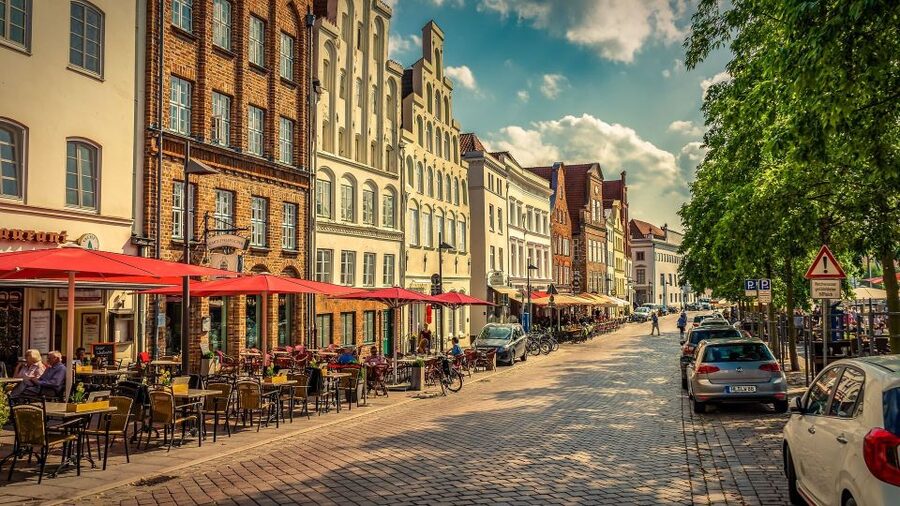
The old town is a UNESCO World Heritage Site because of its historic structure and architectural character. You walk on cobbled streets through an area where the layout and buildings still communicate Lübeck’s medieval and early modern importance.
Wear comfortable shoes. Cobblestones can make a short walk feel longer, especially if you are not used to uneven surfaces. Comfortable clothing also makes sense because this is an outdoor experience with no promise of shelter during every stop.
Marzipan, explained one bite at a time
The bakery stop is the most playful part of the tour. You taste freshly baked marzipan and different varieties while learning about the sweet’s importance in Lübeck.
This is more useful than a standard souvenir stop because the tasting comes with local context. You are not simply buying a box and moving on. You learn why marzipan became associated with the city and get a chance to compare varieties.
The tasting also breaks up the architectural commentary. Ninety minutes of dates, trade routes, and church styles can be a lot to absorb. A small food stop gives you a sensory memory of Lübeck and adds a bit of fun without turning the tour into a shopping trip.
The details provided do not promise a full meal, so do not count on this stop as lunch. Think of it as a tasting. If you have dietary concerns, ask the provider before booking because the available information does not specify ingredients or alternatives.
Lübeck Town Hall closes the route
The final major stop is Lübeck’s Town Hall, regarded as one of Germany’s most beautiful town halls and included within the city’s UNESCO World Heritage setting.
A town hall makes a fitting endpoint because it brings the story back to civic power. You have seen the gate that represented protection and freedom, the churches that marked the city’s wealth and faith, the merchants’ homes that showed private success, and the trading district that helped finance it all. The Town Hall represents the government that organized this growing city.
The tour ends after this stop, so use the final minutes to ask practical questions about places you want to revisit. Your guide can also help connect the route’s main subjects: trade, architecture, literature, and food.
As with the other landmarks, the experience does not include entry tickets. You should treat the Town Hall as a guided exterior stop unless the provider confirms an interior visit for your chosen departure.
What the private price really means
The price is $265 per group of up to 15 people. That is a strong value for a larger family or group of friends. At the full limit, the cost works out to about $17.67 per person, before any separate admission fees.
For two people, the same price is much harder to justify. You are paying for privacy, a dedicated guide, and flexibility rather than for a low-cost shared walk. A smaller group may still prefer it if personal questions and a private pace matter more than the per-person price.
The tour lasts 90 minutes. That is long enough for a clear introduction to Lübeck’s major sights, but not long enough for a slow museum-style examination of each one. You will get the best value if you want a compact first look and plan to continue exploring on your own.
The private setup is also useful for families and groups with a shared interest in architecture, German literature, or local food. The guide speaks German or English, and the activity is offered as a private group rather than a mixed departure.
Guide quality and meeting-point advice
The strongest praise attached to this experience focuses on the guide’s command of Lübeck. One German-language assessment describes the guide as someone who had lived and breathed the city and could explain nearly every brick. That is exactly the quality you want on a walk built around architecture and local stories.
Another short assessment simply calls the experience perfect and very interesting. The overall score is 4.5 from six ratings, which is encouraging but still a small sample. I would treat the score as a positive signal, not a guarantee that every departure will feel identical.
There is one useful practical warning: one person found the guide friendly and capable but said the guide should have made themselves easier to recognize. Since the meeting point is in front of Holsten Gate near Museum Holstentor, look for clear identification and contact the provider if you cannot locate the guide promptly.
The experience is operated by Travmonde OÜ. German and English are available, so select the language that lets you follow the historical explanations comfortably.
Who should book this Lübeck walk?
I would choose this tour if you want a private introduction to Lübeck before exploring on your own. It gives you the city’s main themes quickly, with enough detail to make later visits to the church, Town Hall, Buddenbrook House, or museums more meaningful.
It suits groups that value conversation. A private guide can focus on your interests in a way a large group usually cannot. Families may also appreciate the mix of a gate, church story, writers, skyline, and marzipan tasting.
You may want a different plan if you need a fully accessible route, use a wheelchair, or find uneven cobbled streets difficult. The activity is specifically not suitable for wheelchair users or people with mobility impairments.
I would also skip it if you want long interior visits. Entry tickets are not included, and the schedule is built around walking and explanations rather than extended time inside each landmark.
Cancellation is flexible up to 24 hours before the start for a full refund, and you can reserve now and pay later. Check the available starting times before booking, since the duration is fixed at 90 minutes.
Should you book it?
Book this private Lübeck tour if you are traveling with a group, want a local guide’s explanation of the city’s brick architecture, and like your sightseeing with a little marzipan on the side. The guide’s strong local command is the chief reason to choose it, while the compact route makes it a good first activity in town.
Think twice if you are a couple watching every euro, need wheelchair access, or want admission to the major buildings. For a larger party, though, the fixed group price is fair, and the combination of Holsten Gate, St. Mary’s Church, Buddenbrook House, the Merchants’ Quarter, Town Hall, and a bakery tasting gives you a useful first portrait of Lübeck.
FAQ
Where does the Lübeck walking tour meet?
Meet your guide in front of the Holsten Gate, near Museum Holstentor.
How long does the tour last?
The walking tour lasts 90 minutes.
What languages are available?
The live guide is available in German and English.
Is this a private tour?
Yes. It is offered as a private group experience for up to 15 people.
Are entry tickets included?
No. Entry tickets are not included in the tour price.
Is the tour suitable for wheelchair users?
No. The experience is not suitable for wheelchair users or people with mobility impairments. Comfortable shoes and comfortable clothing are recommended.
More Walking Tours in Lubeck
- Lübeck: Express Walk with a Local
★ 4.9 · 10 reviews - Lübeck: Old Town Highlights Private Walking Tour
★ 4.8 · 8 reviews - Discover Berlin Half-Day Walking Tour
★ 5.0 · 9,624 reviews - Berlin: Third Reich and Cold War 2 Hour Walking Tour
★ 4.9 · 6,830 reviews
Just added in Lubeck
- Timmendorfer Strand: SEA LIFE Behind the Scenes Tour★ 4.9 · 15 reviews
- Lübeck Day Pass – Day ticket for Lübeck museums★ 4.0 · 15 reviews
- Lübeck: Old Town Highlights Private Walking Tour★ 4.8 · 8 reviews
- Lübeck: Architecture and Local Craft Private Guided Tour★ 4.0 · 6 reviews
- Lübeck: Express Walk with a Local★ 4.9 · 10 reviews
- From Kiel: Lübeck Shore Excursion★ 4.6 · 15 reviews
- Lübeck Scavenger Hunt and Highlights Self Guided Audio Tour★ 4.0 · 30 reviews
- SEA LIFE Timmendorfer Strand Admission Ticket★ 3.5 · 157 reviews
Historical Tours, compared.
City History Canal Sightseeing Tour on a Motorboat
Read our review →


Browse the lists this tour appears in