
Reviewed · ARCHITECTURE TOURS
Munich’s Hidden Architecture Guided Tour
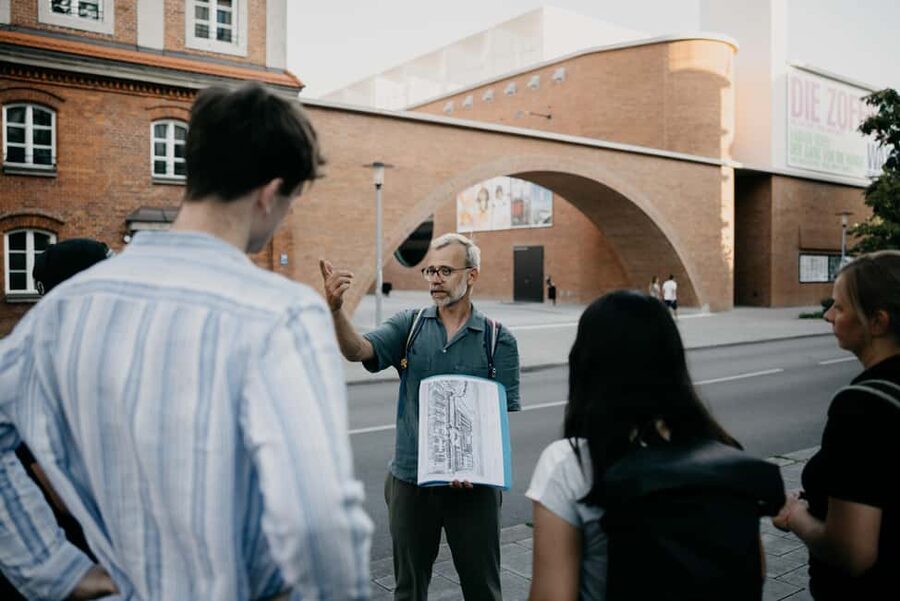
Munich’s most memorable sights may be beyond Marienplatz. This two-hour walk with architect Philipp leads you through the city’s southern districts, where shipping containers become cultural spaces, street art fills unexpected corners, and an old passenger ship rests on a railway bridge. The route also reaches the Isar and the historic neighborhood of Giesing.
I like the mix of alternative architecture and local history, and I like that the walk includes three Christmas markets rather than one polished market in the center. The main caution is practical: this is a winter walking tour with several stops outdoors, uneven urban paths, and no good fit for wheelchair users or people with mobility impairments.
Key points to know before you book
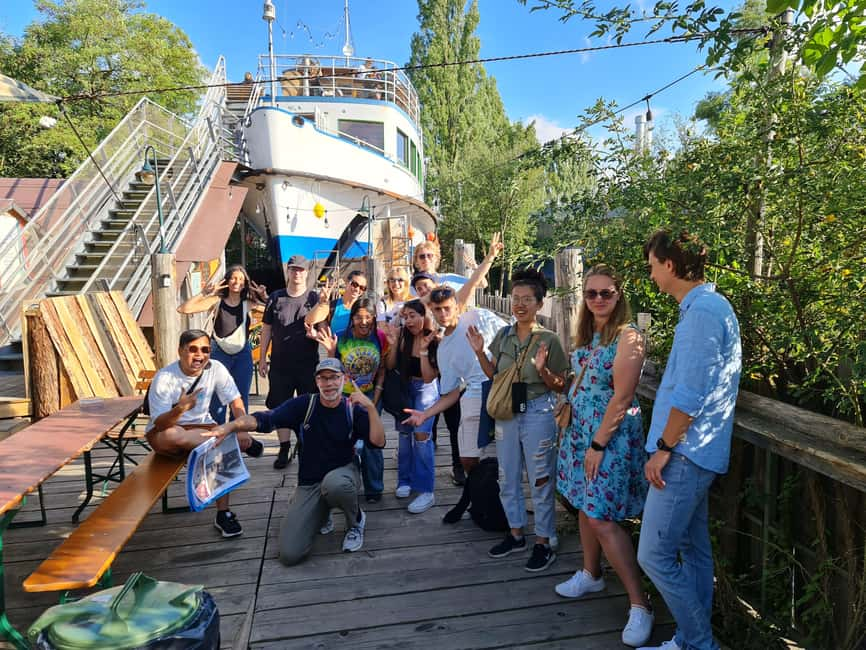
- Alte Utting on a bridge: See the old ship that helped put this part of Munich on the international map.
- Three seasonal markets: Finish with several unusual Christmas market stops instead of a standard central Munich circuit.
- Architect-led commentary: Philipp brings professional architectural knowledge and explains small details that are easy to miss.
- South Munich on foot: Walk from Piazza Zenetti through creative districts, along the Isar, and toward Giesing.
- Nature beside city life: The route includes the river, Wittelsbacherbrücke, and the willow island known as Little Venice.
- Winter evening atmosphere: The tour offers the chance to see Munich and the Isar after dark, depending on the starting time.
Why this south Munich walk is different
Most first-time Munich walks stay close to the old town, the Residenz, and the main squares. This route points you in another direction, toward districts shaped by local life, creative reuse, river scenery, and working-class history.
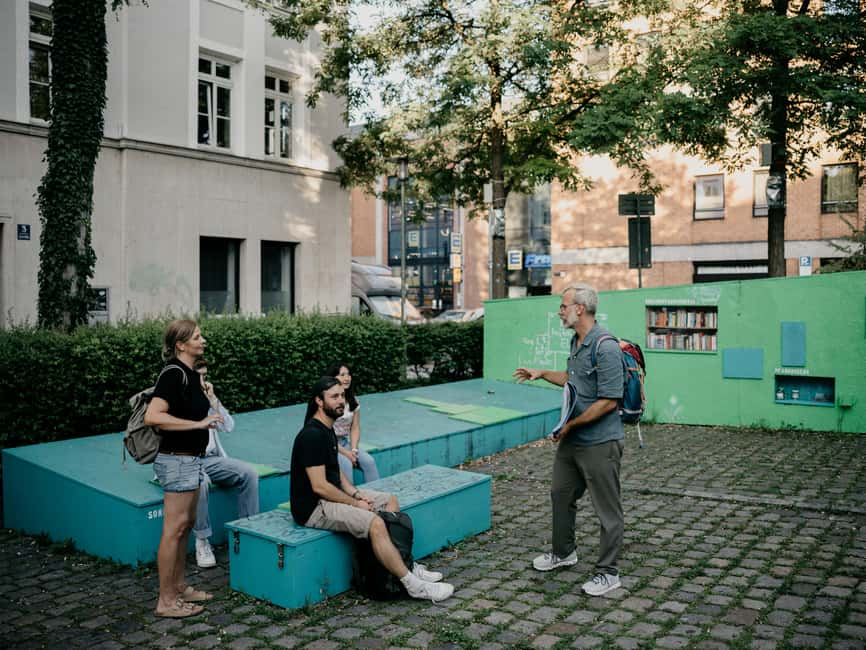
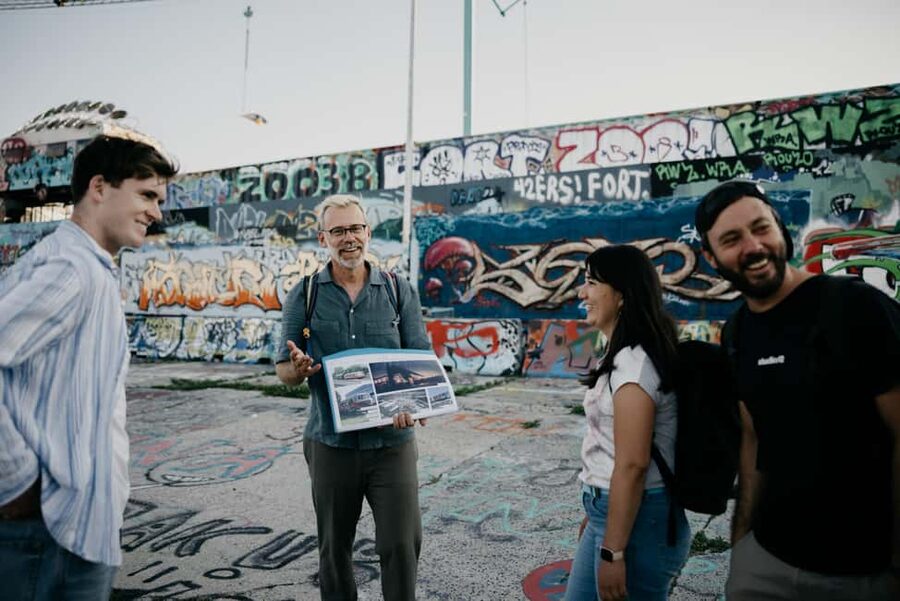
You begin at Piazza Zenetti, near the intersection of Tumblingerstrasse and Zenettistrasse. The meeting place has turquoise and green outdoor furniture and small trees in boxes. Philipp carries a blue folder and wears a colorful backpack, which makes him easier to spot.
From there, you move through a part of Munich that feels less formal than the center. The walk links cultural venues, public art, old neighborhoods, and riverside paths. I like this kind of route because the city becomes more than a list of famous buildings. You get a sense of how Munich changes from district to district.
Philipp is an architect, and that matters here. His role is not simply to point out buildings. He explains design choices, reused materials, street art, and the small features that can disappear when you walk without context. Several people who joined him found his explanations clear, engaging, and useful even after the tour ended.
More architecture walks in Munich:
- Munich 3-Hour Segway Tour: Nazi Munich & Royal Architecture
★ 4.9 · 194 reviews - Munich’s 500 Years of Architecture Guided Tour
★ 5.0 · 8 reviews - Düsseldorf: Guided City Architecture Walking Tour
★ 4.6 · 61 reviews
Piazza Zenetti and the first steps south
Piazza Zenetti is a practical starting point because it places you outside the usual sightseeing core. The small outdoor seating area and boxed trees give the meeting point a casual feel, but you should still arrive prepared. The closest suggested arrival point is Goetheplatz on the U3 or U6 subway lines, followed by a walk of about ten minutes.
This is also a good place to check your clothing before setting off. Winter conditions matter on this route. You will spend much of the two hours outside, and the experience calls for warm layers and comfortable shoes.
The walk then heads toward the Münchner Volkstheater. This stop gives Philipp a chance to set the scene for Munich’s southern districts and explain how architecture, culture, and public space fit together. The theater itself is part of the city’s cultural network, but the larger value is how it helps frame the changes taking place south of the old center.
You should expect guided explanation rather than a long interior visit. The supplied schedule lists the Volkstheater as a guided stop, not as a theater performance or entry tour.
Bahnwärter Thiel and creative reuse
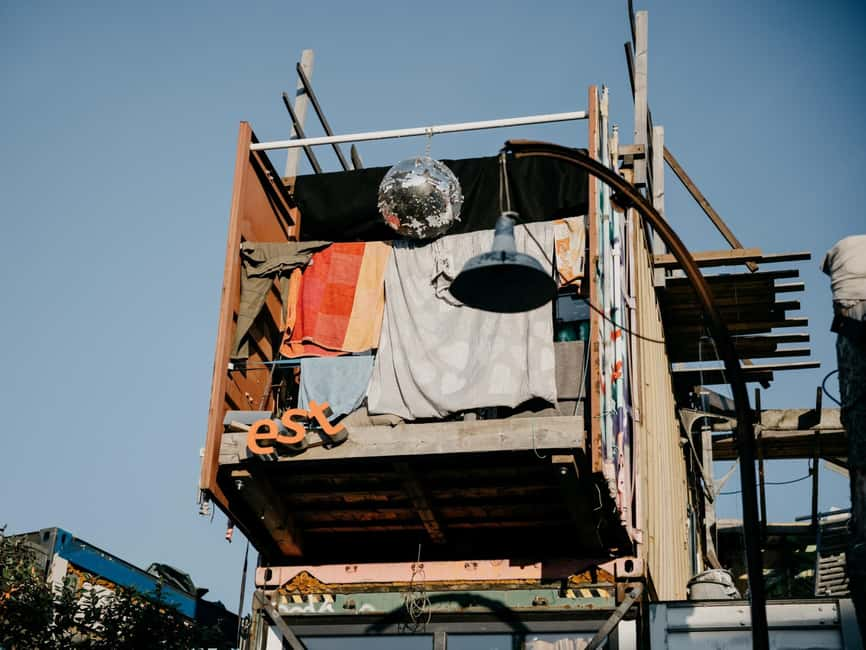
Bahnwärter Thiel is one of the route’s most distinctive places. Its cultural setting uses shipping containers and wood, creating an improvised-looking venue with a strong artistic identity. This is not the polished, carefully matched architecture you find around Munich’s grand squares. Its appeal comes from reuse, experimentation, and the way temporary-looking structures can support a real cultural scene.
For me, this is the kind of stop that justifies choosing an alternative walking tour. You see how a city’s creative life can take shape in leftover or repurposed spaces. Philipp can help you read the site as architecture, not just as an interesting backdrop for photographs.
The exact amount of time at each stop is not specified, so do not expect a long visit inside every venue. The tour is designed as a connected walk, with commentary along the way. If you want a full visit to Bahnwärter Thiel, you may need to return independently.
Alte Utting, Munich’s ship on a bridge
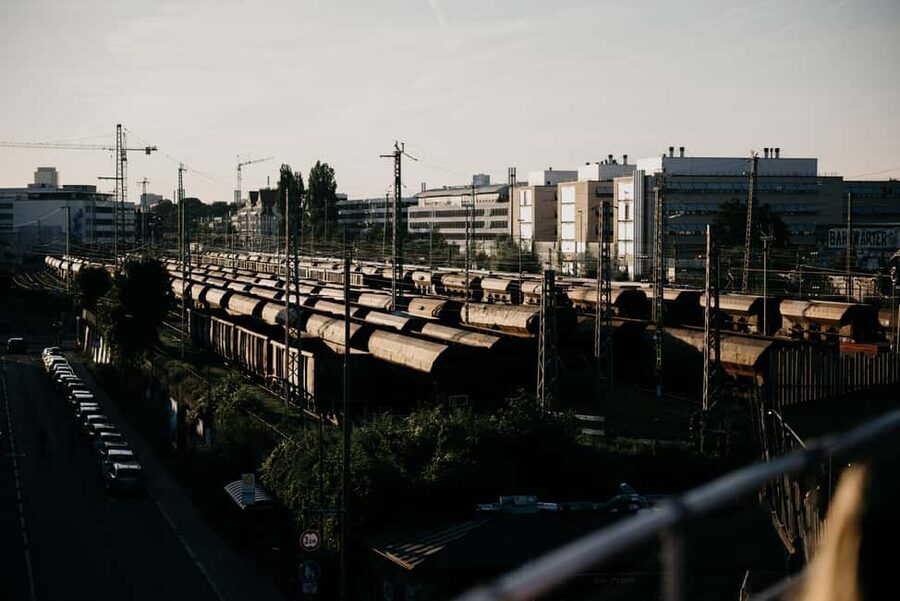
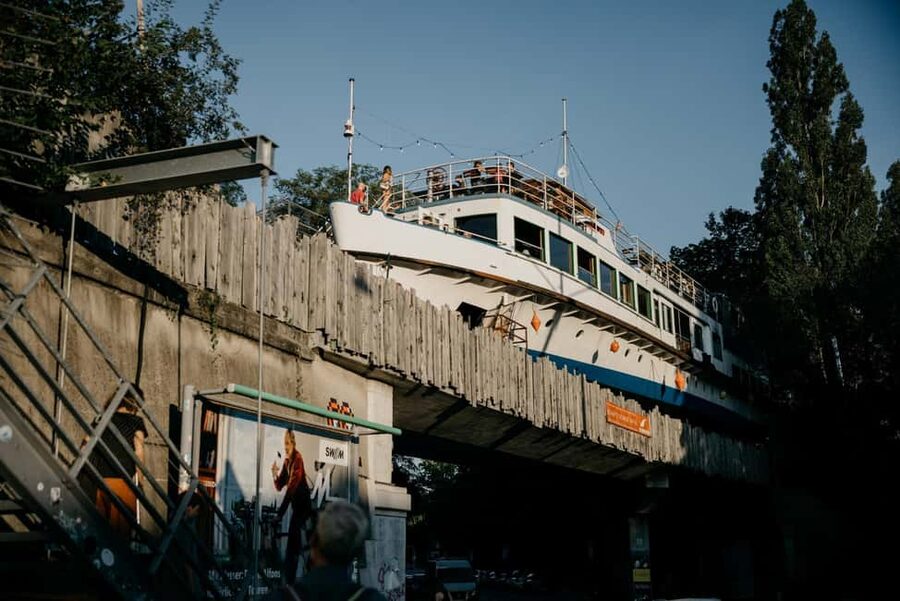
The Alte Utting is likely the most unusual stop on the route. The former ship sits on a bridge at Lagerhausstrasse, far from any normal harbor setting. Its position alone makes it memorable, and it has drawn attention from The New York Times, which described the search for a boat on a bridge as a way to find out if Munich was getting cool.
That odd placement tells you something about the city’s modern character. Munich is often presented through royal buildings, beer halls, and orderly streets. Alte Utting adds a rougher, more playful note. It shows how an old object can be given a new public life in an unexpected place.
You will receive a guided visit to the site, but food and drinks are not included. If the venue is operating when you pass through, you should treat anything you purchase as an extra. Do not book this walk expecting a restaurant meal or a long stop indoors. The point is the building, the setting, and Philipp’s explanation of why the place matters.
A few more half-days in Munich worth comparing
- Munich: Third Reich & WWII Walking Tour
★ 4.6 · 6,181 reviews - Dachau Concentration Camp Memorial Site Tour from Munich by Train
★ 4.5 · 5,637 reviews - Third Reich Walking Tour Munich
★ 4.5 · 4,291 reviews - Munich Hop-On Hop-Off Tour: 1-Day or 2-Day Ticket
★ 4.3 · 4,161 reviews
Dreimühlenstraße and the shift toward the Isar

After Alte Utting, the route continues through Dreimühlenstraße. This section helps connect the creative sites with the older residential fabric of southern Munich. Rather than jumping from one attraction to another by transport, you walk through the spaces between them.
That pacing is important. A guide can show you a photograph of a building, but walking from one district to the next lets you notice changes in street width, building style, public space, and neighborhood mood. Philipp’s architectural background is especially useful here because the smaller details are part of the lesson.
The walk then reaches Wittelsbacherbrücke, one of the route’s main river crossings. The bridge provides a natural pause and a change in scenery. You move from urban streets toward the Isar, with the chance to see the river and its surroundings by night if your starting time allows.
Because the tour lasts only two hours, this is not a slow nature outing. The river section adds contrast to the cultural stops, but you should still think of it as part of a city walk.
The Isar, Claude-Lorrain-Straße, and Little Venice
The Isar is one of Munich’s defining natural features, and this route gives it a proper place rather than treating it as a quick photo stop. Along the river, you get a different view of the city, with open space and water replacing the tighter streets around the center.
The route continues through Claude-Lorrain-Straße before reaching Little Venice, also known as the willow island. The name points to the area’s water-side character, but you should not expect a replica of Venice or a major monument. Its value lies in the small-scale scenery and the contrast between the river, vegetation, and nearby city streets.
I like this part of the walk because it keeps the tour from becoming only an architecture lesson. You get buildings, street art, cultural venues, bridges, water, and trees in one compact route. That variety makes the experience a good choice if you want to understand how Munich’s southern side works as a lived-in district rather than as a collection of attractions.
Bring a camera, but keep your hands free enough for winter walking. The route combines city pavement and riverside areas, and comfortable shoes are more important than fashionable ones.
Giesing and more than 700 years of local history
One of the tour’s goals is to reach Giesing, described as one of the last authentic neighborhoods in this part of Munich. The district has more than 700 years of history, and Philipp uses the walk to explain how its identity developed outside the usual tourist center.
Giesing is valuable precisely because it does not feel designed for sightseeing. You see a neighborhood with its own character, local spaces, and connection to the Isar. A guide adds context that you would probably miss on a self-guided walk, especially if you do not know which buildings, streets, and public places carry historical meaning.
The word authentic can be overused in travel writing, but here the point is fairly practical. Giesing gives you a look at a part of Munich that is not built around royal display or major museums. If you have already seen the central sights, this district can refresh your sense of the city.
Three Christmas markets instead of one central market
The Christmas market element is a major reason to book this tour in winter. You visit three alternative markets, including one described as among Munich’s coolest and most unusual. Their appeal is less about buying standard souvenirs and more about seeing how seasonal events fit into creative neighborhood spaces.
The markets are included in the walking experience, but food and drinks are not. Plan to pay separately for anything you eat or drink. That is useful to know because a winter walk beside the Isar can make a hot drink feel essential.
The starting time affects the mood. A later departure may bring evening views of the city and river, while an earlier departure may give you more daylight for architecture and street art. Starting times vary, so check the available options before booking.
The Christmas markets are seasonal, so this is not a year-round version of the same tour. If you are visiting outside the winter market period, confirm exactly what will operate on your date.
What the $36 price gets you
At $36 per person, the value rests mainly in the guide and the route. You are not paying for transport, meals, admissions, or a large named monument. You are paying for two hours of guided walking through places that are easy to overlook.
That can be good value if you want interpretation. Philipp’s background as a professional architect adds a level of detail that a basic orientation walk may not provide. The route also covers a lot of ground: cultural spaces, Alte Utting, the Isar, Giesing, Little Venice, and three Christmas markets.
The price is less compelling if you want a short, relaxed stroll with lots of time at each stop. Two hours is compact, and the number of locations means the walk keeps moving. You should also budget for food and drinks at the markets and arrange your own transport to the starting point.
Private groups are available, which may make the price more worthwhile for families or small parties who want Philipp’s attention and the option to ask more questions. The standard experience is offered in English or German.
Who will enjoy this tour most
I would choose this walk if you like architecture, street art, urban culture, and neighborhoods that do not appear on every first-day Munich plan. It also suits repeat visitors and residents who want a different reading of the city. One local participant had lived in Munich for almost 25 years and still found new information and new places along the route.
It is a particularly good match for:
- People who have already visited Munich’s old town
- Architecture and design enthusiasts
- Visitors interested in creative reuse and street art
- Winter visitors who want Christmas markets beyond the main tourist circuit
- Anyone who enjoys learning how a city changes from district to district
- Private groups seeking a more personal outing
It is not a good fit if you have limited walking ability, use a wheelchair, or dislike cold-weather outdoor activities. The experience is not suitable for people with mobility impairments or wheelchair users. Participation is at your own risk, and warm clothing is essential.
Meeting details and practical planning
Meet Philipp at Piazza Zenetti, at the corner of Tumblingerstrasse and Zenettistrasse. Look for the turquoise and green outdoor furniture, small trees in boxes, and a guide with a colorful backpack and blue folder.
The suggested subway stop is Goetheplatz on the U3 or U6. From there, allow about ten minutes on foot. You should not rely on arriving at the last minute, especially in winter or if you are unfamiliar with the area.
The route information identifies Gans Woanders as the finish, while the practical meeting information also says the activity ends back at the meeting point. Because those details do not match perfectly, confirm the exact finish location with Philipp when booking. Either way, arrange your onward transport after the two-hour walking period.
You can cancel up to 24 hours ahead for a full refund, and you can reserve now while paying later. Those policies are useful if your winter plans may change.
Should you book Munich’s Hidden Architecture Guided Tour?
Book it if you want Munich beyond the postcard center. The strongest parts are the architect-led explanations, Bahnwärter Thiel, the remarkable Alte Utting, the Isar section, and the chance to see Giesing and three less typical Christmas markets in one outing.
Skip it if you want indoor sightseeing, a short route, or a major museum and monument tour. This experience asks you to walk outdoors in winter and stay open to places that may look rough, improvised, or ordinary until someone explains their story.
At $36, it offers good value for a curious visitor who wants local context rather than another pass through the central squares. Wear warm layers, arrive at Piazza Zenetti early, and bring comfortable shoes. You will get the most from it if you let Philipp show you why Munich’s southern districts deserve more attention.
FAQ
How long does the tour last?
The tour lasts two hours.
What languages are available?
The live tour guide offers the experience in English or German.
Where does the tour begin?
The meeting point is Piazza Zenetti, at the street intersection of Tumblingerstrasse and Zenettistrasse.
How do I reach the meeting point?
The suggested route is to leave the U3 or U6 subway at Goetheplatz and walk about ten minutes to Zenettiplatz.
What should I wear?
Wear warm clothing suitable for winter weather and comfortable walking shoes.
Are food and drinks included?
No. Food and drinks are not included in the tour price.
Is the tour suitable for wheelchair users?
No. The experience is not suitable for wheelchair users or people with mobility impairments.
Just added in Munich
- Private transfer: Vilshofen to Munich with 2h sightseeing stop★ 5.0 · 6 reviews
- Pub crawl incl. Oktoberfest museum guided tour with beer tasting (private)★ 5.0 · 5 reviews
- South Tyrolean specialties and wine tasting★ 5.0 · 5 reviews
- Size Matters Beer Tour Munich★ 4.6 · 105 reviews
- Short & sweet: Tasting the Viktualienmarkt★ 4.8 · 37 reviews
- Secret Food Tours Munich★ 4.8 · 5 reviews
- Munich: Romantic Wine Experience for Two at Viktualienmarkt★ 4.2 · 14 reviews
- Munich: Resistance against Hitler – Historical Walking Tour★ 5.0 · 5 reviews
Architecture Tours, compared.
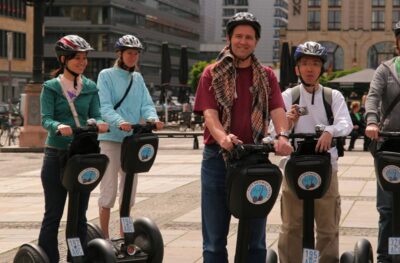
Munich 3-Hour Segway Tour: Nazi Munich & Royal Architecture
Read our review →
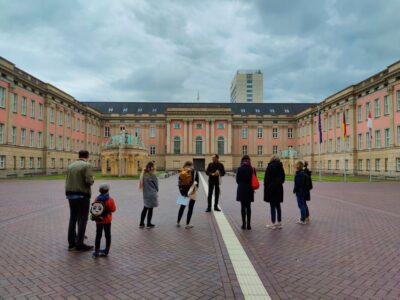
Guided Walking Tour of UNESCO Site and Architecture
Read our review →
Browse the lists this tour appears in