
Reviewed · ARCHITECTURE TOURS
Berlin: Modernist Architecture Tour in the Hansaviertel
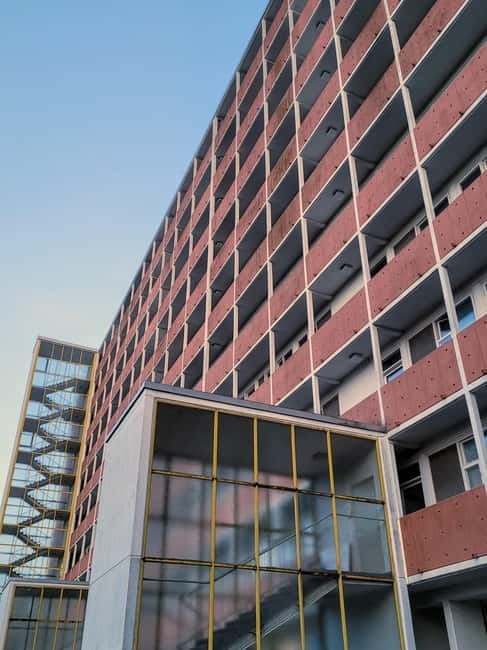
Hansaviertel is where Berlin’s postwar ideas became concrete. Between the Spree and Tiergarten, you’ll move from elegant 19th-century villas to apartment blocks designed by Walter Gropius, Oscar Niemeyer, Alvar Aalto, and other major architects. The setting is leafy and calm, but the story is tied to Nazi persecution, wartime destruction, and Cold War rivalry.
I like the way this tour connects architecture with ordinary life, asking what these buildings promised to the people who would live in them. I also like the route’s quieter focus: you get a memorial to a lost Jewish community and the riverside character of the old district, not just a parade of famous architects. The main drawback is that the tour is mostly outdoors, so two hours of walking and standing can feel tiring in poor weather.
Key details before you book
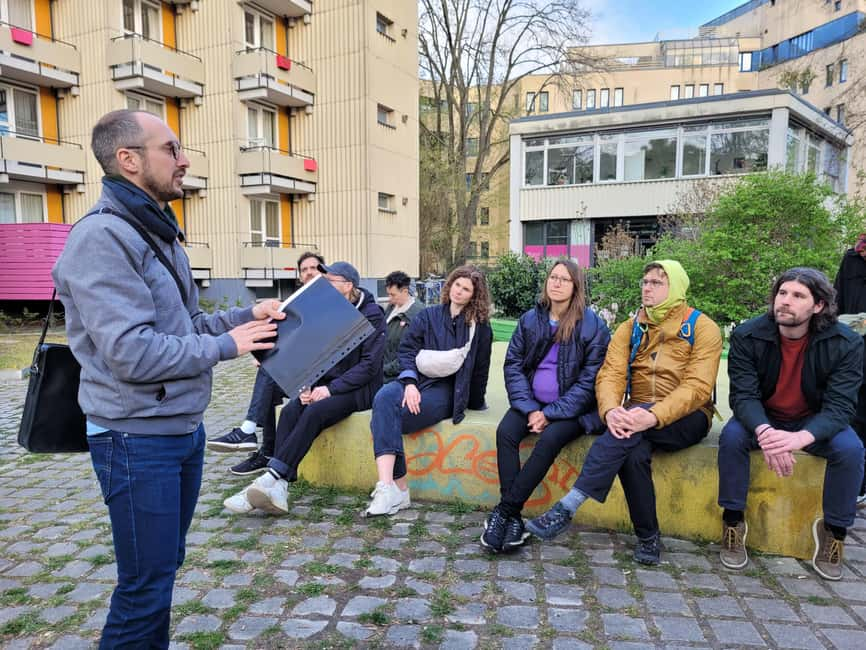
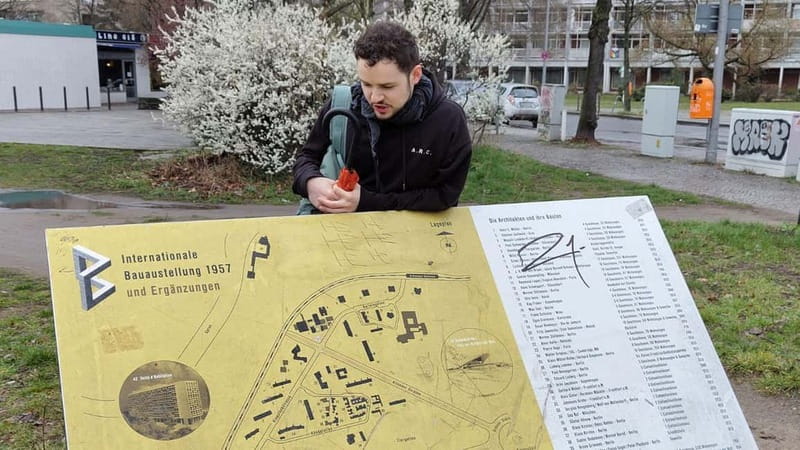
- Interbau 1957 turned a bomb-damaged district into a West Berlin showcase, using modern housing to answer East Berlin’s competing visions of urban life.
- The architecture comes with famous names, including Walter Gropius, Oscar Niemeyer, and Alvar Aalto.
- The story begins before modernism, with 19th-century villas and residents such as Rosa Luxemburg, Nelly Sachs, and Käthe Kollwitz.
- A Jewish memorial adds necessary historical weight, showing what was lost before the postwar rebuilding began.
- Morgan has led the tour with lively explanations and detailed answers, making the walk useful for people who want more than dates and building names.
- The tour costs $23 and lasts about two hours, a reasonable price for a guided introduction to a district that is easy to overlook.
Why Hansaviertel makes a better architecture walk than a postcard stop
Berlin has no shortage of grand sights, but Hansaviertel gives you something different. It is not a single monument or a polished historic street. It is a neighborhood shaped by several distinct periods, each leaving a visible mark.
You begin near the Berlin-Tiergarten S-Bahn station, between the Tiergarten and the Spree. That location matters. The district’s calm setting can make it hard to picture the crowded, expanding Berlin of the late 19th century, or the wartime destruction that later cleared much of the area.
The walk gives you a way to read the neighborhood in layers. First comes the former middle- and upper-class enclave, with villas, gardens, and elegant façades. Then comes the story of Jewish life and Nazi persecution. Finally, you reach the postwar experiment in modern housing that made Hansaviertel internationally known.
I find that order especially useful. You are not asked to admire concrete apartment blocks in isolation. You first learn what was there before, what was destroyed, and why rebuilding became a political act.
More architecture walks in Berlin:
- Munich 3-Hour Segway Tour: Nazi Munich & Royal Architecture
★ 4.9 · 194 reviews - Düsseldorf: Guided City Architecture Walking Tour
★ 4.6 · 61 reviews - Potsdam: Guided Walking Tour of UNESCO Site and Architecture
★ 4.7 · 49 reviews
Starting at Tiergarten station beside the beer garden
The meeting point is in front of the Berlin-Tiergarten S-Bahn station, at the Siegmunds Hof and Bachstraße exit. Look beside the beer garden known as Biergarten der Tiergartenquelle, and find the guide with the orange umbrella.
That clear landmark should make the start fairly easy, though I would still allow a few extra minutes. Berlin stations can have several exits, and using the specific Siegmunds Hof and Bachstraße exit will save you from circling the block.
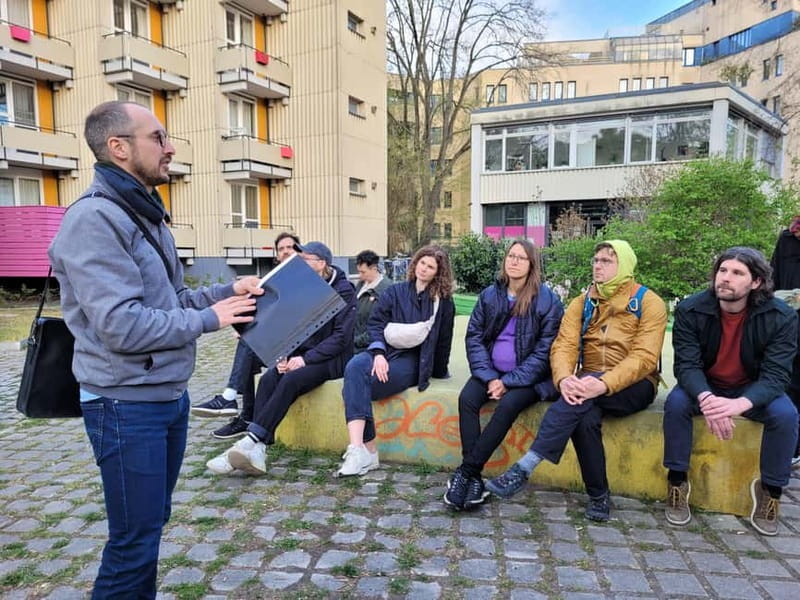
The tour is offered in German or English. Morgan is one guide associated with the experience, and the tour description indicates a style built around stories, questions, and historical connections. That matters here because Hansaviertel is not self-explanatory. You can see the buildings without understanding why they were built, but the political and social context is what makes them interesting.
The opening portion introduces the neighborhood’s earlier character. You’ll hear how Berlin’s population growth helped create a fashionable residential district in the 19th century. The point is not simply to admire old façades. It is to understand that Hansaviertel was once a carefully planned enclave for affluent residents, with villas and gardens rather than the modern apartment blocks associated with it today.
From villas to the lives of Rosa Luxemburg and Käthe Kollwitz
The first historical layer gives the tour a human scale. Hansaviertel was home to notable figures including Rosa Luxemburg, Nelly Sachs, and Käthe Kollwitz. Their presence helps shift the story away from architecture as an abstract subject.
Rosa Luxemburg connects the neighborhood to Berlin’s political life and resistance. Nelly Sachs brings the experience of Jewish German life and persecution into view. Käthe Kollwitz, known for art shaped by grief, poverty, and war, adds another reminder that Berlin’s cultural story was never separate from its social conflicts.
You should not expect a museum visit or a detailed biography of each person. Instead, these names help frame the district as a place where real people lived, worked, argued, created, and suffered. The tour’s value is in drawing those connections while you walk through streets that can otherwise seem quiet and anonymous.
This is also where the pace may feel more reflective than brisk. The route is designed to explain, not simply to move you from one photo stop to the next. If you want a quick architecture checklist, this may feel slow. If you want to know why the neighborhood matters, the slower pace is a strength.
A quiet memorial to Jewish life lost under Nazism
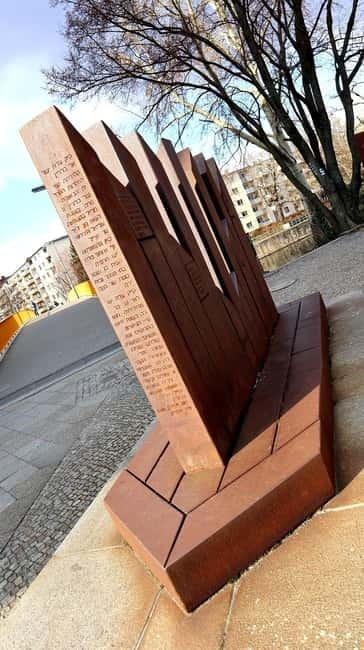
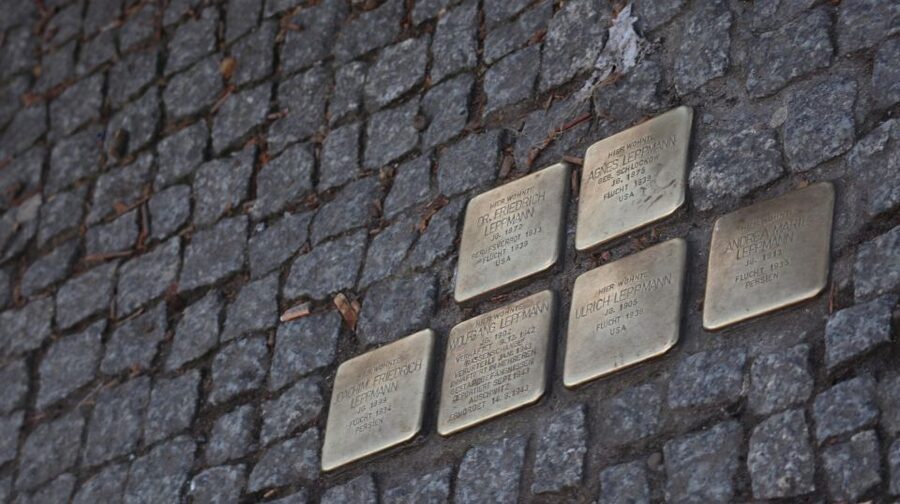
One of the most important moments comes at a memorial marking the site of a significant Jewish community. That community was destroyed socially and physically by the Nazi regime, followed by the damage caused by Allied bombing.
The setting is described as quiet, and that quiet is part of the experience. There is no grand museum setting to organize the story for you. The guide provides the context, and the absence of the former community becomes part of what you are asked to consider.
I appreciate that this stop is included before the modernist showcase. It prevents the postwar rebuilding story from becoming a clean tale of progress. Hansaviertel was not simply cleared and improved. People and communities had already been persecuted, displaced, and killed.
The tour does not present architecture as a way to erase the past. Instead, it shows how rebuilding took place on ground marked by loss. For many people, this will be the most serious part of the walk, and it is worth approaching with patience.
A few more half-days in Berlin worth comparing
- Berlin: Reichstag, Dome and Government District Guided Tour
★ 4.7 · 18,288 reviews - Berlin: 1-Hour City Tour by Boat with Guaranteed Seating
★ 4.3 · 16,993 reviews - Berlin: Boat Tour Along the River Spree
★ 4.4 · 11,252 reviews - Discover Berlin Half-Day Walking Tour
★ 5.0 · 9,624 reviews
Interbau 1957 and the Cold War argument in concrete
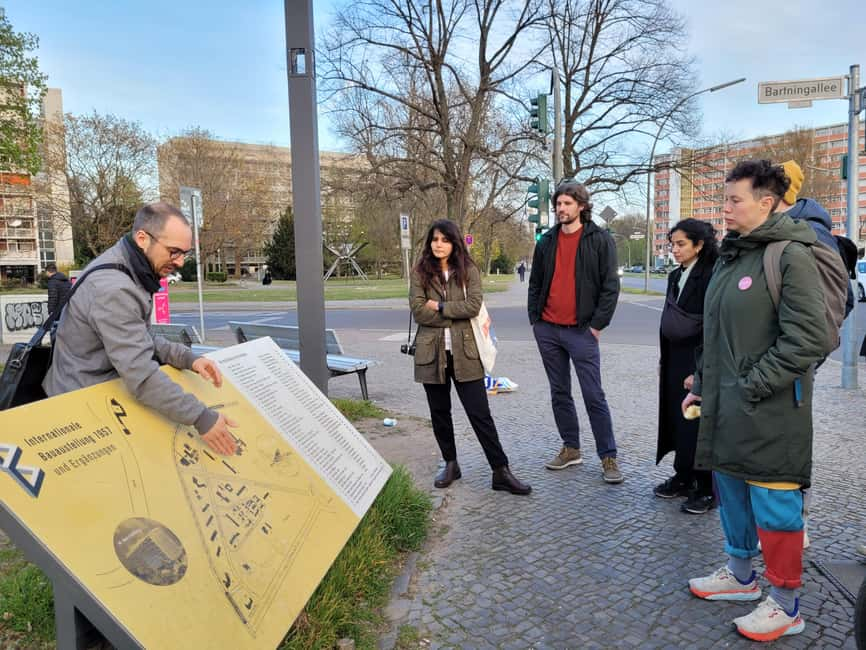
The major turn comes with Interbau 1957, the international architecture exhibition that reshaped Hansaviertel. West Berlin used the project to present a new vision of urban life after World War II.
This was architecture with a political job. West Berlin was surrounded by the larger Cold War contest, and modern housing offered a way to show what a democratic, forward-looking city might look like. Across the city, East Berlin was pursuing its own building ideals. Hansaviertel became West Berlin’s answer, with open planning, new apartment buildings, and designs from celebrated international architects.
The phrase international architecture exhibition can sound dry, but the basic idea was bold. Instead of restoring the old district exactly as it had been, planners used the damaged area to test a different kind of city.
As you walk, the guide explains the ideas behind the buildings. You’ll consider questions that still matter: Should housing be practical or expressive? How much should an architect shape daily life? Does a building remain modern when its original social promises are several decades old?
That last question is especially useful. Interbau was not only about unusual shapes. It was about sunlight, open space, shared life, and a new relationship between apartment buildings and the surrounding city. The tour lets you judge how well those ideas survived.
Meeting Gropius, Niemeyer, Aalto, and their neighbors
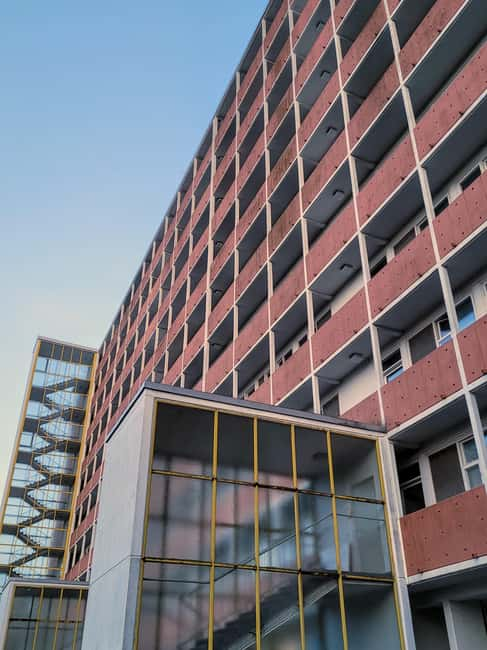
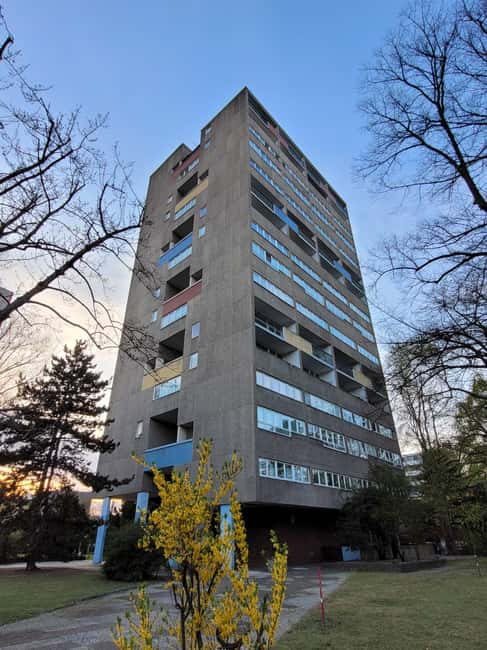
Hansaviertel’s architectural appeal comes from the range of designers gathered in one district. Walter Gropius, Oscar Niemeyer, and Alvar Aalto are among the names connected with the project, along with other influential modernist architects.
You’ll see buildings that are elegant, experimental, and sometimes provocative. Their forms differ, but they share a break from the tightly packed 19th-century street wall that shaped much of older Berlin.
Gropius brings the weight of the Bauhaus tradition. Niemeyer is associated with more expressive curves and sculptural forms. Aalto’s work often rewards close attention to human comfort and the relation between a building and its surroundings. The tour does not treat these architects as untouchable geniuses. It uses their work to ask how design choices affect residents.
That approach is more useful than simply memorizing names. Look at how a building meets the street, how much open space surrounds it, and how the design might feel to someone returning home every evening. You’ll get more from the walk if you notice those practical questions rather than searching only for the most photogenic façade.
The architecture can also be divisive. Some people find postwar modernism fresh and generous. Others see cold concrete and a loss of traditional Berlin character. The tour gives you room to consider both reactions. It is not a sales pitch for every building.
The route, timing, and physical effort
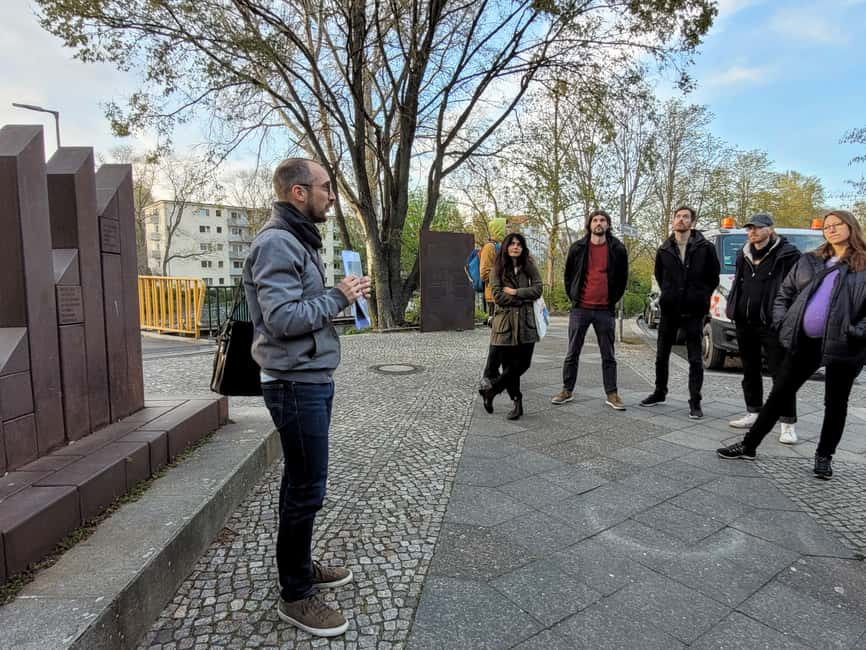
The full activity lasts about two hours, with the guided Hansaviertel portion listed at about 1.5 hours. The route begins at the Tiergarten station and is scheduled to finish at Hansaplatz. The meeting information also describes the activity as ending back at the meeting point, so I would confirm the exact endpoint when booking if your onward plans depend on it.
You should be comfortable walking and standing for roughly two hours. Wear comfortable shoes and bring water. There is no separate indoor stop promised, and food and drinks are not included.
The tour is listed as wheelchair accessible. Even so, the route is an outdoor walk through a neighborhood, so you may want to ask the provider about the exact surface and any point where the group pauses. That is sensible planning for any walking tour, especially one that includes several outdoor stops.
The suggested age is 14 and up because the historical material includes Nazi persecution, Jewish loss, and the political divisions of postwar Berlin. There is no strict age restriction, but minors must be accompanied by an adult.
Is $23 a fair price for this walk?
At $23 per person, the tour is priced below many major guided sightseeing experiences in Berlin. The value depends on your interest. If you only want famous landmarks, Hansaviertel may not be your first choice. If you enjoy architecture, urban planning, or 20th-century history, the price is quite reasonable.
You are paying for an expert local guide rather than admission to a museum or monument. That distinction matters. The buildings are part of the neighborhood, so you are not buying entry to a single attraction. You are paying for interpretation, connections between sites, and the chance to ask questions as the walk develops.
The guide’s ability to respond to different questions is one of the experience’s useful features. Morgan has been described as able to move through a wide range of questions while adding further information. That suggests the tour can work for both a curious beginner and someone already interested in modernist design.
There are no food or drink inclusions, and there is no museum entry. That keeps the price straightforward. Bring your own water and plan a café or beer garden stop separately if you want one.
Who will get the most from Hansaviertel?
I would recommend this tour to you if you like seeing how politics and design affect everyday places. It suits visitors who have already seen central Berlin’s major sights and want a district with a more focused story.
It is also a good choice if you enjoy architecture but do not want a lecture made only of dates and technical terms. The route combines buildings with residents, Jewish life, war, rebuilding, and Cold War competition.
You may want to skip it if you dislike walking, standing, or serious historical discussion. It is not a light sightseeing loop. The story includes persecution and destruction, and the modernist buildings are best appreciated with time to think about them.
Families with younger children may find the subject matter and pace difficult. The suggested minimum age of 14 is a useful guide. Teenagers and adults who enjoy history, design, or urban questions should find more to hold their attention.
Practical advice for a better walk
Arrive at the correct S-Bahn exit and look for the orange umbrella. Comfortable shoes are essential, even though the route is not described as strenuous.
Bring water, and dress for the weather. You will be outside for most or all of the experience, and the tour does not include food or drinks.
Try not to judge the buildings too quickly. Modernist architecture can look plain in a single photograph. Pay attention to spacing, windows, balconies, open areas, and the way the buildings relate to the older district.
Finally, ask questions. The tour is strongest when it explains the choices behind the buildings and connects them to life in Berlin. Morgan’s ability to follow different questions can make the experience more personal and useful than a fixed speech.
Should you book the Hansaviertel tour?
Book it if you want a thoughtful two-hour walk through a part of Berlin that combines Jewish memory, Cold War politics, and modernist design. The $23 price is fair for a guided neighborhood tour, especially if you value context more than a long list of sights.
Skip it if you want grand monuments, indoor exhibits, or a short ride between attractions. Hansaviertel asks you to walk, look closely, and think about what a city is supposed to do for its residents.
For architecture fans, history-minded visitors, and anyone curious about how West Berlin tried to express a new future after the war, this is a strong pick. Bring good shoes, water, and an open mind about concrete.
FAQ
Where does the tour begin?
It begins in front of the Berlin-Tiergarten S-Bahn station at the Siegmunds Hof and Bachstraße exit, next to Biergarten der Tiergartenquelle.
How do I find the guide?
Look for the guide holding an orange umbrella near the meeting point.
Where does the tour finish?
The route is listed as finishing at Hansaplatz. The meeting information also says the activity ends back at the meeting point, so confirm the exact endpoint when booking.
How long does the experience last?
The activity lasts about two hours. The guided Hansaviertel portion is listed as about 1.5 hours.
What languages are offered?
The tour is available in English and German.
Is the tour wheelchair accessible?
Yes, the activity is listed as wheelchair accessible.
What should I bring?
Bring comfortable shoes and water. The experience is a walking tour with approximately two hours of walking and standing.
Is the tour suitable for children?
The recommended age is 14 and up because of the historical content. Minors must be accompanied by an adult.
What is included in the price?
An expert local guide is included. Food, drinks, and entry to museums or monuments not specified in the route are not included.
Just added in Berlin
- Berlin & The Third Reich Private Guided Tour★ 5.0 · 3 reviews
- Third Reich Quest Experience in Berlin★ 4.5 · 7 reviews
- Private Analogue Photography Experience in Berlin★ 5.0 · 3 reviews
- Berlin Urbex Adventure and History Tour★ 5.0 · 9 reviews
- The Beauty of Berlin by Bike: Private Tour★ 5.0 · 59 reviews
- Berlin: Guided Bike tour of the Berlin Wall and Third Reich★ 5.0 · 160 reviews
- Beyond Currywurst: Berlin’s Hidden Street Food & Culture Tour★ 5.0 · 100 reviews
- Berlin Third Reich & Cold War Walking Tour With A Guide★ 5.0 · 7 reviews
Architecture Tours, compared.

Munich 3-Hour Segway Tour: Nazi Munich & Royal Architecture
Read our review →
Guided Walking Tour of UNESCO Site and Architecture
Read our review →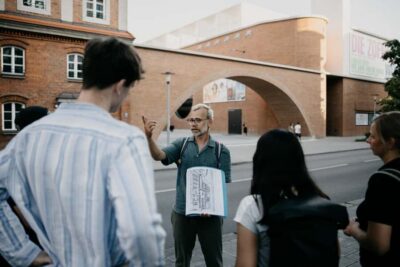
Browse the lists this tour appears in