
Reviewed · HISTORICAL TOURS
Karl-Marx-Allee Walking Tour: Berlin’s Socialist History
Karl-Marx-Allee is where East Germany tried to build a shining socialist future in stone. The huge apartment blocks, broad avenues, and formal towers were meant to show that the new state could house its people in style. Beneath that polished face lie stories of worker revolt, police surveillance, and a city still arguing over who can afford to live here.
I like this walk for two reasons: the architecture is impossible to miss, and the history connects grand buildings to ordinary East Berliners. I also like that the route reaches beyond Cold War spectacle, showing how the former parade boulevard now figures in protests over rent and gentrification.
The main consideration is the subject matter. This is a serious history walk, not a light sightseeing stroll, and the grand scale can feel repetitive if you are not interested in urban design, East Germany, or the Cold War.
Key points to know before you book
- See the grandest face of East German architecture: Walk beneath the monumental housing blocks built in socialist classicism.
- Trace a workers’ uprising: Learn how anger over construction demands in 1953 threatened the young East German government.
- Look beyond the polished facade: The tour explains surveillance, wiretaps, and hidden Stasi listening posts.
- Compare two visions of socialism: Earlier postwar modernism contrasts sharply with the later formal boulevard.
- Connect history with film: See locations associated with The Lives of Others and The Queen’s Gambit.
- Finish with present-day Berlin: The former parade route is now linked to local protests over rising living costs.
Karl-Marx-Allee, Berlin’s socialist showcase
The first thing you notice is scale. Karl-Marx-Allee was not designed to whisper. Its broad roadway and enormous residential blocks were meant to make residents and visitors feel the power of the new East German state.
The buildings belong to the style often called socialist classicism. Look for formal facades, repeated windows, decorative details, and a sense of ceremony more often associated with government buildings than ordinary flats. Yet these were homes, not just monuments. The state wanted the street to display a model of socialist living.
That tension gives the walk its bite. You are not simply looking at pretty buildings. You are examining a political message built into apartments, shops, cafes, and public space.
After World War II, Berlin lay in ruins, and East Germany needed housing as well as symbols. Thousands of volunteers worked day and night on the reconstruction program. The result was an avenue designed to suggest order and progress rising from the wreckage.
I find the street most interesting when you keep two views in mind at once. From a distance, it looks like a carefully staged national project. At close range, it becomes a neighborhood where people lived, shopped, ate, and dealt with the limits of a tightly controlled society.
More History Tours in Berlin
- Berlin: Natural History Museum Entrance Ticket
★ 4.6 · 3,382 reviews - Berlin Historical Highlights Walking Tour
★ 4.9 · 657 reviews - Berlin Private Complete History All Day Walking Tour
★ 5.0 · 474 reviews
From Frankfurter Tor to the heart of the boulevard
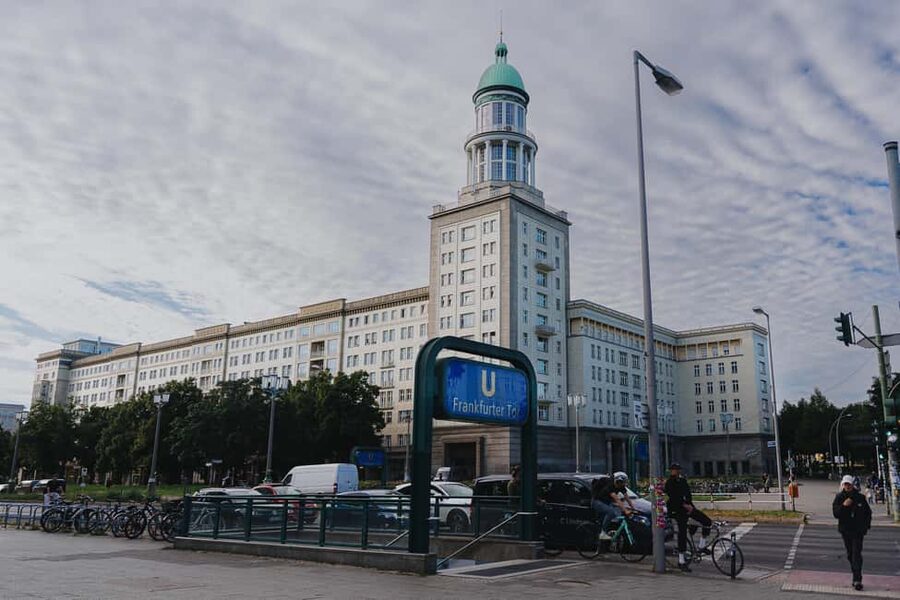
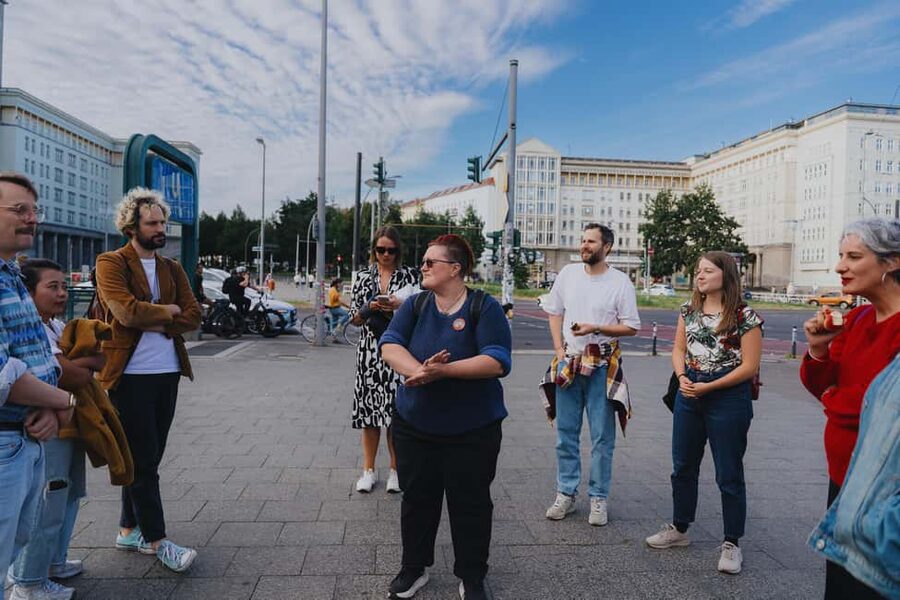
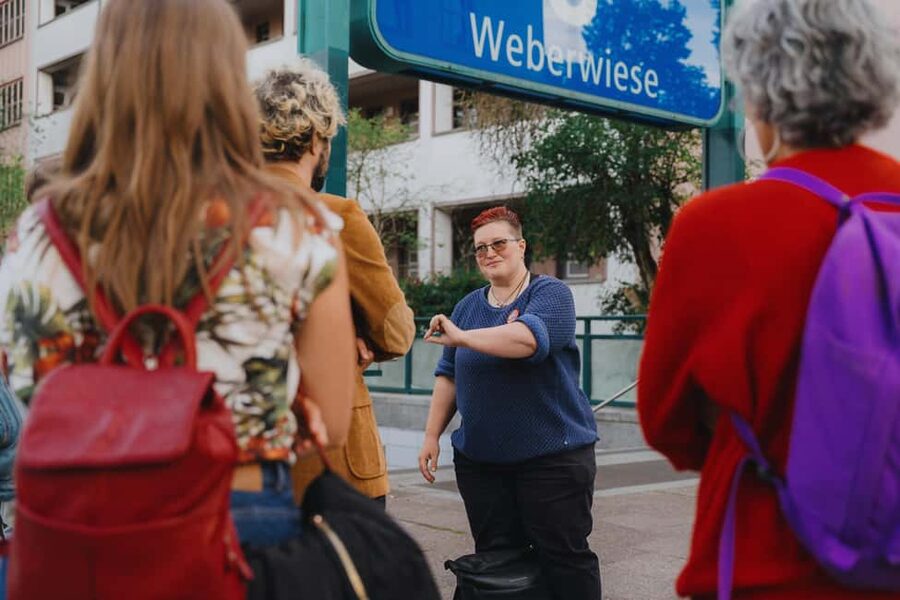
The walk begins outside the Frankfurter Tor U-Bahn station, at the corner of Warschauer Straße and Karl-Marx-Allee. Look for the guide holding an orange umbrella. This is a useful meeting point because the station is easy to identify, and Frankfurter Tor provides an immediate visual introduction to the avenue.
The guided portion lasts about 1.5 hours within a total activity time of two hours. That leaves time for gathering the group and moving between the start and finish, so you should expect a focused walk rather than a full-day city tour.
From Frankfurter Tor, the route heads along Karl-Marx-Allee toward U Strausberger Platz. The avenue gives you room to take in its proportions, but do not expect a fast march through Berlin. The point is to stop, look, and connect architectural details with political events.
Wear comfortable shoes. The tour is wheelchair accessible, which helps people who need step-free access, though the broad route and urban setting still make sensible footwear useful for everyone.
The postwar modernists who came first
One of the more useful parts of this tour is that Karl-Marx-Allee did not begin with the grand blocks most people associate with it. Earlier postwar buildings reflected modernist ideas about rebuilding Berlin after the destruction of the war.
These designs came from a period when architects were thinking about new ways to organize city life. Their ideas were more spare and forward-looking than the later socialist classicism. The contrast shows that East German architecture did not follow one fixed plan from the beginning.
The shift in style was political. The new regime rejected the earlier modernist look and promoted a more formal version of socialist architecture. Fast-growing poplar trees were later used to hide some of the earlier buildings from passersby, making the change in taste visible in the street itself.
You will get more from this section if you look in both directions. The avenue is not one uniform monument. It is a record of changing ideas about what a socialist city should look like and how citizens should experience it.
Why the 1953 uprising matters here
The most dramatic part of Karl-Marx-Allee’s story is the workers’ uprising of June 1953. The building program was supposed to prove the strength of East Germany, but it helped create the anger that nearly brought down the young government.
Disgruntled workers began a mass uprising. The precise local setting matters because this was not an abstract rebellion somewhere far away. The demands and frustrations were tied to work, construction, and the conditions imposed by the state.
The result was a crisis for East Germany. A street intended to advertise national recovery became linked to opposition against the government. That contradiction is central to understanding the avenue.
I appreciate this part of the tour because it keeps the buildings from becoming frozen museum pieces. The architecture may look calm and controlled, but the people who built and occupied this district did not always accept the rules placed on them.
More Walking Tours in Berlin
- Discover Berlin Half-Day Walking Tour
★ 5.0 · 9,624 reviews - Berlin: Third Reich and Cold War 2 Hour Walking Tour
★ 4.9 · 6,830 reviews - Berlin: Discover Berlin Walking Tour
★ 4.9 · 5,998 reviews - Berlin’s Best: 2 Hour Walking Tour Third Reich and the Cold War
★ 5.0 · 5,486 reviews
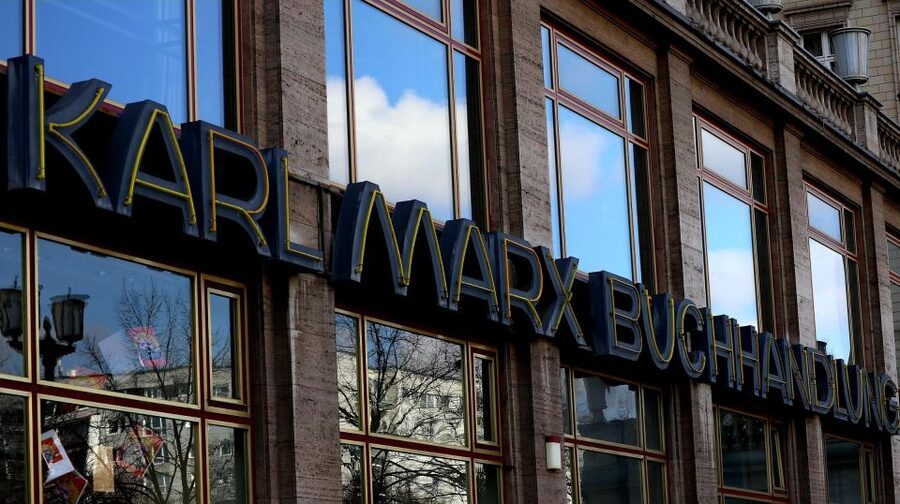
Cafes, shops, and the ideal East Berlin life
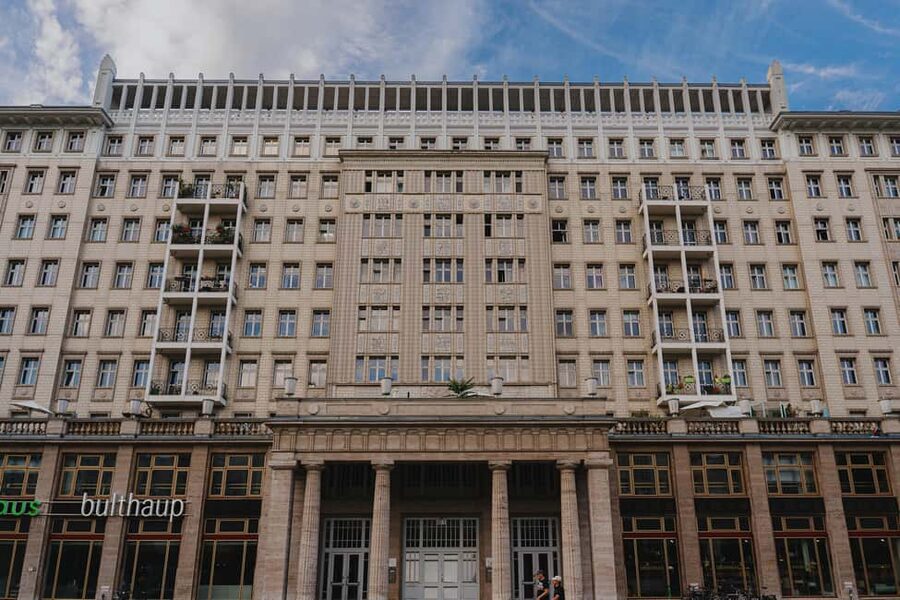
Karl-Marx-Allee was designed to offer the best East Berlin could provide. Cafes, restaurants, and well-stocked shops helped create an image of comfort and plenty within socialism.
That detail is easy to miss if you focus only on the monumental facades. The avenue was also a stage set for daily life. It told residents that the state could provide attractive homes, places to eat, and access to consumer goods.
The important word is image. The polished street did not represent the whole experience of living in East Germany. Shortages, political restrictions, and state control existed beyond the public face of the boulevard.
A guide can help you hold those two realities together. You can admire the planning and building work without accepting the official story at face value. That balance is the best reason to choose this walk over a quick photo stop.
The Stasi behind the perfect facade

The tour also examines the surveillance system that remained hidden from the avenue’s public image. Wiretaps in flats and listening stations in attics were part of the East German secret police system.
These details change how you read the apartment blocks. The buildings were meant to feel modern and comfortable, but private life could be watched and recorded. The same homes that symbolized socialist progress could also be places where residents had reason to guard their words.
You should not expect to enter secret rooms or inspect original surveillance equipment on this walk. The value is in understanding the contrast between the visible street and the hidden machinery of control.
This is also where film references become useful. The route includes locations connected with The Lives of Others, a film closely associated with Stasi surveillance, as well as The Queen’s Gambit. Film locations add a pop-culture hook, but the stronger point is how the street’s architecture continues to communicate mood and political memory.
A boulevard that changed after the Wall fell
After German reunification, Karl-Marx-Allee lost its role as the setting for socialist parades. For a time, the avenue looked like an awkward relic from another political age. Its monumental style no longer matched the city’s new direction, and parts of the street fell into disrepair.
Berlin’s housing crisis changed the story again. Real estate interest returned, and an area once treated as an outdated curiosity became valuable. That shift gives the boulevard a modern edge: the fight is no longer about building socialism, but about who can remain in a changing city.
The former Stalinallee now appears in local protests over gentrification and rising living costs. The same broad public space that once displayed state power can now host community resistance.
That link between past and present makes the walk more than a history lesson. You see how old buildings acquire new meaning as political conditions change. Berlin does not preserve its past in a glass case. It keeps arguing with it.
What the two-hour format does well

Two hours is a sensible length for this subject. Karl-Marx-Allee is visually large, but the route stays focused on one corridor and its political story.
You have enough time to understand the main architectural phases, the 1953 uprising, Stasi surveillance, and the street’s post-reunification changes. You do not have enough time for every building, interior, or side street, so anyone seeking a detailed architectural survey should treat this as an introduction rather than a specialist course.
The guided walk is available in English or German. That matters because the subject depends on explanation, not just views. A photo can show the towers and facades, but it cannot explain why a modernist style was rejected, how construction demands fed discontent, or why a showcase neighborhood could also be watched by the secret police.
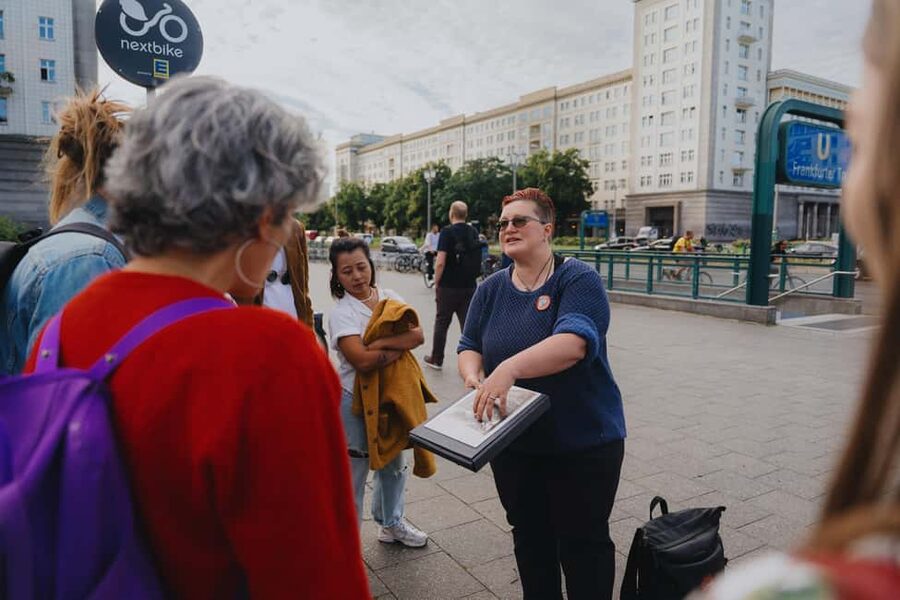
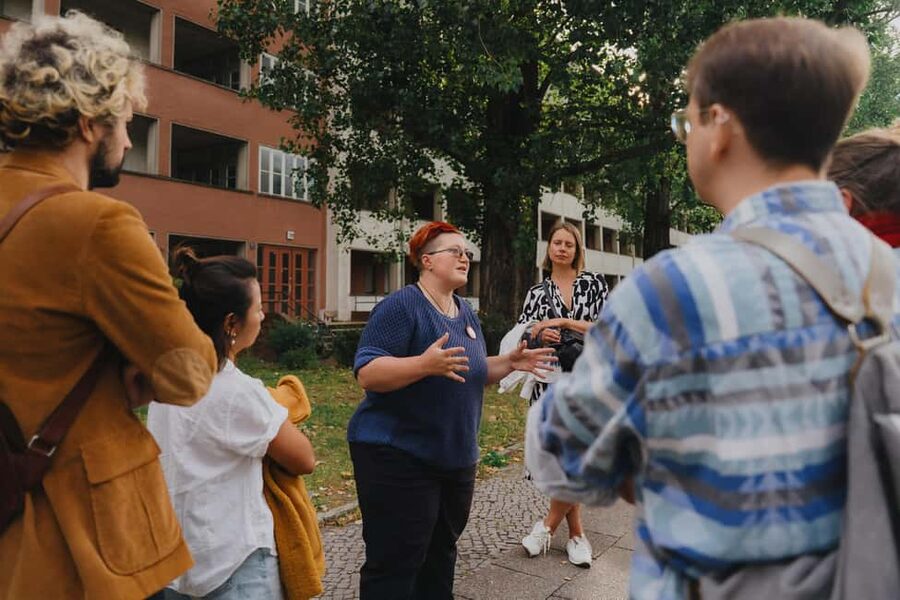
The group also benefits from a responsive guide. Martina is specifically noted for paying attention to curious participants rather than simply pushing ahead with a fixed speech. That is useful on a walk like this, where questions about architecture, daily life, and surveillance naturally lead in different directions.
Is $23 a fair price?
At $23 per person, this is a good value if you want context rather than a short photo stop. You are paying for a two-hour guided interpretation of one of Berlin’s most unusual urban projects, not merely transportation or entry to a building.
The value comes from the connections. You get architecture, political history, film locations, and present-day housing issues in one compact route. A self-guided walk could show you the avenue, but it would be harder to connect its changing styles with the 1953 uprising or the hidden surveillance network.
The price may feel less worthwhile if you already know Karl-Marx-Allee well or prefer to explore at your own speed. The route has a clear structure, and a guide-led discussion will not suit someone who wants to stop for long photographs at every block.
The option to reserve now and pay later is useful if your Berlin schedule is still shifting. You can also cancel up to 24 hours ahead for a full refund, which gives you some protection when planning around museum visits or changing weather.
Who should take this walk?
I would choose this tour for anyone interested in the Cold War, urban planning, architecture, modern German history, or the daily realities of East Berlin. It also suits visitors who want a neighborhood-based experience rather than another tour of central Berlin’s best-known monuments.
Film fans have an extra reason to come, thanks to locations connected with The Lives of Others and The Queen’s Gambit. The references do not replace the history, but they provide familiar points of entry into a complicated place.
This is less suitable for young children. The activity is not recommended for anyone under 10, and the discussion of political repression may be too serious for a family seeking simple entertainment.
You should also choose another activity if you want interiors, a museum collection, or a long break for coffee. The experience is an outdoor walking tour, and its strength is the relationship between buildings, streets, and events.
Should you book the Karl-Marx-Allee walk?
Book it if you want to understand why this grand avenue exists and what happened behind its carefully managed public face. The combination of socialist classicism, earlier modernism, the 1953 uprising, Stasi surveillance, and current housing protests gives you a fuller view than architecture alone.
I especially recommend it for a first visit to East Berlin’s former Soviet sector, since the walk supplies the political frame you need to read the street properly. Bring comfortable shoes, meet the guide with the orange umbrella outside Frankfurter Tor, and come ready to ask questions.
Skip it if you have little interest in 20th-century politics or prefer a relaxed sightseeing route with fewer serious themes. For everyone else, $23 buys a sharp, useful look at a Berlin boulevard that still has plenty to say.
FAQ
Where does the Karl-Marx-Allee walking tour begin?
Meet outside the Frankfurter Tor U-Bahn station, on the corner of Warschauer Straße and Karl-Marx-Allee. The guide holds an orange umbrella.
Where does the walking tour finish?
The route is listed as finishing at U Strausberger Platz. The activity information also describes the end as back at the meeting point, so check the exact meeting details when booking.
How long does the tour last?
The activity lasts two hours, with about 1.5 hours described as the guided walk along Karl-Marx-Allee.
Which languages are available?
The live guide leads the tour in English or German.
Is the tour wheelchair accessible?
Yes, the activity is described as wheelchair accessible.
Is the tour suitable for children?
It is not suitable for children under 10.
Can I cancel the booking?
You can cancel up to 24 hours in advance for a full refund. You can also reserve now and pay later.
Just added in Berlin
- Berlin & The Third Reich Private Guided Tour★ 5.0 · 3 reviews
- Third Reich Quest Experience in Berlin★ 4.5 · 7 reviews
- Private Analogue Photography Experience in Berlin★ 5.0 · 3 reviews
- Berlin Urbex Adventure and History Tour★ 5.0 · 9 reviews
- The Beauty of Berlin by Bike: Private Tour★ 5.0 · 59 reviews
- Berlin: Guided Bike tour of the Berlin Wall and Third Reich★ 5.0 · 160 reviews
- Berlin Third Reich & Cold War Walking Tour With A Guide★ 5.0 · 7 reviews
- Shared Underground Party Tour in Berlin★ 4.5 · 9 reviews
Historical Tours, compared.
City History Canal Sightseeing Tour on a Motorboat
Read our review →


Browse the lists this tour appears in