
Reviewed · THIRD REICH TOURS
Munich: Third Reich and World War II Segway Tour of the City
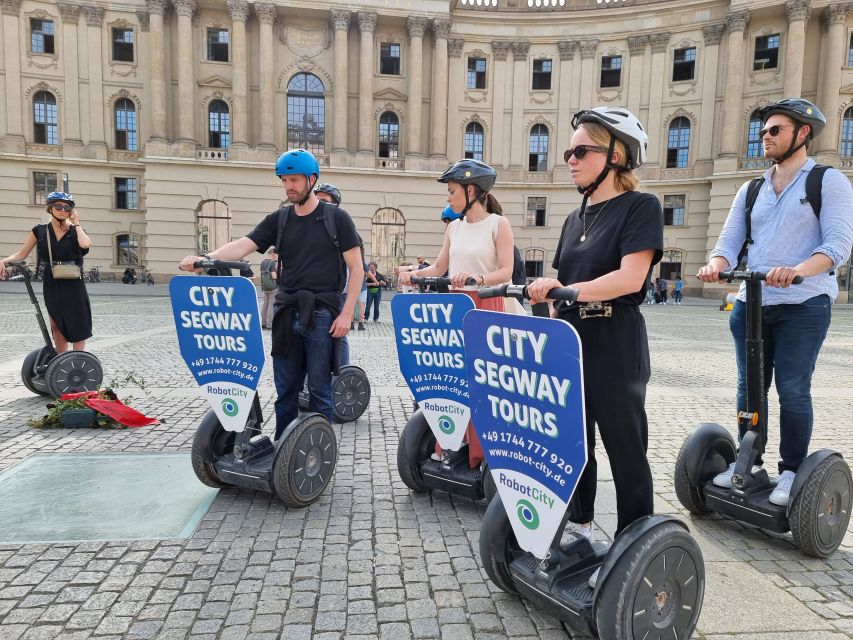
Munich’s difficult 20th-century story is easier to grasp when you can cover a lot of ground in three hours. This tour links Hitler’s former apartments, the Old Synagogue site, Königsplatz, Odeonsplatz, and the Brown House while you glide between stops on a Segway. The moving format lets you see far more than you could on foot.
I like the careful training at the start, especially for first-time riders, and I like the small groups, limited to 10 people. Guides such as Abdel and Jamal have been praised for patience, clear English, and a good sense of humor. The main drawback is that riding on roads can unsettle beginners, and some riders may want more time in the English Garden.
Key points to know
- Three hours on a Segway: Cover central Munich’s major historic areas in less time than a walking tour.
- A serious subject with a lively format: Hear about Hitler’s years in Munich and the city during World War II without spending the entire tour indoors.
- Former Nazi power sites: See the Führer’s building, Brown House, Königsplatz, and Odeonsplatz.
- Useful first-timer instruction: You receive practice and a safety briefing before leaving the office.
- Small groups of up to 10: The guide can give more attention to riders who need extra help.
- Good advice for later: Your guide may point you toward Hofbräuhaus am Platzl or Hofbraukeller for Bavarian food and drink.
Why a Segway works well for Munich’s difficult history
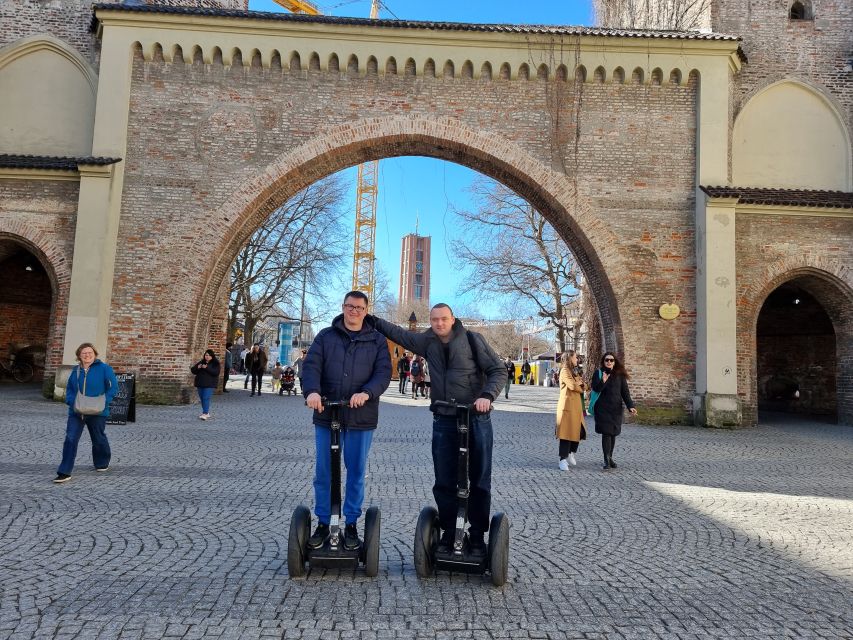
This is not simply a joy ride with a few dates added. The tour uses Munich’s streets to connect places tied to Bavarian royalty, the Nazi movement, and World War II. That physical connection matters. You are not jumping between unrelated stops on a bus. You move from one site to the next, seeing how the central districts fit together.
I like this approach for visitors with only a short stay. Munich is spread out enough that a walking tour can require long stretches between major sights. A Segway gives you more range while keeping the group outdoors and moving.
The subject also benefits from a guide’s explanation. A former apartment or government building can look ordinary if you pass it alone. The guide gives each address a reason to matter, including Hitler’s time in Munich and his rise to power.
The balance is worth noting. The tour focuses on history, but it is not a museum program or a specialist seminar. Commentary is described as entertaining and informative, with attention to the sites you pass. If you want detailed architectural or political analysis at every stop, you may find the explanations uneven. If you want a clear introduction while seeing much of the city, the format makes sense.
More Segway Tours in Munich
- Munich: City Highlights Guided Segway Tour
★ 4.6 · 266 reviews - Munich 3-Hour Segway Tour: Nazi Munich & Royal Architecture
★ 4.9 · 194 reviews - Munich Segway Tour
★ 5.0 · 181 reviews
Getting comfortable on the Segway before the city ride
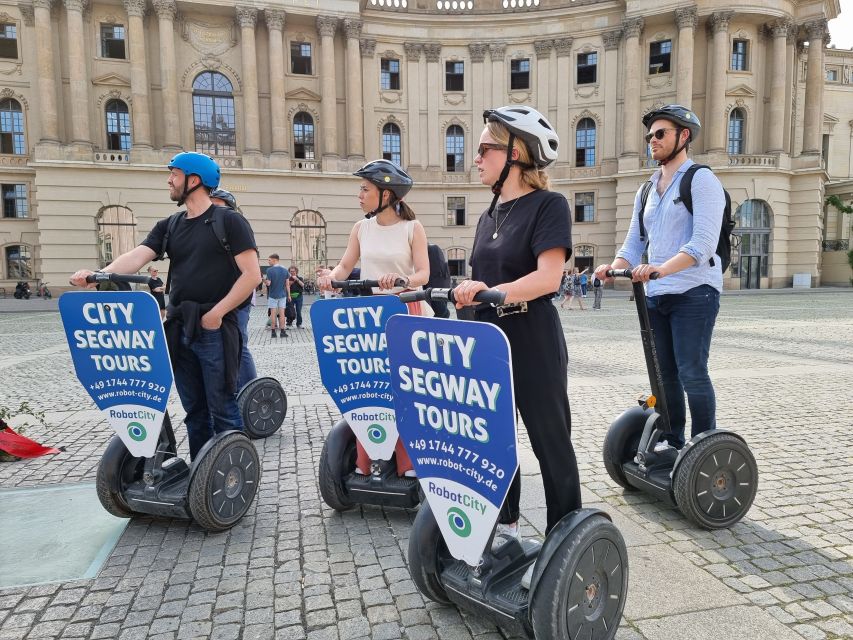
You meet at Robot City Segway Tour München, the office used by Firewheels Tour GmbH. The tour begins with a safety briefing and instruction on handling the Segway. You also get practice before setting out.
That opening is important. Several riders had never used a Segway before, and the instruction helped them get moving. Guides have been praised for being patient with nervous beginners, particularly Abdel, who is repeatedly described as friendly, calm, and helpful. Jamal is also noted for giving detailed training before the group entered central Munich.
A Segway responds to your balance and body movement, so the first few minutes can feel strange. Give yourself time. Do not treat the practice as a formality. Ask for help before the group leaves if you are not comfortable stopping, turning, or controlling your speed.
The equipment supplied includes the Segway and a helmet. The activity is not suitable for children under 14 or for pregnant women. You should also consider your own comfort on city streets. One rider found the road sections scary, even while enjoying the quieter park and cycle-track portions.
Hitler’s Munich: apartments, addresses, and the rise to power
One of the tour’s most unusual features is the attention given to Hitler’s former homes. You pass the apartment where he lived from 1920 to 1929 and another apartment connected with his life in Munich in 1933.
These stops are valuable because they show the city as part of his political story, not just as a backdrop to events that happened elsewhere. Your guide explains the period when Hitler lived in Munich and how his influence grew. The addresses themselves may not look dramatic, so the guide’s context is essential.
This is also where expectations matter. You are passing the locations from outside, not entering a preserved historic apartment. The value comes from the location and explanation, not from an elaborate interior display.
For anyone interested in the Nazi period, these stops give the tour a clear purpose. You are not merely checking off famous squares. You are tracing a chapter of Munich’s past through places connected with Hitler’s personal and political life.
The Old Synagogue site and Munich during World War II
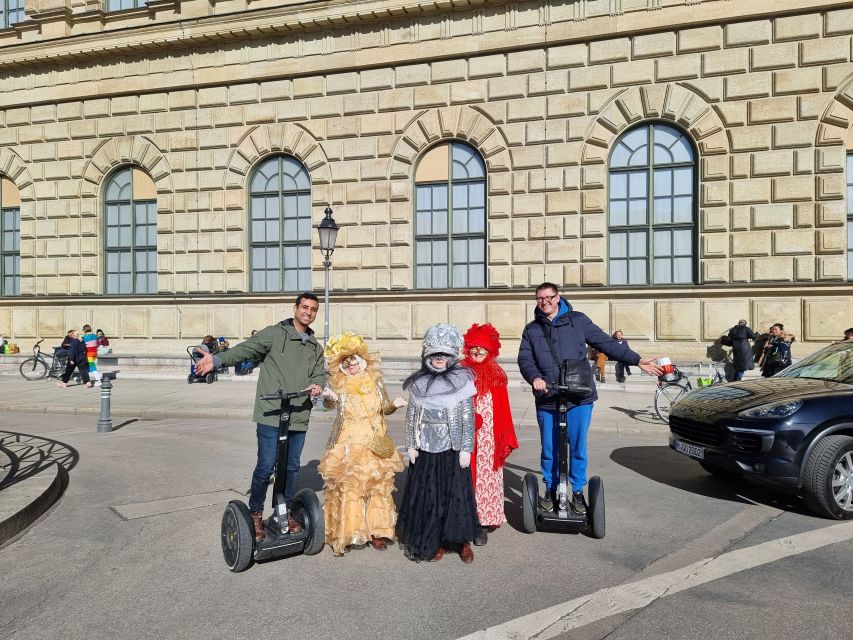
The tour includes a stop outside the site of the old synagogue. Here, the guide discusses what happened in Munich during World War II and explains the significance of the location.
This is one of the places where a guided visit is especially useful. A site connected to Jewish life and wartime destruction can be easy to miss if you only follow the city’s grand architecture. The stop adds a necessary human dimension to a route that also includes Nazi government buildings and ceremonial spaces.
The format does have limits. The tour covers several locations in three hours, so no single stop can receive the attention of a full museum visit. You should see this as an introduction that helps you decide which historical sites deserve a longer return visit.
I appreciate that the route does not present Munich only through royal palaces and beer halls. The old synagogue site places the city’s modern history beside its tourist attractions, making the day more honest and more useful.
More Third Reich Tours in Munich
- Munich: Third Reich & WWII Walking Tour
★ 4.6 · 6,181 reviews - Third Reich Walking Tour Munich
★ 4.5 · 4,291 reviews - Munich: Birthplace of the Third Reich Guided Walking Tour
★ 4.6 · 771 reviews - Munich City Walking Tour, includes Third Reich & Viktualienmarkt
★ 5.0 · 458 reviews
Königsplatz and Odeonsplatz reveal the public face of power
Königsplatz and Odeonsplatz are major stops on the route. They help show how public spaces can be used for ceremony, politics, and spectacle.
You also pass the Führer’s building and the Brown House, both tied to the Nazi period. These locations give the tour a stronger political focus than a standard sightseeing ride. The guide points out buildings and explains their place in Munich’s history, while you see how close these sites are to the city center.
Königsplatz is particularly useful as part of the route because it links architecture and political history. Rather than seeing a grand square only as a photo stop, you hear how it fit into the period covered by the tour.
Odeonsplatz adds another layer. It is one of Munich’s best-known central spaces, and its inclusion helps connect the Nazi-era sites with the older city. The tour also includes stories about Bavarian kings, so the route is not limited to the 20th century.
You should expect an overview rather than a long lecture at each square. The guide’s ability to explain clearly matters here. Abdel has been praised for his historical explanations and friendly manner, while another rider found the information helpful but wished for more detail about certain sights, including an archway at the end of Leopoldstrasse. That is a fair warning: coverage is broad, but not every building receives equal attention.
Schelling-Salon and the city’s everyday history
Schelling-Salon provides a different kind of stop. This pub remained open throughout World War I and World War II, giving it a place in the city’s everyday story.
It is a welcome change from official buildings and political addresses. A pub can show how ordinary city life continued through periods of great upheaval, even though it should not be treated as a substitute for a memorial or museum.
The guide points out sites like this while riding through Munich’s streets, so the tour includes small details as well as major landmarks. These moments can make the route feel less like a checklist of famous names.
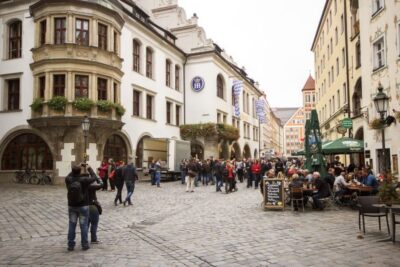
The tour also gives recommendations for after the ride. Hofbräuhaus am Platzl, the beer hall originally built in 1589, is one suggestion. Hofbraukeller, which serves traditional Bavarian food, is another. These recommendations are useful because the tour ends back at the guide’s office, leaving you free to continue exploring on your own.
Riding conditions, weather, and the English Garden question
A Segway is a practical way to cover distance, but it does not remove the realities of city riding. You may use streets and cycle tracks, and road traffic can make some riders tense. The group moves through different settings, including park areas, so the experience is not the same from start to finish.
The English Garden is part of what attracts some riders to a Segway tour, but this particular experience is primarily a city history route. One rider who felt confident on the Segway wanted more time riding through the English Garden. If your top priority is park cruising, check the exact route and starting time before booking.
Weather can also affect the experience. The tour has gone ahead in rain, snow, and freezing conditions. That shows the activity can operate in unpleasant weather, but it does not mean you should arrive unprepared. Wear clothing suited to the forecast and remember that you will be outside for three hours.
The season may change the feel of the ride. Oktoberfest crowds can make central Munich busier, though the Segway still allowed one group to get around without trouble. A smaller group helps, but you should not expect empty streets in a major city during a major festival.
The guide makes or breaks this three-hour route
The strongest part of the experience is the guide’s role. You need someone who can do three jobs at once: teach a new rider, keep a group safe, and explain a complicated past in plain language.
The guide names that come up most positively are Abdel and Jamal. Abdel has been praised for patience, friendliness, humor, and strong English. He also helped first-time riders feel secure, including during cold and snowy weather. Jamal is noted for detailed training and a pleasant introduction to central Munich.
Tours are available in English and German. If language communication is important to your booking, choose carefully and confirm the language offered at your selected time. One group had a mix-up involving language and needed an interpreter, though the guide still worked to help them.
The group limit is 10 people. That is small enough for individual attention without making the tour feel private by default. Private groups may occur when demand is low, but you should not assume that will happen.
Is the $100 price good value?
At $100 per person, this is not Munich’s cheapest way to see the center. You are paying for the Segway, helmet, guide, instruction, and a three-hour route, with hotel pickup and drop-off excluded.
The value comes from combining transport and sightseeing. You cover a large area, receive historical commentary, and avoid arranging separate walks between the city’s main locations. One rider felt the tour saved money by combining the sites and the information in one activity. I think that is a fair way to judge the price.
The value is strongest if you are short on time, curious about World War II history, or interested in trying a Segway. It is weaker if you prefer slow museum visits, want extensive detail at every building, or already know Munich’s central districts well.
Free cancellation is available up to 24 hours before the activity, and you can reserve now and pay later. Those terms give you some flexibility, though the main booking decision should still be based on your comfort with the equipment and outdoor conditions.
Who should book this Munich Segway tour?
I would recommend it to adults and older teenagers who want to see a lot of Munich in one morning or afternoon. It suits first-time visitors, history-minded visitors, and anyone who finds long walking tours tiring.
It is also a good choice for couples and small groups. The group size keeps the tour personal, and the guide can spend time helping anyone who needs extra practice.
I would hesitate if you dislike riding near traffic, are pregnant, are under 14, or want a quiet and deeply detailed history lecture. The route moves at a steady pace, and the guide must serve riders with different confidence levels.
Should you book it?
Book this tour if you want a lively way to connect Munich’s major Nazi-era sites, Bavarian history, and central landmarks in three hours. The careful training and patient guides make it approachable even if you have never used a Segway.
Skip it if your main goal is extended time in the English Garden or detailed visits inside historic buildings. For most first-time visitors with limited time, the combination of range, instruction, and serious historical context makes the $100 fare reasonable.
FAQ
How long is the Munich Third Reich and World War II Segway Tour?
The tour lasts three hours.
What language is the tour offered in?
The live tour guide is available in English or German.
Where does the tour meet?
You meet the guide at Robot City Segway Tour München.
What is included in the price?
The price includes the guide, Segway, and helmet.
Is hotel pickup and drop-off included?
No. Hotel pickup and drop-off are not included.
What age must participants be?
Participants must be at least 14 years old.
Is the tour suitable for pregnant women?
No. Pregnant women are listed as unsuitable for this activity.
How many people can join the group?
The group is limited to 10 participants.
Which historic sites are included?
The route includes Hitler’s former apartments, the old synagogue site, Königsplatz, Odeonsplatz, the Führer’s building, the Brown House, and Schelling-Salon.
Can I cancel the booking for a refund?
Yes. You can cancel up to 24 hours in advance for a full refund.
Just added in Munich
- Private transfer: Vilshofen to Munich with 2h sightseeing stop★ 5.0 · 6 reviews
- Pub crawl incl. Oktoberfest museum guided tour with beer tasting (private)★ 5.0 · 5 reviews
- South Tyrolean specialties and wine tasting★ 5.0 · 5 reviews
- Size Matters Beer Tour Munich★ 4.6 · 105 reviews
- Short & sweet: Tasting the Viktualienmarkt★ 4.8 · 37 reviews
- Secret Food Tours Munich★ 4.8 · 5 reviews
- Munich: Romantic Wine Experience for Two at Viktualienmarkt★ 4.2 · 14 reviews
- Munich: Resistance against Hitler – Historical Walking Tour★ 5.0 · 5 reviews
Third Reich Tours, compared.

Berlin’s Best: 2 Hour Walking Tour Third Reich and the Cold War
Read our review →
Third Reich Berlin: Hitler and WWII Walking Tour
Read our review →
Walking Tour of Former Nazi Party Rally Grounds
Read our review →
Berlin Third Reich Sites: Half-Day Walking Tour
Read our review →Browse the lists this tour appears in