
Reviewed · MUSEUMS
Munich Private Walking Tour with the BMW Museum and BMW Welt
BMW’s polished machines and Munich’s complicated past make an unusual pair. This private four-hour tour moves from racing cars and motorcycle engines at the BMW Museum to royal scandals, resistance stories, Nazi history, church legends, and beer at Hofbräuhaus.
I like the way the tour connects technology with local history, rather than treating Munich as just a postcard city. I also like the private format, which gives your group direct time with one guide. Claudio is praised for his warm manner and broad command of history, though your assigned guide may be someone else.
The main drawback is the price for a small group. At $539 for up to 15 people, the per-person value is strong with a full group, but much weaker for two or three people. Public transport, food, and drinks cost extra.
Key points to know before booking
- BMW Museum and BMW Welt come first: See a century of BMW cars, motorcycles, engines, racing machines, MINIs, and Rolls-Royces.
- The tour is private: Your group gets its own English- or German-speaking guide rather than joining a large departure.
- Munich’s difficult past is included: The route covers the Beer-Hall Putsch, Hitler’s rise, the White Rose, Georg Elser, and Eva Braun.
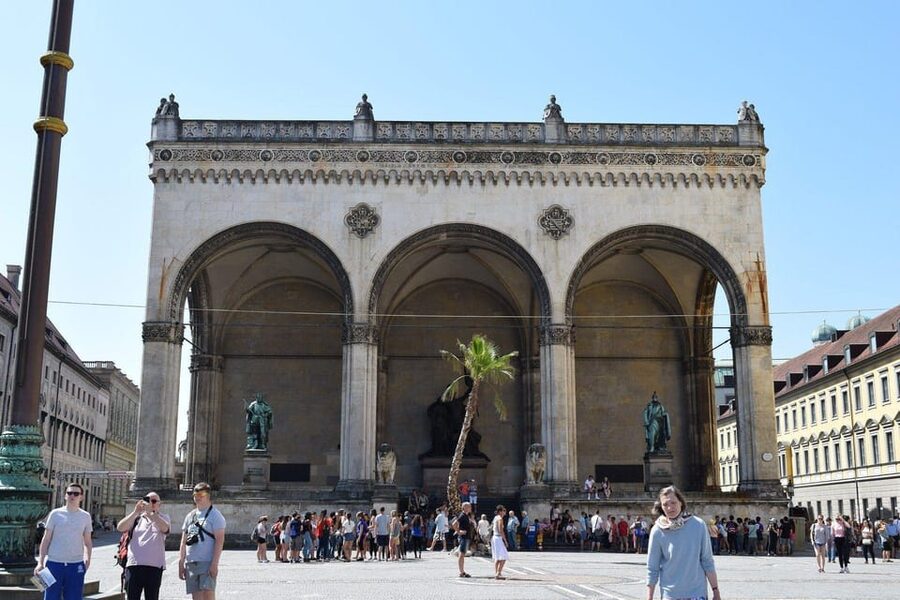
- Classic city sights fill the second half: Expect Marienplatz, both town halls, St. Peter’s Church, Frauenkirche, Odeonsplatz, and Hofbräuhaus.
- Transport is not included: You meet at the Fish Fountain in Marienplatz, but public transportation to the BMW complex is paid separately.
- The price depends on group size: $539 works out to about $36 per person for 15 people, but about $270 per person for two.
Why BMW makes a strong opening in Munich
Many city tours begin with churches and squares. This one starts with BMW, giving you a look at modern Munich before turning to older chapters of the city. That contrast is useful. You see how engineering, design, and industry helped shape Bavaria’s public image, then you return to the center for stories about kings, political violence, religion, and beer.
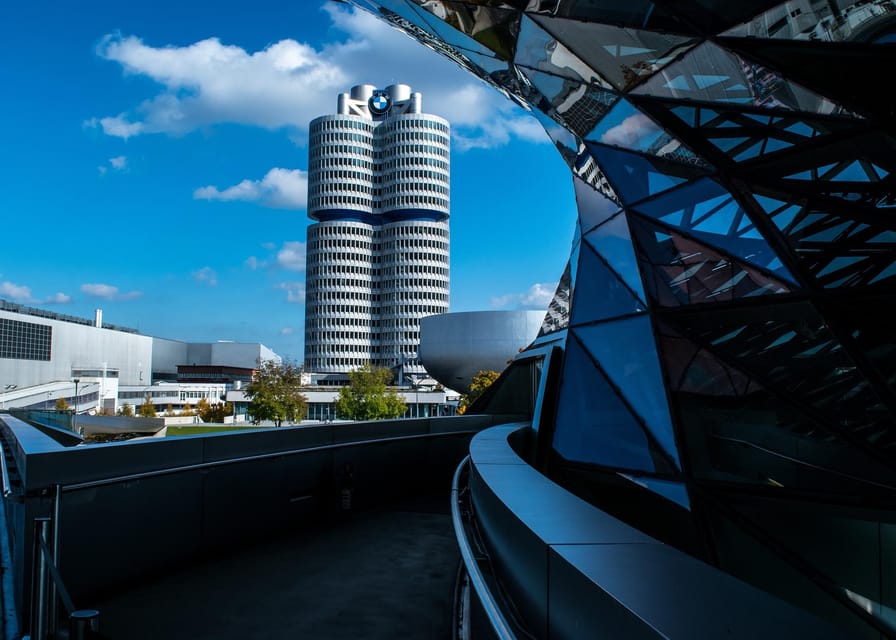
The BMW Museum focuses on the company’s development across roughly a century. You can expect cars, motorcycles, and engines, along with displays about racing success and technical progress. The racing cars are likely to be the big draw if you enjoy motorsport, but the collection also works for anyone interested in how a manufacturer builds a public identity around performance.
The point is not simply to admire expensive cars. Your guide can help connect the objects to BMW’s engineering goals and the company’s changing designs. That makes the museum more rewarding than a quick walk through a showroom.
More Museum Tours in Munich
- Munich: Beer and Food Tour with Dinner & Oktoberfest Museum
★ 4.7 · 1,086 reviews - Munich: FC Bayern Museum + Arena View
★ 4.5 · 944 reviews - Munich: FC Bayern Museum Entry Ticket
★ 4.6 · 193 reviews
BMW Museum and BMW Welt: two different experiences
The BMW Museum is the historical part of the visit. It presents the company’s legacy, including legendary racing cars and the development of its vehicles, motorcycles, and engines. If you like mechanical detail, allow yourself time to look closely at the displays rather than racing through for photographs.
BMW Welt has a more forward-looking feel. It presents current designs, technology, and the company’s ideas about the future. The showroom also includes MINI and Rolls-Royce models, so you are not seeing only the familiar BMW badge.
This pairing matters. The museum explains where BMW came from, while BMW Welt shows how the company wants to be seen now. You get history, design, and marketing in one stop. The drawback is that the two spaces can feel polished and corporate. If you want only old cars or a traditional museum, the contemporary showroom may hold less interest.
Getting from the BMW complex to the old center
The tour uses public transportation to reach Munich’s central sights. That is practical, since the BMW Museum and BMW Welt are away from Marienplatz, where the tour begins and ends. You should budget separately for the transport fare because it is not included in the $539 price.
Starting at the Fish Fountain in front of the city hall at Marienplatz gives you a clear meeting point. It also places you in the middle of Munich’s old center at the end of the visit. Since the activity finishes back at the meeting point, you do not need to arrange a separate return from the final sight.
The exact amount of time spent at BMW and in the center is not specified. A four-hour tour has to cover a lot, so expect an overview rather than long, unhurried visits at every stop. If BMW is your main reason for booking, tell your guide early. If the old city matters more, ask for extra attention there.
Marienplatz, the town halls, and Munich’s public face
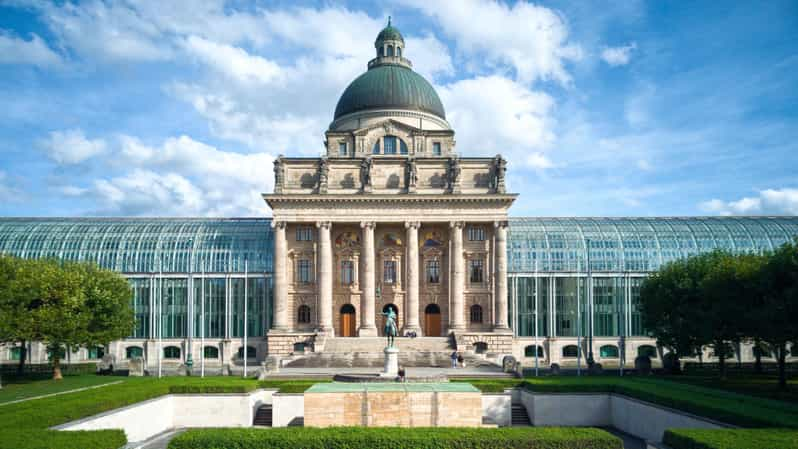
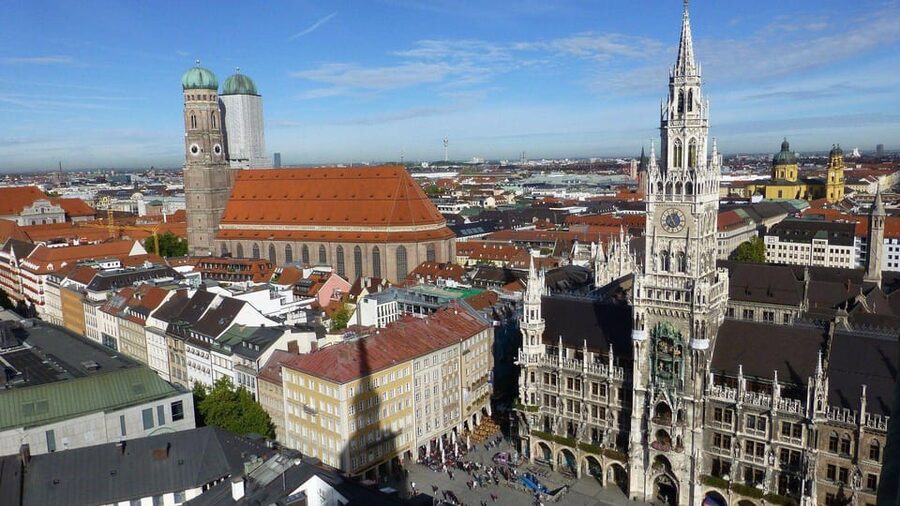
Back in the center, the tour turns to Marienplatz and the buildings that define Munich’s public image. You’ll see Mary’s Column, the Old Town Hall, and the New Town Hall with its famous Glockenspiel.
The Glockenspiel is the familiar attraction, but the square is also useful for understanding Munich’s civic life. The Old Town Hall represents the city’s earlier government, while the New Town Hall reflects the confidence of a later period. Your guide can give these buildings meaning beyond their façades.
A private tour helps here because you can ask why a particular building matters, what the figures on the clock represent, or how the square fits into Munich’s story. With only four hours, the guide will need to keep the pace moving. Comfortable shoes are sensible because the tour is a walking experience once you reach the center.
More Walking Tours in Munich
- Munich: Third Reich & WWII Walking Tour
★ 4.6 · 6,181 reviews - Third Reich Walking Tour Munich
★ 4.5 · 4,291 reviews - Munich: Night Watchman Walking Tour
★ 4.7 · 2,092 reviews - Munich Ghosts and Spirits Evening Walking Tour
★ 5.0 · 1,900 reviews
St. Peter’s Church and the devil’s footprint at Frauenkirche
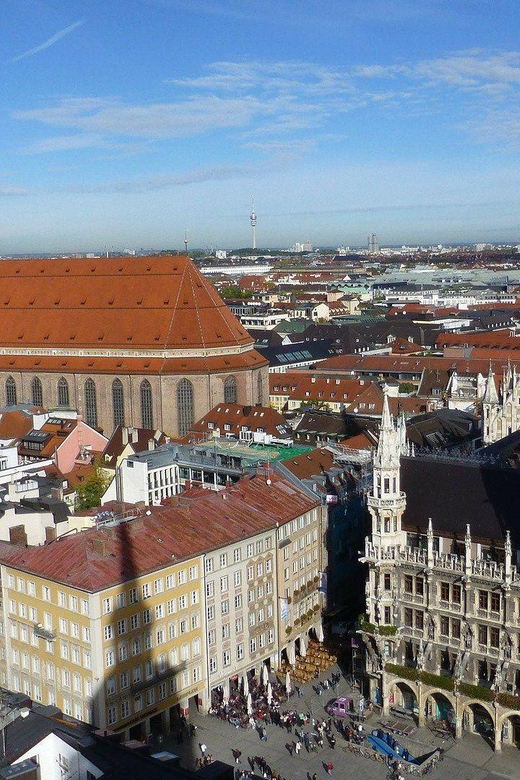
St. Peter’s Church is Munich’s oldest Catholic church, making it an important stop for anyone interested in the city’s religious foundations. The church adds a quieter, older layer to a route otherwise filled with royal drama, political conflict, and commercial energy.
Frauenkirche brings both architecture and legend. Its twin towers are among Munich’s best-known sights, but the tour also covers the story of the devil’s footprint. Legends like this are not a substitute for history, yet they show how people have used stories to explain remarkable buildings and mysterious details.
You should think of these church stops as short interpretive visits rather than guaranteed long periods inside. The information provided does not promise a special service, tower visit, or extended interior tour. The value is in seeing the buildings as part of Munich’s identity and hearing the tales attached to them.
Kings, lovers, and the misunderstood Ludwig story
Munich’s royal past gets a lively treatment through the story of King Ludwig I and Lola Montez. Their relationship became a political and personal scandal, and it gives you a more human way into nineteenth-century Bavarian history. Royal decisions were not made in a vacuum. Romance, public opinion, and power could collide with real consequences.
The tour also covers Ludwig II, often labeled the Mad King. The description presents him instead as the Not So Mad King, which signals a more careful look at a figure often reduced to a nickname. You’ll hear about his misunderstood life rather than receiving only the usual fairy-tale version of Bavaria’s castle-building monarch.
These stories add personality to Munich’s monuments. They also keep the tour from becoming a list of dates and rulers. If you enjoy political gossip with historical weight, this section should be one of the more entertaining parts of the walk.
Eva Braun, Hitler, and Munich’s uneasy past
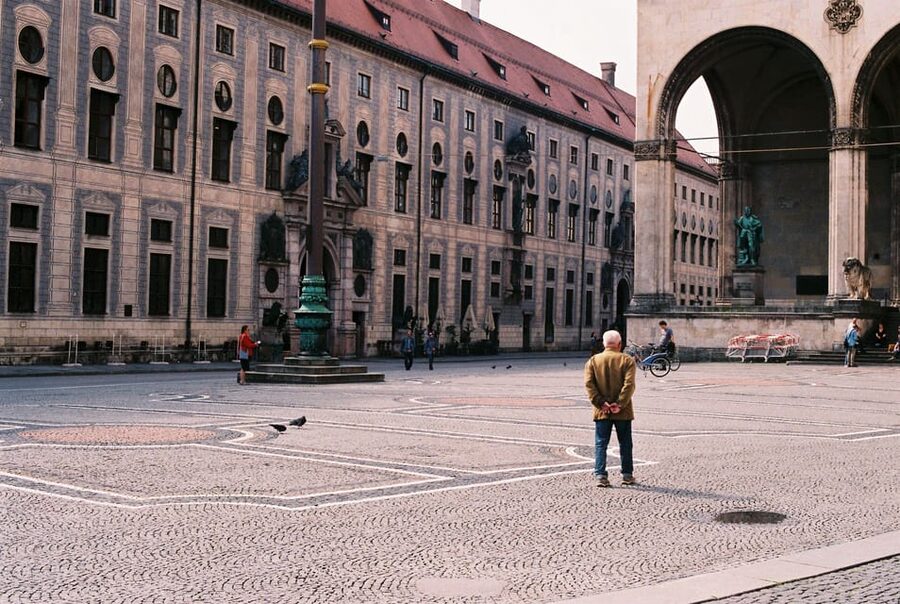
The tour does not avoid Munich’s role in the Nazi period. It discusses Eva Braun and Hitler, as well as the Beer-Hall Putsch at Odeonsplatz. That is important because Munich’s beauty can make it easy to overlook the city’s part in Germany’s darkest chapter.
At Odeonsplatz, Hitler and his followers attempted to seize power. The event failed at the time, but it became significant in the later Nazi story. Hearing about it on location helps you understand that political history happened in ordinary public spaces, not only in distant government buildings.
The treatment of Eva Braun is also presented as more complicated than a simple label of Hitler’s wife. Her life and public image are often misunderstood, so the subject can add context to the personal side of the Nazi leadership. This is serious material, and the quality of the experience will depend heavily on how clearly and responsibly your guide handles it.
The White Rose and Georg Elser
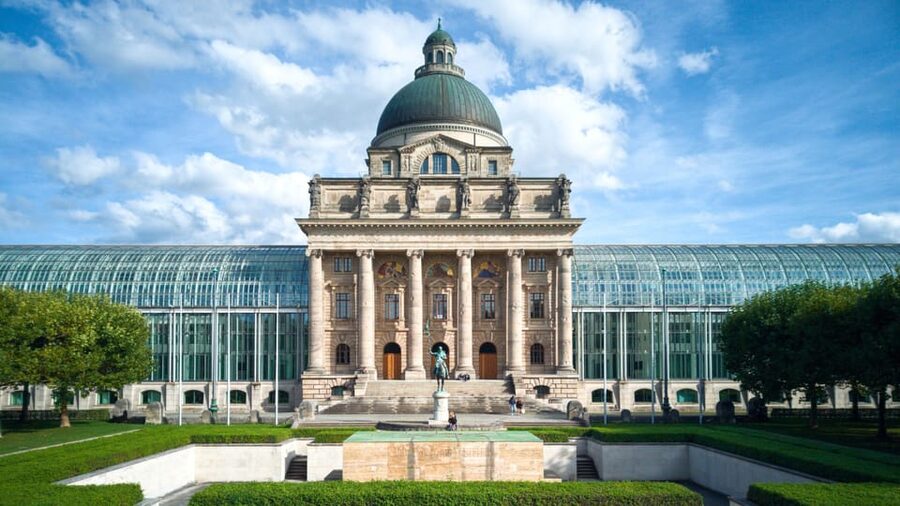
Two resistance stories give the history section needed balance. The tour covers the White Rose, the student-led resistance group associated with opposition to the Nazi regime, and Georg Elser, who attempted a bold act against Hitler.
These stories matter because they show that opposition existed, even under a brutal dictatorship. The White Rose represents moral protest and the risks taken by young people. Elser’s story points to a different kind of resistance, personal, direct, and dangerous.
For you, this is one reason a private guide can be valuable. You can ask questions about how these acts fit into Munich’s wartime history and how the city remembers them. The supplied details do not specify a dedicated museum visit or memorial stop, so treat this as guided interpretation during the city walk, not a separate resistance museum tour.
Hofbräuhaus and the beer culture finale
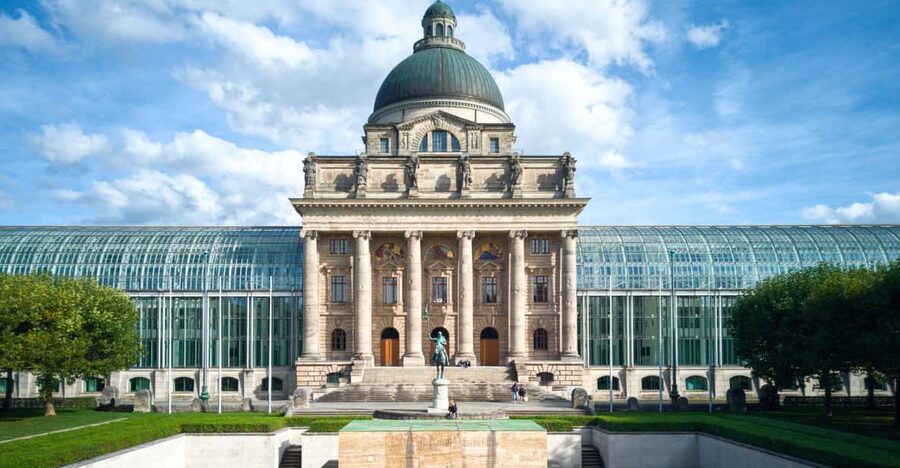
The tour ends with Munich’s famous beer culture at Hofbräuhaus, established in 1589. This is not just a place to grab a drink. It is one of the city’s best-known institutions, and its long history helps explain why beer halls are tied so closely to Munich’s public life.
You can expect a lively atmosphere and the chance to consider local food and drink. However, food and beverages are not included, so any meal or beer comes from your own pocket. That flexibility is useful if you want only a quick look, though you may prefer to stay longer after the tour ends.
The route returns to the Marienplatz meeting point, so Hofbräuhaus is part of the experience rather than the final drop-off. Check with your guide about the exact timing if you hope to eat there. Four hours must cover BMW, transportation, the old city, political history, churches, and the beer hall, so the Hofbräuhaus portion may be more about orientation than a full meal.
What the private format is really worth
The price is $539 per group of up to 15. With a full group, that is about $36 per person before transport, food, and drinks. For a family or larger party, that can be a fair way to combine a museum visit and a city introduction without paying separate per-person rates.
For two people, the same price works out to about $270 each. That is a serious cost, especially since public transportation and museum extras beyond the stated entrance are not listed as included. I would look at this as a time-saving private guide service, not a budget tour.
The strongest value comes from the range of subjects. In four hours, you can connect BMW’s industrial story with Munich’s royal past, religious landmarks, Nazi history, resistance movements, and beer tradition. A guide who can handle those shifts well is central to the experience.
The available ratings average 4.2 out of 5 from 13 reviews. The clearest praise centers on the guide’s knowledge and manner. Claudio is specifically described as warm, friendly, and exceptionally well informed about history and practical details. You are not guaranteed Claudio, but the comment gives you a useful standard to expect from the guiding service.
Who should book this four-hour tour
I would recommend it to first-time visitors who want a fast but serious introduction to Munich. It suits families, private groups, and people who prefer asking questions instead of listening to a fixed script. It is also a good match if you want BMW and the old city in one booking rather than arranging separate visits.
History-minded visitors should appreciate the range, especially the White Rose, Georg Elser, the Beer-Hall Putsch, and the stories of Ludwig I and Ludwig II. Car enthusiasts will value the BMW Museum and Welt, though a dedicated automotive tour would likely provide more time for the vehicles themselves.
I would hesitate if you are traveling alone or as a couple on a tight budget. The price becomes much easier to justify when shared among a larger group. I would also hesitate if you want a slow museum visit, a long lunch, or extensive time inside each church, since the route covers a lot in four hours.
English and German are available, and the activity is private. Free cancellation is available up to 24 hours before the start, with a full refund, and you can reserve now while paying later. Those terms help if your Munich plans are still changing, but they do not reduce the extra cost of transportation or refreshments.
Should you book it?
Book this tour if you want one private guide to connect BMW, Munich’s old center, royal stories, Nazi history, resistance, and beer culture. Its best feature is the unusual range, backed by the chance for direct questions and a flexible private format.
Skip it if the price is too high for your group size or if you prefer to explore museums at your own pace. For a larger party, the $539 group price can be sensible. For a small party, compare it with separate BMW admission and a less expensive city walk before committing.
FAQ
How long does the tour last?
The tour lasts four hours.
Where does the tour begin?
It begins at the Fish Fountain in front of the city hall at Marienplatz Square, Am Marienplatz, 80809 Munich, Germany.
Where does the tour end?
The activity ends back at the meeting point at Marienplatz.
Is the tour private?
Yes. It is for a private group, with a local guide dedicated to your group.
Which languages are available?
The live guide is available in English or German.
Is public transportation included?
No. Public transportation is not included in the price.
Are food and drinks included?
No. Food, drinks, and other personal expenses are not included.
Just added in Munich
- Private transfer: Vilshofen to Munich with 2h sightseeing stop★ 5.0 · 6 reviews
- Pub crawl incl. Oktoberfest museum guided tour with beer tasting (private)★ 5.0 · 5 reviews
- South Tyrolean specialties and wine tasting★ 5.0 · 5 reviews
- Size Matters Beer Tour Munich★ 4.6 · 105 reviews
- Short & sweet: Tasting the Viktualienmarkt★ 4.8 · 37 reviews
- Secret Food Tours Munich★ 4.8 · 5 reviews
- Munich: Romantic Wine Experience for Two at Viktualienmarkt★ 4.2 · 14 reviews
- Munich: Resistance against Hitler – Historical Walking Tour★ 5.0 · 5 reviews
Museums, compared.

Skip-the-Line: Berlin Wall Museum at Checkpoint Charlie
Read our review →
Browse the lists this tour appears in