
Reviewed · BERLIN WALL AND COLD WAR TOURS
Hitler to Stalin – WWII & Cold War Tour (Small Group)
Berlin’s past is written into ordinary streets, empty spaces, surviving walls, and grand buildings that changed meaning more than once. This 2.5-hour walking tour links Nazi Berlin, the Second World War, the city’s division, and reunification in one compact route.
I like the way the tour joins famous sights with less comfortable places such as Hitler’s bunker site and the former Gestapo headquarters. I also like the use of then-and-now photographs and maps, which can help you picture a city that has been altered almost beyond recognition. The main drawback is simple: you will be outdoors and on your feet for the full tour, rain or shine.
Key points at a glance
- A clear historical arc: Follow Berlin from Nazi rule and wartime destruction through the Cold War and reunification.
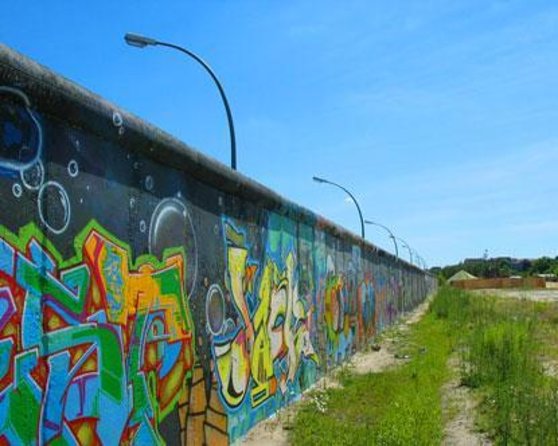
- Major sites in one walk: See the Brandenburg Gate, Reichstag, Holocaust Memorial, Berlin Wall, Checkpoint Charlie, Hitler’s bunker site, and Gestapo headquarters.
- Small-group format: The limited-size setting should make it easier to hear the guide and ask questions.
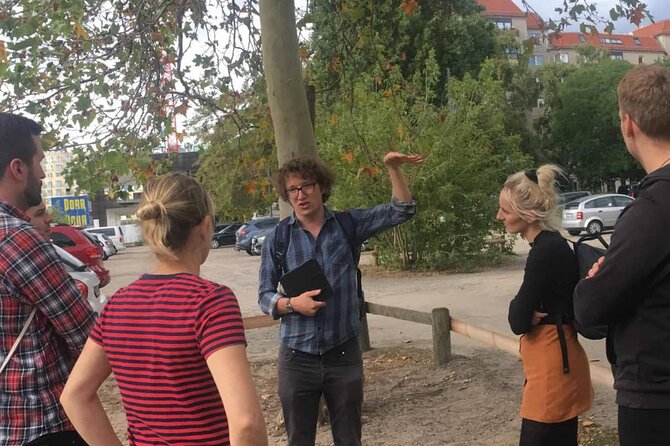
- Strong guide focus: English-speaking historians lead the walk, with Tom named among the guides.
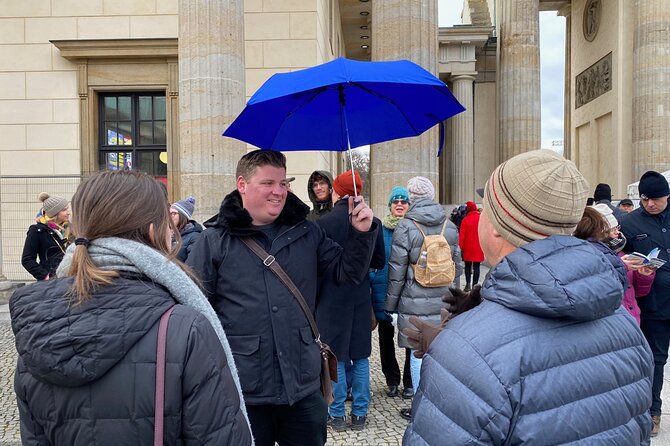
- Practical meeting point: Start at the Tourist Center by the Brandenburg Gate, marked by a blue umbrella, and finish back there.
- Good booking flexibility: You can cancel up to 24 hours before departure for a full refund and reserve without paying immediately.
Why this Berlin history walk is worth your time
Berlin can feel like a history book with the pages scattered across a very large city. A monument may mark one era, while the next street points to another. This tour gives you a single thread to follow, beginning with the Nazi period and moving into the Cold War division of Berlin.
That structure matters. You are not simply checking off the Brandenburg Gate, the Wall, and Checkpoint Charlie. You are encouraged to see how the city changed under dictatorship, war, occupation, division, and reunification. The result should give you a clearer sense of why Berlin looks the way it does today.
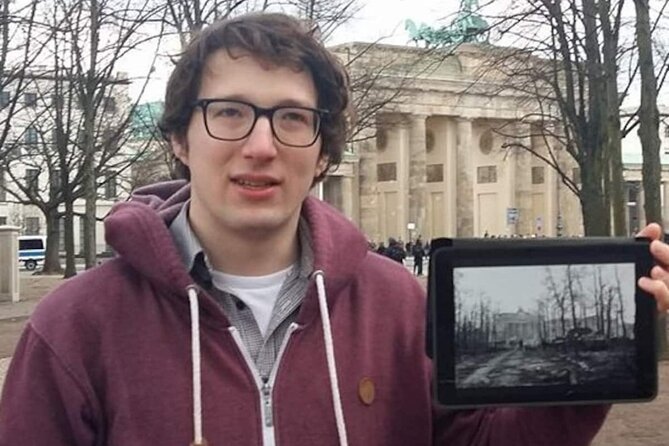
The tour is led in English by a live guide, rather than delivered through an audio recording. Guides are described as historians with a strong grasp of the material. Tom is one named guide, and his style has been praised for being interesting, well judged, and engaged with the whole group. That is useful on a subject that can quickly become a long list of dates and names.
The small-group format is another plus. It does not guarantee a private experience, but it generally makes a walking tour easier to follow than a large crowd gathered around a flag. You should have a better chance to hear explanations, ask about a particular site, and stay connected to the guide as the group moves through central Berlin.
More Third Reich Tours in Berlin
- Berlin: Third Reich and Cold War 2 Hour Walking Tour
★ 4.9 · 6,830 reviews - Berlin’s Best: 2 Hour Walking Tour Third Reich and the Cold War
★ 5.0 · 5,486 reviews - Third Reich Berlin: Hitler and WWII Walking Tour
★ 5.0 · 3,301 reviews
Starting under the Brandenburg Gate
The meeting point is the Tourist Center at the Brandenburg Gate. Look for the blue umbrella. This is a sensible place to begin, since the gate is one of Berlin’s clearest symbols and a useful reference point for first-time visitors.
The Brandenburg Gate has carried several meanings over the years. On this tour, you consider its movement from a symbol tied to Prussian power and wartime damage to an image of unity in modern Germany. That change is central to the whole walk: Berlin’s landmarks did not simply survive history, they were repeatedly given new meanings.
Take a moment before the tour starts to look at the surrounding space. The gate is grand, but the open area around it also helps you understand how political power was displayed in Berlin. Your guide can place the structure within the wider story of war, division, and reunification.
The tour ends back at this meeting point. That makes the route easier to plan, especially if you have another central Berlin activity afterward. Starting and ending in the same place also removes the need to figure out an unfamiliar return route after a long walk.
The Reichstag and the politics of power
The Reichstag offers a chance to connect architecture with government and political change. The tour does not present it only as a photogenic building. Instead, you look at its role in the political story of Berlin and Germany.
This stop is especially helpful if you want more than military history. The period covered by the tour was shaped by political decisions, state power, ideology, and international pressure. The Reichstag gives the guide a natural place to explain those forces.
Do not expect this walking tour to function as a full interior visit to the Reichstag. The supplied details focus on viewing the building and understanding its political importance. If entering the Reichstag or seeing its dome is a priority, check separately before booking.
Hitler’s bunker site and the difficult work of remembrance
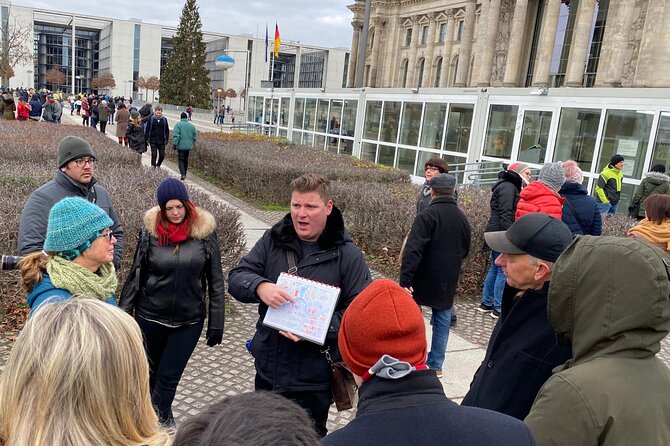
The Hitler’s bunker stop is one of the tour’s most sobering moments. You are not visiting a preserved underground complex. The focus is on the site and its place in the final days of the Nazi regime.
That distinction is important. The bunker is often treated in popular culture as a dramatic setting, but a responsible tour should place it within the destruction caused by the regime rather than turn it into a spectacle. A good explanation here helps you understand the collapse of Nazi power and the physical changes made to the area afterward.
You then connect that story with the Memorial to the Murdered Jews of Europe, often called the Holocaust Memorial. Its field of concrete slabs invites a different response from the bunker site. One location points to the end of a dictatorship, while the other asks you to consider the human cost of Nazi persecution and mass murder.
The memorial can be unsettling and open to personal interpretation. That is part of its value. The guide’s role is to supply context and encourage respectful attention, not to rush you through it as another photo stop.
Same city, a completely different kind of day:
- Berlin: Reichstag, Dome and Government District Guided Tour
★ 4.7 · 18,288 reviews - Berlin: 1-Hour City Tour by Boat with Guaranteed Seating
★ 4.3 · 16,993 reviews - Berlin: Boat Tour Along the River Spree
★ 4.4 · 11,252 reviews - Discover Berlin Half-Day Walking Tour
★ 5.0 · 9,624 reviews
Gestapo headquarters and the machinery of Nazi rule
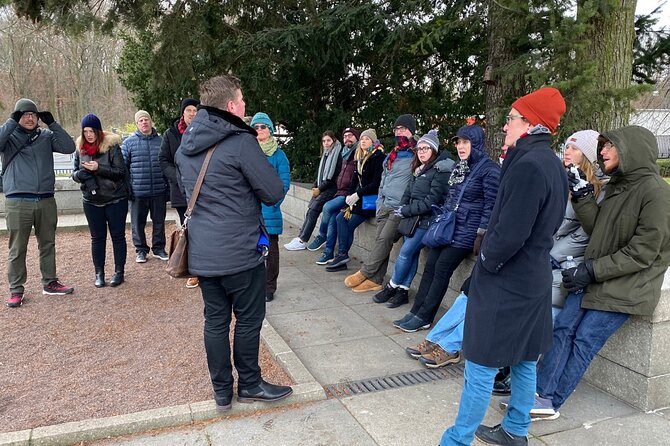
The former Gestapo headquarters adds an important layer to the tour. Hitler’s bunker is linked with the regime’s final collapse, but the Gestapo site helps explain how Nazi control operated while the regime was in power.
This is where Berlin’s streets become evidence of a system, not just a backdrop to famous events. The stop can help you connect government offices, police power, imprisonment, persecution, and fear. It also keeps the tour from focusing only on military campaigns and battlefield outcomes.
The emotional tone here may be serious, and rightly so. You are dealing with state violence and the people harmed by it. The benefit of having a guide is that you can receive the necessary background without trying to piece it together from a plaque or a few lines in a guidebook.
Seeing the Berlin Wall as a real barrier
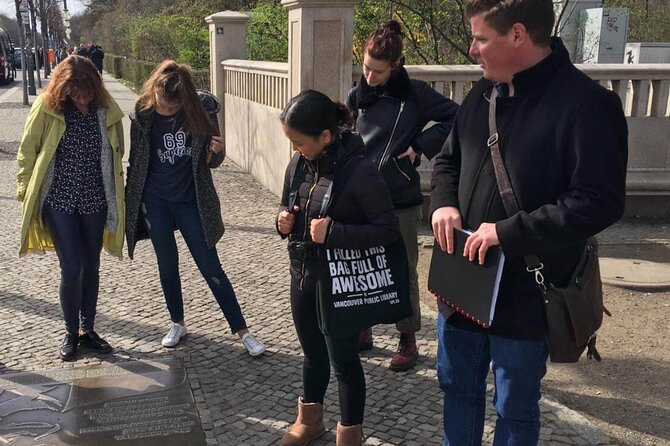
The Berlin Wall section shifts the story from Nazi dictatorship to postwar division. You consider how Berlin was split into separate political systems and how an international conflict shaped daily life in one city.
The phrase Iron Curtain can sound abstract until you see where a barrier once cut through streets and neighborhoods. The tour helps make that division more concrete. Berlin was not simply divided on a map. Movement, families, work, and ordinary routines were affected by the border.
The Wall is also a useful place to discuss how physical remains are preserved. Some sections are gone, some are marked, and some survive as reminders rather than complete fortifications. Your guide uses maps and then-and-now images to show how the city changed, which should make the vanished border easier to picture.
If you want a long, highly detailed visit to surviving Wall sections, this tour may feel brief. Its purpose is to explain the Wall within a larger Nazi and Cold War story, not to replace a specialist Wall museum or a longer walk along the former border.
Checkpoint Charlie and a divided city
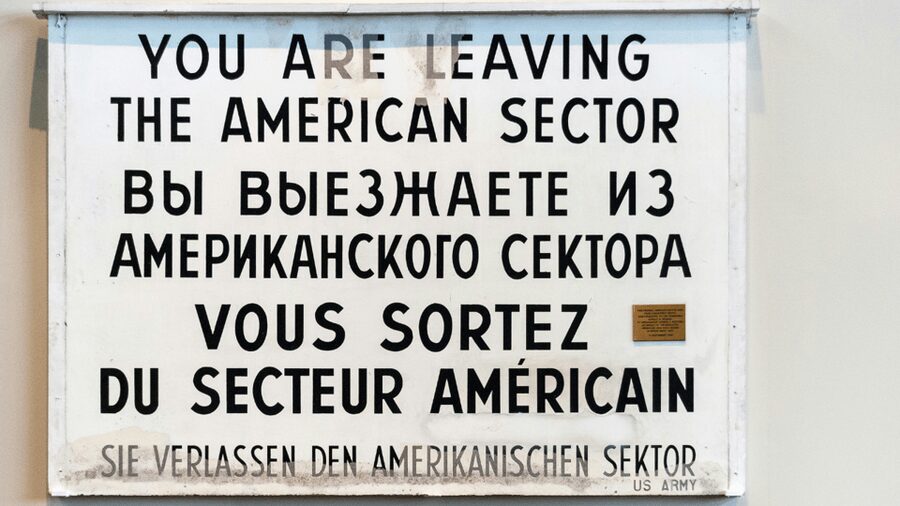
Checkpoint Charlie is one of Berlin’s most recognizable Cold War locations. It represents the division between East and West and the tense relationship between the powers that controlled the city.
The site can feel touristy today, which is worth knowing before you go. The tour’s value is not simply in taking a picture beside the checkpoint sign. It is in understanding what the crossing meant, why it became important, and how Berlin’s division carried global significance.
This is also a good place to bring the story toward reunification. The tour explains the events that led to Berlin’s partition and eventual unity, giving you a sense of how the city moved from a heavily guarded border to an open capital.
The contrast between the present-day street and its Cold War role is striking. That contrast is one of the reasons a walking tour works well here. You can stand in a normal city setting while the guide explains how tense and restricted the same area once was.
How much walking and outdoor time to expect
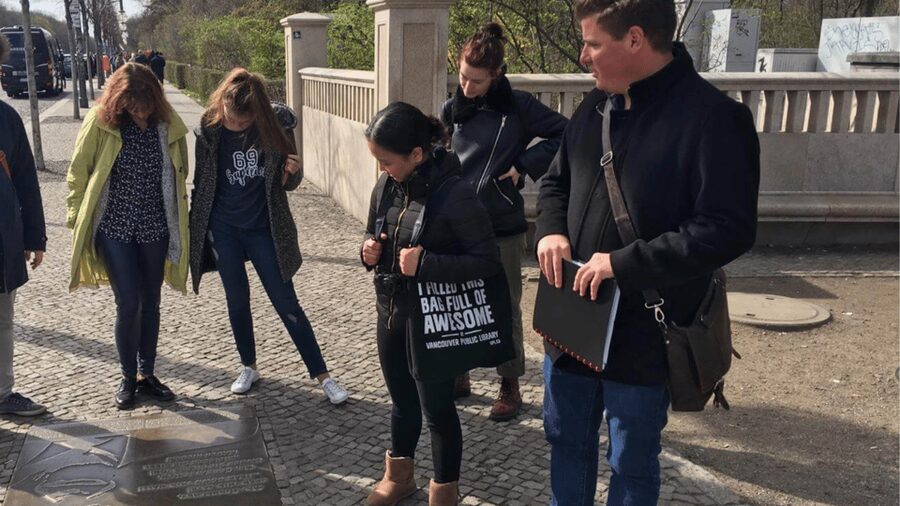
The tour lasts 2.5 hours and takes place on foot. Comfortable shoes are essential, not optional. Bring water and light snacks, especially if you are scheduling the walk around other sightseeing.
The tour runs rain or shine. Bring an umbrella or raincoat in poor weather, and dress for conditions rather than relying on a last-minute forecast. Since much of the experience happens outdoors, bad weather can affect your comfort even if it does not change the historical content.
The activity is listed as wheelchair accessible. You should still mention any specific mobility needs when booking, since a city walk can involve different surfaces and crowd conditions. The available information does not provide a detailed route surface description, so ask if you need precise accessibility guidance.
What the $34 price gives you
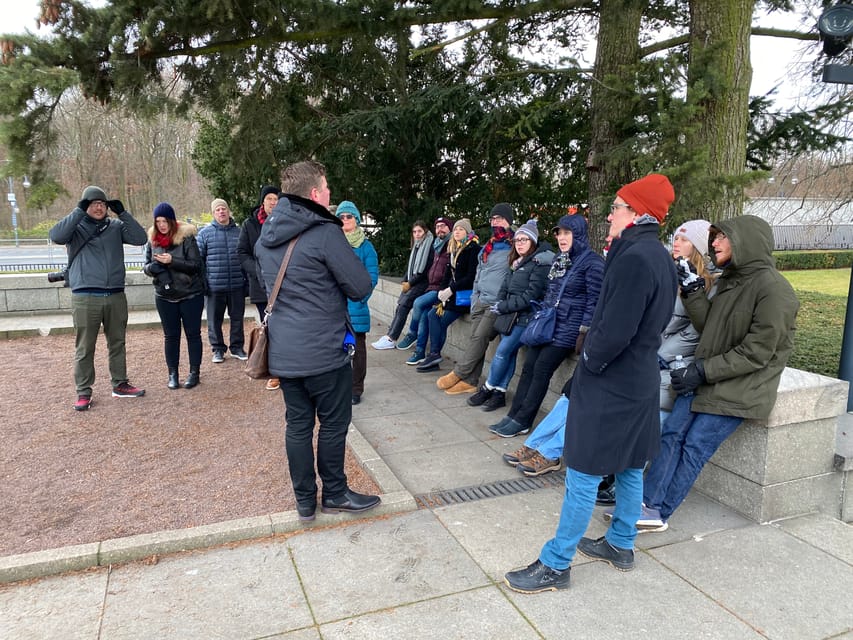
At $34 per person, this sits in the affordable range for a guided central Berlin history walk. The value comes from the number of major themes covered in a short period: Nazi rule, wartime Berlin, political power, Holocaust remembrance, the Berlin Wall, Cold War division, and reunification.
You are also paying for a live English-speaking guide and a small-group setting. That can be worthwhile if you want a connected explanation rather than separate visits to landmarks with different information panels. The maps and then-and-now images add practical value because they help show changes that are difficult to see from the street alone.
The price is less attractive if you only want a quick look at the Brandenburg Gate or Checkpoint Charlie. You can see those places without a tour. The fee makes more sense if you want the links between the sites and prefer having a specialist explain the difficult parts of Berlin’s past.
A recorded rating of 4.9 from nine ratings suggests a very strong early response, though the sample is small. The most praised qualities are the guides’ command of the subject, their ability to keep the group interested, and the chance to visit the major sites. Tom is specifically described as engaging and appropriate in his handling of the material.
Who should book this tour
I would recommend this walk to first-time visitors who want a clear introduction to Berlin’s 20th-century history. It also suits you if you have limited time and want to connect several central sites in one outing.
It is a good fit for adults and older students who can manage serious subject matter and a sustained walk. The guide-led format should help if you have read some background but want the places themselves to make more sense.
You may want a different experience if you prefer museums, indoor exhibits, or a very slow visit at each landmark. This tour covers a lot in 2.5 hours, so individual stops receive context rather than unlimited time.
Practical details before you book
Meet at the Tourist Center by the Brandenburg Gate and look for the blue umbrella. The tour is in English, led by a live guide, and returns to the same meeting point.
The activity is wheelchair accessible, and you can reserve now while paying later. Cancellation is free up to 24 hours before the start time for a full refund. Starting times vary, so check availability for the date you want.
Bring water, a light snack, comfortable shoes, and rain protection. Plan for outdoor conditions even if the forecast looks uncertain.
Should you book the Hitler to Stalin tour?
Book it if you want Berlin’s major Nazi and Cold War sights explained as one connected story. The combination of the bunker site, Gestapo headquarters, Holocaust Memorial, Reichstag, Wall, and Checkpoint Charlie gives you more than a standard city highlights walk.
The strongest reason to choose it is the guide-led context. You see the places, but you also learn how war, dictatorship, occupation, division, and reunification reshaped the city. At $34, that is solid value for a small-group walk, provided you are ready for serious subject matter and two and a half hours outdoors.
FAQ
Where does the tour start?
It starts at the Tourist Center at the Brandenburg Gate. Look for the blue umbrella.
Where does the tour finish?
The activity ends back at the meeting point by the Brandenburg Gate.
How long does the tour last?
The tour lasts 2.5 hours.
What language is the tour in?
The tour is conducted in English by a live guide.
Is the tour wheelchair accessible?
Yes, the activity is listed as wheelchair accessible.
What landmarks are included?
The tour covers the Brandenburg Gate, Reichstag, Berlin Wall, Holocaust Memorial, Checkpoint Charlie, Hitler’s bunker site, and the former Gestapo headquarters.
What should I bring?
Bring comfortable walking shoes, water, light snacks, and an umbrella or raincoat if the weather is poor.
Can I cancel for a refund?
Yes. You can cancel up to 24 hours in advance for a full refund. You can also reserve now and pay later.
More Berlin Wall and Cold War Tours in Berlin
- Berlin: DDR Museum Tickets
★ 4.3 · 3,443 reviews - Skip-the-Line: Berlin Wall Museum at Checkpoint Charlie
★ 4.1 · 2,041 reviews - Berlin: East Side Gallery Spree Cruise in a Solar Catamaran
★ 4.0 · 1,039 reviews - Cold War, Berlin Wall, Spies and the East Side Gallery
★ 5.0 · 1,024 reviews
Just added in Berlin
- Berlin & The Third Reich Private Guided Tour★ 5.0 · 3 reviews
- Third Reich Quest Experience in Berlin★ 4.5 · 7 reviews
- Private Analogue Photography Experience in Berlin★ 5.0 · 3 reviews
- Berlin Urbex Adventure and History Tour★ 5.0 · 9 reviews
- The Beauty of Berlin by Bike: Private Tour★ 5.0 · 59 reviews
- Berlin: Guided Bike tour of the Berlin Wall and Third Reich★ 5.0 · 160 reviews
- Beyond Currywurst: Berlin’s Hidden Street Food & Culture Tour★ 5.0 · 100 reviews
- Berlin Third Reich & Cold War Walking Tour With A Guide★ 5.0 · 7 reviews
Berlin Wall and Cold War Tours, compared.

Berlin’s Best: 2 Hour Walking Tour Third Reich and the Cold War
Read our review →
Skip-the-Line: Berlin Wall Museum at Checkpoint Charlie
Read our review →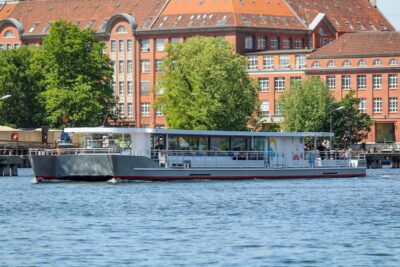
East Side Gallery Spree Cruise in a Solar Catamaran
Read our review →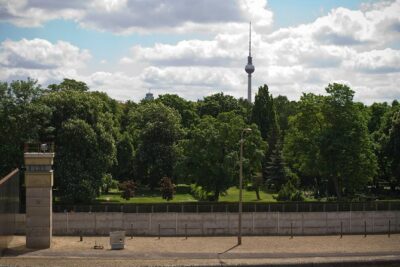
Cold War, Berlin Wall, Spies and the East Side Gallery
Read our review →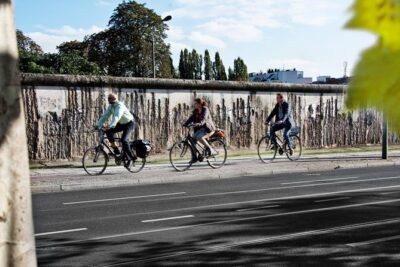
Guided Bike Tour of the Berlin Wall and Third Reich
Read our review →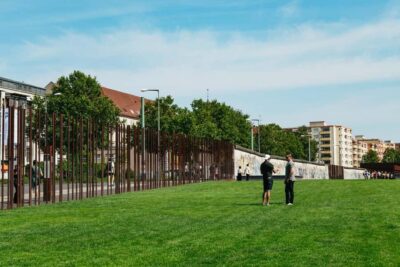
Browse the lists this tour appears in