
Reviewed · BERLIN WALL AND COLD WAR TOURS
Hitler to Stalin – WWII & Cold War Tour (Small Group)
Berlin’s past is not kept behind museum glass on this walk. It is under your feet at the Führerbunker site, in the open space around the Brandenburg Gate, and along streets once split by the Berlin Wall. In about two and a half hours, you follow the story from Hitler’s final days to the Soviet occupation and the Cold War division of Europe.
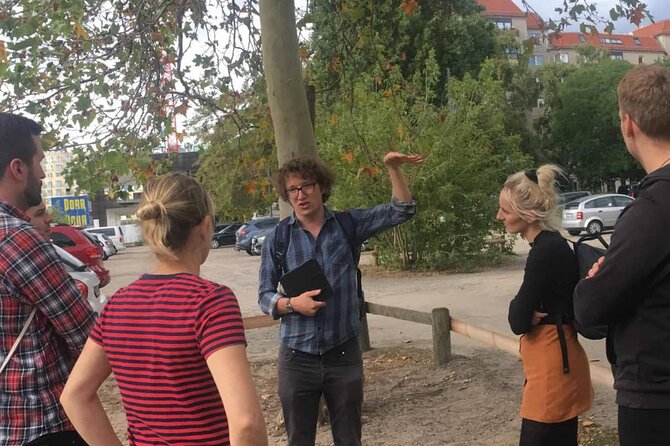
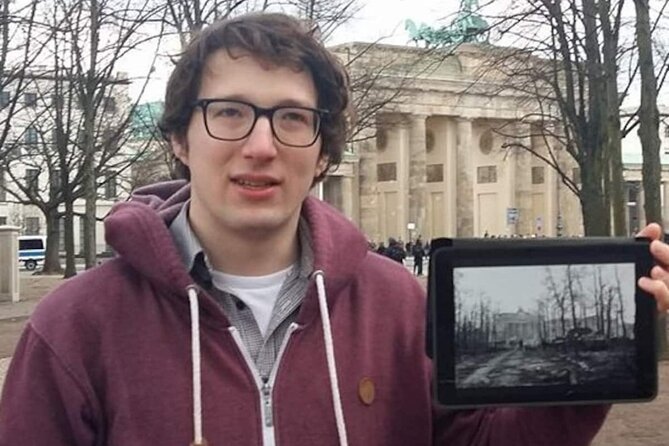
I like the small maximum of 15 people, which should make it easier to hear the guide and ask questions. I also like the way the tour links famous sights with lesser-known episodes, including the June 1953 uprising and the Soviet memorial in Tiergarten. Guide Mark has been especially good at using old photographs to show how wartime Berlin looked beside the modern city.
The main drawback is the pace. Nine stops in 150 minutes means some places receive only 10 or 15 minutes, and the tour requires walking outdoors in potentially poor weather. You will see the sites and gain a strong framework, but this is not a slow, detailed visit inside each landmark.
Key points about the Berlin history walk
- Brandenburg Gate to Checkpoint Charlie: The route connects Berlin’s best-known symbols in a clear west-to-east historical sequence.
- Hitler’s final headquarters: The Führerbunker stop explains the site without pretending that the underground complex is open for viewing.
- A serious look at the Holocaust: The Memorial to the Murdered Jews of Europe gives you time to walk among 2,711 concrete slabs.
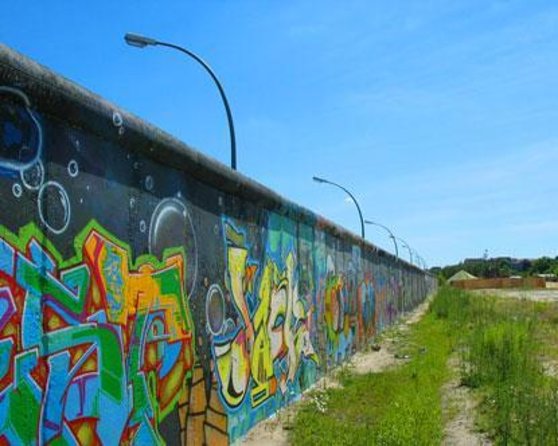
- Cold War beyond the wall: The June 17, 1953 uprising and Berlin Wall Memorial add human detail to the familiar East-West story.
- Small-group format: The group is limited to 15 people, with free admission at the listed stops.
- Strong guide-led storytelling: Mark has used wartime photographs and answered detailed questions during the walk.
Why this $23 tour can be a smart start in Berlin
At $23, this is a low-cost way to get a connected explanation of central Berlin. You are not paying separate admission fees for the stops, and each listed site is free to visit. The real value is the guide’s ability to explain how the locations relate to one another.
That connection matters. The Brandenburg Gate is not just a handsome neoclassical monument. The Reichstag is not simply a government building. Checkpoint Charlie is more than a photo stop. Seen together, they form a timeline of imperial Germany, Nazi rule, wartime destruction, Soviet control, divided Berlin, and reunification.
I would use this tour early in a Berlin stay. It gives you a useful map of the city’s 20th-century story, then lets you return to the places that deserve more time. The short stops also help you decide which memorials or museums you want to explore on your own.
The price does come with limits. You are buying a guided outdoor walk, not museum entry or a private lesson. The itinerary moves quickly, and some subjects, especially the Holocaust and the Battle of Berlin, deserve more than a few minutes. Think of this as a well-organized introduction rather than a final word on Berlin’s past.
More Third Reich Tours in Berlin
- Berlin: Third Reich and Cold War 2 Hour Walking Tour
★ 4.9 · 6,830 reviews - Berlin’s Best: 2 Hour Walking Tour Third Reich and the Cold War
★ 5.0 · 5,486 reviews - Third Reich Berlin: Hitler and WWII Walking Tour
★ 5.0 · 3,301 reviews
Starting at the Brandenburg Gate and Reichstag
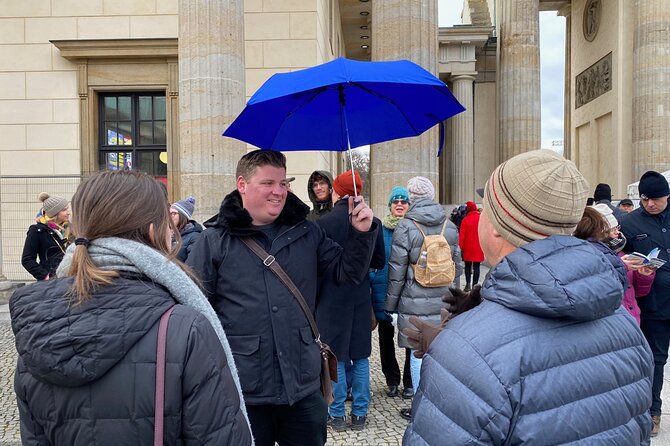
The tour begins at Brandenburg Gate on Pariser Platz. Built under Frederick William II in the 18th century on the site of an earlier city gate, it has witnessed major changes in Berlin’s political life. Today, it works as a symbol of peace and European unity, but the guide can place that modern meaning against the darker events that took place around it.
You get about 10 minutes here. That is enough for an introduction and photographs, though not enough for a long architectural explanation. Pay attention to the way the gate sits between the historic center and the government quarter. Its position helps explain why it became such a powerful political backdrop.
The next stop is the Reichstag, about 15 minutes away in the tour’s sequence. The building opened in 1894 for the Imperial Diet, Germany’s national political body at the time. It was damaged by fire in 1933 and badly damaged again during the Second World War before restoration was completed in 1999.
I like this stop because it links several periods without requiring a long detour. The Reichstag’s story is about German government, Nazi rule, wartime ruin, and the return of parliament to Berlin. The tour does not include admission inside, so you should not expect to visit the dome during this activity.
Seeing the Soviet Memorial in Tiergarten
The Soviet War Memorial in the Großer Tiergarten was erected in 1945 for Soviet soldiers who died in the Battle of Berlin. Its location near Straße des 17. Juni gives the guide a useful place to discuss the final fighting and the Soviet role in Germany’s defeat.
You have about 15 minutes here. That is enough to take in the monument and hear why it matters, but the subject is complex. The memorial reflects Soviet victory and sacrifice, while its presence in Berlin also points toward the political order that followed the war.
This stop helps prevent a one-sided account of the war. Berlin’s destruction did not lead directly to peace and unity. It led to occupation, competing political systems, and a city caught in the growing conflict between the Soviet Union and the Western Allies.
Pausing at the Holocaust Memorial
The Memorial to the Murdered Jews of Europe covers about 19,000 square meters with 2,711 concrete slabs. Designed by Peter Eisenman, it has an uneven ground surface that can create a feeling of uncertainty as you move through the rows.
The group spends roughly 15 minutes here. That time gives you a chance to walk among the slabs rather than simply view the memorial from the pavement. The design is abstract, so the guide’s explanation helps place it within Berlin’s effort to confront the murder of Europe’s Jews.
I appreciate that the stop allows personal reflection instead of turning the memorial into a quick photograph. At the same time, 15 minutes is brief for such a serious subject. If you want to visit the underground information center or spend more time with the memorial, plan a separate visit.
The memorial is close to several other major sites, which makes it a meaningful point in the walk. The route shifts from the public symbols of government and victory to the human cost of Nazi rule.
Same city, a completely different kind of day:
- Berlin: Reichstag, Dome and Government District Guided Tour
★ 4.7 · 18,288 reviews - Berlin: 1-Hour City Tour by Boat with Guaranteed Seating
★ 4.3 · 16,993 reviews - Berlin: Boat Tour Along the River Spree
★ 4.4 · 11,252 reviews - Discover Berlin Half-Day Walking Tour
★ 5.0 · 9,624 reviews
Standing above the Führerbunker site
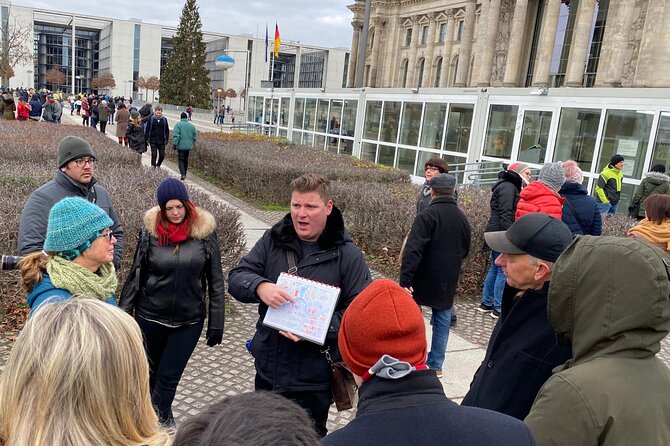
The Führerbunker was an air-raid shelter and Hitler’s final headquarters. Hitler moved there on January 16, 1945, married Eva Braun on April 29, and died by suicide with her less than 40 hours later.
There is no dramatic underground room to enter during this stop. The old Chancellery buildings were destroyed by the Soviets, new construction followed, and the underground complex remained largely undisturbed until 1988. The tour therefore focuses on the site’s location and its historical meaning.
You get about 15 minutes here. This is one of the places where photographs can help. Mark has used images to show the wartime setting and make clear how much the surrounding area has changed.
The lack of visible remains can feel anticlimactic if you expect a preserved bunker. In a way, that is the point. The site is an ordinary part of modern Berlin, and the guide helps you understand what happened beneath it without turning the location into a spectacle.
A surprising stop near the North Korean embassy
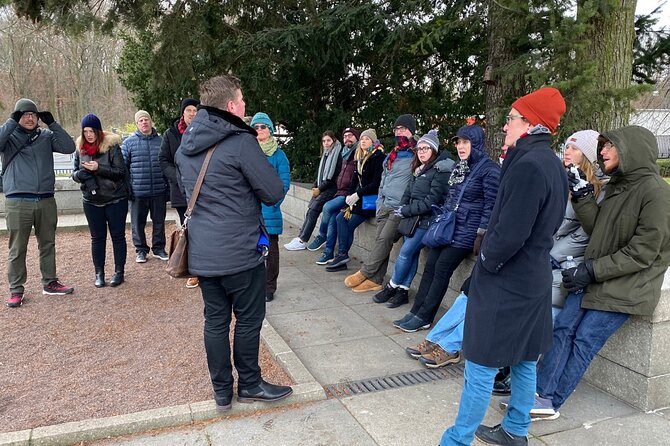
The route includes the Embassy of the Democratic People’s Republic of Korea on Glinkastraße in Mitte. You spend about 10 minutes here.
This is the least familiar stop on the route, and its value comes from the Cold War setting rather than from a famous monument. It broadens the story beyond the Berlin Wall itself and reminds you that Berlin was tied to a worldwide struggle between political systems.
The stop may appeal most to readers who enjoy unusual details and international connections. If you want only the headline sights, it may feel less essential than the Brandenburg Gate or Checkpoint Charlie. Still, it gives the guide a chance to show how the city’s divided past fit into a larger global conflict.
Understanding the June 17, 1953 uprising
The memorial to the June 17, 1953 uprising marks the first major challenge to the postwar communist regime in East Germany. Soviet tanks suppressed the uprising, and about 15,000 people were arrested afterward.
You have about 15 minutes at this stop. It adds a vital human story to the Cold War portion of the walk. The Berlin Wall is usually the best-known symbol of division, but this earlier protest shows that dissatisfaction and resistance were present before the wall was built.
I find this part especially useful because it places East Berliners at the center of the story. Political decisions by governments and armies mattered, but so did workers and residents who challenged the system around them.
Walking the Berlin Wall Memorial
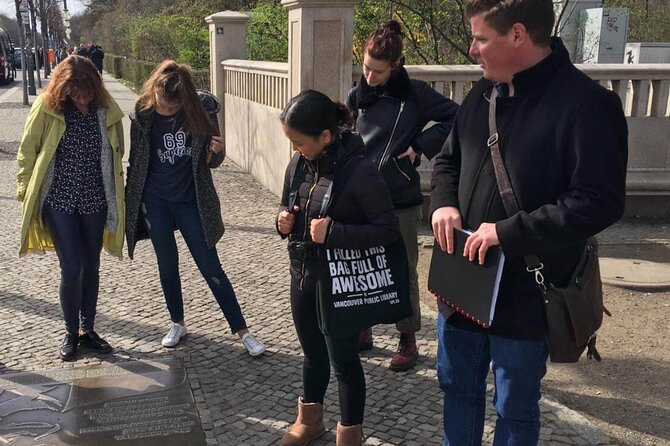
The Berlin Wall Memorial commemorates the division of Berlin and the people who died trying to cross it. The stop lasts about 15 minutes.
The memorial gives you a chance to move from broad Cold War politics to the physical reality of a divided city. The wall was not just a line on a map. It cut through streets, neighborhoods, and daily routines. A guide can make that division easier to grasp by explaining how the barrier shaped life on both sides.
This is another stop where I would consider returning independently. Fifteen minutes can introduce the site, but a longer visit gives you more time to consider the wall’s construction, its border controls, and the lives lost there.
The route does not end at the memorial. It continues toward one of Berlin’s most recognizable Cold War locations.
Finishing at Checkpoint Charlie
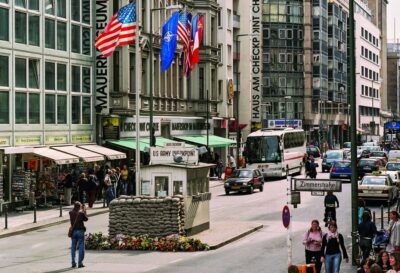
Checkpoint Charlie is the final stop, with about 20 minutes set aside. The Western Allies called it Checkpoint C, while the name Charlie came from the military alphabet. It became the best-known crossing point between East and West Berlin during the Cold War.
The stop provides a clear ending because the tour has moved from Hitler’s dictatorship through Soviet victory and communist rule to the physical division of the city. Checkpoint Charlie also carries a warning about oversimplification. Its fame can make the Cold War seem like a simple contest between two sides, while the earlier stops show the pressure placed on ordinary Berliners.
The activity ends at Friedrichstraße 43 to 45. That is useful if you want to continue exploring central Berlin after the tour. You will have a clear endpoint rather than returning to the starting location.
What the guide adds to the experience
The tour’s success depends heavily on the person leading it. Mark has been praised for bringing the subject to life, answering questions, and using photographs to compare wartime Berlin with the city you see today.
That approach suits this route. Many sites have changed so much that a plaque alone cannot show what stood there in 1945 or how the area looked during the Cold War. Historic images give the modern streets a second layer.
A good guide also needs to handle difficult subjects with care. This route includes Nazi crimes, the Holocaust, mass destruction, Soviet occupation, political arrests, and deaths at the Berlin Wall. The best moments come when the guide explains the facts plainly and gives you room to think.
Because the group can include up to 15 people, you should have a better chance to hear the explanation than on a large city walk. The size is not intimate in the private-tour sense, but it is small enough for questions to be practical.
Timing, weather, and who should book
Allow about two and a half hours for the full experience. The listed schedule totals roughly 150 minutes, with stops ranging from 10 to 20 minutes. Since the tour connects nine locations, you should be ready to walk between them and remain outdoors.
Wear practical shoes and check the forecast. The activity requires good weather, and poor conditions can lead to a new date or a full refund. The tour is near public transportation, which helps you reach the start at Brandenburg Gate and leave from Checkpoint Charlie.
The activity is suitable for most people, and service animals are allowed. Still, the pace and subject matter make it a better fit for adults and older children who can follow a serious historical discussion.
You can cancel for a full refund up to 24 hours before the start time. Changes or cancellations within 24 hours are not accepted for a refund. A minimum group size is also required, so the operator may offer another date or a full refund if that number is not reached.
Should you book the Hitler to Stalin walk?
I would book this tour if you want a strong first look at Berlin’s 20th-century history for a modest price. The route covers major landmarks, lesser-known political events, and the physical traces of division in a single outing.
Book it especially if you value a guide who can connect sites with old photographs and answer questions. Mark’s approach, when he leads the walk, is a major advantage.
I would choose something else if you want museum interiors, a relaxed pace, or detailed time at every memorial. The tour is compact and outdoors, so its strength is the broad story and the connections between places.
For most first-time visitors interested in World War II and the Cold War, this is a useful, serious, and affordable introduction. Plan a few return visits afterward, since several stops deserve more time than this brisk route allows.
FAQ
How long is the Hitler to Stalin tour?
The tour lasts approximately 2 hours and 30 minutes.
Where does the tour begin?
It begins at Brandenburg Gate on Pariser Platz, 10117 Berlin, Germany.
Where does the tour end?
It ends at Checkpoint Charlie on Friedrichstraße 43 to 45, 10117 Berlin, Germany.
What is the price of the tour?
The listed price is $23.
How many people can join the tour?
The group has a maximum of 15 people.
Does the tour include admission tickets?
Admission is listed as free at each stop. The activity is a guided walk rather than a ticketed entry into the Reichstag or another paid attraction.
Which major Berlin landmarks are included?
The route includes Brandenburg Gate, the Reichstag, the Soviet Memorial in Tiergarten, the Holocaust Memorial, the Führerbunker site, the Embassy of the Democratic People’s Republic of Korea, the June 17, 1953 uprising memorial, the Berlin Wall Memorial, and Checkpoint Charlie.
Is the tour available with a mobile ticket?
Yes. The experience includes a mobile ticket.
Are service animals allowed?
Yes, service animals are allowed.
Can I cancel for a full refund?
Yes, if you cancel at least 24 hours before the experience begins. Cancellations made less than 24 hours before the start time are not refunded.
What happens if bad weather cancels the tour?
You will be offered a different date or a full refund if poor weather causes the tour to be canceled.
More Berlin Wall and Cold War Tours in Berlin
- Berlin: DDR Museum Tickets
★ 4.3 · 3,443 reviews - Skip-the-Line: Berlin Wall Museum at Checkpoint Charlie
★ 4.1 · 2,041 reviews - Berlin: East Side Gallery Spree Cruise in a Solar Catamaran
★ 4.0 · 1,039 reviews - Cold War, Berlin Wall, Spies and the East Side Gallery
★ 5.0 · 1,024 reviews
Just added in Berlin
- Berlin & The Third Reich Private Guided Tour★ 5.0 · 3 reviews
- Third Reich Quest Experience in Berlin★ 4.5 · 7 reviews
- Private Analogue Photography Experience in Berlin★ 5.0 · 3 reviews
- Berlin Urbex Adventure and History Tour★ 5.0 · 9 reviews
- The Beauty of Berlin by Bike: Private Tour★ 5.0 · 59 reviews
- Berlin: Guided Bike tour of the Berlin Wall and Third Reich★ 5.0 · 160 reviews
- Beyond Currywurst: Berlin’s Hidden Street Food & Culture Tour★ 5.0 · 100 reviews
- Berlin Third Reich & Cold War Walking Tour With A Guide★ 5.0 · 7 reviews
Berlin Wall and Cold War Tours, compared.


Berlin’s Best: 2 Hour Walking Tour Third Reich and the Cold War
Read our review →
Skip-the-Line: Berlin Wall Museum at Checkpoint Charlie
Read our review →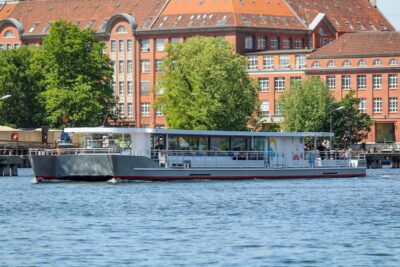
East Side Gallery Spree Cruise in a Solar Catamaran
Read our review →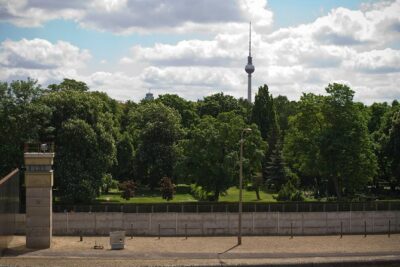
Cold War, Berlin Wall, Spies and the East Side Gallery
Read our review →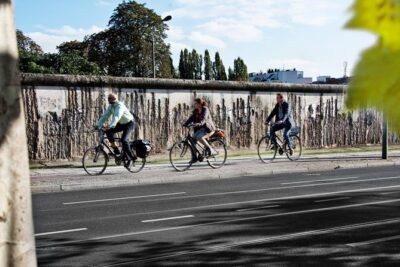
Guided Bike Tour of the Berlin Wall and Third Reich
Read our review →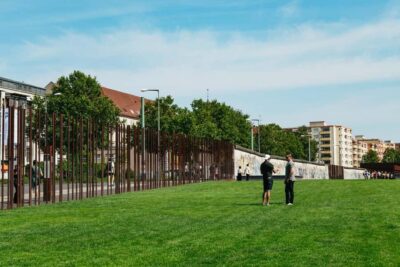
Browse the lists this tour appears in