
Reviewed · BERLIN WALL AND COLD WAR TOURS
Cold War, Berlin Wall, Spies and the East Side Gallery
Berlin’s Cold War story comes alive along a route that links the Palace of Tears, Karl-Marx-Allee, and the former death strip. You move through the city by foot and public transport, seeing how an ordinary street, station, or apartment block could become part of a high-stakes escape story.
I like the way this tour connects major sights instead of treating the Berlin Wall as an isolated monument. I also like the guides’ strong storytelling style. Paul, Xavier, Tina, Nikolai, and others have been praised for using personal stories, photos, humor, and clear explanations to make the period easier to understand.
The main consideration is pace. Three hours is enough for a solid introduction, but not enough for long visits at every stop. You will also need an AB public transport day pass, and the tour runs in all weather.
Key points to know before booking
- The Palace of Tears begins the story: See the former border crossing where families and friends faced painful separations.
- Karl-Marx-Allee shows communist ambition: Read the grand boulevard as political theater, not just as impressive architecture.
- Public transport is part of the route: Bring or buy an AB day pass, since the stops are spread across Berlin.
- The East Side Gallery ends on a creative note: Walk beside surviving sections of the Wall covered with large-scale murals.
- Guides are the main strength: Paul, Xavier, Tina, Nikolai, Klaus, Jim, and others are praised for vivid explanations and personal detail.
- This suits curious beginners: You do not need much prior knowledge, though history buffs will also find plenty to discuss.
From the Palace of Tears to a divided city
Meet your guide outside Friedrichstrasse train station, on the square beside the Tränenpalast, or Palace of Tears. Look for a yellow name badge and yellow umbrella. If you choose an accommodation pickup option, the arrangements differ, so check your booking details carefully.
The Palace of Tears is a fitting place to start. This former border crossing handled departures between East and West Berlin. Its name comes from the emotional farewells that took place inside. A short visit of about 20 minutes gives you a human entry point into the Cold War.
The focus here is not only on governments and military alliances. You hear about families separated by a border, people watched by the East German state, and the pressure placed on anyone who wanted to leave. That personal scale helps before the tour moves into larger political subjects.
The space is indoors, which is useful on a wet or cold day. Still, do not expect a long museum visit. The tour uses the Palace of Tears as a starting chapter, then moves on quickly.
More Museum Tours in Berlin
- Berlin: Jewish Museum Berlin Entrance Ticket
★ 4.5 · 8,393 reviews - Berlin: DDR Museum Tickets
★ 4.3 · 3,443 reviews - Berlin: Natural History Museum Entrance Ticket
★ 4.6 · 3,382 reviews
Alexanderplatz and the public face of East Berlin
A short train ride takes you to Alexanderplatz, one of the best places to see how East Berlin presented itself. The guide spends about 20 minutes here, explaining the square, its role in everyday life, and the surrounding GDR-era architecture.
Alexanderplatz is not a preserved Cold War set. It is a busy modern city space, and that contrast is part of its value. Your guide helps you read the buildings and open spaces as evidence of how the East German government wanted its capital to look and function.
This is also where the tour can connect official political ideas with ordinary routines. The Cold War was not only about spies, borders, and dramatic escapes. It shaped where people worked, shopped, met friends, and encountered state power.
The stop works best if you listen closely rather than simply waiting for a grand monument. The architecture may look plain or dated at first glance. With context, it becomes a record of a political system.
Karl-Marx-Allee and the 1953 workers’ uprising
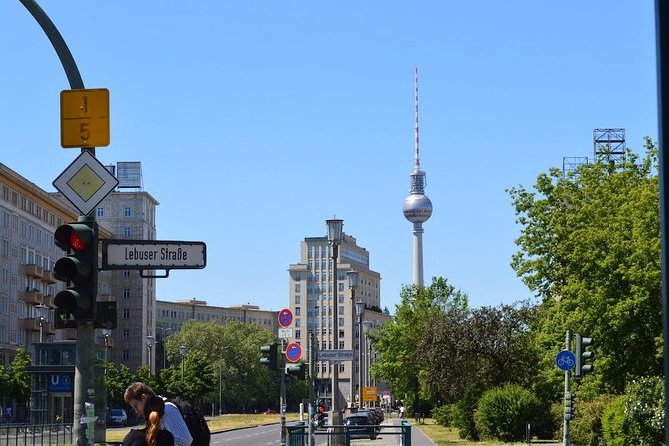
From Alexanderplatz, the group continues along Karl-Marx-Allee. Allow about 20 minutes for this section. The boulevard is broad, formal, and imposing, with monumental buildings designed to project confidence in the socialist state.
Your guide explains how the avenue was used as a model of a socialist city. The scale was deliberate. Large blocks, broad roads, and grand façades were meant to show that East Germany could build a modern society on its own terms.
Look beyond the architecture. The boulevard also became a key site in the workers’ uprising of June 1953. What began with construction workers protesting labor demands grew into a wider challenge to the East German government. The revolt was put down, but it exposed a serious gap between official propaganda and public feeling.
I find this one of the most useful stops because it gives you a way to understand East Germany without relying only on the Wall. The avenue shows the state’s ambitions, while the uprising shows how quickly that polished image could crack.
The visit is relatively short, so you will not examine every building. Wear comfortable shoes and be ready to keep moving. The tour covers a lot of ground in a limited time.
Friedrichshain and the everyday reach of the Stasi
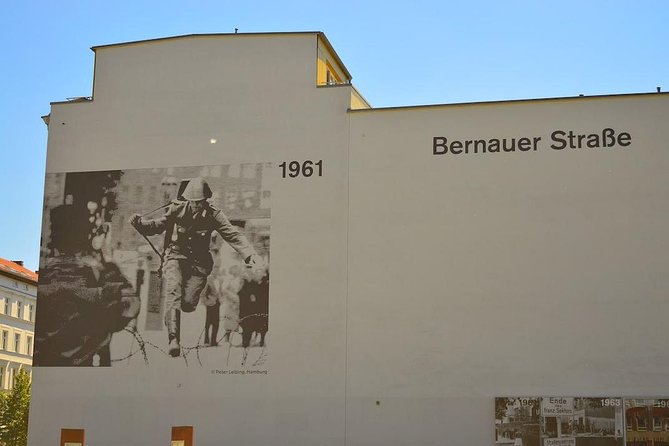
After another short train ride, the tour reaches Friedrichshain. This section lasts around 20 minutes and helps connect the broad political story to the neighborhoods where people lived.
The focus is on surveillance, informants, border controls, and the risks faced by anyone who tried to leave East Germany. The Stasi, East Germany’s secret police, relied on an extensive network of observation and reporting. The guide explains how suspicion could affect families, jobs, friendships, and future opportunities.
This is also where the tour’s stories about escape attempts become especially useful. You may hear about people trying to cross through tunnels, over rooftops, or across guarded areas. These accounts show both the courage of those attempting to escape and the danger built into the border system.
The best guides make these stories concrete without turning them into entertainment. Several guides, including Xavier, Nikolai, and Jim, have been praised for answering many questions and adding personal or local detail. Some guides have also used photographs or iPad images to show how places looked before reunification.
Friedrichshain is not a traditional museum visit. You are walking through a living district, so the evidence may be easy to miss without explanation. Stay close to the guide and ask questions when a detail catches your attention.
More Berlin Wall and Cold War Tours in Berlin:
- Berlin: Third Reich and Cold War 2 Hour Walking Tour
★ 4.9 · 6,830 reviews - Berlin’s Best: 2 Hour Walking Tour Third Reich and the Cold War
★ 5.0 · 5,486 reviews - Skip-the-Line: Berlin Wall Museum at Checkpoint Charlie
★ 4.1 · 2,041 reviews - Berlin: East Side Gallery Spree Cruise in a Solar Catamaran
★ 4.0 · 1,039 reviews
Seeing the Berlin Wall and the former death strip
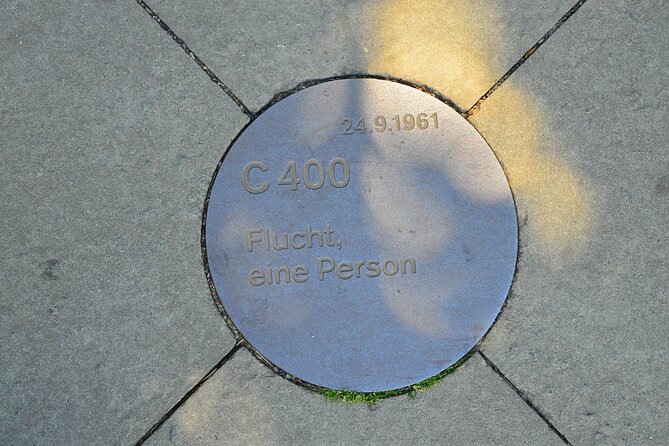
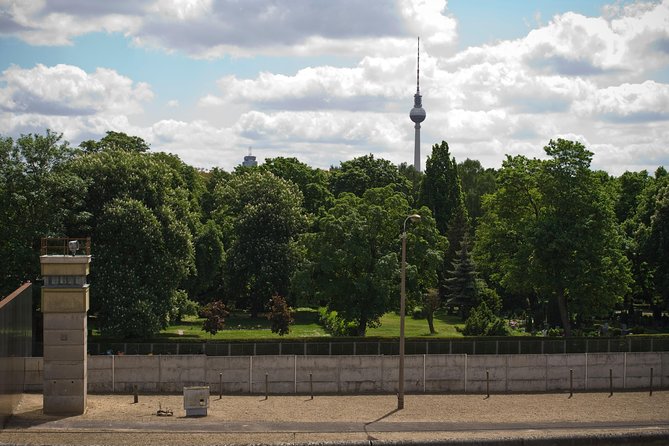
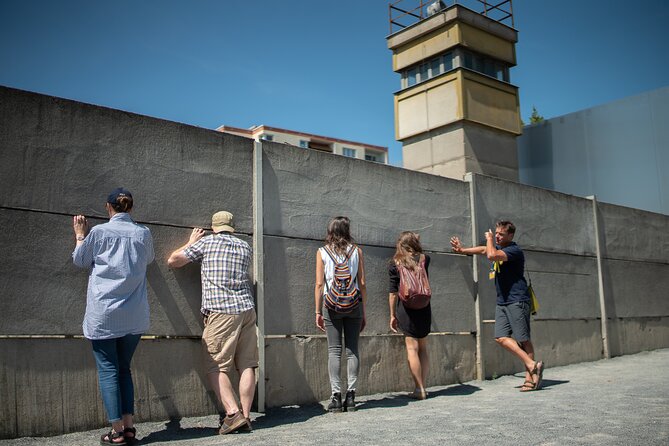
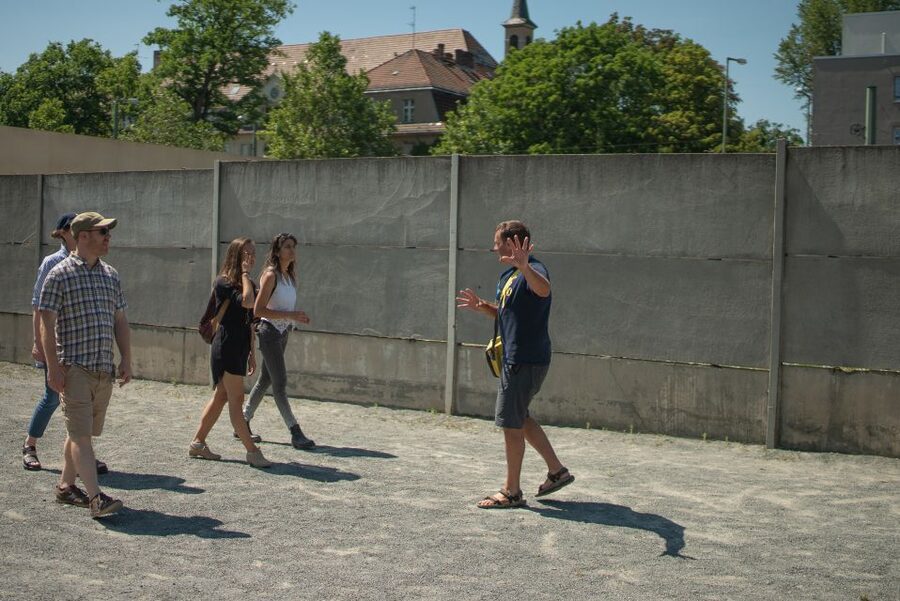
The tour then reaches a section of the Berlin Wall and the former death strip. This is the most direct encounter with the border system, and it helps explain why the Wall was far more than a single concrete barrier.
The border included multiple layers of control, open ground, watch points, fences, and patrol routes. The term death strip refers to the dangerous space between parts of the border system, where escapees could be exposed to guards and other security measures.
The guide explains how the Wall divided streets, neighborhoods, transport routes, and families. You also hear about attempts to get across and the people who died trying. The stories can be difficult, but they are central to understanding the cost of the division.
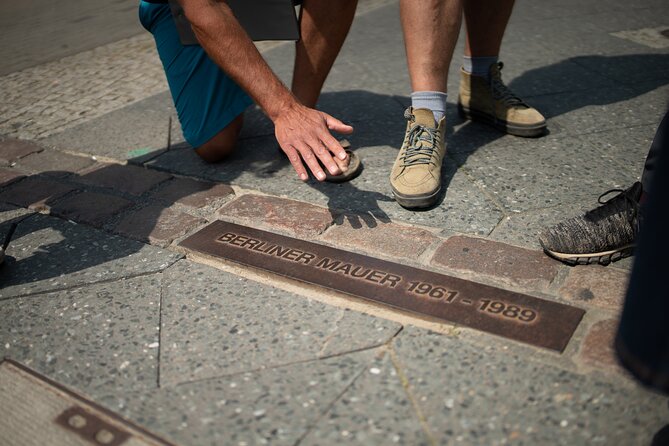
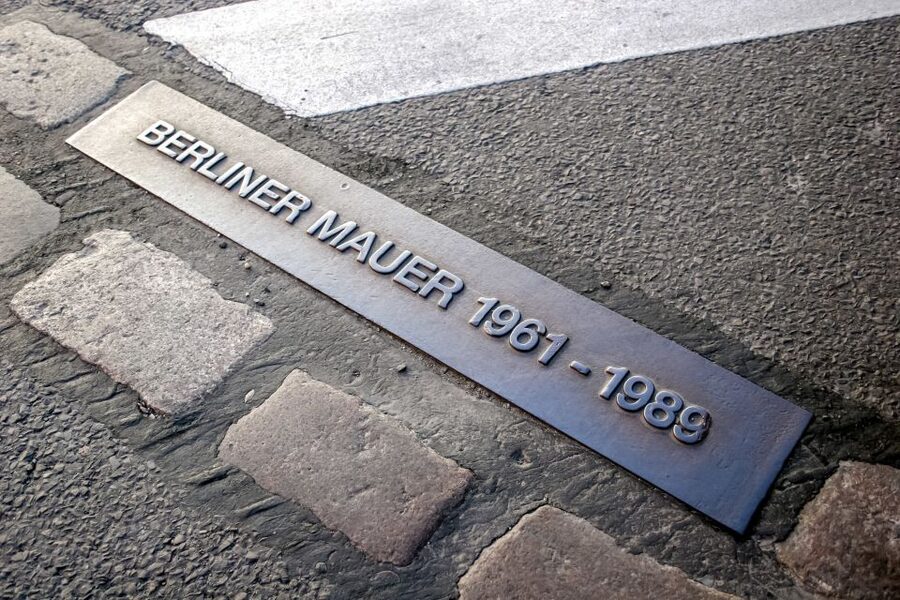
This portion lasts about 16 minutes, so it is a focused stop rather than a long memorial visit. You may want to take a photograph, but give yourself a moment to look at the ground and the remaining structures. Berlin can make the Wall seem almost invisible in places. That absence is part of the story too.
The tour’s route helps you compare the original border area with the later art-covered sections. You see both the machinery of control and the ways Berlin has chosen to remember it.
The East Side Gallery turns a border into public art
The final major stop is the East Side Gallery, where you walk beside a long surviving section of the Berlin Wall covered with murals. The visit lasts about 20 minutes.
The artwork changed the meaning of the Wall. A structure built to keep people in became an open-air gallery that people could approach, photograph, and discuss. The murals are not a replacement for the suffering linked to the Wall, but they show how Berlin reclaimed a symbol of division.
Your guide can help place the paintings in the larger story of 1989 and reunification. You will have time to walk along the decorated section, though the schedule does not allow for a long, leisurely art tour.
This stop is visually striking, but it can also be crowded and active. Keep in mind that the East Side Gallery is a public stretch of Wall, not a quiet museum. The murals are exposed to weather, repairs, and changing city life.
Ending here works well. The route moves from separation and surveillance toward public memory and expression. It does not pretend the past has vanished, but it shows how the city has given the Wall a different role.
Why the guides matter so much
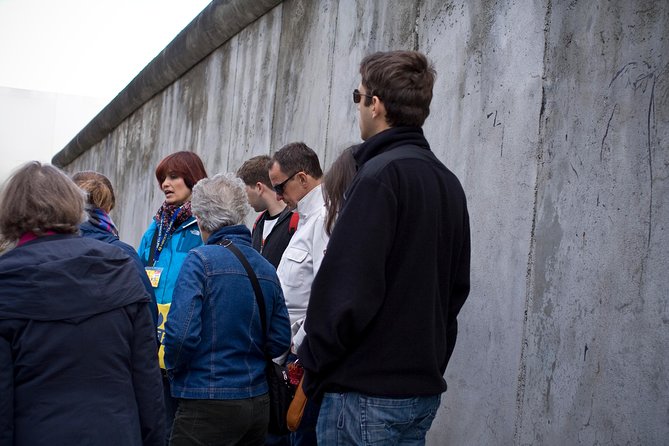
The subject is difficult to explain in three hours. Dates and political terms can quickly become a blur. The guide makes the difference between a route that merely checks off sights and one that helps you understand what happened.
Paul has been praised for explaining the events clearly to someone who arrived with little background. Xavier is noted for combining facts, stories, humor, and attention to the group. Tina has been described as especially engaging, with so many stories that the tour could easily have lasted longer.
Other well-regarded guides include Nikolai, Klaus, Jim, Maria, Eran, Jamie, and Jasper. Several are praised for bringing personal experience or local connections to the subject. One guide grew up in communist East Germany, while others have lived in Berlin for years or studied its history closely.
You cannot usually select a particular guide unless the booking allows it. Still, the pattern is clear: the company places strong weight on storytelling and questions. If you want a silent photo walk, this is not the right format. If you want someone to explain why a place matters, it is a good fit.
Some groups can be large, and one past visitor suggested a microphone would help when numbers rise. If hearing every word matters to you, stay near the guide, especially at busy outdoor stops.
Timing, transport, and physical effort
The tour lasts three hours and combines walking with two short train journeys. It is not a continuous walk from central Berlin to the East Side Gallery, so you need a valid AB public transport day pass.
The pass is not included in the tour price. Staff can help you buy one on the day, but allow a little extra time and keep the ticket with you. The transport links are short, yet they are essential because the route connects sites in different parts of the city.
You should wear comfortable shoes and weather-appropriate clothing. The tour runs in rain or shine, and much of the experience takes place outdoors. Bring a camera, but do not rely on photography alone. The explanations are the main reason to book.
The experience is listed as wheelchair accessible, though the combination of streets, stations, and public transport may still make advance checking sensible if you have specific mobility needs. Private and small-group options are available, which may suit you if you want more time for questions.
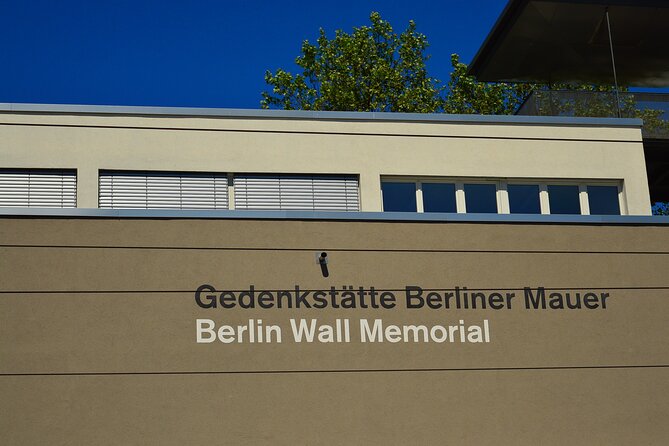
Drop-off information varies. The route lists Bernauer Straße as a drop-off point, while an optional pickup arrangement ends near the Tourist Information at Brandenburg Gate. Confirm the exact end point for your selected option before setting a tight reservation afterward.
Is $18 a fair price?
At $18 per person, the tour offers good value if you want a guided introduction to Cold War Berlin. You are paying for three hours of interpretation, route planning, and public transport connections between sites that would take more effort to link on your own.
The public transport day pass costs extra, and food and drinks are not included. That keeps the advertised price low, but you should add the ticket cost to your real budget.
The value is strongest for first-time visitors and anyone who knows the Berlin Wall mainly through photographs. The guide supplies the missing links: why the border was built, how it worked, what life felt like behind it, and why the surviving sites matter.
If you already have a strong grasp of East German politics and have visited the main memorials, you may find the short stop times limiting. Even then, the route can help you connect places you might otherwise see separately.
Who should book this Berlin Cold War tour?
I would choose this tour if you want a clear, human account of divided Berlin without spending a full day in museums. It is especially useful for families, first-time visitors, and people who want to understand the Wall beyond its famous photographs.
It also suits history fans who enjoy questions and stories about ordinary people. The tour covers spies, informants, escape attempts, surveillance, the 1953 uprising, and reunification, but it gives more attention to the Wall and everyday life than to military strategy or detailed Cold War diplomacy.
That point matters. One past participant wanted more war and politics and less focus on the Wall. If your main interest is the relationship between the United States and the Soviet Union, NATO, or high-level diplomatic crises, another tour may suit you better.
If your interest is how division affected families, streets, workplaces, and choices, this route is a strong match.
Should you book it?
Book this tour if you want a well-paced introduction to East Berlin and the Berlin Wall, with a guide who can turn streets and buildings into understandable history. The route is varied, the price is modest, and the guide quality appears to be its greatest asset.
Skip it if you want long museum visits, extensive time at each memorial, or a detailed study of Cold War diplomacy. For most visitors, though, the mix of the Palace of Tears, Alexanderplatz, Karl-Marx-Allee, the former death strip, and the East Side Gallery gives you a useful three-hour foundation for exploring Berlin on your own.
FAQ
How long does the Cold War Berlin tour last?
The tour lasts three hours, including walking and short public transport journeys between the main sites.
Where does the tour begin?
The standard meeting point is outside Friedrichstrasse train station, on the square beside the Tränenpalast, or Palace of Tears. Look for a guide with a yellow name badge and yellow umbrella.
Is public transportation included?
No. You need an AB public transport day pass to travel between the sites. On-site staff can help you purchase one on the day.
Which languages are available?
Live guiding is available in English and German.
Is the tour wheelchair accessible?
The activity is listed as wheelchair accessible. Check the details of your selected option if you have particular access needs involving stations or public transport.
What should I bring?
Bring comfortable shoes, comfortable clothing, weather-appropriate layers, and a camera. The tour operates in all weather.
Just added in Berlin
- Berlin & The Third Reich Private Guided Tour★ 5.0 · 3 reviews
- Third Reich Quest Experience in Berlin★ 4.5 · 7 reviews
- Private Analogue Photography Experience in Berlin★ 5.0 · 3 reviews
- Berlin Urbex Adventure and History Tour★ 5.0 · 9 reviews
- The Beauty of Berlin by Bike: Private Tour★ 5.0 · 59 reviews
- Berlin: Guided Bike tour of the Berlin Wall and Third Reich★ 5.0 · 160 reviews
- Beyond Currywurst: Berlin’s Hidden Street Food & Culture Tour★ 5.0 · 100 reviews
- Berlin Third Reich & Cold War Walking Tour With A Guide★ 5.0 · 7 reviews
Berlin Wall and Cold War Tours, compared.


Berlin’s Best: 2 Hour Walking Tour Third Reich and the Cold War
Read our review →
Skip-the-Line: Berlin Wall Museum at Checkpoint Charlie
Read our review →
East Side Gallery Spree Cruise in a Solar Catamaran
Read our review →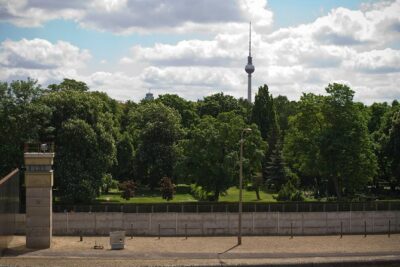
Cold War, Berlin Wall, Spies and the East Side Gallery
Read our review →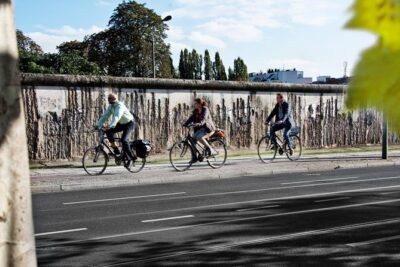
Guided Bike Tour of the Berlin Wall and Third Reich
Read our review →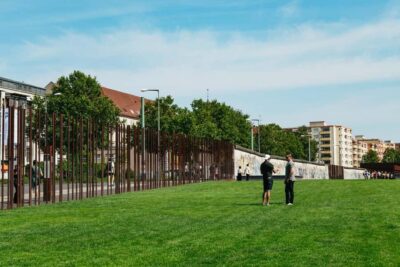
Browse the lists this tour appears in