
Reviewed · MUSEUMS
Berlin: Tickets for the BODY WORLDS Museum in Berlin
Berlin’s BODY WORLDS Museum puts real human anatomy directly in front of you. Whole-body plastinates show how the skeleton, muscles, organs, nerves, and blood vessels fit together, while focused displays explain common diseases and the effects of stress, excess, and poor health. The exhibition is striking, not a light museum visit.
I like the clear progression through the body, from bones and muscles to digestion, circulation, breathing, and the nervous system. I also like the practical questions behind the displays, especially what helps you live longer and how your body responds to stress. The main drawback is that some areas can feel a little quick or dated, and the presentation may be too intense for visitors uncomfortable with real human specimens.
Key points to know before you go
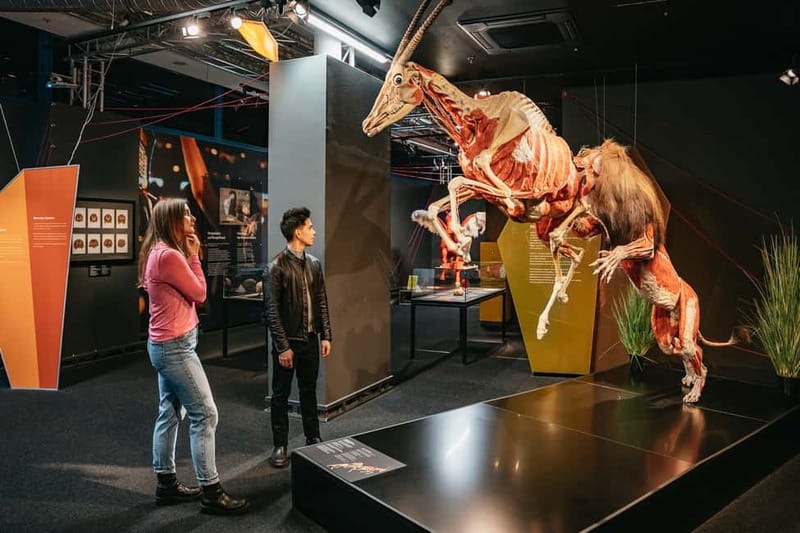
- Real human plastinates: See whole-body preparations and individual organs preserved to show structure and function.
- Central Berlin location: The entrance is at Panoramastraße 1a, 10178 Berlin.
- A one-day ticket: Your admission is valid for one day, with opening hours from 10 AM to 7 PM.
- Good for curious families: The displays turn biology lessons into something concrete, though young children may need help understanding the material.
- English-friendly presentation: Written information and audio content are available in English, though some audio exhibits may not always work.
- Useful practical value: The exhibition connects anatomy with sleep, stress, happiness, excess, moderation, and long-term health.
What makes BODY WORLDS different from a normal museum
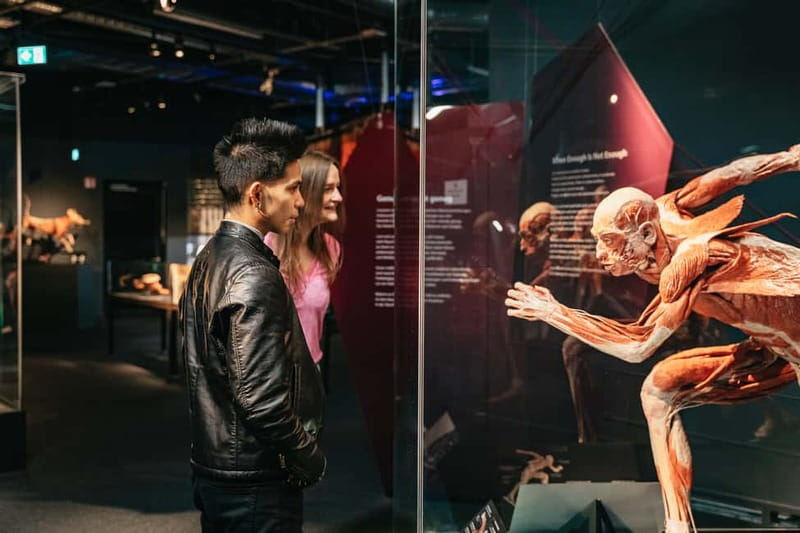
Many museums show models, diagrams, or plastic replicas of the body. BODY WORLDS uses plastination to preserve real human bodies and organs, allowing you to see the actual relationship between parts that are usually hidden from view.
That difference changes the mood. A diagram can tell you how the spine curves or how the heart sits in the chest. A plastinate shows the complete arrangement in three dimensions. You can see bones supporting the body, muscles layered over them, and organs positioned inside the rib cage and abdomen.
The exhibition is the work of Dr. Gunther von Hagens, whose plastination displays have appeared in several cities. In Berlin, the focus is not only on spectacle. The displays are arranged to explain how the body works and how disease can affect it.
I would not treat this as a quick collection of oddities. You are being asked to think about your own body. That makes the experience more personal than a standard science museum, but it also means you should be ready for realistic human specimens.
More Museum Tours in Berlin
- Berlin: Jewish Museum Berlin Entrance Ticket
★ 4.5 · 8,393 reviews - Berlin: DDR Museum Tickets
★ 4.3 · 3,443 reviews - Berlin: Natural History Museum Entrance Ticket
★ 4.6 · 3,382 reviews
Starting with bones, muscles, and the body’s basic frame
The first sections help you get your bearings through the skeleton and muscular system. The skeleton gives the body its framework, while the muscles show how movement is produced and controlled.
This is where the exhibition works especially well for teenagers and adults who have studied anatomy in books but never seen it presented in full form. A skeleton alone is familiar. The real interest comes from seeing how the skeleton, tendons, and muscles relate to one another.
The whole-body displays also help you understand proportion. The human body is not a collection of separate systems neatly divided into textbook chapters. Everything overlaps. Muscles protect and move bones. Bones support organs. Nerves and blood vessels run through the same compact spaces.
You may move through this section quickly if you already know basic anatomy. If you take time to read the labels, though, you will get a stronger sense of how much structure is packed inside an ordinary human body.
Seeing the organs work together
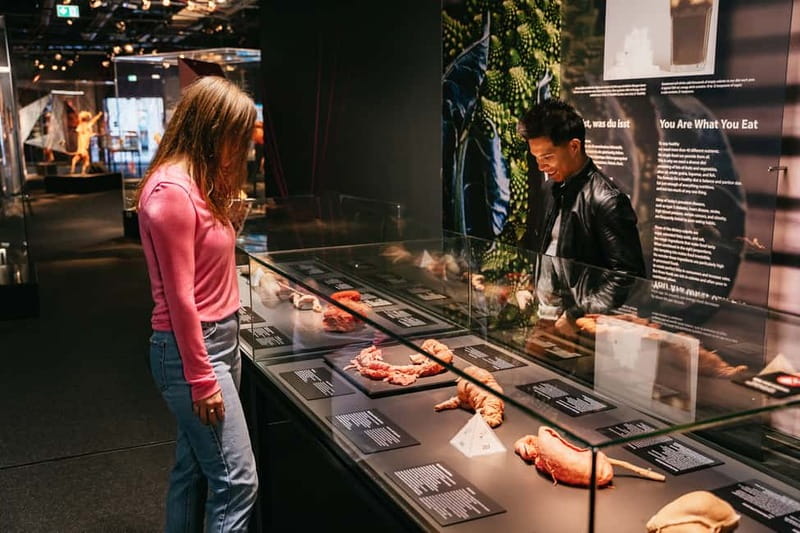
The central strength of BODY WORLDS is its explanation of systems rather than isolated body parts. The digestive system, cardiovascular system, respiratory organs, and nervous system each receive attention, but the displays also show how they depend on one another.
The heart and blood vessels are especially useful for understanding circulation. The cardiovascular system supplies oxygen and nutrients throughout the body, while the lungs handle the exchange that makes that supply possible. Seeing these systems together gives more meaning to what you may have learned in school.
The respiratory section explains the organs involved in breathing. It is one thing to picture lungs in a drawing. It is another to see their form as part of the chest and understand their connection with the rest of the body.
The digestive displays follow the path of food and show the organs involved in processing it. This section can be a good anchor for younger visitors because the subject is familiar, even if the anatomy is not.
The nervous system gives the exhibition a different feel. It moves the discussion from mechanical function to sensation, coordination, and control. The body is not simply a machine made of parts. The brain and nerves shape how you move, respond, and experience the world.
Disease displays that make anatomy practical
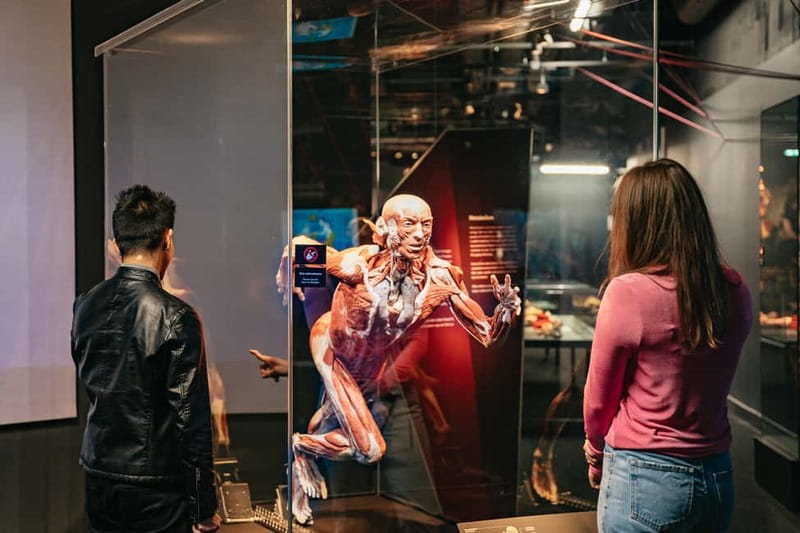
The museum does not stop at healthy anatomy. It also presents common diseases and bodily changes in a way that is easier to understand when you can see the affected structures.
This is one of the most useful parts of the visit. A written description of diseased tissue can be hard to picture. A preserved specimen can make the difference between memorizing a term and understanding what it means physically.
You should not expect a medical consultation or a detailed diagnosis lesson. Instead, the displays give you a broad view of how illness can alter organs and systems. That makes the exhibition suitable for general curiosity, school learning, and anyone who wants a stronger sense of how health affects the body.
The realistic nature of the specimens can be unsettling. If you are sensitive to medical imagery, you may want to pace yourself and move through the more intense sections slowly. The museum is educational, but it does not soften the fact that these are real human preparations.
Same city, a completely different kind of day:
- Berlin: Reichstag, Dome and Government District Guided Tour
★ 4.7 · 18,288 reviews - Berlin: 1-Hour City Tour by Boat with Guaranteed Seating
★ 4.3 · 16,993 reviews - Berlin: Boat Tour Along the River Spree
★ 4.4 · 11,252 reviews - Discover Berlin Half-Day Walking Tour
★ 5.0 · 9,624 reviews
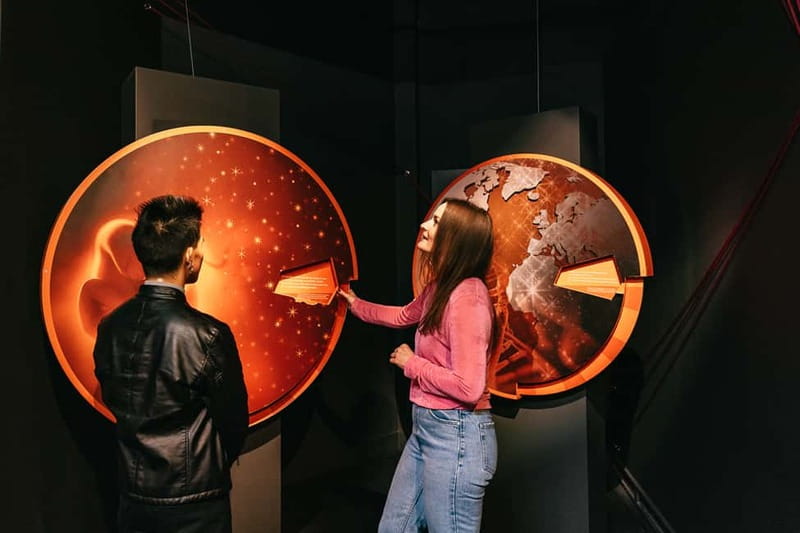
The embryo display and the beginning of life
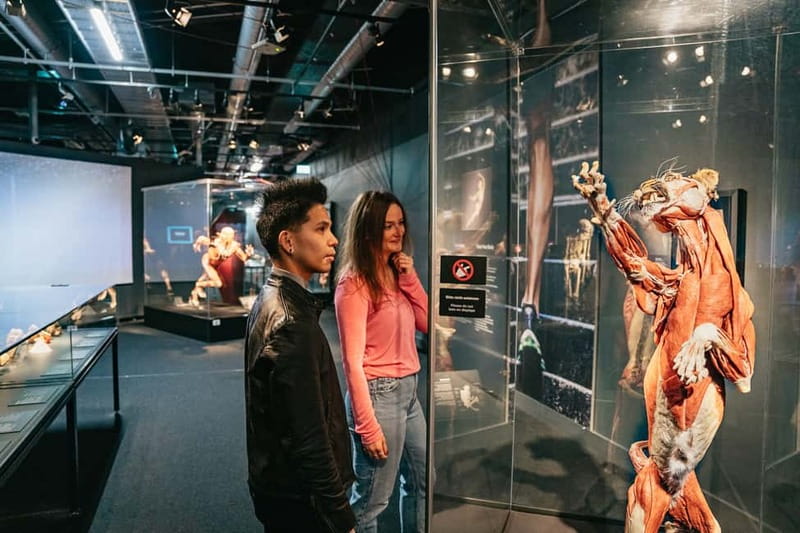
The development of an embryo in the womb adds another dimension to the exhibition. It shifts your attention from adult anatomy to the stages through which the human body develops.
This section can be especially meaningful because it places the adult body in context. The complex systems seen elsewhere do not appear all at once. They develop gradually, with organs and structures taking shape over time.
As with the disease displays, the value comes from seeing physical form rather than only reading about it. You can connect early development with the fully formed skeleton, muscles, organs, and nervous system shown elsewhere in the museum.
This is also a section where personal reactions may vary. Some people will find it fascinating and thoughtful. Others may prefer to spend more time with the adult anatomy. The exhibition gives you room to choose your pace.
From anatomy to stress, happiness, and healthy living
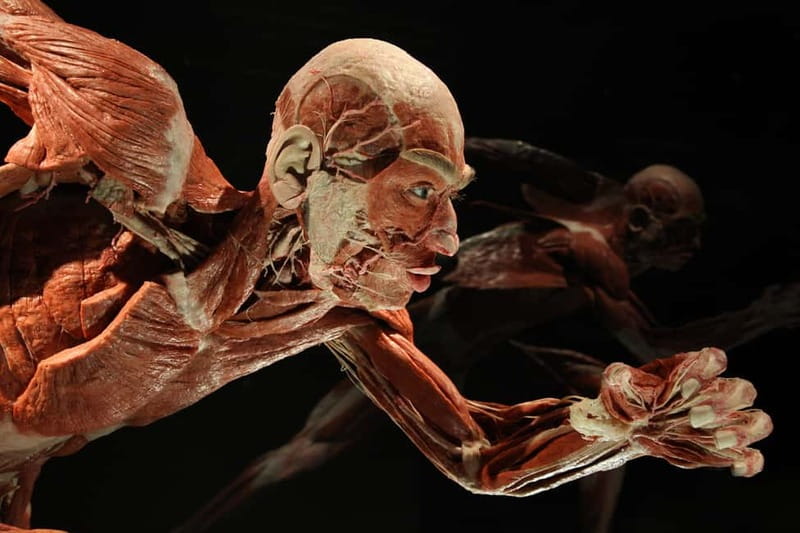
BODY WORLDS goes beyond the question of what the body contains. It also asks what affects how the body feels and functions over time.
You will find displays about stress, happiness, excess, moderation, and the conditions that support a long life. These themes keep the visit from becoming a purely technical anatomy lesson. They connect the organs in front of you with everyday choices and emotional experience.
The stress material is a useful change of pace. Stress is often described as something abstract, but the exhibition places it within the body’s systems. You are encouraged to think about how the body copes with pressure and what happens when strain becomes a regular part of life.
The discussion of excess and modesty is less about giving you a strict set of rules than about showing the middle ground between too much and too little. That broader approach makes the final sections relevant even if you are not especially interested in biology.
I like this practical angle because it gives the museum a purpose beyond shock value. You leave thinking not only about what you have seen, but also about how your own habits affect the body.
How long to allow and how to pace the visit
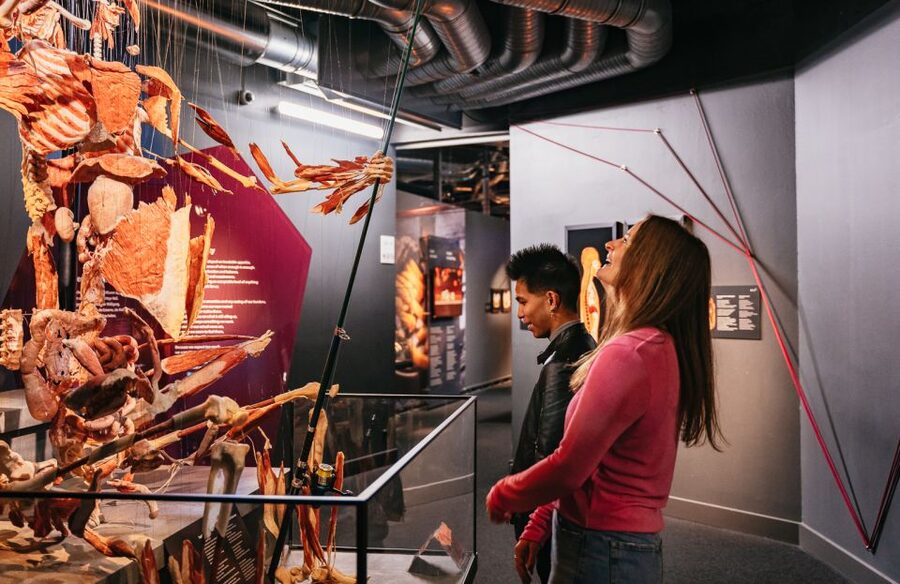
The ticket is valid for one day, and the museum is open daily from 10 AM to 7 PM, with last admission at 6 PM. The activity begins and ends at Panoramastraße 1a.
No fixed tour duration is given, so your visit depends on how closely you read the displays and how comfortable you are with the subject. You could move through the museum fairly quickly, but that would reduce the value of the ticket. The labels and system-by-system layout reward a slower pace.
Some visitors find they finish sooner than expected. If you are mainly looking at the major specimens, the museum may feel compact. If you read the explanations, compare healthy and diseased structures, and spend time with the audio or interactive material, you will get more from it.
I would plan it as a focused museum stop rather than an all-day outing. It fits well into a central Berlin day because the ticket lets you visit during the stated opening hours instead of tying you to a long guided schedule.
Audio, translation, and the quality of the presentation
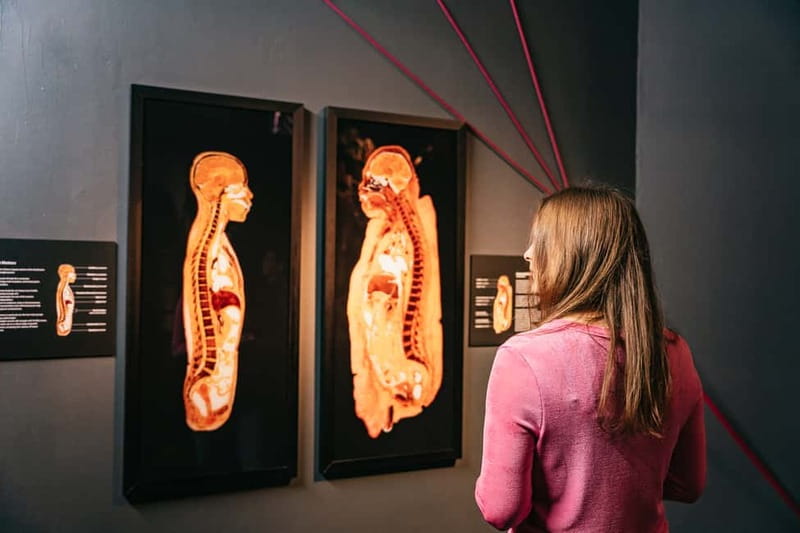
The admission ticket includes entry to the exhibition, but not the audio guide. Some displays provide audio content, and an interactive guide on a phone can add another layer of explanation. English translations are available on the displays and in audio material.
The technology is helpful when it works. Audio explanations can give context while you stand in front of a specimen, and a phone-based guide can make the visit more engaging for children and teenagers. Still, not every audio point may be operating properly, and finding a particular audio exhibit can be less obvious than it should be.
The visual displays do most of the work, so you are not dependent on the audio guide. If you want every extra explanation, check the audio arrangements before you enter and bring patience for a few imperfect stations.
The exhibition has a strong educational purpose, but it is not packed with hands-on activities. If you prefer touch screens, games, and frequent interactive stations, you may find the format fairly traditional. Its main tools are real specimens, labels, and guided interpretation.
Is the $22 ticket good value?
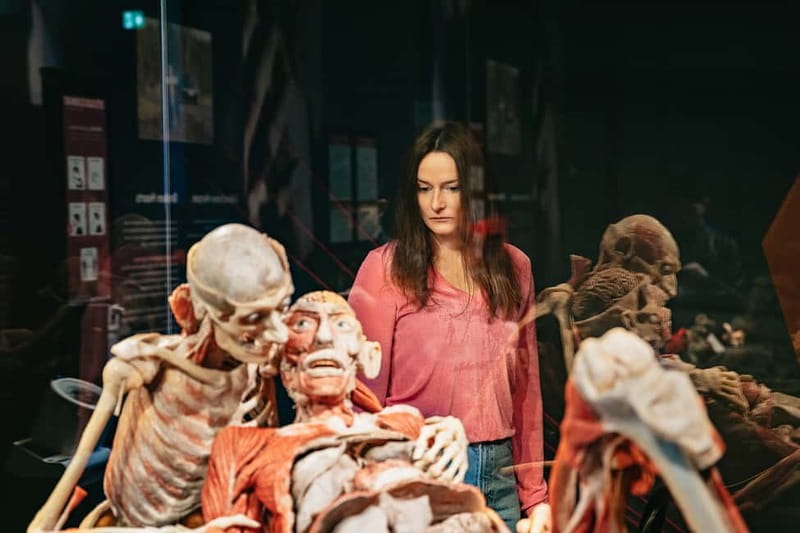
At about $22 per person, the ticket is reasonably priced for a major central Berlin museum visit. The value depends on how much time you give it and how interested you are in anatomy.
You are paying for access to a specialized exhibition that uses real human preparations rather than standard replicas. That makes it different from many general science museums and gives the admission a clear reason to exist.
The price feels strongest for adults, students, families with older children, and anyone studying biology, medicine, nursing, fitness, or health. You can also make the ticket worthwhile simply by reading carefully and using the visit to understand your own body better.
The value is weaker if you want a large museum with many rooms of changing subjects or a highly interactive family attraction. Some displays may feel a little tired, and not every audio station is guaranteed to add something. The experience is about anatomy first, entertainment second.
The option to reserve now and pay later can help if your Berlin schedule is still changing. You can also cancel up to 24 hours before the visit for a full refund, according to the booking conditions.
Who will enjoy it most?
I would recommend BODY WORLDS to adults who like science, medicine, psychology, or unusual museums. It also suits teenagers who are learning about the human body and want something more memorable than a classroom diagram.
Families should consider the age and temperament of their children. The exhibition can be educational for school-age children, but real human specimens may be difficult for some young visitors. A parent who explains what they are seeing will get more from the visit than one who simply lets children race from display to display.
It is also a good choice for repeat visitors who saw BODY WORLDS in another city years ago. The subject remains compelling because the museum brings familiar anatomy into a new setting and lets you notice details you may have missed before.
I would skip it if you want a relaxed art museum, a purely hands-on science center, or a short attraction with no medical imagery. The realistic specimens are the point, and they will not suit everyone.
Practical details for your Berlin visit
The museum is at Panoramastraße 1a, 10178 Berlin. Your activity begins and ends at the same location, so there is no separate meeting point or transport segment to manage.
Opening hours are 10 AM to 7 PM every day, with last admission at 6 PM. The museum is closed on December 24. Since the ticket is valid for one day, check the available starting times when you book.
Cloakroom service is not included. Lockers may be available for a charge, so travel light if you can. Wheelchair access is available.
A final practical point: give yourself time to adjust to the first displays. The museum asks you to look at bodies in a very direct way. You do not need to rush, and you do not need to examine every specimen equally closely. Follow the systems that interest you and take a pause if the material becomes too intense.
Should you book BODY WORLDS Berlin?
Book it if you want a serious, unusual look at how the human body is built and affected by disease. The clear English information, central location, whole-body plastinates, and useful discussion of stress and healthy living make the $22 ticket a fair buy for the right audience.
Go with realistic expectations. This is not a playful attraction, and the audio and interactive elements may be uneven. But if you are curious about anatomy, studying the body, or looking for a Berlin museum that offers something genuinely different, BODY WORLDS deserves a place on your schedule.
FAQ
Where is BODY WORLDS Museum in Berlin?
The museum is at Panoramastraße 1a, 10178 Berlin. The activity begins and ends at this meeting point.
How much does admission cost?
The listed price is $22 per person.
How long is the ticket valid?
The ticket is valid for one day. Check availability for the available starting times.
What are the museum’s opening hours?
BODY WORLDS is open Monday through Sunday from 10 AM to 7 PM. Last admission is at 6 PM.
Is the museum open on December 24?
No. The museum is closed on December 24.
What does the ticket include?
The ticket includes entrance to the BODY WORLDS exhibition.
Is an audio guide included?
No. The audio guide is not included in the ticket price.
Are lockers and cloakroom service included?
No. Cloakroom service is not included, and lockers are subject to a charge.
Is the museum wheelchair accessible?
Yes. The activity is wheelchair accessible.
Just added in Berlin
- Berlin & The Third Reich Private Guided Tour★ 5.0 · 3 reviews
- Third Reich Quest Experience in Berlin★ 4.5 · 7 reviews
- Private Analogue Photography Experience in Berlin★ 5.0 · 3 reviews
- Berlin Urbex Adventure and History Tour★ 5.0 · 9 reviews
- The Beauty of Berlin by Bike: Private Tour★ 5.0 · 59 reviews
- Berlin: Guided Bike tour of the Berlin Wall and Third Reich★ 5.0 · 160 reviews
- Beyond Currywurst: Berlin’s Hidden Street Food & Culture Tour★ 5.0 · 100 reviews
- Berlin Third Reich & Cold War Walking Tour With A Guide★ 5.0 · 7 reviews
Museums, compared.




Skip-the-Line: Berlin Wall Museum at Checkpoint Charlie
Read our review →
Browse the lists this tour appears in