
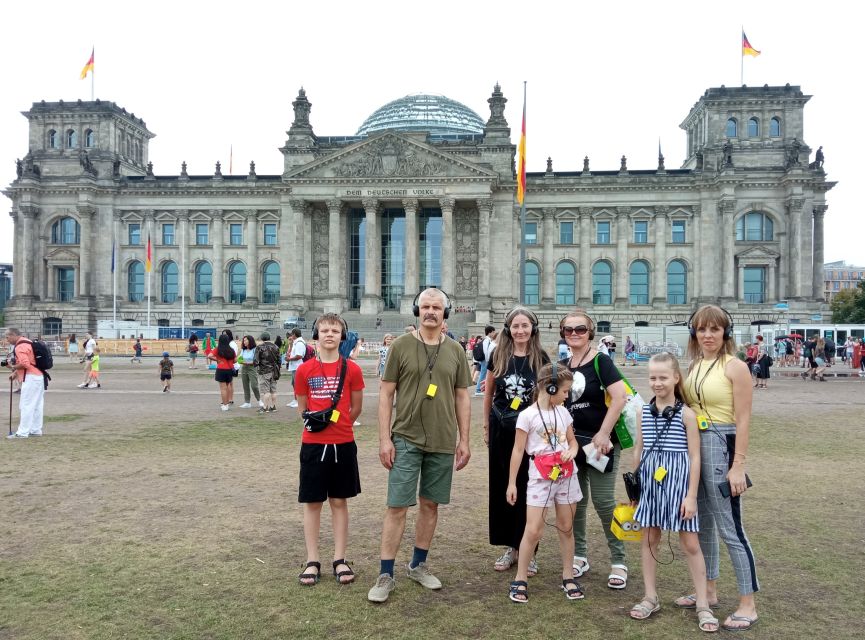
Reviewed · SHOWS AND COMEDY
Berlin Sightseeing Musical-Historical Walking Tour
Berlin’s story comes with a soundtrack on this three-hour walk. Classical oratorios, 20th-century political change, and modern hip-hop help frame the monuments, squares, and memorials between Museum Island and the Reichstag. It is an unusual way to connect Berlin’s buildings with the times that shaped them.
I like the route’s strong lineup of major sights, and I like having music in your ears as you move through the city. The main consideration is that this may feel more like an audio tour with a human guide pointing the way than a traditional, talk-heavy walking tour. A technical problem with the equipment can also affect the experience.
Key points to know before you book
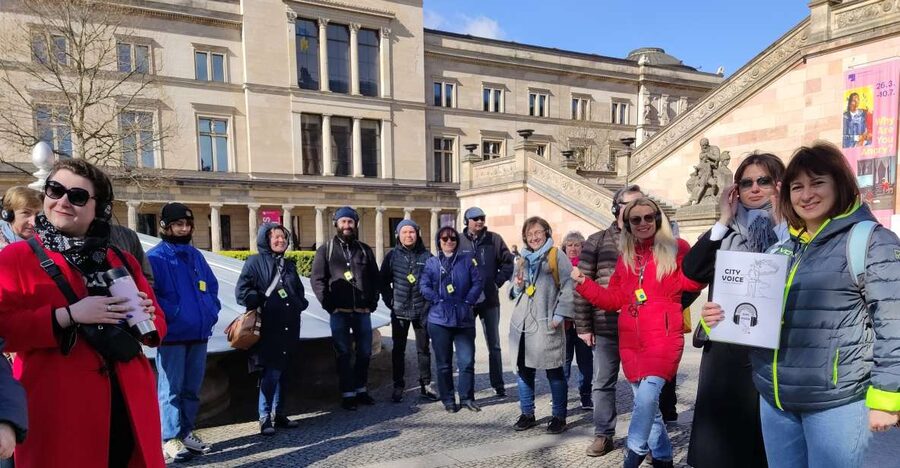
- Music guides the story: Hear a mix of commentary and music in English, German, or Russian.
- Nine major stops: The route includes Museum Island, Gendarmenmarkt, Potsdamer Platz, the Holocaust Memorial, Brandenburg Gate, and the Reichstag.
- Three hours on foot: Expect steady walking with a small break, so comfortable shoes matter.
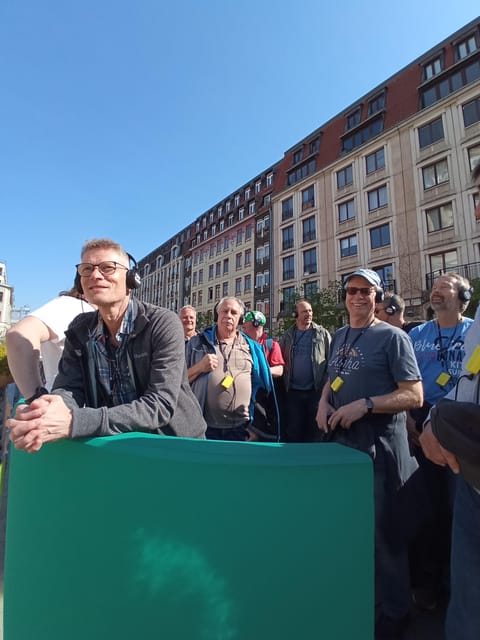
- Headphones are supplied: You can listen without needing to stand close to the guide.
- Outdoor planning is important: The tour runs rain or shine, and some locations depend on the weather.
- Best for independent walkers: It suits you if you enjoy setting your own visual pace while receiving a guided soundtrack.
Berlin’s past, heard rather than simply explained
Many Berlin tours move from monument to monument and give you a quick date for each one. This experience takes another route. It asks how music and political life have crossed paths in Berlin, from the 18th century to the 21st century.
That gives the walk a clear idea. You are not only looking at buildings. You are listening for the city’s changing voice, from classical music and formal oratorios to the sounds of later decades and hip-hop. The music is mixed into the audio guide, so the soundtrack is part of the tour rather than an optional extra.
I like this approach because Berlin can feel visually overwhelming. You see grand Prussian buildings, Cold War reminders, Nazi-era memorials, and modern glass architecture within a fairly compact area. Music can give that sequence a more human rhythm.
The live guide still matters, but you should set your expectations correctly. One guide leads the route and helps you locate each stop, while the supplied headphones deliver much of the spoken material. If you want a long, personal conversation with a guide at every monument, this may not be the right format. If you prefer clear audio and time to look around, it can work well.
More History Tours in Berlin
- Berlin: Natural History Museum Entrance Ticket
★ 4.6 · 3,382 reviews - Berlin Historical Highlights Walking Tour
★ 4.9 · 657 reviews - Berlin Private Complete History All Day Walking Tour
★ 5.0 · 474 reviews
Starting at the Alte Nationalgalerie
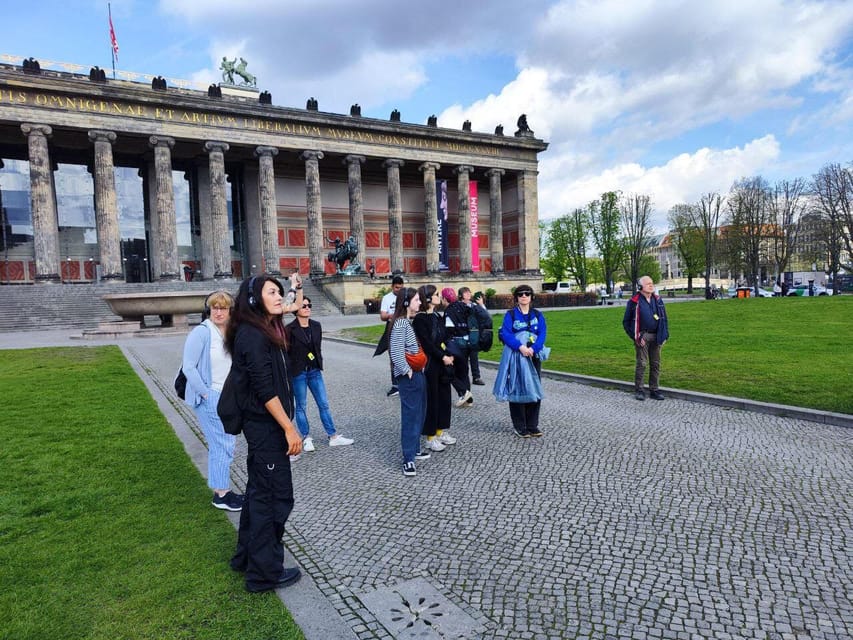
Meet your guide in front of the entrance to the Alte Nationalgalerie on Museum Island. Arrive 10 to 15 minutes early with your ticket ready on your phone or printed. The guide is identified by a headphone sign, which should make the meeting point easier to find.
The start is fitting. The Alte Nationalgalerie is part of Berlin’s Museum Island, a concentration of major cultural buildings beside the River Spree. Even before the formal walking begins, you are in a part of the city where art, architecture, scholarship, and state power sit close together.
The tour does not include museum admission, so you should think of this as an outdoor walking experience. If you want to visit the museums afterward, plan that separately and allow extra time.
Museum Island and the Berliner Dom
The first walking section takes about 20 minutes and introduces Museum Island, including the Berliner Dom area. This is one of Berlin’s most impressive architectural settings, with monumental facades and open views around the river.
The audio format can be useful here. You can look up at the domes, stonework, and broad buildings while listening through your headphones instead of trying to keep your eyes fixed on a guide. The trade-off is that you may need to pause your visual sightseeing to catch every detail in the narration.
This stop sets up the main theme: Berlin is not one neat historical story. It is a city where royal ambition, public culture, war, division, and reunification overlap. The musical framing gives those shifts a different route into the subject.
Humboldt University and the power of ideas

The walk continues to Humboldt University of Berlin for another 20-minute guided stop. The university is a useful place to consider Berlin’s intellectual life and the role of education in the city’s public story.
The route does not present music as something separate from politics and society. Instead, it connects cultural expression with the forces around it. That may make this section especially interesting if you enjoy the relationship between art, ideas, and historical change.
You should also expect an outdoor explanation rather than an indoor university visit. The tour focuses on seeing the location and hearing its story. There is no indication that entry to university buildings is part of the experience.
More Shows and Comedy in Berlin
- Berlin: 1.5-Hour Comedy Bus Tour in German
★ 4.5 · 1,165 reviews - Berlin: Laughing Spree Comedy Show on a Boat
★ 4.9 · 670 reviews - Quatsch Comedy Club Berlin: Die Live Show Entry Ticket
★ 4.7 · 634 reviews - Berlin: English Stand-Up Comedy Show
★ 4.6 · 306 reviews
Gendarmenmarkt’s grand setting
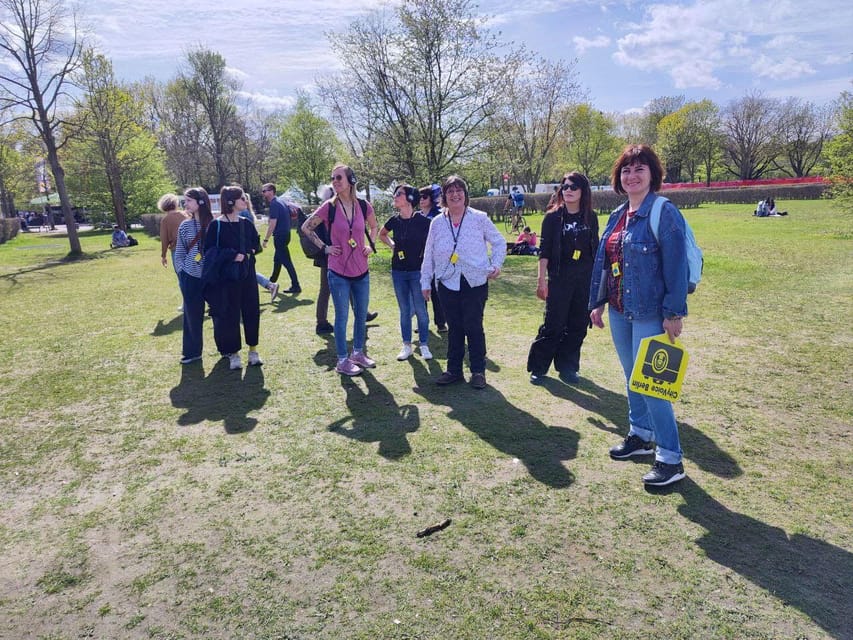
Gendarmenmarkt receives the longest listed stop, about 30 minutes. That extra time makes sense. The square is one of the city’s major architectural spaces, with formal buildings arranged around an open plaza.
Here, the music can help soften what might otherwise be a standard architecture stop. You are encouraged to consider not only the square’s appearance but also the sounds and cultural life associated with Berlin across different periods.
This is also a good point to judge the tour’s pace. You will spend several minutes listening at each location, then walk onward. The route is not a fast photo sweep, but it is not a full lecture at every stop either. You get a guided sequence with enough time to take in the setting.
The Trabi Museum and Cold War Berlin
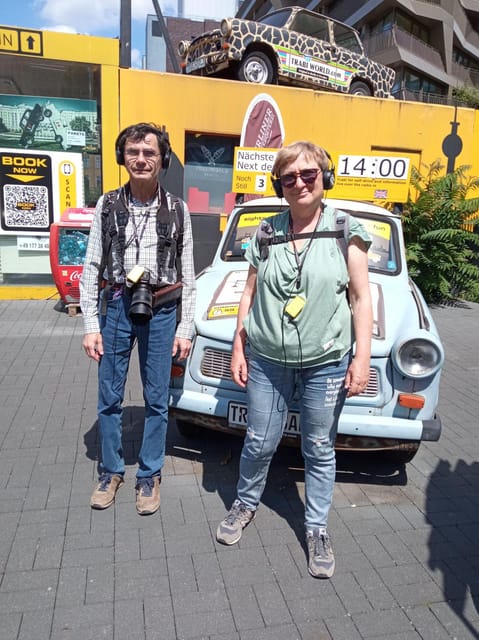
The route includes the Trabi Museum, with about 20 minutes for sightseeing and explanation. The Trabant, commonly called a Trabi, is closely linked with everyday life in East Germany and has become one of the most recognizable symbols of the former East.
The stop adds a lighter, more concrete object to a route filled with grand buildings and memorials. A car can make the Cold War period feel less abstract. It points toward daily routines, limited consumer choice, and the divided city that existed before reunification.
The information provided does not state that museum admission is included. Treat this as a stop connected with the museum and check the exact plan if entering the building matters to you. The experience includes the walking guide and headphones, but food, drinks, transport, and other admissions are not included.
Potsdamer Platz and a changed city
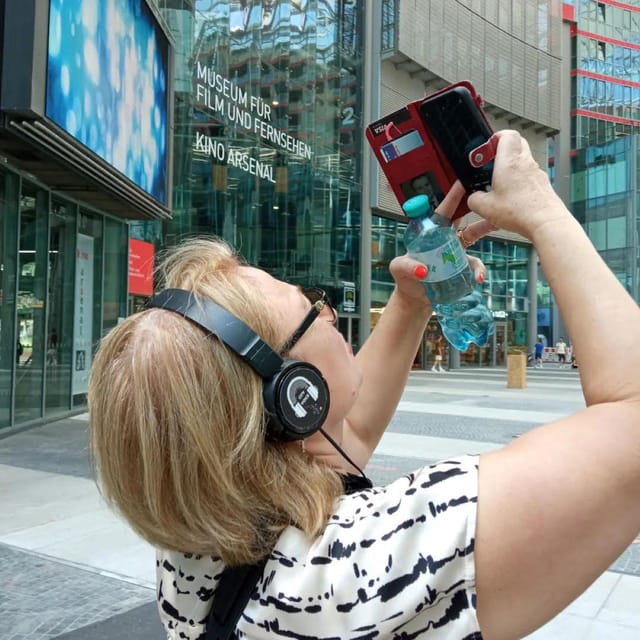
Potsdamer Platz is another 20-minute stop. Its modern architecture gives you a sharp contrast with Museum Island and Gendarmenmarkt.
This is where the tour’s long time span becomes especially visible. The route moves from historic stone buildings to a part of Berlin shaped by division, redevelopment, and modern construction. The audio guide’s mix of music and commentary can help connect those changes rather than treating each site as an isolated photograph.
Potsdamer Platz is also a useful reminder that Berlin’s story did not end with the fall of the Wall. The city continued to rebuild and change its public spaces. You may find this stop less emotionally heavy than the memorials later in the route, but it helps explain the physical city you see today.
The Holocaust Memorial requires a slower pace

The Memorial to the Murdered Jews of Europe, often called the Holocaust Memorial, is one of the most serious stops. The planned visit lasts about 20 minutes.
Expect the tone to change here. The memorial’s concrete slabs create a stark setting, and the tour places this site within the wider story of Berlin’s 20th century. The musical approach may feel more restrained or reflective in this section, but the supplied information does not specify the exact tracks used.
Give yourself room to think. This is not a place for a rushed photo stop. The tour is conducted outdoors, and the weather can affect how long you want to remain in the open space. There is no stated indoor museum visit included, so plan separately if you want the memorial’s underground information center.
Brandenburg Gate and the symbols of Berlin
Brandenburg Gate follows with another 20-minute stop. It is one of Berlin’s most familiar landmarks, yet its meaning has changed across different eras.
The gate can represent royal power, national identity, division, and reunification depending on the period being discussed. That makes it a strong place for the tour’s central question: how do public events, cultural expression, and music influence one another?
You will likely hear the historical explanation through the headphones while looking at the gate and the surrounding avenue. This can be a good arrangement for a crowded public landmark because you do not have to stand directly beside the guide to hear. Still, stay aware of the group and the street environment as you listen.
The Reichstag and the final historical chapter
The final major landmark is the Reichstag, with about 20 minutes for sightseeing and commentary. The building links parliamentary government with the dramatic political changes that shaped modern Germany.
The route ends in the same broad central district, with the stated finish at the White Crosses. The meeting details also describe the activity as ending back at the meeting point, so confirm the exact finish location when you book or meet the guide. This matters if you have a restaurant reservation, train connection, or another timed activity afterward.
As with the other stops, the tour does not list entry inside the Reichstag. You should not assume that a dome visit or interior access is part of the walk.
What the headphones add, and where they may fall short
The headphones are central to the experience. They carry an audio guide mixed with music, and the material is available in English, German, and Russian. A live guide is also provided in those languages.
The benefit is clear: you can hear the narration without relying on the guide’s speaking volume. Music can also make the transitions between sites feel more connected. I like that the soundtrack gives the route an identity beyond a standard list of dates.
The limitation is just as important. This is not necessarily a conventional walking tour where the guide speaks continuously in person. The human guide may mainly organize the group, point out locations, and keep the route moving. If a technical fault occurs, the audio element can cause frustration, so test the headphones early and tell the guide promptly if something is not working.
Is $40 a fair price?
At $40 per person, the value depends on what you want from a city tour. You receive three hours of guided walking, headphones, a multilingual audio program, and a route covering many of central Berlin’s key historical locations.
That is a reasonable price if you want an organized introduction and would otherwise pay separately for a sightseeing walk and an audio guide. The route also saves you the work of linking these sites yourself.
The value is weaker if you want admission to museums, meals, hotel pickup, or a highly personal guide conversation. None of those are included. You also need to reach the Alte Nationalgalerie on your own and handle your own food and drinks.
At three hours, the tour is long enough to provide a real framework but short enough to fit into a day of sightseeing. I would consider it most useful early in a Berlin visit, when the city’s many eras still need a clear structure.
Walking conditions and practical planning
Wear comfortable shoes and clothes. You will walk between several stops, with a small break, and the activity runs rain or shine. Some locations depend on weather, so bring suitable protection rather than assuming the day will stay dry.
The tour is not suitable for wheelchair users or people over 70, according to the activity information. That is an important limitation, especially because the route includes extended outdoor walking and uneven conditions may be possible around public squares and memorial areas.
Free cancellation is available up to 24 hours before the start for a full refund. You can also reserve now and pay later, which helps if your Berlin plans are still shifting. Starting times vary, so check availability before arranging anything around the tour.
Who should book this musical walking tour?
I would choose this experience if you enjoy music, urban history, and major landmarks but do not want a standard sightseeing script. It is particularly suitable for first-time visitors who want to see many central sights in one organized route.
It can also suit you if listening through headphones feels comfortable and you like having time to look around independently. The audio format lets you focus on the buildings instead of watching a guide’s every gesture.
I would hesitate if you want museum interiors, detailed access to the Reichstag, or a guide who speaks directly for most of the three hours. I would also think twice if you dislike wearing headphones or need an accessible route.
Should you book it?
Book this walk if the idea of hearing Berlin’s political and cultural story through music appeals to you. The route covers an impressive set of landmarks, and the connection between sound, architecture, and historical change gives familiar sights a fresh angle.
Skip it if your priority is a traditional live lecture, interior admissions, or a slow private tour. At $40, the experience offers good value for a structured introduction, but its success depends on the audio equipment and your comfort with a guide-led route that uses recorded commentary. Bring good shoes, arrive early, and confirm the ending point before you set your next appointment.
FAQ
How long does the Berlin musical-historical walking tour last?
The tour lasts three hours. Check availability for the specific starting time.
Where does the tour start?
The guide waits in front of the entrance to the Alte Nationalgalerie on Museum Island. Arrive 10 to 15 minutes early and look for a guide holding a headphone sign.
Which languages are available?
The live guide and audio guide are available in English, German, and Russian.
Are headphones included?
Yes. Headphones are included, and they play an audio guide mixed with music.
Does the tour run in bad weather?
Yes. The walk takes place rain or shine, although some locations are weather-dependent.
Is the tour suitable for wheelchair users?
No. The activity is listed as not suitable for wheelchair users. It is also listed as not suitable for people over 70 years old.
More Walking Tours in Berlin
- Discover Berlin Half-Day Walking Tour
★ 5.0 · 9,624 reviews - Berlin: Third Reich and Cold War 2 Hour Walking Tour
★ 4.9 · 6,830 reviews - Berlin: Discover Berlin Walking Tour
★ 4.9 · 5,998 reviews - Berlin’s Best: 2 Hour Walking Tour Third Reich and the Cold War
★ 5.0 · 5,486 reviews
Just added in Berlin
- Berlin & The Third Reich Private Guided Tour★ 5.0 · 3 reviews
- Third Reich Quest Experience in Berlin★ 4.5 · 7 reviews
- Private Analogue Photography Experience in Berlin★ 5.0 · 3 reviews
- Berlin Urbex Adventure and History Tour★ 5.0 · 9 reviews
- The Beauty of Berlin by Bike: Private Tour★ 5.0 · 59 reviews
- Berlin: Guided Bike tour of the Berlin Wall and Third Reich★ 5.0 · 160 reviews
- Beyond Currywurst: Berlin’s Hidden Street Food & Culture Tour★ 5.0 · 100 reviews
- Berlin Third Reich & Cold War Walking Tour With A Guide★ 5.0 · 7 reviews
Shows and Comedy, compared.




Quatsch Comedy Club Berlin: Die Live Show Entry Ticket
Read our review →



Cabaret – The Berlin Musical at Tipi am Kanzleramt
Read our review →Browse the lists this tour appears in