
Reviewed · MUSEUMS
Berlin: Museum Island Guided Walking Tour
Berlin’s Museum Island is more than a cluster of famous museums. It is a compact lesson in power, art, war, reconstruction, and the changing face of the German capital. This walk takes you around the island, past Berlin Cathedral, the Lustgarten, the Spree, and the Humboldt Forum, while adding the old harbor and former GDR government district.
I like the small group limit of 10, which should make it easier to hear the guide and ask questions. I also like the route’s variety: you get grand buildings, riverside views, old ships, and Berlin’s divided past in one outing. The main consideration is that the tour is in German, and it is a walking tour only, with no museum interiors or admission tickets included.
Key points at a glance
- Museum Island from the outside: Walk around all five UNESCO World Heritage-listed museums and learn how the architectural ensemble took shape.
- Berlin Cathedral and Lustgarten: See two of central Berlin’s most impressive landmarks from the open square and park.
- A local perspective: Guide Carlo is praised for clear explanations, strong subject knowledge, and an engaging style.
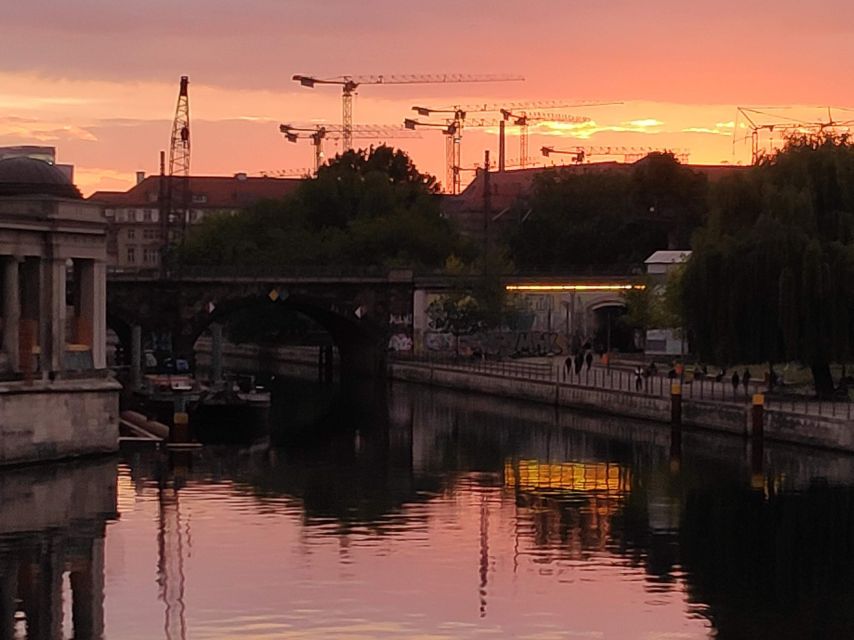
- More than museum facades: The route adds the historical harbor, a ship lock, the Spree, and the former GDR government district.
- Small, focused group: The tour is limited to 10 participants, making conversation with the guide more practical.
- Straightforward timing: Plan on two hours, though Carlo has sometimes continued for around two and a half hours when the discussion runs long.
Why Museum Island makes a strong first walk in Berlin
If you have only a short time in Berlin, Museum Island gives you a useful starting point. The buildings are close together, but each reflects a different period and purpose. The route lets you see the city’s grand central core without spending two hours inside one museum.
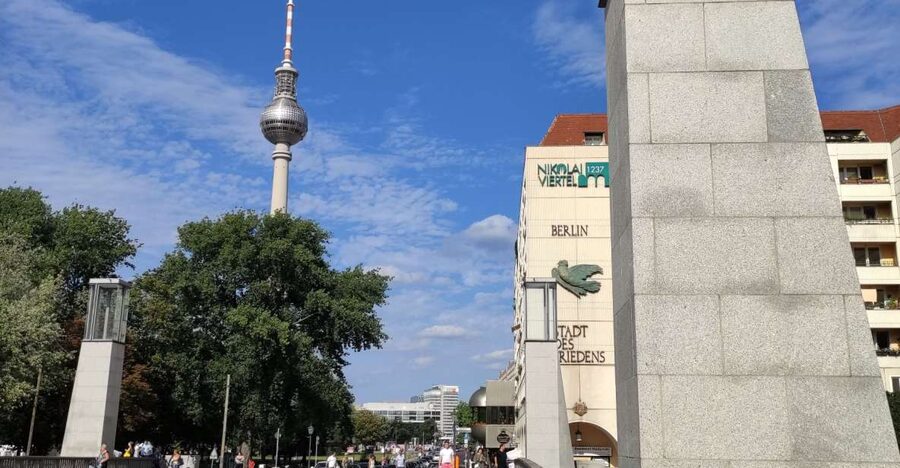
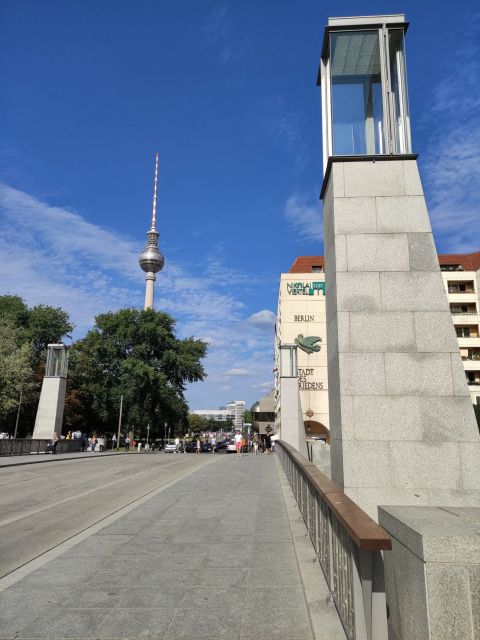
You begin near U Rotes Rathaus, close to Berlin’s old civic center. From there, the walk heads through the Nikolaiviertel, crosses the Spree, and reaches the island. That opening matters because it helps connect the polished ceremonial center with older parts of Berlin.
You should think of this as an orientation walk, not a museum tour. You will see the exteriors of the five museums and learn about their place in Berlin’s cultural life, but the price does not include entry to any of them. If you want to visit the Pergamon Museum, Bode Museum, Neues Museum, Altes Museum, or Alte Nationalgalerie inside, plan a separate visit.
The tour costs $43 per person. That is a fair price if you want a focused introduction with a live guide, especially in a group of no more than 10. It is less attractive if you mainly want museum admission or prefer to explore at your own pace with an audio guide.
More Museum Tours in Berlin
- Berlin: Jewish Museum Berlin Entrance Ticket
★ 4.5 · 8,393 reviews - Berlin: DDR Museum Tickets
★ 4.3 · 3,443 reviews - Berlin: Natural History Museum Entrance Ticket
★ 4.6 · 3,382 reviews
Meeting near Rotes Rathaus
The practical starting point is the exit of U Rotes Rathaus station, exit A, in the direction of Rathausstrasse, Spandauer Strasse, and Schlossplatz. Look for the guide carrying the Get Your Guide, You in Berlin flag.
This is a useful central meeting point, but give yourself enough time to find the correct exit. Berlin stations can have several exits, and the wrong one can put you on the opposite side of a busy street. The listed starting location also refers to Donkey Republic, but the detailed meeting instruction points you to U Rotes Rathaus exit A. Follow the metro exit directions.
From here, you are close to the Nikolaiviertel, the first part of the walk. Wear comfortable shoes. The tour runs in rain or shine and operates on public holidays, so check the forecast and dress for the day rather than assuming Berlin’s center will provide much shelter.
Nikolaiviertel and the route into central Berlin
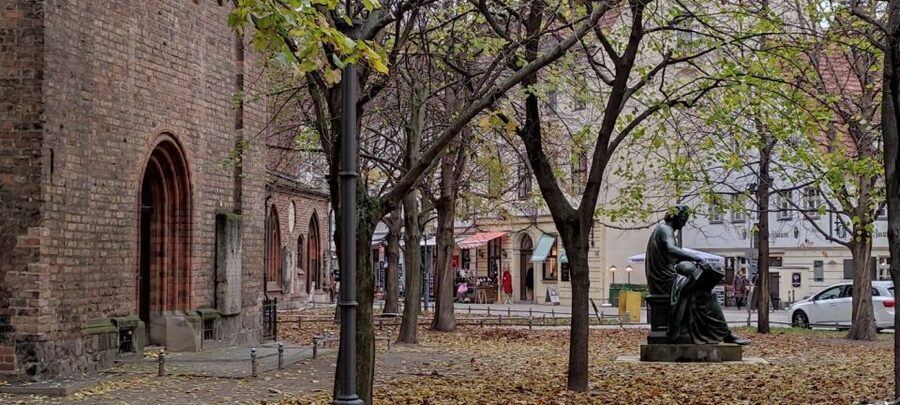
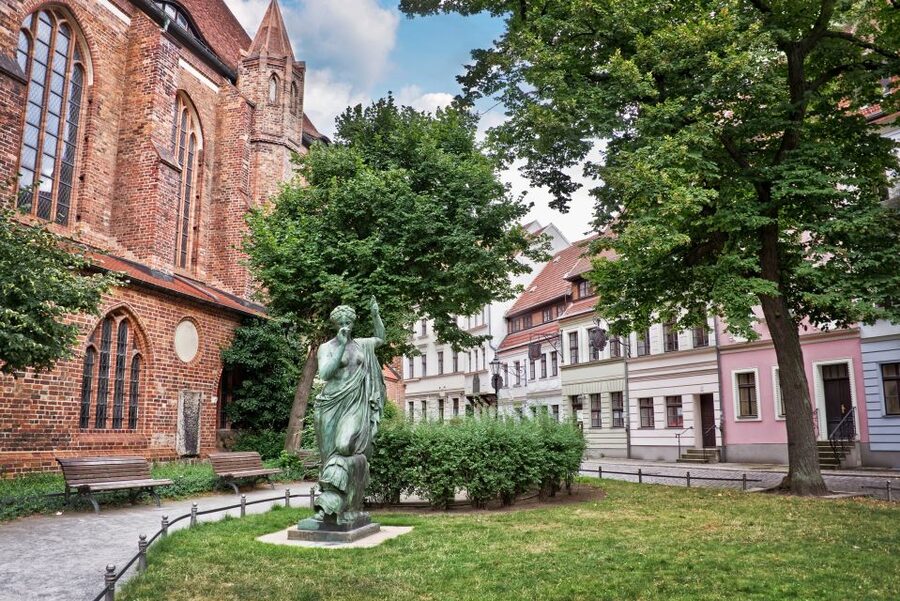
The Nikolaiviertel gives the walk a gentler opening than beginning directly beside the cathedral. You stroll through this historic quarter before crossing the Spree toward Museum Island.
The area is important because it places Berlin’s monumental center in a more intimate setting. Streets here help you see the city as a lived-in place, not only as a collection of state buildings and museums. The guide can use this transition to explain how Berlin developed around the river and how its central districts changed over time.
This part also sets the pace. The route is made for walking and commentary, not rushing from one photo stop to the next. Expect time to look around, listen, and ask questions. If you want a brisk exercise walk, the frequent stops may feel slow. If you want context before visiting the museums, the rhythm should work well.
Five museums around Museum Island
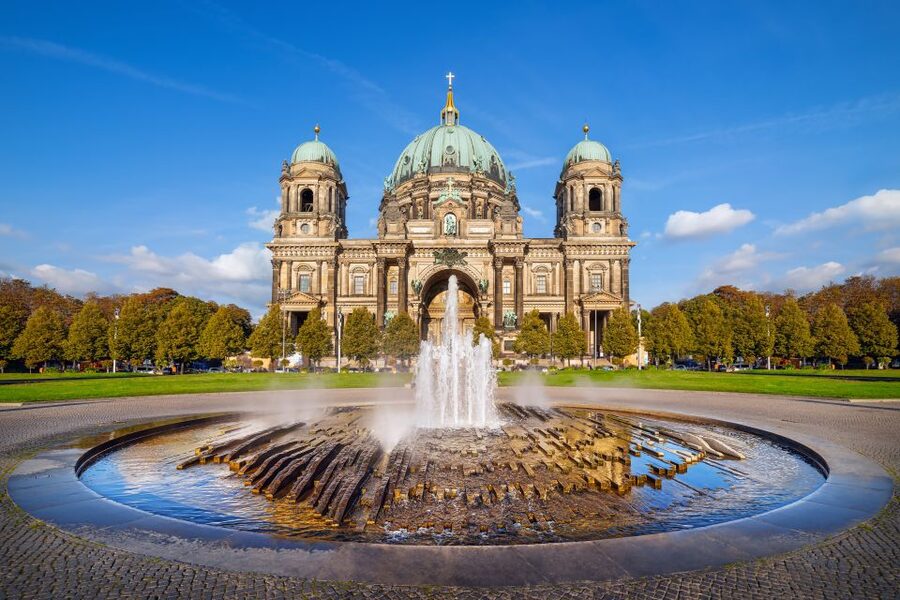
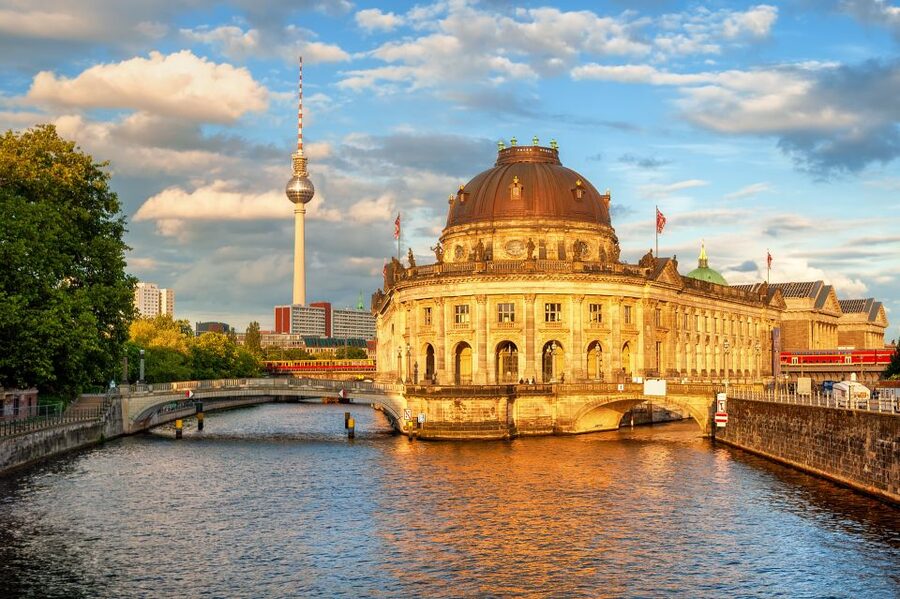
Museum Island is the heart of the experience. The complex contains five UNESCO World Heritage-listed museums, gathered in a remarkably small area along the Spree. You walk around the ensemble while the guide explains the buildings, their designers, and their place in Berlin’s cultural development.
The appeal is partly architectural. These are not anonymous museum boxes. Their facades, stairways, domes, columns, and formal layouts reflect the ambitions of the people who planned Berlin as a capital of European importance. The tour focuses on the buildings designed by leading architects of their time, so you get a sense of how art, scholarship, and government authority were presented to the public.
I like this approach because the island makes more sense when seen as a group. A single museum visit can leave you focused on one collection. Walking around all five helps you understand the larger plan.
Still, you should keep expectations clear. The tour does not take you through the galleries, and it does not provide museum entry. If ancient Egyptian objects, classical sculpture, Byzantine art, or paintings are your main reason for coming, set aside another half-day or more for the interiors. This walk is best used before that visit, not instead of it.
More Walking Tours in Berlin
- Discover Berlin Half-Day Walking Tour
★ 5.0 · 9,624 reviews - Berlin: Third Reich and Cold War 2 Hour Walking Tour
★ 4.9 · 6,830 reviews - Berlin: Discover Berlin Walking Tour
★ 4.9 · 5,998 reviews - Berlin’s Best: 2 Hour Walking Tour Third Reich and the Cold War
★ 5.0 · 5,486 reviews
Berlin Cathedral and the open space of Lustgarten
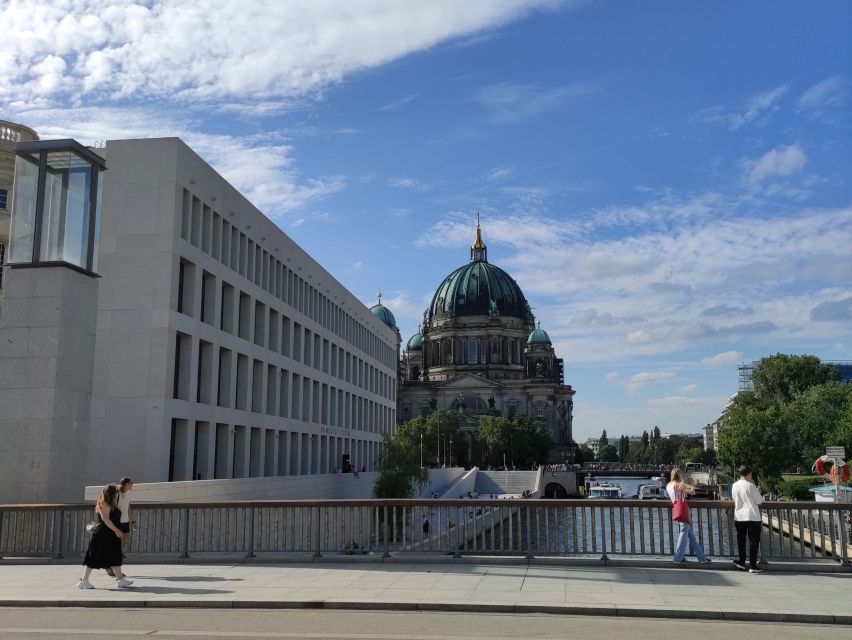
The route continues through Lustgarten, the broad open space in front of Berlin Cathedral. This is one of the walk’s strongest visual moments. The cathedral’s scale is difficult to miss, and the open setting gives you room to take in its dome and formal front.
Lustgarten also helps explain how Berlin’s center was shaped for public display. The square links the cathedral, museums, and surrounding state buildings, creating a concentrated view of the city’s cultural and political ambitions.
Your guide can point out how the area has changed through different political periods. That is one reason a live walk is useful here. A plaque may tell you what a building is, but it rarely explains how the surrounding space was used or why it matters in Berlin’s larger story.
The square can be exposed to weather, with little shade or shelter during the explanation. In warm weather, bring water. In cold or wet conditions, a coat and shoes with good grip will make the two hours much easier.
The Spree, old ships, and Berlin’s working waterfront
One of the route’s welcome surprises is the visit to Berlin’s historical harbor and ship lock. This adds a practical, maritime side to a tour that could otherwise focus only on monumental architecture.
The old ships provide a direct link to Berlin’s relationship with the Spree and its canals. You are not just looking at grand buildings built for culture and government. You are also seeing the waterways that helped move goods and connect the city.
The ship lock is another useful change of pace. It gives the guide a chance to explain how the river system functioned while you watch the waterway itself. The stop should appeal to anyone who likes transport history, old vessels, or the working details behind a capital city.
Do not expect a boat ride. This is a walking stop beside the harbor and lock. It is included for viewing and explanation, not as a separate cruise or museum visit.
The former GDR government district
The walk also covers the former government district of the German Democratic Republic. This is where the tour broadens beyond architecture and museums to address Berlin’s divided past.
The GDR period is not treated as a distant footnote. It shaped how central Berlin was used, what buildings represented, and how people experienced the city before reunification. Seeing the district in person gives you a physical sense of the political geography that maps and dates alone cannot provide.
This section may be especially useful if you are new to German history. Berlin’s story can become a blur of Prussian monarchy, Nazi rule, wartime destruction, division, the Berlin Wall, and reunification. A good guide can connect these periods without turning the walk into a lecture.
The German-only format matters here. Guide Carlo is associated with this experience and is praised for making complex Berlin history easy to follow, with a warm and enthusiastic manner. If you understand German well, this local perspective should add real value. If you do not, check language options carefully before booking, since the listed live tour language is German.
Finishing at the Humboldt Forum
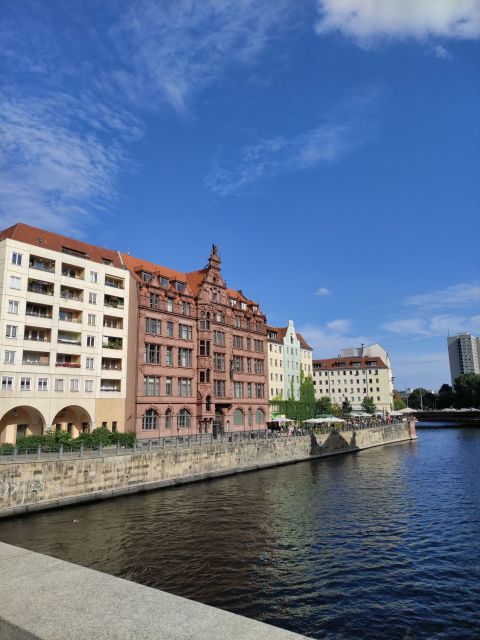
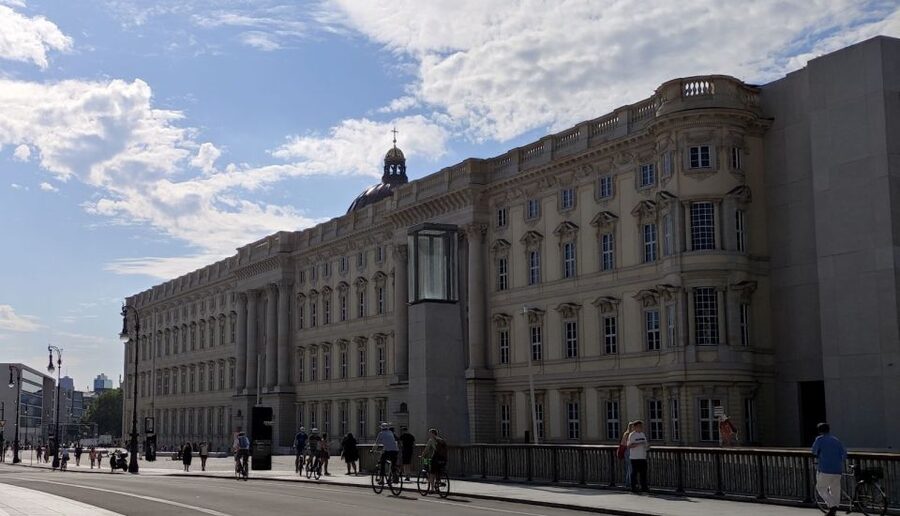
The walk ends outside the Humboldt Forum. This is a sensible finish because the building connects the modern cultural center with Berlin’s older palace and museum traditions.
You finish with a useful choice. You can continue exploring the area on your own, visit the Humboldt Forum separately, or use the nearby transport connections to reach another part of Berlin. Since the tour ends at the building rather than inside it, admission is not part of the experience.
Ending here also means you are not returned to the starting point. If you have timed museum tickets, a restaurant reservation, or a train to catch, allow a little extra time after the official finish. Carlo has sometimes carried on beyond the planned two hours, with some walks reaching about two and a half hours, so a flexible schedule is wise.
What the two-hour format really gives you
Two hours is enough to cover the major outdoor sights without turning the outing into an exhausting day. You get a clear route, several strong photo stops, and a framework for understanding central Berlin.
The time can stretch when the guide is answering questions or adding background. That is a bonus if you enjoy discussion, but it may matter if you have a strict appointment afterward. I would avoid booking this directly before a timed museum entry unless you leave a generous gap.
The small group is another practical advantage. With up to 10 people, the guide can speak to the group without needing to shout across a large crowd. You also have a better chance to ask about a building, a political period, or a point on the route.
This is still an outdoor walking tour. You should be comfortable on your feet for the duration, and weather can affect your enjoyment. The tour runs in all conditions, including public holidays, so plan clothing accordingly.
Who will get the most from this walk
I would choose this tour if you are visiting Berlin for the first time and want the city’s central sights tied together by a local voice. It also suits you if you enjoy architecture, urban history, rivers, ships, and political stories more than a simple checklist of landmarks.
It is a good fit before a museum visit. The guide gives you a better sense of why the island matters, so the interiors may feel less disconnected when you return on your own.
The experience is less suitable if you need an English-language tour, want to spend most of your time inside museums, or dislike walking in uncertain weather. It also may not suit you if you want a relaxed stroll with little commentary. The guide’s style is information-heavy and enthusiastic, and the tour can run long because of that.
Is $43 a fair price?
At $43, you are paying for the guide, the small group, and the structure of the walk. You are not paying for museum tickets, transport, food, or access to the cathedral or Humboldt Forum interiors.
That makes the value depend on your goals. For a first orientation to Museum Island, the price is reasonable, especially when the group is capped at 10 and the guide can explain the connections between buildings and political eras.
If you are happy reading signs and walking independently, you can see the outdoor sights without paying anything. The added value here is interpretation. A strong guide turns the cathedral, harbor, ship lock, GDR district, and museum facades into one coherent story.
The activity has a 4.9 rating from 28 reviews, with especially strong praise for Carlo’s subject knowledge, friendly manner, and ability to make Berlin’s complicated past accessible. That is encouraging, though a small review total is not the same as a long-established record across thousands of bookings.
My recommendation
Book this walk if you want a compact, German-language introduction to Berlin’s center, with more substance than a simple photo stop. The mix of Museum Island, Lustgarten, Berlin Cathedral, the Spree, old ships, and the GDR government district gives you a broader view of the city than a museum-only visit.
Skip it if you need English, want museum entry included, or have a tightly packed schedule that cannot absorb a possible half-hour extension. For everyone else, the $43 fee buys a well-shaped route and a useful local explanation of one of Berlin’s most important areas.
FAQ
Where does the Museum Island walking tour meet?
Meet at the exit of U Rotes Rathaus metro station, exit A, in the direction of Rathausstrasse, Spandauer Strasse, and Schlossplatz. Look for the guide with the Get Your Guide, You in Berlin flag.
Where does the tour finish?
The tour finishes outside the Humboldt Forum.
How long does the walking tour last?
The scheduled duration is two hours. The walk may last longer when the guide continues explaining or answering questions. Some departures with Carlo have lasted about two and a half hours.
What language is the tour in?
The listed live tour language is German.
How large is the group?
The tour is offered as a small-group experience with a maximum of 10 participants.
Does the tour enter the museums?
The experience takes you around Museum Island and past its five UNESCO World Heritage-listed museums. Museum admission is not included, and the tour does not provide an indoor museum visit.
What should I bring?
Bring comfortable shoes and clothing suitable for the weather. The tour runs outdoors in rain or shine.
Can I cancel the booking?
You can cancel up to 24 hours in advance for a full refund. A reserve-now, pay-later option is also available.
Just added in Berlin
- Berlin & The Third Reich Private Guided Tour★ 5.0 · 3 reviews
- Third Reich Quest Experience in Berlin★ 4.5 · 7 reviews
- Private Analogue Photography Experience in Berlin★ 5.0 · 3 reviews
- Berlin Urbex Adventure and History Tour★ 5.0 · 9 reviews
- The Beauty of Berlin by Bike: Private Tour★ 5.0 · 59 reviews
- Berlin: Guided Bike tour of the Berlin Wall and Third Reich★ 5.0 · 160 reviews
- Beyond Currywurst: Berlin’s Hidden Street Food & Culture Tour★ 5.0 · 100 reviews
- Berlin Third Reich & Cold War Walking Tour With A Guide★ 5.0 · 7 reviews
Museums, compared.



Skip-the-Line: Berlin Wall Museum at Checkpoint Charlie
Read our review →
Browse the lists this tour appears in