
Reviewed · THIRD REICH TOURS
Berlin: Hitler and the Third Reich – a private walking tour
The most chilling stop is also the least visible: the patch of ground above Hitler’s former bunker. There is no dramatic ruin here, just an unmarked site near ordinary Berlin streets. That plainness helps you grasp how the Nazi era ended, not in a grand final scene, but in a buried room beneath a destroyed capital. I like that this walk connects the bunker to the Holocaust Memorial and to the former offices that made Nazi rule possible.
I also like the route’s range. You see the Soviet War Memorial in leafy Tiergarten, the former Reich Aviation Ministry, the old SS and Gestapo grounds, and the open-air Topography of Terror exhibition. The main consideration is pace: two hours covers a lot, so you will hear a strong overview rather than explore every site in detail.
Key points at a glance
- Hitler’s bunker site: Stand above the place where Hitler spent his final days, with the guide explaining what happened there and why little remains.
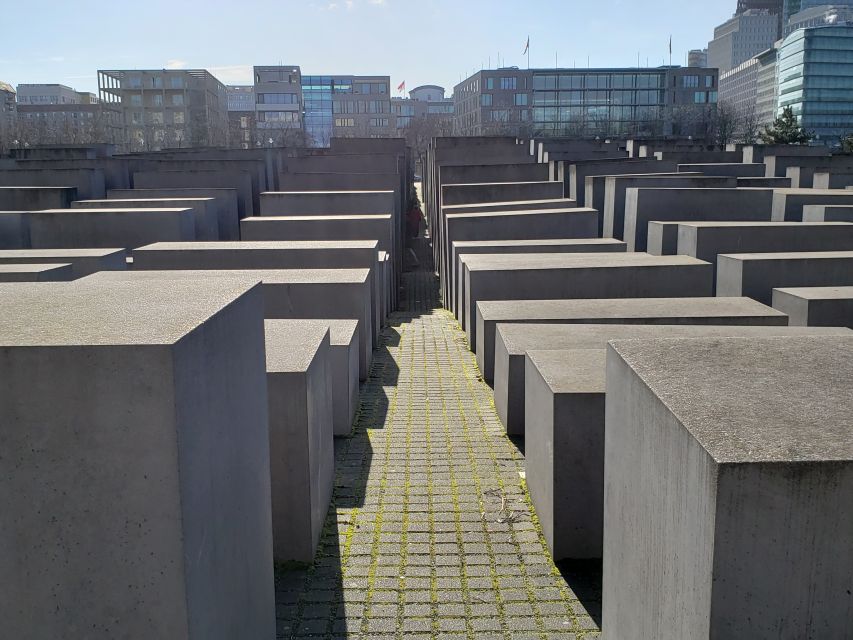
- 2,710 concrete steles: Walk through the Memorial to the Murdered Jews of Europe, a powerful outdoor stop that invites quiet thought.
- Nazi government district: See former government buildings tied to the regime, including the Reich Aviation Ministry and the former Propaganda Ministry area.
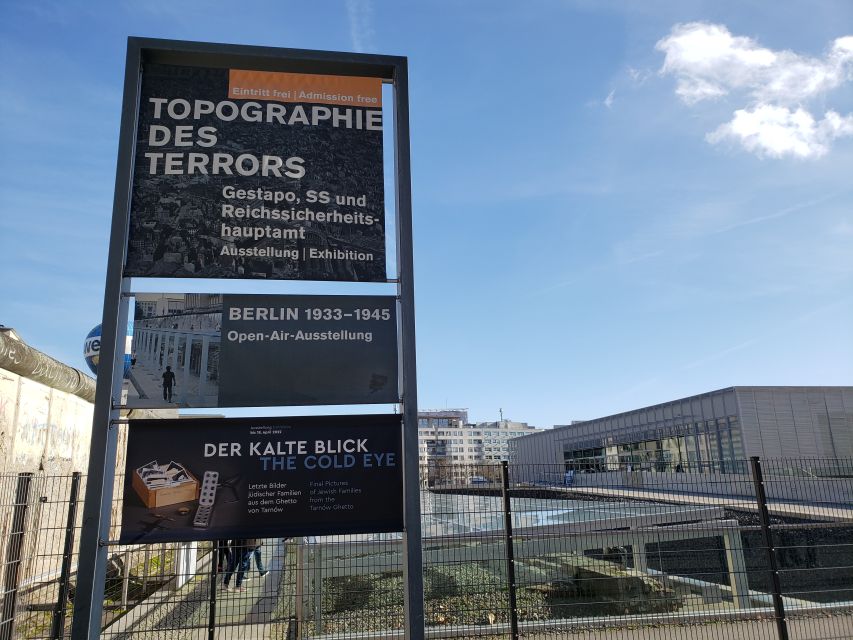
- SS and Gestapo grounds: Visit the site now marked by the Topography of Terror documentation center and open-air exhibition.
- Private two-hour format: You get a guide for your own group, with German or English commentary and room for questions.
- Good central finish: The walk begins at Brandenburg Gate and ends at Topography of Terror, close to major central Berlin sights.
Why this short walk matters in Berlin
Berlin does not present its Nazi past in one enclosed museum. The evidence is spread across streets, office buildings, memorials, empty lots, and fragments of the former Wall. That can make the subject hard to follow on your own. A guide gives you the thread connecting these places.
This tour focuses on the period from the rise of the Nazi Party to the collapse of the Third Reich. Along the way, the guide also places the period in a wider story, from the Teutonic Knights through the Cold War and reunification. That broader frame is useful because Berlin’s 20th-century story did not end in 1945. The city was divided, occupied, rebuilt, and finally reunited.
The route is also a lesson in how power works. You are not only shown a bunker where one dictator died. You see ministries, police offices, propaganda sites, military buildings, and memorials. Together, they show how a government used administration, violence, war, and public messaging to control a country.
The tour has a five-star rating from four recorded bookings, and the guide most often named in the comments is Stefan Knoll. The clearest praise concerns his explanations, his speaking style, and his use of old photographs to show how the places looked during the Nazi period. Those photographs matter in a city where many original buildings were destroyed or altered.
More Third Reich Tours in Berlin
- Berlin: Third Reich and Cold War 2 Hour Walking Tour
★ 4.9 · 6,830 reviews - Berlin’s Best: 2 Hour Walking Tour Third Reich and the Cold War
★ 5.0 · 5,486 reviews - Third Reich Berlin: Hitler and WWII Walking Tour
★ 5.0 · 3,301 reviews
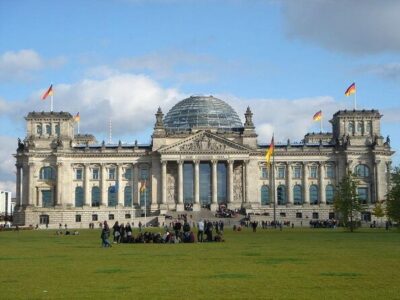
Brandenburg Gate: begin with Berlin’s best-known landmark
Meet your guide in front of the tourist information center at Brandenburg Gate. A sign with your name makes the meeting point easier to spot, though the square can be busy and open, so arrive with a few minutes to spare.
Brandenburg Gate is not simply a photo stop. It sits at the edge of the former government district and near the route of the Berlin Wall. Your guide uses it to place the rest of the walk on a map, explaining how the area changed from imperial Berlin to the Nazi capital, then to a divided Cold War city and finally to modern Germany.
The gate is also a useful starting point because it gives you an immediate sense of scale. Many important sites are close together, but the route crosses open city streets and large memorial spaces. Comfortable shoes are essential, and water is sensible in warm weather.
Soviet War Memorial in Tiergarten
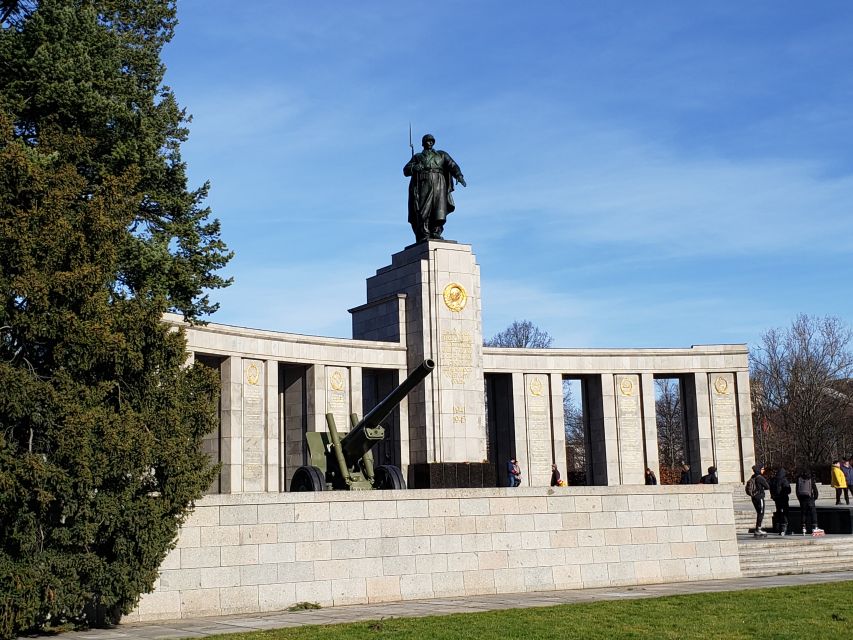
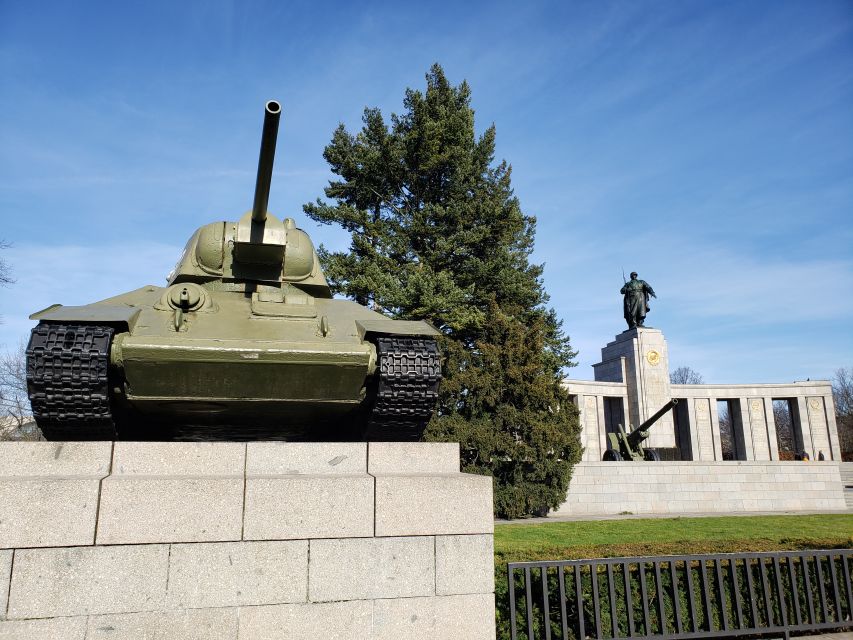
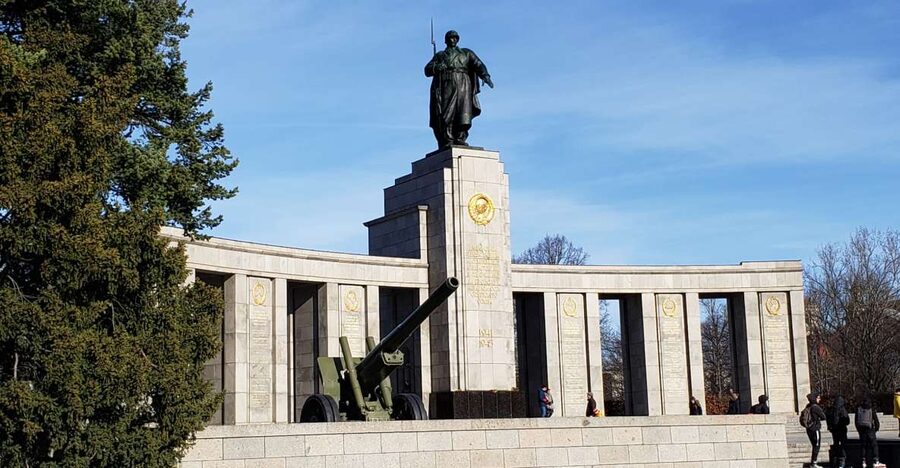
The walk continues toward the Soviet War Memorial in Tiergarten. Its large scale and formal design contrast with the surrounding trees. This is one of the most imposing memorial sites on the route, and it brings the end of the Second World War into view from the Soviet perspective.
The stop helps explain Berlin after 1945. The city was not simply liberated and restored. It was occupied and divided among the victorious powers, with Soviet influence shaping East Berlin for decades. The memorial therefore connects the Nazi collapse to the political division that followed.
I like this part of the walk because it gives you a pause from the dense government district. The trees soften the setting, but the monument remains forceful. Your guide can also help you read the site as part of Berlin’s wider postwar story rather than treating it as an isolated sculpture.
Do not expect an indoor visit here. This is an outdoor guided stop, and its value comes from the explanation and setting. Rain, heat, or cold will affect your comfort, so dress for the day.
The Holocaust Memorial and its 2,710 steles
The Memorial to the Murdered Jews of Europe is made up of 2,710 concrete steles arranged across a large open field. You walk among them while the ground changes beneath your feet and the blocks rise and fall around you.
The design is intentionally spare. There are no long captions on the surface and no simple story told through statues. The guide provides the historical context, while the memorial itself gives you time to think about the scale and absence represented there.
This is a place for quiet attention. It can be tempting to treat the rows as a maze or a photo backdrop, but a respectful visit works better. Stay aware of the memorial’s purpose and listen to the explanation before wandering through the blocks.
The stop is especially valuable on a tour about the Third Reich because it shifts the focus from Nazi institutions to the people murdered by the regime. The former ministries and police offices show how the dictatorship operated. The memorial insists on remembering its victims.
The tour also passes a memorial dedicated to the murdered Roma and Sinti. That addition matters. Nazi persecution targeted more than one group, and this stop widens the story beyond the most familiar sites.
More Walking Tours in Berlin
- Discover Berlin Half-Day Walking Tour
★ 5.0 · 9,624 reviews - Berlin: Discover Berlin Walking Tour
★ 4.9 · 5,998 reviews - Berlin: Hidden Backyards Guided Walking Tour
★ 4.8 · 5,360 reviews - Berlin: Alternative Berlin Walking Tour
★ 4.6 · 1,204 reviews
Hitler’s bunker site and the end of the Third Reich
The bunker site is one of Berlin’s most misunderstood attractions because there is almost nothing to see. The location is identified as the place where Hitler spent the final days of his life, but the bunker itself is not open as a historic attraction. You stand above the former site and learn what happened there.
That lack of a grand ruin is useful. It keeps the focus on facts rather than spectacle. The ordinary surroundings make the site feel unsettling in a quiet way, especially after the scale of the Holocaust Memorial and the state buildings earlier in the walk.
A guide can also correct the myths that have grown around the bunker. The important point is not to recreate Hitler’s final days as drama. It is to understand the collapse of the Nazi government, the destruction of Berlin, and the decision to bury the remains of the regime’s leadership.
This stop is short in physical terms but important in the structure of the walk. You move from the visible machinery of government to the place where that system ended. I would not book this tour expecting an underground visit or preserved rooms. The experience is explanation at an outdoor site.
Former ministries and the machinery of Nazi rule
Several buildings on the route show how the dictatorship relied on normal-looking government offices. You see the former Reich Aviation Ministry, built for Hermann Göring, and the area connected with the former Propaganda Ministry.
These are useful stops because they put Nazi power into an administrative setting. The regime was not run only from military headquarters or dramatic rallies. It depended on ministries, civil servants, police departments, propaganda offices, and paperwork.
The former Reich Aviation Ministry is particularly striking as a reminder of the regime’s military ambitions. The building’s connection with Göring helps your guide explain the relationship between politics, rearmament, and war.
The former Propaganda Ministry area brings another part of the system into focus. Public messaging was not a side project. It helped shape what people saw, heard, and believed. Your guide’s old photographs can help you compare the wartime setting with the streets you see today.
Some buildings have survived because they were reused, while others are gone or marked only by signs and memorial panels. That can frustrate anyone hoping for a perfectly preserved historic district. I see it differently: the mix of surviving structures and missing sites reflects Berlin’s destruction and its long effort to confront the past.
Topography of Terror: where the SS and Gestapo once operated
The walk finishes at Topography of Terror, an open-air documentation center on the former site of the SS and Secret State Police buildings. This is one of the strongest stops for understanding how persecution was organized.
The name refers to an exhibition rather than a grand monument. You see information connected with the institutions that carried out terror, and the setting itself marks the former headquarters of the SS and Gestapo. The location helps link Nazi ideology to arrests, interrogation, deportation, and violence.
Because this is the final stop, you can use the guide’s explanation to tie together the sites you have just visited. The memorials show who was murdered. The ministries show how the regime was administered. Topography of Terror points toward the police and security bodies that enforced it.
The tour ends here rather than returning to Brandenburg Gate. That is practical if you want to continue with Berlin’s museums or visit nearby former Wall sites. It also means you should plan your next stop from Topography of Terror, not from the starting point.
The information center can reward extra time, but entrance is not included in the tour price. If you want a longer museum visit, allow time after the two-hour walk and check the day’s opening details separately.
What the private format adds
At $22 per person, this is a low-cost way to put several difficult sites into order. The value is strongest when you are traveling with two or more people and want a guide focused on your group rather than a large public walk.
Private does not mean that every stop becomes a long lecture. The tour lasts two hours and covers a wide central route, so the guide has to keep things moving. The benefit is the chance to ask questions and request clarification when a site catches your interest.
Stefan Knoll is the guide specifically named in the booking comments. His strengths are clear speaking, engaging explanations, and historical photographs that show the former appearance of the sites. Since guides can vary by date, you should treat Stefan’s participation as possible rather than guaranteed unless your booking confirms it.
The tour is offered in German and English. It is also listed as wheelchair accessible. Because the walk includes outdoor memorials and city streets, weather still matters even when the route is accessible. Bring suitable clothing, comfortable shoes, and water.
Who should book this walk?
I would choose this tour early in a Berlin visit if you want a clear introduction to the Nazi period before visiting more museums. It suits first-time visitors, families with older children, and anyone who prefers places and explanations over a long indoor exhibition.
It also works well for a short stay. In two hours, you see several key sites without spending a full day on one museum. The route is central and begins at Brandenburg Gate, so it can fit alongside other sightseeing.
You may want something longer if you already know Berlin’s Nazi history well or want detailed time at each documentation center. The guide can explain the setting, but this is not a full-day research tour. You should also choose another experience if you prefer a bus ride, extensive indoor access, or a preserved bunker.
The subject is heavy, and the route does not soften it. That is appropriate, but you may want to leave room afterward for a quieter activity. The final stop at Topography of Terror gives you the option of continuing with more information, though the walk itself ends after two hours.
Should you book it?
Book this private walk if you want Berlin’s Nazi-era sites explained as one connected story rather than visited as scattered points on a map. The strongest features are the small private format, the central route, the Holocaust Memorial, the bunker site, and the guide’s use of historical photographs.
At $22 per person, it offers good value for a focused introduction, especially for a private group. Just keep your expectations practical: you will see sites and hear their context, not enter Hitler’s bunker or spend a long time inside every museum. Wear good shoes, prepare for outdoor weather, and consider staying at Topography of Terror after the tour if you want more detail.
FAQ
Where does the tour begin?
The tour begins at Brandenburg Gate, in front of the tourist information center. Your guide will have a sign with your name.
Where does the tour finish?
The walk finishes at the Topography of Terror documentation center.
How long does the tour last?
The tour lasts two hours.
Is the tour private?
Yes. It is offered as a private walking tour for your own group.
What languages are available?
The live guide is available in German and English.
Is entrance to museums included?
No. The tour includes the guide and private walking tour, but entrance to attractions is not included.
Just added in Berlin
- Berlin & The Third Reich Private Guided Tour★ 5.0 · 3 reviews
- Third Reich Quest Experience in Berlin★ 4.5 · 7 reviews
- Private Analogue Photography Experience in Berlin★ 5.0 · 3 reviews
- Berlin Urbex Adventure and History Tour★ 5.0 · 9 reviews
- The Beauty of Berlin by Bike: Private Tour★ 5.0 · 59 reviews
- Berlin: Guided Bike tour of the Berlin Wall and Third Reich★ 5.0 · 160 reviews
- Berlin Third Reich & Cold War Walking Tour With A Guide★ 5.0 · 7 reviews
- Shared Underground Party Tour in Berlin★ 4.5 · 9 reviews
Third Reich Tours, compared.


Berlin’s Best: 2 Hour Walking Tour Third Reich and the Cold War
Read our review →
Third Reich Berlin: Hitler and WWII Walking Tour
Read our review →
Walking Tour of Former Nazi Party Rally Grounds
Read our review →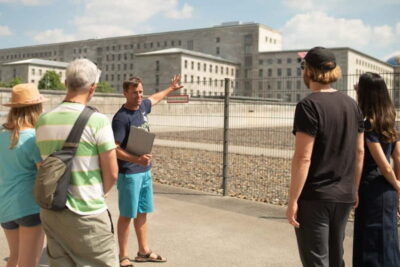
Berlin Third Reich Sites: Half-Day Walking Tour
Read our review →Browse the lists this tour appears in