
Reviewed · COLOGNE TOURS
Bonn: Former Government District Private Tour
Bonn’s former government district tells the story of West Germany in concrete, stone, and carefully placed monuments. This private walk takes you from Museum Koenig past the residences and offices of the Bonn Republic to the UN Campus and the small Bundesbüdchen kiosk, a surprisingly cheerful finish to a serious political story.
I like the private format, which lets you ask questions and set the pace within the 90-minute limit. I also like the route’s mix of major landmarks and smaller details, especially the Adenauer monument, the original corner-store-style Bundesbüdchen, and the distant views of Bonn’s tall Langer Eugen and Post Tower.
The main limitation is clear: this is almost entirely an outdoor walk, with only a brief look into Museum Koenig’s foyer. You also need German to get the full value from the guide, and children under 16 are not accepted.
Key points to know before booking
- A private walk through the Bonn Republic: The tour is reserved for your group, with a maximum booking size of two people at the advertised price.
- Adenauer takes center stage: The Konrad Adenauer monument at Bundeskanzlerplatz receives about 15 minutes of explanation.
- Mostly outdoor sightseeing: You pass major political buildings rather than entering them.
- Museum Koenig is the starting point: You get a short look at its bright entrance hall, but this is not a museum tour.
- The Bundesbüdchen is the memorable finish: This small kiosk marks the end of the route near the former government quarter.
- German only, with strong historical content: The guide explains the postwar political era in German, using humor and detail.
Why Bonn’s government quarter matters
Bonn served as the capital of West Germany during the Cold War and the decades after the Second World War. The former government district was the working center of a new democratic state, even though Bonn never had the grand imperial scale of Berlin.
That modesty is part of the appeal. You are not touring a palace complex or a dramatic fortress. You are walking among offices, diplomatic residences, monuments, and modern towers that helped shape the Federal Republic.
I find this kind of tour useful because it gives Bonn a political frame. Without that frame, Adenauerallee can look like a pleasant avenue and the large government buildings can seem like anonymous offices. With a guide, the route connects them to the people and institutions that rebuilt West Germany.
The tour is especially helpful if you have already seen Bonn’s old town and want to understand the city’s 20th-century role. It also works well at the start of a Bonn visit, since you leave with a map of the former government area and a basic sense of how its major buildings fit together.
A few more half-days in Bonn worth comparing
- Bonn: 24-Hour Hop-On Hop-Off Sightseeing Bus Ticket
★ 4.5 · 454 reviews - From Bonn: Rhine River to Linz Sightseeing Boat Tour
★ 4.5 · 358 reviews - Bonn: 1.5-Hour River Cruise on the Rhine
★ 4.5 · 109 reviews
Starting at Museum Koenig
Meet your guide in front of Museum Koenig. The museum is a practical starting point because it sits at the edge of the former government district and gives the walk an immediate sense of place.
You spend roughly 20 minutes around the museum, followed by another short guided look of about five minutes. The one indoor moment is a glimpse into the bright hall from the foyer. That small detail matters: you get a taste of the building without turning the experience into a museum visit.
Set your expectations correctly. You are not paying for admission, a full natural-history presentation, or time with the museum collections. The museum serves mainly as an architectural and geographic opening to the political quarter.
From here, the route continues on foot along Adenauerallee. The distances between stops are short, usually one to four minutes, so you spend most of the time listening rather than marching from one point to another. Comfortable clothing is the only specific item recommended, but sensible walking shoes still make good sense.
Walking along Adenauerallee
Adenauerallee gives the walk its central spine. The avenue links Museum Koenig with the former government buildings and helps you see how Bonn’s capital district was arranged.
The guide turns toward the area of the Federal Press Office and the present-day United Nations Plaza. This is where the story moves from the early federal republic toward Bonn’s later international role.
You will not simply check off buildings. The value lies in hearing how the district developed and in learning what each structure represented. The walk is short enough to keep the information manageable, but the subject has enough political detail to reward close attention.
At several points, you look toward buildings rather than going inside. That is a strength if you like urban history and architecture, but a weakness if you want interior access. Bring questions about the postwar government, Bonn’s capital status, or the role of the buildings you pass. A private group makes those questions easier to ask than on a large public tour.
Villa Hammerschmidt and Palais Schaumburg
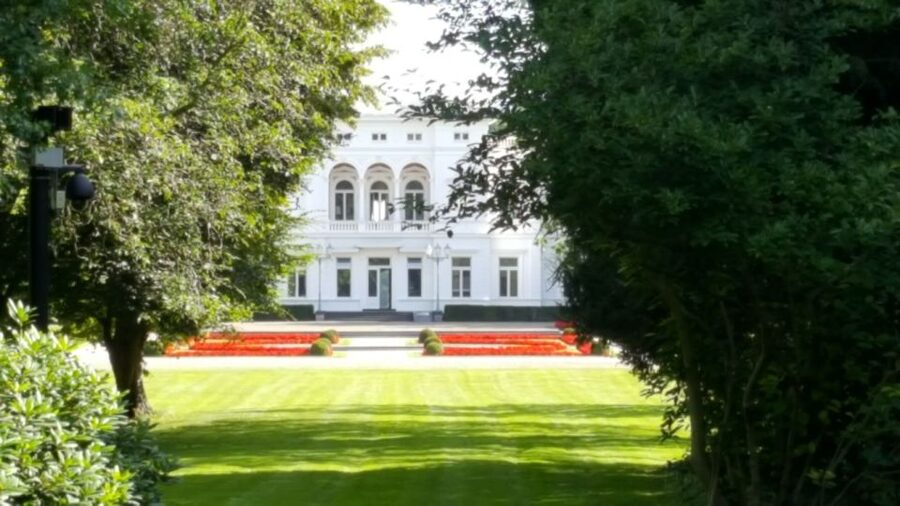
Villa Hammerschmidt appears as a pass-by stop, with about eight minutes devoted to the site. It is linked to the early federal leadership and helps show the residential side of the capital district.
You then continue toward Palais Schaumburg, another important address in the former government quarter. The stop lasts about five minutes and is also viewed from outside.
These buildings are valuable because they give the political story a human scale. Government is not only plenary halls and ministries. Leaders needed homes, offices, meeting rooms, and formal spaces for the new republic to function.
Still, you should not expect a grand interior tour. The buildings are part of the street experience, and your guide supplies the context from outside. If you prefer seeing rooms, exhibits, and original furnishings, you may want to pair this walk with a separate museum visit.
A short stop described as a small special detail appears between the major buildings. Its exact identity is not specified in the tour information, so the safest expectation is a brief guide-led observation rather than a major attraction. That kind of pause can be useful when you want the story to include the less obvious corners of the district.
Same city, a completely different kind of day:
- Bonn: Evening Sightseeing Cruise on the Rhine River
★ 4.5 · 78 reviews - Panorama tour between Bonn and Königswinter
★ 4.7 · 63 reviews - Bonn: Private City Highlights Walking Tour
★ 4.9 · 35 reviews - From Bonn: Christmassy Advent Cruise on the Rhine
★ 4.7 · 19 reviews
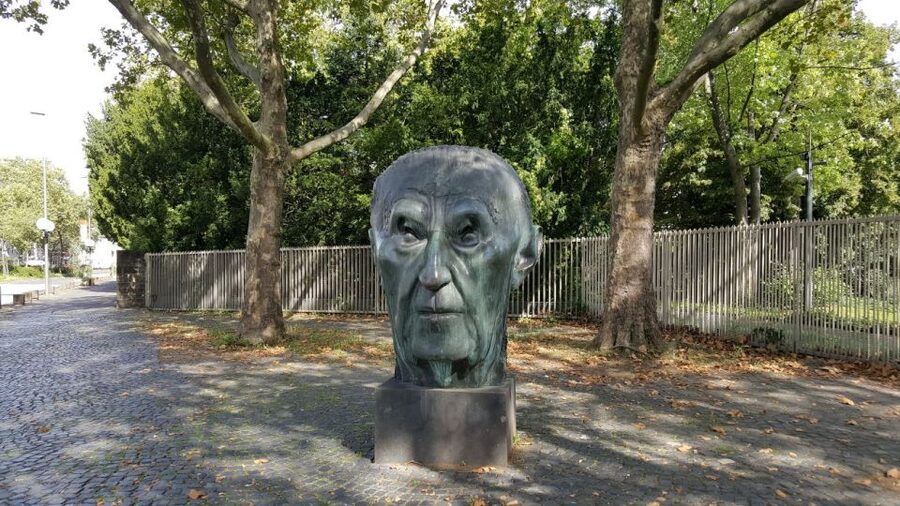
The Adenauer monument at Bundeskanzlerplatz
The longest individual sightseeing stop comes at the Konrad Adenauer monument, with about 15 minutes of explanation. This is the political heart of the walk.
Adenauer was the first chancellor of West Germany, and his presence at Bundeskanzlerplatz gives the route a clear main character. The guide uses the monument as a way into the early years of the Federal Republic and the choices that shaped Bonn’s role as capital.
I would pay close attention here, even if monuments are not normally your favorite part of sightseeing. The stop connects a person, a location, and a period of German history in one place. It also helps explain why Bonn became associated with a particular style of government: cautious, provisional at first, and gradually more established.
The tour’s tone seems to balance seriousness with humor. One recent German review described the guide as highly entertaining and educational, while another praised the humor and the amount learned about postwar Germany. That combination is important for a subject that can quickly become a list of dates and institutions.
Views toward the Chancellery and modern Bonn
After Bundeskanzlerplatz, the walk reaches a viewpoint with about five minutes for sightseeing. From here, you get distant views of several buildings tied to the former government district.
These include Villa Hammerschmidt, Palais Schaumburg, and the former Federal Chancellery. You also look toward the House of History and Bonn’s two best-known modern towers, Langer Eugen and the Post Tower.
The towers add a useful contrast. Bonn’s government era was not frozen in the low, formal buildings of the early republic. The skyline also records later development and the city’s continuing role after the federal government moved to Berlin.
The views are distant, so do not expect to walk through the Chancellery or enter the House of History on this route. You get orientation and explanation instead. I like that approach for a short tour because it shows how the buildings relate to each other, something you often miss when visiting them one at a time.
You will want to check the weather before booking. Much of the tour depends on being outside and looking across open spaces. A recent booking took place in unpleasant weather, yet the group still found the walk rewarding, which suggests the guide can keep the story moving. Even so, a dry day will make the views and the walking much more comfortable.
The UN Campus and the former Plenary Hall
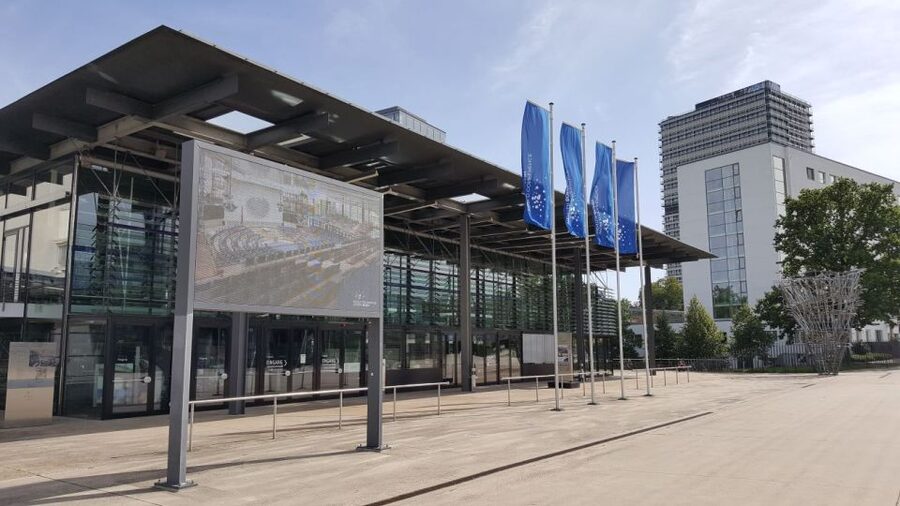
The route continues toward the Bonn-Bundeshaus quay and the former Plenary Hall. Each receives about eight minutes of guided attention, and both help explain Bonn’s transition from national capital to international center.
The United Nations presence gives the former government district a second chapter. Bonn is no longer Germany’s federal capital, but the area continues to carry political and international functions.
The Plenary Hall is treated as a pass-by stop, so you view it from outside. The guide’s job here is to explain what the building meant during Bonn’s capital years and how it fits into the surrounding district.
This section is likely to interest anyone who wants more than a monument walk. You see how democracy was practiced in physical spaces, where parliamentary work, press activity, executive offices, and public institutions sat close together.
The route remains easy to follow. Walking sections are short, and the tour lasts only 90 minutes. That makes it a good choice for a morning or afternoon addition rather than a full day devoted to political history.
Finishing at the Bundesbüdchen
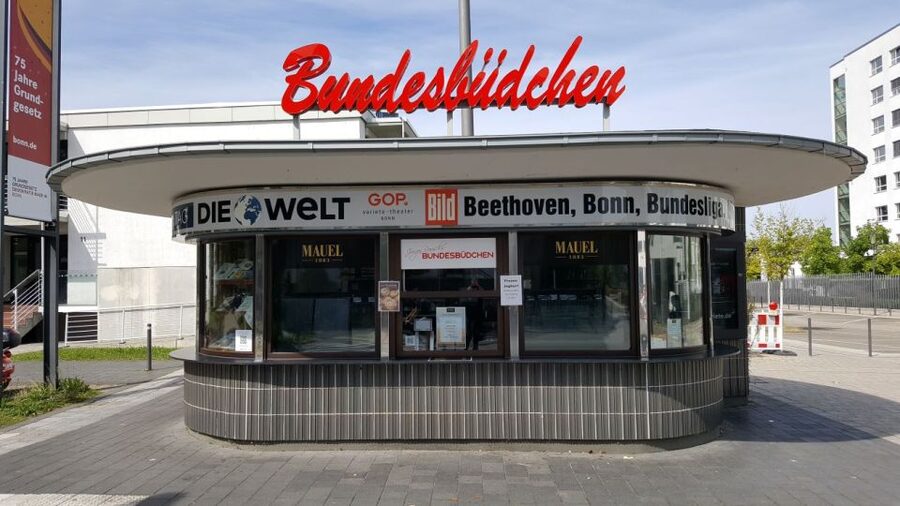
The Bundesbüdchen gives the tour its most unusual ending. This small corner-store-style kiosk once served as a familiar checkpoint in the government district, and it provides a lighter final image after all the formal buildings and political names.
You spend about six minutes here. The stop is not important because it is grand. It is important because it shows the everyday side of a government quarter. People working around ministries and political institutions needed ordinary places to pause, buy something, and meet.
I like the contrast. The tour begins with a museum and passes monuments, residences, offices, and parliamentary sites. It ends with a small neighborhood fixture. That helps keep Bonn’s political past from feeling too distant or polished.
After the final stop, the return to Museum Koenig takes about 10 minutes by subway. The meeting point and return point are therefore connected, which is handy if you leave luggage, meet someone afterward, or have another Bonn activity planned near the museum.
What the 117 dollar price means
The advertised price is $117 per group of up to two people. For two people, that works out to $58.50 each for a private 90-minute tour. For one person, the same group price is much less attractive, since you pay the full amount alone.
The value comes from privacy and the guide’s focus, not from admission tickets. You are paying for a personal explanation of a specialized area, with no large-group crowd and no need to follow a set public-tour pace.
I think the price makes the most sense for a pair of adults who care about German political history and want a private guide. It is less compelling if you only want a quick look at Bonn’s architecture or hope to enter several buildings, since most of the sights are viewed from outside.
Free cancellation up to 24 hours before the start and the option to reserve without paying immediately make the booking less rigid. The tour is also wheelchair accessible, though the route includes outdoor walking and short transfers, so you should still consider your own mobility needs.
Who should book this Bonn walk
This tour fits you best if you:
- Want a focused introduction to Bonn’s years as West Germany’s capital
- Enjoy political history, architecture, and city walks
- Prefer a private guide to a large group
- Can follow a tour in German
- Are at least 16 years old
- Do not need extensive indoor access
- Want a 90-minute activity that leaves room for other Bonn plans
I would especially recommend it to adults visiting Bonn for the first time, history-minded couples, and anyone who has seen the city center but wants to understand the former capital district.
I would hesitate if you want a bilingual tour, a child-friendly outing, or a museum-heavy experience. The language is German only, the tour excludes children under 16, and the sole indoor look is the foyer of Museum Koenig.
The strongest praise has focused on the guide’s humor, clear teaching, and ability to make postwar German politics enjoyable. The perfect overall rating from 127 bookings supports that impression, though the experience will still depend on your interest in the subject and your comfort with outdoor sightseeing.
My booking advice
Book this walk if you want the story behind Bonn’s government quarter, not just photographs of its buildings. The Adenauer monument, the former Chancellery, the Plenary Hall, and the UN Campus make sense together here, and the private format gives you room to ask questions.
Skip it if you need interiors, English, or a family activity for younger children. For the right audience, though, $117 is a fair private-tour price for two people, especially when you value a focused German guide and a compact route that ends with the friendly oddity of the Bundesbüdchen.
FAQ
Where does the tour begin?
The meeting point is in front of Museum Koenig in Bonn.
How long does the tour last?
The tour lasts 90 minutes.
What language is the tour conducted in?
The live tour guide speaks German. German is the only language specified.
Is the tour private?
Yes. It is an exclusive private group tour, priced for a group of up to two people.
Is the tour wheelchair accessible?
Yes, the activity is listed as wheelchair accessible.
Can children join the tour?
No. The tour is not suitable for children under 16.
Do you enter the government buildings?
The tour is mainly outdoors and passes the major buildings. The only indoor glimpse described is a brief look into the foyer and bright hall of Museum Koenig.
Just added in Bonn
- Panorama tour between Bonn and Königswinter★ 4.7 · 63 reviews
- RhineRiverBoatTour from Bonn to Königswinter with Live Guide★ 4.3 · 13 reviews
- Bonn: Sunset Boat Tour on the Rhine★ 4.7 · 11 reviews
- Bonn: Sunday Brunch Buffet with Cologne live music★ 5.0 · 5 reviews
- Bonn Regio WelcomeCard with Guidebook★ 4.3 · 15 reviews
- Bonn: Private Guided Walking Tour★ 4.3 · 15 reviews
- Bonn : Private Walking Tour With A Guide ( Private Tour )★ 4.5 · 9 reviews
- Bonn: Private City Highlights Walking Tour★ 4.9 · 35 reviews
Cologne Tours, compared.
Virtual Reality Time Travel Experience Ticket
Read our review →
The Night Watchman Old Town Walking Tour in German
Read our review →
Browse the lists this tour appears in