
Reviewed · COLOGNE TOURS
Cologne: Virtual Reality Time Travel Experience Ticket
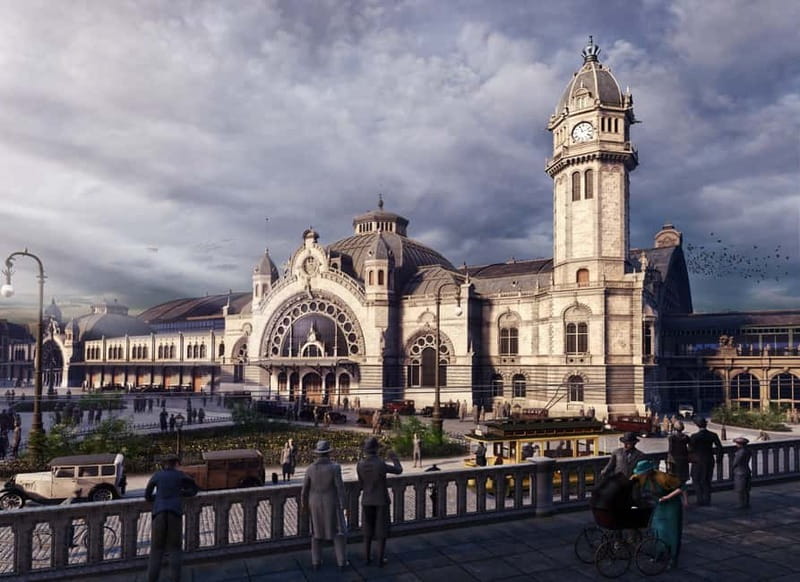
Cologne’s past comes alive on a virtual streetcar ride through 1926, when the cathedral surroundings, old main station, city hall, and theater district looked very different. You’ll see the city before World War II destroyed much of it, then finish amid a colorful Carnival scene at Neumarkt.
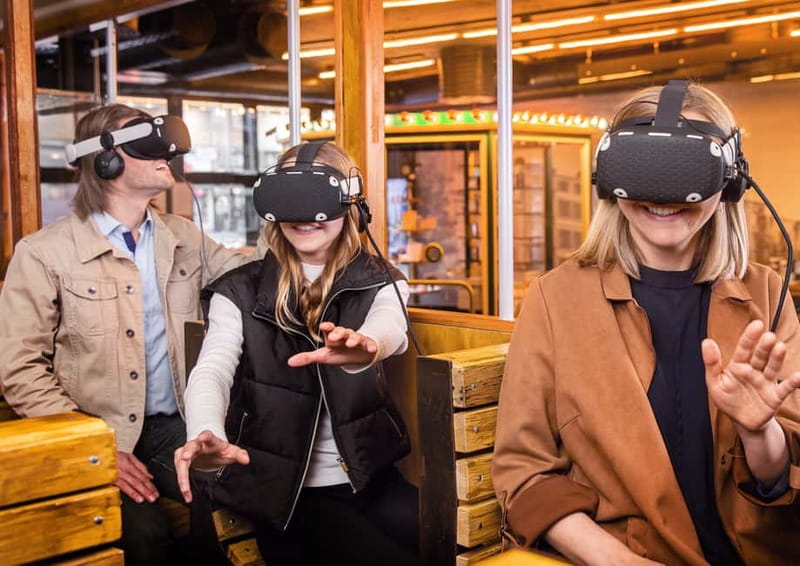
I like the smart three-part design: the 15-minute cinema show gives you context, while the hatter’s shop adds a hands-on human story. The best part is the polished VR ride, with a full 360-degree view and enough movement to feel like you’re aboard an electric tram.
The tradeoff is the short running time. Forty-five minutes works well for families and rainy afternoons, but the hat-shop section can feel rushed, and the experience only covers the 1920s rather than showing how Cologne changed after the war. Language also matters, so confirm your English departure if that is important to you.
Key points at a glance
- See Cologne before World War II: The VR ride recreates the old cathedral area, main station, Schauspielhaus theater, city hall, and other lost or altered places.
- Meet Tessa and Pitter: A fictional hatter and streetcar driver guide the story through postwar Cologne, British occupation, and the Spanish flu.
- Three stops in 45 minutes: You get a period film, a decorated hat shop, and a 360-degree tram journey.
- Try the 1920s fashion: Original hats and hat-making items from the Diefenthal family help explain why headwear mattered so much.
- Good indoor choice: The attraction suits a wet day, and the central setting makes it easy to fit between other Cologne sights.
- Plan for a visual presentation: The experience is mostly visual, works for people wearing glasses, and is not suitable for children under six.
Cologne in 1926, before the city was lost
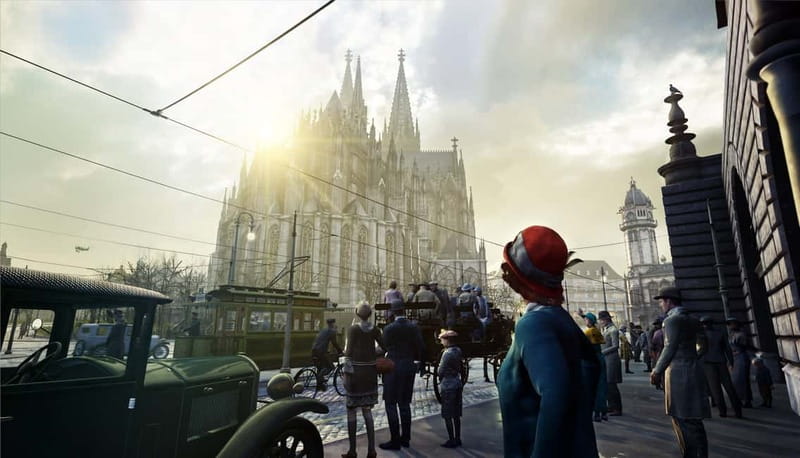
The central idea is simple and effective: take you back to a Cologne that no longer exists. The story focuses on the years after the First World War, a period marked by British occupation, the Spanish flu, changing social habits, and a growing appetite for cinema, fashion, and public entertainment.
This is not a traditional walking tour. You stay indoors and move through three staged sections, with staff helping you along. The final VR ride provides the broadest view of the city, while the first two parts explain how ordinary people lived and dressed.
I think the choice of 1926 is especially useful because it shows Cologne before the destruction of World War II. You are not simply looking at old photographs. You see streets and buildings arranged as a working city, with the tram carrying you through the center.
The story follows Tessa, a hatter with an urgent special order, and Pitter, a Cologne streetcar driver who may be able to get her delivery to Neumarkt on time. The plot is light and accessible rather than academically complex. That is a strength for families, though some adults may find parts of the script a little corny.
A few more half-days in Cologne worth comparing
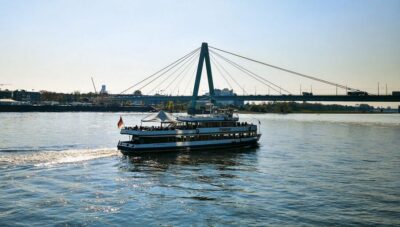
- Cologne: Panoramic City Cruise
★ 4.3 · 5,698 reviews - Cologne: Brewery Tour with 3 Kölsch Beer Tastings
★ 4.7 · 3,108 reviews - Cologne: Top Sights Rhine River Cruise – Skyline Tour
★ 4.4 · 3,030 reviews
The cinema: a 15-minute introduction to old Cologne
The experience begins in a recreated Lichtspielhaus, or movie theater. In the 1920s, cinemas were not only places to watch films. They were grand social spaces and an important source of news and information.
You take a seat with the fine society of the period and watch a short film about Cologne in the 1920s. It runs for about 15 minutes and sets up the historical background before you put on the VR equipment.
This section helps you understand the period without requiring much prior knowledge. You get a quick sense of the social mood after the First World War and the major forces shaping the city. It is also a good pause before the more active parts of the visit.
The limitation is that the film is brief. If you want a detailed account of Cologne’s politics, architecture, or daily life, you will need another source. Think of it as a lively orientation, not a full lecture.
If you book in English, pay attention to the language of the presentation. English and German are offered, but scheduling changes have occasionally meant that an introduction or film was shown in German. Confirm the language at the start and speak up promptly if it does not match your booking.
The hatter’s shop: fashion with a personal story
The second stop takes you into the Riedschneider family hat shop, decorated to suggest a working business from the period. Here, Tessa explains the social role of hats and the craft behind them.
In the 1920s, hats were part of everyday clothing for men and women. The style you chose could signal your status, profession, personality, or occasion. That makes this room more than a collection of old clothing. It shows how a small object could carry a surprising amount of social meaning.
The shop includes original items from the Diefenthal family of Cologne hat makers. These pieces give the display a local connection, rather than presenting fashion as a vague theme from somewhere else. You can also try on hats, which adds a playful, physical element to an otherwise visual visit.
I would allow yourself time to look closely here, even though the schedule gives the stop roughly 15 minutes. Some people find this the most charming part because it feels personal and hands-on. Others may wish the staff had more time to explain hat-making techniques and let everyone try more pieces.
The shop also carries the story forward. Tessa has an important delivery to make at Neumarkt, and Pitter’s streetcar becomes part of the solution. The plot gives the next section a reason to exist, even if you are mainly here for the historical setting.
The VR streetcar: the main attraction
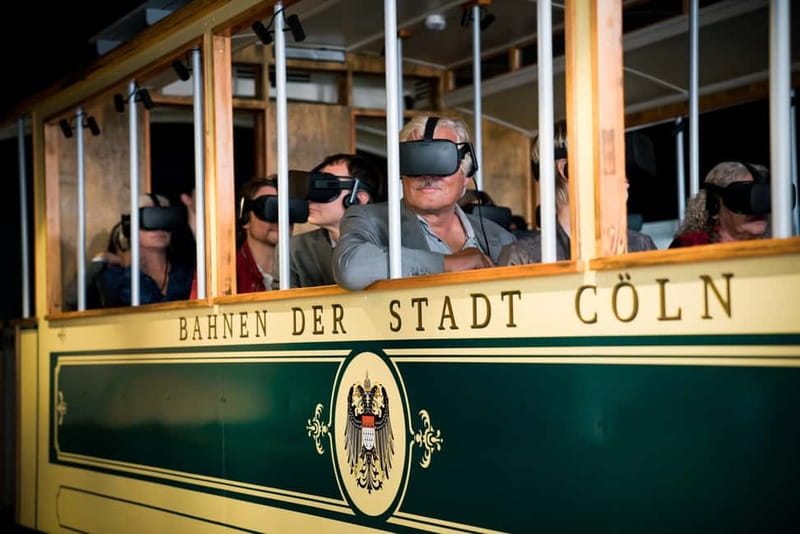
The final 15 minutes are the main event. You put on VR goggles and travel aboard the first electric Cologne streetcar in 1926.
The ride gives you a 360-degree panoramic view, so you are not limited to whatever appears directly in front of you. Look around to take in the streets, buildings, and passing details. The sensation is closer to sitting inside a moving scene than watching a flat historical film.
The route includes Cologne Cathedral and its surroundings as they looked at the time, the old main train station, the Schauspielhaus theater, city hall under Konrad Adenauer, and other parts of the city that have disappeared or changed beyond recognition.
This is where the attraction earns much of its $23 price. A modern visit to Cologne can show you the cathedral, Roman remains, and rebuilt streets, but it cannot show you the city as a whole before wartime destruction. The VR ride connects familiar places with their earlier forms.
The trip ends at Neumarkt during Carnival, with a final burst of music, color, and activity. It is a cheerful finish to a story that has touched on war, occupation, illness, and social change.
The ride is mostly visual, so you do not need to follow a complicated set of instructions. It is suitable for people who wear glasses. If you are sensitive to motion or virtual reality, the available information does not specify how intense the movement feels, so consider that before booking.
Same city, a completely different kind of day:
- Cologne: Chocolate Museum Entrance Ticket
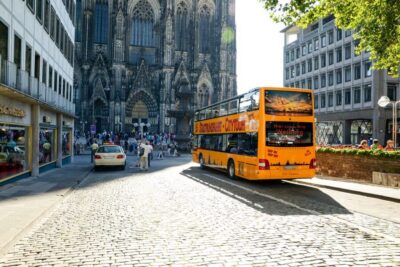
★ 4.4 · 2,790 reviews - Cologne: 24h Hop-On Hop-Off Sightseeing Bus Ticket
★ 4.3 · 2,735 reviews - Cologne: Melaten Cemetery Life, Love and Death Tour
★ 4.9 · 2,728 reviews - Cologne: The Night Watchman Old Town Walking Tour in German
★ 4.6 · 1,395 reviews
What the historical setting gets right
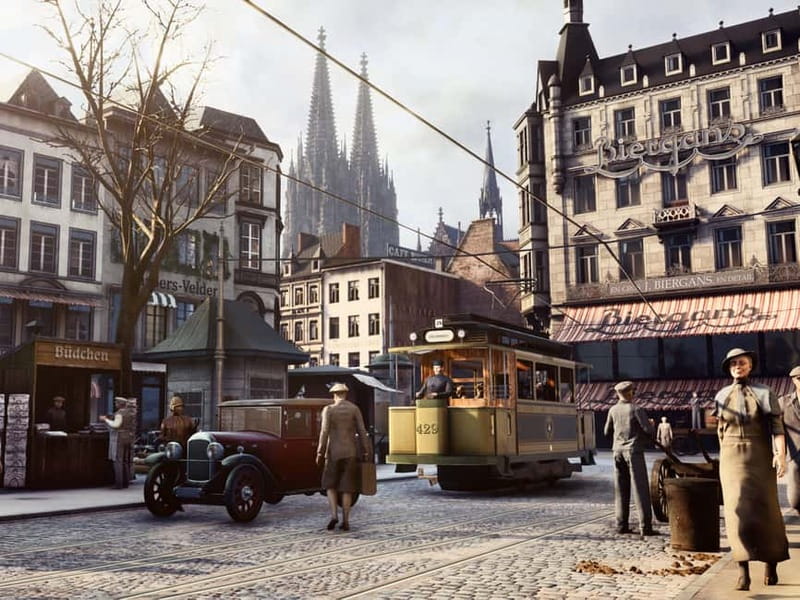
The attraction works best when it links major events to normal routines. The British occupation and Spanish flu are important context, but the hat shop and streetcar show how those forces affected daily life.
That balance keeps the presentation from becoming a list of dates. You see a city where people went to cinemas, wore carefully chosen hats, rode electric trams, attended Carnival, and moved through public spaces that later changed forever.
The use of Tessa and Pitter also makes the subject easier to follow. Their story gives children a clear thread, while adults can focus on the buildings, clothing, and social details around them.
Still, the experience offers only one period. If you hope to see Cologne develop from the 1920s through wartime destruction and postwar rebuilding, you may leave wanting a longer timeline. The attraction gives you a focused glimpse, not a complete history of the city.
Is 45 minutes enough?
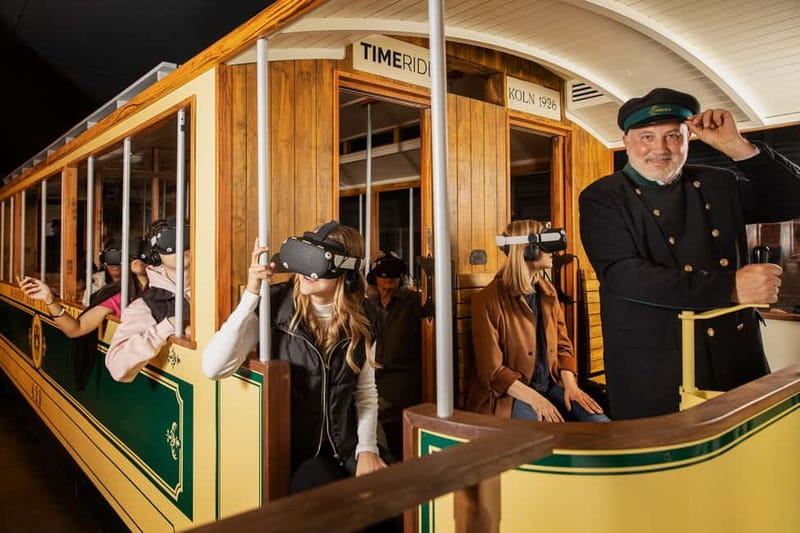
For many visitors, yes. The compact format makes this easy to fit around a cathedral visit, museum stop, or meal. Families in particular may appreciate the pace, since the experience does not ask children to stand through a long lecture.
The three sections are each about 15 minutes, which gives the visit a clear rhythm. You begin seated, move into the hat shop, then finish with the more exciting VR ride.
That structure also explains the main criticism: the visit can feel rushed. The hat shop has enough detail to reward a slower look, and the VR route may leave you wishing for more streets or more historical periods.
I would treat the 45 minutes as an advantage if you want a compact indoor activity. If this is the main historical attraction on your Cologne itinerary, you may find it too short on its own.
Price, value, and who should book
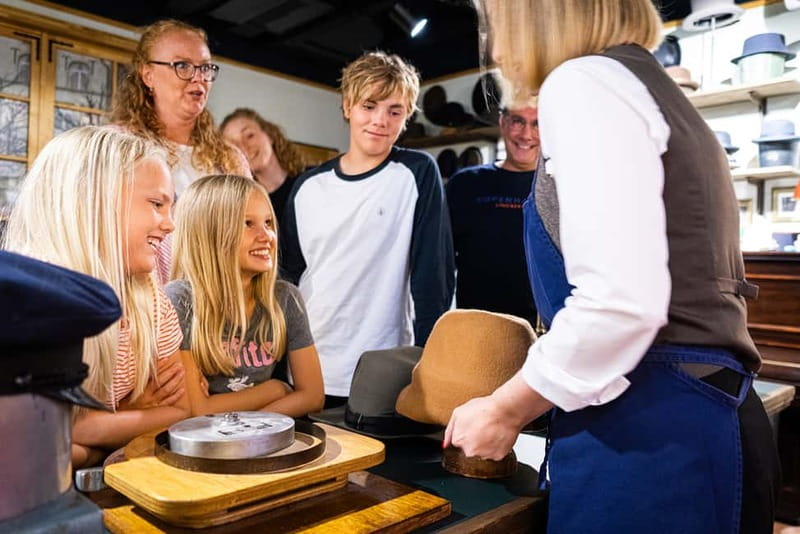
At $23 per person, the ticket is not the cheapest short attraction in Cologne. The value depends on what you want from it.
You are paying for a staged presentation, staff assistance, technical equipment, a historical film, original hat-related objects, and a VR city ride. The strongest value comes from the view of old Cologne, especially if you are interested in places that were destroyed or heavily altered.
I think the price is fair for visitors who enjoy technology and want more than static museum displays. It is also practical for families because the format is short and the hat try-on gives younger children something active to do.
You may find it less worthwhile if you want a long guided history lesson, extensive costume interaction, or a broad timeline from medieval Cologne to the present. The experience is light, visual, and theatrical.
The attraction is wheelchair accessible, with space for one wheelchair per tour. Pets are not allowed, flash photography is not permitted, and there may be a wait at the entrance. Children under six cannot take part.
English and German are available, and staff are described as friendly and helpful. Still, language delivery can affect the experience, so check the scheduled language rather than assuming every part will be presented in English.
Free cancellation is available up to 24 hours before the activity, and you can reserve now and pay later. Those policies are useful if your Cologne plans are still shifting.
Practical tips for getting the most from it
Arrive ready to look around. The VR ride is panoramic, so turning your head matters. Do not stare only ahead, or you will miss the streets and landmarks placed to the sides.
If the hat shop interests you, use that section to ask questions. The objects and costume details are easy to enjoy quickly, but the craft and social meaning become more interesting when you slow down.
Wear your glasses if you need them. The equipment is designed to accommodate glasses, so there is no reason to leave them behind.
Keep your expectations clear. This is a 45-minute indoor attraction, not a full-day historical program. You will get a sharp look at one moment in Cologne, with the VR ride as the main payoff.
The attraction can work well on a rainy day because the entire presentation takes place indoors. Its central Cologne setting also makes it a convenient add-on to a day of sightseeing, though the exact location and transport details should be checked when booking.
Should you book Cologne’s VR time travel experience?
Book it if you want a short, entertaining way to see prewar Cologne, especially if you like VR, historic transport, or old city views. The streetcar ride is the reason to go, while the cinema and hat shop provide useful context and variety.
I would also recommend it for families with children over six, visitors who need an indoor plan, and anyone curious about how familiar Cologne landmarks once looked. The staff’s friendly approach and the chance to try on period hats add warmth to the technology.
Skip it if you want detailed historical analysis, a longer ride, or a full story of Cologne across several centuries. At $23, it is best viewed as a polished 45-minute supplement to your sightseeing, not a replacement for the city’s museums and historic sites.
FAQ
How long does the Cologne VR time travel experience last?
The experience lasts about 45 minutes. The cinema, hatter’s shop, and VR streetcar ride each take roughly 15 minutes.
What does the VR ride show?
The VR ride takes you through Cologne in 1926 aboard the first electric Cologne streetcar. You see the cathedral surroundings, old main train station, Schauspielhaus theater, city hall led by Konrad Adenauer, and other historic locations.
Is the experience available in English?
Yes. The experience is offered in English and German. Confirm the scheduled language when booking, since the language of an introduction or film can occasionally differ from the original booking.
Can people who wear glasses use the VR equipment?
Yes. The experience is suitable for people who wear glasses.
Is the attraction wheelchair accessible?
Yes, it is wheelchair accessible. The provider has space for one wheelchair per tour.
Are children allowed to take part?
Children under six are not permitted. The supplied information does not give a maximum age or a specific child ticket policy.
Are food and drinks included?
No. Food and drinks are not included in the ticket.
Can I cancel the booking?
You can cancel up to 24 hours in advance for a full refund. A reserve-now, pay-later option is also available.
Just added in Cologne
- The rather unknown Melaten★ 4.9 · 26 reviews
- Rickshaw Glühwein Ride★ 4.6 · 24 reviews
- Informative and fun brewery tour in German, public★ 4.9 · 47 reviews
- Public brewhouse tour Cologne in English★ 4.9 · 154 reviews
- Private photoshoot in Cologne★ 5.0 · 5 reviews
- Panorama tour between Bonn and Königswinter★ 4.7 · 63 reviews
- Cologne: Old City Guided Walking Tour★ 4.9 · 63 reviews
- Cologne-Nippes: Gourmet wine tasting with cheese platter★ 4.6 · 26 reviews
Cologne Tours, compared.
The Night Watchman Old Town Walking Tour in German
Read our review →
Browse the lists this tour appears in