
Reviewed · THIRD REICH TOURS
Nuremberg Third Reich Tour in Spanish
Nuremberg’s Nazi past is easier to understand when you see how it grew from older layers of power, religion, antisemitism, and civic pride. This three-hour Spanish-language walk links medieval landmarks with the Nazi rallies, the destruction of the Jewish community, the war, and the postwar trials.
I like the route for two clear reasons: it visits nine meaningful city-center stops, and it ends with the Street of Human Rights, giving the story a strong moral turn rather than leaving you with only Nazi spectacle. I also like the price, about $19.70 per person, for a guided walk of this length.
The main consideration is pace. You cover a lot of ground and history in three hours, with some stops lasting only 10 or 15 minutes. If you want long visits inside museums or churches, this is not that kind of tour.
Key points to know before you book
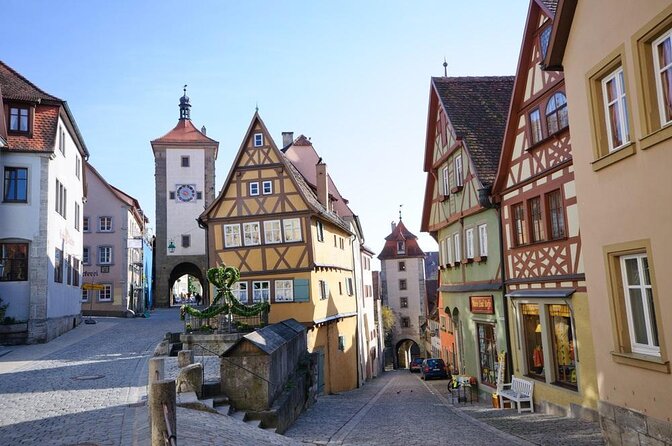
- A Spanish-language route from medieval Nuremberg to the Nuremberg Trials: The tour connects centuries of history instead of treating the Third Reich as an isolated subject.
- Federico is the named guide: He is described as especially lively, flexible, and well prepared, which matters when the subject is heavy and information-heavy.
- Nine central stops, all with free admission: You pay for the guiding, not separate entry tickets along the route.
- A small enough maximum group of 30 people: That is not a private tour, but it should be more manageable than a very large walking group.
- The route begins at Hauptmarkt at 3:30 pm: It finishes at the Street of Human Rights near the central train station, about a 10-minute walk from the starting point.
- Free cancellation up to 24 hours before departure: Poor weather or an insufficient number of bookings can also lead to a new date or a full refund.
Why Nuremberg became a Nazi showcase
The tour begins in the old center, but its subject reaches far beyond medieval buildings. Nuremberg had long held political importance in the Holy Roman Empire. Imperial assemblies, known as Diets of Nuremberg, brought the emperor together with prince electors.
That older prestige helped Hitler present the city as a symbol of German tradition. Nuremberg was selected as a major propaganda center because Nazi leaders wanted to connect their movement with the authority and memory of the medieval Germanic empire.
I find that framing useful. It shows you that Nazi propaganda did not invent every symbol from scratch. It borrowed from older power structures, religious language, civic ceremony, and the city’s own pride in its past.
The tour also introduces Julius Streicher, one of the regime’s leading antisemites. Streicher owned and promoted Der Stürmer, a weekly publication devoted to antisemitic propaganda. His connection to Nuremberg helps explain why the city was presented as especially loyal to National Socialism.
That context gives the walk a clear purpose. You are not simply checking off famous buildings. You are looking at how a city’s identity was used, twisted, and later reconsidered.
More Third Reich Tours in Nuremberg
- Nuremberg: Walking Tour of Former Nazi Party Rally Grounds
★ 4.7 · 1,665 reviews - Nuremberg Old Town and Nazi Party Rally Grounds Walking Tour in English
★ 4.5 · 504 reviews - Nuremberg Old Town and Nazi Rally Grounds Walking Tour
★ 4.7 · 377 reviews
Frauenkirche and the 1349 pogrom
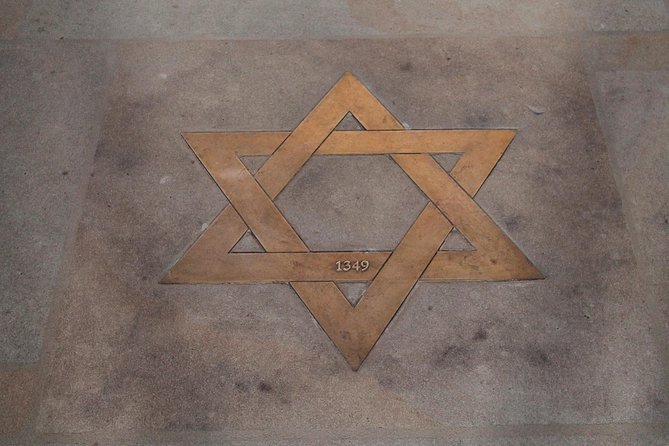
At the Frauenkirche, the guide discusses the Jewish quarter and the pogrom of 1349. The stop lasts about 15 minutes, and admission is free.
This is an important opening because it places antisemitism well before the Nazi period. The tour asks you to consider the relationship between the Jewish community and the city, then connects medieval persecution to later forms of political antisemitism.
The Frauenkirche is also a practical meeting point because it is on Hauptmarkt, where the tour begins at 3:30 pm. Arrive with enough time to locate Hauptmarkt 14 and settle in before the walking starts.
The limitation is that 15 minutes is brief for such a serious subject. You will receive the central explanation, but this is not a separate museum visit or a long historical lecture.
St. Sebaldus Church and the long road to Nazi antisemitism
The second stop is St. Sebaldus Church, where the guide continues the story of antisemitism from the Middle Ages into National Socialism. Again, the scheduled time is about 15 minutes.
This stop helps build the bridge between religious prejudice and the racial ideology promoted by the Nazis. That distinction matters. The Nazi regime used older antisemitic ideas, but it also reshaped them into a political program tied to citizenship, state power, propaganda, and persecution.
I appreciate the order here. You first see the medieval roots, then you move toward modern political extremism. The route does not treat history as a series of disconnected dates.
Because the tour remains outside and moves on quickly, you should expect a spoken explanation rather than a detailed examination of church art or architecture. If your main interest is the building itself, the stop may feel short.
Nuremberg Rathaus and Hitler’s link to the city
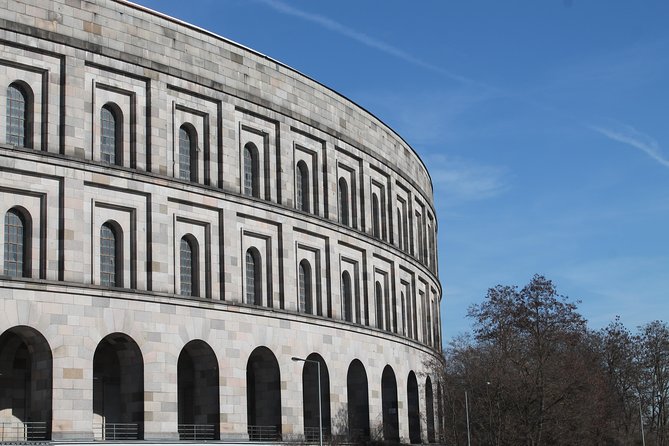
At Nuremberg Rathaus, the guide focuses on Hitler and his connection with Nuremberg. The stop lasts about 15 minutes.
This is where the city’s older political status becomes directly tied to the Third Reich. Nuremberg’s medieval reputation made it useful to Nazi leaders who wanted to claim continuity with a powerful German past.
The Rathaus is a strong place to discuss that connection because it represents civic authority. The point is not only that Hitler visited Nuremberg. It is that the city was given a role in the regime’s story about Germany, tradition, loyalty, and national destiny.
You should expect a concentrated explanation rather than a visit inside the town hall. The attraction here is the guide’s interpretation of the setting, not an included interior tour.
Same city, a completely different kind of day:
- Nuremberg: City Tour with the Bimmelbahn Train
★ 4.4 · 2,475 reviews - Nuremberg: Old Town Guided Walking Tour
★ 4.6 · 2,416 reviews - Nuremberg: Tunnels and Secret Passages in the City Wall Tour
★ 4.8 · 2,334 reviews - Nuremberg: Medieval Dungeons Guided Tour
★ 4.8 · 1,726 reviews
The main synagogue memorial and Kristallnacht
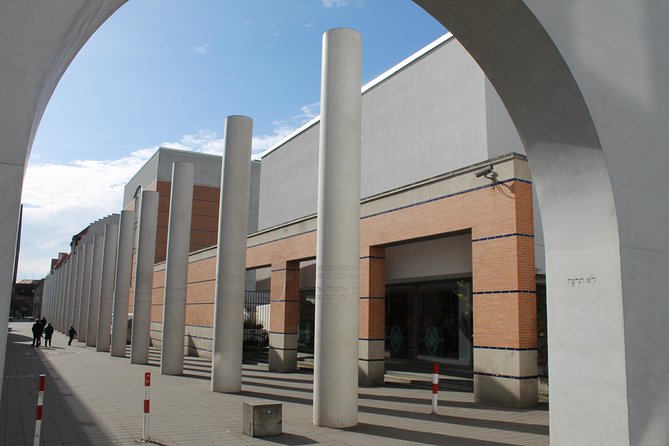
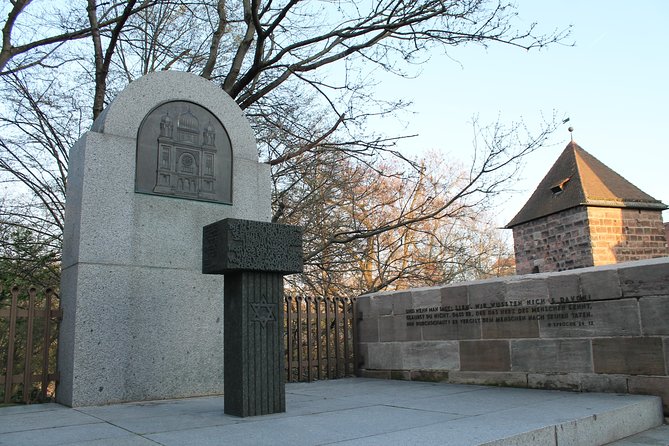
The route then reaches the memorial at the site of Nuremberg’s main synagogue. This stop lasts about 10 minutes and focuses on the synagogue’s destruction and the Night of Broken Glass, known as Kristallnacht.
This is one of the most direct links between Nazi policy and the physical removal of Jewish life from the city. A synagogue was not just a building. Its destruction marked the public attack on a community and helped show how persecution had moved from hateful propaganda to organized violence.
The brief stop makes the guide’s ability to explain events clearly especially important. Federico is named as the guide, and the available comments describe his work as well documented and varied in presentation. Those qualities are useful here, where the subject demands accuracy and care.
This is also a point where the emotional weight of the route increases. The earlier stops provide background, while the synagogue memorial brings the consequences into sharper focus.
Katharinenkirche and a city rebuilt after war
At the ruins of Katharinenkirche, the story shifts toward the battle and liberation of Nuremberg, followed by the reconstruction of the city. The stop lasts about 10 minutes.
The ruined church gives the war a visible setting. Rather than ending with the Nazi period, the tour asks what happened to Nuremberg afterward. The city had been used as a major symbol of the regime, then suffered wartime destruction and had to rebuild.
I like this change of direction because it keeps the walk from becoming a single-note account of Nazi ceremonies and crimes. You also see how public memory works after a dictatorship and a war. What should be rebuilt, what should remain as a ruin, and how should the city explain its past?
Ten minutes is enough for an overview, but not enough for a full study of reconstruction policy or postwar architecture. Think of this as a strong connecting stop in the larger story.
St. Lorenz, the Via Crucis, and the concentration camp
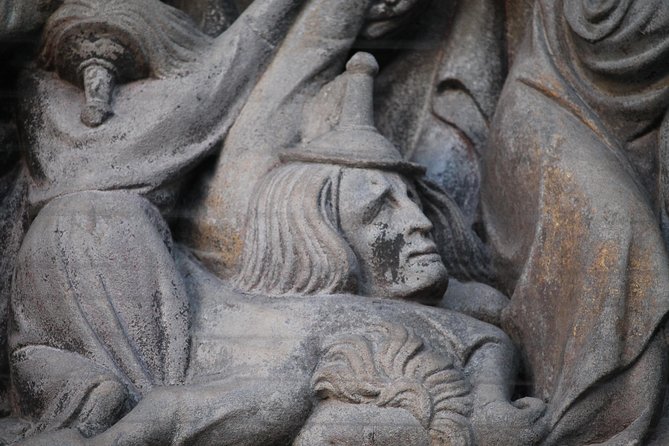
At St. Lorenz, the guide discusses the church’s Via Crucis and its relationship with the Nuremberg concentration camp. This stop also lasts about 10 minutes.
The subject brings together religious imagery and the machinery of Nazi persecution. The Via Crucis, or Stations of the Cross, gives the guide a way to discuss suffering, memory, and the moral questions raised by the camp system.
The data for this tour does not say that you visit the concentration camp itself, so you should not book this walk expecting a camp memorial excursion. The stop is part of the city-center route and uses St. Lorenz as the setting for the discussion.
That distinction is important for planning. If your main goal is the former concentration camp memorial site, you will need to arrange a separate visit. This tour instead gives you a compact introduction to how that history connects with central Nuremberg.
The State Theater and Nazi cultural power
The next stop is Nuremberg State Theater, where the guide explains the opera house’s link with National Socialism. The visit lasts about 10 minutes.
This adds culture to the political story. Nazi rule did not rely only on rallies, police power, and laws. It also used public culture and major institutions to shape ideas about German identity and belonging.
The theater is a useful setting because it reminds you that propaganda could be presented through respectable civic institutions, not only through political speeches. The tour’s larger point is that the regime sought control over how the city looked, sounded, and represented itself.
Again, this is an exterior stop within a walking route. There is no included performance or theater admission. You are paying for the historical explanation in Spanish.
Charterhouse Gate and the Nuremberg Trials
At Charterhouse Gate, the tour turns to the Nuremberg Trials. The stop lasts about 15 minutes, making it one of the longer pauses on the route.
This is a crucial change in the city’s role. Nuremberg had been promoted as the most loyal German city and used as a stage for Nazi power. After the war, it became associated with the effort to prosecute leading figures of the regime.
The trials give the walk a legal and international dimension. The story moves from propaganda and persecution to responsibility and judgment. That shift is one reason the route works better as a full historical arc than as a simple tour of Nazi landmarks.
The supplied information does not say that you enter the courtroom or visit a dedicated museum during the walk. You should expect an explanation at or near Charterhouse Gate, not a long indoor session.
The Street of Human Rights and a different future
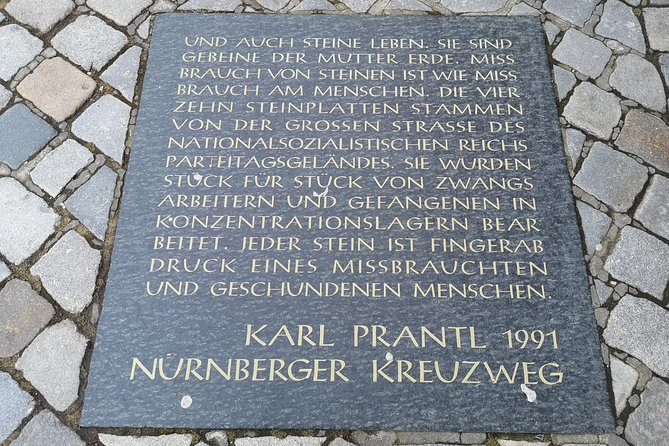
The final stop is the Street of Human Rights, where the tour discusses Nuremberg’s rebirth after the destruction of war. The scheduled time is about 10 minutes.
Ending here is a thoughtful choice. The route begins with medieval persecution, moves through Nazi propaganda and violence, reaches the trials, and finishes with a public statement about human rights.
The ending does not erase the past. It shows how Nuremberg has tried to present a different civic identity. That gives you a useful way to understand the city today, especially after seeing how strongly it was once tied to Nazi symbolism.
The tour ends near the central train station, at Kartäusergasse 1. From there, the starting point is about a 10-minute walk away. The location makes it easy to continue sightseeing or catch a train, though you should remember that the finish is not the same place as the beginning.
Is $19.70 good value for three hours?
At about $19.70 per person, I consider this a strong-value walking tour for anyone who wants a guided historical framework in Spanish. The price includes the guide and the full three-hour route, while every listed stop has free admission.
You are not paying for entry to museums, the courtroom, the theater, or the churches. That keeps the cost low, but it also tells you what sort of product this is: a walking lesson through public places, not an attraction package with interiors and exhibits.
The group can include up to 30 people. That is a reasonable maximum for a city walk, though it is not intimate in the way a private tour would be. If hearing every word matters to you, staying reasonably close to the guide will be helpful.
The tour is usually booked about 35 days ahead. That suggests you should reserve early if your schedule is fixed, especially since the start time is set at 3:30 pm.
Timing, weather, and who will enjoy it
Three hours on foot is manageable for most people, and the tour information says most people can participate. It is also near public transportation, and service animals are allowed.
The afternoon start can work well if you want a morning visit elsewhere in Nuremberg. It can also be warm, since the walk is outdoors and reviews of the experience mention that the tour remained engaging despite heat. Bring water and wear shoes suited to steady city walking, even though there are no special fitness requirements stated.
The route suits you best if:
- You want the history explained in Spanish.
- You prefer a clear chronological story to isolated monuments.
- You are interested in the connection between medieval Nuremberg, Nazi propaganda, the war, and the trials.
- You want a low-cost introduction before deciding which museums or memorial sites deserve more of your time.
- You enjoy a guide-led walk with plenty of spoken context.
It may not suit you if you want a museum-heavy day, a private guide, or an extended visit to the concentration camp memorial site. The short stops keep the group moving, so you will not have much time for quiet reflection at each location.
Should you book the Spanish Nuremberg Third Reich Tour?
I would book it if you want a serious, well-organized introduction to Nuremberg’s most difficult history and Spanish is your preferred language. The route has a strong shape, from the 1349 pogrom to the Street of Human Rights, and the final stop gives the experience more purpose than a tour focused only on Nazi landmarks.
Federico’s named role, his lively presentation, and the repeated praise for the amount of information are good signs for a subject that could easily become dry. Still, keep your expectations clear: this is a fast-paced outdoor walk, not a series of long museum visits.
At $19.70, the value is easy to justify if you want context, chronology, and a guide who can explain why Nuremberg was chosen as the Nazi propaganda center. Cancel at least 24 hours before the 3:30 pm start if your plans change. If poor weather or too few bookings cancel the activity, you will be offered another date or a full refund.
FAQ
What language is the tour conducted in?
The tour is conducted in Spanish, with a Spanish-speaking guide.
How long does the tour last?
The tour lasts approximately three hours.
Where does the tour begin?
It begins at Hauptmarkt 14, 90403 Nürnberg, Germany.
Where does the tour finish?
It finishes at the Street of Human Rights, Kartäusergasse 1, 90402 Nürnberg, near the central train station.
What time does the tour start?
The scheduled start time is 3:30 pm.
Are admission tickets included?
The walking tour includes the Spanish-speaking guide. Admission is listed as free at all nine stops.
Can I cancel for a full refund?
Yes. You can cancel for a full refund up to 24 hours before the experience starts. Changes or cancellations made less than 24 hours before departure are not accepted for a refund.
Just added in Nuremberg
- Tour en español al Campo Zeppelin★ 5.0 · 8 reviews
- Stein: Public guided tour of the “Old Mine” museum★ 4.5 · 18 reviews
- “Rotes Bier” and “Blaue Zipfel”. A historical-culinary walk★ 4.4 · 190 reviews
- Nuremberg: Old Town Guided Tour By Bus★ 4.4 · 198 reviews
- Nürnberg Bachelor(ette) Party with Night PubCrawl★ 4.2 · 5 reviews
- Nuremberg: Bar and Club Tour with Free Shots and Free Entry★ 3.8 · 23 reviews
- Nuremberg: WWII Tour, Courtroom 600 and 3rd Reich Sites★ 4.6 · 94 reviews
- Nürnberg kennenlernen: Highlights in der Altstadt★ 4.7 · 189 reviews
Third Reich Tours, compared.



Berlin’s Best: 2 Hour Walking Tour Third Reich and the Cold War
Read our review →

Third Reich Berlin: Hitler and WWII Walking Tour
Read our review →
Walking Tour of Former Nazi Party Rally Grounds
Read our review →
Berlin Third Reich Sites: Half-Day Walking Tour
Read our review →Browse the lists this tour appears in