
Reviewed · THIRD REICH TOURS
Nuremberg Old Town and Nazi Rally Grounds Walking Tour
Nuremberg’s story turns sharply during this four-hour tour. You begin among castle courtyards, sausage stalls, Gothic churches, and medieval walls, then ride out to the huge former Nazi Rally Grounds, where the scale of Hitler’s propaganda machine becomes difficult to ignore. I like the way the tour connects these two parts of the city instead of treating them as separate day trips.
I also like the practical rhythm: a guided Old Town walk, a 30-minute break for lunch or coffee, then buses and trams included in the price. Guides such as Hannes, Natasha, Nick, and Dimitri have earned especially warm praise for clear storytelling and good humor. The main drawback is the pace. You cover a lot on foot, and the tour is not suitable if walking is difficult.
Key points at a glance
- Two very different Nurembergs: See the medieval center, then the former Nazi Party Rally Grounds in one outing.
- Castle views without a long museum visit: Explore the Imperial Castle courtyards and hear how Holy Roman Emperors used the site.
- A useful lunch break: Take about 30 minutes at the Hauptmarkt for sausages, coffee, Glühwein in December, or a quick restroom stop.
- Public transport included: The bus to the Rally Grounds and tram back to Hauptbahnhof are covered in the $43 price.
- Serious history handled directly: Learn about propaganda, Hitler’s rallies, and how Nuremberg faces this difficult past today.
- Bring proper shoes: The route is a long walking tour in all weather, with no mobility-friendly option.
Why this Nuremberg tour works so well
Many city walks give you medieval lanes and a few handsome façades, then stop. This one adds the former Nazi Rally Grounds, giving you a much fuller picture of Nuremberg. The contrast is the point. You see a city shaped by emperors, craftsmen, churches, and trade, then confront the twentieth-century attempt to turn it into a stage for mass political theater.
I like that the tour does not rush straight to the rally grounds. The Old Town section gives you a sense of Nuremberg as a living city, not merely a place associated with the Third Reich. By the time you reach the parade grounds, you have a better idea of what was being manipulated and destroyed by Nazi propaganda.
The tour is in English and costs $43 per person. That is fair value if you want an organized introduction to both parts of Nuremberg. Your fee includes the live guide and public transport to and from the Rally Grounds, which removes the hassle of working out the connections yourself.
Lunch, drinks, and admission to the Documentation Center are extra. This matters because the tour takes you to the remains of Congress Hall but does not include a museum visit afterward. If you want a longer, more detailed study of the Nazi period, plan extra time at the Documentation Center after the formal tour ends.
More Old Town Tours in Nuremberg
- Nuremberg: Old Town Guided Walking Tour
★ 4.6 · 2,416 reviews - Nuremberg Old Town and Nazi Party Rally Grounds Walking Tour in English
★ 4.5 · 504 reviews - Nuremberg: The Old Town in Evening Light – IN GERMAN
★ 4.7 · 353 reviews
Starting at Hauptbahnhof and the Craftsmen’s Court
Meet your guide outside the large arched central entrance of Nuremberg Hauptbahnhof. Look for the red and white Nuremberg Tours in English sign, and arrive a few minutes early so the group can check in before setting off.
The first stop is Handwerkerhof, or the Craftsmen’s Court, a compact area near the station where local artisans work with traditional materials and methods. It is a pleasant opening because you get an immediate sense of Nuremberg’s craft traditions before entering the main Old Town.
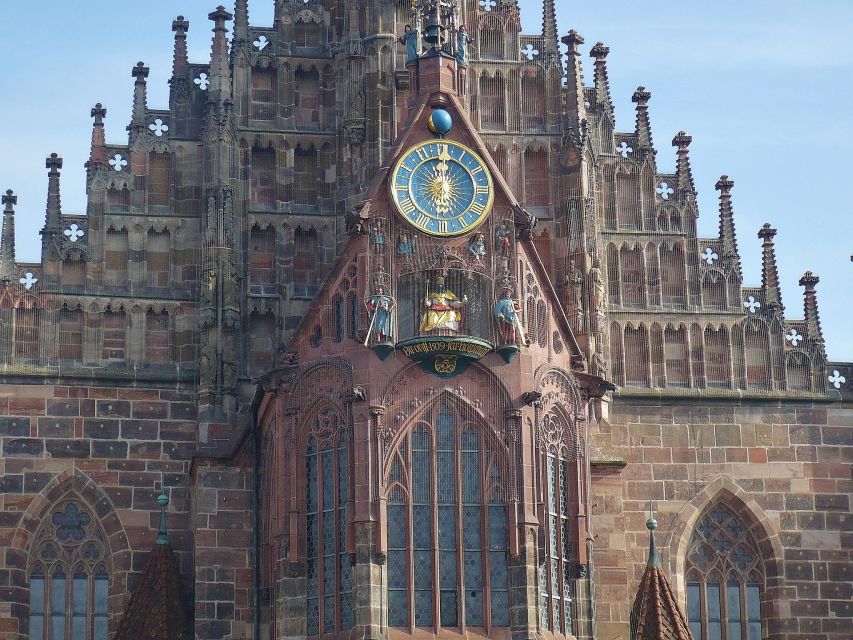
From here, the walk reaches the Mauthalle, a former customs building. The route then passes St. Lorenz Church, one of the city’s major Gothic landmarks. You may not enter every church on this tour, so think of the walk as a guided introduction rather than a full architectural inspection.
That distinction helps set expectations. You will see many important places, but the guide’s stories are the main attraction. If you want to study carvings, altarpieces, or church interiors at length, return later on your own.
Hauptmarkt, sausages, and Nuremberg’s market life
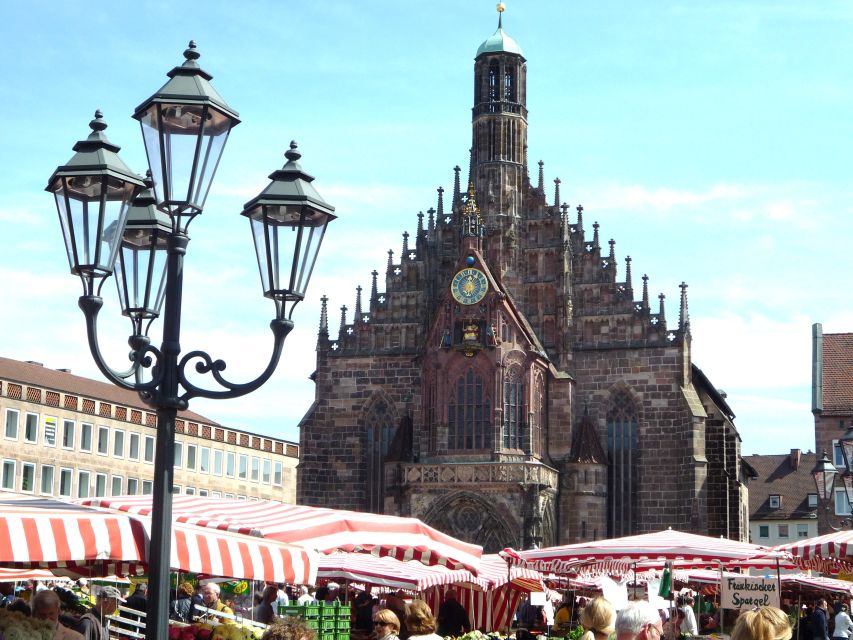
The Hauptmarkt is the Old Town’s central marketplace and one of the liveliest points on the route. Markets have been held here for nearly 700 years, and in December it becomes the setting for Nuremberg’s famous Christmas market.
Your guide explains the square’s place in city life and points out where to find traditional food, beer, and wine. This is also where the tour becomes especially useful for the rest of your stay. You can ask about Nuremberg’s famous small sausages, local amber lager, and places to eat after the tour.
The timing is practical. After the main Old Town sights, you get about 30 minutes of free time at the Hauptmarkt. One guide used the pause for a three-sausage roll, while another noted that December visitors can use it for a quick coffee, restroom stop, or Glühwein. You should not expect a leisurely restaurant meal in this window, but it works well for a fast local bite.
Christmas market visitors should prepare for cold weather and crowds in the square. The tour runs rain or shine, and winter feedback makes clear that warm clothing matters. Comfortable shoes are important year-round, but they are especially useful when the pavement is wet or icy.
City Hall, St. Sebaldus, and the Imperial Castle
The route continues past Old City Hall and St. Sebaldus Church before reaching the Imperial Castle. You get a guided look at the castle courtyards and views over Nuremberg rather than a full castle museum visit.
The castle is one of the best places to understand the city’s medieval importance. Holy Roman Emperors ruled from here for more than 500 years, and the elevated position helps explain why Nuremberg became such an important center.
I like this section because it shifts the story from street-level commerce to political power. The guide can connect the walls, castle, churches, and market to the city’s role in the medieval and Renaissance worlds.
You also visit the exterior or setting around Albrecht Dürer’s House. Dürer is one of Nuremberg’s best-known artists, so this stop adds a cultural thread to the political and religious history. It also keeps the walk from becoming a procession of dates and rulers.
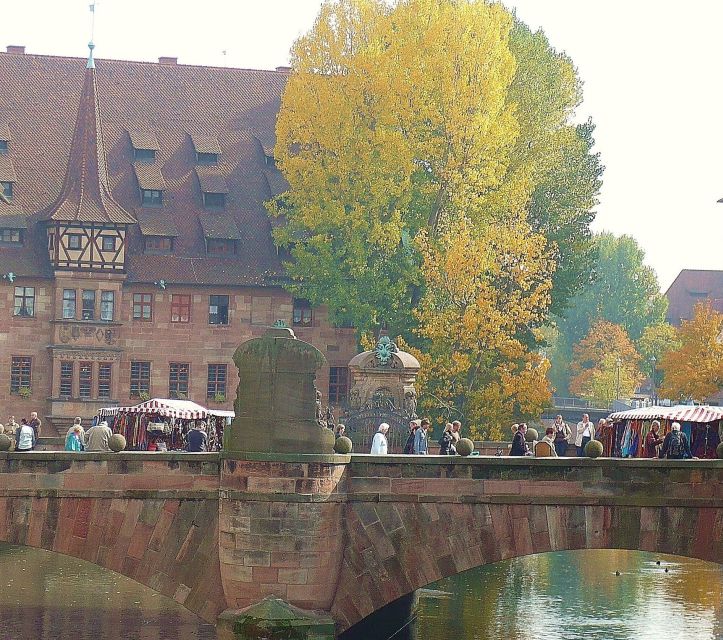
The Old Town is the more traditional sightseeing portion of the tour. You see fortifications, market squares, church façades, and castle views, while the guide adds legends and stories from the medieval and Renaissance periods. It is a good first orientation if you plan to explore Nuremberg more closely later.
More Third Reich Tours in Nuremberg
- Nuremberg: Walking Tour of Former Nazi Party Rally Grounds
★ 4.7 · 1,665 reviews - Nuremberg Third Reich Tour in Spanish
★ 5.0 · 355 reviews - Nuremberg: Tour of Former Nazi Party Rally Grounds
★ 5.0 · 43 reviews
The bus ride to the former Rally Grounds
After the Old Town and lunch pause, you board public transport toward the former Nazi Party Rally Grounds. The ride takes about 15 minutes, and the cost is included.
This transfer is more than a practical link. It lets the tour move from Nuremberg’s compact historic center to a huge open area built for political spectacle. The physical change helps you understand the scale of the Nazi project.
The guide explains how Adolf Hitler used Nuremberg for mass rallies, with columns of SS men, choreographed ceremonies, speeches, and carefully staged images. The focus is not only on what happened, but on how architecture, crowds, symbols, and ritual were used to shape public opinion.
This part requires a different frame of mind from the Old Town walk. The sites are not attractive in the usual sightseeing sense. Their value lies in seeing the remains directly and understanding how propaganda worked through space and ceremony.
Luitpoldhain, Volksfestplatz, and the parade grounds
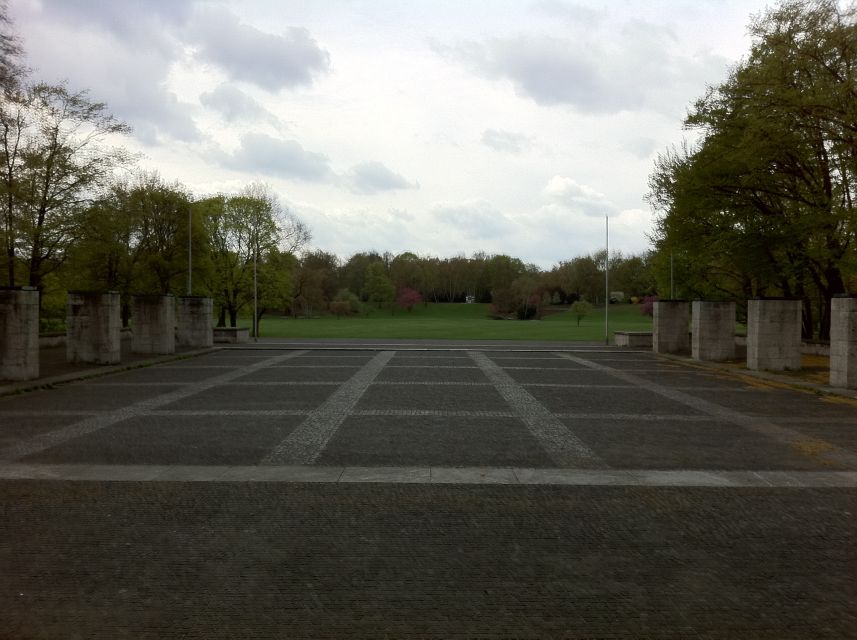
At Luitpoldhain and Volksfestplatz, you see areas linked to the Nazi rallies and public events. The route also includes the parade grounds, Zeppelin Field, and the Luitpold Arena.
Your guide shows how Hitler inspected formations and addressed vast crowds. The scale can be hard to grasp from photographs alone. Standing in the open areas gives you a clearer sense of how the setting was designed to make individuals feel small and the regime appear all-powerful.
The tour does not treat this as a spectacle. Guides have been praised for handling the subject with care, honesty, and sensitivity, while still keeping the presentation clear and engaging. Some use photographs on an iPad to show how the same locations appeared during the Third Reich.
That visual comparison is useful. Many remains are incomplete, weathered, or surrounded by modern city life. The old photographs help you connect the present-day structures to the crowds, banners, uniforms, and ceremonies that once filled them.
Allow time for the weather here. The Rally Grounds are open-air sites, and the tour takes place in rain, cold, or heat. There may be little shelter during the outdoor portion, so bring a coat in winter and wear shoes suited to extended walking.
Congress Hall and Nuremberg’s approach to its past
The tour then reaches Congress Hall, an enormous unfinished structure inspired by the Roman Colosseum. It was intended to hold huge gatherings and project the power of the Nazi state.
Seeing the building from outside gives you a strong sense of the regime’s ambition. The scale is blunt and heavy, and the fact that it was never finished adds another layer to the story. This is one of the clearest places to discuss the gap between political fantasy and reality.
The guide also explains how Nuremberg deals with this past today. That question matters. The city is not presenting the Rally Grounds as a proud monument, but as a place for education and reflection. You learn how the remains are interpreted rather than simply photographed.
Admission to the Documentation Center is not included. The tour gives you an introduction to the Congress Hall site, but you need a separate ticket or visit arrangement if you want the museum exhibits. One useful option is to stay in the area after the formal tour, since the tour ends back at Hauptbahnhof by tram.
The return tram and what four hours really means
The return journey takes about 10 minutes by tram and brings you back to Nuremberg Hauptbahnhof, where the tour began. The total outing lasts about four hours, including the lunch break.
That is a strong format for a first day in Nuremberg. You get orientation, major Old Town sights, food advice, transport help, and an introduction to the Rally Grounds without having to plan the route yourself.
Still, this is not a relaxed stroll. You walk for much of the first half, stand outdoors at the Rally Grounds, and move with a group between several locations. The activity is not suitable for people with mobility impairments or serious walking difficulties.
Guide quality is central to the experience. Names that appear repeatedly in the guide team include Hannes, Natasha, Nick, Nic, Dimitri, Nickolai, Jax, and Paul. Individual assignments can vary, but the strongest pattern is clear: the tour depends on a guide who can balance medieval stories, local tips, and the difficult Nazi material without losing the group.
Hannes has been praised for humor and a good pace, including in freezing weather. Natasha has been noted for linking the Old Town to the Rally Grounds and keeping the four hours moving quickly. Nick and Dimitri have also been singled out for clear explanations and strong local history. These details matter because a four-hour walking tour can feel long with a weak guide and surprisingly short with a good one.
Who should book this tour?
I would choose this tour if you have one day in Nuremberg and want both the Old Town and the Nazi Rally Grounds. It is especially useful for first-time visitors who want orientation before exploring churches, museums, restaurants, and the castle in greater detail.
It also suits anyone interested in the Third Reich who wants to see the sites in person but prefers a guide to provide context. The subject is handled seriously, and the route helps you understand how the architecture and open spaces supported propaganda.
Families can consider it, but remember the length and subject matter. One guide kept a 12-year-old interested throughout, yet the Nazi portion still calls for an age-appropriate conversation. The tour is not a good pick for anyone who needs frequent sitting breaks or step-free access.
Should you book the Nuremberg Old Town and Nazi Rally Grounds Walking Tour?
Book it if you want an efficient, serious introduction to Nuremberg for $43, with public transport included and a built-in lunch pause. I especially like the combination of medieval streets, castle views, local food advice, and the difficult but necessary visit to the Rally Grounds.
Skip it if you want a slow Old Town walk, a full castle visit, or a museum-focused study of the Nazi period. In that case, explore the center at your own pace and reserve extra time for the Documentation Center. For most able-bodied visitors with four hours to spare, though, this tour gives you a useful first reading of Nuremberg, one that helps the city make sense long after the walk ends.
FAQ
Where does the tour begin?
It begins outside the large central arched entrance of Nuremberg Hauptbahnhof. Your guide will hold a red and white Nuremberg Tours in English sign.
How long does the tour last?
The full experience lasts about four hours, including the lunch break and public transport between the Old Town, Rally Grounds, and train station.
Is the tour conducted in English?
Yes. The tour includes a live English-speaking guide.
Is public transportation included?
Yes. The bus to the former Nazi Rally Grounds and the tram back to Hauptbahnhof are included in the tour price.
Is lunch included?
No. Lunch is not included. You receive about 30 minutes of free time at the Hauptmarkt to buy food or drinks.
Is admission to the Documentation Center included?
No. The tour visits Congress Hall and the former Rally Grounds, but admission to the Documentation Center costs extra.
Does the tour run in bad weather?
Yes. The tour takes place rain or shine. Bring comfortable shoes and clothing suitable for the forecast.
Is the tour suitable for people with mobility impairments?
No. The experience includes extensive walking and is not suitable for people who have trouble walking or have mobility impairments.
More Walking Tours in Nuremberg
- “Rotes Bier” and “Blaue Zipfel”. A historical-culinary walk
★ 4.4 · 190 reviews - Nuremberg 2-Hour Old Town Highlights Walking Tour in English
★ 4.4 · 107 reviews - Nuremberg: Private Guided Walking Tour
★ 4.5 · 9 reviews
Just added in Nuremberg
- Tour en español al Campo Zeppelin★ 5.0 · 8 reviews
- Stein: Public guided tour of the “Old Mine” museum★ 4.5 · 18 reviews
- “Rotes Bier” and “Blaue Zipfel”. A historical-culinary walk★ 4.4 · 190 reviews
- Nuremberg: Old Town Guided Tour By Bus★ 4.4 · 198 reviews
- Nuremberg: Bar and Club Tour with Free Shots and Free Entry★ 3.8 · 23 reviews
- Nürnberg Bachelor(ette) Party with Night PubCrawl★ 4.2 · 5 reviews
- Nuremberg: WWII Tour, Courtroom 600 and 3rd Reich Sites★ 4.6 · 94 reviews
- Nürnberg kennenlernen: Highlights in der Altstadt★ 4.7 · 189 reviews
Third Reich Tours, compared.


Berlin’s Best: 2 Hour Walking Tour Third Reich and the Cold War
Read our review →
Third Reich Berlin: Hitler and WWII Walking Tour
Read our review →
Walking Tour of Former Nazi Party Rally Grounds
Read our review →
Berlin Third Reich Sites: Half-Day Walking Tour
Read our review →Browse the lists this tour appears in